
Our readers keep the lights on and my morning glass full of iced black tea. As an Amazon Associate, I earn from qualifying purchases.
Specs are compiled from manufacturer listings and verified buyer reviews and can change over time — please confirm the key details on the product page before buying.
The best 2-player strategy board games skip the downtime and get straight to the tension — every move matters because there’s no one else to hide behind. The real challenge is picking one when each game offers a different kind of duel, from 30-minute card battles to deep, chess-like abstract duels. This guide cuts through the shelf clutter to show you which games deliver the most satisfying head-to-head rivalry for your game shelf.
I’m Min — the founder and writer behind Gadgets Feed. This guide is built by comparing the manufacturers’ published specifications and the patterns across verified customer reviews, so you get each pick’s real strengths and trade-offs instead of marketing spin.
You want a 2-player strategy board game that earns its shelf space, not one that gathers dust after a single play. This roundup sorts the instant classics from the one-session wonders, whether you have 30 minutes for a quick duel or a full evening for a deep historical tug-of-war.
Our Picks at a Glance


How To Choose The Best 2 Player Strategy Board Games
Two-player strategy games live or die on one question: does every decision feel like a real choice? Unlike party games, there’s no chaos to blame — you win or lose purely on the moves you make. Focus on four things before you buy: the length of a single session, how steep the learning curve is, how many paths lead to victory, and whether the game stays fresh after twenty plays.
Match the playtime to your evening
Most of the best duels land in the 30-minute balance — long enough to feel strategic, short enough for a rematch. If you want a game you can pull out on a weeknight, a 30-minute session beats a sprawling one that requires a full evening commitment. The longest games here stretch to 60 minutes, which rewards players who enjoy building a long-term plan over many turns.
Count the ways to win
Games with multiple victory paths — say, military domination, scientific supremacy, or out-scoring your rival — stay tense because your opponent never knows which angle you’re pushing. If a game only rewards one strategy, it gets solved quickly. The best duels force you to pivot your plan based on what the other player is building.
Know the difference between luck and strategy
A great two-player game uses randomness to create interesting decisions, not to decide the winner. Card-drafting games give you a hand of options and ask which one to keep; pure abstract games remove luck entirely so the better player always wins. Decide which flavor suits your rivalry before you commit to a box.
Quick Comparison
| Model | Best For | Playtime | Mechanics | Win Conditions | Amazon |
|---|---|---|---|---|---|
| 7 Wonders Duel★ Best Overall | Overall best classic duel | 30 min | Card drafting, area control | 3 ways | Amazon |
| WatergateDeep Historical Duel | Historical tug-of-war | 60 min | Card-driven, area control | 2 ways | Amazon |
| YinshPure Abstract | Pure abstract strategy | 30 min | Area control, push your luck | 3 rings | Amazon |
| Splendor Duel | Fast gem-collecting battle | 30 min | Card drafting, engine building | 3 ways | Amazon |
| Mandala | Beautiful abstract card play | 30 min | Card play, area control | Point scoring | Amazon |
| Patchwork Americana | Cozy puzzle duel | 30 min | Puzzle, strategy | Point scoring | Amazon |
| Caper Europe | Heist card drafting | 30 min | Card drafting, area control | Point scoring | Amazon |
| Everdell Duo | Co-op or competitive woodland | 45 min | Engine building | Co-op or 1v1 | Amazon |
| Duel for Middle-Earth | LOTR-themed epic duel | 30 min | Card drafting, area control | 3 ways | Amazon |
In-Depth Reviews
1. Asmodee 7 Wonders Duel
Our pick — over 4.5★ from 9,500+ verified ratings; the strongest balance of quality and price.
The gold standard for a quick, tense civilization duel that never overstays its welcome.
7 Wonders Duel takes everything great about the classic civilization builder and reshapes it for exactly two players. You build your city from a pyramid of cards, and each pick you make both helps you and denies your opponent — that tension is the heart of the game. The duel unfolds in about 30 minutes, making it a game you can play twice in an evening without fatigue.
What wins people over is the sheer variety: you can crush your rival’s capital with military might, race ahead on scientific breakthroughs, or simply build the most prestigious city with victory points. Only seven of the eight Wonders in play can be built, so you’re always fighting over limited glory. Buyers report “fast, elegant, tense decisions” — and that phrase nails why it’s the crowd favorite among two-player strategy games.
The game asks for ages 10 and up, and seasoned players note there’s a short learning curve before the strategy clicks. Card quality gets mixed feedback, with some boards showing wear over time, but the replay value keeps owners coming back. The random pyramid setup means no two games unfold the same way.
Why It Wins Duels
- Three distinct victory paths keep every game unpredictable
- Fast 30-minute sessions invite immediate rematches
- Pyramid card layout adds risk-reward tension to every draft
- Works great for kids aged 10 and up
Know Before You Buy
- Cards can warp slightly after heavy play
- One Progress token has a minor balance quirk
- Purely two-player — no solo or group mode
Reach for this if: you want the most celebrated two-player strategy duel that’s easy to teach and endlessly replayable.
Look elsewhere if: you’re hunting for a deep abstract game with zero luck — this one has card-draw variance by design.
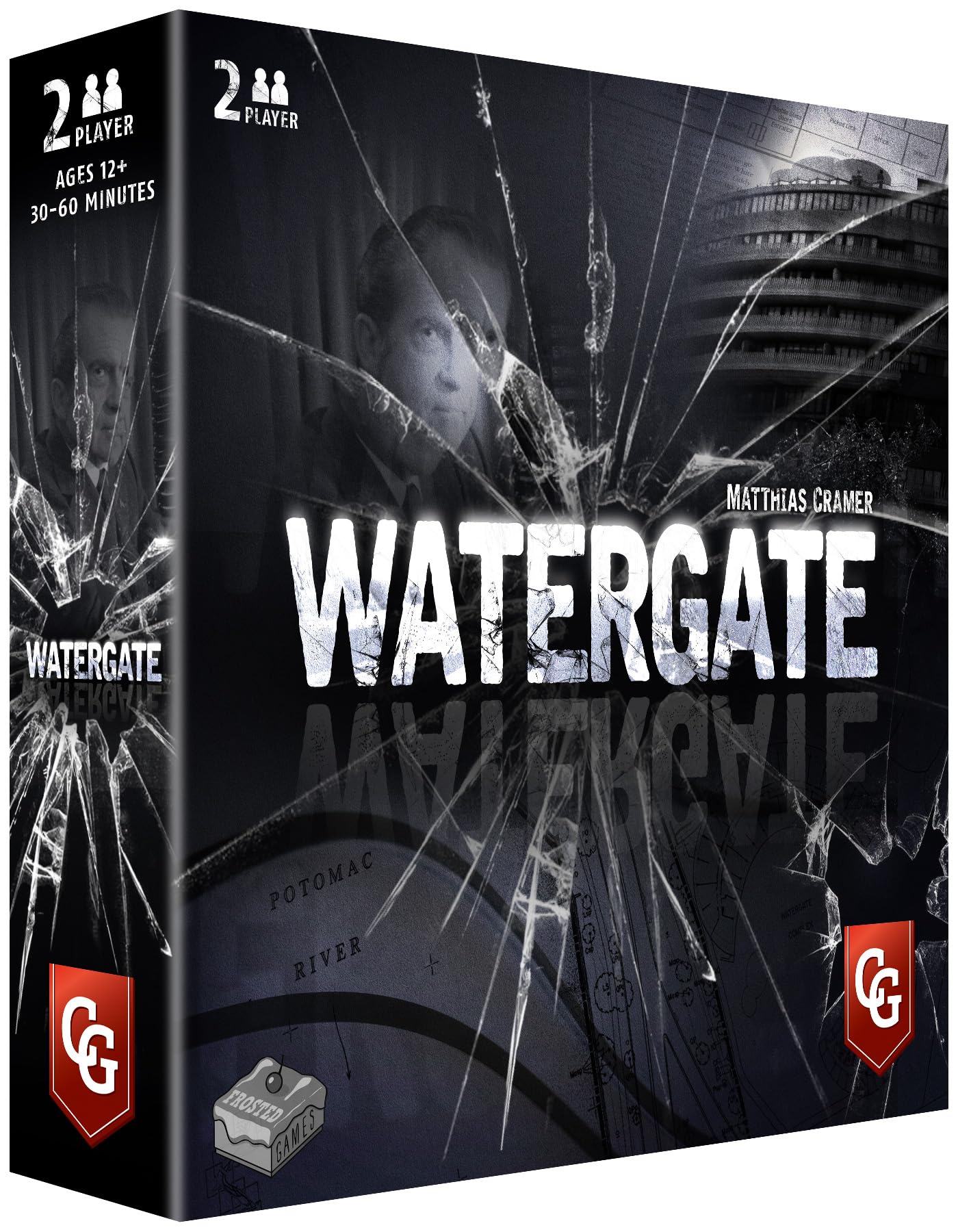
2. Capstone Games Watergate
A card-driven tug-of-war where one of you hunts the truth and the other buries it.
Watergate puts you in the middle of the 1970s scandal — one player is the journalist trying to link President Nixon to the break-in, the other is the administration trying to block the evidence chain. It’s a perfectly balanced duel because the two sides play completely differently. The journalist works to connect Nixon to two informants, while the administration races to collect five momentum tokens or block the link entirely.
This is the longest game in the lineup at a full 60 minutes of estimated play, so it rewards players who want a meatier commitment. You don’t need any history knowledge to enjoy it — the game teaches the real events through play. Owners mention it’s “one of the best 2 player board games ever,” with a satisfying mix of intensity and fairness that keeps both sides engaged to the final turn.
The box includes 2 player decks with 30 cards each, a game board, 36 evidence tokens, and 7 momentum tokens — plenty of pieces to manage. That complexity is the trade-off: it sits between a light filler and the heavyweight Twilight Struggle, so casual players might find it involved. The recurring note is that it rewards card familiarity, meaning your first few games are about learning what your deck can do.
Best for history buffs: if you want a duel that teaches real events while delivering genuinely tense, asymmetric strategy, this is the pick.
Choose this when: you and your rival want a deeper, 60-minute brain-burner with roles that play differently each side.
skip it if: you prefer lighter 30-minute games — this one demands focus and rewards repeat plays to master the decks.
3. Rio Grande Games Yinsh
Five minutes to learn the rules, a lifetime to master the rings.
Yinsh is the purest strategy test in this lineup because luck simply doesn’t exist — the better player wins, every time. You place tokens inside rings and move those rings across a hex board, trying to line up five tokens in a row. When you make a line, you remove those tokens and one ring, shrinking the board and raising the tension with every move.
The rules take about five minutes to grasp, which makes it a fantastic entry point into abstract strategy games. But the depth is genuinely chess-like, with owners noting it takes hundreds of games to reach intermediate mastery. The catch-up mechanic is brilliant: when you remove rings, you also weaken your own position, so you’re always balancing aggression against self-harm. Games typically run about 30 minutes, though quicker players can finish in 15.
As part of the Gipf project series, it’s combinable with any other game in the series — a nice bonus if you ever expand. The components get high marks for quality and durability. It may look simpler than the card-driven games here, but as owners put it, “rich with strategy and enjoyment” is the only honest summary.
What Makes It Special
- Zero luck — pure skill decides the winner
- Five-minute learning curve with endless depth
- Shrinking board creates rising tension every game
- High-quality, durable components
Who Should Pass
- No theme — pure abstract strategy only
- Might feel dry if you prefer card-driven storytelling
- Best for ages 14 and up
Grab this if: you love chess-like duels where every move has layered consequences and the board shifts under your feet.
Think twice if: you want thematic flavor or luck-based comebacks — this is strategy in its rawest form.
4. Splendor Duel
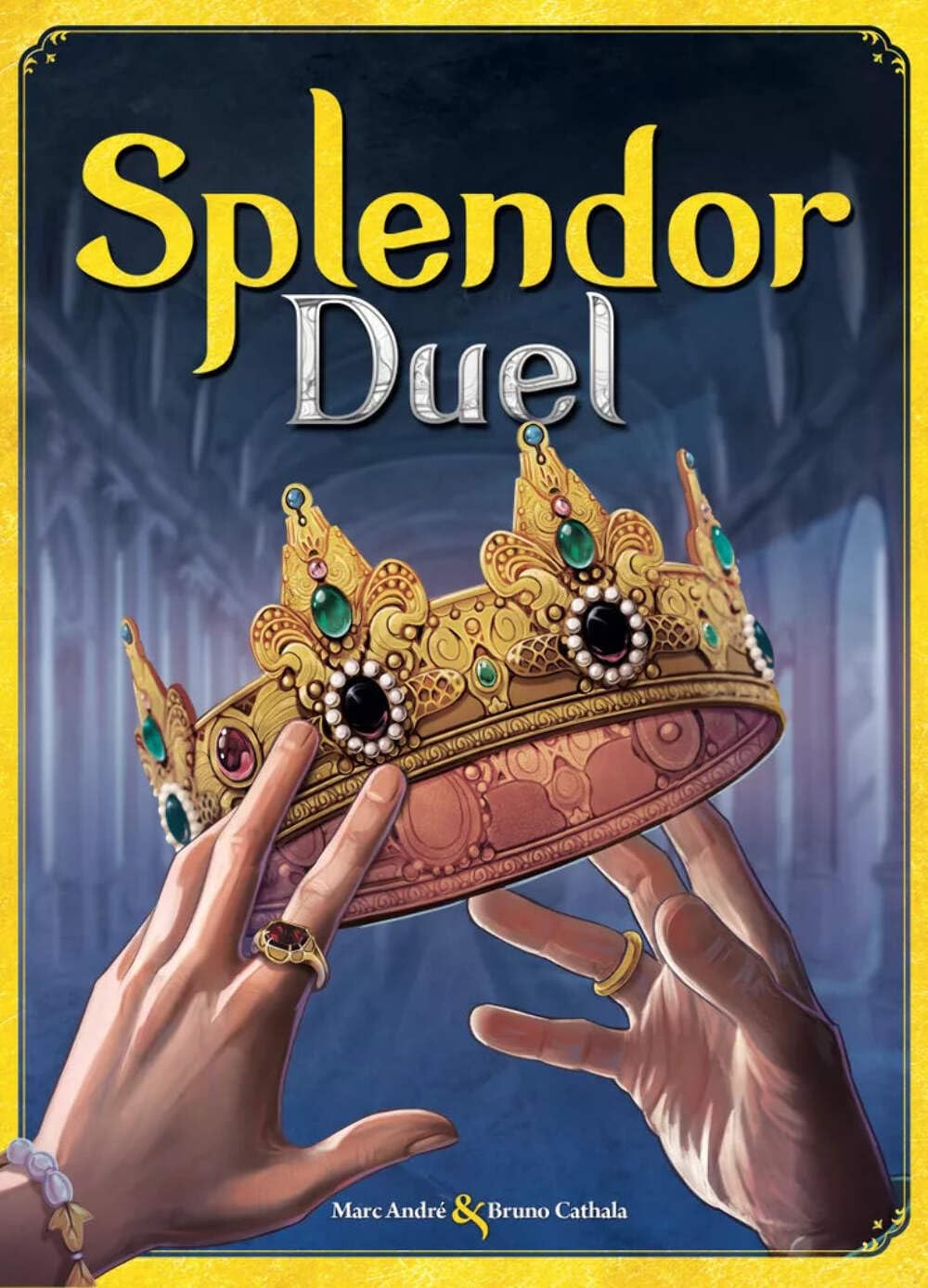
A tighter, faster gem-collecting clash that beats the original for two players.
Splendor Duel takes the beloved gem-trading classic and makes it exclusively for two, adding new layers that the original lacks. You collect gem tokens, buy development cards, and race to gain prestige points — but now there are three ways to win, including a new pearl mechanic and special powers that keep both players guessing. The 30-minute average playtime makes it a perfect weeknight option.
The compact box is genuinely travel-friendly, designed so you can play on a café table or in a hotel room without losing the rich feel. Kids aged 8 to 11 can pick it up quickly, which makes it a rare strategy game that spans generations. What owners love is how every game plays differently — the array of development cards and starting setups means no two sessions are alike.
The honest trade-off is the card size. Multiple customers note the cards are very small, which can make them difficult to read across a table. It’s a cosmetic and readability compromise rather than a gameplay flaw — the game itself is described as more challenging than the original Splendor. If you only want one Splendor game for your shelf, the original wins; if you want the superior two-player duel, this is it.
Why it earns its spot: it’s the rare sequel that improves on the original for its intended audience — faster, more tactical, and still easy to teach.
Reach for this if: you want an elegant, portable engine-builder that’s quick to learn and deep enough for repeat games.
Look elsewhere if: large, readable cards matter to you — the small format is the one recurring complaint.
5. Mandala

A beautiful abstract duel where you build sacred sand mandalas and fight over the colors.
Mandala transforms the ancient ritual of creating and destroying sand mandalas into a clever two-player card game. You play colored cards into two shared mandalas, building a central mountain and your own fields, then score points based on which colors you collect in your cup. The winner of each mandala scores two colors from the mountain while the loser gets one — a split that creates constant tension about what to claim.
What makes it special is the bluffing layer. Card values from 1 to 9 shift depending on the order colors are scored, so you’re constantly weighing whether to take a card now or seed it for later. It’s open information with tense decisions and real comeback potential, which is why owners compare a key decision point to chess. The fabric play mat and 108 cards make it a light, travel-friendly box at 0.4 kg.
Games run about 20 to 30 minutes, and the rules take under five minutes to teach. It’s not a friendly game — you’re actively taking cards to stop your opponent from scoring, so it suits players who enjoy sharp, competitive duels. The square cards are the one practical gripe, being harder to shuffle than standard shapes, but a wash shuffle solves that quickly.
Why It Stands Out
- Beautiful abstract art on a genuine fabric mat
- Bluffing and open-info tension in every turn
- Five-minute teach with deep, evolving strategy
- Light box that travels well
Consider This
- Square cards are awkward to shuffle
- Not a friendly game — denial is core to winning
- Pure abstract with no luck-based comeback
Pick this when: you want a gorgeous, fast abstract duel with genuine bluffing that rewards repeat plays.
pass on it if: you’d rather play a friendly, cooperative game — this one is sharply competitive by design.
6. Patchwork Americana Edition

A deceptively simple quilt-building puzzle where every patch placement is a tiny strategic war.
Patchwork Americana reimagines the beloved Uwe Rosenberg classic with red, white, and blue styling inspired by American quilting traditions. You and your opponent take turns buying different-sized patches to cover your 9×9 quilt board, racing to fill your space with no empty gaps. Each piece you choose is a piece your rival can’t have — that denial mechanic is where the real strategy lives.
It’s a puzzle game at heart, but it asks for real spatial planning. You’re managing two currencies at once: the buttons you spend on patches and the time token that advances you around the board. The player who’s behind on time gets the next turn, creating a push-and-pull rhythm that keeps both players engaged. Sessions run about 30 minutes and the rules are simple enough for ages 8 and up.
Owners consistently call it a go-to two-player game. The one honest complaint is that the rulebook directions are hard to follow — a few players found the written instructions confusing enough to need outside help. The included components are generous: 2 quilt boards, 33 patches, 5 special patches, and 50 button tiles. If you’ve been meaning to try Patchwork, this Americana edition is a handsome way in.
The verdict: short, simple, and genuinely strategic — the rare game that works as a couples’ staple and a family-friendly introduction to deeper duels.
Choose this if: you want a cozy but sharp puzzle duel that’s easy to teach and quick to replay.
Know before buying: the rulebook can be confusing on first read — you may need a quick video or a patient friend to get started.
7. Caper Europe

A fast-paced heist card draft where you hire thieves and outwit your rival across Europe.
Caper Europe drops you into a 1950s-inspired world of stylish heists, where you draft thieves, equip them with gear, and send them to claim key locations across four European cities. Each city has its own unique deck, which means every game offers different strategies and combinations. The drafting mechanic keeps it fast — you pick a card, your rival picks, and the back-and-forth stays tight in 30-minute sessions.
The production quality is a standout. The art is genuinely beautiful, the wooden components feel premium, and the compact box includes custom trays that make setup and travel easy. It’s packed with variety through multiple decks and different difficulty levels, so owners find every playthrough feels fresh. That replayability is what keeps couples coming back to it on date nights.
The recurring weakness is the rulebook — several owners found the instructions not written clearly, which can slow your first session. The board itself has helpful reminders that reduce the learning pain, but you may need a rules video to get rolling. It plays well with kids aged 10 and up and works for adults, making it a flexible addition to any shelf.
Why It Shines
- Four distinct city decks for real replay value
- Premium wooden components and gorgeous 1950s art
- Compact travel-ready box with custom trays
- Quick to learn with helpful board reminders
Watch Out For
- Rulebook is not written clearly
- First session may need a video tutorial
Reach for this if: you want a gorgeous, portable card-drafting duel with high production quality and real variety.
Look elsewhere if: you refuse to touch a game with a confusing rulebook — you’ll need patience or YouTube for setup.
8. Everdell Duo
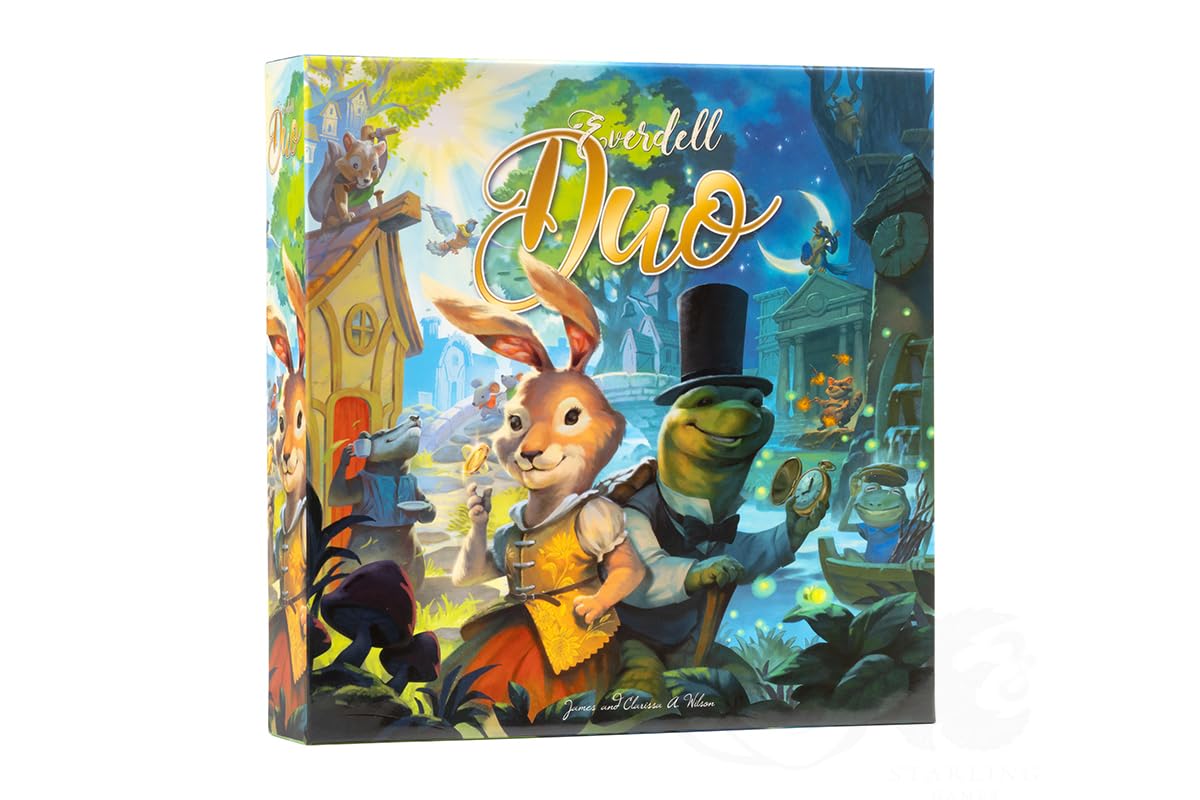
A standalone woodland engine-builder that flips between friendly co-op and fierce head-to-head.
Everdell Duo is the rare game that lets you choose your rivalry style. You can compete head-to-head, building competing critter cities, or collaborate in full co-op mode to take on a 15-chapter campaign together. That flexibility makes it among the most versatile boxes in this lineup — it works for competitive couples and for pairs who’d rather build something together than battle.
The engine-building mechanics are streamlined from the original Everdell, making it approachable without sacrificing strategic depth. Sessions run about 45 minutes, and the components are genuinely tactile and satisfying to handle — owners describe them as fun to fidget with while waiting for your turn. The charming woodland critter art is a big part of the appeal, with players loving the cute pieces and artwork.
The two honest downsides: the rulebook needs improvement, and the box arrives without inserts or organizers — just plastic bags, which feels a bit cheap given the premium components inside. If you’re a fan of the original Everdell, this Duo version offers a fresh, faster way to enjoy it with exactly one other person. The co-op campaign mode is the biggest reason to pick this over the other duels here.
Why it’s different: no other pick here lets you switch between full co-op and competitive modes — it’s two games in one box.
Choose this if: you and your partner want a game you can play together against the game, not just against each other.
Know going in: the box is bare-bones inside and the rulebook is rough — worth planning for a tutorial watch on your first night.
9. Asmodee The Lord of The Rings: Duel for Middle-Earth

The 7 Wonders Duel engine reborn in Middle-earth, with three epic ways to win.
Duel for Middle-Earth takes the acclaimed 7 Wonders Duel mechanics and wraps them in the rich lore of Tolkien’s world. You play as the Fellowship racing to destroy the One Ring, or as Sauron conquering the land — either way, the game unfolds over three chapters using cards and High Places to expand influence and rally allies. It’s a deep but approachable strategy game that fans call a must-have.
Victory comes in three flavors: winning the Quest for the Ring, forming alliances with six Peoples, or dominating Middle-earth outright. That triple path keeps every game neck-and-neck to the final turn, and owners love how balanced the two sides feel. The card-pick mechanic beats deckbuilding for many players because it’s faster and more tactical, with fewer repeated turns and a less punishing economy than its predecessor.
Games run about 30 minutes — or as quick as 20 for seasoned players — with a setup that’s fast enough for spontaneous sessions. The artwork is a highlight, with adorable Nazgûl and Hobbit illustrations that give the dark theme a playful edge. The box includes 69 cards, 44 pawns, 18 tokens, and 30 coins, plus 2 boards and a helpsheet. If you’re a Lord of the Rings fan, this is the easiest recommendation in the whole lineup.
Why Fans Love It
- Three balanced win conditions keep games tense to the last turn
- Fast 30-minute sessions with quick setup
- Beautiful, characterful LOTR artwork
- Refines 7 Wonders Duel with more tactical depth
Consider This
- Pure two-player — no solo or group mode
- LOTR theme may not resonate with non-fans
Grab this if: you want a gorgeous, fast, tactical duel with a beloved theme and real strategic depth.
Think twice if: you don’t care about Middle-earth — the theme is the main draw over the similar 7 Wonders Duel.
Understanding the Specs
Playing Time
This is the single most practical spec for two-player games. A 30-minute game fits a weeknight and invites a rematch; a 60-minute game is a bigger commitment that rewards deeper planning. Look at how much time you realistically have on game night and choose accordingly — the best game is the one you actually get to the table.
Win Conditions
Games with multiple ways to win stay interesting much longer. If every session is just “score the most points,” the game gets solved. When you can win by military, science, or points — or by quest, alliance, or domination — you force your opponent to react to your strategy instead of following one static plan. More win paths equals more replay value.
FAQ
What makes a board game a true 2-player game rather than a scaled-down version?
How long does a typical 2-player strategy game session last?
What is card drafting and why does it matter for 2-player games?
What is engine building in board games?
Which of these games has the least luck involved?
Can any of these games be played cooperatively instead of competitively?
What age are these games appropriate for?
Is Duel for Middle-Earth the same game as 7 Wonders Duel?
How much table space do these games need?
Final Thoughts: The Verdict
For most couples and duos, the winner is the 7 Wonders Duel because it hits a strong balance — 30-minute sessions, three victory paths, and the crowd favorite status among two-player strategy games. If you want a deeper historical brain-burner, grab the Watergate for its 60-minute asymmetric tug-of-war. And for the Lord of the Rings fan in your life, the Duel for Middle-Earth is the one to reach for, offering that same tense 30-minute card-play with a beloved theme and gorgeous art.
How We Picked
We do not accept paid placement. Every pick is matched to a real buyer and a real use-case; we do not hands-on test units.
Sources & Methodology
Specifications: manufacturer listings and product documentation. Review insights: verified customer reviews, as of August 2026. Pricing: not shown on this page (it changes often); check the current price via the retailer link.
As an Amazon Associate, Gadgets Feed earns from qualifying purchases. This does not affect which products we feature.