
Our readers keep the lights on and my morning glass full of iced black tea. As an Amazon Associate, I earn from qualifying purchases.
Specs are compiled from manufacturer listings and verified buyer reviews and can change over time — please confirm the key details on the product page before buying.
Orchids are picky eaters, and the wrong fertilizer can leave you with lush leaves but zero blooms. That is why the 20-20-20 ratio is the gold standard—it delivers equal parts nitrogen, phosphorus, and potassium for balanced growth. This guide cuts through the powder-versus-spike debate to show you which formula fits your watering routine.
I’m Min — the founder and writer behind Gadgets Feed. This guide is built by comparing the manufacturers’ published specifications and the patterns across verified customer reviews, so you get each pick’s real strengths and trade-offs instead of marketing spin.
From fast-acting powders to mess-free spikes, here is the honest breakdown of the 20-20-20 orchid fertilizer options that actually earn their shelf space.
Our Picks at a Glance
How To Choose The Best 20-20-20 Orchid Fertilizer
All the fertilizers here share the same balanced NPK ratio (the three numbers on the label stand for nitrogen, phosphorus, and potassium), so your real choice is about how you water and how much effort you want to spend. Pick the format that fits your routine, not the other way around.
Powder vs. Spikes: Speed vs. Simplicity
Water-soluble powders give you complete control—you decide the strength, and the plant absorbs nutrients immediately. Spikes are the opposite: you push one into the pot and let it release slowly over weeks, which suits anyone who forgets to feed on schedule.
Mixing Strength: The Root Burn Trap
Stronger is not better. Most formulas call for roughly 1 teaspoon per gallon of water, and exceeding that invites root burn on sensitive orchids. If you feed weekly, use a weaker solution; if you feed monthly, the standard dose works fine.
Quick Comparison
| Model | Best For | Format | Size | Mixing Ratio | Amazon |
|---|---|---|---|---|---|
| Gardenwise★ Best Overall | All-purpose feeding | Granules | 1 lb | ½ tsp per gallon | Amazon |
| The Green Alcove SpikesEasiest Use | No-mix convenience | Liquid spikes | 8 Count | None needed | Amazon |
| Peter’s (2 lb) | Micronutrient feeding | Powder | 32 oz | ½ tbsp per gallon | Amazon |
| Peter’s Professional | Foliar feeding | Powder | 2 lb | 1:1:1 | Amazon |
| Grow More | All orchid types | Granules | 20 oz | 1 tsp per gallon | Amazon |
| Peters Professional (3 lb) | Landscape & potted | Powder | 48 oz | 1 tsp per gallon | Amazon |
| ENVY | Long-term value | Granules | 5 lb | 1 tsp per gallon | Amazon |
In‑Depth Reviews
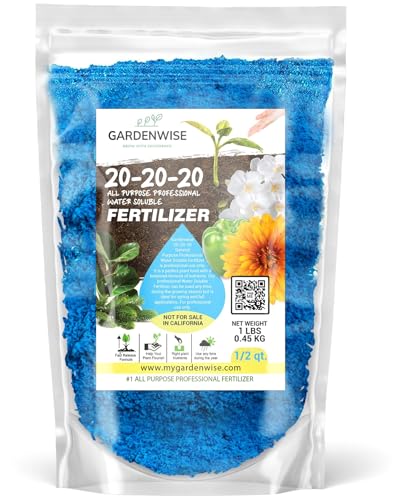
1. Gardenwise 20-20-20 Water-Soluble Fertilizer
Our pick — over 4.5★ from 750+ verified ratings; the strongest balance of quality and price.
The one-pound powerhouse that turns a single scoop into a whole garden’s worth of lush growth.
Owners credit this fertilizer for One buyer showed off a plant that grew from a modest October cutting to a towering June centerpiece., calling the growth “wonderful.” Quality is the most-discussed trait by a wide margin, with dozens of owners noting how reliably it delivers healthy plants.
It dissolves almost instantly in water, which matters when you are mixing a batch for orchids and vegetables alike. Indoor plants get a gentle ½ teaspoon per gallon, while outdoor beds step up to 1 tablespoon—the same bag covers both without guesswork. It is safe for kids and pets once the treated area dries, a detail that matters in busy households.
Buyers report new growth points and unfurling leaves within days of first feeding., and several mention their geraniums and violets looking better than they have in years. The formula is versatile enough for lawns, roses, and tomatoes, making it the rare one-bag solution for a mixed garden.
What wins people over
- Dissolves cleanly with zero clumping
- Simple ½ tsp indoor dose prevents overfeeding
- One bag feeds houseplants, veggies, and lawns
Who should look elsewhere
- Heavy outdoor feeding drains the 1 lb bag fast
- Granules need measuring—not mess-free
The obvious first choice: if you want one balanced formula that works across your whole plant collection, this earns its top spot.
The honest limit: dedicated orchid collectors may prefer a larger bag, since the 16-ounce size disappears quickly with weekly outdoor feeding.
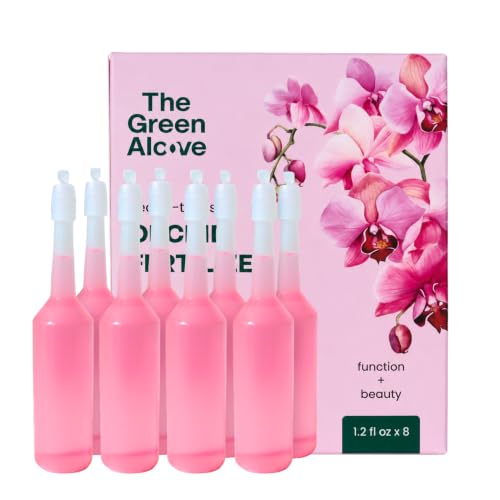
2. The Green Alcove Liquid Orchid Fertilizer Spikes
The pop-and-place feeder that rescues dying orchids without a single measuring spoon.
These spikes are the answer for anyone who has killed a plant with kindness—there is no mixing, no pouring, and no math. You pop the cap and place the feeder, and the 38 ml of liquid releases gently over up to 3 weeks, which dramatically reduces the risk of root burn that plagues over-eager powder feeders.
The rescue stories are the headline here. Owners describe Owners revived orchids that other feeding methods had failed to help., with Dark green leaves and new flower stems appeared after several weeks of steady feeding.. One gardener’s office orchids went from sickly to Sickly orchids sprouted new buds within 6 weeks of placing these spikes..
The 8-count pack is a direct trade-off against the powders above: you get convenience, but you pay for it in volume. Each feeder lasts roughly 3 weeks, so a single pack covers about 6 months of continuous feeding for one plant.
What makes it easy
- Slow release prevents accidental overfeeding
- No measuring, no mixing, no cleanup
- Visible bloom recovery typically appears within 4-6 weeks of use.
The trade-off
- 8 feeders go fast with multiple plants
- Growth results are more mixed than with powders
Reach for these if: you travel, forget feeding schedules, or just want the lowest-effort path to healthy orchids.
Look elsewhere if: you have a large collection—the per-feeder cost adds up fast compared to a powder that makes hundreds of gallons.
3. Peter’s 20-20-20 General Purpose Fertilizer (2 lb)

The decades-tested formula that keeps African violets blooming nonstop and houseplants thriving year-round.
Long-time growers swear by this one—one owner has used it for decades and reports their African violets bloom continuously and their greenhouse plants grow “lushly and flourish.” The micronutrient blend (trace elements beyond the big three NPK) is the differentiator, feeding overall plant vigor.
The feeding philosophy is different from the Gardenwise bag above: this one encourages a lighter touch. For houseplants, the recommendation is just a half tablespoon per gallon every one to two months—these plants simply do not need heavy feeding. Cannabis growers have also found it excellent for the vegetative stage at a full tablespoon per gallon.
Owners consistently note it never burns roots when used as directed, and several call it better than the big-box brands they previously used. The 2-pound bag lasts a long time at these low rates, so it is a strong value for indoor collections.
Why it stands out
- Micronutrients support overall plant health
- ½ tbsp per gallon is extremely economical
- Won’t burn roots at recommended strength
Keep in mind
- Feeding every 1-2 months requires schedule discipline
- Lower strength means slower visible results
Pick this for: a thriving indoor collection where gentle, consistent feeding beats aggressive dosing.
The one caveat: impatient gardeners who want dramatic week-over-week changes should expect a steadier, subtler improvement.
4. Peter’s Professional 20-20-20 (2 lb)
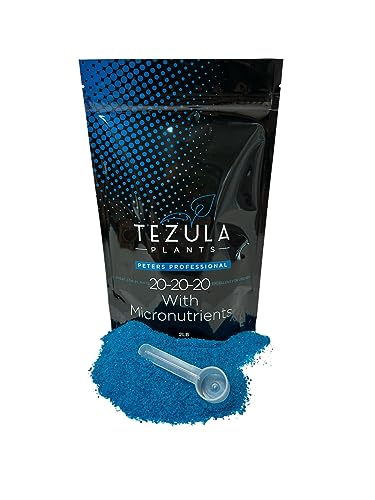
The weekly foliar-feeding favorite that makes potted roses and poinsettias visibly perk up within days.
This version of Peter’s comes in waterproof, airtight packaging with a measuring scoop included—a small detail that keeps the powder dry and the dosing consistent. Owners use it weekly as a foliar feed, spraying the leaves directly, and report their potted roses and poinsettias “really perked up” at the prescribed rate.
It dissolves easily and a little goes a long way, which is the recurring theme across reviews. One long-time user confirms the new packaging delivers “the same results as 30 years ago,” proof of the formula’s staying power. It is equally at home indoors on houseplants and outdoors in a potted vegetable garden.
Unlike the 32-ounce version above, this 2-pound bag is built for more frequent feeding—weekly use on vegetables and flowers makes the larger size the smarter buy for active gardeners. The scoop removes the guesswork of finding a measuring spoon.
Best for weekly feeders: if you already water on a schedule, this dissolves cleanly and delivers visible foliage and growth gains.
The catch: at weekly strength it disappears faster than the lighter-dose version, so budget for more frequent reorders.
Choose this for: gardeners who spray-feed their flowers and vegetables every week and want the measuring scoop included.
skip it if: you only have a couple of orchids—the 2-pound volume is more than a small collection needs.
5. Grow More All Purpose Orchid Fertilizer (20 oz)
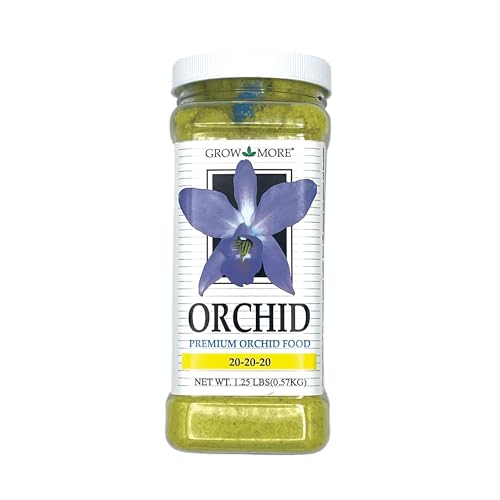
The orchid specialist whose chelated nutrients turned dormant plants into two new flower spikes in weeks.
This is the formula designed specifically for all orchid types—cattleyas, vandas, dendrobiums, and even slab-mounted epiphytes with exposed roots. The chelated nutrients (copper, iron, manganese, and zinc bound for easy absorption) are the standout feature, ensuring orchids boost every drop of nutrition.
The results speak in dramatic before-and-afters: owners mention switching from a popular big-box brand and seeing Tiny buds reportedly grow into large blooms within a week of feeding.. Dormant orchids that had not spiked in months produced 2 new flower stems after regular feeding..
The mixing is simple—1 teaspoon per gallon—and the 20-ounce container lasts over a year for the average orchid owner. It dissolves easily and works across soil, bark, gravel, or inorganic cultures, making it the most versatile orchid-specific option in this lineup.
What makes it the orchid pick
- Chelated trace minerals boost nutrient uptake
- Works on every orchid type and mounting style
- 1 tsp per gallon is easy to remember
The limitation
- Orchid-focused—not the best multi-purpose option
- 20 oz is smaller than the all-purpose bags above
Best for dedicated orchid growers: the chelated formula and species coverage make this the most targeted choice here.
Think twice if: you need one bag for the whole garden—the all-purpose picks stretch further.
6. Peters Professional 20-20-20 (3 lb)

The original Peters formula, packed in three 1-pound zip bags, that professional growers have trusted for decades.
This is the classic “original Peters Fertilizer” that has been a professional staple for years—one orchid book recommended it, and growers who could not find it in garden centers were thrilled to locate it here. The 3-pound package splits into three 1-pound zip-seal bags, keeping the powder fresh and making it easy to grab one bag for the season.
This is among the most versatile products in the Peters line, handling orchids, roses, shrubs, vegetables, landscape plants, and potted plants alike. The standard rate is 1 teaspoon per gallon, and tomato growers report faster fruit set with that low rate, ripening fruit by late June in East Tennessee.
Owners who have used the formula for three seasons call it the best they have tried, with peppers and houseplants both thriving on a simple weekly watering schedule. The 48-ounce total makes it the better value for anyone feeding a varied garden rather than a single orchid.
The workhorse: one bag feeds orchids, tomatoes, peppers, and shrubs with equal success—the definition of all-purpose.
The storage plus: three separate zip bags mean you never expose the whole supply to moisture.
Choose this if: you grow a mix of edibles and ornamentals and want a trusted, professional-grade formula.
Not ideal for: single-plant orchid owners who will struggle to use 3 pounds before it loses potency.
7. ENVY All-Purpose Plant Fertilizer (5 lb)
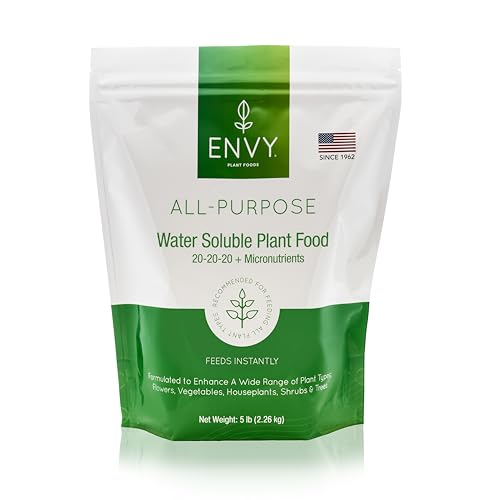
The five-pound bag that makes 500 gallons of feed—a year-plus supply for the most avid indoor gardener.
This is the long-haul value play. The 5-pound pouch makes 500 gallons of fertilizer solution, and a 1.5-pound portion lasts over 6 months for a serious indoor gardener. The resealable pouch with a measuring scoop has been a design staple since 1962, so storage and ease of use are baked into the product.
The balanced 1:1:1 ratio keeps plants green without the burn risk when diluted as directed—1 teaspoon per gallon. Customers note noticeable results within weeks, with one user’s houseplants thriving after 9 months of use and the bag barely dented. The formula is pet-safe and free of unnecessary chloride fillers, a detail ingredient-conscious growers notice.
It covers an extensive list of plants: roses, fiddle leaf figs, bonsai, geraniums, pothos, peace lilies, orchids, dracaenas, anthuriums, and lucky bamboo. Even freeze-damaged oak trees responded to root-zone applications, showing the formula’s reach beyond houseplants.
Why it wins on value
- 5 lb makes 500 gallons—the best cost-per-feed here
- Resealable pouch keeps granules dry
- Pet-safe and free of chloride fillers
The honest caveat
- Minimal burn reported if overused—stick to the 1 tsp dose
- Mixed feedback on plant health at high frequency
Buy this for: the biggest bang per gallon—ideal for big collections, outdoor beds, and anyone tired of reordering small bags.
Consider the others if: you want orchid-specific chelation or a smaller commitment you will actually finish.
Understanding the Specs
The NPK Ratio (20-20-20)
These three numbers stand for nitrogen, phosphorus, and potassium—the primary nutrients plants need. Equal parts of each is the safe, balanced choice for orchids because it supports leaves, roots, and blooms together without pushing one at the expense of another.
Water Soluble vs. Slow Release
Water-soluble powders dissolve instantly and feed on contact, giving you precise control over strength. Slow-release spikes meter out food gradually over weeks, which protects against root burn but offers less control. Your watering habit should decide which one fits.
FAQ
How often should I feed my orchid with 20-20-20 fertilizer?
Will 20-20-20 fertilizer burn my orchid roots?
What is the difference between powder and liquid orchid fertilizer spikes?
Can I use 20-20-20 fertilizer on plants other than orchids?
How long does a bag of 20-20-20 fertilizer last?
Is it safe to use 20-20-20 fertilizer around pets?
What is the best mixing ratio for feeding orchids with powder?
Why are my orchid leaves growing but no flowers appear?
Final Thoughts: The Verdict
For most buyers, the 20-20-20 orchid fertilizer winner is the Gardenwise because it balances proven results, simple dosing, and versatility across a whole plant collection. If you want the convenience of no measuring at all, grab the Green Alcove Spikes. And for dedicated orchid growers chasing maximum blooms, the chelated formula in Grow More is the one to reach for.
How We Picked
We do not accept paid placement. Every pick is matched to a real buyer and a real use-case; we do not hands-on test units.
Sources & Methodology
Specifications: manufacturer listings and product documentation. Review insights: verified customer reviews, as of August 2026. Pricing: not shown on this page (it changes often); check the current price via the retailer link.
As an Amazon Associate, Gadgets Feed earns from qualifying purchases. This does not affect which products we feature.