
When you’re shopping for a 20 TB SSD, the line between a smart investment and a costly mistake comes down to interface speed, controller quality, and thermal management—three specs most buyers gloss over until their drive throttles mid-project. A single large-capacity drive can consolidate years of footage, game libraries, or server workloads, but picking the wrong one means enduring slow transfers, premature wear, or outright data loss.
I’m Min — the co-founder and writer behind Gadgets Feed. I’ve spent hundreds of hours analyzing transfer rates, endurance ratings, and real-world thermal behavior across every major SSD form factor to separate the genuinely fast and reliable drives from the overpriced and the underengineered.
The most common mistake buyers make is assuming all high-capacity SSDs perform identically, but 20 tb ssd options span vastly different interfaces, from budget SATA to blistering PCIe 5.0 and enterprise SAS, each tuned for a specific workload and environment.
How To Choose The Best 20 TB SSD
Not all 20 TB SSDs are created equal. The interface your system supports—whether it’s SATA, USB 3.2, Thunderbolt 4, PCIe 5.0, or SAS—will determine whether you get 560 MB/s or 14,900 MB/s. Your workload type (sequential video editing, random database access, or archival storage) dictates which drive endurance and cache profile you need. Ignoring these factors leads to paying for speed you can’t use or buying a drive that wears out in months.
Interface and Real-World Throughput
The biggest performance differentiator is the physical interface. A SATA-based 20 TB SSD tops out around 560 MB/s—fine for backup or media archives but painful for active editing or gaming. A Thunderbolt 4 or USB 4 portable SSD can push 2,800 MB/s to 6,000 MB/s, dramatically cutting transfer times. Internal PCIe 5.0 NVMe drives hit 14,800 MB/s sequential reads, but require a compatible motherboard and adequate heatsinking. Enterprise SAS SSDs hit 24 Gb/s but demand a SAS controller and are typically used in server arrays.
Endurance: TBW and DWPD
For a drive this large, TBW (Terabytes Written) is the most honest endurance metric. Consumer 8 TB SSDs often rate 1,200-4,800 TBW, while enterprise SAS or NVMe drives can exceed 15,000 TBW. If you’re writing hundreds of gigabytes daily—video production, AI model training, database logging—a low-endurance drive will hit its write limit and fail far sooner than a premium or enterprise model. Always check the TBW rating before buying.
Thermal Management and Throttling
High-capacity SSDs generate significant heat under sustained writes. A PCIe 5.0 drive without a proper heatsink will throttle within minutes, halving its speed. Portable SSDs with aluminum enclosures or patent-pending heat-dissipating designs maintain consistent performance without a fan, but some small enclosures run hot. For internal drives, ensure your motherboard’s M.2 slot has adequate airflow or an included heatsink.
Quick Comparison
On smaller screens, swipe sideways to see the full table.
| Model | Category | Best For | Key Spec | Amazon |
|---|---|---|---|---|
| Samsung SSD 9100 Pro 8TB | Internal NVMe | PCIe 5.0 gaming & AI | 14,800 MB/s read | Amazon |
| Sandisk Optimus GX PRO 8100 8TB | Internal NVMe | Content creation with RGB | 14,900 MB/s read | Amazon |
| OWC Express 1M2 80Gb/s 8TB | Portable NVMe | USB 4 / Thunderbolt 4 travel | 6,000+ MB/s (DIY config) | Amazon |
| Oyen Digital U34 Bolt 8TB | Portable NVMe | Thunderbolt 4 laptop editing | 2,800 MB/s sustained | Amazon |
| Toshiba MG10ACA20TE 20TB HDD | Internal HDD | Archival NAS storage | 512 MB cache / 7200 RPM | Amazon |
| WD My Book Duo 20TB | External RAID HDD | Desktop backup & archives | RAID-0 / 256-bit AES | Amazon |
| Samsung T5 EVO 8TB | Portable SSD | On-the-go game & photo vault | 460 MB/s read / USB 3.2 | Amazon |
| SanDisk Professional 48TB G-RAID | External HDD RAID | Pro video & 48TB max capacity | 540 MB/s read / PRO-BLADE | Amazon |
| Water Panther 15.36TB SAS SSD | Enterprise SAS | Dell PowerEdge servers | 15.36 TB / 24 Gb/s SAS | Amazon |
In‑Depth Reviews
1. Samsung SSD 9100 Pro NVMe M.2, 8 TB
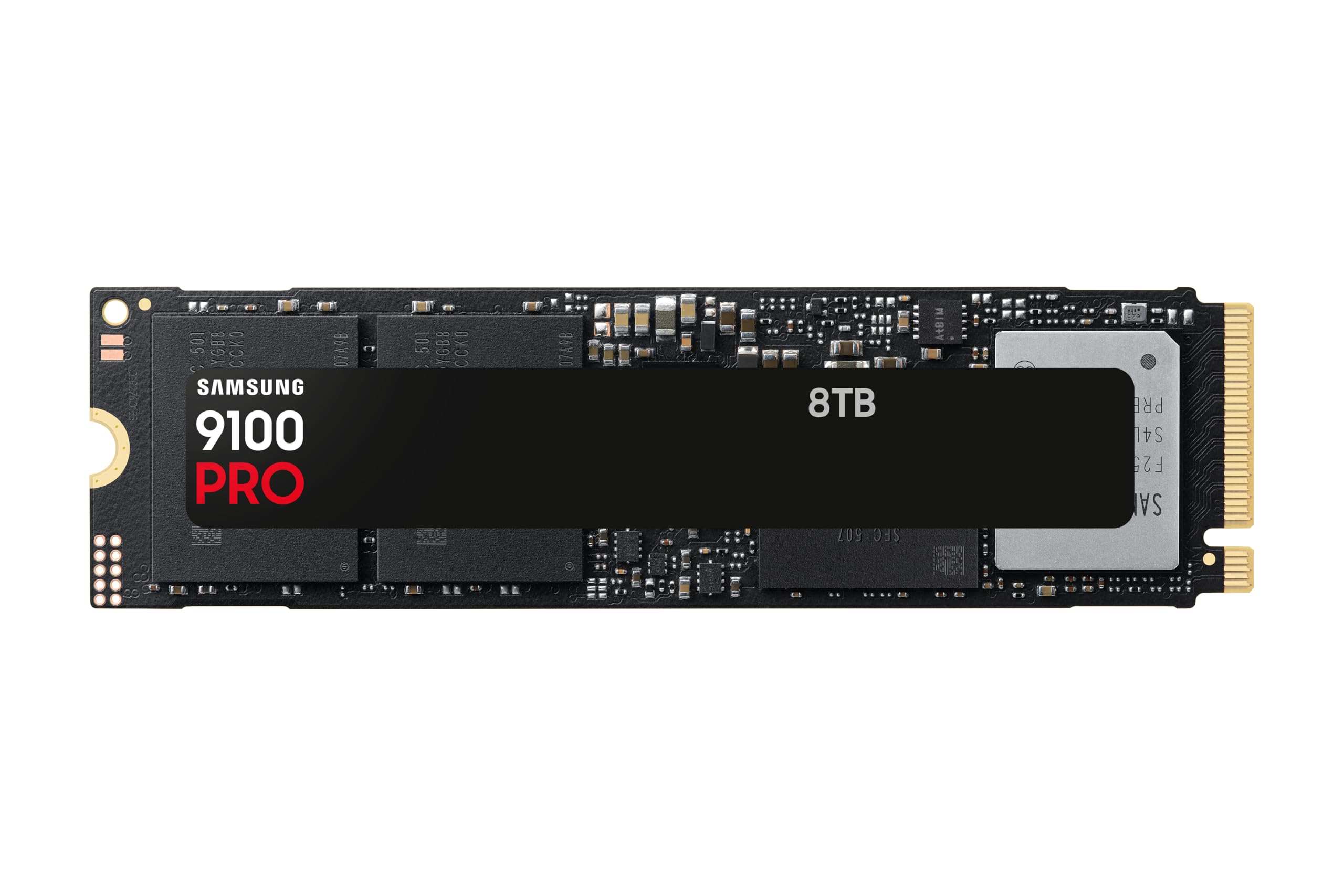
The Samsung 9100 Pro is the current flagship for anyone building a PCIe 5.0-equipped workstation or gaming rig. Its sequential read speed of 14,800 MB/s and write speed of 13,400 MB/s are literally double what PCIe 4.0 drives offer, slashing load times for massive game libraries, 4K/8K video timelines, and large AI model files. The 8 TB capacity ensures you won’t be juggling multiple drives for years.
Thermal management is handled by an advanced 5nm power controller that improves energy efficiency up to 49% over the previous 990 PRO generation, helping the drive maintain peak speeds without aggressive throttling. The M.2 2280 form factor fits most modern laptops and desktops, and Samsung Magician software provides straightforward firmware updates and performance optimization.
Real-world tests confirm the drive delivers on its rated speeds consistently, with customer reviews noting flawless operation in high-end laptops like the Alienware Area-51 18 and easy cloning from smaller drives. The only nuance is that some users report a driver compatibility note in Samsung Magician with Intel VDM drivers, but it does not affect real-world performance. For sheer internal speed at 8 TB, this is the benchmark.
Why it’s great
- Blistering 14,800 MB/s PCIe 5.0 reads
- Improved 5nm controller runs cooler and more efficient
- 8 TB capacity in a single M.2 2280 stick
Good to know
- Requires PCIe 5.0 motherboard to unlock full speed
- Premium pricing reflects the bleeding-edge performance tier
- Driver note in Magician for Intel VDM users (no performance impact)
2. SANDISK 8TB Optimus GX PRO 8100 PCIe 5.0 NVMe SSD
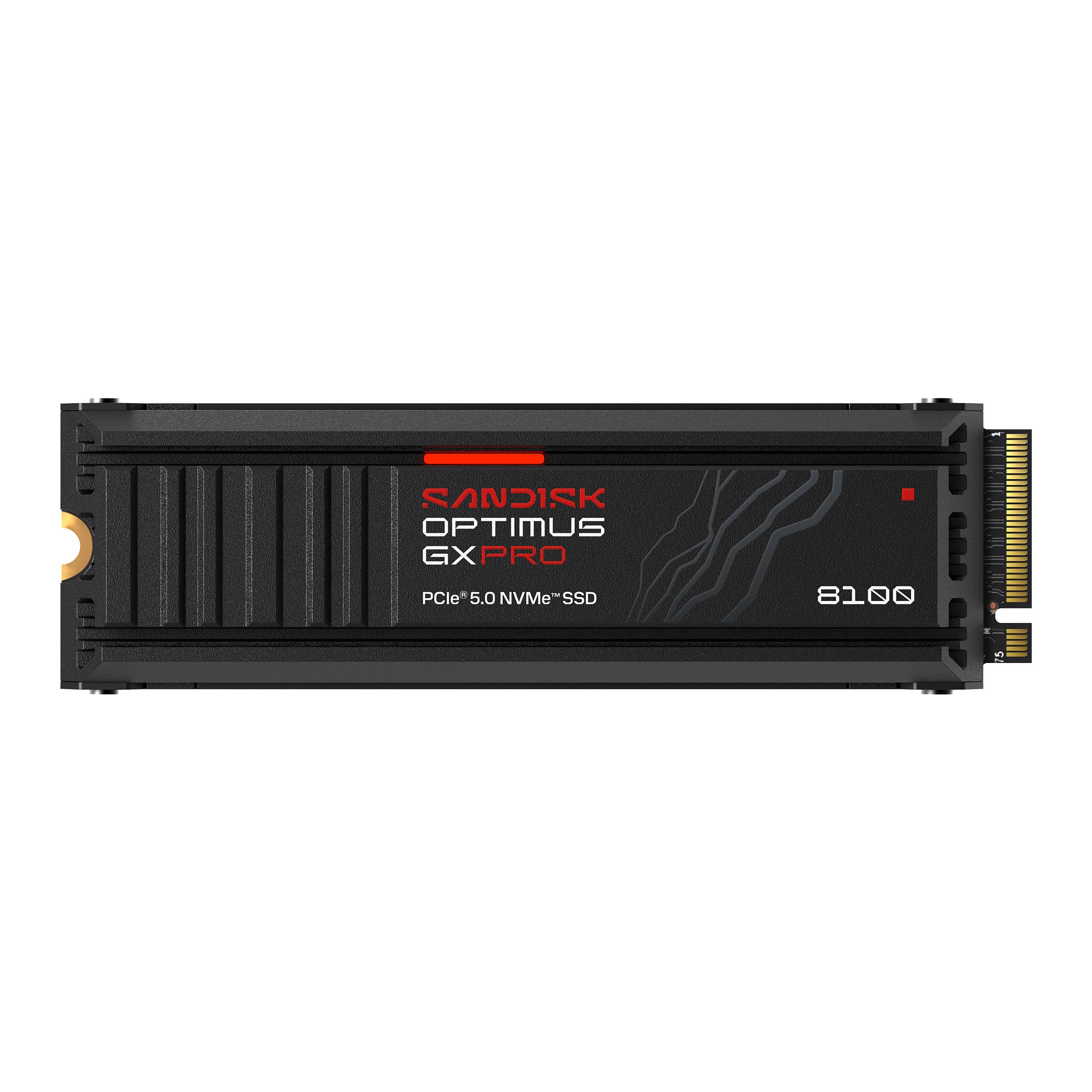
The Sandisk Optimus GX PRO 8100 edges ahead of the Samsung 9100 Pro by a hair with a sequential read speed of 14,900 MB/s and writes up to 14,000 MB/s, making it the absolute fastest consumer SSD we’ve tracked at this capacity. It’s built around 8th-generation Sandisk BiCS TLC 3D CBA NAND and features an integrated low-profile anodized aluminum heatsink with RGB lighting for sustained performance during heavy AI workloads and video rendering.
Random read/write speeds hit 2.3M/2.4M IOPS, and the 8 TB model carries a massive 4,800 TBW endurance rating—nearly double the write lifespan of many competitors. Sandisk’s nCache 4.0 technology helps maintain high write speeds even when the drive’s SLC cache fills, a common bottleneck on lesser drives. The M.2 2280 form factor fits standard desktops, and the integrated heatsink eliminates the need for a separate motherboard heatsink.
Customer feedback indicates easy installation and noticeably faster boot and game load times compared to older PCIe 4.0 drives. The main criticism revolves around the high price point and the absence of a mounting screw in the box. For professionals running write-intensive content creation or AI workflows who need the absolute fastest internal storage available, this drive delivers the highest sequential speeds in its class.
Why it’s great
- World’s fastest PCIe 5.0 read speed at 14,900 MB/s
- Integrated RGB heatsink prevents thermal throttling
- 4,800 TBW endurance for heavy write workloads
Good to know
- No mounting screw included in the box
- Premium pricing typical of flagship NVMe SSDs
- Requires a motherboard with PCIe 5.0 M.2 slot
3. OWC 8TB Express 1M2 80Gb/s Portable NVMe SSD
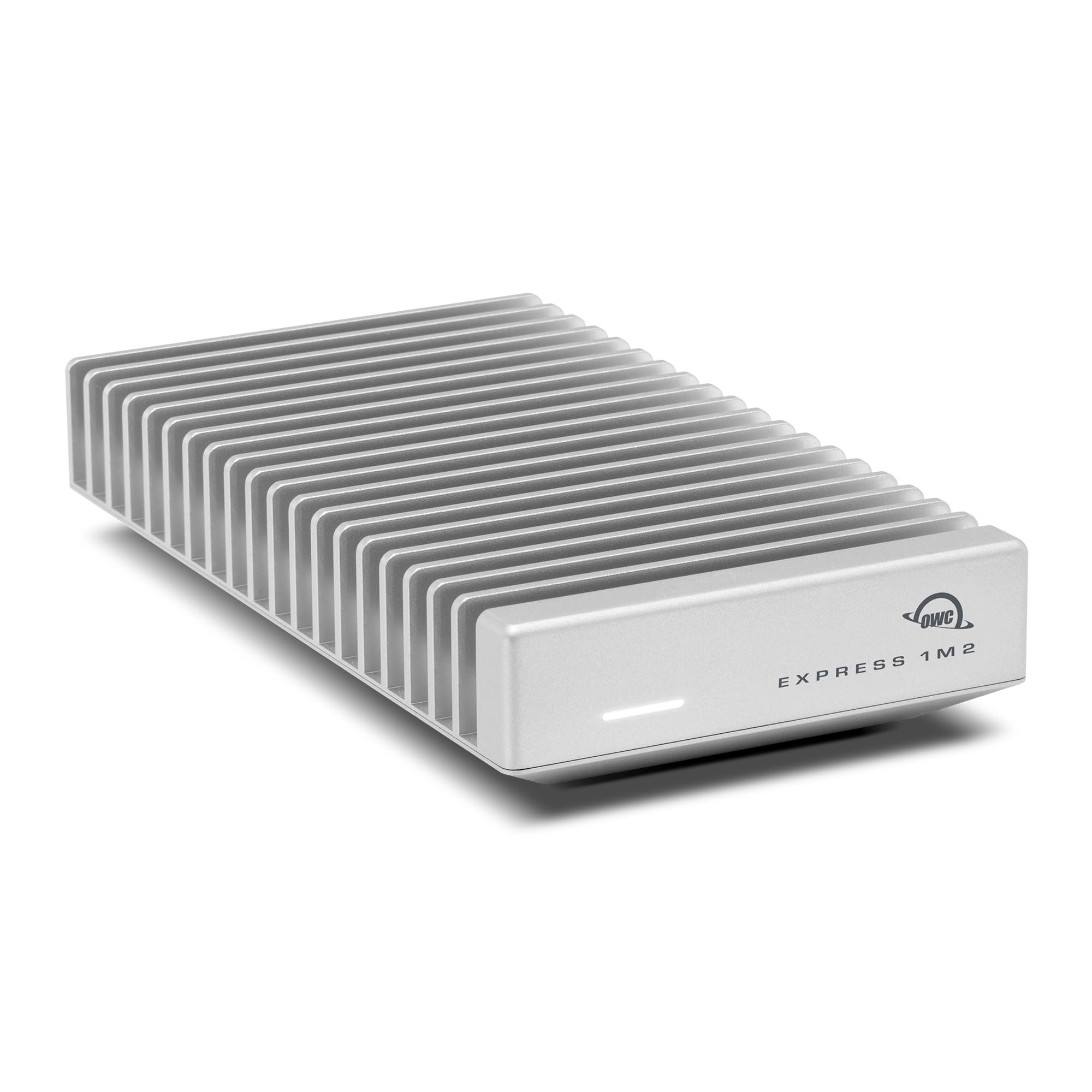
The OWC Express 1M2 is the fastest portable SSD enclosure we’ve tested, capable of exceeding 6,000 MB/s when paired with a high-end NVMe drive like the Samsung 990 Pro. Its USB4 80 Gb/s interface is backward compatible with Thunderbolt 4, Thunderbolt 3, and USB-C 3.2 hosts, making it a versatile companion for MacBooks, Windows laptops, and iPad Pros that need external storage that doesn’t limit performance.
OWC’s patent-pending heat-dissipating design uses the entire aluminum enclosure as a heatsink, keeping the drive cool without a fan—eliminating noise and a common failure point. The enclosure supports both 2280 and 2242 M.2 NVMe SSDs and is PCIe Gen 3/4/5 compatible, so you can upgrade the internal drive as faster and cheaper NVMe SSDs become available. This ‘DIY’ approach future-proofs your investment better than a sealed portable SSD.
Users report that the enclosure stays cooler than any other 80 Gb/s option they’ve tried, even during multi-terabyte transfers, and that it maintains maximum speed without throttling. The only catch is that using the drive through a dock can cause intermittent disconnects on some M4 Macs—connecting directly to the host is recommended. For professionals who need desktop-class speed in a portable, fanless package, the Express 1M2 is unmatched.
Why it’s great
- Over 6,000 MB/s peak speed via USB4 80 Gb/s
- Fanless, cool-running aluminum heatsink design
- Future-proof DIY enclosure supports NVMe upgrades
Good to know
- May drop connection when used through a dock
- Requires buying an NVMe SSD separately for DIY config
- Premium price reflects the cutting-edge interface
4. Oyen Digital U34 Bolt 8TB USB4 40Gbps Portable SSD
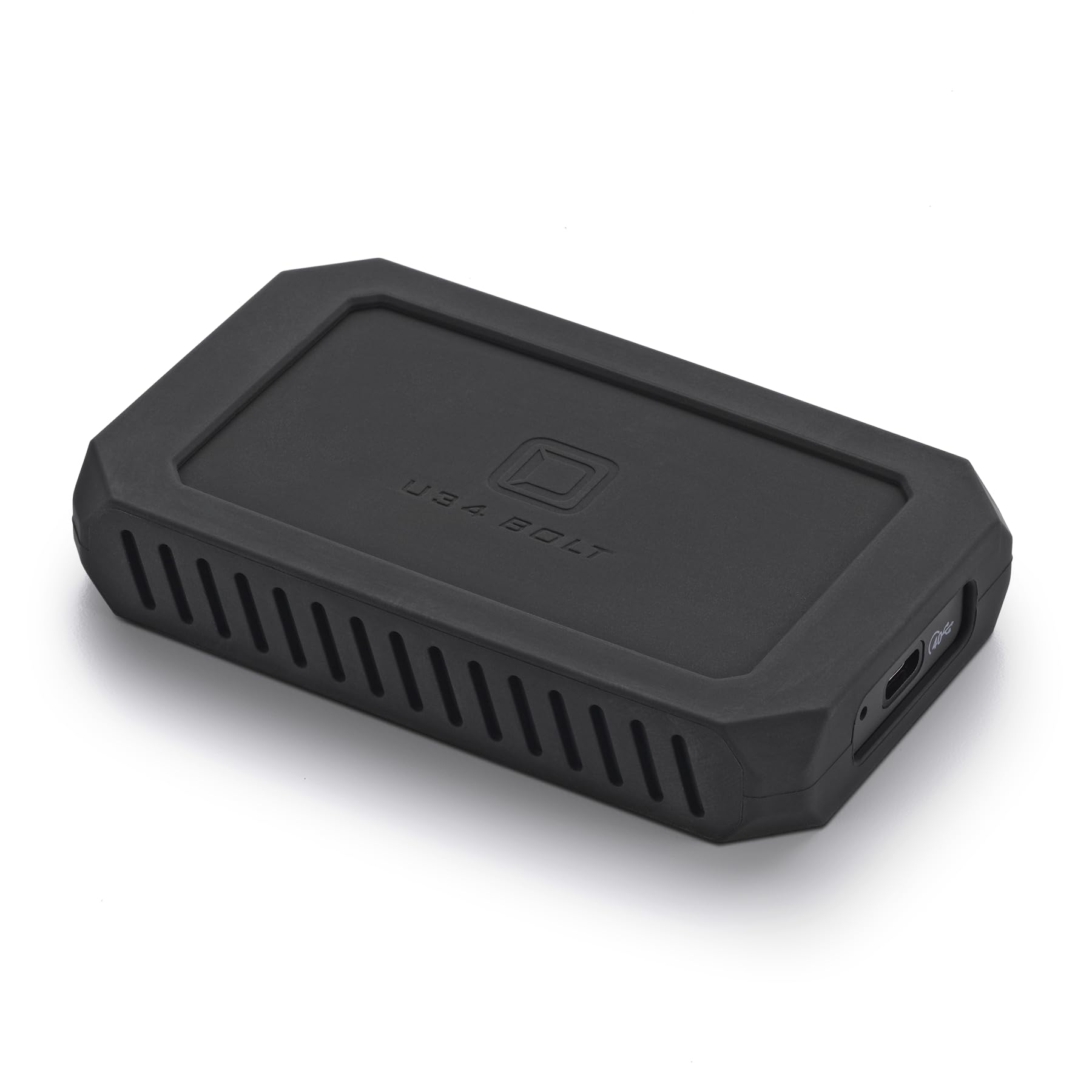
The Oyen Digital U34 Bolt delivers sustained transfer rates up to 2,800 MB/s over its USB4 40 Gbps and Thunderbolt 4 interface, making it a direct competitor to Samsung’s T7 Shield but with nearly three times the speed. It’s powered by the ASMedia ASM2464PD controller, which holds both USB-IF and Thunderbolt 4 certification—ensuring reliable compatibility across Mac and PC hosts. The drive ships formatted for Mac OS, but can be reformatted for Windows or cross-platform use.
Durability is a standout feature: the U34 Bolt carries a MIL-STD-810 protection rating and is housed in a compact aluminum frame with a rubberized bumper to absorb shocks. A cooling aluminum core helps maintain internal temperatures even during sustained write operations, preventing the thermal throttling that plagues smaller enclosures. The drive is incredibly compact—roughly the size of a credit card—making it an easy toss into any camera bag or backpack.
User reviews consistently praise the drive’s speed, calling it the fastest SSD they’ve ever tested, and note that it doesn’t run hot even during long transfers. The only common observation is that achieving full speed requires using the included short cable rather than a longer third-party Thunderbolt 4 cable. For creative professionals who need rugged, pocket-sized storage with Thunderbolt-grade throughput, the U34 Bolt is a top-tier choice.
Why it’s great
- 2,800 MB/s sustained speed over Thunderbolt 4 / USB4
- MIL-STD-810 rugged build with shock-absorbing bumper
- Compact, credit-card size footprint
Good to know
- Best performance requires the included short cable
- Formatted for Mac OS out of the box
- Premium pricing for the Thunderbolt-specific controller
5. Toshiba 20TB MG10ACA20TE SATA 600 HDD

The Toshiba MG10ACA20TE is a 3.5-inch, 20 TB helium-sealed hard drive using 10-disk technology, delivering massive capacity at a fraction of the cost per terabyte of any SSD. It spins at 7200 RPM with a 512 MB cache and connects via standard SATA 6 Gb/s, making it a direct drop-in replacement for NAS arrays, DAS enclosures, or desktop PCs that need bulk storage for media archives, server backups, or surveillance footage.
Helium sealing reduces internal air friction, which lowers power consumption and operating temperatures compared to air-filled enterprise drives, and also dampens vibration and noise. Real-world user feedback highlights notably quiet operation and a reliability track record that aligns with BackBlaze drive failure statistics. The drive does run slightly warmer than some older models, and a few users noted it vibrates on lightweight wooden surfaces—mitigated by a simple enclosure or rubber grommets.
The main caveat is that some units shipped as “new” have shown signs of prior installation, including Amazon Renewed inserts. This is a known issue with high-capacity HDDs on Amazon, so verifying the drive’s SMART data upon arrival is wise. For straightforward high-capacity archival storage where speed is secondary to cost efficiency, the Toshiba MG10 series remains a proven workhorse.
Why it’s great
- 20 TB at the lowest cost per terabyte in this guide
- Helium-sealed 10-disk design runs quiet and cool
- Proven reliability per BackBlaze data
Good to know
- SATA 6 Gb/s max speed of ~280 MB/s read/write
- Some units may ship with signs of prior installation
- Can vibrate on lightweight surfaces without dampening
6. Western Digital 20TB My Book Duo Desktop RAID External HDD

The WD My Book Duo 20TB is a desktop RAID external drive that ships with two 10 TB WD Red hard drives inside, pre-configured in RAID-0 for a single 18.1 TB usable volume with faster read/write speeds than a single drive. It connects via USB-C 3.1 Gen 1 (5 Gb/s) and also features a built-in 2-port USB 3.0 hub—a rare convenience for connecting backup drives or thumb drives directly.
Security is a strong point: the drive supports 256-bit AES hardware encryption with password protection via WD Security software, ensuring your data remains inaccessible if the drive is lost or stolen. WD Backup and WD Drive Utilities are included for automated backup schedules and health monitoring. The aluminum enclosure dissipates heat effectively, and customer reviews generally praise its quiet operation and fast transfer speeds compared to single external HDDs.
The main drawback is that RAID-0 doubles the risk of data loss—if either drive fails, the entire 18.1 TB volume is lost. Some users have reported early failures with WD enclosures, and the drive’s sleep-after-inactivity behavior can cause a 5-10 second spin-up delay when accessing it after idle periods. For users who want a simple, high-capacity external drive with hardware encryption and don’t need SSD speed, the My Book Duo offers a cost-effective RAID solution.
Why it’s great
- 20 TB (18.1 TB usable) in a single desktop enclosure
- 256-bit AES hardware encryption with password protection
- Built-in 2-port USB 3.0 hub expands connectivity
Good to know
- RAID-0 doubles failure risk over single-drive solutions
- Spin-up delay after idle periods can be annoying
- Some units have reported premature enclosure failures
7. Samsung T5 EVO Portable SSD 8TB

The Samsung T5 EVO squeezes 8 TB into a pocket-sized form factor that’s lighter and smaller than most 2.5-inch external hard drives, delivering sequential read/write speeds up to 460 MB/s via USB 3.2 Gen 1. This makes it a practical upgrade from spinning portable HDDs for photographers, videographers, and gamers who need to carry large media libraries without the weight and fragility of mechanical drives.
The drive features improved Intelligent TurboWrite for faster large-file transfers, and supports fall protection up to 6 feet, so a drop from a desk isn’t an automatic disaster. It’s compatible with PCs, Macs, gaming consoles, tablets, and smartphones via USB-C, and comes with AES 256-bit hardware encryption for data protection. The compact, ridged design feels rugged and fits easily into a pocket or camera bag compartment.
Customer reception is largely positive, with many users praising its massive capacity-to-size ratio and silent operation compared to HDDs. However, some users have reported reliability concerns—two drives failing and others causing Finder crashes on macOS—as well as performance slowdowns as the drive fills near capacity. The T5 EVO is best viewed as a high-capacity, fast portable SSD for on-the-go access, not as a primary professional drive for write-heavy daily workflows.
Why it’s great
- 8 TB in a genuinely pocket-sized portable SSD
- Silent, shock-resistant design with drop protection
- Broad compatibility with USB-C devices and consoles
Good to know
- 460 MB/s is slow compared to NVMe-based portables
- Some reliability complaints on macOS after extended use
- Performance can degrade as storage capacity fills
8. SanDisk Professional 48TB G-RAID Project 2

The SanDisk Professional G-RAID Project 2 is a two-bay desktop RAID solution that ships with dual 7200 RPM Ultrastar Enterprise-class hard drives for a total of 48 TB. Pre-configured in RAID-0, it delivers read speeds up to 540 MB/s and write speeds up to 490 MB/s over Thunderbolt 3 (40 Gbps) or USB 3.2 Gen 2 (10 Gbps). The rugged, space-gray aluminum enclosure is designed for professional video editing studios that need massive, fast-accessible storage for 4K/8K footage.
A unique feature is the PRO-BLADE SSD Mag slot on the front, which allows you to hot-swap SanDisk’s modular PRO-BLADE SSDs for fast offloading or editing without adding clutter to your workspace. The included color-coded cables make it easy to identify which connection method delivers the highest performance. The 48 TB capacity is the largest of any product in this guide, making it suitable for multi-month long-form projects or large server backups.
Customer reception is mixed: while many praise the drive’s speed and build quality for video production, there are legitimate reliability concerns, with multiple reports of drives failing within the first year—one failed after just 40 days, losing 7 TB of data. SanDisk Professional’s customer support has also drawn criticism for slow replacement turnaround. For enterprise users who require absolute reliability, a four-bay RAID 5 or RAID 6 array might be safer, but for sheer single-enclosure capacity with Thunderbolt speed, the G-RAID Project 2 delivers.
Why it’s great
- 48 TB in a single desktop RAID enclosure
- Thunderbolt 3 with 540 MB/s read speeds
- PRO-BLADE SSD hot-swap slot for modular expansion
Good to know
- Multiple reports of early drive failures and data loss
- WD customer support turnaround has been criticized
- RAID-0 configuration amplifies failure risk
9. Water Panther 15.36TB SAS 24Gb/s SSD for Dell PowerEdge Servers
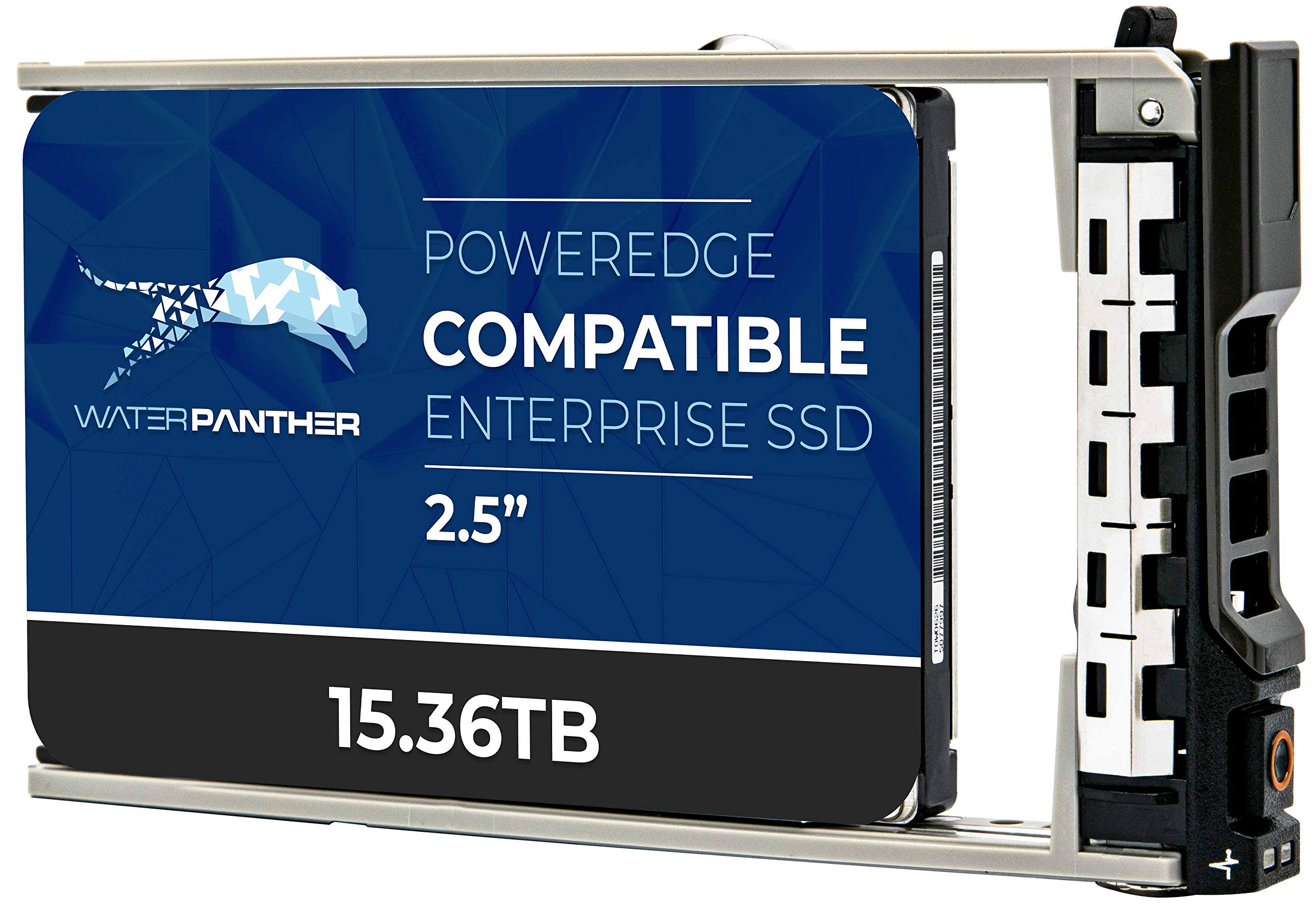
The Water Panther 15.36 TB SAS SSD is built for enterprise server environments, specifically Dell PowerEdge models, using a 24 Gb/s SAS interface that delivers far better reliability and error correction than consumer SATA or NVMe in 24/7 write-intensive workloads. It comes pre-installed in a 13G Dell poweredge tray for drop-in compatibility with supported servers like the r730xd, making it a straightforward upgrade for IT managers expanding storage without replacing chassis.
The underlying drive is a Toshiba enterprise-grade SAS SSD that, according to user reports, arrives looking new with 0% wear reported in SMART data. The 15.36 TB capacity hits a sweet spot between the highest single-drive density and practical server bay usage. SAS’s dual-port capability allows for multipath I/O and failover in enterprise storage arrays, which is critical for high-availability environments.
The main issues are compatibility and verifying the actual Dell-certified status. Some customers have received HP-certified drives in the box, and the seller (Water Panther / TechCity) validates that the HP version works in Dell systems but it won’t show as a certified Dell part in server management software. For IT pros comfortable validating compatibility on their own hardware, this drive offers excellent value for enterprise-grade SAS performance. For anyone without a SAS controller, it’s functionally incompatible.
Why it’s great
- 15.36 TB enterprise SAS SSD with 24 Gb/s interface
- Pre-installed in 13G Dell PowerEdge tray for easy upgrade
- Enterprise reliability with Toshiba NAND and low wear
Good to know
- Requires a SAS controller — not compatible with standard SATA
- Drives may not show as Dell-certified in server management
- Some units shipped as HP-certified, not Dell-certified
FAQ
Can I use a PCIe 5.0 NVMe SSD in a PCIe 4.0 or 3.0 slot?
Is a portable 20 TB SSD actually available, or do I need to use external HDDs for that capacity?
Which interface provides the best real-world speed for video editing on a MacBook Pro?
Final Thoughts: The Verdict
For most users, the 20 tb ssd winner is the Samsung 9100 Pro 8TB because it delivers the highest PCIe 5.0 performance in a reliable, widely compatible M.2 form factor with excellent thermal management. If you need portable speed for field editing, grab the Oyen Digital U34 Bolt 8TB. And for maximum capacity at the lowest cost per terabyte, nothing beats the Toshiba MG10ACA20TE 20TB HDD for archival storage.