
Our readers keep the lights on and my morning glass full of iced black tea. As an Amazon Associate, I earn from qualifying purchases.
Specs are compiled from manufacturer listings and verified buyer reviews and can change over time — please confirm the key details on the product page before buying.
Choosing the right service panel for your home’s electrical system is a decision that will sit behind your wall for decades. The main breaker panel is the heart of your home’s wiring, routing power to every circuit and protecting your family from overloads and short circuits. Get it wrong and you’ll face a cramped box with no room to grow, a failed inspection, or worse — a safety hazard.
I’m Min — the founder and writer behind Gadgets Feed. This guide is built by comparing the manufacturers’ published specifications and the patterns across verified customer reviews, so you get each pick’s real strengths and trade-offs instead of marketing spin.
Whether you are building a new home, upgrading an old fuse box, or adding a sub-panel to a garage, the right 200 amp service panel needs enough spaces for today’s loads and tomorrow’s additions, plus a straightforward installation process that doesn’t leave you scrambling for extra parts.
Our Picks at a Glance

How To Choose The Best 200 Amp Service Panel
A 200-amp service panel has to balance two things: enough breaker slots for your current needs, and the ability to add circuits later without an expensive swap. You also need to match the enclosure type — indoor or outdoor — and check if the panel comes with a dead-front cover or a rainproof box already installed. Here is what matters most.
Space Count and Circuit Count
A “20-space, 40-circuit” panel means you can install 20 full-size breakers, but you can also use tandem or quad breakers to double the number of circuits. More spaces let you run dedicated lines for appliances, EV chargers, and workshop tools without crowding. You get bending room for the wires, too — panels with over 4 inches of wire bending space are much easier to work in.
Plug-On Neutral Technology
Modern code requires arc-fault circuit interrupters (AFCIs) on most living-space circuits. A plug-on neutral panel has a neutral bar that runs the full length of the panel, so the breaker snaps onto both the hot bus and the neutral bar without a separate pigtail wire. Electricians widely consider this faster, neater, and less error-prone than older designs.
Bus Bar Material
Copper bus bars conduct electricity more efficiently and resist corrosion better than aluminum. Some manufacturers use tin-plated copper, which combines the conductivity of copper with extra corrosion resistance. Aluminum bus bars are common in entry-level panels and still meet code, but copper is generally regarded as a premium feature for long-term reliability.
Quick Comparison
| Model | Best For | Spaces / Circuits | Bus Bar Material | Weight | Amazon |
|---|---|---|---|---|---|
| Square D HOM2040M200PCVP★ Best Overall | Plug-on neutral value | 20 / 40 | Aluminum | — | Amazon |
| Leviton LP320-BPDSolid Value | Tool-free breaker swap | 30 / 30 | Tin-plated Copper | — | Amazon |
| ABB TM2020RCUBK1Top Outdoor Pick | Outdoor weatherproof | 20 / 40 | Copper | 32 lbs | Amazon |
| Square D HOM3060M200PQCVP | High capacity indoor | 30 / 60 | Aluminum | 34.8 lbs | Amazon |
| Siemens SN4060B1200 | Max circuits indoor | 40 / 60 | Alloy Steel | — | Amazon |
| Siemens PN3048B1200C | Copper bus premium | 30 / 48 | Copper | — | Amazon |
In‑Depth Reviews
1. Square D – HOM2040M200PCVP Homeline 200-Amp 20-Space 40-Circuit Indoor Main Breaker Load Center Value Pack
Our pick — over 4.5★ from 350+ verified ratings; the strongest balance of quality and price.
The panel that brings Square D quality and plug-on neutral convenience at a mid-range price point.
This indoor panel gives you 20 spaces and 40 circuits — enough room for a typical home plus a few future circuits — with a fully distributed neutral bar that lets you snap Homeline plug-on neutral combination arc fault breakers onto any space without a pigtail. The ground and neutral bars each accept up to three #10-14 equipment grounds, so you can land multiple small-gauge wires per screw, which keeps the wiring neat.
It comes with three HOM120 single-pole 20-amp breakers and two HOM230 double-pole 30-amp breakers already included, plus a combination flush/surface cover. Buyers report it was “delivered right to my house in 2 days and I was able to keep working.” One reviewer, a contractor’s spouse, said their electrician recommended ordering this panel online instead of buying at a big-box store — it arrived quickly and cost less.
The bus bar is aluminum, which is standard at this price tier and perfectly code-compliant, but if you strongly prefer copper you’ll want to look at the Siemens PN3048B1200C below. For most homeowners and electricians doing a straightforward service upgrade, this Homeline value pack balances cost and capability with a brand that inspectors know and trust.
What makes it click
- Plug-on neutral bar accepts AFCI breakers without pigtail wires
- Includes three 20A and two 30A breakers right in the box
- Each pole space accepts full-size, tandem, or quad breakers for expansion
One thing to know
- Aluminum bus bar rather than copper (still fully meets code)
Best for: Homeowners and pros who want a reliable 200-amp indoor panel with modern plug-on neutral wiring and a few breakers thrown in.
Skip if: You need an outdoor-rated NEMA 3R enclosure or you require a copper bus for a heavy-duty commercial build.
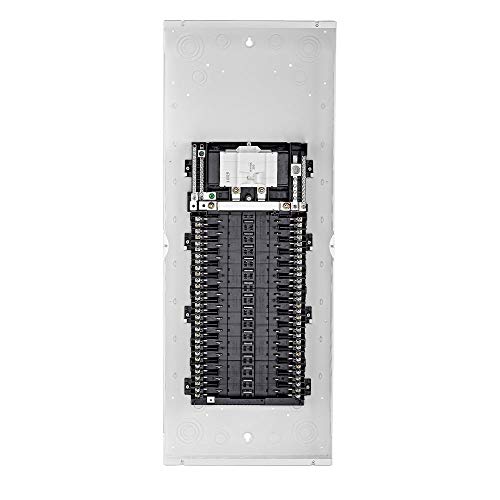
2. Leviton LP320-BPD 30-Space 30-Circuit Indoor Load Center with 200 Amp Main Circuit Breaker
The only panel on this list that lets you wire the entire box before snapping in a single breaker.
Leviton redesigned the load center from the ground up. The circuits are not tied directly to the breakers — instead, you land each hot and neutral wire into the panel itself, then snap the breaker onto the bus afterward. That means if a breaker ever goes bad, you literally pop it out and pop a new one in without touching any wiring. One reviewer called it “groundbreaking” and said “the trick is investing in the smart breakers so you can really see and control what’s going on.”
The bus is tin-plated copper for superior conductivity, and the white powder-coated finish is a sharp departure from the usual battleship-gray. The panel is also stamped with notches for cable ties, which makes bundling wires neat and organized — a detail electricians appreciate during rough-in. However, the door is sold separately. One buyer warned: “I just ordered a door and it cost me another that was not in the budget.” Make sure you factor in the cost of the cover if you want the finished look.
It offers 30 spaces and 30 circuits so it is best for homes where you need 30 individual breakers and want the cleanest, most serviceable interior on the market. The 10-year limited warranty adds confidence.
The breakthrough
- Breakers snap on and off without disconnecting wires — tool-free replacement
- Tin-plated copper bus offers superior conductivity over aluminum
- White finish and integrated cable tie notches give a clean, organized look
The catch
- Door sold separately — adds about to the total cost
- 30 spaces only — no tandem breakers means a hard limit of 30 circuits
Go for it if: You value serviceability and a clean installation — the Leviton design is genuinely easier to work on than any other panel here.
skip it if: You need more than 30 circuits or you want a panel with the cover included in the one-box price.
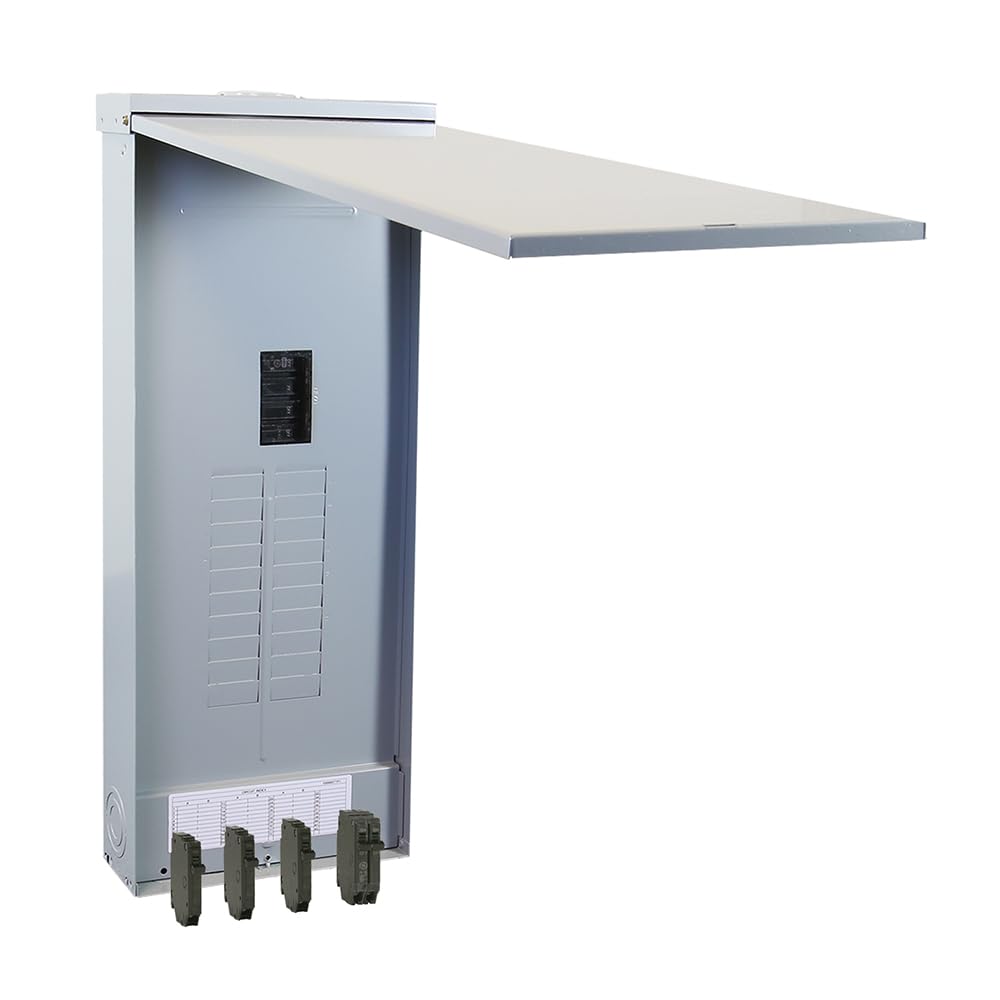
3. ABB TM2020RCUBK1 200A Main Breaker Load Center • PowerMark Gold Outdoor Panel
The outdoor 200-amp panel that arrives with the main breaker and four branch breakers already installed.
This ABB PowerMark Gold panel is built for outdoor service entrance applications. The NEMA 3R weather-resistant enclosure, made from galvanized steel, measures 33 inches tall and 13 inches wide — noticeably larger than the compact indoor Square D panels. It has a copper bus bar for excellent conductivity, and the factory-installed 200A main breaker comes with three THQP 20A single-pole breakers and one THQP 30A double-pole breaker included. The 40-circuit capacity (20 spaces) means you have plenty of room for future additions.
The wiring design features full-length neutral bars with 100% split neutral holes on each side, rated for #14–4 AWG wire. The one-piece interior is removable for bench wiring, and pre-loosened combination screws speed up the process. It supports 120/240V single-phase, 3-wire systems with a 22,000 AIC rating and is compatible with GE and ABB THQL, THQP, GFCI, and AFCI breakers. At 32 pounds, the ABB comes with a copper bus and a full outdoor rating — a clear upgrade for exterior mounts.
Buyers have not posted reviews yet, so we rely on the specs: this panel is ready to surface-mount on an exterior wall with top or bottom feed, and closure caps are included to seal unused knockouts. If you need a 200-amp outdoor panel with a copper bus and you want the main breaker plus a few starter breakers in the box, this is the one.
Built for outdoors
- NEMA 3R weather-resistant galvanized steel enclosure
- Copper bus bar for high conductivity and corrosion resistance
- Includes main breaker plus three 20A and one 30A branch breaker
Size note
- At 33″ tall it is significantly larger than compact indoor panels — confirm your mounting space
Best for: Outdoor residential service entrance where weather resistance and a copper bus are non-negotiable.
Skip if: You are installing indoors and do not need the NEMA 3R rating or the larger footprint that comes with it.
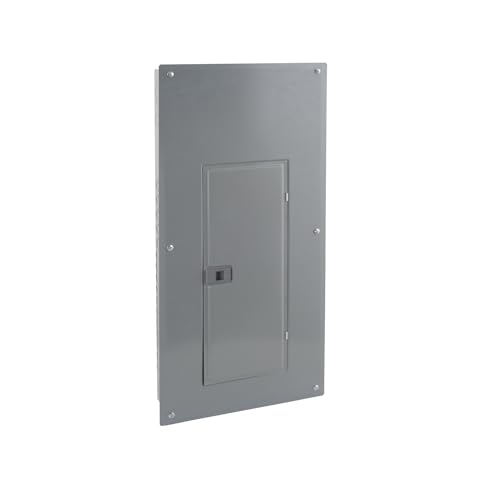
4. Square D by Schneider Electric HOM3060M200PQCVP Homeline 200 Amp 30-Space 60-Circuit Indoor Main Breaker Qwik-Grip Value Pack
Thirty spaces and a 60-circuit capacity make this Square D panel the go-to for big homes and shops.
If you have a large house, a home workshop, or plan to add an EV charger, heat pump, and a generator transfer switch, this 30-space, 60-circuit panel gives you the headroom to do it all. The Qwik-Grip cable entry system grips branch wires without separate cable connectors or steel knockouts, which speeds up installation noticeably. It includes three HOM120 20-amp single-pole breakers and two HOM230 30-amp double-pole breakers, plus a combination flush/surface cover — the same value-pack formula as the 20-space version but with 50% more spaces.
At 34.8 pounds and 15.9 inches wide, it is slightly heavier and wider than the 20-space panels. One buyer called it “an absolute steal” at the price and said it “passed inspection with flying colors.” The plug-on neutral bar works with Homeline combination AFCI breakers on any space, and the aluminum bus bar keeps the cost manageable. The Siemens SN4060B1200 also offers 60 circuits but with 40 spaces instead of 30 — that difference matters because Siemens allows tandem breakers to fill all 60 circuits from 40 spaces, giving you more physical room for wiring.
For most residential jobs, 30 spaces is plenty, and the Qwik-Grip system cuts installation time. If you need the ultimate in future-proofing, the Siemens panel with 40 spaces below is the more expandable option.
Highlights
- 30 spaces / 60 circuits — ample room for large homes and future additions
- Qwik-Grip cable entry eliminates separate connectors and speeds up rough-in
- Comes with five breakers and a combined flush/surface cover
Consider this
- Aluminum bus bar — functional, but copper would be better for heavy continuous loads
Best for: Homeowners who want one panel to handle everything — large homes, shops, and future EV or solar circuits — without running out of spaces.
Skip if: You want the absolute most spaces in the smallest footprint; the Siemens 40-space 60-circuit panel gives you more physical slots.
5. Siemens SN4060B1200 SN Series 200 Amp 40-Space 60-Circuit Main Breaker Plug-On Neutral Load Center Indoor

Forty physical spaces give you the most room to work — and the most room to grow — in this roundup.
The Siemens SN4060B1200 offers 40 spaces and 60 circuits, meaning you have 40 physical slots for full-size breakers and can still use tandem breakers in some positions to reach the 60-circuit maximum. That is 10 more physical spaces than the Square D 30-space panel above, which matters when you have large double-pole breakers for a heat pump, EV charger, welder, and sub-panel feeder that each take two slots. The plug-on neutral design supports simple AFCI breaker installation, and Siemens claims over 4 inches of wire bending space — enough to make routing cables feel less cramped.
One reviewer praised it as “excellent for both professionals and DIY enthusiasts” and noted the “clear layout” and “plenty of space inside.” However, a different reviewer gave it 1 star, reporting “defects” and saying “the 1 inch filler plates don’t fit the spaces either” — quality control may vary, so inspect the panel upon arrival. The bus bar is alloy steel rather than copper or aluminum, which is less common; copper is generally preferred for conductivity, but steel meets the 22,000 AIC interrupt rating specified.
This panel is a strong choice for anyone who knows their electrical needs will grow — a home office, a shop, or a property with multiple outbuildings. The price is premium, but the space count is class-leading among the indoor panels here.
Biggest advantage
- 40 spaces — more physical slots than any other panel in this roundup
- Over 4 inches of wire bending space for easier routing
- Plug-on neutral design for AFCI breakers
Things to check
- Some customers note fitment issues with filler plates; inspect carefully on arrival
- Alloy steel bus bar rather than copper or aluminum
Best for: Future-focused builders who want the maximum physical space count to accommodate large double-pole breakers and lots of circuits.
Skip if: You prefer a copper bus bar or you want a brand with a more consistent quality reputation — check the Siemens panel on arrival.
6. PN Series 200 Amp 30-Space 48-Circuit Main Breaker Plug-On Neutral Load Center Indoor with Copper Bus

The only 30-space panel in this list with a copper bus bar — a tangible upgrade for long-term reliability.
This Siemens PN series panel gives you 30 spaces and 48 circuits, plus two factory-installed ground bars (instead of one). The big differentiator is the copper bus bar: copper conducts electricity more efficiently than aluminum or steel, and it resists corrosion better over decades of service. For a panel that will be installed in a finished basement or utility room where you want maximum confidence about the bus, copper is the premium choice. It also has over 4 inches of wire bending space and a plug-on neutral design for quick AFCI breaker installation.
At a price that places it at the top of this tier, it is not the cheapest per-space option — the Square D HOM3060M200PQCVP offers 60 circuits for less money, but with an aluminum bus. If you run heavy continuous loads like a tankless water heater or a large shop, the copper bus gives you better thermal performance and less voltage drop at the bus connection. Siemens has not collected customer reviews yet for this model, so the decision rests on the specs: NEMA 1 indoor enclosure, single-phase 120/240V, 22,000 AIC interrupt rating.
This panel is for the buyer who wants a quality interior and is willing to pay for copper. If you do not need the copper bus, you can save money with the aluminum-bus Square D above.
The premium touch
- Copper bus bar for superior conductivity and long-term corrosion resistance
- Two factory-installed ground bars instead of the usual one
- Plug-on neutral design and over 4 inches of wire bending space
Trade-off
- 48 circuits max — the Square D 30-space panel above offers 60 circuits for less money
Best for: Buyers who prioritize long-term electrical reliability and want the confidence of a copper bus bar in their main panel.
Skip if: You are on a tighter budget or need 60+ circuits — the aluminum-bus options give you more capacity for less.
Understanding the Specs
Spaces vs. Circuits
Spaces are the physical slots in the panel where a breaker snaps in. Circuits refer to the total number of individual circuits the panel can handle when you use tandem breakers (two breakers in one slot). A “30-space, 60-circuit” panel lets you install up to 30 full-size breakers, but you can double up some slots to reach 60 circuits. More spaces mean more physical room for wiring and larger double-pole breakers.
Plug-On Neutral
Modern electrical code (NEC 2017 and later) requires arc-fault breakers on most circuits. Older panels need a separate pigtail wire from the breaker to the neutral bar. A plug-on neutral panel has a neutral bar that runs the full length of the bus, so the breaker snaps onto both the hot and neutral connections at the same time — faster, cleaner, and less prone to loose connections.
Bus Bar Material
The bus bar is the metal strip inside the panel that distributes power to all the breakers. Copper is the gold standard — it conducts electricity better and resists corrosion longer than aluminum. Tin-plated copper adds extra protection. Aluminum is code-compliant and common at lower price points, but it can oxidize over time if the connections are not properly torqued. For a panel meant to last 40 years, copper is worth the premium.
Enclosure Type: NEMA 1 vs. NEMA 3R
NEMA 1 is for indoor use only — it has no weather sealing. NEMA 3R is rainproof and suitable for outdoor mounting on an exterior wall. If your panel will sit outside by the meter, you need NEMA 3R; otherwise, NEMA 1 is simpler and cheaper. The Square D HOM816M200PFTRB carries a “rainproof” label, while the ABB TM2020RCUBK1 is explicitly rated NEMA 3R with a galvanized steel enclosure.
FAQ
How many spaces do I need in a 200-amp panel?
Can I install a 200-amp panel myself?
What is the difference between a main breaker panel and a main lug panel?
Do I need plug-on neutral for a new panel?
Is a copper bus bar worth the extra cost?
Will a Square D Homeline panel accept Siemens breakers?
What is the AIC rating and why does it matter?
How long does a 200-amp service panel last?
Final Thoughts: The Verdict
For most buyers, the 200 amp service panel winner is the Square D HOM2040M200PCVP because it pairs the trusted Homeline platform with a plug-on neutral design and includes breakers at a price that undercuts the big-box stores. If you want a revolutionary wiring layout that lets you change breakers without touching the wires, grab the Leviton LP320-BPD with its tin-plated copper bus. And for an outdoor-rated panel with a copper bus and the main breaker ready from the start, the standout is the ABB TM2020RCUBK1.
How We Picked
We do not accept paid placement. Every pick is matched to a real buyer and a real use-case; we do not hands-on test units.
Sources & Methodology
Specifications: manufacturer listings and product documentation. Review insights: verified customer reviews, as of July 2026. Pricing: not shown on this page (it changes often); check the current price via the retailer link.
As an Amazon Associate, Gadgets Feed earns from qualifying purchases. This does not affect which products we feature.