
Our readers keep the lights on and my morning glass full of iced black tea. As an Amazon Associate, I earn from qualifying purchases.
Specs are compiled from manufacturer listings and verified buyer reviews and can change over time — please confirm the key details on the product page before buying.
A dead battery is what turns a renewed 2000s handheld from a bargain into a paperweight. That’s the risk you’re actually shopping around: a Game Boy Advance SP that won’t hold a charge, a PSP with a swollen pack, a GBA screen you can’t see in a dim room. This guide breaks down four renewed classics so you know which one works on arrival, what each gets right, and where the honest trade-offs sit.
I’m Min — the founder and writer behind Gadgets Feed. This guide is built by comparing the manufacturers’ published specifications and the patterns across verified customer reviews, so you get each pick’s real strengths and trade-offs instead of marketing spin.
One listing can arrive like new while the next ships scratched, so the specs and condition notes you check before buying decide whether you get a working classic or a return headache. The picks below cover the standout 2000s handheld consoles from that era.
Quick Picks
- Nintendo Game Boy Advance – Indigo (Renewed) — Best Overall
- Nintendo Game Boy Advance SP – Cobalt (Renewed) — Top Performer
- Sony Playstation Portable — Most Versatile
- Sony Playstation Portable PSP 3000 Series — Best Display
How To Choose The Best 2000s Handheld Consoles
Three things decide whether you’re happy with a renewed 2000s handheld: the condition grade you can trust, the battery state on arrival, and whether the screen is playable in normal light. The spec sheet tells you what the console was built to do. The condition grade tells you what shape it’s in today. Those are two different questions.
Condition Grade vs Original Build Quality
A GBA rated “excellent” by one seller might ship with scratches and a missing battery door cover from another. Neither the model number nor the original Nintendo spec sheet tells you the condition of the specific unit you’ll receive. Look for listings that state what has been tested and what is included — charger, batteries, cover.
Battery Type and Rated Play Time
The Game Boy Advance runs on AA batteries and is rated for 15 hours of play. The GBA SP uses a rechargeable lithium-ion pack — a battery you plug in to refill rather than replace — rated at about 10 hours with the front light on, dropping to approximately 18 hours with the light off. The PSP runs on its own rechargeable pack, and the PSP 2000 comes bundled with two. In each case, the listing rates the original factory spec — the pack inside a renewed unit may not match it.
Screen Lighting Is Not Optional
The original GBA has no built-in illumination, so you need a lamp or daylight to see the game. The GBA SP added a front light — a lamp built into the screen edge that shines across the display. The PSP 2000 and 3000 both have backlit displays, where the light sits behind the screen. If you’re used to a modern screen, the unlit GBA display is a genuine adjustment — many buyers recommend a clip-on light attachment for the GBA specifically.
Quick Comparison
| Model | Best For | Screen | Battery / Play Time | Weight | Amazon |
|---|---|---|---|---|---|
| Nintendo Game Boy Advance – Indigo (Renewed) | Retro collectors who want the original GBA form factor | Reflective, no front light — needs external light | 2x AA, up to 15 hours | 7.04 ounces | Amazon |
| Nintendo Game Boy Advance SP – Cobalt (Renewed) | GBA games with a front light and clamshell protection | Front light, flip screen | Rechargeable Li-ion, about 10 hours (18 with light off) | 8.8 ounces | Amazon |
| Sony Playstation Portable (PSP) 2000 Series (Renewed) | Travel and social gaming on a larger display | 480p backlit, Wi-Fi enabled | Two batteries bundled, AC adapter included | — | Amazon |
| Sony Playstation Portable PSP 3000 Series (Mystic Silver) (Renewed) | First-time PSP buyers who want Wi-Fi and UMD support | 480 x 272 backlit, Wi-Fi | Rechargeable; battery condition varies | — | Amazon |
In‑Depth Reviews
1. Nintendo Game Boy Advance – Indigo (Renewed)

The original GBA plays your full library for up to 15 hours — just don’t expect it to light itself.
This one wins on play time: 15 hours on a pair of AA batteries, the longest rated battery life of the two GBA models here. For collectors who want the original horizontal GBA hardware in indigo, this is the definitive version. The processor is more powerful than any earlier Nintendo portable system. The screen is also 50% bigger than the Game Boy Color’s display according to Nintendo’s own listing notes — so text and sprites are easier to read — at the same high-resolution full-color standard. The two added L and R shoulder buttons open up gameplay options the older systems couldn’t handle. At 7.04 ounces — noticeably lighter than the 8.8-ounce GBA SP — the GBA is the more pocketable of the two if you’re carrying it without a case.
What owners consistently value is the gift and collection angle. These renewed units arrive in genuinely like-new cosmetic shape often enough that buyers call it indistinguishable from new, with no scratches and no battery compartment corrosion. One owner after another confirms theirs in great condition and calls it a perfect addition to a collection. The honest caveat is real, though: the same functioning rating that cuts both ways on this listing is not pure praise. A handful of renewed units arrive and don’t boot, and the ones that do work are exactly what you’d expect from a screen with no built-in illumination. The unlit display is a genuine adjustment. One buyer notes the screen is quite scratched on their particular unit — the condition grade varies by seller and by individual console.
Pair this with a clip-on light attachment and the playability gap narrows. Without one, you’re limited to well-lit rooms. The two-button L and R layout and the compact Game Pak size are the real reasons a GBA collector still reaches for this model, but the on-the-fly screen visibility is the honest compromise. It takes the top spot for the longest rated play time of the two GBA models here and, at 4.0 stars, the most consistent on-arrival cosmetic condition. If a dim commute without a light accessory is your usual setup, the GBA SP below solves that problem for you.
What earns its keep
- Up to 15 hours of play on a pair of AA batteries — the longest rated battery life here
- Lighter than the GBA SP at 7.04 ounces vs 8.8 ounces
- High-res full color screen 50% bigger than the Game Boy Color display
- Two added L and R buttons that earlier portables lacked
Where it bites you
- No built-in illumination — needs a clip-on light or a bright room
- Some renewed units arrive in worse cosmetic condition than advertised
- AA batteries are common but not included as a fresh set
Grab it if you’re a collector who wants the original GBA form factor and don’t mind using an external light source.
Think twice if you need a screen that’s readable on a dim commute without accessories.
2. Nintendo Game Boy Advance SP – Cobalt (Renewed)

The flip-screen GBA with a built-in front light — the one you can actually play indoors without accessories.
Playing an original GBA in a dim room is where the SP’s front light (a built-in lamp that shines across the screen from the edges) changes everything. Nintendo built the SP around a flip-screen clamshell design with a front-lit display that they pitched as revolutionary for making gameplay possible in any lighting condition. The rechargeable lithium-ion pack is rated about 10 hours with the front light on and approximately 18 hours with it off — so a long flight can go either way depending on that switch. It weighs 8.8 ounces against the original GBA’s 7.04 ounces, and it takes about three hours to recharge. Backward compatibility with virtually all previously released Game Boy games is a major draw for anyone with a library already in the drawer. What wins people over most is build quality — the fit and finish on the best units is what earns this the higher total owner base of the two Nintendo picks here.
The clamshell design guards the screen when snapped shut, so it slides into a bag without a padded case. The front light is also genuinely softer than a full backlight, which some owners prefer for late-night play. Where the honest limits sit: the L button on renewed units occasionally needs a firm press to register, and cartridge insertion can take a couple of tries before the system reads it. A few units also report faster battery drain than the rated 10 hours. It’s the most compact and pocketable Game Boy handheld in this list, but the front light eats battery fast enough that you’ll want the charger nearby on longer sessions.
Bottom-line read: the SP is the way to go if you want the most playable stock GBA experience — front light, clamshell protection, and pocketable size — without hunting down a third-party light accessory. It beats the original GBA on all three of those practical counts, even though it gives up battery life and its 7.04-ounce lightness.
Reach for this one if commuting, travel, or late-night sessions with an existing Game Boy cartridge collection are the plan.
Anyone who rates raw hours-per-charge above everything should take the longer-rated original GBA instead.
3. Sony Playstation Portable (PSP) 2000 Series Handheld Gaming Console System (Pearl Baby Blue)(Renewed)
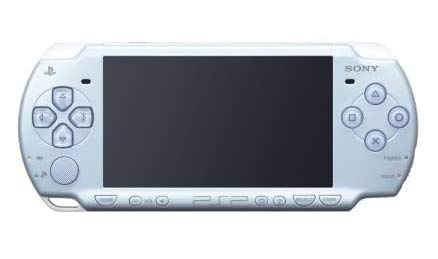
Two batteries in the box and a 480p screen — but you’ll need your own memory stick.
A spare battery in the box is the headline here, and it matters because this is a different hardware class from the GBA family. This is a Wi-Fi-enabled Sony PSP built around a 480p backlit display — 480p means roughly standard-definition TV sharpness — with 1.8 GB of internal storage, bundled with two batteries, an AC adapter, and a USA charging cable in bulk packaging. The listing rates it manufacturer-refurbished with a 90-day warranty and “limited or no wear.” Sony’s PSP platform is a completely different library from Nintendo’s — action, racing, and RPG titles that demanded more horsepower than the GBA could deliver. The two-battery bundle matters because, unlike the GBAs, the PSP can’t run on AA batteries that you can grab from a drawer. When the rechargeable packs fade, you’re dependent on the one in the box — which is why the bundled spare is a real advantage.
Owner feedback splits right down the middle on reliability, and that’s worth being upfront about. Plenty of units arrive clean, scratch-free, and looking new, with the charger in the box and the console working on first charge. Others show up not turning on at all, or with an unexpected issue — a faulty battery that won’t charge past 0%, an incompatible Wi-Fi connection, or a screen with lines across it that look like broken LEDs. Powering on at all is the single biggest variable on this listing, and the same caution applies to whether the memory card you need is actually included. Buyers report the bundled packs on good units hold capacity and standby charge better than typical third-party replacements.
UDM discs, Wi-Fi, and the larger screen distance the PSP from the Game Boy family — but none of that makes it a safer renewed purchase. It’s simply a more ambitious machine that’s correspondingly harder to refurbish consistently. Check that the battery in your unit charges before you trust the bundle, and budget separately for the memory stick you’ll need. If your priority is the safest odds of a working unit on arrival, the GBA and SP listings above are far more predictable — the GBA SP edges this out for sheer on-arrival reliability.
Go for this if you want a large-screen, Wi-Fi-capable Sony handheld with two batteries in the box and accept the mixed reliability odds.
Steer clear if you want the safest bet on working-on-arrival — the GBA and SP listings give you much more predictable condition.
4. Sony Playstation Portable PSP 3000 Series Handheld Gaming Console System (Mystic Silver) (Renewed)

Sony’s final PSP generation — same Wi-Fi and UMD library, just one battery in the box.
Sony’s last PSP build is this one, and it keeps the same 480 x 272 screen resolution and Wi-Fi capability as the 2000 Series, plus a Mystic Silver finish. It’s fully technician tested per the listing. The differences from the 2000 Series come down to shipping contents and battery count: where the 2000 Series bundles two batteries, the 3000 Series ships with one. The PSP library is the same UMD-based platform — UMD discs are Sony’s small optical game discs — so games work across both. The 3000’s later production run means a slightly different refurbishment track record. On the spec sheet the two PSP models look nearly identical, and if you don’t care about the bundled spare battery the choice between them depends on which color you want and which listing shows better condition odds on the day you buy.
The owner feedback here is straightforward: reliability is the swing factor, with units that work perfectly alongside units that never power on. Battery issues are the most consistent negative, and owners mention dead or failing packs on arrival — a recurring pattern across every renewed PSP listing, not just this one. State of the shell and screen varies. A very good unit arrives looking new with no scratches and works straight out of the packaging. A bad one shows up with a scratched screen, scuffed back, or a damaged battery cover connector. The analog stick is the other spot to watch — a faulty-feeling stick is common enough on refurbs that you should test both the d-pad and the nub before settling in.
For a first PSP purchase, the 3000 is a reasonable entry point if you find one in good condition. But plan on sourcing a replacement battery eventually — it’s simply the pattern on every renewed PSP listing. Buyers going the homebrew route — running homemade software not sold by Sony — should know the 3000 accepts unsigned software more freely than later Sony handhelds, which is why it’s still a common pick for that crowd. If you do end up replacing the battery, buy from a vendor with a return policy.
The right buy for anyone wanting Sony’s final PSP revision — a slightly later production console with the full UMD and Wi-Fi feature set intact.
The one knock against it: the PSP 2000 above ships two battery packs, and this one covers you for one.
Understanding the Specs
Screen Lighting: Front-Lit vs Backlit vs Reflective
The original GBA has a reflective screen — it bounces room light back at you instead of lighting itself — so it depends on ambient light to be visible. The GBA SP added a front light that throws illumination from the edges across the display. The PSP 2000 and 3000 use fully backlit LCD panels (the light sits behind the screen) at 480p and 480 x 272 resolution respectively. If you’ve only played modern handhelds, the reflective GBA display is the biggest adjustment — many owners recommend a clip-on light accessory for that model alone.
Battery Format: AA vs Rechargeable Li-ion
The original GBA runs on two AA batteries, rated 15 hours of play. The GBA SP uses a rechargeable lithium-ion pack, rated about 10 hours with the front light on and approximately 18 with it off, recharging in about three hours. The PSP runs on its own rechargeable lithium-ion pack. AA batteries can be swapped instantly at any shop; rechargeable packs must be sourced specifically for the model when they fade, which makes the spare-battery bundle on the PSP 2000 Series a genuinely useful inclusion for long-term ownership.
Game Media: Game Pak vs UMD
Nintendo’s GBA family uses compact Game Paks — Nintendo’s small game cartridges — that are smaller than Game Boy Color cartridges and hold progress without an external battery. Sony’s PSP uses UMD discs — larger, spin-driven media that requires more delicate handling in a portable. Both systems support backward compatibility within their own brand lines: the GBA SP plays virtually all previously released Game Boy games, while Game Boy Advance games are compatible across the GBA, GBA SP, and later Game Boy systems.
Renewed Condition Grades
Every console on this list is renewed, which typically means professionally inspected and restored rather than brand new. Condition grades (“excellent,” “like new”) describe appearance, not function or battery health. Two consoles with the same grade can arrive in very different states. Before you buy, check the listing for what’s included — charger, batteries, memory stick, cover — because missing accessories are among the most common surprises on renewed handhelds.
FAQ
Does the Nintendo Game Boy Advance Indigo have a backlit screen?
How long does the Nintendo Game Boy Advance SP battery last on a charge?
Can I play my old Game Boy games on the Game Boy Advance SP?
Does the PSP 2000 come with a memory stick?
What is the difference between the PSP 2000 and PSP 3000?
What does Renewed mean on these handheld consoles?
Why do the reviewed PSP units sometimes ship with dead batteries?
Can I use third-party accessories with a renewed GBA or PSP?
Are the Game Boy Advance and PSP consoles really portable enough for daily carry?
Final Thoughts: The Verdict
Nintendo Game Boy Advance – Indigo (Renewed) — 4.0 stars and the longest rated battery life of the two GBA models at 15 hours on a pair of AA batteries, plus the lightest body here at 7.04 ounces. And if you want a bigger Wi-Fi screen and a Sony library to match, the PSP 2000 Series (Renewed) covers you with two batteries bundled — the easiest way to start a handheld collection without losing a session to a dead pack. Just want to see the screen in a dim room without accessories? The GBA SP – Cobalt (Renewed) front light is the one spec that settles that.
How We Picked
We do not accept paid placement. Every pick is matched to a real buyer and a real use-case; we do not hands-on test units.
Sources & Methodology
Specifications: manufacturer listings and product documentation. Review insights: verified customer reviews, as of September 2026. Pricing: not shown on this page (it changes often); check the current price via the retailer link.
As an Amazon Associate, Gadgets Feed earns from qualifying purchases. This does not affect which products we feature.