
Our readers keep the lights on and my morning glass full of iced black tea. As an Amazon Associate, I earn from qualifying purchases.
Specs are compiled from manufacturer listings and verified buyer reviews and can change over time — please confirm the key details on the product page before buying.
When you need a 200mm camera lens, you are really choosing between two tools: a constant-aperture zoom that pros keep on their camera, or a flexible, far-reaching zoom for travel and daylight. This guide explains what the aperture numbers and stabilization stops mean for your actual shots, and which lens earns a spot in your bag.
I’m Min — the founder and writer behind Gadgets Feed. This guide is built by comparing the manufacturers’ published specifications and the patterns across verified customer reviews, so you get each pick’s real strengths and trade-offs instead of marketing spin.
Understanding focal length, aperture, and stabilization specs helps you pick the best 200mm lens for your shooting style.
Our Picks at a Glance


How To Choose The Best 200mm Camera Lens
Buying a telephoto lens is a commitment, so match the lens’s optical personality to your favorite subjects. A lens that opens to f/2.8 lets in far more light and blurs backgrounds more strongly than one that narrows to f/6.3 at the long end, making it the key spec for indoor events and portraits.
Match the mount to your camera body
Every lens is built for a specific physical connection to the camera, called the mount. A Canon EF lens only fits Canon DSLR bodies, while a Sony E-mount lens only fits Sony mirrorless cameras, so your camera brand and system dictates which lenses are even options for you.
Decide between constant and variable aperture
A constant aperture lens, like an f/2.8 zoom, keeps the same brightness across the whole zoom range, which is ideal for consistent exposure when shooting video. A variable aperture lens, like an f/4-6.3 zoom, gets darker as you zoom in, but it is usually far lighter and more affordable.
Weigh image stabilization against your shooting style
Image stabilization is a system inside the lens (or camera) that counteracts hand shake for sharper handheld photos. If you mostly shoot in bright daylight, stabilization matters less, but if you shoot at dusk or without a tripod, a lens with strong stabilization can make the difference between a sharp shot and a blurry one.
Quick Comparison
| Model | Best For | Focal Length | Max Aperture | Weight | Amazon |
|---|---|---|---|---|---|
| Canon EF 70-200mm f/2.8L IS III★ Best Overall | Pro Canon DSLR work | 70-200mm | f/2.8 | 3.2 lb | Amazon |
| Canon RF 100-400mm f/5.6-8 ISLong Reach Value | Budget wildlife shooting | 100-400mm | f/5.6-8 | 816 g | Amazon |
| Tamron 28-200mm f/2.8-5.6 RXDBest Value | Travel all-in-one | 28-200mm | f/2.8-5.6 | 1.3 lb | Amazon |
| Nikon Z 24-200mm f/4-6.3 VR | Nikon travel all-rounder | 24-200mm | f/4-6.3 | 1.3 lb | Amazon |
| Fujinon XF 55-200mm f/3.5-4.8 LM OIS | Fujifilm X shooters | 55-200mm | f/3.5-4.8 | 580 g | Amazon |
| Tamron 25-200mm f/2.8-5.6 VXD G2 | Next-gen Sony travel zoom | 25-200mm | f/2.8-5.6 | 1.3 lb | Amazon |
| Sigma 70-200mm f/2.8 DG DN OS | Sony mirrorless value pro | 70-200mm | f/2.8 | 1345 g | Amazon |
| Sigma 70-200mm f/2.8 Sports HSM | Canon DSLR pro work | 70-200mm | f/2.8 | 1805 g | Amazon |
| Nikon AF-S 70-200mm f/2.8E FL ED VR | Nikon DSLR sports | 70-200mm | f/2.8 | 3.2 lb | Amazon |
| Sony FE 200-600mm f/5.6-6.3 G OSS | Serious wildlife reach | 200-600mm | f/5.6-6.3 | 4.7 lb | Amazon |
| Sony FE 70-200mm f/2.8 GM OSS II | Pro Sony mirrorless all-rounder | 70-200mm | f/2.8 | 1045 g | Amazon |
In‑Depth Reviews
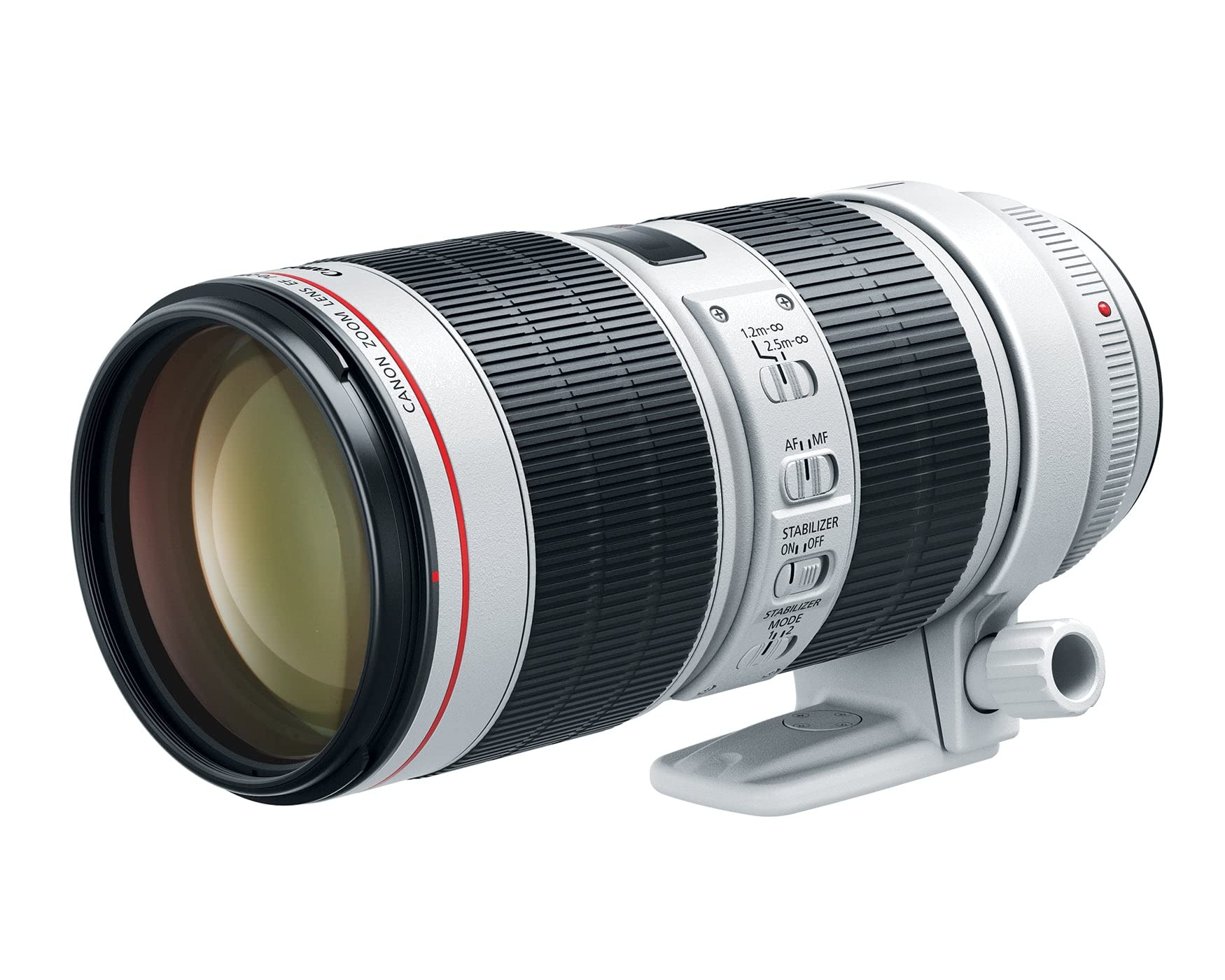
1. Canon EF 70-200mm f/2.8L IS III USM
Our pick — over 4.5★ from 550+ verified ratings; the strongest balance of quality and price.
The pro-standard workhorse that nails sharpness, speed, and creamy bokeh in one white barrel.
Working photographers grab this lens when the shot must be sharp. It holds a constant f/2.8 aperture across the entire 70-200mm zoom range, so you get the same bright exposure and strong background blur at 70mm or 200mm, a lifesaver under stadium lights or in a dim venue.
Its 3.5-stop image stabilization lets you shoot handheld in dim venues where a lesser lens would demand a tripod. The lens body is highly resistant to dust and water, and the fluorine coating on the front and rear elements helps smudges and fingerprints wipe off easily, so it shrugs off a day of shooting in harsh weather.
It is a heavy piece of glass at 3.2 pounds, and that weight is the trade-off for the pro build and optics. Buyers report that while the reach is fantastic, 200mm can feel short for sideline sports where you might need to crop in, and they report the autofocus is fast and quiet enough to track moving subjects with ease.
What wins people over
- Laser-sharp images with beautiful f/2.8 bokeh that buyers call professional-grade
- Fast, quiet autofocus that pairs smoothly with Canon DSLRs
- Effective image stabilization that allows for extra f-stops as advertised
- Versatile for both video and photo projects
The honest trade-offs
- The price is premium, with value for money getting mixed feedback
- At 3.2 pounds, the weight draws mixed opinions for long handheld sessions
The pro pick: This is the lens for Canon DSLR shooters who demand the sharpest results and shoot in low light, and who are willing to carry the weight for professional-grade reliability.
Think twice if: You need more reach than 200mm for distant wildlife, since owners mention cropping is needed for sideline sports.
2. Canon RF 100-400mm f/5.6-8 IS USM
A featherweight wildlife zoom that reaches farther than its price suggests.
Canon mirrorless shooters who want serious reach without the weight get a zoom that stretches from 100mm to 400mm while staying compact at 816 grams. Its optical stabilizer delivers up to 5.5 stops alone, or 6 stops with an EOS R body’s in-body stabilization, for sharp handheld shots of distant birds.
It focuses surprisingly close for a telephoto, with a minimum focusing distance of 2.89 feet at 200mm and a maximum magnification of 0.41x at 400mm, so it can double for close-up work. The autofocus is driven by Canon’s Nano USM for high speed, smooth, and quiet operation, which owners praise for sports events.
The trade-off is the f/5.6-8 aperture, which buyers are honest about: it struggles in low light conditions. The lens quality and value for money are what win people over here, and the lightweight design is a constant point of praise, though opinions on zoom range are mixed.
The daylight reach pick: This lens is the go-to for birding and wildlife in good light, where its light weight and long reach let you shoot all day without fatigue.
The limitation: The slow aperture makes it unsuitable in low light conditions, so keep it for sunny outdoor shoots.
3. Tamron 28-200mm f/2.8-5.6 Di III RXD
One lens that replaces three, saving your back and your wallet on every trip.
This is the ultimate one-lens travel solution for Sony mirrorless cameras, covering a huge 28-200mm range in a body that weighs just 1.3 pounds. It opens at a fast f/2.8 at the wide end, which gives you decent low-light ability and bokeh for portraits, before narrowing to f/5.6 at the 200mm telephoto end.
The RXD stepping motor unit is exceptionally quiet, which makes it a favorite for videographers who need silent focusing during recording. Buyers who shoot adventure photography report this lens replaces their wide, portrait, and telephoto lenses, performing like three lenses combined for landscapes, wildlife, macro, and even astro. The moisture-resistant construction and fluorine coating add a layer of protection for outdoor use.
The main catch is the autofocus, which draws mixed feedback; while many find it fast, others report it hunts for focus more than expected, particularly on distant objects. For the weight and the range, the sharpness throughout is what wins people over, and the value for money is a huge draw.
Why it’s a travel legend
- Excellent sharpness throughout the 28-200mm zoom range
- Portable and compact at 1.3 pounds for superior mobility
- Quiet RXD stepping motor is ideal for video work
- Moisture-resistant construction and fluorine coating
The autofocus caveat
- Autofocus is mixed: some find it fast, others report it hunts for focus
- The f/5.6 aperture at 200mm is a minor trade-off for low light
Reach for this if: You want one lightweight lens for travel and everyday shooting on a Sony body, covering everything from wide landscapes to 200mm telephoto without swapping glass.
Look elsewhere if: You need reliable autofocus for fast-moving distant subjects, since focus hunting is a known complaint.
4. Nikon NIKKOR Z 24-200mm VR

The all-in-one that stays glued to your Nikon Z body for everyday shooting.
Nikon Z shooters who want to leave the camera bag at home will love this compact 24-200mm zoom, which weighs just 1.3 pounds and covers everything from wide-angle scenery to 200mm telephoto. It features built-in Vibration Reduction image stabilization, which owners say effectively compensates for the slower aperture, letting you shoot handheld in more situations than the f/4-6.3 range suggests.
The lens uses Nikon technologies including Aspherical Lens Elements, ED Glass Elements, ARNEO Coat, and Fluorine Coat to keep images sharp and clear. The customizable, clickless control ring offers quick and quiet access to your most-used camera settings, and the 8.3x optical zoom range is what makes it such a versatile daily driver.
Customers note it can handle 90% of their shooting needs, making it ideal for travel photography where you do not want to carry multiple lenses. The autofocus draws mixed feedback, with some finding it fast and reliable while others report focus misses, and the slow aperture beyond 30mm is a noted compromise. The common-sense verdict is that the image quality and sharpness throughout the zoom range, plus the travel-friendly weight, make it a stellar value.
The everyday travel pick: This lens is for Nikon Z owners who want a single, lightweight optic that covers most shooting scenarios, from city walks to wildlife at 200mm.
The compromise: The variable f/4-6.3 aperture gets slow at the long end, and manual focus is tricky to get right according to buyers.
5. Fujinon XF 55-200mm f/3.5-4.8 R LM OIS

A sharp, metal-bodied classic that brings pro-level optics to the Fujifilm X system.
Fujifilm X series owners get a versatile all-rounder in this 55-200mm zoom, offering an 83-300mm equivalent focal length on APS-C cameras. Its 4.5-stop stabilization is top-tier, enabling sharp handheld shots at 1/20s at 200mm where rivals blur.
The maximum aperture ranges from f/3.5 to f/4.8, which is not the fastest, but owners find the high ISO capability of modern Fuji bodies offsets the need for a wider f/2.8 lens. The all-metal build feels solid and durable, and the manual aperture and focus rings give a satisfying, tactile shooting experience.
Reviewers point out the lens is tack-sharp at all focal lengths up to about 155mm, with one noting it outright outperformed 300mm full-frame lenses from other brands. The focusing speed is the mixed point here: it is accurate but can be slow, and the 580-gram weight draws mixed opinions for balance on smaller bodies. The recurring note about the 1.1m minimum focus distance is a limitation for very close work.
What makes it a keeper
- Tack-sharp photos at all focal lengths, rivaling prime lenses
- top-tier 4.5-stop optical image stabilization for handheld shots
- Solid, all-metal build quality
- Sharp, colorful, detailed images even indoors
The compromises
- Autofocus is accurate but can be slow, especially in tricky light
- At 580 grams, it is heavy enough to cause front imbalance on smaller bodies
Best for: Fujifilm X shooters who want a durable, high-quality telephoto for landscapes and distant subjects without stepping up to the heavier, faster 50-140mm.
Who should skip: Anyone who needs quick autofocus for fast action, since the focusing speed is the known weak point.
6. Tamron 25-200mm f/2.8-5.6 Di III VXD G2
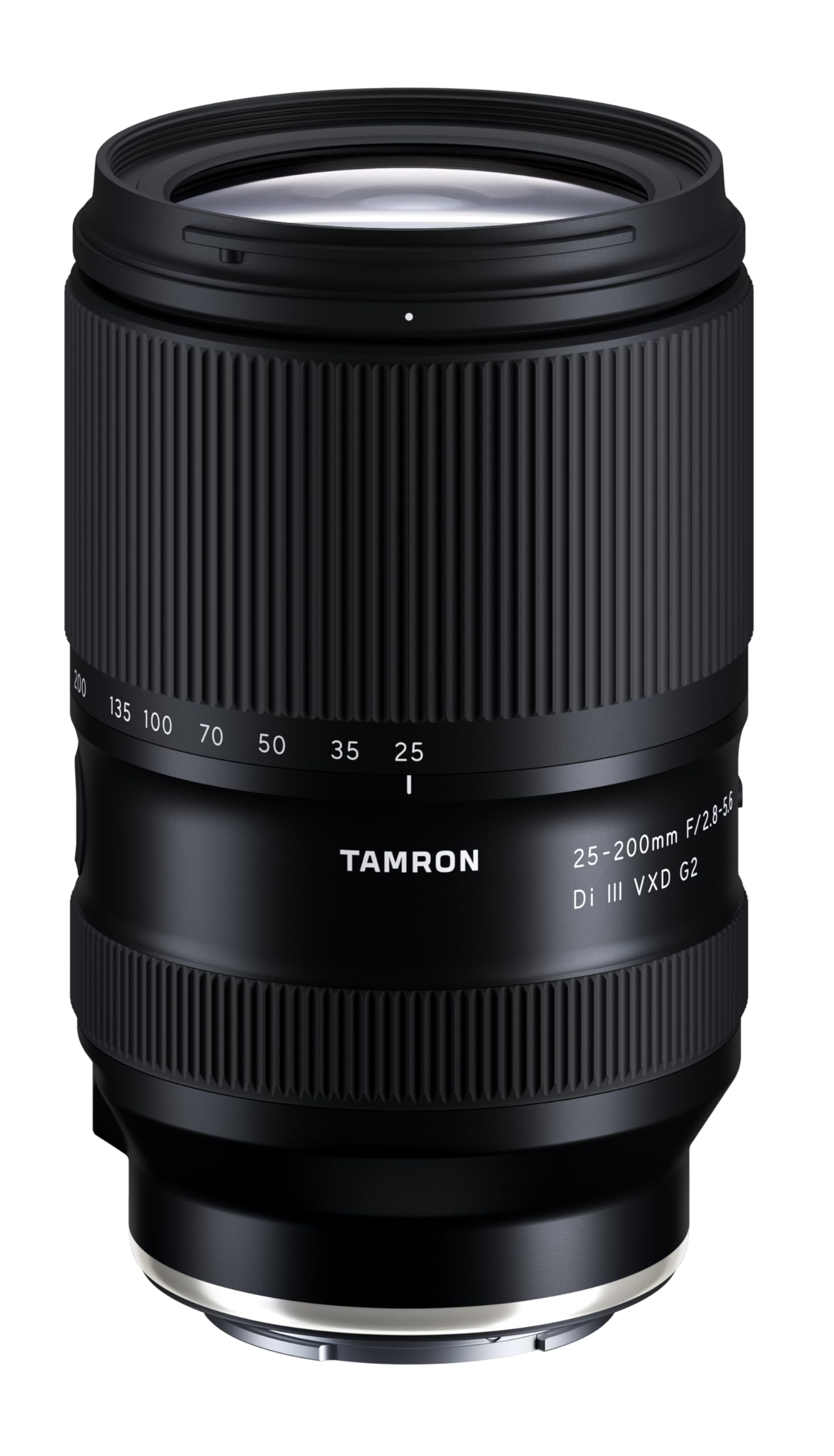
The second-generation all-in-one that gets even closer to its subjects.
This advanced 2nd-generation all-in-one zoom for Sony E-mount cameras refines the travel-zoom formula with upgraded features and a fast, precise VXD autofocus system. It is designed for capturing sports and action, such as children and pets in motion, while still being compact enough for everyday carry at 1.3 pounds.
The standout upgrade here is the outstanding close-up performance, with a 1:1.9 magnification that allows for half-macro shooting, so you can get impressively close to small subjects without a dedicated macro lens. It covers a 25-200mm focal range, which gives you a slightly wider starting point than older travel zooms.
Owners who carry it daily report it is close in sharpness to their much more expensive constant f/2.8 lenses, with the only real loss being light collection at the long end. One traveler took it to Rome and called it perfect on a Sony a6700, praising its sharp images, great bokeh, and wonderful zoom for both faraway and close-up shots.
The daily carry pick: This is for Sony shooters who want a sharp, versatile zoom for travel and everyday moments, with the bonus of half-macro close-up ability.
The trade-off: The variable aperture loses some light collection compared to a constant f/2.8, which only matters in dim conditions.
7. Sigma 70-200mm f/2.8 DG DN OS for Sony

A masterpiece of sharpness that undercuts the Sony G Master by a wide margin.
Sony mirrorless shooters who want pro-level f/2.8 performance without paying the Sony premium will love this Sigma, which many buyers directly chose over the Sony G Master. It delivers tack-sharp images with a fast, quiet autofocus driven by the High-response Linear Actuator (HLA) motor, and the dust and splash-resistant structure brings the superior weather resistance of the Sigma Sports line.
The lens completes the F2.8 DG DN full-frame mirrorless trio, meaning it pairs beautifully with Sigma’s other prime lenses for a consistent setup.
The one consistent complaint is the weight: at 1345 grams, shoppers say it is heavier than expected for a mirrorless lens. The thing everyone raves about is the lens quality, and for value for money, it is considered a near-unbeatable deal for a constant f/2.8 zoom on Sony bodies.
The value pro pick
- Tack-sharp images with great colors and clean bokeh
- Fast and quiet autofocus for photo and video
- Dust and splash-resistant pro build quality
- Best value for a 70-200mm f/2.8 on Sony E-mount
The weight factor
- At 1345 grams, it is heavier than expected and can cause back strain on long handheld shoots
- One owner notes the lens cap twist-screw can hinder the zoom ring if not fully removed
The smart-money pro pick: This is for Sony shooters who need constant f/2.8 performance and pro build for events and portraits but want to save compared to native options.
Who it won’t suit: Anyone who needs an ultralight setup, since the weight is the one recurring complaint, especially for multi-hour handheld sessions.
8. Sigma 70-200mm f/2.8 Sports DG OS HSM for Canon

A rugged, weather-sealed bruiser that out-shoots its price tag on Canon DSLRs.
Canon DSLR owners who need a lens that can take a beating will find a true ally in this Sigma Sports model. It incorporates 9 FLD and 1 SLD low-dispersion glass elements for exceptional sharpness, and the 11-blade rounded diaphragm produces ultra-smooth, creamy bokeh behind your subject.
The magnesium alloy barrel is both light and durable, and the dust- and splash-proof structure means it keeps working in rain and dust. The tripod socket features 90 click stops with an Arca Swiss type clamp, making it easy to switch between horizontal and vertical shooting on a tripod without loosening the plate.
Buyers who have used it professionally for years report it is durable, weather-sealed, and delivers outstanding image quality that is sharp wide open at f/2.8. The recurring themes are that it is cheaper than the Canon equivalents while offering comparable or better glass, but the weight is a serious factor at 1805 grams. Autofocus speed draws mixed feedback, with some praising its speed while others find it slow, and the non-removable tripod ring and front zoom ring are noted as awkward by some.
The pro durability pick
- Sharp photos that work well both indoors and outdoors
- Weather-sealed with a magnesium alloy barrel for rugged use
- 11-blade rounded diaphragm for ultra-smooth bokeh
- Great value compared to Canon L-series equivalents
The physical demands
- At 1805 grams, it is heavy, with mixed opinions on the weight
- Autofocus speed and the non-removable tripod ring get mixed feedback
The field workhorse: This is for working Canon DSLR pros who need a durable, sharp f/2.8 zoom for weddings, portraits, and outdoor shoots in harsh conditions.
The catch: The significant weight makes it a poor choice for minimalists, and the autofocus speed may not satisfy fast-action sports shooters.
9. Nikon AF-S NIKKOR 70-200mm f/2.8E FL ED VR

The state-of-the-art Nikon telephoto that turns fast action into razor-sharp frames.
Nikon DSLR shooters chasing sports and action will find this lens delivers razor-sharp images with fast focusing and creamy bokeh that owners say is particularly impressive for portraits. It works exceptionally well in sports arenas, where the constant f/2.8 aperture lets in enough light to freeze the action even under artificial lights.
The lens features a minimum focus distance of 3.6 feet (1.1 meter) and a 9-blade diaphragm with a minimum aperture of f/22, giving you solid control over depth of field. It is coated with Nano Crystal Coating to minimize flare and ghosting, and the FL (fluorite) and ED (extra-low dispersion) elements contribute to the superb image quality.
Buyers report it works well with all of Nikon’s tele-converters, making it an incredibly versatile tool that can extend its reach. The price is the biggest sticking point, with value for money getting mixed opinions, and the weight also draws disagreement, with some finding it less heavy than expected while others call it super heavy. The image quality, sharpness, and autofocus speed are consistently praised.
Why it leads on action
- Razor-sharp images with fast, accurate autofocus
- Creamy bokeh that is particularly praised for portraits
- Nano Crystal Coating minimizes flare and ghosting
- Works well with all of Nikon’s tele-converters for extended reach
The big considerations
- The high price draws mixed opinions on value for money
- Weight is contentious: some find it manageable, others call it super heavy
The action specialist: This is for Nikon DSLR owners who photograph sports or fast-moving subjects in arenas and need the brightest, sharpest f/2.8 zoom available.
The hesitation: The premium price is hard to justify for casual shooters, and the weight is a genuine consideration for all-day carry.
10. Sony FE 200-600mm f/5.6-6.3 G OSS

Super telephoto reach that brings distant wildlife into stunning, frame-filling detail.
For Sony shooters who live for wildlife and birding, this is the lens that delivers exceptional reach, covering 200mm all the way out to 600mm. It uses 5 ED (extra-low dispersion) glass elements to reduce flare and ghosting, plus an aspherical lens element that dramatically reduces spherical aberration for consistently sharp images.
The internal zoom mechanism keeps the weight and balance constant as you zoom, which owners note makes it easier to handle on a gimbal or tripod, and it remains handholdable for short bursts despite its 4.7-pound weight. The Direct Drive SSM (Supersonic Wave Motor) provides fast, quiet, and precise focus, which is critical for tracking birds in flight.
The Nano AR coating suppresses reflections, flare, and ghosting for clean, contrasty images even in harsh light. Buyers consider it worth the price for the reach alone, pairing it with high-resolution bodies for even more effective range via cropping. The heaviness is the mixed point, and owners mention it is not ideal for low-light action, but for daytime wildlife, it is a spectacular performer.
The reach machine
- Consistently sharp images with fast autofocus for wildlife
- Internal zoom keeps balance constant, aiding handheld and tripod use
- Excellent value for the 200-600mm super telephoto reach
- Nano AR coating suppresses flare and ghosting
The physical reality
- At 4.7 pounds, it is heavy and needs a tripod or good technique
- Owners note the hood lacks a lock and can feel loose
The wildlife specialist: This is for dedicated Sony birders and wildlife photographers who need maximum reach and are happy to carry a heavy lens for the shot.
Be aware: It is not a low-light lens, so keep it for bright outdoor sessions, and plan for a tripod for extended shooting.
11. Sony FE 70-200mm f/2.8 GM OSS II

The world’s lightest 70-200mm f/2.8 zoom, built for the sharpest action and movie work.
This is the pinnacle of the 70-200mm f/2.8 category for Sony mirrorless, and its crown jewel is weight: at 2.3 lb (1045 g), it is 29% lighter than its predecessor and the world’s lightest 70-200mm f/2.8 zoom.. The reduced weight and advanced design improve balance, with a constant barrel length for easy, agile handling.
Four XD Linear Motors boost AF speed up to 4x over the prior model for fast, precise tracking in stills and video. Customers note the autofocus is flawlessly fast and reliable, with Eye AF that locks onto subjects instantly, making it a joy for sports and wildlife.
The optical quality is superb, with two aspherical elements and one XA (extreme aspherical) element ensuring high resolution, while the Nano AR Coating II subdues flare and ghosting. Owners capture incredible detail, noting it catches eyelashes and hairs on athletes at 200mm with manageable noise even at high ISO. It is designed with movie magic in mind, reducing focus breathing and offering independent control rings for focus, zoom, and iris, making it ideal for professional video. The price is steep, but the performance and build justify it for those who demand the very best.
Why it’s the ultimate
- Superb image quality with sharpness across the entire zoom range at f/2.8
- Lightest 70-200mm f/2.8 zoom at 2.3 lb (1045 g)
- Super fast, precise autofocus with flawless Eye AF
- Excellent low-light performance and beautiful bokeh at 200mm
The investment
- The price is premium, though buyers call it worth it for the performance
- Teleconverters for extra reach are sold separately
The enthusiast’s dream: This is for Sony professionals and serious enthusiasts who want the absolute best combination of sharpness, speed, and light weight for sports, portraits, and events.
The reality check: The investment is significant, so it is best suited for those who will use its full capability regularly.
Understanding the Specs
Focal Length & Reach
Focal length, measured in millimeters (mm), determines how much your subject is magnified. A 200mm lens brings distant subjects much closer than a standard 50mm lens, making it ideal for sports, wildlife, and portraits. Zoom lenses that include 200mm in their range, like 70-200mm or 28-200mm, offer flexibility, while a higher number like 600mm provides even more reach but often adds significant weight and cost.
Aperture & Low Light
The aperture, shown as f-number (like f/2.8), is how wide the lens opening gets to let in light. A lower f-number means a wider opening, allowing more light for better low-light performance and creating stronger background blur (bokeh). A constant aperture lens like f/2.8 maintains that brightness across the zoom range, while a variable aperture lens like f/4-6.3 gets darker as you zoom in.
Image Stabilization
Image stabilization (IS, VR, OSS) is a mechanism inside the lens or camera that counteracts hand shake to produce sharper handheld photos at slow shutter speeds. It is measured in “stops” of correction; a 4-stop system allows you to shoot at a shutter speed 4 times slower than normal and still get a sharp image. This is crucial for telephoto lenses, where even tiny movements are magnified.
Lens Mount Compatibility
The lens mount is the physical and electronic interface that connects the lens to the camera body. Each camera brand and system uses its own mount, such as Canon EF for Canon DSLRs, Sony E for Sony mirrorless, and Nikon Z for Nikon mirrorless. You must match the lens mount to your camera body for it to fit and function correctly.
FAQ
What does the f-number in a lens name actually meanf/2.8 mean for my photos?
Is a 70-200mm lens good enough for wildlife photography?
What is the difference between a constant and variable aperture zoom lens?
How much does image stabilization help when shooting at 200mm?
Will a Canon EF lens work on my Canon RF mirrorless camera?
What does a 55-200mm lens mean on an APS-C camera?
Is a heavier lens like the Sigma 70-200mm Sports worth carrying?
What is a teleconverter and why would I use one?
Why is the Sony FE 70-200mm f/2.8 GM OSS II considered so good?
What is the advantage of the internal zoom on the Sony 200-600mm?
How close can I focus with a telephoto zoom lens?
Final Thoughts: The Verdict
For most buyers, the best 200mm camera lens is the Canon EF 70-200mm f/2.8L IS III because it delivers the sharpest images, fastest autofocus, and most beautiful bokeh of the group, holding a constant f/2.8 aperture across the zoom range that pros rely on. If you want a lightweight travel all-in-one, grab the Tamron 28-200mm for its 28-200mm range in a 1.3-pound body. And for wildlife reach, the Sony FE 200-600mm is the one to reach for when distant subjects are the goal.
How We Picked
We do not accept paid placement. Every pick is matched to a real buyer and a real use-case; we do not hands-on test units.
Sources & Methodology
Specifications: manufacturer listings and product documentation. Review insights: verified customer reviews, as of August 2026. Pricing: not shown on this page (it changes often); check the current price via the retailer link.
As an Amazon Associate, Gadgets Feed earns from qualifying purchases. This does not affect which products we feature.