
Finding the correct 205/60R16 tires for your sedan or crossover isn’t just about matching a sidewall number. The wrong compound can turn a quiet highway cruiser into a noisy, hydroplaning hazard the moment a rain cloud rolls in. This guide isolates the specific rubber compounds, tread patterns, and load ratings that define a genuinely good set in this exact fitment.
I’m Min — the co-founder and writer behind Gadgets Feed. I’ve spent hundreds of hours cross-referencing UTQG treadwear grades, load index ratings, and real-world owner reports across every major tire manufacturer to isolate which 205/60R16 models actually deliver on their promises.
After analyzing five distinct sets that range from touring all-season to severe snow-service certified, this evaluation of the best 205/60r16 tires focuses squarely on measurable performance metrics and verified owner feedback rather than marketing claims.
How To Choose The Best 205/60R16 Tires
Every 205/60R16 tire shares the same section width and aspect ratio, but the variables that separate a 40,000-mile set from a 70,000-mile set come down to compound chemistry, tread pattern engineering, and internal belt construction. Beginners often assume all all-season tires behave identically — the data proves otherwise.
Match the UTQG Grade to Your Driving Mileage
The Uniform Tire Quality Grade (UTQG) includes a treadwear number that predicts relative wear life. A UTQG 700 tire should theoretically last nearly twice as long as a UTQG 400 tire under identical conditions. If you commute 15,000 miles annually, investing in a higher treadwear grade saves replacement costs long before the first rotation.
Check the Load Index and Speed Rating
For 205/60R16 tires, load indices typically range from 92 (1,389 pounds per tire) to 101 (1,235 pounds per tire). A higher load index supports heavier vehicles without sidewall deformation. Speed ratings like H (130 mph) or V (149 mph) indicate the tire’s thermal capacity at sustained highway speeds — essential for interstate driving in hot climates.
Know the Difference Between Touring and Performance All-Season Compounds
Touring all-season tires prioritize ride comfort, low road noise, and long tread life with silica-enriched compounds. Performance all-season tires use stiffer shoulder blocks and higher silica content for improved dry cornering grip and wet braking, often at the cost of a firmer ride and slightly faster tread wear. Your local climate and driving style should dictate the choice.
Quick Comparison
On smaller screens, swipe sideways to see the full table.
| Model | Category | Best For | Key Spec | Amazon |
|---|---|---|---|---|
| Goodyear Assurance WeatherReady | Premium All-Season | Year-round snow & wet grip | UTQG 700 AA / 3PMSF rated | Amazon |
| Hankook Kinergy PT (H737) | Mid-Range Touring | Long tread life & quiet ride | Load index 101 / 1,235 lbs | Amazon |
| NEXEN N’PRIZ AH8 | Mid-Range Performance | Low rolling resistance & budget value | 92H speed rating / 4 wide grooves | Amazon |
| Firestone FT140 Touring | Entry-Level Touring | Budget-friendly replacement set | Load index 110 / 3,062 lbs set | Amazon |
| Fullway HP108 | Budget Performance | Low cost per tire for urban driving | UTQG 380 AA / Load range SL | Amazon |
In‑Depth Reviews
1. Goodyear Assurance WeatherReady

The Goodyear Assurance WeatherReady carries the Three-Peak Mountain Snowflake (3PMSF) certification, making it the only tire in this 205/60R16 roundup legally rated for severe snow service. Owners report confident handling in up to four inches of fresh snow, which is exceptional for an all-season touring compound. The UTQG 700 AA treadwear grade suggests a potential lifespan exceeding 60,000 miles under normal driving conditions — significantly higher than the standard 400-500 grade found on most competing sets.
Dry and wet traction receive consistently positive marks across verified reviews, with multiple owners noting the tire feels secure in heavy rain without any hydroplaning sensation at highway speeds. The trade-off is a firmer ride feel in warm weather compared to softer touring compounds, and some users report a measurable fuel economy penalty of roughly 1 MPG due to the aggressive silica tread formulation. Cornering confidence improves noticeably over OEM-grade rubber, with reduced sidewall flex during lane changes.
The main durability concern centers on age at delivery. Several buyers received tires manufactured 12-18 months earlier, which may reduce the usable service life for drivers who log fewer than 10,000 miles annually. Despite this, the WeatherReady’s wet and winter performance gives it a clear safety advantage over standard all-season tires in the same 205/60R16 size, especially for drivers in the Snow Belt who want a single set year-round.
Why it’s great
- 3PMSF certified for genuine snow traction
- UTQG 700 AA treadwear for extended mileage
- Excellent hydroplaning resistance in heavy rain
Good to know
- Firmer ride feel in warm weather vs touring tires
- Approximately 1 MPG fuel economy reduction reported
- Some units arrive with older manufacture dates
2. Hankook Kinergy PT (H737)

The Hankook Kinergy PT delivers one of the highest verified mileage figures in this 205/60R16 comparison. One owner reported 72,000 miles with 5,000 to 10,000 miles of tread life remaining, which points to a compound that resists wear far beyond typical touring-class expectations. The load index of 101 (1,235 pounds per tire) provides a higher load capacity than the standard 92-rated competitors, making this set suitable for heavier sedans or occasional cargo hauling without sidewall fatigue.
Ride quality is consistently described as smooth and quiet, with only a slight increase in road noise compared to older premium touring tires like Cooper. Wet traction performance stands out in owner accounts — several drivers note no wheel spin or slipping during acceleration on rain-soaked roads, even on tight turns. The rubber sheet sandwiched between the first and second belts helps prevent belt-edge separation, a construction detail that adds structural durability over the tire’s life.
Dry handling benefits from an optimized contact patch profile that distributes weight evenly during acceleration, braking, and cornering. The trade-off is that the Kinergy PT feels slightly less responsive in aggressive cornering than performance-oriented compounds. Given the price point relative to the Michelin Defender T+H, the Hankook offers comparable tread life at a significant cost saving, making it a strong choice for high-mileage commuters who need reliable all-season performance without paying the premium brand surcharge.
Why it’s great
- Proven tread life exceeding 70,000 miles in real-world use
- Higher 1,235-pound load capacity per tire
- Excellent wet traction with no hydroplaning reported
Good to know
- Slightly louder than premium touring competitors
- Cornering response is moderate, not sharp
- Mix of fillers means break-in may feel different initially
3. NEXEN N’PRIZ AH8

The NEXEN N’PRIZ AH8 is engineered with four wide circumferential grooves that actively force water and slush outward from the contact patch, reducing hydroplaning risk at highway speeds. This hydroplaning resistance is backed by dense siping within the tread blocks that creates additional biting edges for grip on wet and light winter surfaces. The 92H speed rating confirms the tire can sustain 130 mph, which is sufficient for all legal highway use across North America.
Fuel efficiency receives a boost from a low rolling resistance compound that reduces parasitic drag, a feature that matters for daily commuters covering 12,000 to 15,000 miles annually. Owner reviews from a 2017 Lexus ES300h owner note the tire is quiet, handles well, and eliminated squealing during turns — a common issue with harder compounds on light vehicles. The computer-optimized tread pattern design minimizes road noise and vibration, contributing to a cabin experience that feels closer to premium touring rubber than its price tier suggests.
The main trade-off is treadwear longevity. The N’PRIZ AH8 prioritizes grip and rolling efficiency over maximum mileage, so heavy-footed drivers may see wear accelerate faster than the Hankook Kinergy PT. For urban and suburban drivers who value a quiet cabin and predictable wet-road behavior, this tire delivers a compelling balance of performance and economy at a mid-range price point that undercuts many legacy brand options in the 205/60R16 size.
Why it’s great
- Four wide grooves reduce hydroplaning effectively
- Low rolling resistance improves fuel economy
- Quiet, comfortable ride with minimal road noise
Good to know
- Tread life is moderate, not exceptional for high mileage
- Not designed for severe snow or ice conditions
- Load index 92 may be too low for heavier vehicles
4. Fullway HP108
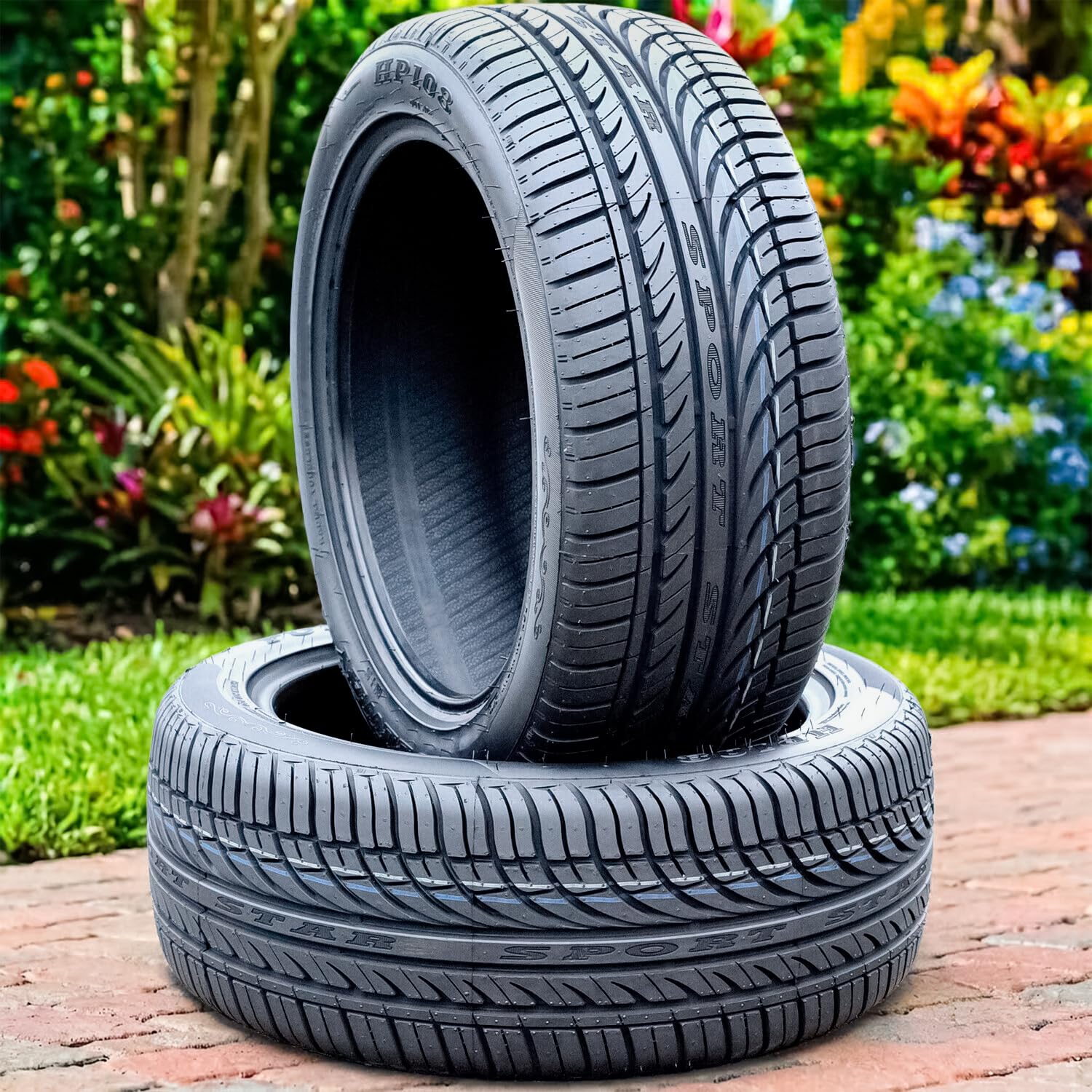
The Fullway HP108 is a budget-oriented all-season performance tire aimed at drivers who need a functional set of 205/60R16 rubber without spending on established brand legacy. The UTQG 380 AA grade indicates moderate treadwear expectations, with the AA traction rating matching premium tires for wet stopping distance. Owners report a smooth and reliable ride with solid grip on both dry and wet roads, and several repeat buyers confirm purchasing multiple sets — a strong signal of consistent value for the price.
The Load Range SL and 4-ply rating are typical for passenger car tires in this size, supporting up to 1,389 pounds per tire. The maximum pressure of 36 PSI is lower than some competitors, which may affect load-carrying capacity at higher speeds. Installation feedback is positive, with quick delivery times and tires arriving in good condition. One owner specifically noted that the tires performed perfectly on their vehicle and matched the expected size and specifications exactly.
The main limitation is that the HP108 lacks the advanced silica compounding and multi-belt construction found in premium tires, so long-term wear at high mileage and extreme wet performance may not match the Goodyear or Hankook sets. For city driving, short commutes, or as a replacement set for a secondary vehicle, the Fullway HP108 delivers dependable performance at a significantly lower entry cost than the top-tier options in this review.
Why it’s great
- Very low cost per tire for budget-conscious buyers
- AA traction rating matches premium tire wet grip
- Smooth and quiet ride for daily urban driving
Good to know
- Lower UTQG 380 means faster wear than premium options
- Maximum pressure 36 PSI limits high-speed load capacity
- Not suitable for severe snow or deep winter conditions
5. Firestone FT140 All-Season Touring

The Firestone FT140 carries a High Load Index of 110, meaning the set can support up to 3,062 pounds total — significantly higher than the standard 92-rated tires in this class. This extra load margin provides a safety buffer for drivers who frequently carry passengers or cargo. Bridgestone manufactures the FT140 under the Firestone brand, leveraging a tire engineering heritage that prioritizes structural consistency and predictable wear patterns across the tread surface.
Owner feedback highlights the smooth and quiet ride after installation, with several buyers noting that the tires made their cars run quieter and feel smoother than the previous sets they replaced. Delivery speed earns positive mentions, and the price point is positioned to compete directly with other entry-level touring all-season options in the 205/60R16 segment. The basic all-season compound provides adequate dry and light wet traction for typical suburban commuting and highway cruising.
The trade-off comes in long-term consistency. One verified review reports that the passenger-side tire required air top-ups monthly starting about two months after installation, suggesting potential bead sealing or sidewall porosity issues on some units. While most buyers report satisfaction, the FT140 lacks the advanced tread compounding and hydroplaning groove engineering of the higher-tier options. It is best suited as a functional budget replacement for low-mileage driving in moderate climates where extreme wet or winter performance is not a priority.
Why it’s great
- High load index 110 provides substantial payload margin
- Quieter and smoother ride than many worn-out OE tires
- Quick delivery and straightforward installation reported
Good to know
- Some quality control issues with slow air leaks reported
- Basic compound lacks advanced wet weather features
- Not recommended for heavy snow or frequent rain driving
FAQ
Can I use 205/60R16 tires on a vehicle that came with 205/55R16?
What does the 3PMSF symbol mean on a 205/60R16 tire?
How often should I rotate 205/60R16 tires for even wear?
Is an H speed rating sufficient for highway driving in a 205/60R16 tire?
Final Thoughts: The Verdict
For most drivers, the best 205/60r16 tires overall are the Goodyear Assurance WeatherReady because the 3PMSF certification and UTQG 700 AA treadwear provide genuine year-round capability without needing a separate winter set. If you prioritize maximum tread life and load capacity at a lower price, grab the Hankook Kinergy PT. And for the tightest budget where any replacement is better than worn rubber, the Fullway HP108 delivers functional all-season performance without the premium price tag.