
For anyone who has ever walked behind a welding cart only to realize the outlet is just three feet too far, or spent a stormy night wrestling a generator into a dangerous spot near the house, a proper 220-volt extension cord is the difference between a productive workflow and a frustrating safety hazard. This category is not about plugging in a desk lamp; it is about delivering high-amperage power reliably over distance, where undersized wire or cheap connectors create heat that can melt equipment or start fires.
I’m Min — the co-founder and writer behind Gadgets Feed. I have spent hundreds of hours analyzing the technical specifications and real-world user feedback on high-voltage extension cords, focusing on the specific gauge, amperage ratings, and connector types that separate a safe, long-term investment from a dangerous compromise.
Whether you are powering a welder on a jobsite, connecting an RV to shore power, or running a generator safely away from your home’s intake, this guide will help you sort through the options and identify the best 220 extension cord for your specific setup and budget.
How To Choose The Best 220 Extension Cord
Selecting the right 220-volt extension cord means matching three key parameters to your specific device: the current draw of your equipment, the distance you need to cover, and the physical plug shape required by your outlet and tool. Ignoring any one can lead to poor performance or a dangerous overload.
Gauge: The Wire Thickness Matters Most
The American Wire Gauge (AWG) number is deceptively simple — a lower number means a thicker wire, and for 220-volt circuits, thickness directly dictates how much current can travel safely without voltage drop. A 10 AWG cord handles up to 30 amps reliably for runs up to 50 feet, while a 6 AWG cord is necessary for 50-amp circuits like those used by large RVs and Level 2 EV chargers. Never use a 14 AWG cord (common on household 120V cords) for a 220V load — the wire will overheat under sustained current.
NEMA Plugs: The Physical Lock You Cannot Fake
NEMA configurations are standardized, non-interchangeable connectors. A NEMA 6-50 plug (two straight hot blades and a round ground) is standard for welders, while a NEMA L14-30 uses a twist-lock mechanism for generator connections to prevent accidental disconnection under vibration. An L14-30 plug physically will not fit into a 6-50 receptacle — verify your device’s plug end before ordering, as returning a heavy cord is a hassle.
Length: Manage Voltage Drop Over Distance
Every foot of wire adds resistance. For runs over 50 feet on a 30-amp circuit, you should step up to 8 AWG or reduce the load to 25 amps to stay within safe voltage drop (under 3%). Most quality cords explicitly derate amperage at distances beyond 50 feet — the PlugSaf 100-foot cord, for instance, specifies a drop from 30 to 25 amps. Plan your cord length so your generator or welder can sit well away from your work area or home intake, but not so far that voltage drop starves your gear.
Quick Comparison
On smaller screens, swipe sideways to see the full table.
| Model | Category | Best For | Key Spec | Amazon |
|---|---|---|---|---|
| YESWELDER 50ft 250V | Welder Cord | MIG/TIG welders up to 50 ft | 10 AWG, NEMA 6-50 | Amazon |
| PlugSaf 50FT L14-30 | Generator Cord | Portable generator to transfer switch | 10 AWG, Twist-Lock, 50 ft | Amazon |
| RVGUARD 30 Amp 25ft | RV Cord | 30A RV or camper hookup | 10/3 Gauge, TT-30P/R | Amazon |
| S7 30 Amp L14-30 to 4 Outlets | Generator Distribution | Running 120V tools from generator | 10 AWG, L14-30 to 5-20R | Amazon |
| Southwire Yellow Jacket 100ft | Light Duty 220V | Medium-load tools, light duty | 14 AWG, 13 Amp | Amazon |
| PlugSaf 100FT L14-30 | Extra-Long Generator | Generator placement far from house | 10 AWG, 100 ft, IP65 | Amazon |
| POWGRN 50A 100FT NEMA 14-50 | Heavy-Duty RV/EV | 50A RVs, Level 2 EV chargers | 6 AWG, 50 Amp, 100 ft | Amazon |
In‑Depth Reviews
1. YESWELDER 50ft 250 Volt Welder Extension Cord 10 AWG
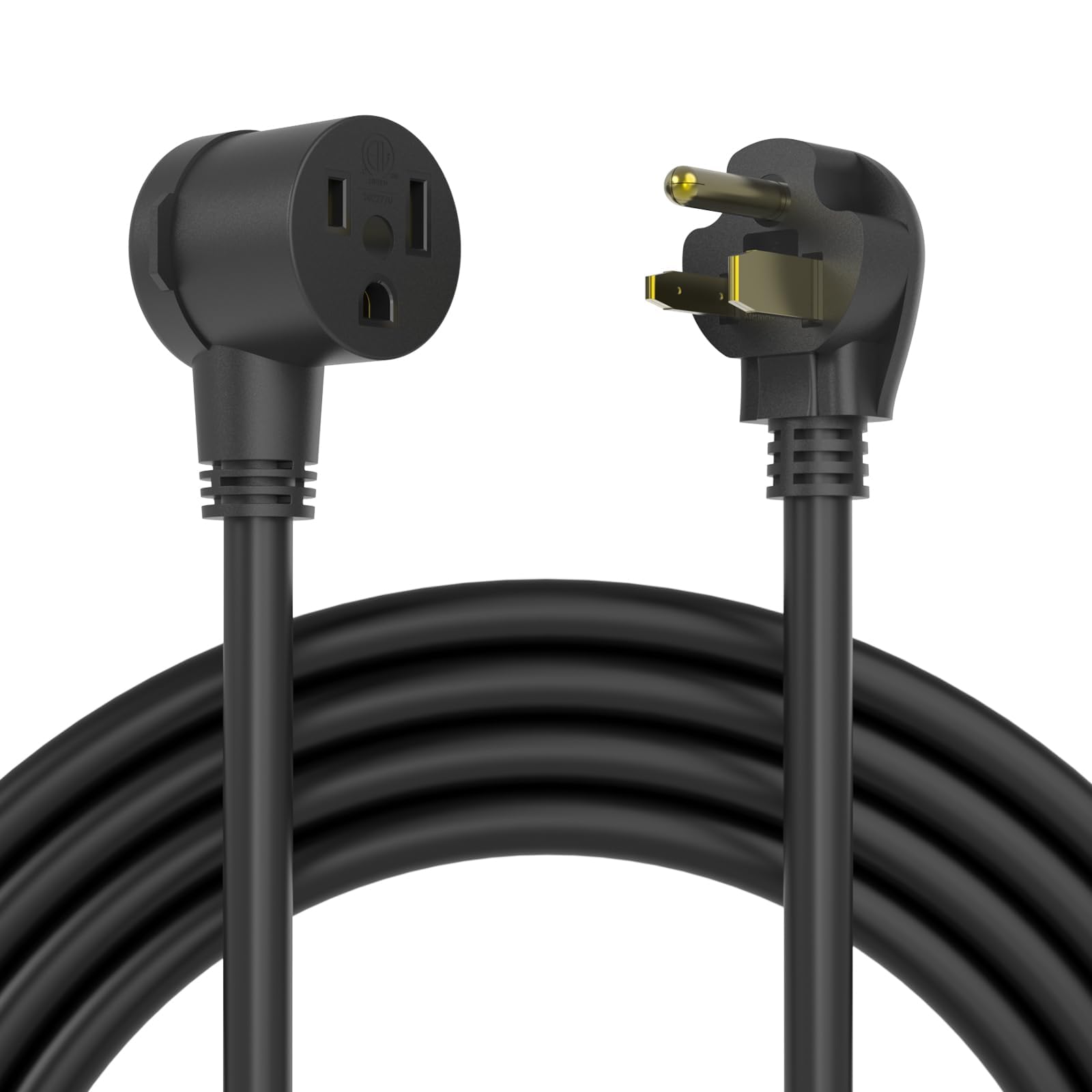
Built specifically for the NEMA 6-50 receptacle found on virtually every MIG, TIG, and plasma cutter in a home shop, this YESWELDER cord gives you a full 50 feet of reach without forcing you to park your welder dangerously close to the workpiece. The 10 AWG copper conductors are generously sized for 25 amps at 250 volts — sufficient for most 220-volt welders including Miller Millermatic and Lincoln Power MIG series — and an STW jacket rated to 194°F keeps the cable pliable even near hot metal splatter.
Real-world users report that the cord handles continuous welding sessions without noticeable heat buildup at the plug ends, and the bright yellow jacket offers high visibility on a cluttered garage floor — a subtle but appreciated safety cue. At 50 feet, you can also daisy-chain this cord with a shorter adapter if needed, though direct connection is always preferred to minimize voltage drop.
One nuance worth noting: this is a straight-blade non-locking connector. If you plan to regularly plug and unplug under load, the molded grips on the 6-50 ends are substantial enough to provide leverage, but the connection itself relies purely on friction fit. For a dedicated welding station, that is perfectly fine; for a constantly relocated welder on a jobsite, a twist-lock would be more secure.
Why it’s great
- True 10 AWG copper with low resistance for long MIG runs
- STW jacket resists oil, moisture, and temperature extremes
- 50-foot length solves the “three feet short” problem permanently
Good to know
- Straight-blade plug can pull out if snagged; not twist-lock
- Designed for single-outlet tools; no secondary tap for lights
2. PlugSaf 50FT 30 Amp Generator Extension Cord 4 Prong L14-30

The PlugSaf 50-foot cord addresses the central dilemma of generator safety — you need the machine far enough from your house to keep exhaust fumes and noise away, but close enough to actually power your transfer switch. With the L14-30 twist-lock connector on both ends, the secure bayonet-style coupling prevents the cord from walking loose under vibration from a running generator, which is a real failure point with straight-blade plugs in a power outage scenario.
Rated for 30 amps at 125/250V (7500 watts peak), this 4-conductor cable carries both 120V legs plus neutral and ground, making it compatible with any modern home transfer switch. The jacket carries an IP65 weatherproof rating, meaning rain and snow during a storm are not an immediate shutdown risk. Users specifically praise the cord’s flexibility — heavier than a 14 AWG household cord, but supple enough to coil into an organizer without fighting memory in the vinyl jacket.
The twist-lock mechanism does require a quarter-turn to seat fully; if you are routing the cord through a tight opening, you may need to plug the generator end first and spin the female end onto the transfer switch inlet separately. The included cord organizer is a simple strap, not a reel, but for the price this remains the most refined 50-foot generator cord on the market for home backup duty.
Why it’s great
- Twist-lock L14-30 ends prevent accidental disconnect from generator vibration
- IP65 weatherproof rated for outdoor deployment during storms
- Flexible 10 AWG jacket coils easily despite heavy gauge
Good to know
- Cord derated to 25A at lengths beyond 50 feet
- Not suitable for RV shore power — uses L14-30, not TT-30
3. RVGUARD 30 Amp 25 Foot RV Extension Cord

For the RV owner with a standard 30-amp shore power inlet (the NEMA TT-30R common on travel trailers and smaller RVs), this RVGUARD cord is a thoughtfully engineered drop-in replacement or extension. The molded female end features a grippy T-handle that gives you leverage and keeps your fingers away from the energized connector face — a feature typically found on cords costing significantly more. At 25 feet, it provides just enough reach to reposition your RV from a pedestal that is awkwardly placed at the back of the campsite.
The 10/3 STW jacket is heavy enough to survive being run over by a stabilizer jack or pinched between the RV chassis and a curb, and the integrated LED power indicator on the female end gives immediate visual confirmation that the pedestal breaker is on. Buyers consistently note that the plug ends are tight against the molded rubber, with no wobble that could lead to arcing over time. The included storage bag with drawstring makes it easy to keep the cord clean between trips.
One limitation is that this cord is strictly a 30-amp (3750W) solution — it uses the RV-specific TT-30 configuration, which has a single 120V hot leg. It will not plug into a NEMA 14-50 pedestal without an adapter, so if your RV requires 50-amp service, you need the larger POWGRN cord. For 30A systems, however, the build quality punches well above the entry-level price.
Why it’s great
- Ergonomic T-handle for safe, easy plugging and unplugging
- LED power indicator confirms live connection instantly
- Thick 10/3 STW jacket resists pinching and weather
Good to know
- TT-30 connector is 120V only; not suitable for 240V welder circuits
- 25-foot length is short for backup generator placement
4. S7 25FT 30 Amp Generator Extension Cord L14-30 to 4X 5-20R

This S7 cord solves a specific problem that other generator cords ignore: your generator may have a 30-amp L14-30 outlet, but most of your tools and appliances use standard 120-volt 5-15R or 5-20R plugs. Instead of stuffing multiple adapters onto a single heavy generator cord, this cable terminates in a breaker-protected distribution block with four 5-20R outlets, letting you run lights, a fridge, a sump pump, and a phone charger all from one generator connection.
The male end is the twist-lock L14-30, which mates securely to the generator panel, while the breakout box supports up to 7500W across the four outlets combined — though each individual 5-20R outlet is limited to 20 amps by its own thermal breaker. The 10-gauge conductors handle the full 30-amp feed from generator to the box, then the internal wiring splits into standard gauge for each leg. Users report that the 25-foot blue jacket is flexible enough to route through a garage window or under a door.
One thing to keep in mind: the breakers on this unit are push-to-reset thermal types mounted on the box. If you trip an outlet, you need physical access to the box to reset it — not ideal if the distribution block is sitting in a wet yard 25 feet from the house. The box is rated for outdoor use but is not fully submersible, so keep it elevated off wet ground.
Why it’s great
- Breaker-protected 4-outlet distribution box eliminates need for power strip adapters
- Twist-lock L14-30 male end secures to generator panel
- 10 AWG core supports full 30-amp throughput to the breakout point
Good to know
- Distribution box requires outdoor elevation to avoid water pooling
- Each outlet limited to 20 amps; total box load must not exceed 30A
5. Southwire Yellow Jacket Heavy Duty Extension Cord 100 Foot 14/3

Southwire’s Yellow Jacket is the industry-standard benchmark for household extension cords, but it is crucial to recognize that this 14 AWG cord is designed for light 110/120-volt tools, not heavy 220-volt loads. The 100-foot length is tempting for anyone wanting to run power a long distance, but at 14 gauge and a 13-amp maximum, attempting to pull 20 or 30 amps through this cord for a welder or generator will produce dangerous heat and voltage drop that can damage sensitive electronics.
Where this cord shines is powering electric edgers, leaf blowers, pressure washers, and medium-duty power tools on a standard 15-amp household circuit. The bright yellow SJTW jacket lays flat without kinking, coils easily for storage, and the lighted female end is a reliable indicator of line power. Users consistently praise its flexibility and durability for general-use outdoor work.
If you have a 220-volt device, do not buy this cord expecting it to work — it uses a standard NEMA 5-15P three-prong plug and will not physically fit a 6-50 or L14-30 receptacle. Within its intended 120-volt, 13-amp role, it is an excellent value; but for 220-volt extension duty, it is simply the wrong tool.
Why it’s great
- Extremely flexible SJTW jacket with no coil memory
- Lighted female end confirms power at a glance
- 100-foot length covers large yards for 120V tools
Good to know
- 14 AWG is too thin for any 20A+ 220V load
- Standard household plug will not fit 220V receptacles
6. PlugSaf 100FT 30 Amp Generator Extension Cord L14-30

When your generator must sit behind a privacy fence, around a corner, or 100 feet from the transfer switch inlet, the standard 25 or 50-foot cord will not cut it. This PlugSaf 100-foot version uses the same L14-30 twist-lock connectors and IP65 weatherproof construction as its 50-foot sibling, but addresses the physics of voltage drop by explicitly derating the current to 25 amps for runs beyond 50 feet. That means you get the same 10 AWG thickness but should not plan to pull the full 30-amp 7500W rating at this distance.
The 4-conductor cable (two hots, neutral, ground) maintains a separate path for 120/240V split-phase power, which is essential if your transfer switch sends both legs to separate household circuits. Users report that the extra weight of the 100-foot coil is manageable — about 15 pounds — and the adjustable cord organizer strap helps keep it neat when stored. The twist-lock ends feature substantial strain relief collars that accept aggressive bending angles at the plug entrance without cracking the jacket.
The biggest downside is simply the derating: if your generator setup requires 30 amps continuously at 100 feet, you need to step up to an 8 AWG cord or a 50-amp cord like the POWGRN. This cord will power most home essentials during an outage (fridge, furnace fan, a few lights) but may trip the breaker if you try to run a central AC or a well pump at the same 100-foot distance.
Why it’s great
- 100-foot reach lets generator sit far from house for safety and theft deterrence
- Twist-lock connectors hold securely even during high wind or vibration
- IP65 rated for all-weather outdoor use
Good to know
- Amperage derated to 25A at 100 feet — cannot pull full 30A
- Heavier and less flexible than a 50-foot cord
7. POWGRN NEMA 14-50P to 14-50R 50 Amp RV/EV Extension Cord 100 FT
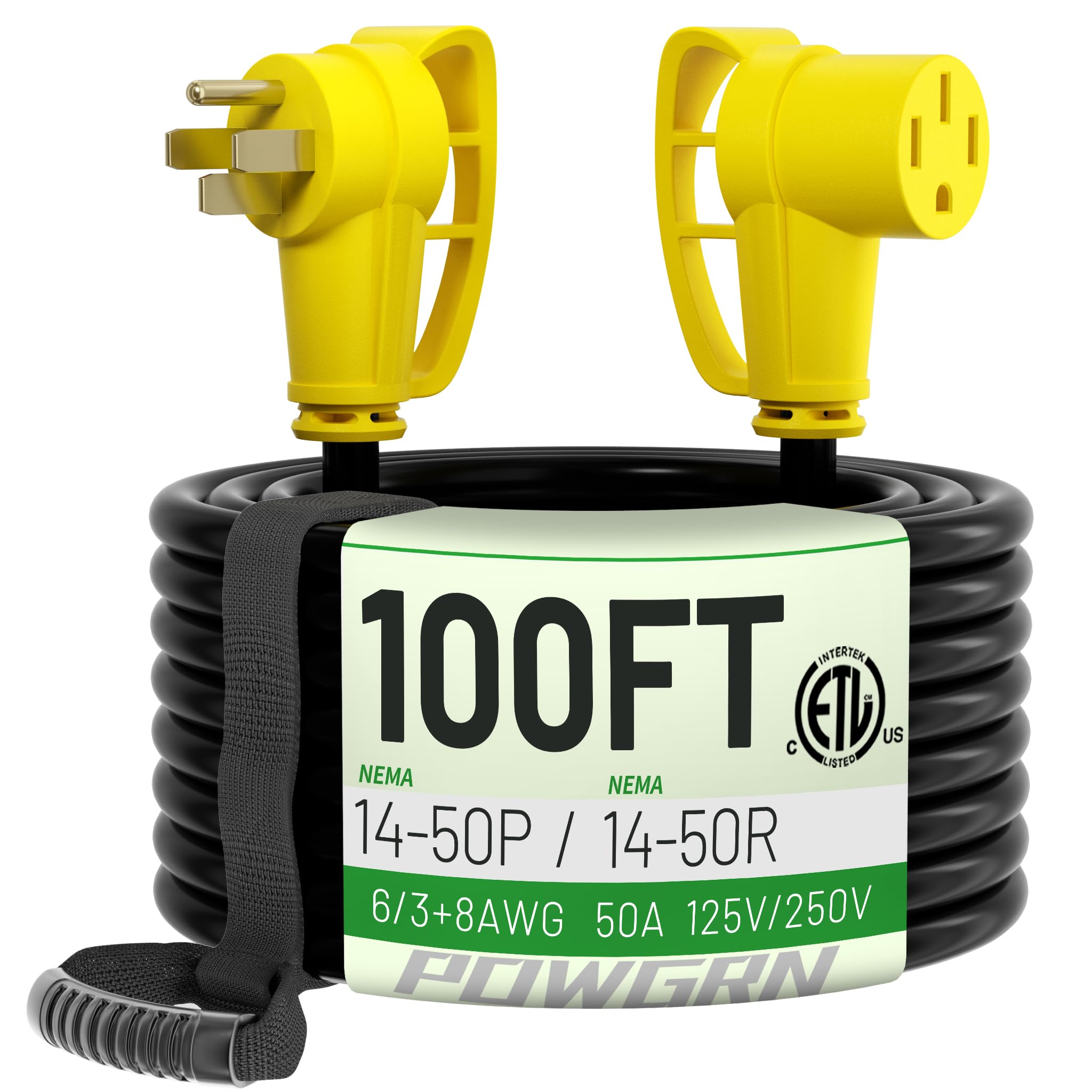
The POWGRN 100-foot cord sits at the top of the power pyramid, designed for the highest current demands in this category: 50-amp service for large RVs and Level 2 EV chargers. The 6 AWG conductors are substantially thicker than the 10 AWG used in most other cords here, and the NEMA 14-50 connector (four flat blades including neutral) is the standard for Tesla Wall Connectors, juice box chargers, and 50-amp RV pedestals. If your equipment draws 40+ amps continuously, this is the minimum spec that will not turn into a heater coil.
The jacket is thick and robust, with a black and yellow color scheme that stands out on pavement, and the female end features an insulated grip handle that makes plugging and unplugging the heavy connector safe without yanking on the cable jacket. The cord is IP65 waterproof and rated for -40°F flexibility, which matters for EV owners who charge outdoors in winter. A single user reports running 36 amps daily for nearly a year with zero issues — indicating the 6 AWG wire stays well within safe operating temperature even under continuous high draw.
There are a few practical considerations at this power level. The cord weighs over 25 pounds, so coiling and storing it is a two-hand job. The 50-amp rating also drops to 40 amps at lengths over 50 feet — with 100 feet you are effectively capped at 40 amps continuous, so verify your EV charger’s output: a 48-amp charger will trip the breaker or cause voltage sag. For 50-amp RV service (running AC, microwave, and converter simultaneously), the 100-foot derate is less of a concern because RVs rarely sustain 50A draw for long periods.
Why it’s great
- 6 AWG pure copper conductors handle 50A with ample safety margin
- Insulated grip handle on female end prevents hot-plug injuries
- IP65 and cold-rated to -40°F for year-round EV charging
Good to know
- Weighs over 25 pounds — not a portable cord for casual use
- Derated to 40A at 100 feet; not suitable for 48A continuous EV chargers
FAQ
Can I use a 50-amp extension cord on a 30-amp RV or welder?
How do I know if my welder needs a NEMA 6-50 or a NEMA 14-50 cord?
Is it safe to bury a 220 extension cord underground temporarily?
Final Thoughts: The Verdict
For most users, the 220 extension cord winner is the YESWELDER 50ft 10 AWG because it hits the sweet spot of 10-gauge construction, the universally needed NEMA 6-50 connector for welders and heavy tools, and a 50-foot length that solves real reach problems without excessive weight. If you need a generator cord for home backup, grab the PlugSaf 50FT L14-30 for its secure twist-lock connection and IP65 weather resistance. And for 50-amp RV or EV charging duty, nothing beats the POWGRN 100FT 6 AWG — it is the only cord on this list with the raw copper cross-section to handle sustained high current safely over a hundred feet.