
Our readers keep the lights on and my morning glass full of iced black tea. As an Amazon Associate, I earn from qualifying purchases.
Specs are compiled from manufacturer listings and verified buyer reviews and can change over time — please confirm the key details on the product page before buying.
You have a big space — a garage, a workshop, a basement — and a standard 120-volt plug just cannot get the job done. The real heat lives at 220 volts, where the amps and wattage actually move from “chilly” to “comfortable” without tripping the breaker. This guide sorts through the options that run on that higher voltage, focusing on what each one delivers for your specific room and setup.
I’m Min — the founder and writer behind Gadgets Feed. This guide is built by comparing the manufacturers’ published specifications and the patterns across verified customer reviews, so you get each pick’s real strengths and trade-offs instead of marketing spin.
Whether you are warming a drafty workshop or keeping a finished basement toasty, you need power that matches the square footage — and the right 220 volt space heater makes that difference between a room you avoid and a room you actually want to use.
Our Picks at a Glance

How To Choose The Best 220 Volt Space Heater
A 220-volt heater is a different animal from the plug-in space heater you keep under your desk. The higher voltage lets it draw more power — measured in watts — which means it can actually push enough heat into a drafty garage or a large basement. But that power comes with wiring requirements you need to check first.
Wattage and Amperage: The Real Capacity Numbers
The wattage tells you how much heat the unit can produce, and the amperage tells you what size breaker and wire gauge you need. A 2000-watt unit typically needs a 15-amp circuit, while a 7500-watt monster requires a circuit rated above 32 amps. Always confirm that your panel and wiring can handle the amp load before you mount anything.
Heating Method: Forced Air vs. Radiant
Forced-air heaters use a fan to blow air over a hot element, warming the room evenly in minutes — great for finished basements and living spaces. Radiant (infrared) heaters warm objects and people directly without heating all the air first, which works well in drafty garages or greenhouses where you want to feel the heat right away.
Installation Type: Hardwired, Plug, or Wall Mount
Some 220-volt heaters are hardwired directly into a junction box, which is common for permanent wall-mounted units. Others come with a NEMA plug (like a 6-20P) that goes into a specific 240-volt outlet. Wall-mount and ceiling-mount options save floor space, while portable tower units can be moved where needed — but each changes how you or an electrician will set it up.
Quick Comparison
| Model | Best For | Wattage | Amperage | Heating Coverage | Amazon |
|---|---|---|---|---|---|
| Stiebel Eltron CK Trend 2000W★ Best Overall | Bathrooms / small basements | 2000 W | 8.7 Amps | — | $112.50Amazon |
| VEVOR 7500W Garage HeaterTop Performer | Large workshops / garages (750+ sq ft) | 7500 Watts | 31.25 Amps | 732 sq.ft | Amazon |
| KING PAW2422-W Wall Heater | Quiet permanent room heat | 2250 W | 9.38 Amps | 400 sq. ft | $289.95Amazon |
| Dura Heat EUH4000 Garage Heater | Medium garages (500 sq ft) | 3750W | 20 Amps | 500 sq. ft | Amazon |
| Cadet CSC202TW Wall Heater | Small rooms / basements (200 sq ft) | 2000 Watt | 8.33 Amps | 200 sq. ft | $123.99Amazon |
| DR. INFRARED HEATER DR218-3000W | Greenhouses / drafty workshops | 3000 Watts | 12.5 Amps | 600 sq. ft | $153.61$156.20Amazon |
In‑Depth Reviews
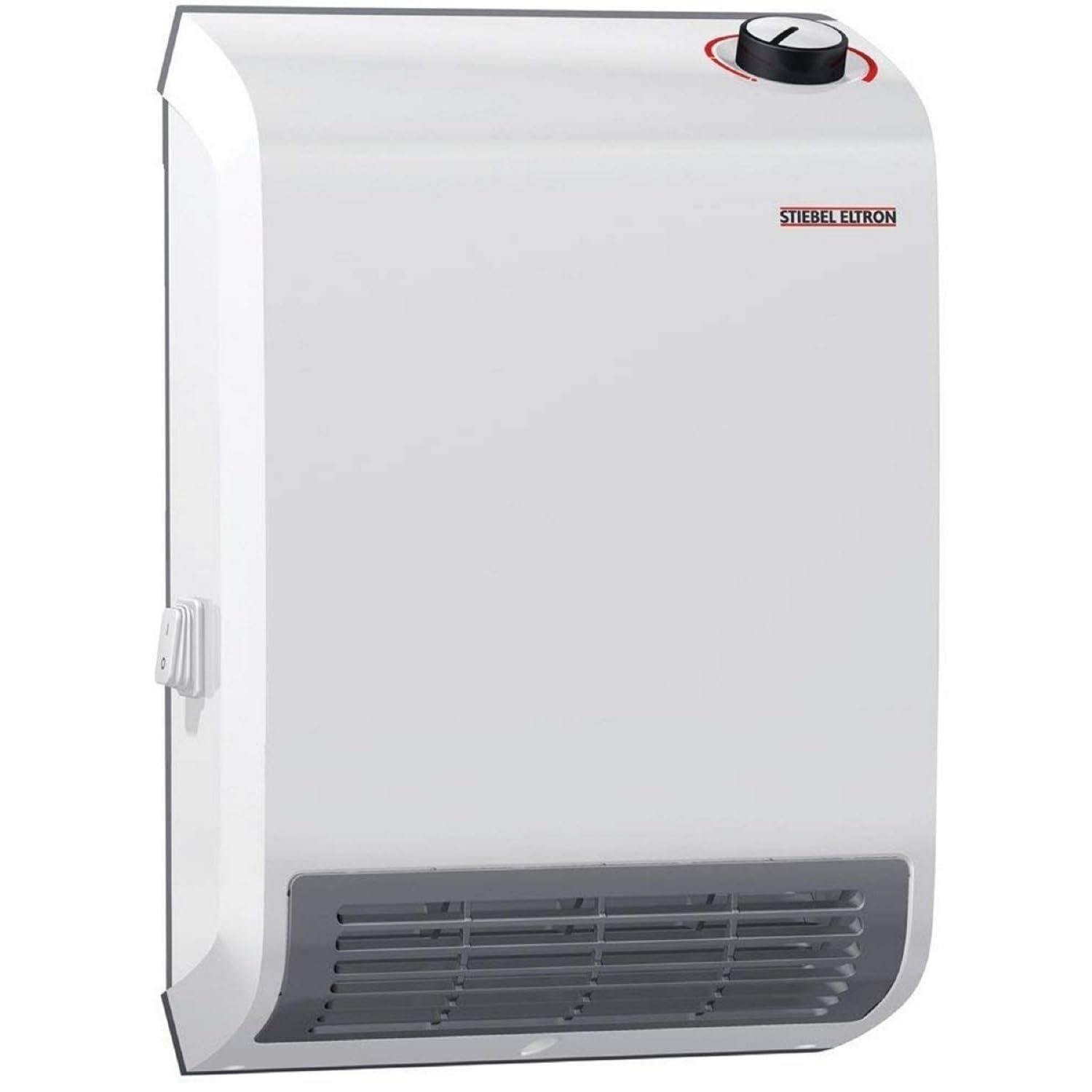
1. Stiebel Eltron CK Trend Wall-Mounted Electric Fan Heater, 2000W
Our pick — over 4★ from 900+ verified ratings; the strongest balance of quality and price.
The slim, hardwired heater that quietly transforms a cold basement without eating up floor space.
At just 5.13 inches deep, the Stiebel Eltron CK Trend is the slimmest unit in this list — making it ideal for narrow wall spaces in a bathroom, hallway, or finished basement. It uses a ceramic PTC (positive temperature coefficient) heating element, which is inherently stable and self-regulating. It outputs 2000 Watts at 240 volts (6824 BTU/hour) and runs at just 49 dB(A) — quiet enough for a playroom or office.
Owners mention impressive real-world performance: one buyer mentioned it heated their finished basement from 58°F to 67°F in just 2 hours, then maintained 65°F with a 15-minute on / 45-minute off cycle. But the installation is strict — it must be hardwired with a 15-amp breaker and 14 AWG wire, and there is no exterior knockout for conduit, so the wire must enter from the back. A few US buyers reported failures when one 120V phase was lost, so stable power is a must.
What Shoppers Love
- Extremely quiet operation — the glass-reinforced polycarbonate fan is noticeably less noisy than standard metal fans
- Slim profile (5.13 inches deep) frees up floor space in tight rooms
- 3-year warranty against defects in workmanship and materials
Installation Gotchas
- Hardwired only — no plug option, and no side knockout for conduit entry
- Some US buyers had failures when one 120V leg dropped, causing a voltage dip that damaged the unit
Best for: Bathrooms, 3-season porches, and small basements where a quiet, slim, permanent heater is the priority.
One real caution: The lack of a side conduit knockout complicates installation in retrofit situations — this heater works best when you can run wire into the back before drywall goes up.
2. VEVOR Electric Garage Heater, 7500 Watt Digital Fan Forced
The heavy lifter that turns a cold two-car garage into a comfortable workspace without a struggle.
This is the one you grab when a 2000-watt unit would just be spinning its fan. The VEVOR delivers 7500 Watts of forced air, enough to cover 732 sq. ft of space — a 50% wider coverage than the Dura Heat 3750W unit manages. But that raw power demands serious electrical work: at 31.25 Amps, this unit requires a circuit breaker rated above 32 amps and a hardwired connection. Do not plan on plugging this into any standard outlet.
The digital controls include a remote and a 9-hour timer, so you can fire it up before you even step into the shop. Buyers report it heats an insulated 25×30 garage easily, and one owner noted the thermostat feature works well after pulling the sensor wire away from the unit for better accuracy. It is quieter than some competing units that have burned terminal blocks, which makes a real difference during a long day in the workshop.
Wattage powerhouse with smart features: If you have the breaker capacity and the space, this is the most raw heating capability in the list — the 25600 BTU output is far beyond what a bathroom heater can provide. Just be ready for a permanent installation.
Ideal for: Large insulated garages and workshops where you want digital control, a timer, and enough heat to work in shirtsleeves during winter.
One real limit: It needs a breaker above 32 amps — if your panel is full or runs on 20-amp circuits, you cannot use this without an upgrade.
3. KING PAW2422-W PAW Pic-A-Watt Electric Wall Heater

The wall heater that disappears into the room and only announces itself with a steady, quiet flow of warm air.
If your main complaint about forced-air heaters is the noise, this King model addresses it directly. It uses a whisper-quiet squirrel cage blower instead of a standard fan, and buyers who replaced loud Cadet units report this one sounds more like a forced-air vent with strong airflow — much less intrusive when it cycles on. At 9.38 Amps, it is light on your electrical system, requiring only a standard 15-amp circuit for the 2250W setting.
The Pic-A-Watt feature lets you adjust the wattage to match the room’s heating needs, making this suitable as primary heat in a basement or addition rather than just a spot warmer. It covers up to 400 sq. ft and includes patented Smart Limit Protection for safety. One installer noted the included thermostat bracket instructions were poor and the screws strip easily, so plan to use your own hardware for a clean install.
Why It Stands Out
- Squirrel cage blower is genuinely quieter than typical fan-forced units
- Selectable wattage lets you match the heater to your room’s insulation and size
- Rated 4.6 out of 5 stars from 329 reviews — highest rating in this list
The Installation Notes
- Screw heads on the grill are known to strip — replace with Phillips screws during setup
- On-unit thermostat bracket instructions are poorly described in the manual
Best suited for: New construction basements, additions, or any room where you want permanent heat that runs quietly and blends into the wall.
Look elsewhere if: You need something portable or you are not comfortable with a hardwired wall-can installation.
4. Dura Heat 240V Electric Space Heater for Garage, 3750W
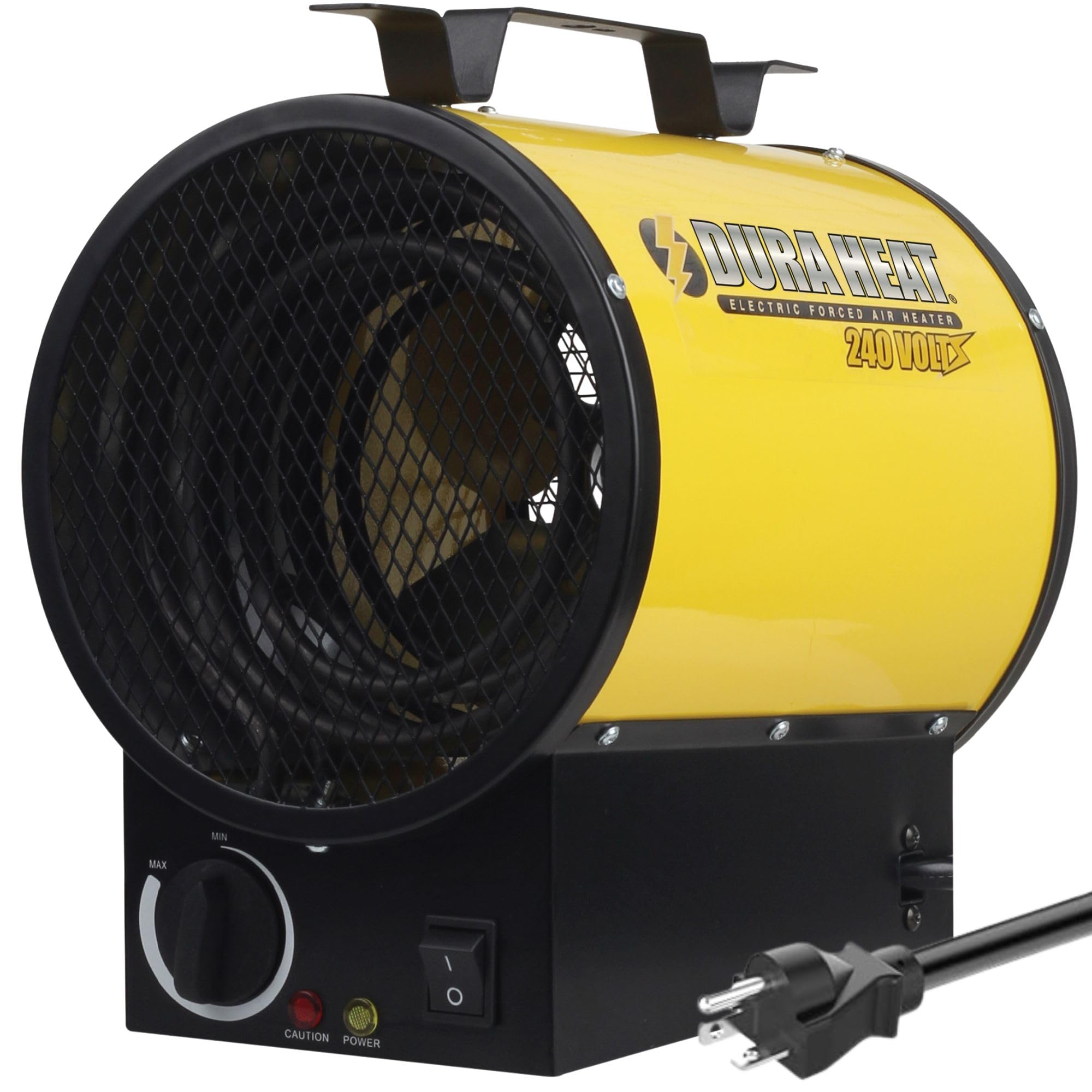
A straightforward plug-in option for the garage that needs serious heat but not a full electrical rewire.
Unlike the hardwired units above, the Dura Heat comes with a NEMA 6-20P plug — that is the standard 240-volt 20-amp outlet often found in garages for welders or compressors. If your garage already has that receptacle, you can mount this on the wall or ceiling and plug it right in. It delivers 3750 Watts, heating up to 500 sq. ft, and one reviewer noted that in 2 hours the inside temp of their shop went from 50°F to 66°F.
The catch is the fan runs constantly whenever the unit is powered on, regardless of whether the thermostat is calling for heat. That means it blows warm air followed by cool air as the heating coil cycles off — which wastes some energy and can feel drafty. Buyers also note the fan is quite loud, so this is not a heater for a quiet reading room. It is a practical tool for a workshop where heat output matters more than silence.
Direct plug-in convenience with a trade-off: At 11 inches deep, it has a 2.1x deeper footprint than the slim Stiebel Eltron CK Trend, so it eats up more wall space. But if you have a 6-20R outlet above your workbench, this is the quickest route to 12800 BTU of forced air.
Reach for this if: You have a 240V 20-amp outlet in your garage and want a wall-mounted heater without hardwiring.
One trade-off: The constant fan noise and cycling between hot and cool air makes this far less efficient and comfortable than a heater with a true fan-off thermostat.
5. Cadet Com-Pak Electric Wall Heater Complete Unit With Thermostat
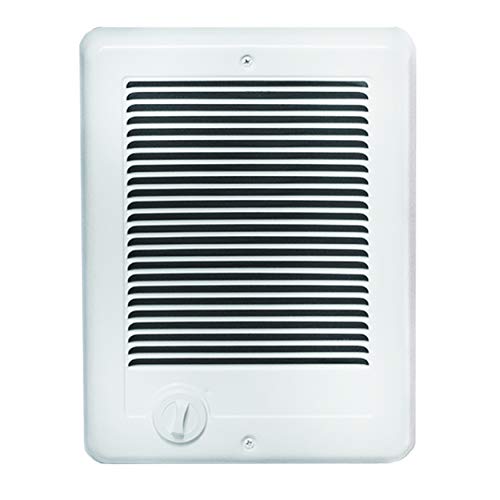
The compact heater that somehow makes a 250 sq ft basement the toastiest room in the house.
The Cadet Com-Pak is rated for 200 sq. ft, but buyers consistently report it warms up larger spaces. One reviewer with a 250 sq ft basement said it made that room the toastiest in the house. It draws just 8.33 Amps at 240 volts — a 3.8x lower amperage than the VEVOR 7500W unit, meaning it can go on a standard 15-amp circuit with room to spare. That makes it one of the easiest 220-volt heaters to wire into an existing home.
It recess-mounts into the wall with a built-in adjustable thermostat, so you do not need a separate wall controller. The fan is notably quiet — several reviewers mention the low noise level — and the complete unit comes with the wall can, heater, grill, and thermostat included. Just cut the hole, run the 240V line, and mount it. The only real limit is the 200 sq ft official coverage, so it is best for one room at a time.
Compact, complete, and quiet: At 2000 Watts (the same wattage as the Stiebel Eltron CK Trend but with a 50% greater heating element in one review’s experience), this is a direct replacement for old in-wall heaters and an excellent choice for adding zoned heat to a single room.
Perfect for: Adding permanent heat to a basement, home office, or bedroom where you want a clean in-wall look and easy thermostat control.
Not for: Large open garages or workshops — the coverage tops out at around 250 sq ft in real-world use.
6. DR. INFRARED HEATER DR218-3000W Greenhouse Garage Workshop Infrared Heater

The portable infrared heater that keeps tender plants alive through a freeze without drying out the air.
Unlike the forced-air units that blow hot air across a room, the Dr. Infrared Heater uses radiant heat — it warms objects and plants directly. That makes it a smart choice for greenhouses where you do not want a strong fan disturbing seedlings or drying out the soil. It is rated IPX4, meaning it is protected against water splashing, so it can handle the damp environment inside a greenhouse or workshop.
At 3000 Watts, it puts out 50% more wattage than the Cadet or Stiebel Eltron units, covering up to 600 sq. ft — well-suited to a 6×8 greenhouse or a 20×25 shop. One owner reported it maintained 42-48°F inside a greenhouse during a 22°F freeze, which is exactly what you need for overwintering plants. But the catch is reliability: a small number of buyers reported the thermostat wiring burning up, so inspect the connections during setup and consider an external thermostat.
Targeted radiant heat for sensitive spaces: At 10 inches wide and weighing just over 10 pounds, it is portable enough to move between a greenhouse in winter and a workshop in spring — and the low-maintenance enclosed heating element means there is no coil to clean.
Reach for this if: You need heat in a greenhouse, cold-frame, or drafty workshop where moving air would be a problem for plants or fine dust.
Look elsewhere if: You want quiet operation in a living space — the fan noise is moderate, and some buyers found it too loud for a bedroom or office.
Understanding the Specs
Wattage vs. BTUs
Wattage is the electrical power the heater consumes, while BTUs (British Thermal Units) measure the heat output. For 220-volt heaters, wattage is the most direct way to compare how much heat a unit can produce in your space. A rough rule for this category: 10 watts per square foot of well-insulated space is a starting point, but drafty garages need more.
Amperage and Breaker Requirements
A heater’s amperage tells you what size circuit breaker and wire gauge you need. A 2000-watt unit at 240 volts draws about 8.3 amps — fine on a 15-amp circuit. A 7500-watt unit draws over 31 amps and needs a dedicated circuit with a breaker above 32 amps, plus appropriately thick wire. Always match the breaker to the heater’s amperage or you risk tripping or fire.
Forced Air vs. Radiant (Infrared) Heating
Forced-air heaters use a fan to blow air over a hot electric coil or ceramic element. They heat the room air evenly and quickly but can be noisy and will stir up dust. Radiant (infrared) heaters warm objects and people directly without heating the air first. They are quieter and feel warmer at lower air temperatures, but they leave cold spots behind furniture or tools.
Plug Type and Hardwiring
A 6-20P plug fits a NEMA 6-20R 240-volt 20-amp outlet — common in garages for welders and compressors. Hardwired units connect directly to a junction box with wire nuts, which is required for in-wall heaters and some ceiling-mount units. Hardwired installations are permanent and typically need an electrician.
FAQ
Can I plug a 220-volt heater into a regular household outlet?
How big of a room can a 2000-watt 220-volt heater warm?
What size breaker do I need for a 220-volt space heater?
Is it safe to leave a 220-volt space heater on overnight?
Which is better for a greenhouse: forced air or infrared?
Do I need an electrician to install a 220-volt wall heater?
What does “Pic-A-Watt” mean on a King heater?
How loud is a 220-volt forced-air heater?
Final Thoughts: The Verdict
Across the board, the 220 volt space heater winner is the VEVOR 7500W Garage Heater because it delivers the most raw heating power — 25600 BTU across 732 sq. ft — with digital precision and a remote control. If you want quiet permanent heat that blends into a room’s wall, the KING PAW2422-W is your best bet with its whisper-quiet squirrel cage blower and selectable wattage. And for a compact, easy-to-wire room heater that actually warms a space larger than its rating suggests, the Cadet Com-Pak remains the most straightforward choice for a single room in a home.
How We Picked
We do not accept paid placement. Every pick is matched to a real buyer and a real use-case; we do not hands-on test units.
Sources & Methodology
Specifications: manufacturer listings and product documentation. Review insights: verified customer reviews, as of July 2026. Pricing: not shown on this page (it changes often); check the current price via the retailer link.
As an Amazon Associate, Gadgets Feed earns from qualifying purchases. This does not affect which products we feature.
Related Guides
Product prices and availability are accurate as of the date/time indicated and are subject to change. Any price and availability information displayed on Amazon at the time of purchase will apply to the purchase of this product. As an Amazon Associate I earn from qualifying purchases.
CERTAIN CONTENT THAT APPEARS ON THIS SITE COMES FROM AMAZON. THIS CONTENT IS PROVIDED "AS IS" AND IS SUBJECT TO CHANGE OR REMOVAL AT ANY TIME.
Amazon and the Amazon logo are trademarks of Amazon.com, Inc. or its affiliates.