
The 24 megapixel camera occupies a sweet spot that professionals and serious enthusiasts have trusted for years: enough resolution for large prints and heavy cropping without the file-size headaches of higher-count sensors. What separates a great 24MP camera from a mediocre one isn’t the pixel count — it’s the sensor technology, autofocus performance, and build quality that define real-world results.
I’m Min — the co-founder and writer behind Gadgets Feed. I’ve spent hundreds of hours analyzing sensor specifications, comparing autofocus systems across generations, and studying real user performance data to identify which 24 megapixel cameras deliver on their promises in actual shooting conditions.
Whether you’re upgrading from a smartphone or building a professional kit, finding the right best 24 megapixel camera means understanding sensor architecture, stabilization capabilities, and lens ecosystem support before you commit to a system.
How To Choose The Best 24 Megapixel Camera
The 24MP category spans entry-level APS-C bodies to premium full-frame workhorses, and your choice depends entirely on how you intend to shoot. The camera that excels for studio portraits may frustrate you during wildlife tracking, and the video-focused hybrid might lack the ergonomics for all-day event photography. Focus on the sensor type, autofocus architecture, and stabilization system — these three elements define nearly every shooting experience.
Sensor Size and Architecture
A 24MP APS-C sensor packs pixels tighter than a full-frame sensor at the same resolution, which typically means more noise at higher ISO values. Full-frame sensors offer approximately 1.5 stops better high-ISO performance and shallower depth of field. However, APS-C bodies are smaller, lighter, and their lenses cost significantly less. The Canon EOS R8 and Sony a7 III use full-frame sensors for maximum low-light capability, while the Sony a6700 demonstrates how modern APS-C sensors can still deliver excellent results in good light.
Autofocus System and Tracking
Phase-detection autofocus coverage and subject-recognition algorithms have become the primary differentiator in modern cameras. The Sony Alpha series uses AI-based processing for real-time eye tracking on humans, animals, and vehicles. Canon’s Dual Pixel CMOS AF II covers nearly the entire frame and includes deep-learning detection for aircraft and trains. Panasonic’s S5II introduced phase-detect AF to the LUMIX line after years of contrast-based systems, finally matching its competitors in tracking speed.
Stabilization and Video Features
In-body image stabilization (IBIS) allows handheld shooting at shutter speeds 5-8 stops slower than would otherwise be possible. This matters enormously for low-light photography and handheld video. The Canon R6 Mark II offers 8 stops of IBIS with select lenses, while the Fujifilm X100VI provides 6 stops in a compact fixed-lens body. For video shooters, unlimited recording time and 10-bit internal color are critical — the Panasonic S5IIX includes a built-in fan for unlimited 4:2:2 10-bit recording without overheating.
Quick Comparison
On smaller screens, swipe sideways to see the full table.
| Model | Category | Best For | Key Spec | Amazon |
|---|---|---|---|---|
| Canon EOS R8 | Full Frame | Lightweight full-frame entry | 24.2MP, uncropped 4K60p oversampled from 6K | Amazon |
| Sony a6700 | APS-C | Hybrid photo/video with AI AF | 26MP APS-C, 4K120p, AI processor | Amazon |
| Sony a7 III | Full Frame | Budget full-frame with kit lens | 24.2MP BSI, 693 phase-detect AF points | Amazon |
| Sony a7 IV | Full Frame | High-resolution hybrid work | 33MP, 4K60p 10-bit, S-Cinetone | Amazon |
| Canon R6 Mark II | Full Frame | Action and low-light photography | 24.2MP, 40fps electronic shutter, 8-stop IBIS | Amazon |
| Sony a7C II | Full Frame | Compact full-frame travel | 33MP, AI AF, compact body | Amazon |
| Panasonic S5II | Full Frame | Video-first hybrid with phase AF | 24.2MP, unlimited 4:2:2 10-bit, active IS | Amazon |
| Panasonic S5IIX | Full Frame | Pro video with internal ProRes | 24.2MP, 5.8K ProRes, built-in fan | Amazon |
| Fujifilm X100VI | APS-C | Street photography with film simulations | 40.2MP, IBIS, built-in ND filter | Amazon |
In‑Depth Reviews
1. Canon EOS R8

The Canon EOS R8 delivers nearly identical image quality and autofocus performance to the much more expensive R6 Mark II, making it the most accessible entry point into Canon’s full-frame RF mount system. The 24.2MP CMOS sensor paired with the DIGIC X processor produces sharp, vibrant images with excellent dynamic range and impressively low noise up to ISO 6400. The Dual Pixel CMOS AF II covers the entire frame with 1,053 zones and detects people, animals, vehicles, horses, trains, and aircraft automatically.
Video shooters benefit from uncropped 4K recording at 60fps oversampled from 6K, full HD high-frame rate recording at up to 180fps, and support for Canon Log 3 and HDR PQ. The body weighs only 461 grams with battery and card, making it the lightest full-frame RF mount camera available. The 3.0-inch vari-angle LCD touchscreen and 0.39-inch OLED EVF with 120fps refresh rate provide a clear shooting experience in any orientation.
The trade-offs are real but manageable: the R8 lacks in-body image stabilization, uses a single SD card slot, and the LP-E17 battery delivers only about 500 shots per charge. The mechanical shutter tops out at 6fps, though the electronic shutter reaches 40fps with full AF tracking. This camera is ideal for photographers stepping up from APS-C who want full-frame quality without the weight or cost of higher-tier Canon bodies.
Why it’s great
- Exceptionally light full-frame body at 461g
- Uncropped 4K60p oversampled from 6K with C-Log3
- R6 Mark II autofocus and image quality at a lower price point
Good to know
- No in-body image stabilization
- Single UHS-II SD card slot
- Small battery lasts roughly 500 shots
2. Canon EOS R6 Mark II

The Canon EOS R6 Mark II represents the refined sweet spot of Canon’s mirrorless lineup, combining a 24.2MP full-frame CMOS sensor with the DIGIC X processor for exceptional image quality across all lighting conditions. The 8-stop in-body image stabilization system transforms handheld shooting, allowing sharp images at shutter speeds that would have required a tripod with earlier bodies. The improved subject detection now recognizes horses, trains, and aircraft alongside the standard people, animals, and vehicles.
At 40fps with the electronic shutter and full autofocus tracking, the R6 Mark II captures action sequences that rival dedicated sports cameras. The 6K oversampled 4K60p video delivers exceptional sharpness with Canon’s characteristic color science, and the camera can record up to 6 hours of continuous full HD video without overheating. The 3.0-inch vari-angle touchscreen and 0.5-inch OLED EVF with 120fps refresh rate provide excellent composition tools.
The weather-sealed magnesium alloy body feels durable and professional, and the dual SD card slots provide redundancy for paid work. Battery life is significantly improved over the R8, with a single LP-E6NH charge lasting through a full day of mixed shooting. The main limitation is the 6fps mechanical shutter cap, but the electronic shutter handles virtually all action scenarios without rolling shutter issues significant enough to notice in practice.
Why it’s great
- 8-stop IBIS for sharp handheld shots in low light
- 40fps electronic shutter with full AF tracking
- Weather-sealed body with dual SD card slots
Good to know
- Mechanical shutter limited to 6fps
- Higher price point than R8 for similar image quality
- No CFexpress card slot
3. Sony a7 III

The Sony a7 III remains a benchmark in the mirrorless world years after its release, and for good reason. The 24.2MP back-illuminated full-frame sensor delivers outstanding dynamic range and low-noise performance, with a native ISO range of 100-51,200 that extends to 204,800. The 693 phase-detection AF points cover 93% of the frame, and the Real-time Eye AF for humans and animals remains competitive with cameras released years later.
The 5-axis in-body stabilization provides up to 5 stops of correction, making handheld shooting at slower shutter speeds practical. Burst shooting reaches 10fps with continuous AF/AE tracking, and the buffer depth with a UHS-II card allows extended sequences. The included 28-70mm f/3.5-5.6 lens provides a versatile starting point, though upgrading to faster glass unlocks the sensor’s full potential in low light.
The menu system is notoriously complex, and the 2.36-million dot EVF and 3-inch 922k dot LCD feel dated compared to newer competitors. The 4K video is oversampled from 5K and looks excellent, but lacks the 10-bit color and higher frame rates of modern bodies. For photographers who prioritize still image quality and want access to Sony’s extensive E-mount lens ecosystem at the lowest entry price, the a7 III remains a compelling choice.
Why it’s great
- Excellent dynamic range and low-noise sensor
- 693 phase-detect AF points with Real-time Eye AF
- Huge E-mount lens ecosystem
Good to know
- Complex menu navigation
- Lower resolution EVF and LCD than newer models
- No 10-bit video or 4K60p
4. Sony a7 IV

The Sony a7 IV bridges the gap between enthusiast and professional with a 33MP full-frame Exmor R sensor and the BIONZ XR processing engine — an 8x improvement over the previous generation. The 4K60p recording in 10-bit 4:2:2 with full pixel readout delivers cinematic quality, and the S-Cinetone color profile produces beautiful skin tones straight out of camera. The 7K oversampled 4K30p mode provides stunning detail for narrative work.
The autofocus system inherits Sony’s latest Real-time Eye AF technology, reliably tracking human and animal eyes even in challenging lighting conditions. The 693 phase-detection points work seamlessly across the expanded ISO range of 50-204,800. The improved grip and redesigned menu system address the a7 III’s biggest complaints, making daily operation more intuitive. Dual card slots support CFexpress Type A and SD formats for flexible workflow.
Battery life is exceptional, with the NP-FZ100 easily exceeding 2,000 shots per charge in mixed use. The 4K60p video does include a Super 35mm crop factor, which changes the effective field of view and requires wider lenses than expected. The EVF and LCD resolutions are solid but not class-leading, and the electronic viewfinder blackout during burst shooting can be disorienting at 10fps. For hybrid shooters who want 33 megapixels for stills and 10-bit video capabilities, this is a strong contender.
Why it’s great
- 33MP sensor with excellent detail and dynamic range
- 4K60p 10-bit 4:2:2 with S-Cinetone color
- Exceptional battery life for all-day shooting
Good to know
- 4K60p uses Super 35mm crop factor
- EVF resolution lags behind competitors
- Electronic viewfinder blackout during burst
5. Sony a6700

The Sony a6700 is currently one of the best APS-C cameras on the market, combining a 26MP Exmor R back-illuminated sensor with a dedicated AI processor for intelligent subject recognition and tracking. The 759 phase-detection AF points ensure precise focus across the entire frame, and the AI-based Real-time Recognition system identifies subjects by type — humans, animals, birds, insects, cars, and airplanes — automatically selecting the optimal tracking mode.
Video performance is outstanding for an APS-C body, with 4K60p oversampled from 6K in 4:2:2 10-bit color, plus 4K120p high-frame-rate recording for slow-motion. The BIONZ XR processor enables fast processing for both photo and video, and the S-Cinetone color profile provides a professional-grade film look. The compact body is built with a durable magnesium alloy design and features a vari-angle touchscreen for flexible composition.
The a6700’s small form factor makes it ideal for travel and vlogging, but the reduced grip size can be uncomfortable with larger telephoto lenses. The in-body stabilization is decent but not as effective as full-frame competitors for handheld video without a gimbal. Low-light performance is limited compared to full-frame sensors at the same resolution, particularly above ISO 6400. The menu system remains complex despite improvements, but the customizable buttons and function menu help streamline operation.
Why it’s great
- AI-based subject recognition for automatic tracking
- 4K120p high-frame-rate video recording
- Compact and durable magnesium alloy body
Good to know
- Low-light performance lags behind full-frame sensors
- Complex menu system requires learning time
- Small grip uncomfortable with heavy lenses
6. Sony a7C II

The Sony a7C II packs nearly the same 33MP full-frame sensor and BIONZ XR processor as the larger a7 IV into a body that’s significantly more compact and lightweight. The dedicated AI processor enables advanced subject recognition and tracking, reliably following human and animal eyes with impressive accuracy even in challenging lighting. The 5-axis sensor-shift image stabilization provides up to 7 stops of correction, making handheld shooting practical in low-light environments.
Video features include 4K60p recording in 4:2:2 10-bit color, and the S-Cinetone profile delivers professional color science straight out of camera. The unlimited recording time (no overheating issues) and active stabilization for walking shots make it a strong option for vloggers and travel content creators. The compact form factor, combined with Sony’s extensive E-mount lens selection, provides a versatile travel kit that fits in a small bag.
The a7C II does make compromises to achieve its small size: the EVF is lower resolution than the a7 IV, the rear screen lacks the fully articulating design preferred by vloggers, and there’s only a single SD card slot. The button layout is cramped, and the smaller grip may cause fatigue during extended shooting sessions with heavy lenses. For photographers who prioritize portability over ergonomics and need dual-card redundancy, the a7C II is a focused travel tool.
Why it’s great
- Compact full-frame body ideal for travel
- AI-based autofocus with excellent eye tracking
- 7-stop sensor-shift IBIS for handheld shooting
Good to know
- Single SD card slot limits professional use
- EVF and rear screen are lower resolution
- Cramped button layout and small grip
7. Panasonic LUMIX S5II
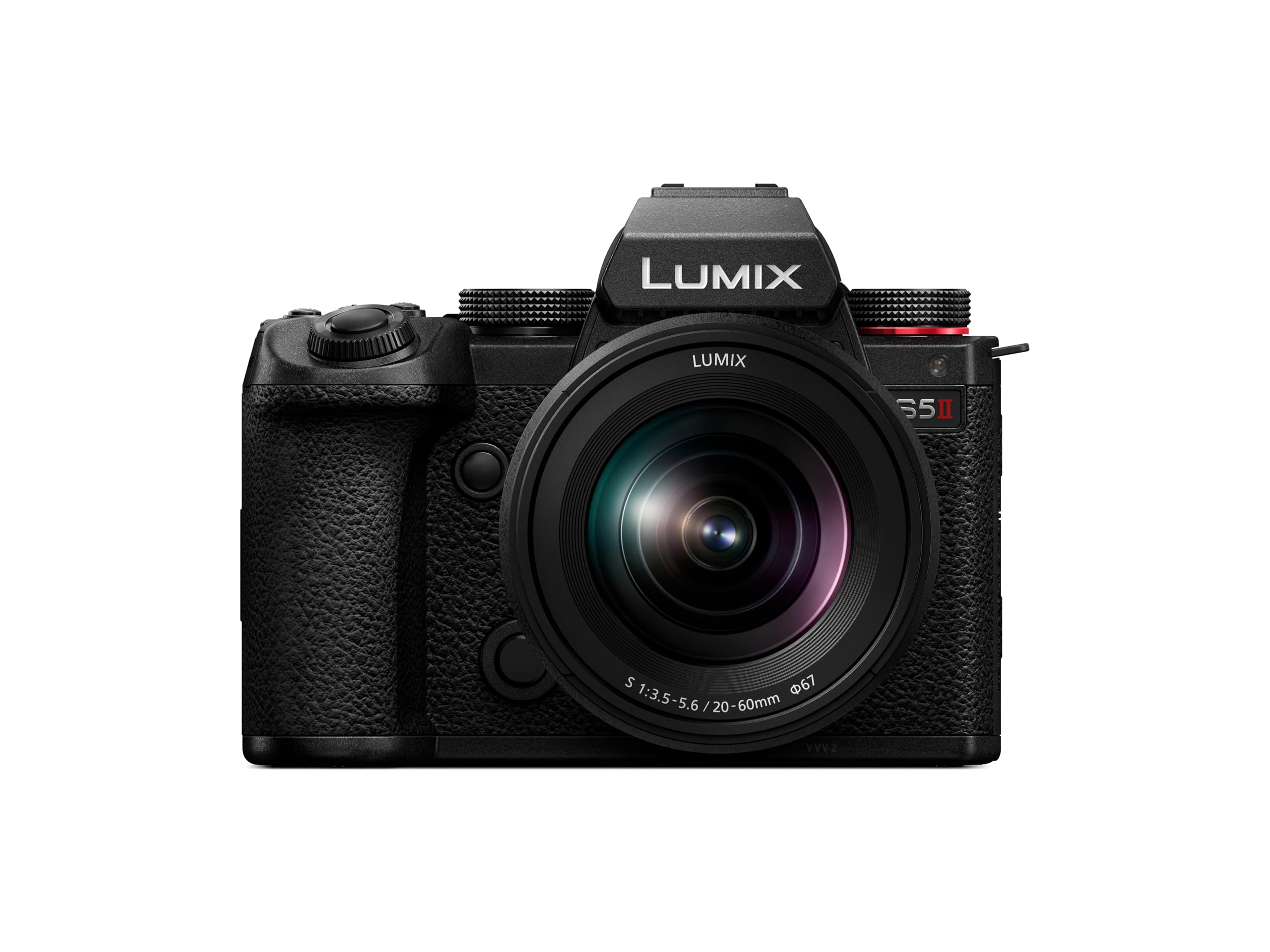
The Panasonic LUMIX S5II represents a turning point for the LUMIX line, introducing a phase hybrid autofocus system that finally matches the speed and reliability of Canon and Sony competitors. The 24.2MP full-frame CMOS sensor delivers approximately 2x faster signal processing than its predecessor, with excellent dynamic range and natural color reproduction. The Active I.S. technology provides exceptional stabilization for walking shots, significantly reducing the need for a gimbal in many scenarios.
Video features are where the S5II truly shines: unlimited 4:2:2 10-bit recording with 14+ stops of V-Log/V-Gamut capture for maximum dynamic range and color grading flexibility. The REAL TIME LUT feature allows in-camera color grading for both photos and video, speeding up the editing workflow. The heat dispersion mechanism combines a small fan with an efficient heat sink, enabling unlimited recording without overheating — a critical advantage over many competitors that shut down after 30 minutes of 4K60p.
The S5II includes a 20-60mm f/3.5-5.6 kit lens that provides a versatile wide-to-standard zoom range, though the variable aperture limits low-light performance. The L-mount ecosystem includes options from Sigma, Leica, Viltrox, and Blackmagic, providing solid lens choices at various price points. Battery life is notably poor, with the DMW-BLK22 lasting only about 370 shots per charge – a battery grip or external power source is essential for all-day shoots. The body is slightly heavier than Sony and Canon equivalents but provides excellent ergonomics and button layout.
Why it’s great
- Phase hybrid AF now competitive with Sony and Canon
- Unlimited 4:2:2 10-bit recording with built-in fan
- Excellent Active I.S. for walking video shots
Good to know
- Poor battery life requires grip or external power
- Limited long zoom lens options in L-mount
- Heavier than comparable Sony and Canon bodies
8. Fujifilm X100VI

The Fujifilm X100VI is a unique camera in this roundup, offering a fixed 23mm f/2 lens (35mm equivalent) with a dedicated photographic experience that emphasizes process over specifications. The 40.2MP X-Trans CMOS 5 HR sensor produces exceptional detail and resolution, and the 5-axis in-body image stabilization provides up to 6 stops of correction — a first for the X100 series. The built-in 4-stop neutral density filter allows wide-aperture shooting in bright conditions and smooth video motion blur.
The X100VI’s appeal lies in its film simulation modes, with 20 options including the new REALA ACE profile. These simulations produce stunning out-of-camera JPEGs that require minimal editing, making the X100VI ideal for photographers who want a distinctive look without post-processing. The hybrid viewfinder offers both optical and electronic viewing options, and the improved autofocus system with deep-learning subject detection provides reliable performance for street and portrait photography.
The X100VI has significant limitations as a primary camera: the fixed 23mm lens prevents zoom or telephoto shooting, and the autofocus motors can struggle with fast-moving subjects despite the improved algorithms. Video quality is acceptable but lags behind mirrorless competitors, and the lack of weather sealing means careful use in rain or dust. The high MSRP and limited availability make it difficult to find at retail prices, though its status as a cultural object ensures strong resale value.
Why it’s great
- Outstanding film simulations for beautiful JPEGs
- 6-stop IBIS and built-in ND filter
- Unique hybrid viewfinder experience
Good to know
- Fixed 23mm f/2 lens limits versatility
- Autofocus motors can be slow
- No weather sealing without filter adapter
9. Panasonic LUMIX S5IIX

The Panasonic LUMIX S5IIX is the video-focused sibling of the S5II, adding internal 5.8K ProRes recording, ProRes RAW output over HDMI, and wireless or wired IP streaming capabilities. The 24.2MP full-frame sensor and phase hybrid AF system are identical to the S5II, providing the same excellent image quality and reliable tracking. The 14+ stop V-Log/V-Gamut capture delivers exceptional dynamic range for color grading, and the REAL TIME LUT feature enables in-camera color grading for both photo and video.
The built-in fan and heat sink mechanism allow unlimited 4:2:2 10-bit recording in all modes, and the IP streaming capability makes the S5IIX a viable option for live production environments. The camera produces crystal-clear images with natural colors and excellent stabilization, making it a popular choice for professional YouTubers and content creators who need reliable long-form recording. The kit lens provides a 20-60mm range that covers wide-angle to standard perspectives.
Battery life remains the S5IIX’s weakest point, draining quickly during video recording and requiring external power or a battery grip for extended shoots. The body is slightly heavy at 740g with battery and card, and the rubber port covers feel fragile. High ISO performance degrades above 51,200, and the L-mount lens selection for long telephoto zooms remains limited compared to Sony and Canon systems. For video professionals who need internal ProRes and unlimited recording in a compact body, this is a specialized tool that delivers.
Why it’s great
- Internal 5.8K ProRes recording without overheating
- Wireless and wired IP streaming capability
- Phase hybrid AF with excellent tracking
Good to know
- Very poor battery life during video use
- Heavier than comparable mirrorless bodies
- Fragile rubber port covers
FAQ
Is 24 megapixels enough for professional photography?
What’s the difference between full-frame and APS-C at 24 megapixels?
Why do some 24MP cameras overheat when recording 4K video?
How important is in-body image stabilization for a 24MP camera?
Final Thoughts: The Verdict
For most users, the best 24 megapixel camera winner is the Canon EOS R8 because it delivers full-frame image quality, excellent autofocus, and 4K60p video in the lightest body available, making it the ideal entry point into full-frame photography. If you want advanced video features and unlimited recording, grab the Panasonic LUMIX S5IIX. And for professional stills and action photography with best-in-class stabilization, nothing beats the Canon EOS R6 Mark II.