
Our readers keep the lights on and my morning glass full of iced black tea. As an Amazon Associate, I earn from qualifying purchases.
Specs are compiled from manufacturer listings and verified buyer reviews and can change over time — please confirm the key details on the product page before buying.
Choosing the right 245/45R18 tires means deciding how your car behaves on a rainy highway, a frosty morning, or a sharp off-ramp. This guide breaks down nine of the strongest all-season options in this exact size, focusing on the grip, ride comfort, and durability that actually show up in real driving.
I’m Min — the founder and writer behind Gadgets Feed. This guide is built by comparing the manufacturers’ published specifications and the patterns across verified customer reviews, so you get each pick’s real strengths and trade-offs instead of marketing spin.
We have ranked the best 245/45r18 tires for wet traction, snow capability, comfort, and long tread life so you can match a set to your car and your climate.
Our Picks at a Glance


How To Choose The Best 245/45R18 Tires
This size fits a wide range of sport sedans and coupes, from BMW 3-Series to Audi A7 and even some SUVs. Before you pick a set, you want to match the tire’s ratings to how you actually drive and the weather you face.
Start with the load index and load range
The load index is a number on the sidewall that tells you how much weight a single tire can safely carry. Many of the tires in this size come in a 96 load index, which supports 1565 pounds per tire, or a stronger 100 index at 1764 pounds per tire. That higher 100 index usually comes with an XL (extra load) construction, which is a good match for heavier cars or those with a sportier feel, because the stiffer sidewall helps keep the tire planted during hard cornering.
Match the speed rating to your driving
The speed rating is the letter after the size, like V, W, or Y, and it tells you the maximum speed the tire is built to handle. A V rating is rated for 149 mph, a W rating for 168 mph, and a Y rating for 186 mph. Unless you regularly drive at those speeds, any of these will work fine, but a higher rating often comes with a firmer compound that can sharpen handling at the cost of a slightly firmer ride.
Weigh all-season versatility against your climate
A true all-season tire needs to handle dry summer heat, heavy rain, and light snow without forcing you to swap tires twice a year. Look for features like siping, which are tiny slits in the tread that grab snow and ice, and wide grooves that push water out to resist hydroplaning. If you live somewhere with severe winters, a tire with the Three-Peak Mountain Snowflake symbol, which indicates it is certified for snow performance, is the safer choice.
Quick Comparison
| Model | Best For | Load Capacity | Load Index | Item Weight | Amazon |
|---|---|---|---|---|---|
| Continental ExtremeContact DWS06 PLUS★ Best Overall | Performance all-season grip | 1764 lbs | 100 (XL) | 23.8 lbs | Amazon |
| GT Radial Maxtour LXBudget Champion | Budget-friendly comfort | 1565 lbs | 96 (SL) | 26.2 lbs | Amazon |
| Goodyear Eagle RS-ASmooth Cruiser | Smooth highway ride | 1565 lbs | 96 (SL) | 27.3 lbs | Amazon |
| Falken Ziex ZE950 | Strong value and sturdy load | 1764 lbs | 100 (XL) | 26.2 lbs | Amazon |
| Starfire WR | Quiet daily commutes | 1565 lbs | 96 (SL) | 27 lbs | Amazon |
| Bridgestone WeatherPeak | Certified snow capability | 1565 lbs | 96 (XL) | 25.6 lbs | Amazon |
| Yokohama Advan Sport AS PLUS | Sporty handling with XL load | 1764 lbs | 100 (XL) | 26 lbs | Amazon |
| Goodyear Eagle Sport A/S | Lightweight performance | 1764 lbs | 100 (XL) | 22 lbs | Amazon |
| Michelin CrossClimate2 | Year-round severe weather | 1764 lbs | 100 (XL) | 30.9 lbs | Amazon |
In-Depth Reviews
1. Continental ExtremeContact DWS06 PLUS
Our pick — over 4.5★ from 950+ verified ratings; the strongest balance of quality and price.
The all-season benchmark that blends sticky dry grip with confident snow manners
The Continental ExtremeContact DWS06 PLUS is the tire that keeps showing up on sport sedans for one reason: it delivers a genuinely balanced performance envelope. With a 100 load index and an XL construction, it supports 1764 pounds per tire, which makes it a solid match for heavier cars and drivers who push hard into corners. It carries a Y speed rating, the highest you can get, rated for up to 186 mph.
You get responsive handling and a long tread life, backed by up to 50,000 miles of limited manufacturer coverage, thanks to Continental’s SportPlus Technology. Built-in D, W, and S wear indicators molded into the tread fade as the tire wears, signaling when dry, wet, or snow performance drops. Buyers consistently report a huge upgrade over factory tires, especially in colder weather, with one noting it is 5 lbs lighter than the Goodyears it replaced.
The trade-off is a split in long-term durability reports, as some owners find them long-lasting while others report tires blowing out after 5000 miles. That is a rare but serious outlier, so inspect them regularly. Even with that caveat, the consensus is clear: this is the tire that re-inspires confidence on a Jaguar XF or a BMW 328i the moment you leave the driveway.
What wins people over
- Outstanding dry and wet grip, with strong snow and ice performance
- Smooth, quiet highway ride with precise steering
- Higher 1764-lb load capacity than its cheaper rivals
Watch out for
- A few buyers report premature blowouts after 5000 miles, so check pressures often
- Premium-tier price point
Reach for this if: you want the most complete all-season performer that shines on dry roads and in light snow without needing a winter set.
Look elsewhere if: you are strictly budget-focused and rarely push the car, since the cost buys capability you may not use.
2. GT Radial Maxtour LX
A wallet-friendly touring tire that refuses to wear out quickly
The GT Radial Maxtour LX is the tire for drivers who want a comfortable daily ride without paying a premium. It uses extra shoulder channels that force water out of the tread to reduce the risk of hydroplaning on wet roads, paired with stiff tread blocks for precise handling and steering response. The asymmetric tread and full-depth siping keep traction strong in dry, wet, and light winter weather even as the rubber wears down.
At this price, the tread life reports are exceptional. Owners mention two years of use with tread remaining, and one logged 55,000 miles across highway, snow, rain, and gravel. The ride is smooth and quiet, though a slight road noise builds as the tires age toward the end of their life.
The honest caveat is a split in durability and stability reports. Durability splits: some owners get 70,000 miles, others less than a year, and a few report vibration instead of a stable ride. It carries a 96 load index, which means 1565 pounds per tire, compared to the Continental’s 1764 pounds, so it is better suited to lighter cars in standard-load duty.
Who it’s for: budget-minded commuters who prioritize a soft, quiet ride and serious tread life over max cornering grip.
The honest caveat: durability and stability are a coin flip in the review data, so it is a value gamble that pays off for many but not all.
3. Goodyear Eagle RS-A
A touring tire that makes an older car feel brand new again
The Goodyear Eagle RS-A is an all-season touring tire that earns its keep on ride comfort. Its asymmetric construction improves handling and ride quality during straight driving, while aggressive shoulder tread blocks boost cornering grip and wide lateral grooves pull water out for better wet traction. In this 245/45R18 size, it carries a 96 load index supporting 1565 pounds per tire.
What buyers rave about is the smoothness. The review pages sum it up: “Rides very smooth, no complaints.” Drivers describe feeling like they are in a brand new car, with quiet operation and solid year-round performance. At 27.3 pounds per tire, it is noticeably heavier than the Continental ExtremeContact DWS06 PLUS, which comes in at 23.8 pounds, so your steering may feel a touch less eager in quick transitions.
This is not the most notable tire in the lineup, but that is not its job. It delivers reliable traction in multiple driving conditions and a refined ride that makes long highway miles disappear. If your priority is comfort and predictability over razor-sharp handling, this is a strong mid-range pick.
Pick this for: commuters and families who want a quiet, comfortable ride on a tire that performs well in varied conditions all year.
skip it if: you drive a heavier car that needs the extra load capacity of an XL-rated tire.
4. Falken Ziex ZE950

A true all-season with XL load strength at a mid-range price
The Falken Ziex ZE950 is a high-performance all-season tire that punches above its price with an XL-rated 100 load index. That means it supports the same 1764 pounds per tire as the Continental, despite costing notably less. It uses 3D Canyon sipe technology, which increases biting edges for ice braking and interlocks under load for better handling and improved wear.
The tread design is built for wet and snowy confidence. Wide angled tread slots pack snow into the center of the tire for extra grip, sculptured groove walls eliminate rain groove wandering, and wide circumferential grooves evacuate water to boost hydroplaning resistance. Customers note two sets lasting over 60,000 miles each with no wet-weather issues, and “bang for your buck” appears repeatedly in reviews.
The honest downsides are minor. Some owners find them a little loud, and snow traction is described as average rather than exceptional. But at this load capacity for this price, it is a compelling option for sport sedans that need the extra load rating without the premium price tag, falling short of the Continental on ultimate grip but leading on value.
The ceiling: it matches the premium tires on load capacity and tread life at a friendlier price, making it a smart buy for daily drivers.
The floor: if you face heavy snow or demand the quietest possible cabin, this one gives ground to more specialized picks.
5. Starfire WR

A Cooper-made all-season that wins on quiet comfort and wet-road poise
The Starfire WR comes from Cooper Tire & Rubber Company, and it shows in the build quality. It is a high-performance all-season tire with an M+S rating for mud and snow, backed by a 40,000-mile treadwear warranty. In this 245/45R18 size, it carries a 96 load index supporting 1565 pounds per tire, and weighs in at 27 pounds.
What sets this tire apart is how consistently owners describe it as quiet and smooth. Drivers report it is quieter than prior Coopers they have owned, with excellent cornering and minimal hydroplaning on wet roads. One BMW X3 owner calls it a great tire with smooth, no-noise handling, and a few report multiple compliments on the aggressive tread design within the first week. Several owners have bought it for a second car, which is a strong vote of confidence.
The durability picture is mixed, with some tires holding up well and others lasting only 7 months, so longevity varies. But for the money, owners say it delivers about 80–90% of a premium tire’s performance at around half the price. If you want a quiet ride and solid wet traction without spending premium dollars, this is a strong contender.
Why owners love it
- Remarkably quiet and smooth on the highway
- Strong dry and wet traction with minimal hydroplaning
- 40,000-mile treadwear warranty adds confidence
Why it’s not for everyone
- Aggressive drivers may replace it around 30,000 miles
- An occasional set wears out far sooner than expected
Best for: daily commuters who value a hushed cabin and dependable wet-road grip at a sensible price.
Not for: owners who want a tire that can handle heavy snow with authority, since the M+S rating is lighter-duty than a snow-certified tire.
6. Bridgestone WeatherPeak

A quiet touring tire that carries genuine snow certification
The Bridgestone WeatherPeak earns its place for drivers who want true all-weather protection without switching to winter tires. It is Three-Peak Mountain Snowflake Certified, a stronger snow credential than the basic M+S rating, while staying quiet and long-lasting. In this size, it carries a 96 load index but with an XL construction, and it weighs 25.6 pounds.
The ride quality is where this tire shines in everyday use. Owners describe it as smooth and easy to balance, with one Camry XSE driver reporting good traction and a highly recommended rating. Another buyer calls it top of the line, noting it is slightly overpriced but worth the money for the confidence it provides.
The snow certification is the headline feature here, but the trade-off is that it is a touring tire at heart. It will not match the sporty response of the Continental or Yokohama on a twisty road, so it is best suited to drivers who prioritize a comfortable, secure ride across all seasons. For a light SUV or a sedan that sees real winter weather, this is a very capable pick.
The appeal: genuine snow certification in a quiet, smooth-riding all-season package that works all year.
The compromise: its touring character means it gives up some of the sharp, sporty handling that performance drivers want.
7. Yokohama Advan Sport AS PLUS

An XL-rated sport tire that transforms handling on a sports car
The Yokohama Advan Sport AS PLUS is built for drivers who want crisp handling and strong all-season traction. It uses extra large shoulder blocks to improve cornering performance and an tune sidewall construction for responsive, precise steering. A flatter contour profile and advanced rubber compound reduce uneven wear for a longer tread life, while a four-pitch tread variation cuts road noise for a quieter ride. It carries a 100 load index with XL construction, supporting 1764 pounds per tire.
Buyers on sporty platforms notice the difference immediately. A sports car owner reports the tires made a big difference in handling, all for the better, and a Subaru STI owner liked them so much they bought another set for a second car. One Audi A7 driver notes a perfect fit, great value, and good noise levels. The Z grooves and wavy sipes create additional biting edges that improve traction in wet and winter conditions.
The main observation is a minor one. One owner noted a floating feel on a Lexus at freeway speeds before the tires wore in, which is a brief break-in quirk rather than a persistent problem. For the price, this is a strong premium option that delivers sporty response and XL-grade load capacity in a package that stays quiet on the highway.
Choose it for: sports sedans and coupes where sharp cornering and a strong 1764-lb load rating matter more than outright snow capability.
Pass on it if: your winters are severe, since the wet and winter traction is good but not in the same league as a snow-certified tire.
8. Goodyear Eagle Sport A/S

The lightest tire here, and it shows in how eager the car feels
The Goodyear Eagle Sport A/S is the featherweight of this group at just 22 pounds per tire, which is noticeably lighter than the Continental’s 23.8 pounds and far lighter than the Goodyear Eagle RS-A’s 27.3 pounds. Less unsprung weight means quicker steering response and a slightly more energetic feel, which makes it a natural fit for sporty hatches like the VW GTI and cars like the 2006 Mazda RX8 that owners mention fitting perfectly.
Despite the light weight, it carries a 100 load index with XL construction, supporting the full 1764 pounds per tire. Owners praise its grip, performance, and durability, with one reporting good performance across many environments. It performs well on various surfaces, and one GTI owner notes it works well in snow conditions, so it is not just a fair-weather tire.
The trade-off is a modest H speed rating, rated for 130 mph, which is lower than the V or W ratings on other tires here. For most real-world driving that is a non-issue, and the light weight and strong load capacity make it a great value. It is built in the United States, which some buyers appreciate.
What makes it stand out
- Very light 22-lb weight for responsive, eager handling
- XL-rated 1764-lb load capacity despite the light build
- Strong grip and performance across varied conditions
Keep in mind
- H speed rating is lower than rivals, though fine for daily driving
- Not the quietest option in the lineup
Grab it if: you drive a lighter sporty car and want the crisp steering that comes with less unsprung weight, plus a strong XL load rating.
Think twice if: you regularly drive at sustained high speeds where a V or W rating would give more headroom.
9. Michelin CrossClimate2
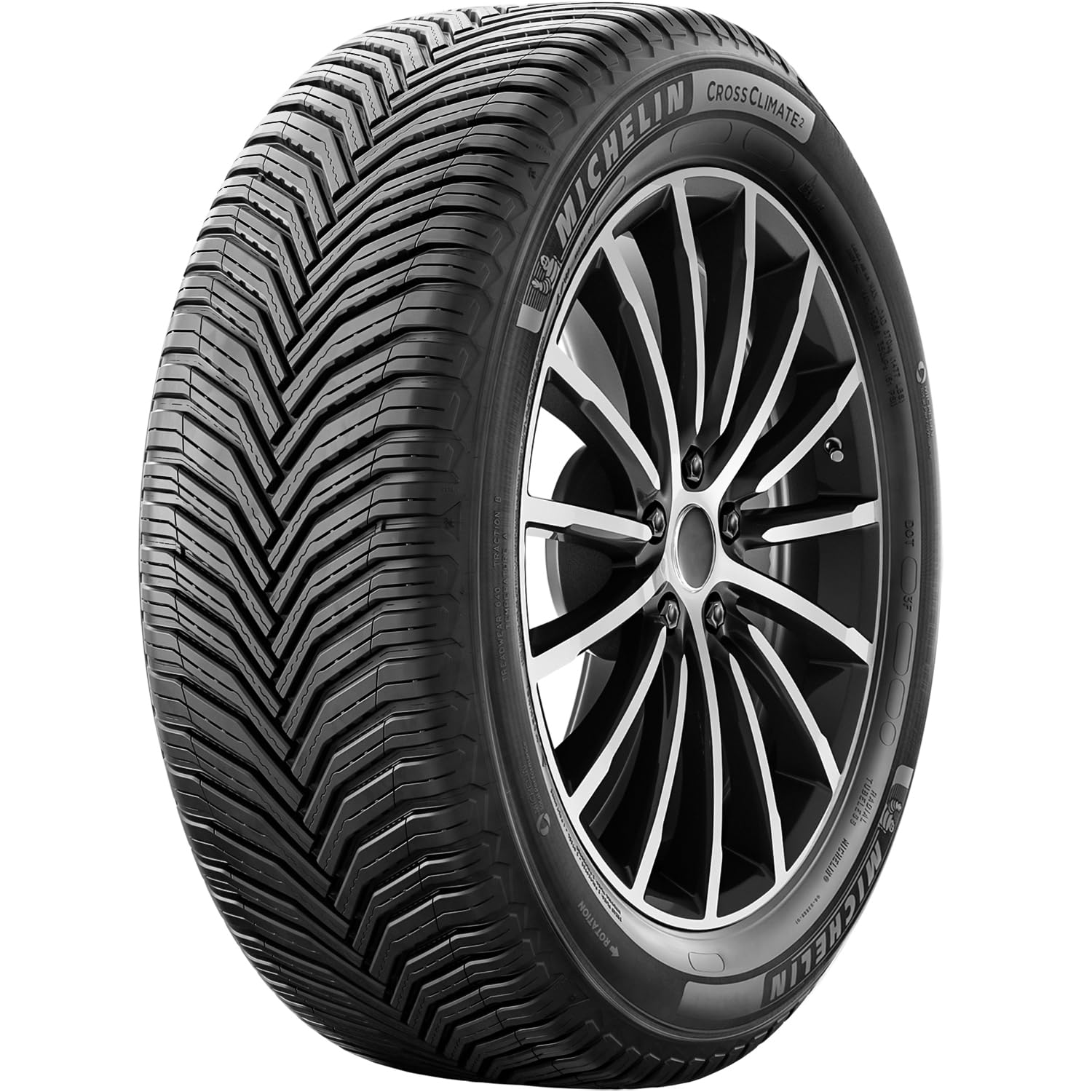
The one-tire solution that genuinely replaces snow tires in most winters
The Michelin CrossClimate2 is the most expensive tire here, but it is also the most capable in severe weather. It is designed to perform in every climate condition, with excellent wet and dry braking, and Michelin backs it with a 60,000-mile treadwear limited warranty and a 6-year standard limited warranty. It carries a 100 load index with XL construction, supporting 1764 pounds per tire, though it is the heaviest tire in this group at 30.9 pounds.
Owner reports are striking. Reviewers point out the tire kept them safe through a bomb cyclone, driving through snow, sleet, ice, and rain while maintaining highway speeds with confidence. One Vermont owner says it is so good they no longer need separate summer tires, calling it the best all-season tire they have ever tried. Michelin says it stops shorter than four leading competitors in dry and wet conditions and lasts up to 15,000 miles longer, matching its 60,000-mile warranty.
This is a premium investment, and it is heavy, which can slightly dull steering response compared to lighter sport tires. But if you live in a region with real winters and want a single set of tires that handles everything, this is the definitive pick. It delivers a quiet, smooth ride and exceptional grip on water surfaces, making it the safest all-weather choice in this lineup.
The verdict: if you want one set of tires that conquers everything from dry summer highways to icy winter roads, this is the one.
The trade-off: it is the heaviest and most expensive tire here, so it is best for drivers who value capability and safety over sharp handling and budget.
Understanding the Specs
Load index and load range
The load index is the two-digit number in the size, like 96 or 100, and it tells you the maximum weight a single tire can carry when fully inflated. A 96 index supports 1565 pounds, while a 100 index supports 1764 pounds. The load range, marked SL for standard load or XL for extra load, indicates the tire’s internal construction strength. XL tires have stiffer sidewalls that keep the tire planted during cornering, which is why they are common on sportier cars.
Speed rating explained
The speed rating is the letter that follows the load index, such as H, V, W, or Y. It tells you the maximum speed the tire is engineered to handle: H is rated for 130 mph, V for 149 mph, W for 168 mph, and Y for 186 mph. A higher rating usually comes with a firmer compound for better high-speed stability, but it can also mean a slightly stiffer ride around town.
FAQ
What cars use 245/45R18 tires?
What does the 100 load index mean on a tire?
Is an XL load range tire worth it?
What is the difference between M+S and Three-Peak Mountain Snowflake ratings?
How long should a set of 245/45R18 all-season tires last?
Can I use 245/45R18 tires in the snow?
What does the speed rating like 96V or 100Y mean?
Are heavier tires worse for fuel economy and handling?
Final Thoughts: The Verdict
If you want the best all-around performer that blends dry grip, wet confidence, and useful snow capability, the Continental ExtremeContact DWS06 PLUS is the crowd favorite, holding a 4.8-star rating across 900+ owners. For budget-conscious drivers who still want a smooth, long-lasting ride, the GT Radial Maxtour LX delivers impressive tread life for the money. And if you face serious winters and want to skip the seasonal tire swap entirely, the Michelin CrossClimate2 is the safest all-weather pick, though it costs the most and weighs the most of the group.
How We Picked
We do not accept paid placement. Every pick is matched to a real buyer and a real use-case; we do not hands-on test units.
Sources & Methodology
Specifications: manufacturer listings and product documentation. Review insights: verified customer reviews, as of August 2026. Pricing: not shown on this page (it changes often); check the current price via the retailer link.
As an Amazon Associate, Gadgets Feed earns from qualifying purchases. This does not affect which products we feature.