
Our readers keep the lights on and my morning glass full of iced black tea. As an Amazon Associate, I earn from qualifying purchases.
Specs are compiled from manufacturer listings and verified buyer reviews and can change over time — please confirm the key details on the product page before buying.
Buying a replacement engine is not like buying a mower — you cannot swap brands and hope it fits. The vertical shaft has to match your old crankshaft exactly, or nothing bolts up. This guide compares four replacement engines in the 24 to 25 HP class so you can pick the one that drops into your deck and fires on the first turn of the key. One honest note before we start: this list uses flexible matching for the 25 HP class, so not every pick is the exact number you searched. Anything in the 24 to 26 HP range serves the same job, and the nearest same-type size is called out plainly in each review.
I’m Min — the founder and writer behind Gadgets Feed. This guide is built by comparing the manufacturers’ published specifications and the patterns across verified customer reviews, so you get each pick’s real strengths and trade-offs instead of marketing spin.
Replacement engines live or die on crankshaft measurements, not horsepower badges. Below you will find four engines in the standard 24 to 25 HP class, matched to the riders and zero-turns they actually fit, plus what genuinely matters before you buy a 25 HP lawn mower engine.
Our Picks at a Glance
How To Choose The Best 25 HP Lawn Mower Engine
A replacement engine is a fitment job first and a horsepower decision second. Get the shaft wrong and a perfectly good engine sits on your garage floor.
The crankshaft is the whole ballgame
The crankshaft is the spinning shaft that sticks out the bottom of the engine and drives your mower’s blades. It has two measurements that matter: diameter and length. Engines are commonly made in 1 x 3-5/32, 1-1/8 x 3-5/32, 1-1/8 x 3.94, and 1-1/8 x 4-5/16 sizes. Measure your old shaft before you order anything — the engine makers themselves tell you to do this, and it is the single most common reason a swap fails.
Match the mounting pattern, not just the brand
Two engines can both be 24 HP and have completely different bolt circles. Some mounting holes come drilled only, which means you tap the threads yourself or reuse the self-tapping bolts from your old equipment. If you have never tapped a hole, plan for that step before the engine arrives.
Know your charging needs
The alternator inside the engine keeps your battery topped up and powers lights or an electric blade clutch. If your mower runs extra electrical gear, a higher-output charging system saves you from a dead battery mid-season.
Quick Comparison
| Model | Best For | Shaft Size | Power Class | Starting | Amazon |
|---|---|---|---|---|---|
| Briggs & Stratton 44S977-0033-G1★ Best Overall | Direct-replacement riders | Vertical shaft | 25 GHP | Electric start, 16 amp | Amazon |
| Briggs & Stratton 44S977-0032-G1 | Husqvarna and John Deere swaps | Vertical shaft | 25 GHP | Electric start, 16 amp | Amazon |
| 24 HP 724cc Intek Series (44N877) | Kohler and John Deere z345m replacement | 1″ x 3-5/32″ | 24 HP, 724cc | Gas powered | Amazon |
| 24hp Kawasaki Vertical Shaft | FS730V class zero-turns | 1″ x 3-5/32″ | 24 HP, 726cc V-Twin | Electric start | Amazon |
In‑Depth Reviews
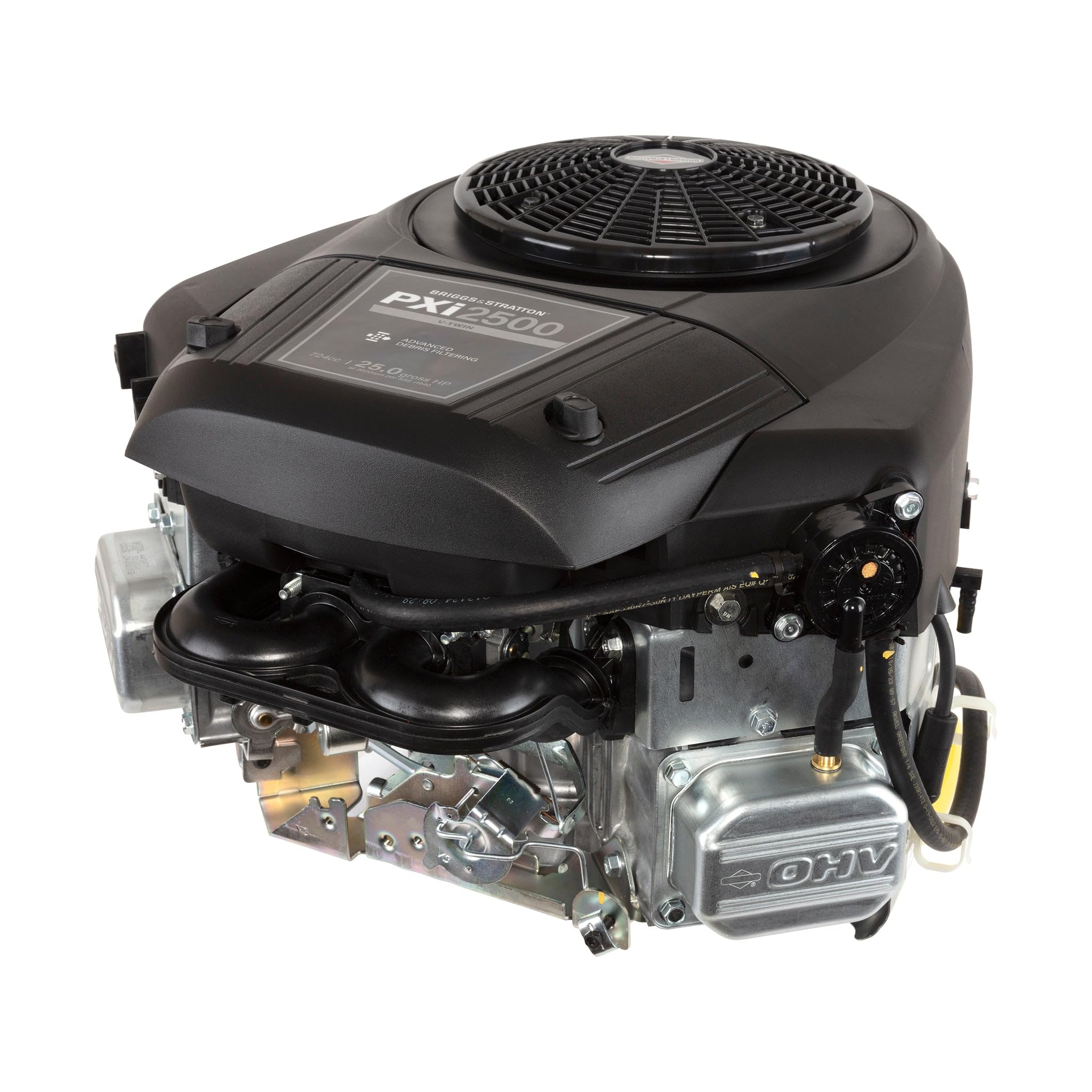
1. BRIGGS & STRATTON 44S977-0033-G1 25 GHP Vertical Shaft Engine, Black
Our pick — 4.5★ from 100+ verified ratings; the strongest balance of quality and price.
The crowd favorite for a reason: it bolts onto older equipment and just runs.
If you are replacing a tired engine on a rider or zero-turn that has already served you for years, this is the pick with the deepest track record. The 25 GHP rating and electric start with a 16 amp alternator mean you turn a key instead of yanking a cord — and that alternator keeps your battery charged through the season. The Dura-Bore cast iron cylinder sleeve is a hard liner inside the cylinder bore that resists wear far better than a plain aluminum wall, which is why these engines keep running when cheaper ones start burning oil.
This engine drops straight into older machines, which is why it earns a spot. Buyers report: “This was a perfect fit for my 2013 Ferris IS600Z using a legacy 44Q7775145G5 with 595730 Crankshaft.” Owners also swap out a 20hp Kohler from a 48″ Scag — the bolt pattern matches, the crank lines up, and the engine fires right up. A float feed carburetor (a simple fuel delivery system) keeps gas flowing reliably, and the overhead valve design (valves placed in the cylinder head) runs cooler and gives longer valve life than older flathead designs. Two things to know: some engines arrive without a muffler or starter solenoid (the electrical switch that engages the starter), and shipping damage from boxes turned on their side is a real pattern. Open the carton on the porch, check for oil in the box, and plan for a break-in oil change at one hour and five hours.
What works in the real world
- Electric start with a 16 amp alternator — no pull cord, and your battery stays charged
- Dura-Bore cast iron cylinder sleeve for long wear inside the cylinder
- Hits the correct bolt pattern on older equipment, so swaps go quickly
What you should plan around
- Ships without a muffler or starter solenoid on some orders — budget for both
- Boxes occasionally arrive on their side, so oil can leak and the dipstick can bend
Right for you if: you are refreshing an older rider or zero-turn and want the widest fitment record in this class.
Think twice if: your mower uses a crankshaft outside the standard vertical sizes — measure before you order.
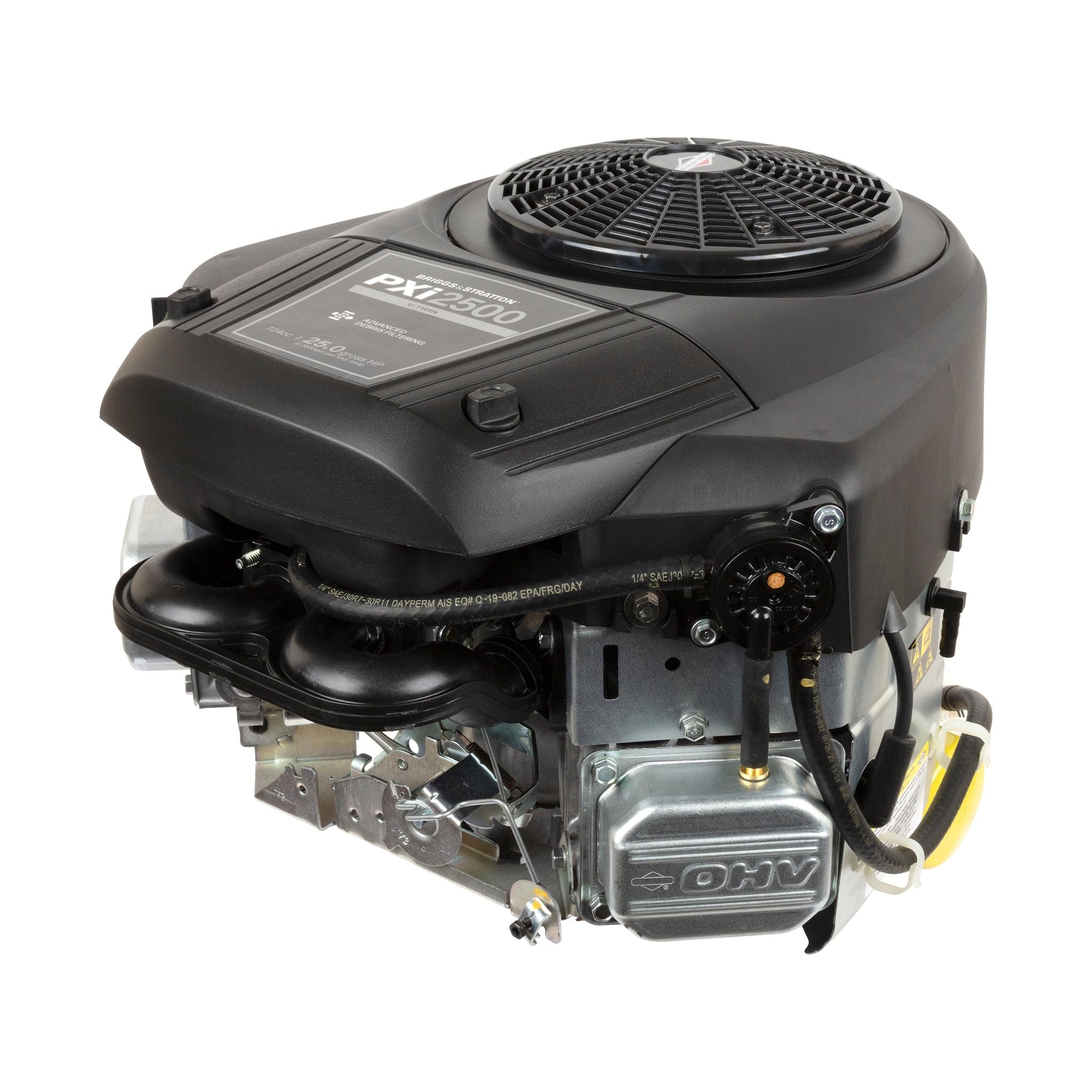
2. Briggs & Stratton 44S977-0032-G1 25 GHP Vertical Shaft Engine, Black
The Husqvarna and John Deere upgrader that cuts tall grass without bogging down.
Owners stepping up from a worn 21 or 22 HP engine to 25 GHP report more blade speed and more power through thick growth. The full pressure lubrication with an oil filter means oil is pumped to the moving parts instead of just splashed around, which is a durability step up for anyone mowing acreage several times a week. A PTO bearing, the bearing under the engine where the blade-drive pulley mounts, takes the side load off the crank.
Wiring is the easy part on this direct-replacement engine. Plugs and wires matched perfectly on a Scag Freedom Z swap, and the whole job took about an hour. Owners mention: “I replaced the engine on my Scag Freedom Z in about 1 hr.” John Deere LA120 owners note it drops in with help lifting it onto the frame — you will want a second set of hands. Here is the trade-off nobody advertises: some mounting holes need tapping before the bolts will bite, and shipment orientation bites both Briggs models — engines that travel on their side lose their oil into the box. It still ran afterward, but check yours the moment it lands. On the physical side, this one is listed at 83.8 pounds and its package measures 19 x 16 x 18 inches — compact enough to wrestle onto a frame with one helper.
Where it earns its keep: the full pressure lubrication and oil filter put it a durability step above splash-lubricated engines when you are cutting heavy growth multiple times a week.
Solid fit for: Husqvarna, John Deere, and Scag owners who want a genuine power bump out of a tired frame.
Not your pick if: you want zero wrenching — the tapped mounting holes and the lifting help are part of the job.
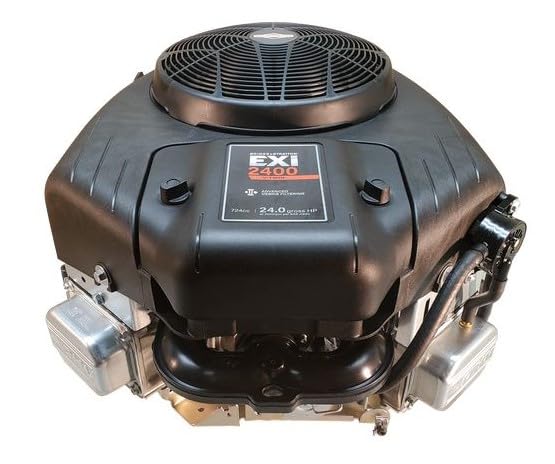
3. 24 HP 724cc Intek Series Engine 1 x 3-5/32 inch (Replaces Briggs 44N877)
The 724cc workhorse for riders and z-turns that just need a straight swap.
Rated 4.8 out of 5, this is the highest-scoring engine in the group — and the newest listing. Its 724cc displacement gives it real low-end torque, which is what shoves a deck through wet spring grass. The 1″ x 3-5/32″ shaft, tapped 7/16″ with a 1/4″ keyway, matches the most common Briggs mounting pattern, and the listing covers the full crankshaft size family so you can confirm your measurement against it.
Where it shines is the Kohler cross-swap. Owners replacing a Kohler on a zero-turn report the muffler needed tweaking to fit, then it ran great. John Deere z345m owners call it a clean replacement. One consistent thread in the reviews: the mounting holes come drilled only, so you tap the threads yourself — and the ground connection needs tapping too. As customers note: “Mounted well (need to tap 3/8–16 engine mounting holes).” There is no documentation in the box and no clear warranty statement, so if you need step-by-step guidance you are supplying it yourself. For a mechanically confident owner, tapping those holes is a fifteen-minute job.
Strengths worth the money
- 724cc of displacement pushes a deck through thick grass without stalling
- Proven cross-fit for Kohler engines and John Deere z345m mowers
- Arrives complete — owners note it came with everything needed for the exchange
Before you order, know this
- No documentation and no clear warranty info in the box
- Mounting holes ship undrilled for threads — you tap them yourself
Buy it when: you are handy with a tap and want the best-reviewed engine here for a Kohler or z345m swap.
Pass when: you want factory paperwork and warranty clarity in the box.
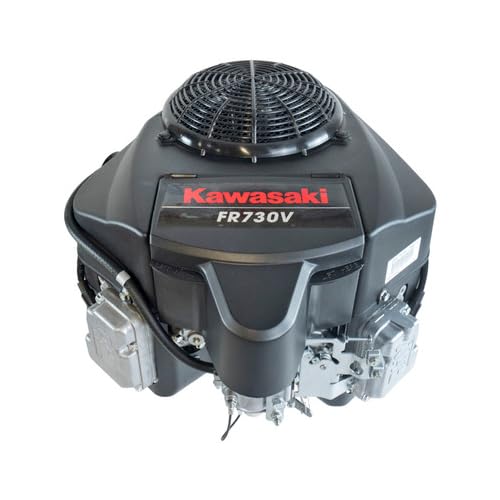
4. 24hp Vertical 1″x3-5/32″ Shaft, Fuel Pump, Electric Start, Kawasaki Engine
A commercial-grade V-twin for FS730V class zero-turns that has to earn its keep.
The 726cc OHV V-twin is the heftiest engine in this group, and it shows on the scale — 95 pounds of aluminum block sitting on your frame. This is the top of the price tier, so you are paying for a different class of power delivery: two cylinders running smoother and quieter than a single, with torque that holds steady under load. It ships with electric start and a fuel pump feeding the carburetor.
If you own the right machine, this engine is drop-in easy. Reviewers point out: “Engine direct fit for FS730V, plug-and-play, no wire splicing.” Owners with FS730V machines describe swapping it in and starting it right up with fresh oil and fuel, and one install on a Gravely ran without problems. One FS730V owner noted a revised air filter housing that keeps the filter cleaner. Compare that to the price difference you avoid against dealer parts, and the value argument is straightforward for a machine you rely on.
Here is the honest catch, and it matters: the listing warns you to measure your old crankshaft because Kawasaki builds several shaft sizes, and at least one buyer found the shaft did not match despite ordering it as a replacement. The return window and the shaft mismatch are the two things to sort out before you click buy. The engine itself is a strong unit — the risk lives entirely in fitment. Weigh that against the 95-pound weight and the fact that it outweighs the Briggs 44S977-0032-G1 considerably, and this is a pick for the owner who knows their exact shaft size and intends to keep the machine for years.
The spec that earns the premium: a 726cc V-twin delivering smoother, steadier torque than the single-cylinder picks here, rated for machines that work hard all season.
The caveat that costs money: shaft-size mismatches are the reported failure point, so confirm your crankshaft measurement before ordering — a bad fit here means a return, not a fix.
Reach for this: if you run an FS730V or similar commercial-class zero-turn and want the smoothest, most powerful engine in this comparison.
Look elsewhere: if you cannot confirm your crankshaft measurement exactly — a mismatch here is a return, not a repair.
Understanding the Specs
Horsepower Class and Displacement
Horsepower is the headline number, but displacement — the total volume of the engine’s cylinders, measured in cubic centimeters or cc — tells you more about real pulling power. The 724cc and 726cc engines here sit in the standard 24 to 25 HP class, which is the balance for consumer riders and light-commercial zero-turns. A bigger horsepower number does not mean a better fit; matching the class your frame was built for keeps the belts, pulleys, and deck running as designed.
Shaft, Sleeve, and Charging System
The crankshaft size — its diameter and length — has to match your old engine or nothing bolts up. The cylinder sleeve is the hard liner inside the bore: cast iron versions resist wear far longer than a bare aluminum wall, which is the difference between an engine that lasts a decade and one that starts burning oil. The charging system’s amp rating tells you how much electrical headroom you have, so if your machine runs lights or an electric blade clutch, a higher amp alternator keeps the battery from going flat.
FAQ
How do I know if a replacement engine will fit my mower?
What crankshaft sizes do these engines come in?
Is 24 HP the same as 25 HP for a mower engine?
Do these engines come with a muffler and starter solenoid?
What does the 16 amp alternator do on a mower engine?
Why do some replacement engines arrive with oil leaked in the box?
What is a Dura-Bore cast iron cylinder sleeve?
Do I need to tap the mounting holes on a replacement engine?
Briggs & Stratton or Kawasaki for a zero-turn?
Can I replace a Kohler engine with a Briggs & Stratton?
Final Thoughts: The Verdict
For most buyers, the 25 hp lawn mower engine is the BRIGGS & STRATTON 44S977-0033-G1 — it earns the top spot on the strength of its fitment record across older riders and zero-turns, and its 4.5-star rating across 140+ ratings backs that up. If you run a Husqvarna or John Deere and want a genuine power bump, the 44S977-0032-G1 is the one to grab, with its full pressure lubrication and PTO bearing. And if you are replacing a Kohler or want the highest-scoring engine here, the 24 HP 724cc Intek Series is the pick for you. Whatever you choose, measure your crankshaft first — that single tape-measure check decides whether the swap takes an hour or becomes a return.
How We Picked
We do not accept paid placement. Every pick is matched to a real buyer and a real use-case; we do not hands-on test units.
Sources & Methodology
Specifications: manufacturer listings and product documentation. Review insights: verified customer reviews, as of September 2026. Pricing: not shown on this page (it changes often); check the current price via the retailer link.
As an Amazon Associate, Gadgets Feed earns from qualifying purchases. This does not affect which products we feature.