
A 250-watt heater occupies a specific niche in the heating market—it delivers a gentle, sustained warmth ideally suited for supplementing the heat in small, enclosed spaces like a bathroom, under a desk, or inside a pet enclosure, without the energy draw of its high-wattage 1500W cousins. You’re not looking to heat a whole house; you need targeted, efficient comfort for a defined area where safety and precise temperature control matter more than raw power.
I’m Min — the co-founder and writer behind Gadgets Feed. To build this guide, I cross-referenced wattage-to-room-size ratios, safety certifications (UL 2021, ETL), heating element types, and the difference between radiant and convection heat delivery, ensuring you get the exact form factor that fits your space without wasted energy.
Whether you need a fanless panel for a bedroom or a rugged heat lamp for a barn, understanding the unique trade-offs within each design leads you to the right 250 watt heater for your specific scenario.
How To Choose The Best 250 Watt Heater
Finding the right 250-watt heater means matching the heating technology (radiant vs. convection) to your specific room, recognizing that the small wattage cap is a feature, not a flaw, for those needing safe, low-energy boost heat. You must consider the physical form factor—wall-mounted mats, ceiling lamp fixtures, tower fans, or handheld tools—each is built for a distinct job.
The Convection vs. Radiant Decision
The core choice is how the heat is delivered to you. Convection panel heaters (like the EconoHome or Amaze models) warm the air itself, circulating it slowly via natural airflow. These are silent, do not dry out the air, and are ideal for maintaining a constant ambient temperature in a bedroom or small office. Radiant heaters (like the Premier 1 heat lamp) emit directional infrared energy that warms objects and people directly, not the air. This is perfect for a bathroom ceiling fixture or a barn pen because you feel the heat instantly and the energy isn’t wasted heating empty floor space. Fan-forced models combine a heating element with a blower to push warm air around, offering faster room warming than convection panels but with audible noise and potential dust movement.
Safety Certifications and IP Ratings
A 250-watt heater is often used in bathrooms or near pets and children, so safety is paramount. Look for UL 2021 compliance or ETL certification, which confirm the unit meets rigorous standards for electrical safety and overheat protection. For bathroom-specific installations, the IP44 splash-proof rating (found on the EconoHome panel) guarantees the unit is protected against water splashes from any direction, making it legal and safe to install in Zone 2 of a wet room. Ceiling exhaust heater combos like the Broan-NuTone must be Type IC rated to safely contact insulation without fire risk, a crucial detail for in-ceiling installation.
Physical Dimensions and Installation
How the heater integrates into your space is just as important as its heat output. A wall-mounted panel heater at about 18×24 inches can be painted to match your wall, offering a completely flush and unobtrusive profile. A ceiling lamp fixture requires cutting into your ceiling and connecting to a switch, but it frees up all floor and wall space and provides heat precisely over a shower or changing area. A 250W heat gun is a completely different tool—a high-velocity, high-temperature device for shrink-wrapping, not room heating—so matching the physical form factor to your actual task is non-negotiable. Always check dimensions (depth especially) and if installation hardware is included.
Quick Comparison
On smaller screens, swipe sideways to see the full table.
| Model | Category | Best For | Key Spec | Amazon |
|---|---|---|---|---|
| Premier 1 “Prima” Heat Lamp | Radiant Lamp | Pet & livestock warming | Ceramic fixture, anti-chew cord | Amazon |
| EconoHome Wall Panel | Convection Panel | Bathroom & room addition heat | IP44 splashproof, 100 sq ft | Amazon |
| Broan-NuTone 164 Ceiling Unit | Ceiling Fan Heater | Bathroom ceiling installation | 2 bulb, 70 CFM ventilation | Amazon |
| Amaze Mini Convection Panel | Wall-Mounted Panel | Small room & RV use | 853 BTU/hr, 8.8 lbs panel | Amazon |
| Comfort Zone 4800W Fan Heater | Industrial Fan | Large garage & workshop | 4800W, 1000 sq ft coverage | Amazon |
| Weller 6966C Heat Gun | Heat Gun Tool | Electronics & shrink tubing | 3-position switch, 6′ cord | Amazon |
In‑Depth Reviews
1. Premier 1 “Prima” Heat Lamp®
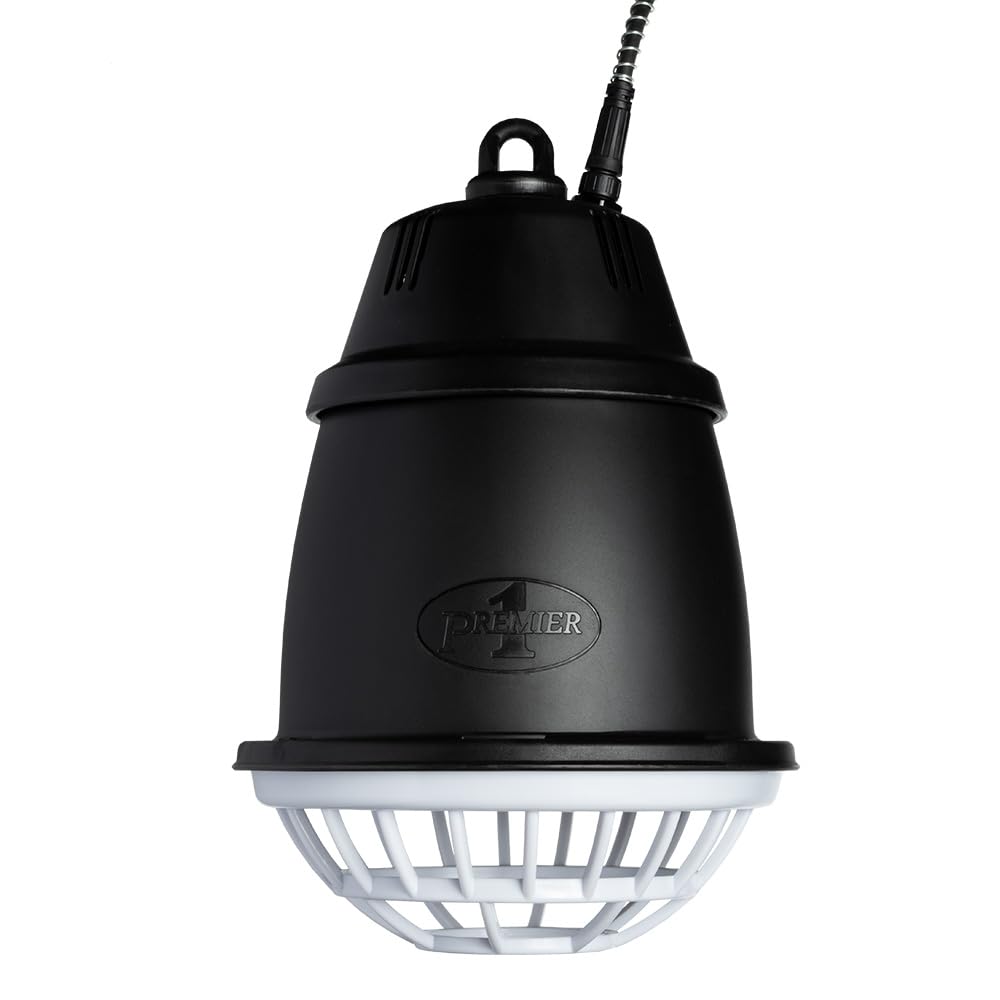
For anyone needing to warm a specific zone—whether it’s a dog kennel, goat barn, or newborn puppies—the Premier 1 “Prima” stands apart by solving the exact fire-safety problem that plagues common heat lamps. Its glass-reinforced plastic housing and heavy-duty plastic grill are purpose-built to resist both high bulb temperatures and the impact of ornery animals, while the 16-foot anti-chew spring-wire cord prevents a common electrical failure point. This is the only lamp on the list designed from the ground up for fall-safe operation around livestock instead of just being a metal clamp lamp someone hung in a stall.
The fixture is rated for standard 250W BR40 or infrared bulbs (sold separately), and its ceiling-mount form factor keeps the heat source safely out of reach. Customers consistently report its integrated tip-over shut-off as a genuine life-saver for their animals, a feature missing from standard barn clamp lights. The lamp’s 9-3/8 inch diameter dome focuses the infrared heat downward rather than wasting it sideways, making the 250W feel extremely effective for a small pen or hutch area where direct warmth is the requirement.
The trade-off with this lamp is that it provides zero ambient air heating—it warms by line-of-sight infrared only, so the air around the lamp stays close to ambient room temperature. It also has no thermostat, meaning the bulb runs at 100% output until unplugged or switched. The build quality is exceptional for its use case, but it is not a heater for a home office or living space.
Why it’s great
- Heavy-duty ceramic fixture rated for 250W BR40 bulbs reduces fire risk compared to standard metal lamps.
- Anti-chew spring cord and plastic grill add crucial safety layers for animals and barn environments.
Good to know
- Bulb not included — you must purchase a compatible 250W BR40 or infrared bulb separately.
- Provides only direct infrared heat, no convection or air temperature control.
2. EconoHome Wall Mount Space Heater Panel

The EconoHome panel heater is the top choice for those wanting a permanent, invisible heating solution for a 100 sq. ft. bathroom or small room without sacrificing any floor space. The unit is a slim convection heater (only 0.4 inches thick) that mounts directly to your wall like a picture frame, painting over to match your existing wall color. Its IP44 splash-proof rating is the key differentiator here—this is one of the few 250W panel heaters you can legally and safely install in a bathroom’s Zone 2 area, directly above a towel rail or near a sink, without worry of moisture damage.
The heater uses a crack-resistant calcium silicate core that is triple-reinforced, addressing the common longevity complaint about ceramic panels that can crack under uneven pressure. The included plug-in thermostat gives you temperature control across a range of 41-86°F, and because it’s a fanless convection design, it operates in absolute silence. Customers who purchased this specifically for bathroom use report that it effectively takes the chill off a tiled room without the noisy blast of a fan heater, maintaining a steady temperature within a few degrees of the set point.
Owners note that the installation template and hardware are easy to use, but extreme care must be taken to drill screw holes evenly, as uneven pressure can still lead to cracking in the panel, even with the triple reinforcement. It delivers heat slowly, so it will not provide instant warmth upon entry, but rather maintains a constant background temperature. The 250W limit means it cannot serve as a primary heat source for any room larger than 100 sq. ft., so buyers must respect its coverage quote.
Why it’s great
- IP44 splashproof rating makes it the safest choice for bathroom wall mounting, directly near water sources.
- Fanless convection design means zero noise and no dust circulation, ideal for allergy sufferers.
Good to know
- Heats up slowly compared to fan-forced models; it is designed for ambient temperature maintenance, not quick blasts.
- Ceramic panel can crack if mounting screws are overtightened or applied unevenly.
3. Broan-NuTone 164 Ceiling Heater and Fan

If you are remodeling a bathroom and want a heat source that is completely hidden in the ceiling, the Broan-NuTone 164 is the established standard. This fixture combines a ventilation fan (70 CFM at 4.0 sones) with two 250W R40 or BR40 infrared bulb sockets, delivering 500W of total heat output, plus air exhaust. The unit is Type IC rated, which is crucial—this allows the housing to be safely covered by insulation in your attic without creating a fire hazard, a requirement for many modern building codes. The infrared bulbs warm occupants directly via radiant energy, making a bath or shower stall feel instantly warmer even if the room air has not yet heated up.
The fan and heater operate independently using a separate two-function wall switch (not included), meaning you can run the ventilation without the lights, or hit the heater on a cold morning without needing to use the fan. Installation involves mounting the steel housing between ceiling joists, and the adjustable brackets with keyhole slots make retrofit into an existing cutout easier than many competing models. Owners with a 65 sq. ft. standard bathroom report that a 15-20 minute run on the 500W setting, combined with the warm infrared glow, makes morning showers far more bearable without the energy draw of a 1500W portable space heater.
The primary downside is that the heat lamp bulbs are not included, and you must buy R40 or BR40 bulbs separately, which typically cost -20 each. Also, the combined electrical load of two bulbs plus the fan motor must be accounted for on your circuit. The fan is rated at 4.0 sones, which is moderately loud—not whisper-quiet, but typical for a standard bathroom exhaust fan. Some owners noted that the plastic damper door feels flimsy, and the wiring instructions can be vague for homeowners not experienced with electrical work.
Why it’s great
- Type IC rating allows direct insulation contact for safe attic installation above the bathroom.
- Provides 500W of radiant infrared heat from two 250W bulbs plus 70 CFM ventilation in one ceiling unit.
Good to know
- Bulbs not included — you must purchase two R40 or BR40 infrared bulbs separately.
- Ventilation fan operates at 4.0 sones, which is noticeable rather than whisper-quiet.
4. Amaze Mini Convection Panel Heater

The Amaze Mini panel heater is the most space-efficient way to bring 250W of silent convection heat to a small room, RV, or under-desk situation, with a profile only one inch thick. It is rated to cover up to 80 sq. ft. and is UL 2021 certified by Intertek, an important safety validation for a panel that can be mounted flush to a wall. Its niche is in providing a consistent, low-level ambient heat that prevents a small space from ever getting cold, rather than trying to suddenly warm a cold room. Owners have successfully used the Amaze with a smart plug to automate a garage freeze-prevention system, keeping temperatures above freezing in an uninsulated 250 sq. ft. garage through passive, silent convection alone.
Because it uses a nichrome wire heating element and no fan, the panel operates with zero noise and prevents the recirculation of dust and allergens, which is a happy side effect for home offices or nurseries. The surface is painted a heat-resistant white, and the design specifically allows you to paint over it to match your wall color, making it nearly invisible. The panel itself weighs 8.8 pounds, and the included wall mount kit is straightforward—it installs like hanging a heavy picture frame using a 100-pound wire and hook system, which is simpler than drilling multiple wall anchors.
The 250W power means that heating is very gradual, and it will not feel hot to the touch in a large or leaky room. A small bathroom user reported that the 250W model was insufficient for a medium bathroom but perfectly adequate for a small one. Some buyers have pointed out an unpleasant chemical smell, which may persist for days or weeks depending on the unit. The long-term durability has also been questioned, with some reports of the ceramic panel developing cracks after a year of use, though the company’s ETL certification and UL compliance provide some manufacturing baseline.
Why it’s great
- One-inch profile and paintable surface mount nearly flush to the wall, making the heater truly invisible.
- ETL certified to UL 2021, fans deliver silent operation without dust recirculation.
Good to know
- Some units report a persistent chemical off-gassing smell that can last weeks.
- 250W is too weak for a moderately sized bathroom or poorly insulated spaces.
5. Comfort Zone 4800W Fan-Forced Heater

The Comfort Zone 4800W heater exists in a completely different category from the other 250W-focused units—it’s an industrial-grade fan-forced unit capable of heating a 1,000 sq. ft. garage or workshop. Its massive 17,065 BTU/hr output is delivered via a heavy-gauge steel body and a NEMA 6-30P plug, meaning it requires a 240-volt, 30-amp dedicated circuit (like a dryer or welding outlet), not a standard 120V wall socket. For those with serious space-heating needs in a workshop, this is the heater that can blast enough warm air to make a cold concrete floor tolerable even on a freezing day.
The built-in thermostat control is a simple screw knob on the back of the unit, which users have war-gamed effectively for keeping a 30×32-foot garage at 40-50°F using a wi-fi thermostat and contactor setup. The fan-forced air design circulates the heat rapidly, but it is loud—owners compare it uniformly to a hairdryer on a low-pitch setting. It comes with rubber feet and a carrying handle, making it portable within the workshop, though the 30-amp power requirement means you won’t be moving it casually from room to room.
The catch is the power requirement, which is a deal-breaker for virtually any standard home bedroom or living room. Plugging this into a standard 120V outlet will not work; it requires the NEMA 6-30R receptacle. A second catch is the electricity consumption—owners have reported around /month in added electric bills when running it continuously, or about 1,000 kWh in a partial winter month. It is a power-hungry beast, and the initial purchase price is just the start of its cost.
Why it’s great
- 4800W output can effectively heat a 1,000 sq. ft. commercial-grade garage or workshop space.
- Heavy-gauge steel body and carrying handle make it durable and relatively portable for its class.
Good to know
- Requires a dedicated 240V, 30-amp NEMA 6-30R receptacle — not compatible with standard household outlets.
- Operates at a loud volume comparable to a hairdryer; not suitable for quiet indoor spaces.
6. Weller 6966C 250W Heat Gun

The Weller 6966C is a heat gun, not a room heater, but it is a valid 250-watt device for those who need concentrated hot air for shrink tubing, solder sleeves, or other electronics work. With a 3-position switch (Hi-Off-Cool), it allows you to blast high heat for applying shrink wrap and then flip to a cool setting to blow cooling air across the workpiece—a genuinely useful feature for electronics techs who don’t want to wait for the gun to cool passively. The gun is light at 0.04 pounds, and its rubber handle provides a comfortable grip for precise manual operation over many splices.
Experienced users, including a 54-year electrical technician, report that this model lasts 15+ years of professional use, a durability stat that is unmatched by many cheaper heat guns. The heat output is concentrated into a narrow area, which is ideal for heat-shrinking connectors on battery cables or wire terminations without melting adjacent insulation. The airflow is gentle but hot, making it much more precise than a standard high-flow heat gun that can blow small components off a workbench.
This tool is completely unsuited for any kind of space heating—it will not warm a room, a desk, or a person. Its purpose is entirely task-based: soldering sleeves, heat shrink, bending plastic, or light paint stripping. The 250W rating is for the element; the tool produces a directed stream of 400-500°F air at the nozzle, not a general warmth. It is a specialist tool for the electronics bench, not a comfort device.
Why it’s great
- Exceptional build quality and longevity — many units last 15+ years in professional use.
- 3-position Hi-Off-Cool switch allows for precise application of heat without waiting for cooldown.
Good to know
- Not a room heater; designed exclusively for shrink tubing, soldering, and electronics work.
- Narrow heat area focused through a nozzle limits its use for broad applications.
FAQ
Can a 250W heater be used as a primary heat source for a bathroom?
Is a 250W convection panel heater safe to leave on unattended?
What does IP44 splashproof rating mean for a bathroom heater?
Final Thoughts: The Verdict
For most users, the 250 watt heater winner is the EconoHome Wall Panel because its IP44 splashproof rating and absolute silent convection operation make it the safest, most installation-friendly choice for the most common 250W scenario: a bathroom or small room. If you need a dedicated and rugged heat source for animals or a workshop pen, grab the Premier 1 “Prima” Heat Lamp for its safety-first, fall-shut-off design. And for a completely hidden, code-friendly bathroom ceiling installation that also provides ventilation, nothing beats the Broan-NuTone 164 Ceiling Heater.