
Our readers keep the lights on and my morning glass full of iced black tea. As an Amazon Associate, I earn from qualifying purchases.
Specs are compiled from manufacturer listings and verified buyer reviews and can change over time — please confirm the key details on the product page before buying.
Here is the short answer: most people should buy the SANDISK 256GB Extreme, because it moves files faster than almost anything else at this capacity and it handles 4K and 5K video without choking. The two things that actually decide whether you will be happy are the read speed (how fast the card hands files to your computer) and the video speed class (a rating that promises the card can keep writing data fast enough for smooth footage). Get those right and you avoid the two classic heartbreaks: a card that fills up on a road trip and one that stutters mid-recording.
I’m Min — the founder and writer behind Gadgets Feed. This guide is built by comparing the manufacturers’ published specifications and the patterns across verified customer reviews, so you get each pick’s real strengths and trade-offs instead of marketing spin.
A 256GB card is the practical middle ground for phones, drones, and handhelds. Whether you shoot drone footage, load Switch games, or run a dash cam, the pick below matches the card to your device. 256 gb micro sd card shortlist here.
Our Picks at a Glance


How To Choose The Best 256 GB Micro SD Card
The mistake most first-time buyers make is chasing the biggest read-speed number on the packaging. The number that matters is the write speed (how fast the card saves data), because that is what keeps a drone or action camera from dropping frames mid-flight. Read speed (how fast the card hands files back to your computer or console) decides how long you sit waiting at the end of the day. Buy the card for the job your device actually does: V30 for 4K, A2 for apps.
Match the speed class to what you shoot
V30 is the badge to look for if you record 4K video — it promises the card can sustain a write speed of at least 30 megabytes per second. U3 means the same thing for continuous recording on UHS-enabled devices. A2 is a separate rating about running apps straight off the card, which matters for Android phones and handhelds that load games from it. A card can carry all three badges, and the good ones here do.
Check your device’s ceiling before you buy
Your device can hold a card back. A card rated at 190MB/s will only hit that inside hardware built to read that fast. In an older phone or a basic camera, that same card runs at whatever the slot allows. That is why a faster card is headroom for your next device, and why a cheap card can feel identical in slow gear.
The capacity you see will be less than the box says
A 256GB card shows up as less than 256GB on your screen, and that is normal. Manufacturers count in decimal (1GB = 1,000,000,000 bytes) while computers count in binary, so the same chip reads lower on a device. Some brands here spell out the usable figure plainly, which makes it easier to plan how much video or how many games actually fit.
Quick Comparison
| Model | Best For | Read Speed | Speed Class | App Rating | Amazon |
|---|---|---|---|---|---|
| SANDISK 256GB Extreme★ Best Overall | Drones and cameras | Up to 190MB/s | U3 / V30 | A2 | Amazon |
| Blink MicroSD for Sync Module XRBest Value | Blink local video | — | — | — | Amazon |
| SANDISK 256GB UltraBest for Phones | Phones and Switch | Up to 150MB/s | U1 / V10 | A1 | Amazon |
| PNY 256GB Premier-X | Budget 4K shooting | Up to 100MB/s | U3 / V30 | A1 | Amazon |
| SanDisk 256GB Ultra (Older Version) | Budget Switch storage | Up to 120MB/s | U1 / C10 | A1 | Amazon |
| SIX M200 256GB | 4K continuous recording | Up to 190MB/s | U3 / V30 | A2 | Amazon |
| Amazon Basics microSDXC | Dash cams and security cams | Up to 100MB/s | U3 / V30 | A2 | Amazon |
| SAMSUNG EVO Select 256GB | All-round devices | Up to 130MB/s | U3 / V30 | A2 | Amazon |
| PNY 256GB PRO Elite Prime | Heavy 4K creators | Up to 200MB/s | U3 / V30 | A2 | Amazon |
In‑Depth Reviews
1. SANDISK 256GB Extreme microSD Card + Adapter, Up to 190MB/s Read Speeds
Our pick — over 4.5★ from 148,500+ verified ratings; the strongest balance of quality and price.
The card drone pilots and action-cam shooters reach for when dropped frames are not an option.
If you fly a drone or shoot action footage, this is the card that gets out of the way. The SANDISK 256GB Extreme reads at up to 190MB/s (fast enough to offload a day of footage quickly) and writes at up to 130MB/s so 4K and 5K UHD (Ultra High Definition — roughly four to five times the pixels of standard Full HD) record without the stutter that ruins a take. It carries U3 and V30 ratings, which are the badges that promise the card can sustain continuous video writing, plus A2 app performance for phones and handhelds that load software straight from the card.
What earns it the top slot is speed you can actually feel against the field. Against the SANDISK 256GB Ultra, this Extreme card reads at 190MB/s versus the Ultra’s 150MB/s. It also carries a full-featured spec sheet: temperature proof, water proof, and X-ray proof, so an airport scanner or a sudden downpour will not end your trip.
The honest catch is device ceilings. To hit that 190MB/s you need hardware built for it, and the card pairs best with a matching high-speed reader (sold separately) rather than a laptop slot from years ago. Owners of drones, cameras, and handhelds are overwhelmingly happy with it, and the phrase that keeps surfacing is that it captures and stores photos “without fail.”
What owners rave about
- Up to 190MB/s read speeds — the fastest mainstream offload in this list
- A2-rated, so apps and games load quickly on phones and handhelds
- Temperature, water, and X-ray proof for travel and outdoor shots
- Comes with an SD adapter for cameras and readers
The trade-off to know
- Full 190MB/s needs a compatible reader and device, not included
- Reliability shows a mixed picture alongside the strong positives
Go for it if: you shoot 4K or 5K on a drone or action camera and want the least waiting on transfers.
Think twice if: your device is a basic phone or older camera that cannot feed a 190MB/s card its full speed.
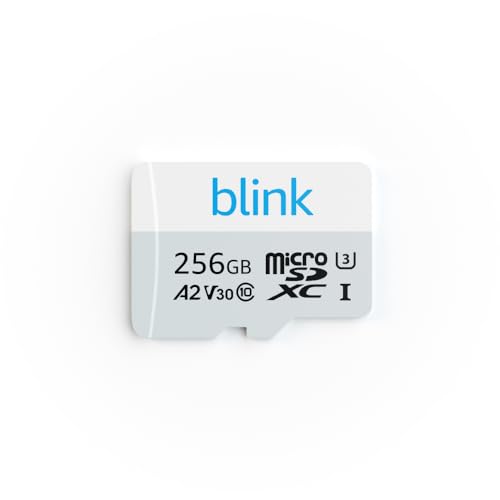
2. Blink MicroSD card for local video storage with Blink Sync Module XR
The card built to keep your Blink camera footage on your shelf instead of a subscription server.
This one is a specialist, and it does its job without fuss. Slide the Blink MicroSD into a Blink Sync Module XR and the 256GB of storage lets you view, share, and download thousands of locally stored videos from up to 10 Blink cameras. The headline benefit is simple: no monthly fees for local video storage, because your clips live on the card instead of a paid cloud plan.
Two compatibility rules decide whether this card is right for you, and they matter more than any speed number here. It works with the Sync Module XR, and it is a poor match for the Sync Module 2 or older legacy Sync Modules. It also will not do local storage with Blink XT, XT2, or the legacy Indoor cameras. Check your module first — get that right and setup is genuinely easy.
The surprise in the reviews is how far buyers push it beyond its Blink roots. Buyers report the 256GB cards “work great with REOLINK cameras, full capacity (not just Blink),” which means a card sold for one ecosystem quietly feeds others too. What wins people over is reliability, and the value angle holds up as well — those same owners note it costs roughly half what comparable cards ask.
The single-use warning: this card is engineered around the Blink Sync Module XR, so if you own a Sync Module 2 or older Blink hardware, it will not deliver the local storage you are hoping for.
Made for you if: you run Blink cameras on a Sync Module XR and want your clips stored locally without a subscription.
Look past it if: your camera gear is a different brand’s ecosystem or an older Blink module.
3. SANDISK 256GB Ultra microSD Card + Adapter, Up to 150MB/s Read Speeds
The everyday expander for phones, tablets, and handhelds that just needs dependable room to grow.
Not every device wants a speed monster, and this is the card that understands that. The SANDISK 256GB Ultra reads at up to 150MB/s and carries an A1 rating (a lower app-performance grade than A2, but enough to keep phone apps loading briskly). Owners drop it into Android phones, tablets, Chromebooks, and Windows laptops and get instant recognition with no setup. It shines brightest in a Nintendo Switch OLED, where owners describe simple install and immediate recognition with no lag, errors, or corruption.
The name of the game here is dependable capacity at a fair price, and the storage is the star. Owners fill it with games, updates, screenshots, and photos, and one recurring theme is that the 256GB provides genuinely ample space for a big game library. A 10-year limited warranty backs the card, which is a long runway for a piece of silicon this small.
Where the Extreme runs away on raw speed, this Ultra trades a little of it for reach across more devices. It is rated V10 and U1 — fine for Full HD and casual shooting, but a step below the V30 cards that keep 4K writing smooth — so heavy 4K creators should stay with the Extreme. For everyone loading apps and storing photos, it just works.
Where it delivers
- Up to 150MB/s read speeds for quick file transfers
- Works across Android phones, tablets, Chromebooks, and Windows laptops
- A1 rating keeps app loading responsive
- Backed by a 10-year limited warranty
Keep in mind
- V10 and U1 ratings suit Full HD, not high-bitrate 4K
- Reliability reports land on both sides of the fence
- Not compatible with Nintendo Switch 2
The pick for: phone, tablet, and Switch owners who want more room without paying for speed they will not use.
Not for: dedicated 4K videographers, who should step up to the Extreme.
4. PNY 256GB Premier-X C10 U3 V30 A1 microSDXC Flash Memory Card, UHS-I

Proof that a proper V30 badge does not have to cost premium money.
Here is the value play for anyone shooting 4K on a budget. The PNY 256GB Premier-X carries the full speed-class set — Class 10, U3, and V30 — which means it can sustain the write performance 4K UHD video demands, at read speeds up to 100MB/s. It also carries an A1 rating for phones and handhelds that run apps directly off the card. For the money, that combination punches above its weight.
What buyers consistently come back to is the price-to-capacity ratio. Deal hunters note it slots into cameras, drones, smartphones, and tablets without complaint, and it survives temperature extremes, shock, and water. Owners put it to work in everything from deer cams to daily phone storage, and the recurring review theme is that it is fast and reliable for the money.
Set your expectations on the speed side, though. At 100MB/s read, it trails the SANDISK Extreme’s 190MB/s by a wide margin on paper, so offloading a big card to your computer takes longer. And with an A1 rating rather than A2, app loading is good but not the quickest on Android. For a card that never claims to be the fastest, it does the job it was hired for.
The honest read: this is the card you buy when you want a genuine V30 badge for smooth 4K without paying a premium for offload speed — a fair trade if your bottleneck is budget, not a stopwatch.
Pick this one if: you shoot 4K on action cams or phones and want the right speed class at a friendlier price.
Leave it if: you offload large batches often and want the fastest transfers available.
5. SanDisk 256GB Ultra microSDXC UHS-I Memory Card with Adapter (Older Version), 120MB/s

A retired classic that still holds up for loading games and stashing Full HD video.
SanDisk discontinued this generation, but it earned a loyal following for a reason. The older Ultra reads at up to 120MB/s and carries A1-rated performance, which loads apps faster than the base rating. Owners have pressed it into service in Nintendo Switch consoles, car cameras, and phones for years — one long-run report describes transfer speeds as great and reliability as holding up across two years of Switch use.
The capacity math trips people up here, so it helps to hear it from the field: a card sold as 256GB reads as roughly 238GB on screen, because drive makers count in decimal while computers count in binary. That is not a defect. One buyer also clocked a real read speed of 93MB/s on an older USB 3 reader versus the advertised 120MB/s — well within the normal gap between a card’s ceiling and the hardware reading it.
It slots comfortably between the current Ultra and the Extreme on this list. You get dependable storage and fast-enough transfers, but not the 190MB/s offload or the V30 badge of the top pick. Since the model is discontinued, the current replacement is the 150MB/s Ultra sitting just above it — so treat this as a value find while it is still around.
Still worth it because
- Up to 120MB/s transfer speeds for moving photos quickly
- A1 rating speeds up app loading on phones and handhelds
- Trusted for game storage and Full HD video
- Compatible with most microSD devices
Worth knowing
- Discontinued by the manufacturer
- Runs C10 and U1 — not the V30 badge 4K shooters want
- Real-world speed depends heavily on your reader
Reach for this if: you want proven game and Full HD storage and do not need the fastest offload in the room.
Shop past it if: you shoot high-bitrate 4K or want current-generation hardware.
6. SIX M200 256GB Micro SD Card, Read Up to 190MB/s for 4K UHD Continuous Recording
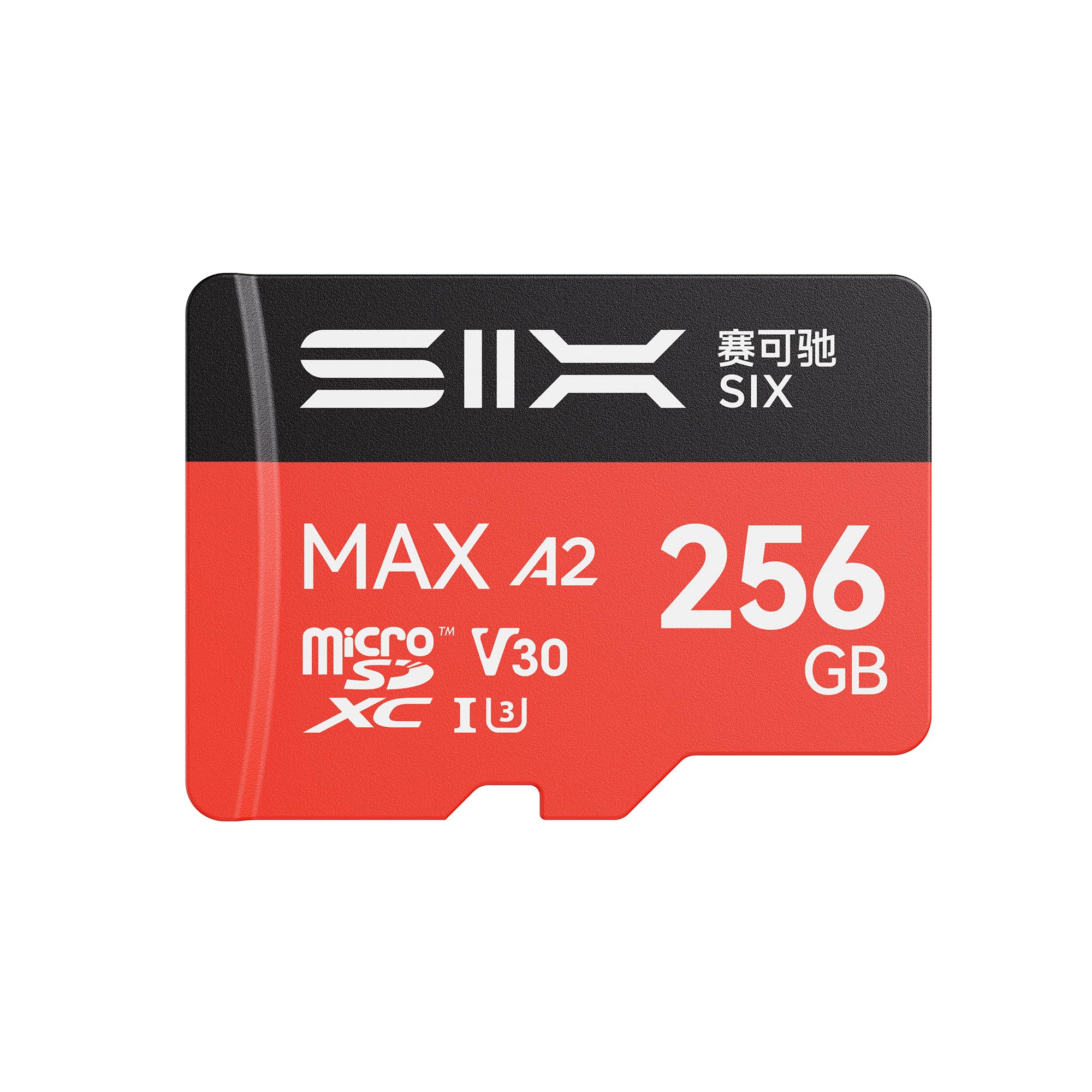
Built to keep write speeds steady through long, non-stop recording sessions.
For dash cams and security setups that never stop recording, endurance beats raw speed. The SIX M200 256GB carries U3 and V30 ratings and reads at up to 190MB/s, and it is designed for high-endurance, sustained performance — the kind of loop recording a dash cam runs every drive. It also carries A2 app performance and a lifetime limited warranty, which is a generous promise on a flash card. The 190MB/s figure does require an extra DDR200 high-speed card reader or a compatible device, sold separately.
Performance is the headline in customer feedback. Owners mention it works great in dash cams, doorbell cameras, and monitors, and the handful of reviews call out that the storage capacity checks out as real. One owner confirmed it was clear at night and reliable in a monitor camera — good news if you run always-on security gear.
The honest note is that a small minority hit compatibility trouble in specific dash cams. One owner with a VIOFO A229Plus ran into a “slow card” error and had to abandon it, so if your device has a known strict card list, double-check before buying. For most setups, though, this is a solid endurance card at a fair price.
Fit check: the SIX M200 is a strong choice for drones, dash cams, and security cameras where steady write performance matters more than brand name.
One caution: a small number of dash cams reject it, so verify compatibility with your specific device first.
The natural match if: you keep a dash cam or security camera running constantly and want dependable loop recording.
Skip if: you know your dash cam is picky about cards and you want zero compatibility risk.
7. Amazon Basics microSDXC Memory Card with Full Size Adapter, A2, U3, Read Speed up to 100 MB/s, 256GB
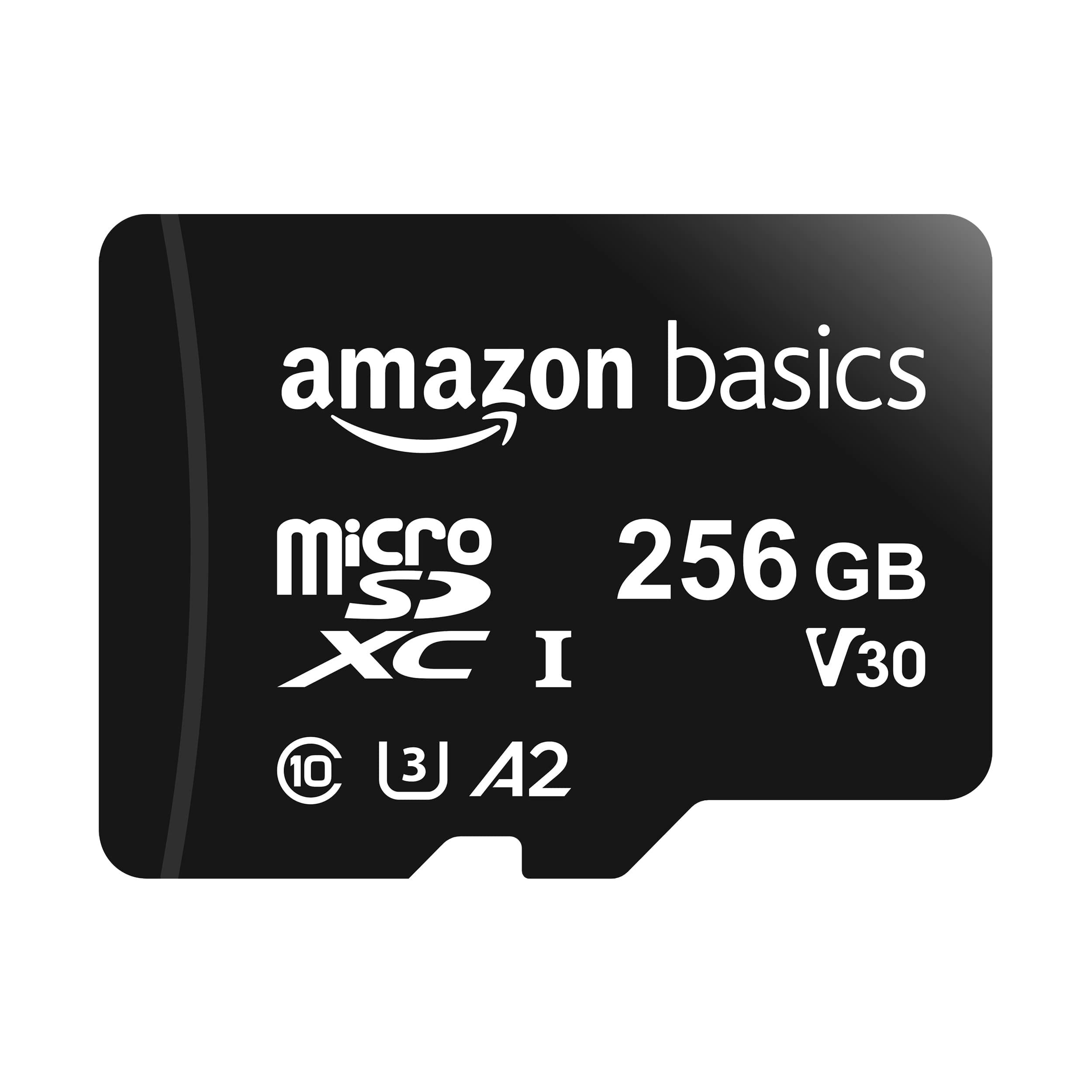
The quiet workhorse for dash cams and security cameras that record around the clock.
When a card lives permanently inside a dash cam or a security camera, durability matters as much as speed. This Amazon Basics 256GB reads at up to 100MB/s and carries U3, V30, and A2 ratings — the same V30 continuous-recording badge the big names use. Built for hard use, it is shock-resistant, IPX6 water-resistant (IPX6 means it shrugs off powerful water spray), and rated for temperatures from -10°C to +80°C. It also resists X-rays and magnetic fields.
What sells it to security-minded owners is honesty about capacity. Amazon spells out usable space plainly — a 256GB card gives you at least 232GB once formatting and binary math are done — which is refreshingly transparent about the gap between the label and your screen. Buyers with Thinkware dash cams and Eufy home cameras report smooth continuous recording, no dropped frames, and reliable operation after outdoor mounting. The build survived real exposure without glitches or data errors.
Against the SANDISK Extreme, this card trades top-end speed for outright toughness — 100MB/s read versus 190MB/s — which is the deal you are making. Compatibility is the one spot to eyeball: it plays nicely with Nintendo Switch generally, but reports are mixed on the latest Switch OLED. Check your device’s max supported capacity first, as the card itself advises.
Why it earns its keep
- U3 and V30 rated for smooth 4K and Full HD recording
- Shock-resistant, IPX6 water-resistant, and cold/heat rated
- Clear usable-capacity labeling for honest planning
- Full-size adapter included
The fine print
- 100MB/s read is on the lower side for large offloads
- Compatibility reports are mixed on the newest Switch OLED
- Not compatible with Nintendo Switch 2
Ideal for: dash cams, security cams, and outdoor rigs that need a card to survive real weather and vibration.
Reconsider if: you need the fastest offload speeds or you run the newest Switch OLED.
8. SAMSUNG EVO Select 256GB microSDXC, 130MB/s Full HD & 4K UHD, UHS-I, U3, A2, V30
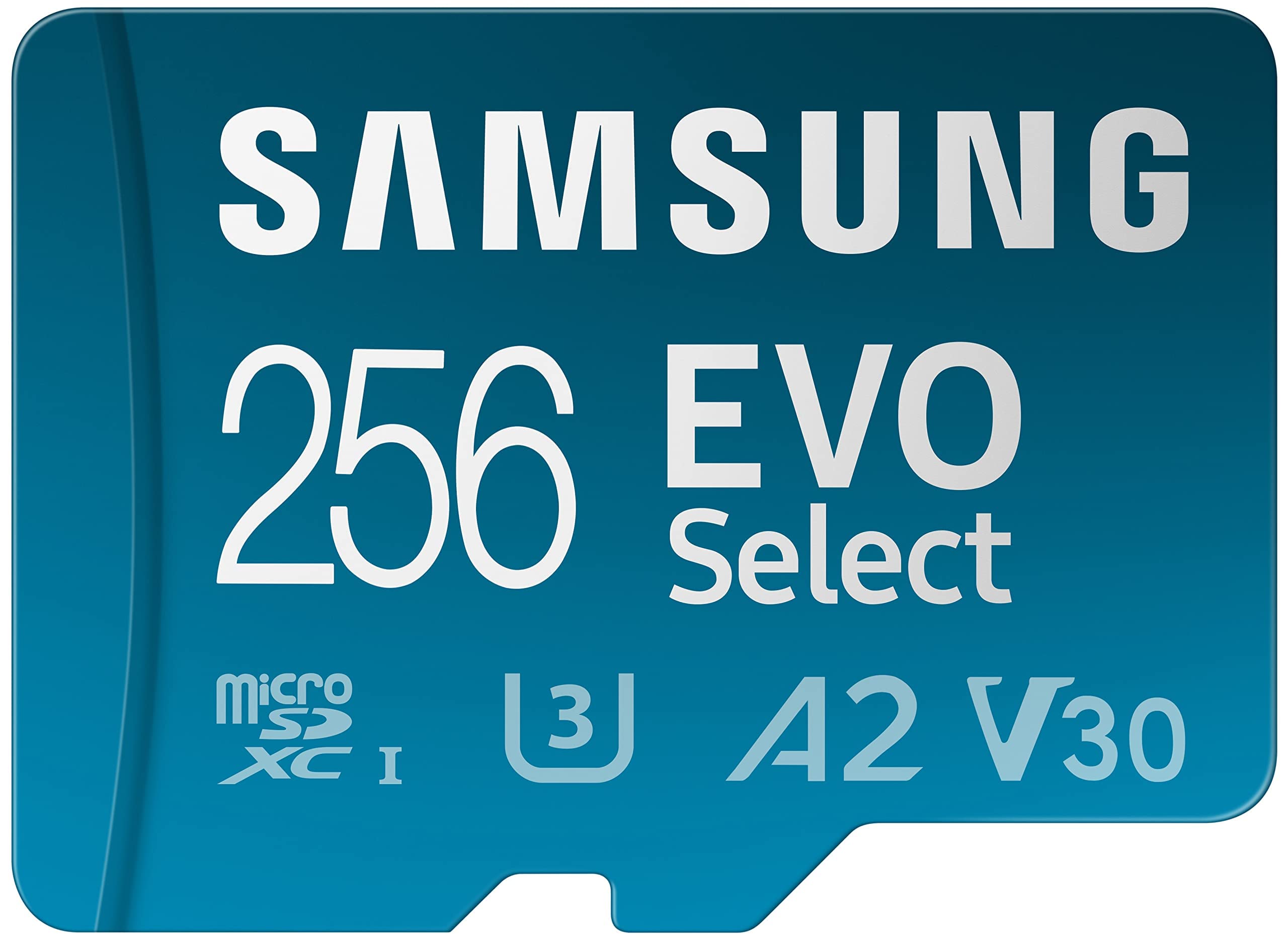
The all-rounder that plays nicely with everything from phones to handhelds to drones.
If you want one 256GB card that never makes you think about compatibility, this is it. The SAMSUNG EVO Select reads at up to 130MB/s with U3, Class 10, V30, and A2 ratings, so it handles 4K video and app loading alike. Samsung produces its firmware and components in-house, and the card is backed by a 10-year limited warranty. Customers note smooth, consistent performance in Nintendo Switch, Steam Deck, and Samsung phones, with no lag on 4K video or high-res photos.
The appeal is that it fits everywhere you would want it. Drones, consoles, cameras, phones, and tablets are all on the compatible list, and the capacity gives you room for a serious library of games or media. Speed stays consistent with no file corruption reported, and the included adapter means it drops into a full-size camera slot as well as a microSD one.
There is one repeated caveat worth naming: fast transfers can push this card hot, and owners describe it warming up noticeably during big transfers. It stays within tolerance, but if you move large files often, expect some heat. Card-quality complaints do show up in the feedback, so treat this as a strong mainstream choice rather than a guaranteed perfect run — the vast majority of owners are happy, and the ones who are not ran into isolated issues.
The appeal: the EVO Select is engineered across the widest spread of devices here, from game consoles to drones, and the A2 plus V30 combination covers both fast app loading and smooth 4K.
Worth watching: it can run warm under heavy transfer loads, and quality varies slightly card to card.
Made for: anyone who owns several devices and wants a single trustworthy card that does not need matching to any one gadget.
Look elsewhere if: you shift gigabytes constantly and want a card that stays cool under sustained load.
9. PNY 256GB PRO Elite Prime C10 U3 V30 A2 microSDXC Flash Memory Card
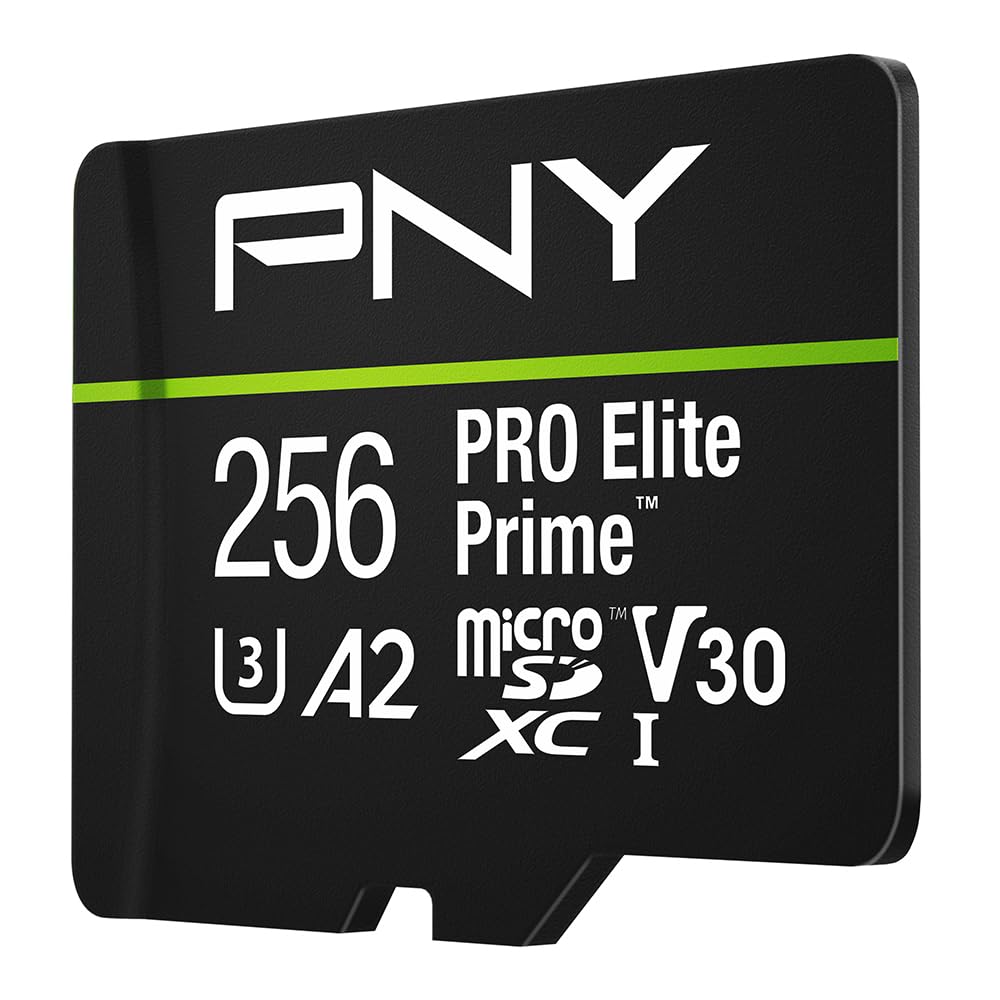
The highest read speed in this list, made for creators who move footage all day.
For raw numbers, nothing here beats this. The PNY 256GB PRO Elite Prime reads at up to 200MB/s — the fastest on this page — and writes at up to 150MB/s when paired with the PNY Performance Prime card reader. It carries U3, V30, and A2 ratings, so it handles 4K UHD recording and fast app loading in equal measure. For a content creator, that combination is the difference between a quick offload and a long wait at the end of a shoot.
Real-world use backs it up. Reviewers point out it running clean in a DJI Mini 5 Pro drone, writing well with no issues and transferring quickly to a computer. A GoPro 10 user captured 4K content daily for about four months and described roughly 10 hours of recordable 4K footage with strong picture, sound, and duration. Nintendo Switch shoppers say months of trouble-free game loading, and the card carries drop, temperature, and water proofing.
The one thing to know is that the headline 200MB/s and 150MB/s figures assume the PNY Performance Prime reader, which is sold separately. In a standard slot you will see less. Also note it is not compatible with Nintendo Switch 2, though it works fine with the original Switch. Pair it with fast hardware and it earns its speed-leader badge.
The strongest points
- Up to 200MB/s read and 150MB/s write with the matching reader
- A2 rating for fast app launch on phones and handhelds
- Proven in DJI drones and GoPro action cams
- Drop, temperature, and water proofed
Set expectations
- Top speeds need the PNY Performance Prime reader, sold separately
- Not compatible with Nintendo Switch 2
- As the newest PNY model, long-term feedback is still building
Built for: creators and drone pilots who want the quickest offloads and also need smooth 4K capture.
Think again if: you will not buy the matching reader or you own a Switch 2.
Understanding the Specs
Read Speed vs Write Speed
Read speed is how fast the card hands files back to your computer, console, or phone — it decides how long you wait to offload footage. Write speed is how fast the card saves data as you shoot, and it is the one that keeps 4K video from stuttering mid-take. High read speed (up to 200MB/s on the PNY PRO Elite Prime) shortens offload time, but a card can read fast and write slower. For shooting, watch the write side; for offloading, watch the read side. Both numbers require a compatible device and reader to reach their ceiling.
Speed Class Badges Explained
The letters and numbers on a card are promises about specific jobs. U1 and U3 are UHS speed classes for continuous recording — U3 is the higher tier for smooth video. V10 and V30 are video speed classes; V30 promises a sustained write rate of 30MB/s, which is what 4K recording needs. A1 and A2 are application performance ratings for running software straight off the card, and A2 is the faster of the two (A2 provides minimally 4000 read IOPS and 2000 write IOPS). If you shoot 4K, look for U3 or V30. If you load apps from the card, look for A2.
FAQ
Is a 256GB microSD card enough for 4K video recording?
Will a 256GB microSD card work with a Nintendo Switch?
Why does my 256GB card show less than 256GB on my device?
What is the difference between A1 and A2 app performance ratings?
Do I need a special card reader to reach the advertised speed?
Are microSD cards waterproof and durable enough for cameras outdoors?
Which is better for a dash cam, a V30 card or a higher-capacity card?
Can I use a 256GB microSD card in a drone or action camera?
How long should a 256GB microSD card last?
Final Thoughts: The Verdict
For most people, the 256 gb micro sd card to buy is the SANDISK 256GB Extreme, because it pairs up to 190MB/s read speed with the V30 rating that keeps 4K and 5K footage smooth and stable. If you run Blink cameras and want local storage without a subscription, grab the Blink MicroSD for Sync Module XR. And for maximum speed on creative work, the PNY 256GB PRO Elite Prime leads the list at up to 200MB/s read with the matching reader. Buy for the badge your device needs — V30 for 4K, A2 for apps — and you will get the right card the first time.
How We Picked
We do not accept paid placement. Every pick is matched to a real buyer and a real use-case; we do not hands-on test units.
Sources & Methodology
Specifications: manufacturer listings and product documentation. Review insights: verified customer reviews, as of September 2026. Pricing: not shown on this page (it changes often); check the current price via the retailer link.
As an Amazon Associate, Gadgets Feed earns from qualifying purchases. This does not affect which products we feature.