
A 256 GB SD card is the storage sweet spot for photographers and videographers — large enough to hold thousands of RAW photos or hours of 4K footage without running out of space on set. But not all cards are created equal, and picking the wrong speed class can mean dropped frames, corrupted files, and missed moments that you can’t get back.
I’m Min — the co-founder and writer behind Gadgets Feed. I cross-reference real-world transfer benchmarks, controller architectures, and sustained write speeds to find the cards that actually deliver on their rated performance across DSLRs, mirrorless cameras, and action cams.
After analyzing seven top-rated options, I’ve identified the cards that balance capacity, speed, and durability for every shooting scenario to help you pick the best 256 gb sd card for your gear.
How To Choose The Best 256 GB SD Card
Buying a 256 GB SD card means balancing storage with speed. The wrong card leaves you waiting for buffer clears or dealing with stuttering video. Focus on three core specs to narrow your options.
Speed Class Matters — U3 and V30 Are Your Floor
For 4K video recording, look for UHS Speed Class 3 (U3) and Video Speed Class 30 (V30). U3 guarantees a minimum sequential write speed of 30 MB/s, while V30 ensures stable writing for 4K video streams. A card that only hits Class 10 (10 MB/s) will choke on high-bitrate footage, causing frame drops mid-clip.
Read Speed vs Write Speed — Know the Difference
Read speed affects how fast you transfer files to your computer — great for workflow speed. Write speed determines how fast your camera saves each shot or video segment. For burst-mode photographers, sustained write speed is critical; a card that advertises 150 MB/s reads might throttle writes to 20 MB/s after a few seconds. Check real-world reviews for sustained write performance.
Full-Size SD vs microSD With Adapter
Full-size SD cards offer better heat dissipation and thicker PCBs for durability in DSLRs and camcorders. microSD cards with an adapter provide more versatility across drones, action cams, phones, and Switch consoles — but the adapter itself can become a failure point if it’s low quality. For mission-critical shoots, a dedicated full-size SD card is safer.
Quick Comparison
On smaller screens, swipe sideways to see the full table.
| Model | Category | Best For | Key Spec | Amazon |
|---|---|---|---|---|
| Samsung EVO Select | microSD + Adapter | Gaming & Smartphones | 130 MB/s Read, A2 | Amazon |
| PNY PRO Elite Prime | microSD + Adapter | Extreme Speed Transfers | 200 MB/s Read, 150 MB/s Write | Amazon |
| SanDisk Extreme | microSD + Adapter | Raspberry Pi & 4K Cams | 160 MB/s Read, A2, V30 | Amazon |
| Lexar 800x PRO | Full-Size SD | DSLR & Camcorder | 150 MB/s Read, U3, V30 | Amazon |
| LinkMore XV13 | Full-Size SD | Budget Full-Size Storage | 95 MB/s Read, 70 MB/s Write | Amazon |
| TEAMGROUP Elite | Full-Size SD | Everyday Backup Storage | 100 MB/s Read, U3, V30 | Amazon |
| Amazon Basics | microSD + Adapter | Dash Cams & Security | 100 MB/s Read, A2, V30 | Amazon |
In‑Depth Reviews
1. Samsung EVO Select
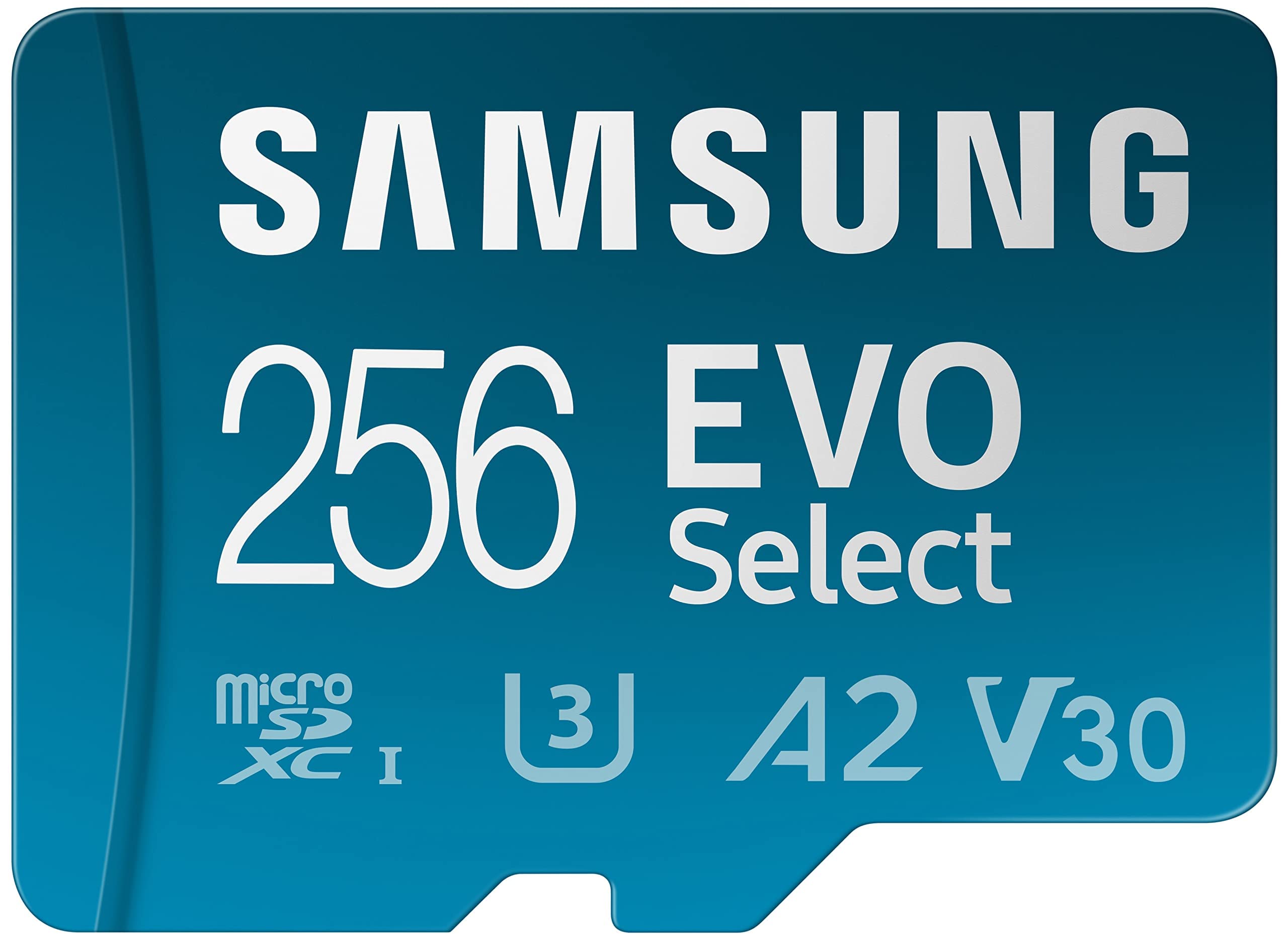
The Samsung EVO Select hits the sweetest balance of performance and reliability in the 256 GB category. With sequential reads pegged at 130 MB/s and an A2 rating delivering at least 4000 random read IOPS, it loads apps and games on Android smartphones and Nintendo Switch with noticeably less latency than A1-class cards. The included SD adapter preserves full compatibility with standard camera slots, though the microSD form factor means you lose the thicker PCB thermal mass of dedicated SD cards during sustained 4K recording.
Real-world benchmark reviews show sustained write speeds hovering around 60 MB/s after the SLC cache fills — sufficient for 4K 30fps video without dropped frames, but burst-mode shooters may notice a buffer pause during long RAW sequences. Samsung backs it with a 10-year limited warranty, and the card has survived temperature extremes and water immersion tests without data loss. It runs warm during heavy use, which is within spec for the NAND controller.
For the hybrid shooter who moves between a phone, drone, and mirrorless camera, this card eliminates the need to buy separate formats. The A2 rating future-proofs it for upcoming apps that demand higher IOPS, while the 256 GB capacity holds roughly 10,000 24-megapixel RAW files or four hours of 4K 100Mbps video. It is the single most versatile pick in this roundup.
Why it’s great
- A2 app performance speeds up game loading on Switch and Android
- 10-year warranty reflects long-term reliability
- Included adapter works with full-size SD slots
Good to know
- Sustained write speed drops after SLC cache fills
- Adapters can be a weak point in extreme environments
2. PNY PRO Elite Prime
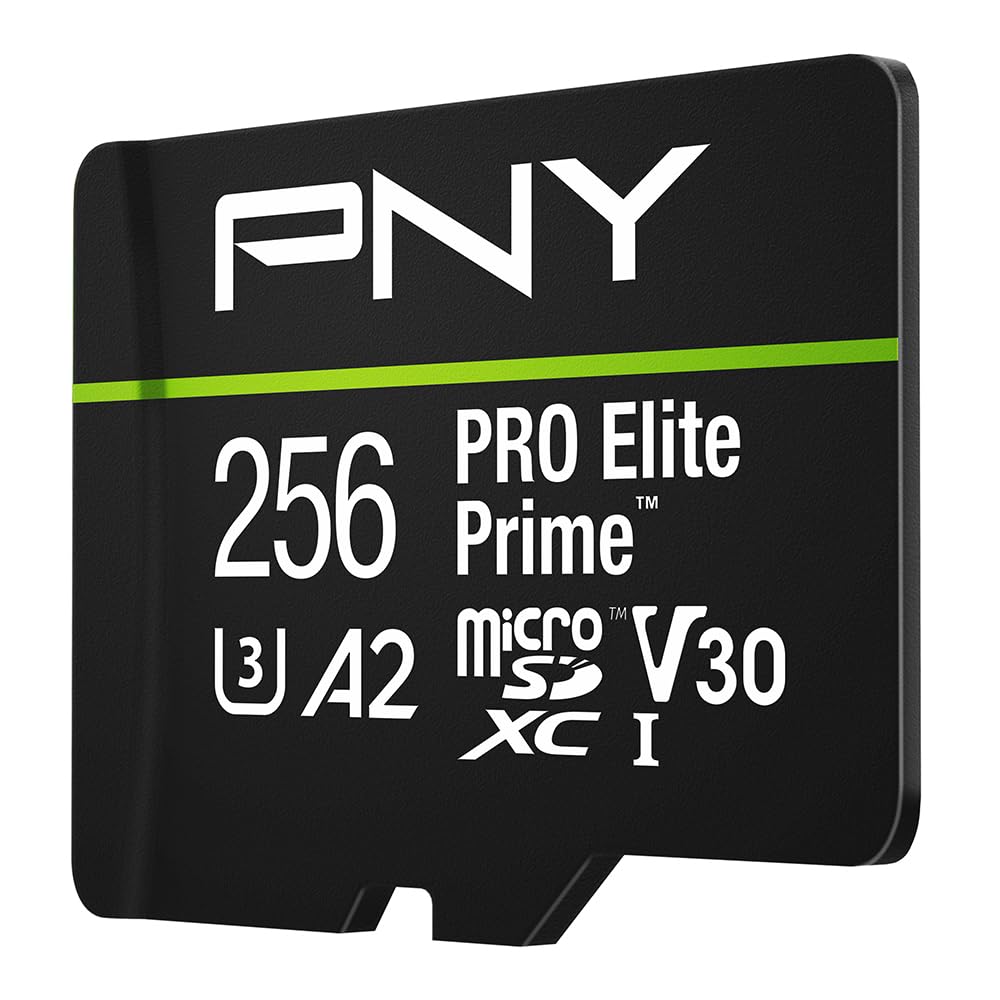
The PNY PRO Elite Prime claims the highest raw read speed in this lineup at 200 MB/s, achieved when paired with PNY’s dedicated Performance Prime card reader. This makes it the fastest option for offloading large video files to your editing rig — a 25 GB 4K clip transfers in roughly two minutes. Write speeds reach a claimed 150 MB/s, and real-world tests on GoPro cameras have shown zero dropped frames across hours of 4K 60fps recording in hot, humid conditions.
The A2 rating ensures fluid app performance on Android devices, and the card handles 4K UHD video from action cameras and drones without buffer pauses. PNY constructs the card with water, drop, and temperature resistance, making it suitable for outdoor content creators who shoot in rain or dust. The included SD adapter lets it work in full-size camera slots, though achieving peak read speeds requires their proprietary reader.
Content creators who offload multiple gigs of footage daily will appreciate the transfer speed gains. The 256 GB capacity stores approximately 5.5 hours of 4K 150Mbps footage from an action cam. While it costs a premium over mid-range cards, the time saved during editing workflows justifies the investment for regular shooters.
Why it’s great
- 200 MB/s read speed slashes file transfer times
- Zero frame drops in 4K 60fps recording tests
- A2 rated for fast app loading
Good to know
- Peak speeds require proprietary PNY reader
- Premium price tier limits value for casual users
3. SanDisk Extreme

The SanDisk Extreme has been a community favorite for years, and the 256 GB revision still competes strongly. It delivers up to 160 MB/s reads and 90 MB/s writes — enough to clear a 12-megapixel buffer in seconds on most mid-range DSLRs. The V30 and U3 ratings guarantee consistent 30 MB/s minimum sequential writes, which is sufficient for 4K UHD video at standard bitrates without micro-stuttering.
In benchmarks using a UHS-II reader, the card reaches about 95 MB/s read and 70 MB/s write due to the UHS-I bus bottleneck — still well above Class 10 minimums. Raspberry Pi 4 users report smooth boot times with Kali Linux, and the A2 rating improves app responsiveness on Android phones. SanDisk’s built-for-testing includes temperature, water, shock, and X-ray resistance, backed by a reliable warranty process.
The 256 GB capacity suits power users who need bulk storage for dashcams or security cameras, where the card’s endurance handles constant overwrite cycles. It ships with a microSD adaptor, though the included SD adapter is standard thickness and fits most camera slots without issues. This card is a proven workhorse for anyone needing dependable mid-range performance.
Why it’s great
- Trusted brand with consistent real-world performance
- Rugged durability for dashcam and outdoor use
- A2 rating for Android app storage
Good to know
- UHS-I bus limits peak throughput below rated numbers
- Write speed drops after sustained transfer
4. Lexar 800x PRO
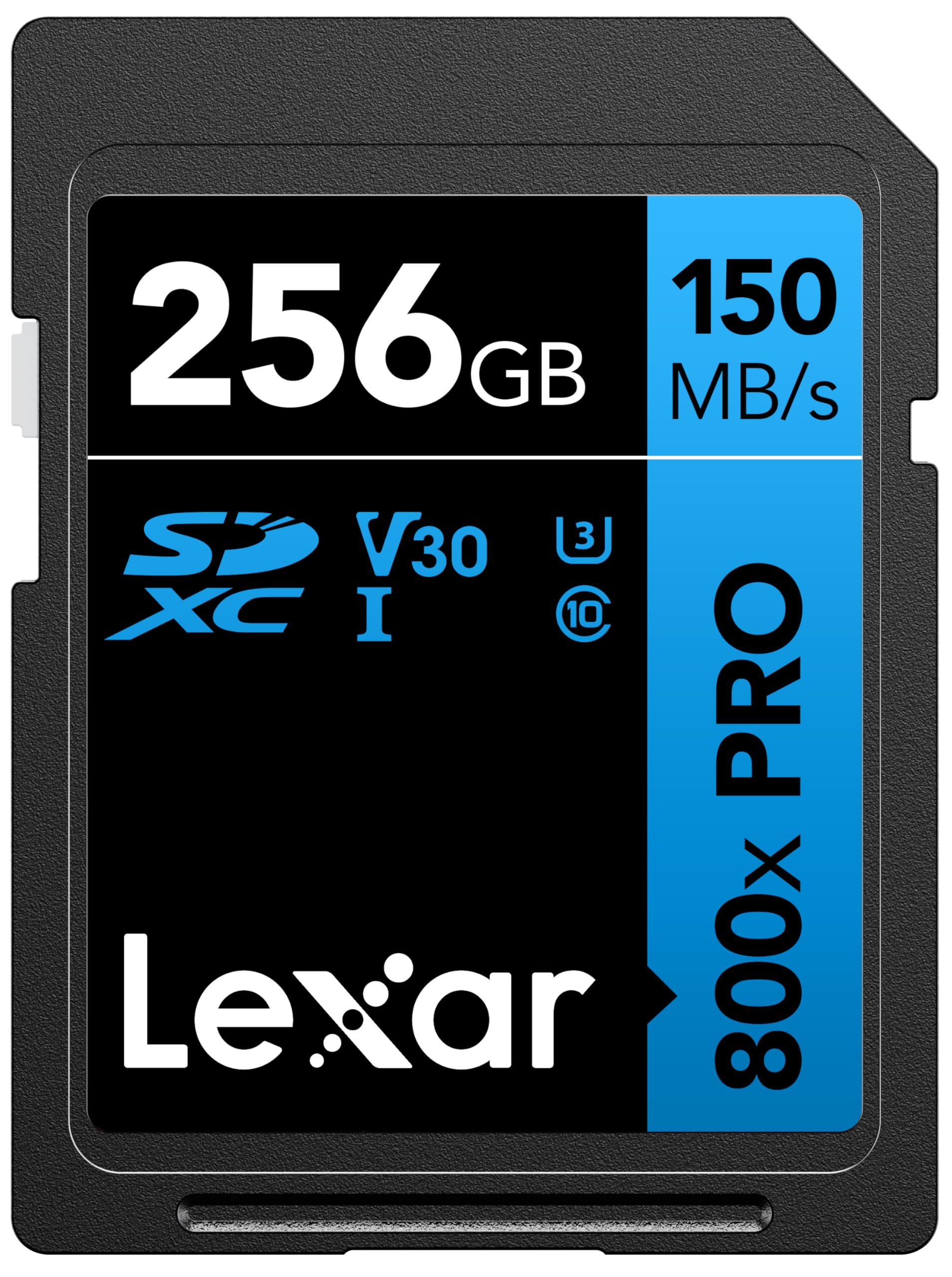
The Lexar 800x PRO is the only full-size SD card in this list, and it is purpose-built for point-and-shoot and mid-range DSLR cameras like the Canon R6 or Nikon Z5. Rated at 150 MB/s reads and carrying U3 and V30 certifications, it captures 4K UHD video at standard bitrates without hesitation. The full-size SD form factor offers slightly better thermal dissipation during extended recording sessions compared to a microSD inside an adapter.
Hobbyist photographers report consistent performance in burst mode on 20–24 megapixel sensors, clearing buffers faster than budget Class 10 cards. The 256 GB capacity holds about 2.5 hours of 4K 100Mbps footage or around 8,000 RAW images. Lexar provides a 10-year limited warranty and the card is temperature, shock, vibration, and X-ray proof, adding peace of mind for field work.
The card lacks an A2 rating, which makes it less suitable for app storage on phones — this is a dedicated camera card. Users who prefer smaller capacities to minimize potential data loss can step down to the 128 GB or 64 GB versions within the same 800x PRO family. For photographers who don’t need the versatility of microSD, this full-size card offers a cleaner, more robust solution.
Why it’s great
- Full-size SD design with better heat handling
- Consistent 4K UHD recording performance
- 10-year warranty from a legacy memory brand
Good to know
- No A2 rating limits phone/tablet use
- No storage case included in packaging
5. LinkMore XV13

The LinkMore XV13 is a full-size SD card that punches above its price tier. It is rated for 95 MB/s reads and 70 MB/s writes — real-world benchmarks confirm read speeds around 84 MB/s and write speeds of 26.5 MB/s, which exceeds the Class 10 and U3 minimums. It supports 4K UHD video recording, though the sustained write speed is better suited to Full HD or moderate bitrate 4K rather than high-bitrate professional codecs.
Designed with UHS-I and V30 certifications, the card is compatible with most DSLRs, camcorders, and laptops. Its shockproof and temperature-resistant construction suits outdoor use, and the Taiwanese-made chips provide dependable reliability for photography students or hobbyists. The 256 GB capacity works well for yearbook classes or backup storage on older Nikon cameras that support up to 32 GB officially but accept larger sizes.
Budget-conscious buyers who need a full-size SD card for everyday shooting will find the LinkMore a capable performer. The write speed is adequate for casual 4K clips, but sustained burst photographers should look to faster options. For the price, it delivers solid baseline performance without the premium brand tax.
Why it’s great
- Competitive full-size SD option at a lower price point
- V30 certified for 4K video recording
- Durable build with temperature and shock resistance
Good to know
- Write speeds fall short for sustained RAW bursts
- Brand lacks the warranty infrastructure of major makers
6. TEAMGROUP Elite
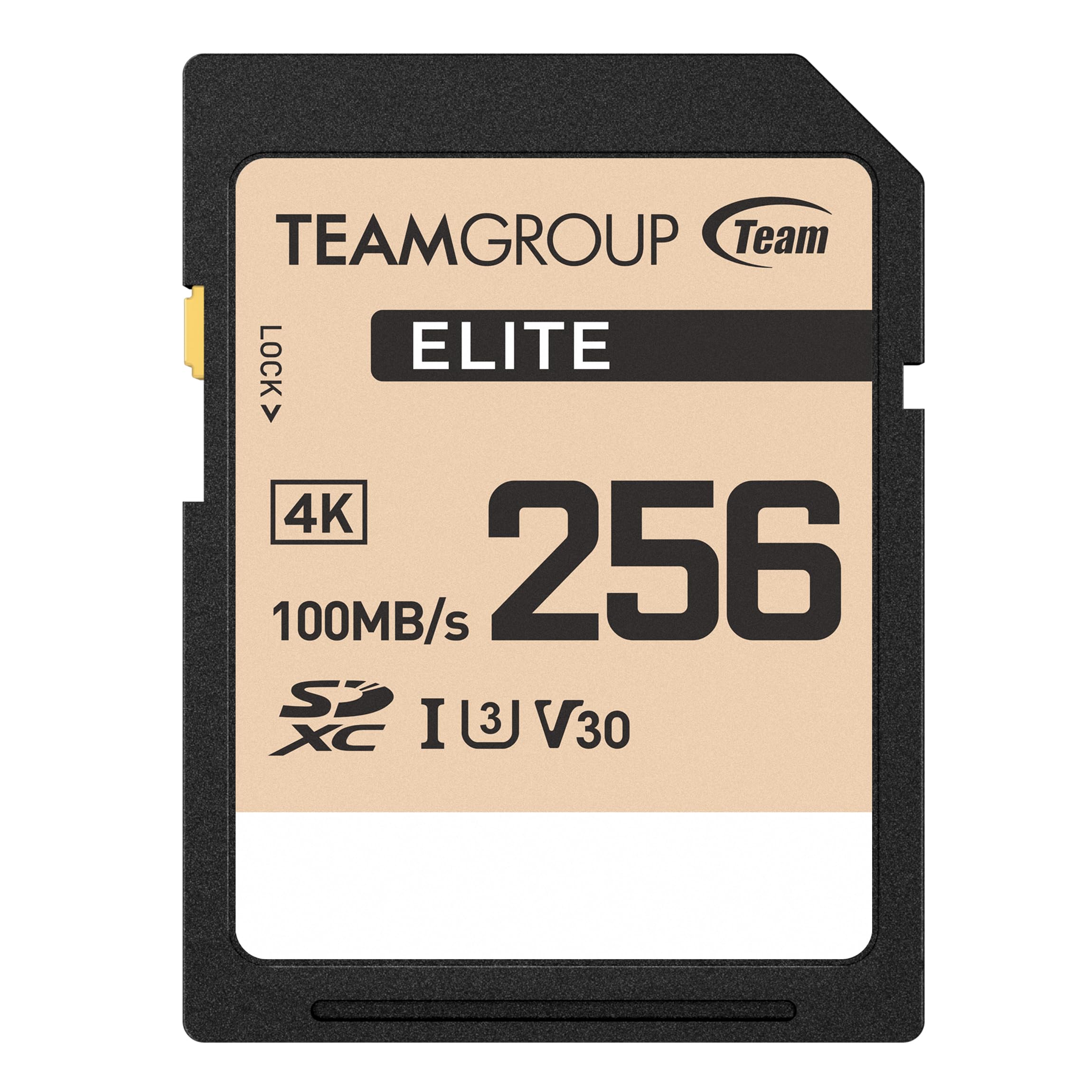
The TEAMGROUP Elite 256 GB SD card is an entry-level full-size card with U3 and V30 ratings that belie its budget-friendly positioning. It claims up to 100 MB/s reads, and real-world users report reads around 90 MB/s — adequate for transferring photos and music. However, sustained write testing reveals throttling to approximately 10 MB/s after extended writes, which means it is not suitable for high-bitrate 4K video or rapid-fire burst photography.
The card is waterproof, anti-shock, anti-static, and X-ray proof, making it durable enough for daily carry. It supports SLC caching technology that speeds up initial writes before the pSLC cache fills. Users have successfully formatted it in FAT32, exFAT, and NTFS, and it works with Windows Ready Boost for speeding up older laptops. The 256 GB capacity is ideal for storing medical records, music libraries, or photo archives.
This card is best suited for archival storage or devices that write infrequently — think backup drives, music players, or older cameras shooting JPEGs rather than RAW bursts. It is not designed for action cameras or 4K video, but for basic storage expansion it provides reliable performance at a minimal cost. A great option for non-demanding applications where the extra spend on premium cards offers no benefit.
Why it’s great
- Very cost-effective for bulk storage needs
- Water, shock, and X-ray resistant build
- Works with FAT32, exFAT, and NTFS formats
Good to know
- Write speed throttles heavily under sustained load
- Not recommended for 4K video recording
7. Amazon Basics

The Amazon Basics microSDXC card proves that budget-friendly doesn’t have to mean cutting corners on speed. It carries A2, U3, and V30 ratings with sequential reads around 100 MB/s and writes in the 60 MB/s range — numbers that rival SanDisk and Samsung in casual use. Users report zero dropped frames in dashcams and security cameras, and the card handles 4K 60fps recording on GoPro Hero 9 without stuttering.
The card is rated for extreme temperatures (-10°C to +80°C), IPX6 water resistance, shock, X-ray, and magnetic field resistance. The included full-size SD adapter allows it to slot into cameras and laptops, and the A2 rating keeps app loading snappy on Android devices. Real-world capacity after formatting is roughly 232 GB, which is standard across the 256 GB category due to binary/decimal conversion.
For homeowners setting up security cameras, dashcam users, or parents buying storage for a school tablet, the Amazon Basics delivers reliable performance at a compelling price. The 256 GB capacity stores about 30 hours of 1080p high-bitrate footage from a security cam. While it lacks the brand prestige of premium options, the performance is genuine, and the risk of data loss appears minimal based on long-term user reports.
Why it’s great
- A2, U3, V30 ratings at a very accessible price
- Zero dropped frames in dashcam and GoPro tests
- Extensive environmental resistance ratings
Good to know
- Not compatible with Nintendo Switch 2
- Write speeds lower than top-tier microSD cards
FAQ
What is the difference between UHS-I and UHS-II SD cards?
Can I use a microSD card in a full-size SD slot?
How much 4K video can a 256 GB SD card hold?
Final Thoughts: The Verdict
For most users, the 256 gb sd card winner is the Samsung EVO Select because it combines A2 app performance, reliable sustained writes, and broad device compatibility at a mid-range price. If you need the fastest possible file transfers, grab the PNY PRO Elite Prime. And for full-size SD reliability in DSLR bodies, nothing beats the Lexar 800x PRO.