
Swapping out a 1080p panel for a 2560×1440 monitor is the single most impactful upgrade you can make for gaming and creative work. You get 78% more pixels than standard Full HD, translating to sharper text, finer detail, and a wider field of view without the heavy GPU tax of 4K. The real debate starts when you factor in panel technology, refresh rate targets, and the dimming zones that separate a good image from a great one.
I’m Min — the co-founder and writer behind Gadgets Feed. My approach to monitors involves hundreds of hours cross-referencing tech specs like pixel response, color gamut coverage, and VESA certification levels to separate marketing claims from measurable performance.
Whether you are upgrading your competitive gaming rig or building a dual-monitor workstation, this guide cuts through the noise to find the best 2560×1440 monitor for your specific needs and budget.
How To Choose The Best 2560×1440 Monitor
Selecting the right QHD panel involves more than just confirming the resolution. You need to balance pixel density against your viewing distance, decide how many frames per second your hardware can feed, and choose a panel type that matches your tolerance for motion blur and color accuracy. Here is what matters most.
Screen Size and Pixel Density
A 27-inch display is the most common pairing for 2560×1440 because it hits roughly 109 pixels per inch — a sweet spot that makes individual pixels invisible at normal viewing distances. A 32-inch screen at the same resolution drops to about 91 PPI, making text and fine details slightly softer. If you sit farther back from a 32-inch panel, the lower pixel density is less noticeable, but for desktop use, 27 inches remains the sharper choice for productivity and competitive gaming.
Refresh Rate and Response Time
Refresh rate determines how many times per second the panel redraws the image. A 144Hz or 165Hz display is a huge step up from 60Hz, but 240Hz and 300Hz panels provide a tangible edge in fast-paced shooters where split-second tracking matters. Response time — measured in milliseconds (ms) gray-to-gray — dictates how quickly a pixel can shift from one shade to another. Look for 1ms (GtG) on IPS or VA panels; OLED panels achieve 0.03ms, virtually eliminating motion blur.
Panel Technology: IPS, VA, OLED, and Mini-LED
IPS panels offer the best color accuracy and wide viewing angles, making them the default choice for mixed use. VA panels deliver deeper native contrast and better blacks, but often suffer from darker response time at extreme transitions. OLED technology delivers infinite contrast and perfect blacks, but requires careful management of burn-in risk. Mini-LED is a backlighting enhancement for IPS or VA panels that adds local dimming zones, improving HDR contrast without the burn-in concerns of OLED.
Quick Comparison
On smaller screens, swipe sideways to see the full table.
| Model | Category | Best For | Key Spec | Amazon |
|---|---|---|---|---|
| Alienware AW2725DF | QD-OLED | Esports & HDR Gaming | 360Hz / 0.03ms GtG | Amazon |
| ASUS ROG Strix XG27AQDMG | Glossy WOLED | Color-Critical Gaming | 240Hz / Custom Heatsink | Amazon |
| Acer Predator X27U | QD-OLED | Premium Budget OLED | 240Hz / DCI-P3 99% | Amazon |
| MSI MAG 274QPF X30MV | Mini-LED VA | Bright HDR & SDR Detail | 300Hz / 1152 Zones | Amazon |
| Samsung Odyssey OLED G6 G61SD | QD-OLED | Bright Room HDR Gaming | 240Hz / Glare-Free Coating | Amazon |
| LG 27GR83Q-B | Fast IPS | High-FPS Competitive Play | 240Hz / HDMI 2.1 | Amazon |
| Samsung Odyssey G5 G50F | Fast IPS | Entry-Level 1440p Immersion | 180Hz / HDR10 | Amazon |
In‑Depth Reviews
1. Alienware AW2725DF

The Alienware AW2725DF earns the top spot because it delivers a 360Hz refresh rate on a QD-OLED panel — a combination that eliminates almost all perceivable motion blur. The 0.03ms gray-to-gray response time means even the fastest pixel transitions happen before your next frame arrives, and the 1.5 million-to-one contrast ratio produces blacks so deep they make the bezel around the screen look gray by comparison.
G-Sync and FreeSync Premium Pro both work without fuss, and the included fully adjustable stand (height, tilt, swivel, pivot) gives you total desk posture control. With DCI-P3 99.3% coverage and Delta E under 2, this monitor also handles color-critical editing tasks better than most mid-range IPS panels. The 16:10 aspect ratio setting is a rare bonus for productivity layouts.
Potential buyers should note the coating can show a slight purple tint in direct light, and you have to accept periodic pixel-refresh cycles to protect against burn-in. Alienware backs it with a 3-year burn-in warranty, which provides some peace of mind, though the text clarity on QD-OLED panels is not quite as sharp as a standard IPS for heavy word processing.
Why it’s great
- 360Hz refresh rate for elite-level motion clarity
- Infinite contrast and True Black 400 HDR
- 3-year burn-in warranty included
Good to know
- Coating can show purple tint under bright direct light
- Requires periodic pixel refresh maintenance
- Text clarity not as sharp as high-PPI IPS displays
2. ASUS ROG Strix XG27AQDMG

ASUS opted for a glossy WOLED panel on the ROG Strix XG27AQDMG, which makes a massive difference in perceived contrast and color saturation. The custom heatsink and advanced airflow design let this monitor sustain higher brightness without aggressive thermal throttling, and the third-generation WOLED technology delivers noticeably brighter white windows and cleaner text rendering than earlier OLED gaming panels.
At 240Hz with 0.03ms response, competitive shooters feel incredibly fluid, and the anti-flicker technology helps reduce eye strain when frame rates fluctuate during VRR operation. ASUS includes a 3-year warranty that covers burn-in, and the monitor’s uniform brightness mode ensures luminance remains consistent across the entire screen — ideal for desktop work where you notice edge dimming on other OLEDs.
The main consideration is the lack of built-in speakers — you need separate audio. Some users report needing to swap the included DisplayPort cable to eliminate flickering at 240Hz, and the auto-dimming screen-saver features can be annoying until you configure them exactly to your preference. Despite these small quirks, the glossy finish makes this the best-looking OLED for mixed lighting.
Why it’s great
- Glossy WOLED delivers superior perceived contrast and color pop
- Custom heatsink prevents brightness loss during long sessions
- 3-year burn-in warranty and anti-flicker technology
Good to know
- No built-in speakers
- May require aftermarket DP cable for full 240Hz stability
- Auto-dimming features need manual setup
3. Acer Predator X27U W1bmiipprx
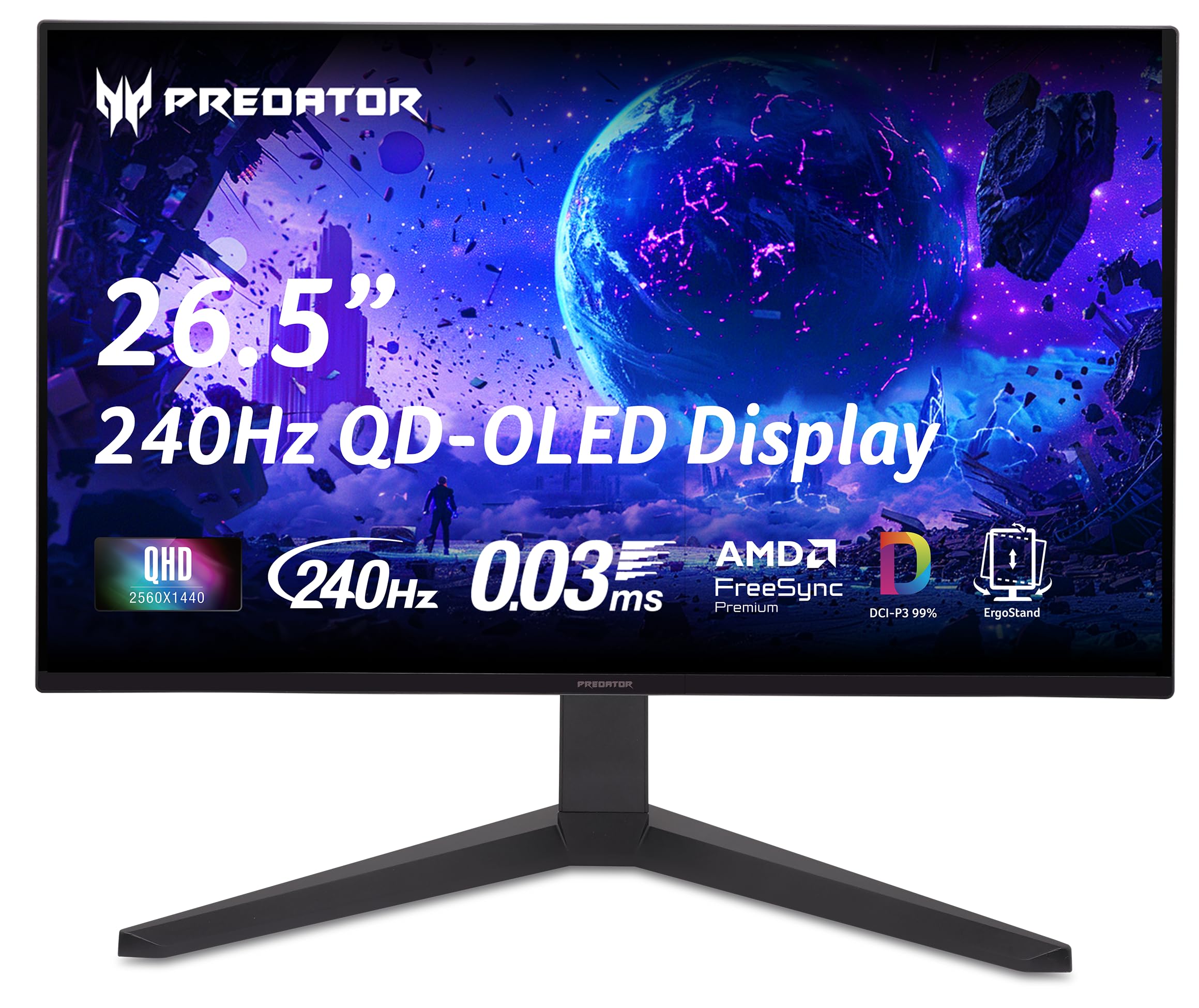
Acer’s Predator X27U brings QD-OLED technology to a more accessible price point without cutting corners on the essentials. The 26.5-inch panel uses a true 10-bit color depth with DCI-P3 99% coverage and a ZeroFrame design that makes the screen feel larger than its diagonal suggests. Colors are noticeably richer and bolder than any IPS panel in the same range, and the delta E under 2 ensures out-of-box accuracy suitable for content review.
The 240Hz refresh rate paired with 0.03ms GtG response eliminates tearing and stutter in competitive titles, and FreeSync Premium works well with both AMD and G-Sync-compatible GPUs. The stand offers full ergonomic adjustment — tilt, height, pivot, and swivel — and the monitor includes built-in speakers, which many OLED competitors omit at this price level.
Brightness is slightly conservative compared to premium OLEDs, peaking below some rivals in HDR highlights, and the plastic build lacks the metal rigidity of ASUS or Alienware options. The menu interface is dense and lacks a dedicated sharpness or overdrive control, which may frustrate tweakers. For the price, however, this is the cheapest entry point into true QD-OLED performance.
Why it’s great
- True 10-bit QD-OLED with rich, bold colors
- Includes built-in speakers and full ergonomic stand
- Delta E under 2 for accurate out-of-box color
Good to know
- HDR peak brightness is average for the OLED class
- Plastic build feels less premium than metal rivals
- Menu lacks dedicated sharpness and overdrive controls
4. MSI MAG 274QPF X30MV

The MSI MAG 274QPF X30MV is the only monitor on this list to combine a 27-inch QHD panel with full-array Mini-LED backlighting. With 1,152 local dimming zones and a peak brightness of 1000 nits, this display delivers VESA DisplayHDR 1000 certification — meaning HDR highlights punch through with real luminance, not just simulated contrast. The Rapid VA panel provides deeper native blacks than IPS, and the 300Hz refresh rate gives it the highest frame-rate ceiling outside of the 360Hz Alienware.
Quantum Dot technology pushes the color gamut to 99% DCI-P3, and the 0.5ms minimum response time keeps ghosting under control even in fast motion. The AI Navigator software allows per-game tuning, and the monitor includes a robust stand with height and tilt adjustment. For users who want OLED-like contrast without worrying about burn-in, the Mini-LED approach is a compelling alternative.
The caveats involve VA panel behavior: dark-level black smearing can appear on certain text transitions, and enabling 10-bit color requires Display Stream Compression. Some users find the on-screen menu complex and the default settings need manual color temperature adjustment. If your primary use is mixed productivity and SDR desktop work, the IPS panels on this list might offer a more hassle-free experience.
Why it’s great
- 1152-zone Mini-LED with DisplayHDR 1000 certification
- 300Hz refresh rate for ultra-smooth gameplay
- No burn-in risk compared to OLED panels
Good to know
- VA panel shows black smearing on dark text transitions
- 10-bit color requires DSC enabled
- Default color settings need manual calibration
5. Samsung Odyssey OLED G6 G61SD

Samsung’s Odyssey OLED G6 G61SD uses the same QD-OLED core as the Alienware but adds some proprietary thermal management tech to reduce burn-in risk. A pulsating heat pipe and Thermal Modulation System predict surface temperature and adjust brightness to keep the core cool — Samsung claims this cools five times better than older graphite sheet methods. The Glare Free coating also cuts reflected light by 54% compared to standard anti-reflection films, making it one of the most usable OLEDs in rooms with windows.
The 240Hz refresh rate and 0.03ms response are on par with the premium OLED field, and FreeSync Premium Pro ensures smooth frame delivery. The slim metal design is genuinely striking — a silver chassis that looks more like a high-end monitor stand than a gaming peripheral. The remote control for menu navigation is a nice touch, and the built-in speakers save desk space.
Some users report that the non-disableable Pixel Shift feature creates visible gaps on the desktop, and the JOG button on the back feels flimsy for the price. The brightness is capped at 250 nits typical, which is lower than the Alienware or ASUS equivalents, and random flicker events have been attributed to burn-in protection cycles. The silver bezel can create reflections that distract from immersion in dark scenes.
Why it’s great
- Advanced heat pipe cooling reduces burn-in risk
- Glare Free coating works well in bright rooms
- Slim metal design with remote control included
Good to know
- Non-disableable Pixel Shift can create visible desktop gaps
- Typical brightness is lower than competitive OLEDs
- JOG button feels cheap for the premium price point
6. LG 27GR83Q-B
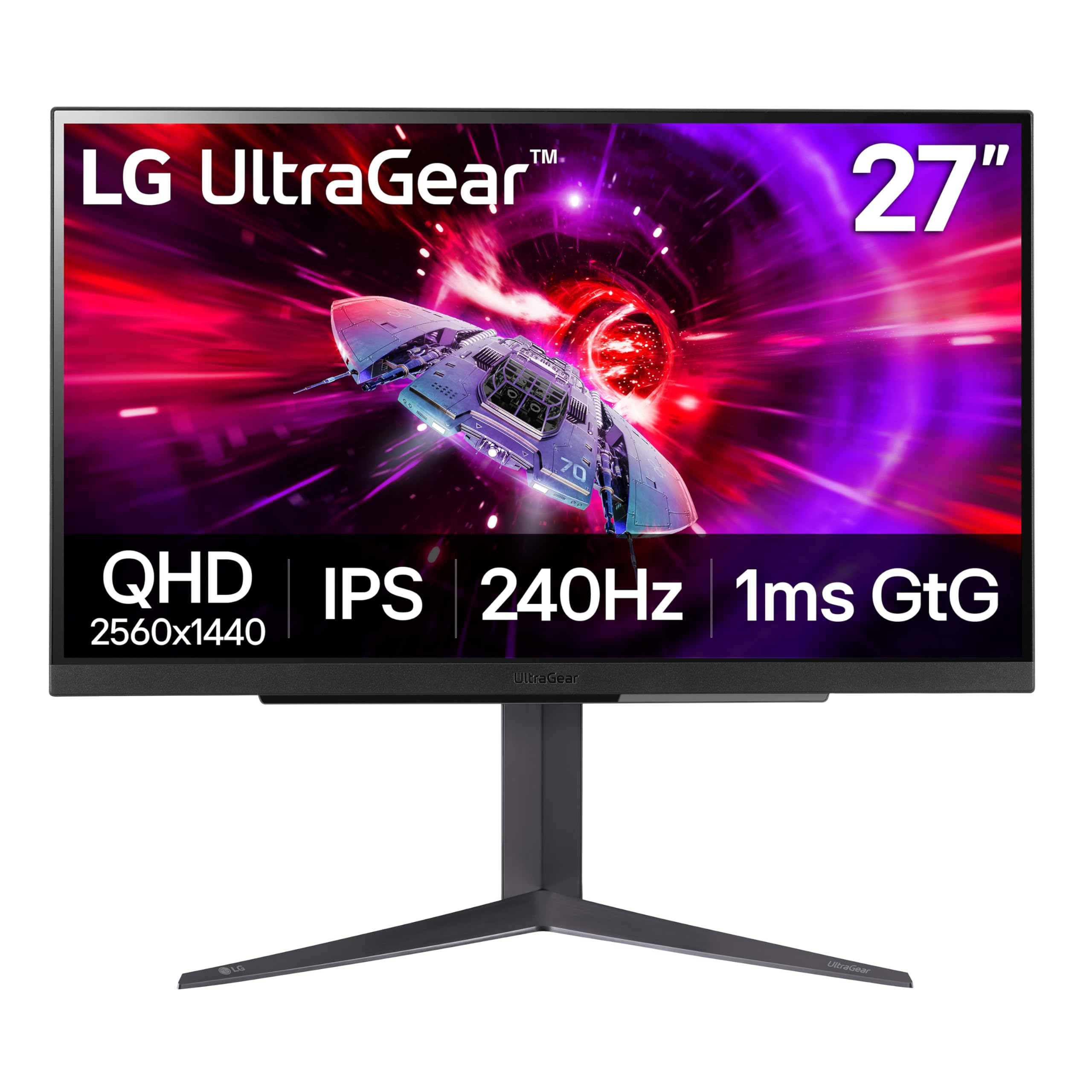
LG’s 27GR83Q-B is the most straightforward high-value IPS option for buyers who want 240Hz without paying the OLED premium. The HDMI 2.1 port delivers the full 240Hz refresh rate at QHD resolution, which is rare at this price tier — most competitors cap at 144Hz over HDMI and only hit high rates through DisplayPort. The IPS 1ms (GtG) response is consistent, and the DCI-P3 95% color gamut provides punchy, accurate colors for both gaming and content consumption.
NVIDIA G-Sync Compatibility and AMD FreeSync Premium are both validated, and the DisplayHDR 400 certification means you get noticeable highlight enhancement in supported games. Dynamic Action Sync and Black Stabilizer give you fine control over responsiveness in competitive titles, and the 4-pole headphone jack with DTS Headphone:X provides spatial audio for headphones.
Build quality is decent but not exceptional — the stand is fully adjustable with tilt, height, and pivot, but the plastic construction feels mid-range. Reports of stuck or dead pixels appear in user reviews more frequently than with premium OLEDs, suggesting the quality control batch variance is higher. The LG OnScreen Control software is a welcome utility for quick brightness and mode switching, if you can tolerate the slightly cluttered menu.
Why it’s great
- 240Hz via HDMI 2.1 at QHD — best-in-class connectivity
- DCI-P3 95% with DisplayHDR 400 for vibrant SDR and HDR
- DTS Headphone:X spatial audio output
Good to know
- Quality control can produce dead or stuck pixels
- Plastic build feels budget compared to premium IPS
- Menu software is cluttered and not intuitive
7. Samsung Odyssey G5 G50F
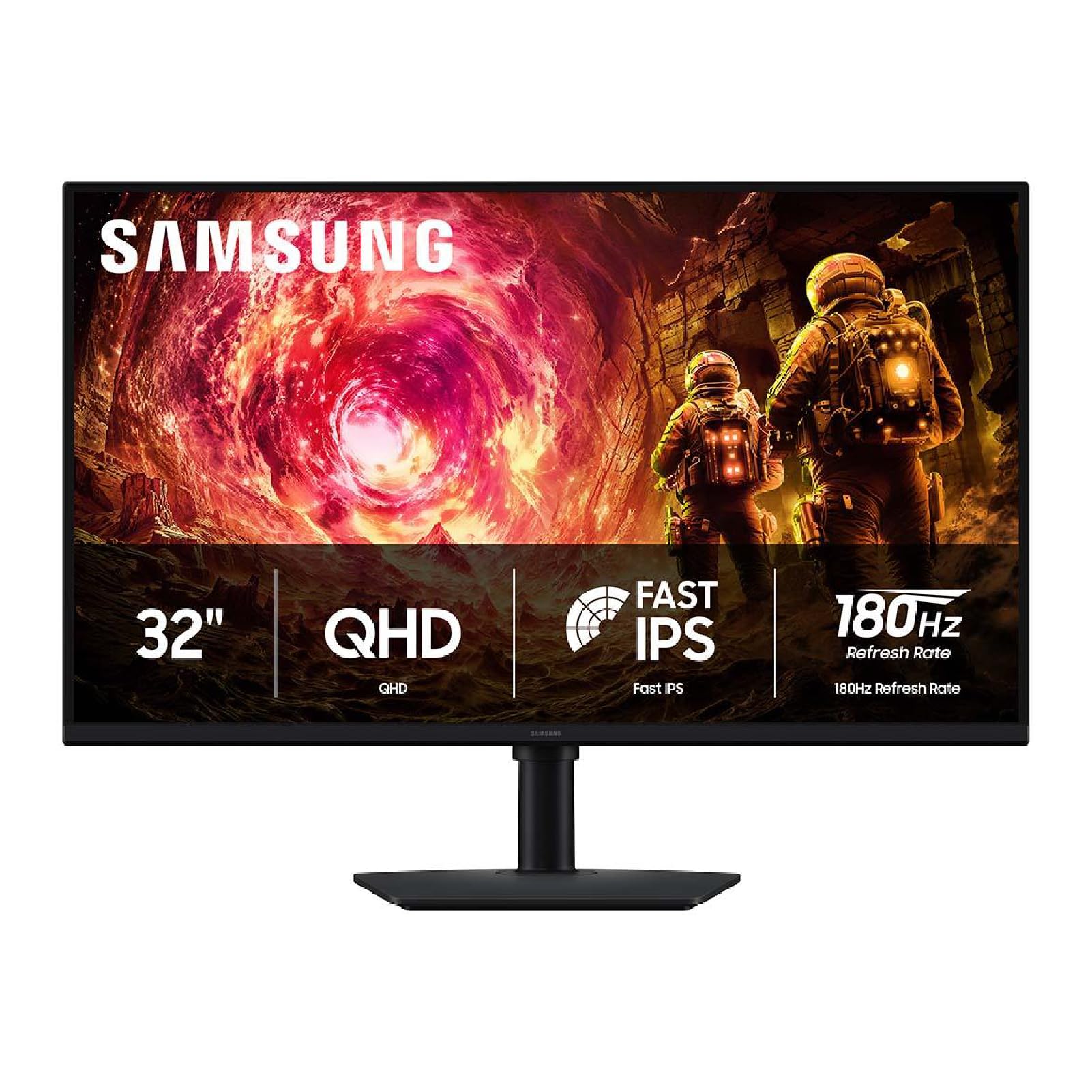
The Samsung Odyssey G5 G50F is the entry-level value king of this list — a 32-inch IPS panel with 180Hz refresh rate at 2560×1440 that undercuts nearly every competitor on price. Despite being the most affordable QHD monitor here, it delivers a surprisingly good IPS experience with wide 178-degree viewing angles and minimal anti-glare coating that makes colors pop close to glossy levels. The 1ms (GtG) response and FreeSync/G-Sync compatibility give it solid competitive gaming credentials.
The ergonomic stand is a genuine surprise at this price point — height adjustment, tilt, swivel, and pivot are all included, and the Auto Source Switch+ feature automatically detects active inputs. Black Equalizer helps reveal details in dark game scenes, and the Virtual Aim Point crosshair overlay is useful for FPS players. HDR10 support is present, though the 300-nit brightness limits its effectiveness in bright HDR scenes.
The biggest trade-offs are connectivity and OSD navigation: you only get one HDMI 1.4 port and one DisplayPort 1.2 input, which means you cannot run 1440p at 180Hz through HDMI. The control joystick is mounted on the back and can be awkward to reach. A small number of units have been reported with faint smudge-like marks on the screen, though this appears to be a QA batch issue rather than a widespread defect.
Why it’s great
- Excellent entry price for a 32-inch QHD IPS panel
- Full ergonomic stand with height, tilt, swivel, pivot
- 180Hz refresh rate with G-Sync and FreeSync support
Good to know
- Only one HDMI 1.4 port — limited connectivity
- OSD joystick is on the back of the monitor
- 300-nit brightness limits HDR effectiveness
FAQ
What is the ideal screen size for 2560×1440 resolution?
Can I run a 2560×1440 monitor without a high-end graphics card?
Is OLED worth the extra cost for a 1440p gaming monitor?
What is Display Stream Compression and do I need it for 1440p 240Hz?
Should I get a flat or curved panel for a 2560×1440 monitor?
Final Thoughts: The Verdict
For most users, the 2560×1440 monitor winner is the Alienware AW2725DF because it delivers 360Hz speed on a QD-OLED panel with a 3-year burn-in warranty — the best balance of competitive frame rates and visual quality. If you want true HDR brilliance without OLED concerns, grab the MSI MAG 274QPF X30MV with its 1152-zone Mini-LED backlight. And for the highest performance-per-dollar in the 1440p tier, nothing beats the Acer Predator X27U for bringing genuine QD-OLED color to a surprisingly accessible price point.