
Our readers keep the lights on and my morning glass full of iced black tea. As an Amazon Associate, I earn from qualifying purchases.
Specs are compiled from manufacturer listings and verified buyer reviews and can change over time — please confirm the key details on the product page before buying.
If you drive with a dash cam, the worst sound is a beep telling you the card failed right after an incident. Standard microSD cards aren’t built for the constant rewriting, heat, and vibration of a car. You need a card rated for endurance, which is why this list focuses on that exact spec. Keep in mind that while you searched for a 256GB card, some picks here are similar same-type sizes that serve the same purpose.
I’m Min — the founder and writer behind Gadgets Feed. This guide is built by comparing the manufacturers’ published specifications and the patterns across verified customer reviews, so you get each pick’s real strengths and trade-offs instead of marketing spin.
Choosing the right 256gb sd card for dash cam means looking past raw capacity to the write speed and endurance rating that keep footage safe in a parked, hot car.
Our Picks at a Glance


How To Choose The Best 256GB SD Card For Dash Cam
A dash cam writes video constantly, deletes the oldest clip, and writes again — all day, every day. A normal card wears out fast under that workload. You want one built for continuous recording, and the three specs below are what separate a reliable card from a frustrating one.
Look for the endurance rating first
Endurance is measured in hours of continuous recording the card is engineered to handle. A high number here means the card’s flash memory is rated to be rewritten over and over without corrupting. This is the single biggest difference between a card that lasts a year and one that quietly fails on a hot afternoon.
Match the speed class to your camera’s resolution
The speed class tells you the minimum sustained write speed. A V30 card guarantees at least 30MB/s, which is the safe minimum for 4K video. If your dash cam shoots 4K and your card can’t sustain that write speed, you get dropped frames or a “card too slow” warning exactly when you need the footage.
Don’t ignore the temperature range
Your car’s cabin can exceed 60°C in summer sun. Cards rated for wide operating temperatures are engineered to keep writing in that heat. A card without that rating is more likely to throttle its speed or stop recording entirely on a hot dashboard.
Quick Comparison
| Model | Best For | Speed Class | Write Speed | Endurance Rating | Amazon |
|---|---|---|---|---|---|
| SanDisk High Endurance★ Best Overall | Overall reliability | U3 V30 | 75.9 MB/s | 20,000 hours | Amazon |
| VIOFO IndustrialTop Performer | Brand-matched 4K | V30 | 80 MB/s | — | Amazon |
| Samsung Pro EnduranceBest Value | Maximum rated lifespan | Class 10 | 40 MB/s | 140,000 hours | Amazon |
| PNY PRO Elite | Surveillance value | U3 V30 | 90 MB/s | 68,800 hours | Amazon |
| ROVE Industrial | Extreme cold tolerance | V30 A2 | 90 MB/s | 3,000 P/E cycles | Amazon |
| Integral High Endurance | Budget surveillance | V30 U3 A2 | 50 MB/s | 48,000 hours | Amazon |
| SIX M200 | Fast file transfers | U3 V30 A2 | — | — | Amazon |
| GIGASTONE Pro | Budget with recovery | U3 V30 A1 | 60 MB/s | — | Amazon |
| THINKWARE | Thinkware owners | — | 90 MB/s | — | Amazon |
In‑Depth Reviews
1. SanDisk 256GB High Endurance microSD Card
Our pick — over 4.5★ from 75,500+ verified ratings; the strongest balance of quality and price.
Rated for 20,000 hours of continuous recording, this card outlasts standard cards in daily dash cam use.
You can trust this card for 24/7 security cameras and dash cams alike, thanks to its build quality. It’s rated for up to 20,000 hours of continuous recording, and buyers report it “handles 24/7 recording without any issues.” The write speed of 75.9 MB/s (megabytes per second) keeps 4K UHD footage flowing without the card becoming the bottleneck.
It’s rated for Full HD (1920×1080) and 4K UHD (3840×2160) video, though the total recording hours drop if you shoot in 4K. The card is built for harsh conditions — temperature proof, waterproof, shock proof, humidity proof, and magnet proof — so a hot car interior or a bumpy road won’t phase it. Owners say it holds about a month of driving footage from both front and rear cameras, which makes the 256GB capacity feel genuinely useful rather than just a number on the box.
One honest note: it’s listed as compatible with the original Nintendo Switch but not the Switch 2, so if you’re buying it for gaming rather than driving, check your console first. Reliability is the most-discussed trade-off here; a minority of units arrive with issues, but the overwhelming pattern is a card that just works. The recurring gripe is that the price has crept up lately, but for a card this proven, most owners call it worth it.
Why owners stick with it
- Build quality is the top praise — over 900 owners single it out
- Endurance rated to 20,000 hours of continuous recording
- Holds roughly a month of driving footage from two cameras
The trade-offs to know
- Reliability gets mixed feedback — test yours early
- Does not work with Nintendo Switch 2
The crowd favorite: if you want the card most dash cam owners already trust, this is the safe money — strong value for the endurance you get.
Reach for it if: you record daily and want a proven card; look elsewhere only if you need Switch 2 compatibility.
2. VIOFO 256GB Industrial Grade microSDXC Card
Engineered for 4K 60fps recording in extreme heat, this card maintains stable writes without dropped frames.
If you own a VIOFO A229 or any demanding 4K dash cam, this card is built for it. Owners mention flawless 4K recording at 30 and 60 fps (frames per second) with no card errors, and heat resistance is a recurring highlight — “this INDUSTRIAL chip CAN handle the HEAT in a car during the Summer.” Transfer speeds reach up to 100MB/s (megabytes per second) with a rated media speed of 80 MB per second, so pulling footage off for review feels quick.
The 256GB capacity is the balance for stability, according to review pages: a larger card can offer more storage, but this size balances loop length and buffer performance for multi-channel cameras. It formats in about three seconds, which owners appreciate when reinitializing the card monthly — a habit several recommend to extend lifespan. It’s also waterproof, anti-X-ray, and anti-magnetic, covering the usual environmental threats.
The honest caveat is reliability, which gets mixed feedback — some customers note the card still works after a year, while others mention it stops after four months. That split suggests quality control varies between batches. The other common note is value: some call it worth the price for confidence, others find it too expensive for what it is. This is a premium pick if you want a card that’s genuinely matched to its own brand’s cameras.
Built for 4K duty: handles 4K 30/60fps recording in extreme heat with no dropped frames, and the 256GB size keeps it stable for multi-channel cams.
Batch variance: reliability reports are split between long-term workhorses and early failures — test yours in the first week.
Brand-matched confidence: this is the card for VIOFO owners who want zero guesswork; it’s engineered for the cameras that share its name.
The catch: premium pricing and occasional early failures make it a pick for those who prioritize performance over budget.
3. Samsung PRO Endurance 256GB microSDXC Card
With a 140,000-hour endurance rating, this card is built to last over 16 years of continuous recording.
No other card on this list comes close to the Samsung PRO Endurance on rated lifespan: up to 140,000 hours of recording, which the maker says spans over 16 years. That figure dwarfs the 20,000-hour rating of the SanDisk above, and it’s backed by a warranty up to 5 years. For a dash cam that records every drive, that longevity translates to fewer card swaps and less worry about when it might fail.
Read and write speeds are up to 100/40 MB/s, which is enough for Full HD and 4K recording, though the write speed trails the 75.9 MB/s of the SanDisk. It’s engineered to run from -25°C to 85°C, and it stands up to magnets, X-rays, water, drops, and wear — the usual environmental gauntlet. Reviewers point out it works first time with a Garmin dash cam and a Tapo c211 camera, and one driver notes it was the exact card their tech support recommended for their camera to “work perfectly.”
The value case is straightforward: you pay for endurance, and the cost per rated hour of recording is among the lowest here. The trade-off is the write speed, which is fine for most dash cams but not the fastest on this list. Some might find the white color an odd choice for a device that lives tucked inside a windshield, but that’s cosmetic, not functional.
Endurance bargain: 140,000 rated hours for a warranty-backed card is the best longevity-per-dollar on this list.
Speed trade-off: the 40 MB/s write speed is plenty for standard dash cams, but heavier multi-channel 4K rigs may want more headroom.
Buy it for the long haul: if you want a card that outlasts your current car, this is the one — the rated lifespan is class-leading.
Who should pass: if your camera needs the fastest possible write speed, the SanDisk or VIOFO handle it better.
4. PNY 256GB PRO Elite High Endurance microSDXC
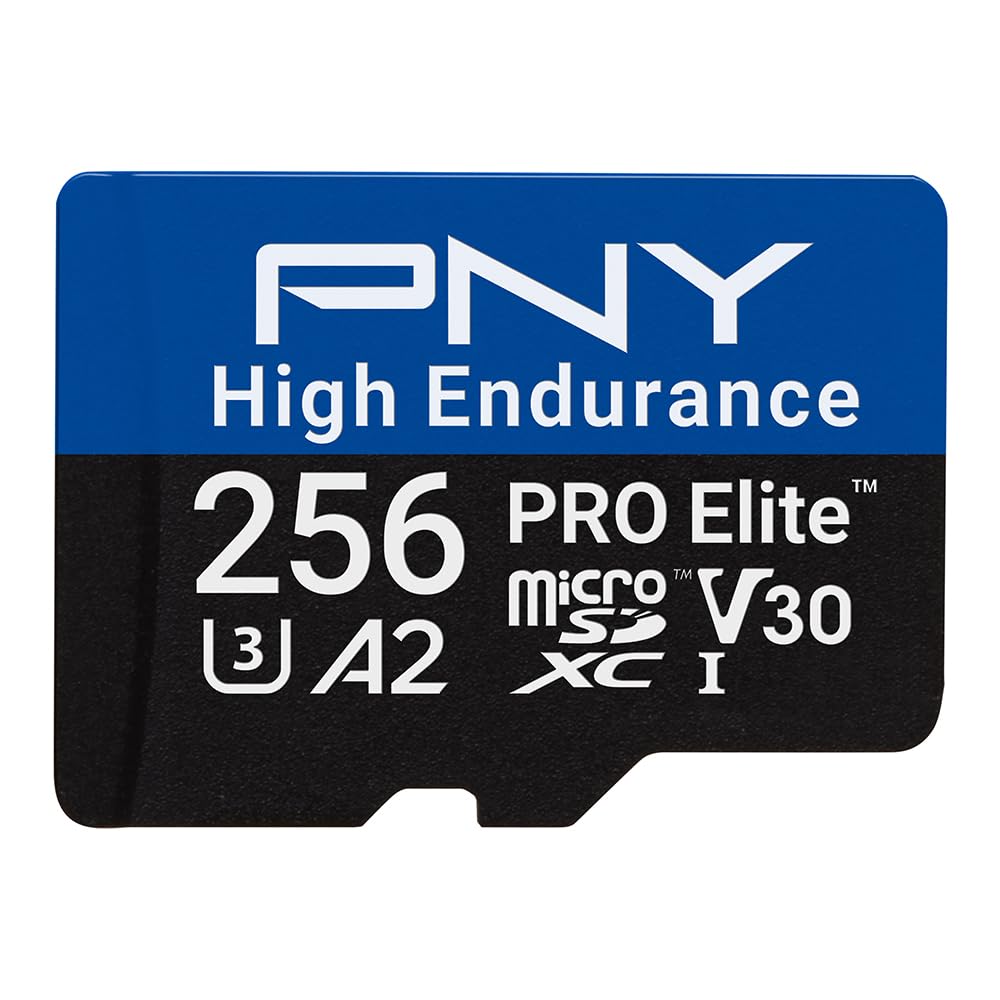
This card pairs a 90 MB/s write speed with a 68,800-hour endurance rating for balanced surveillance performance.
The PNY PRO Elite splits the difference between raw speed and long life. The write speed of up to 90 MB/s is among the fastest on this list, beating the SanDisk’s 75.9 MB/s and nearly doubling the Samsung’s 40 MB/s. At the same time, its endurance rating of up to 68,800 hours of continuous recording sits comfortably above the SanDisk’s 20,000-hour figure, giving owners a card that’s both quick and built to survive years of loop recording.
For dash cam and surveillance use, the memory quality is the top praise — owners call it “fast and reliable” and note it works well in a Wyze security cam and in a dash cam without issue. It’s Class 10, U3, V30 rated, so it handles Full HD and 4K recording at 1920×1080 and beyond. It’s also magnet proof, shock proof, temperature proof, and waterproof, with a warranty of up to 2 years. One owner uses it in a Steam Deck and calls it “the best blend of quality, speed and price around.”
The mixed feedback centers on the battery life aspect, with some owners reporting a card died after 6 months of use — a reminder that even good cards can fail, so early testing is wise. There’s also a note about usable storage coming in around 60GB on a formatted card in one review, which is unusual and worth verifying if you’re buying for a specific recording budget.
The speed-and-life combo
- 90 MB/s write speed for fast, smooth 4K capture
- Rated to 68,800 hours of continuous recording
- U3/V30/A2 rated for app and video performance
Things to watch
- Battery life aspect gets mixed reviews — some fail after 6 months
- Warranty is shorter than Samsung’s at up to 2 years
The balanced pick: this suits buyers who want near-top write speeds without sacrificing the endurance rating that keeps dash cam footage safe.
Who should skip: if you want the longest possible warranty, the Samsung’s 5-year coverage beats this one.
5. ROVE Industrial 256GB High Endurance Card + USB 3.0 Reader
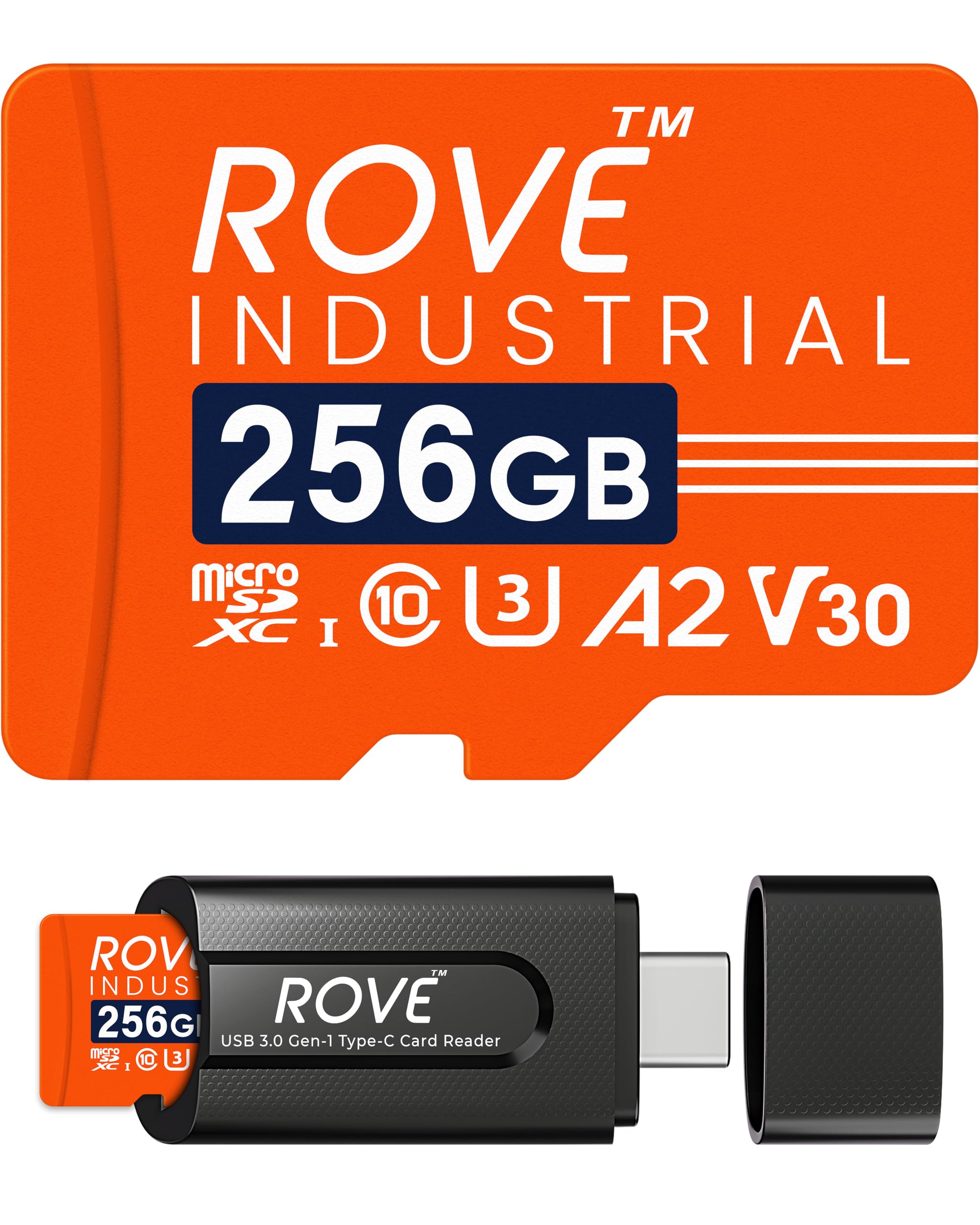
Rated for -40°C to 85°C, this industrial card includes a USB 3.0 reader for easy footage transfer.
What defines the ROVE Industrial is its operating temperature range of -40°C to 85°C — the widest on this list. That makes it the pick for northern climates where a standard card struggles to start writing on a frozen morning. It’s rated for 3,000 P/E cycles (the number of times the memory can be erased and rewritten), which is the spec that matters for 24/7 dash cam and security recording. Read speeds reach up to 100MB/s with writes up to 90MB/s.
The included USB 3.0 Type C card reader is the practical bonus here — you won’t need to buy a separate reader to pull footage off the card. Shoppers say it works flawlessly in a BlackVue DR770X 3-channel dash cam with no errors and smooth recording, and the customer service is a point of praise: one initial failure was replaced with a working unit promptly.
The functionality aspect gets mixed feedback overall, which is the honest fit-note here. The quality itself is praised, but the card’s behavior across different devices isn’t universally smooth — so if you’re using it beyond a dash cam, verify compatibility first. It’s V30, A2, U3, Class 10 rated, covering the speed requirements for smooth 4K UHD recording.
Built for the extremes: the -40°C to 85°C range and 3,000 P/E cycles make it the most climate-hardy card here.
Fit note: functionality gets mixed reviews across devices, so this is best for a dedicated dash cam rather than multi-device use.
Reach for this if: you drive in severe cold or want a card reader included in the box — the temperature range is class-leading.
Look elsewhere if: you need guaranteed cross-device compatibility; the mixed functionality reports suggest sticking to dash cams.
6. Integral 256GB High Endurance microSD Card

This budget card offers 48,000 hours of endurance, eliminating the need for a cloud subscription.
The Integral is one of the more affordable high-endurance options here, and it doesn’t skimp on the rating that matters. It’s built for up to 48,000 hours of 24/7 continuous recording — more than double the SanDisk’s 20,000-hour figure. The write speed is up to 50MB/s, which is enough for Full HD and 4K video, though it’s slower than the PNY’s 90 MB/s and SanDisk’s 75.9 MB/s. It’s V30, U3, A2 rated, so it handles the speed requirements for modern dash cams.
Buyers report it works flawlessly with a Tapo indoor camera, storing video clips for days without issues. One buyer notes they got it specifically “so I wouldn’t have to pay for a cloud account” — a real-world use case for anyone tired of subscription fees. It’s engineered to operate from -25°C to 85°C and is water-resistant, shock-proof, and X-ray proof. Sudden power-off protection helps minimize data corruption during power loss or voltage fluctuations, which matters in a car that’s being started and stopped.
The trade-off is the write speed. At 50MB/s, it’s the slowest on this list alongside the Samsung, so it’s best for standard dash cams rather than demanding multi-channel 4K rigs. Compatibility is the top praise, with the card working across CCTV systems, dash cams, and indoor/outdoor security cameras.
Why it wins on value
- 48,000-hour endurance rating at a budget-friendly price
- Compatibility is the top praise — works across CCTV and dash cams
- Sudden power-off protection guards against corruption
The compromise
- 50 MB/s write speed is the slowest here alongside Samsung
- Best for standard cams, not heavy multi-channel 4K
The smart budget pick: if you want long endurance without the premium price, this gives you most of the durability for less.
Think twice if: your camera demands the fastest sustained writes for 4K 60fps — the PNY or SanDisk handle that load better.
7. SIX M200 256GB Micro SD Card
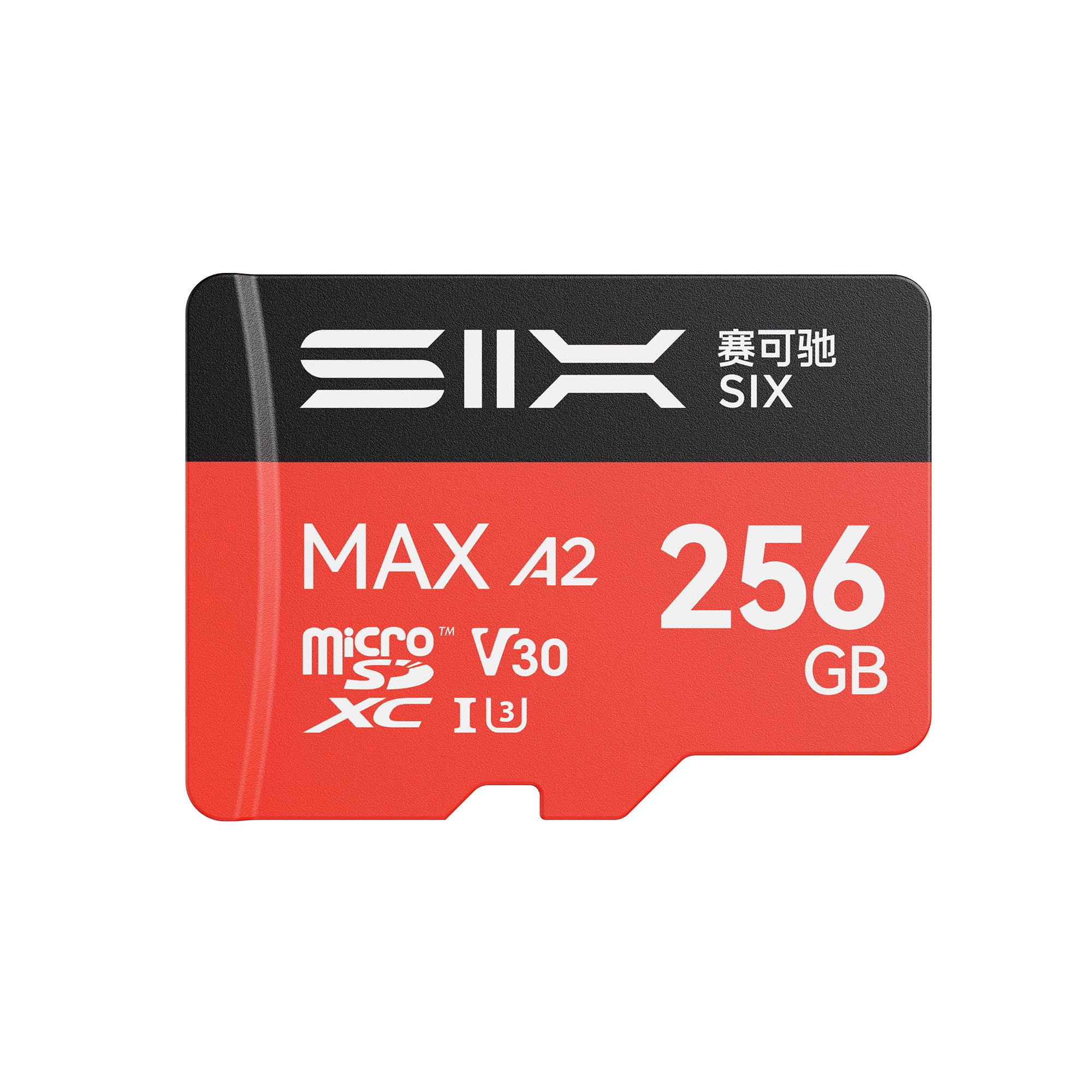
With read speeds up to 190 MB/s, this card transfers 4K footage quickly and is rated for continuous recording.
The SIX M200 leads on transfer speed with reads up to 190MB/s — roughly 2X as fast as standard micro SD cards, per the maker. That means pulling a day’s worth of 4K footage off the card is noticeably faster than with the SanDisk or PNY options. It’s U3/V30/A2 rated for sustained 4K recording, and the A2 rating means apps can run directly from the card on Android devices and handheld consoles. It’s built for high-endurance duty with drones, dash cams, and security cameras for stable loop recording.
Owners mention it “works as advertised and according to spec,” with one buyer installing it in a new doorbell camera where it “worked like a charm.” The value for money is a top praise, and several note it saved them money versus other options. It’s waterproof, shockproof, and temperature-resistant with a lifetime limited warranty, and it’s also drop proof, magnetic proof, wearout proof, and X-ray proof.
The honest note: speed feedback is mixed. Some customers note great speeds while others say they don’t match the advertised specifications. The 190MB/s read speed also requires an extra DDR200 High Speed Card Reader (sold separately) or a DDR200-compatible device — a reader you’ll have to buy to hit that top figure. Like the SanDisk, it’s compatible with Switch 1 but not Switch 2.
The speed case
- Read speeds up to 190MB/s for fast file transfers
- U3/V30/A2 rated for 4K and app performance
- Value for money is a top praise from owners
Speed caveats
- Advertised 190MB/s needs a separate DDR200 reader
- Speed performance gets mixed feedback from owners
The fast-offload pick: this suits anyone who reviews dash cam footage daily and hates waiting on transfers — it’s the quickest reader on this list.
Who should pass: if you want the top speed from the start, factor in buying a DDR200 reader to actually reach it.
8. GIGASTONE 256GB Micro SD Card High Endurance Pro

This budget card includes 5 years of free data recovery, adding confidence for dash cam users.
What makes the GIGASTONE stand out is the 5 years of free data recovery included with the card — a safety net most competitors don’t offer. It’s built for dash cams, security cameras, and general use with read/write speeds up to 100/60 MB/s, enough for 4K Ultra HD recording and displaying. It’s U3, V30, and A1 rated, so it handles Full HD and 4K video along with running apps directly from the card on supported devices. It’s also waterproof, shockproof, temperature-proof, and X-ray proof.
Reliability is the top praise from owners, with consistent performance and compatibility across dashcams, the Switch, and even 3D printers. One owner notes the heat resistance is a genuine benefit: “even if I don’t take it out of the camera, the heat doesn’t seem to affect it.” The package includes a micro SD to SD adapter and a mini case for storage, and it’s backed by a Gigastone 5-year limited warranty.
The honest trade-off is durability, which gets mixed feedback — some reviewers point out failures after three months of use. The most striking negative is a camera warning about the card being too slow after three hours of operation, with the buyer concluding the write speed isn’t sustained, only burstable. That’s a real risk for a dash cam that records continuously, so test it in your specific camera before relying on it for critical footage.
The safety-net appeal
- Reliability is the top praise — consistent across dashcams and other devices
- 5 years of free data recovery included
- Heat-resistant in a parked car, per owner reports
The durability risk
- Durability gets mixed feedback — some fail after 3 months
- One report of write speed not being sustained after hours of use
The budget-with-backup pick: this suits owners who want cheap storage plus a recovery safety net, ideal for non-critical cameras.
Who should skip: if you run a high-end 4K dash cam that records 24/7, the sustained-write question makes this a riskier bet than the SanDisk or PNY.
9. THINKWARE 256GB MicroSD Card

The plug-and-record card made specifically for Thinkware dash cams, with cold-weather stability.
This card is designed for one thing: Thinkware dash cams. It’s rated for smooth loop recording, so it captures continuously and preserves incident footage longer between overwrites. The cold-weather reliability is a specific selling point — stable writes reduce startup errors when a dash cam struggles to turn on in low temperatures, which matters for winter commuters. Media speed is rated at 90 MB per second, keeping recordings flowing without bottlenecks.
Owners confirm it works as advertised, with one buyer noting the “Thinkware software is preloaded and mates with unit perfectly.” Another driver calls it “pricey, but works well with Thinkware ARC Dash Cam.” The 256GB capacity extends recording time so the camera captures more trips before overwriting, and it supports parking surveillance features like motion and impact detection along with time lapse modes on select models. It’s ideal for front-facing cameras, rideshare drivers, and fleets.
The honest caveat is the price — this is the most expensive card on this list — and the reliability record is mixed with a small sample. One owner reported a defective card causing gaps and pixelations in recordings, which ended up being an investigation into the card’s performance. That’s a reminder that even brand-official cards can have bad units, so test yours immediately. If you don’t own a Thinkware camera, there’s no reason to pay the brand premium.
The plug-and-play case
- Thinkware software preloaded and mates perfectly with the unit
- Cold-weather reliability reduces startup errors
- Loop recording preserves incident footage longer
The brand cost
- The most expensive card on this list
- Mixed reliability reports despite the brand premium
Made for Thinkware owners: if you run a Thinkware dash cam and want zero guesswork with software integration, this is the card to grab.
Skip it unless: you own a Thinkware camera — for any other brand, the SanDisk or Samsung give you more for less.
Understanding the Specs
Speed Class (V30, U3, A1/A2)
The speed class tells you the minimum sustained write speed a card guarantees. A V30 rating means at least 30MB/s, which is the safe floor for 4K recording — anything slower risks dropped frames or a “card too slow” warning. The A1 or A2 rating applies to running apps directly from the card, which matters for phones and consoles but less for a dash cam. Higher is better, but match it to what your camera needs.
Endurance Rating (Hours or P/E Cycles)
Endurance is the number of hours a card is rated for continuous recording, or the number of erase/write (P/E) cycles its memory can survive. This is the single most important spec for a dash cam, since the card is constantly overwriting old footage. A card rated for 20,000 hours will outlast a standard card by years. If the data only lists P/E cycles, know that a higher number means more rewrites before failure.
FAQ
Why does my dash cam need a special high-endurance card?
What does the V30 speed class rating mean for my dash cam?
How long will a 256GB card record before it overwrites old footage?
Can I use a card from one brand in a different brand’s dash cam?
How does heat affect a dash cam memory card?
What is loop recording and why does it matter?
Why do some cards mention they don’t work with the Nintendo Switch 2?
Should I format my dash cam card regularly?
Final Thoughts: The Verdict
For most buyers, the 256gb sd card for dash cam winner is the SanDisk High Endurance because it pairs a proven 20,000-hour endurance rating with a strong 75.9 MB/s write speed and the largest base of satisfied owners. If you want the longest rated lifespan possible, the Samsung PRO Endurance is the one to reach for with its 140,000-hour rating. And for extreme-cold climates or a card that includes its own reader, the ROVE Industrial stands out with its class-leading -40°C to 85°C operating range.
How We Picked
We do not accept paid placement. Every pick is matched to a real buyer and a real use-case; we do not hands-on test units.
Sources & Methodology
Specifications: manufacturer listings and product documentation. Review insights: verified customer reviews, as of August 2026. Pricing: not shown on this page (it changes often); check the current price via the retailer link.
As an Amazon Associate, Gadgets Feed earns from qualifying purchases. This does not affect which products we feature.