
Our readers keep the lights on and my morning glass full of iced black tea. As an Amazon Associate, I earn from qualifying purchases.
Specs are compiled from manufacturer listings and verified buyer reviews and can change over time — please confirm the key details on the product page before buying.
Buying a 26-inch rim depends on three numbers: the ISO 559 wheel size, your hub spacing, and your brake type. Match all three and the rim bolts straight on; miss one and it goes back in the box. This guide sorts the picks by what each one actually fits.
I’m Min — the founder and writer behind Gadgets Feed. This guide is built by comparing the manufacturers’ published specifications and the patterns across verified customer reviews, so you get each pick’s real strengths and trade-offs instead of marketing spin.
For the safest all-rounder, start with the 4.5+ star WheelMaster, backed by 300+ ratings. Here is what actually matters when you shop for 26 inch mountain bike rims.
Our Picks at a Glance

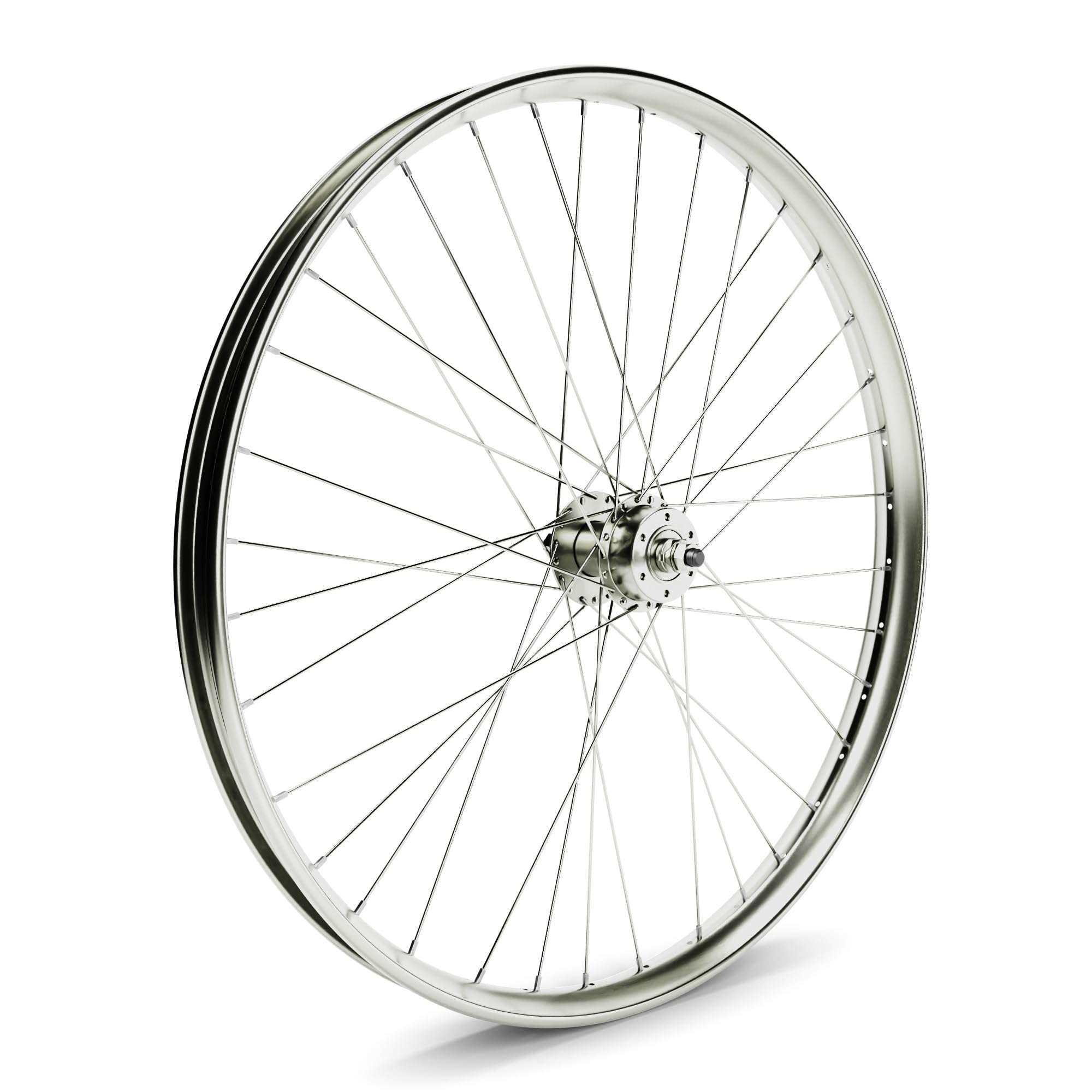

How To Choose The Best 26 Inch Mountain Bike Rims
Most 26-inch wheel returns happen for one boring reason: the buyer checked the tire size and ignored the hub. A rim can be the right diameter and still refuse to sit in your fork. Work through these four checks before you buy anything.
Confirm the wheel is really 26-inch (ISO 559)
The number that matters on a mountain bike rim is the ISO bead-seat diameter — 559 mm is the 26-inch standard. A rim marked 26 inches but built for a different standard will not seat your tire evenly. Check that the listing names 26 inches and, where possible, ISO 559, then measure your old rim before ordering.
Match your hub spacing and axle type
Quick-release hubs on mainstream mountain bikes typically run 100 mm up front and 135 mm at the rear. Fat bikes and some downhill frames use wider spacing. Pull your current wheel out and measure the gap between the fork blades and the frame dropouts — an axle that is too narrow or too wide is the single most common fit failure.
Decide your brake mount before your rim width
Disc-brake wheels need a rotor mount, and the near-universal pattern on value wheelsets is 6-bolt. Rim-brake wheels skip that entirely and instead need a machined braking surface on the rim wall. If your bike has caliper or V-brakes, a disc-only wheel is the wrong purchase no matter how good the price looks.
Weigh spoke count against how you ride
More spokes usually means a stiffer wheel that carries heavier loads and shrugs off potholes. Fewer spokes can feel livelier and spin up faster. A 36- or 48-spoke build suits commuters, cargo, and heavier riders; a 32-spoke build suits lighter trail riding. Neither is better — they are different jobs.
Quick Comparison
| Model | Best For | Rim Size | Spoke Count | Brake Style | Amazon |
|---|---|---|---|---|---|
| WheelMaster 26″ Alloy Mountain Disc Double Wall★ Best Overall | Safe all-rounder | 26 inches | 36 | Disc | Amazon |
| BBR Tuning Heavy Duty 12 Gauge 26Inch x 1.25 Inch Front Bike RimBudget Front Fix | Single front replacement | 26 inches | 36 | Disc | Amazon |
| Hiland 26″ Alloy Bike WheelsBest for Commuters | 7-speed freewheel builds | 26 inches | — | Disc | Amazon |
| BUCKLOS MTB Wheelset | Trail upgrade pair | 26 inches | 32 | Disc | Amazon |
| Exceedhub 26″ Mountain Bike Wheelset | Rim-brake riders | 26 inches | 32 | Rim brake | Amazon |
| DONSP1986 26″ Heavy Duty 48 Spokes Wheelset | Heavy loads and fat tires | 26 inches | 48 | Caliper, Disc | Amazon |
| WEEROCK 26 Inch MTB Wheel Set | Wide cassette range | 26 inches | 26 | Disc | Amazon |
| Bullseye MonsterWheels 26″ Fat Tire Wheels | Fat bike rolling stock | 26 inches | — | — | Amazon |
In‑Depth Reviews
1. WheelMaster 26″ Alloy Mountain Disc Double Wall
Our pick — 4.5+★ from 300+ verified ratings; the strongest balance of quality and price.
Thirty-six spokes, a double-wall alloy rim, and a 6-bolt disc mount make this the set-and-forget pick for disc-brake trail bikes.
The build is the reason to choose it. A 36-spoke lacing spreads your weight across more contact points than a 32-spoke wheel, so the rim holds its shape on washboard gravel and rooty singletrack. The rim is a WEI XM280 disc model paired with a W/M MT-2000 hub, and it mounts a 6-bolt rotor — the common six-screw disc pattern found on most mountain bikes.
That extra width helps you seat a fatter trail tire with a sidewall that sits square. At 1.5 inches of rim width, this WheelMaster is wider than the 1-inch BBR Tuning front rim in this list. Buyers report 100 miles of use with no issues, and owners talk about quality above everything else. It also arrives as a single wheel, so check if you need one or a pair before you commit.
Sizing is the other half of the story. It is an ISO 559 26-inch wheel, which is the true 26-inch mountain standard rather than a nominal label. The aluminium construction keeps it manageable in the hand, and disc-only braking means it suits modern mountain frames rather than older caliper-brake bikes. If you ride an older rim-brake frame, this is not your wheel.
What earns it the top slot
- 36-spoke build spreads load and resists going out of true on rough ground
- 1.5-inch rim width gives fatter tires a squarer, more stable profile
- 6-bolt disc mount matches the common rotor pattern on mountain bikes
- Double-wall aluminium rim construction at a mid-range price point
What to weigh first
- Single wheel only — a full bike rebuild needs two
- Disc brake only, so caliper and V-brake frames are out
- Build quality draws mixed notes even though durability holds up over distance
Reach for this if: you want one dependable 26-inch disc wheel with the spoke count to survive daily trail abuse.
Look elsewhere if: your bike runs rim brakes or you need a matched front-and-rear pair in one order.
2. BBR Tuning Heavy Duty 12 Gauge 26Inch x 1.25 Inch Front Bike Rim
A single front wheel with 12-gauge steel spokes for commuters who keep bending thin-gauge rims on curbs.
Twelve-gauge spokes are thicker wire than the standard gauge most value wheels use, and that thickness is the whole pitch here. More steel per spoke means more resistance to bending when you hit a curb with your weight forward. It runs 36 spokes on an alloy steel rim, which is a lot of reinforcement for a front wheel.
Compare it directly with the BUCKLOS set: this rim carries 36 spokes to the BUCKLOS 32, and that extra four-spoke margin is exactly what you feel when a pothole catches you off guard. The trade-off sits in the width. At 1-inch rim width this is a narrower rim than the 1.5-inch WheelMaster above, so very fat tires will look pinched on it.
The reasonable worry is what happens from the start. Spoke quality and wheel alignment are the two things buyers flag most often, so budget a few minutes with a spoke wrench to true it before your first ride. Mounting is straightforward — precision-machined hubs spin smoothly and the disc-brake mount is ready to bolt a rotor on. It is disc-ready and 26-inch, so confirm your fork and brake type first.
Front-only by design: this is one wheel, not a set. If your rear rim is the damaged one, this purchase will not solve it.
The honest math: heavy steel spokes add toughness and weight together. Riders chasing a light front end should look at an aluminium-spoked wheel instead.
Right answer when: your front wheel is the casualty and you want thick-gauge spokes without spending much.
Wrong answer when: you need a matched pair, or your bike runs rim brakes.
3. Hiland 26″ Alloy Bike Wheels
Two aluminium wheels with a 7-speed freewheel and bolt-on axles — a direct swap for older geared 26-inch mountain bikes.
The standout detail here is the freewheel type. This set is built around a 7-speed freewheel and a bolt-on axle, which is the older drivetrain standard rather than the modern cassette. That makes it a direct fit for plenty of secondhand 26-inch mountain bikes that never got a cassette upgrade. Get this wrong and the wheel is useless to you, so count your rear cogs before ordering.
Rim width is quoted at 1.75 inches, and the wheel is designed for tires from 1.75 to 2.215 inches. That range covers most pavement-to-fire-road tires, so you are not locked into one rubber size. Aluminium construction keeps the pair reasonably light for a budget set, and both front and rear are in the box — unlike the single-wheel WheelMaster or BBR picks.
Disc brakes are supported, and owners lean on functionality: it works, it rolls, it holds your tire and tube properly. Fit is the part that varies, so measure your dropouts and your brake mounts with a ruler rather than trusting the model name alone. The one thing it will not accommodate is a wide-range modern cassette drivetrain.
The practical upside: a complete front-and-rear set with a 7-speed freewheel already matched to the older bolt-on frame standard.
The catch to check: 7-speed freewheel only. A rider on an 8-speed or wider cassette should look at the WEEROCK set instead.
Built for: the rider reviving a 26-inch mountain bike with a 7-speed freewheel and bolt-on axles.
Not built for: cassette drivetrains or fat-tire frames — the freewheel type rules both out.
4. BUCKLOS MTB Wheelset

6069 aluminium double-wall rims at 32 spokes, with sealed bearings and a freehub that takes an 8 to 10-speed cassette.
The construction is the conversation starter. 6069 aluminium alloy is a stronger, more deformation-resistant rim stock than the plain alloy on cheaper sets, and 32-count #45-steel round spokes per wheel handle the impacts. These are the parts that matter on gravel and root-strewn singletrack, where a soft rim slowly folds itself out of shape.
Weight is where this one separates from a budget pair. At 2.06 kg it is the lighter of the two weighed wheelsets in this list, and it is far easier to whip through tight singletrack as a result. The double-wall rim with its 25 mm width gives tires a stable, square seating surface without the balloon feel of a very wide rim.
Sealed bearings are the under-rated feature. Each wheel carries its own sealed cartridge, keeping dust out and rolling resistance down on long rides. The quick-release fitting means no tools needed for installation, and the box includes spare spokes and anti-puncture PVC rim strip — items many sets leave you to buy separately. Front spacing is 9×100 mm and rear is 10×135 mm, so verify your fork and frame dropouts match.
Why it climbs the shortlist
- 6069 aluminium double-wall rim resists deformation better than standard alloy
- 32 spokes per wheel with #45 steel construction for impact resistance
- Sealed bearings front and rear for smooth pedalling
- Includes spare spokes, quick-release parts and anti-puncture rim strip
Where it needs watching
- Reliability is strong overall, but the freehub draws mixed notes for wear over distance
- Balance of the wheelset gets mixed feedback from some owners
- Requires 8–10-speed cassette drivetrain — a 7-speed freewheel will not fit
My pick for: mountain bikers with a 26-inch frame running an 8–10-speed cassette who want a lighter, tougher wheel set for trail riding.
Think twice if: you are on a 7-speed freewheel drivetrain, or you expect a sealed freehub to survive neglect.
5. Exceedhub 26″ Mountain Bike Wheelset

The one set here built for rim brakes, with a 19 mm internal width and double-wall walls that suit older mountain frames.
Rim-brake compatibility is this wheel’s whole reason to exist. If your 26-inch bike uses caliper or V-brakes, nearly every pick in this list is ruled out by its disc mount — but the Exceedhub runs rim brakes, so your existing setup works without a conversion. That alone narrows the field for anyone in a classic older frame.
Width sits at 19 mm internally and 25 mm externally, which is a good fit for the 1.5 to 2.125-inch tire range the listing names. It carries 32 spokes front and 32 rear — a stiffer-than-necessary figure for a road-leaning rider but exactly right for a gravel-eating commuter. Spokes are 45# steel with extended copperheads at 12 mm, which keeps the spoke ends seated against the rim longer.
Two small details earn trust over time. The double-layer rivet rim uses PVC explosion-proof tire pads, a barrier that stops a spoke end from puncturing the inner tube from the inside out. And the front-2, rear-2 bearing layout keeps grit out of the hub, so the pedalling effort stays low. Owners tend to report out-of-the-box alignment and straightforward riding. At 3.2 kg the pair is heavier than the BUCKLOS set, so you are trading lightness for the brake compatibility you cannot get elsewhere.
Brake compatibility is the selling point: rim-brake frames have very few 26-inch options, and this is the clear one.
The trade-off is weight: a 3.2 kg pair will feel noticeably slower to spin up than a lighter set, so weight-sensitive riders should weigh that against the brake fit.
Point this at: an older 26-inch mountain bike with rim brakes that needs a fresh front-and-rear pair and cannot convert to discs.
Skip it for: a disc-brake build — you would be paying for a braking surface you will never use.
6. DONSP1986 26″ Heavy Duty 48 Spokes Wheelset

Forty-eight spokes in twelve-gauge steel, wrapped in a double-wall aluminium rim — this wheel is built to carry weight.
Forty-eight spokes is the highest count on this list, and the count is the point. Spreading load across that many points of contact holds the rim true under a rider plus gear plus a rough trail. The spokes are 12-gauge, which is thicker wire than the standard gauge on most value wheels, and the rim itself is double-wall aluminium.
That combination matches a wide tire. This set takes tires from 2.35 to 3.5 inches, the widest range in this list, so it suits fat tires without pinching the sidewall. Both disc and caliper brake mounting are supported, making it one of only two picks ready for either brake type.
The fit is the catch. This is a single item — 1 in the box — and its front hub spacing is a 100 mm hub with a 145 mm axle while the rear is 135 mm with a 180 mm axle. Those axle lengths run long compared with the standard quick-release wheels in this list, so measure your dropouts carefully. The manufacturer even suggests rechecking and readjusting the spoke tension with a spoke wrench before installation, which tells you the wheel arrives ready to be tuned rather than perfectly dialed.
The numbers that sell it
- 48 spokes front and rear — the widest load distribution here
- 12-gauge spokes for resistance to bending under heavy weight
- Accepts tires from 2.35 to 3.5 inches, the widest range in this list
- Disc and caliper brake mounting in one wheel
The numbers to check
- Axle lengths of 145 mm front and 180 mm rear are unusually long — confirm your frame
- One item in the box, not a pair
- Spoke tension may need adjusting with a wrench before your first ride
Best matched to: a heavy rider or cargo bike where load-bearing matters more than spin-up speed, running fat 26-inch tires.
Measure before you buy: the long axle spacing is the detail that sends this wheel back to the seller.
7. WEEROCK 26 Inch MTB Wheel Set

Twenty-six spokes, a 6-bolt disc mount, and cassette compatibility all the way from 7 to 11 speeds.
The gearing range is what sets this apart. Where the Hiland set stops at a 7-speed freewheel, this WEEROCK wheel takes any cassette from 7 through 11 speeds. That matters if you plan to upgrade your drivetrain later and want wheels that will keep up. Just be sure your freewheel is a cassette type — the listing is explicit about it.
The wheel also leans light on spokes. At 26 spokes, this is the lowest count in the list, and the result is a livelier, faster-spinning wheel under a lighter trail rider. Premium pieces support that: 6-bolt disc brake mount, a hub with two bearings front and rear, and sealed construction for better water and dust resistance than an unsealed hub.
Build quality is the standout strength, with owners rating it consistently above value for money. The 25 mm rim width is a sensible middle ground between a racy narrow rim and a fat-tire carrier. One recurring note worth knowing about: the quick-release levers can be prone to releasing easily, so snug them when you mount. Front spacing is 100 mm and rear 135 mm, matching the common quick-release standard.
The strongest argument: a 7 to 11-speed cassette compatibility range that no other set here offers, plus 6-bolt disc support and a sealed two-bearing hub.
The line to watch: the quick-release stability draws mixed notes, so do not skip the final lever check before you ride.
Pick this when: your bike runs a cassette drivetrain from 7 to 11 speeds and you want wheels that will survive a future upgrade.
Leave it if: you ride a freewheel setup, since cassette compatibility is the only gearing it accepts.
8. Bullseye MonsterWheels 26″ Fat Tire Wheels

Eighty-millimetre alloy rims with 26 x 4.0 Vee Rubber tires and tubes already mounted — roll it straight onto the bike.
This is the only fat-bike set in the group. The rims measure 80 mm wide in single-walled aluminium, and the 26 x 4.0 tires plus Schrader tubes arrive mounted and ready to roll. If you are converting a fat bike or fixing up a snow-and-sand build, that is a huge convenience compared with buying rims, tires and tubes separately.
Hub spacing tells the fat-bike story: front is 135 mm and rear 170 mm, the wide dropouts fat frames use. Standard quick-release mountain wheels in this list sit at 100 mm front and 135 mm rear, so these will not fit a regular mountain frame. Check your own spacing before you order — this set is built to a different standard than the rest of the picks.
Because these are single-walled rims, they trade some stiffness for their deep-dish fat profile. That is fine for a fat bike’s low-pressure riding, less ideal for high-pressure trail thrashing. Note the listing is honest about condition — black spokes arriving “slightly scratched” — so expect a working wheel rather than a showpiece. The Vee Rubber Mission Command tires are included, which saves sourcing them separately.
What you get in one box: rims, spokes, 26 x 4.0 tires and Schrader tubes, mounted and ready — a complete rolling set for a fat bike.
The fit reality: 135 mm front and 170 mm rear spacing means this is for fat frames only, never a standard 26-inch mountain bike.
Right for you if: your bike is a fat-tire 26-inch frame with 135 mm front and 170 mm rear dropouts and you want a rolling set from the start.
Wrong for you if: you ride a standard mountain frame — the spacing will not fit, and single-walled rims are not a trail-thrashing choice.
Understanding the Specs
ISO 559 and 26-Inch Sizing
The number printed on a mountain bike tire tells you two things: the tire’s outer diameter and the bead-seat diameter it needs to grip. ISO 559 is the bead-seat standard for a true 26-inch mountain rim, so a rim and tire both marked ISO 559 seat cleanly together. A rim that says 26 inches but uses a different bead-seat standard may fit loosely and let the tire shift under cornering. Always match the ISO figure before anything else.
Rim Width and Tire Fit
Rim width is quoted as a range, and it decides which tire widths sit correctly. A narrow 1-inch rim suits narrow tires; a 25 mm or wider rim lets a fatter tire seat with a square profile and better sidewall support. Riding a too-wide tire on a too-narrow rim pinches the sidewall and rounds the tread, which makes cornering unpredictable. Match the tire range printed in the listing to the tires you already own.
Spoke Count and Gauge
Spoke count is the number of steel rods radiating from the hub to the rim. More spokes spread load across more points, so a 36- or 48-spoke wheel carries heavier weight and holds its shape under rough riding. Gauge refers to spoke wire thickness — 12-gauge is thicker than standard, so it resists bending better. Fewer spokes, such as 26 or 32, spin up faster and suit lighter trail riders or smoother riding.
Hub Spacing and Axle Type
Hub spacing is the distance between the fork or frame dropouts where the axle sits. Mainstream quick-release mountain bikes commonly use 100 mm up front and 135 mm at the back, while fat bikes run wider at 135 mm and 170 mm. Axle length matters too, since a long axle may not sit in a standard dropout. Measure your own spacing with a ruler before ordering a replacement wheel or set.
FAQ
Will a 26-inch rim fit a 27.5 or 29-inch mountain bike?
How do I check my hub spacing before buying a 26-inch wheel?
What is the difference between a 6-bolt disc wheel and a rim-brake wheel?
Can I put a 26-inch rim on a bike with V-brakes?
How many spokes should a 26-inch mountain bike rim have?
Does rim width change which tire I can use?
Is a freewheel wheel better than a cassette wheel for a 26-inch mountain bike?
Do new wheels arrive true and ready to ride?
Can I use fat bike 26-inch wheels on a standard mountain bike?
Final Thoughts: The Verdict
For most riders buying 26 inch mountain bike rims, the WheelMaster 26″ Alloy Mountain Disc Double Wall is the safest choice. It gives you 36 spokes, a 1.5-inch double-wall alloy rim, and a 6-bolt disc mount (the bolt pattern most mountain disc brakes use). If you want a lighter, tougher set for trail riding, the BUCKLOS MTB Wheelset pairs 6069 aluminium rims with 32 spokes and sealed bearings (bearings shielded from dirt and water). And if your bike runs rim brakes, the Exceedhub 26″ Mountain Bike Wheelset is the one to reach for — nothing else in this group is built for that brake type. Check your hub spacing and brake mount first, and the rest falls into place.
How We Picked
We do not accept paid placement. Every pick is matched to a real buyer and a real use-case; we do not hands-on test units.
Sources & Methodology
Specifications: manufacturer listings and product documentation. Review insights: verified customer reviews, as of November 2026. Pricing: not shown on this page (it changes often); check the current price via the retailer link.
As an Amazon Associate, Gadgets Feed earns from qualifying purchases. This does not affect which products we feature.