
If you are shopping for a 27.5 inch mountain bike, you want a wheel size that strikes a balance — nimble enough to flick through tight turns like a 26-inch bike, but with enough rollover ability to clear roots and rocks without stopping you cold. The real trick is finding a bike that rides smoothly and safely right out of the box, without needing costly repairs or hours of adjustments. This guide covers eight real options at different budgets, so you see exactly what your money buys and what trade-offs come at each price level.
I’m Min — the co-founder and writer behind Gadgets Feed. This guide is built by comparing the manufacturers’ published specifications and the patterns across verified customer reviews, so you get each pick’s real strengths and trade-offs instead of marketing spin.
A great 27.5-inch mountain bike needs a frame that does not tire you out, gears that shift when you need them, and brakes that stop you in wet or dry conditions. Here is the no-spin look at the best contenders for a 27.5 inch mountain bike that fits your trails, your body, and your budget.
How To Choose The Best 27.5 Inch Mountain Bike
Picking the right bike starts with understanding the three things that determine how it actually rides: the frame material, the suspension type, and the brake system. The rest — number of speeds, tire width, and added features — matters, but those three will decide whether you enjoy the ride or fight the bike the whole way.
Frame Material — Aluminum vs. Carbon Steel
Aluminum frames weigh less and resist rust better, which makes them the smart choice if you plan to ride regularly or have to carry the bike up stairs. Carbon steel frames are heavier but absorb road vibration differently and cost less, which appeals to budget buyers. The catch: aluminum bikes usually shift the weight balance toward the front, so you might notice more bounce on steep descents unless the suspension fork compensates.
Suspension — Hardtail vs. Full
A hardtail (front suspension only) is lighter and more efficient for climbing because none of your pedaling energy gets absorbed by a rear shock. Full suspension gives you cushioned control on rocky descents but adds weight and complexity. For most riders hitting gravel paths, packed dirt, or moderate trails, a hardtail with a lockout fork — which lets you stiffen the fork for paved sections — is the practical sweet spot.
Brakes — Disc vs. Rim
Mechanical disc brakes grab a rotor mounted at the wheel hub instead of the wheel rim, which means mud and water don’t reduce stopping power. Rim brakes are cheaper but lose grip when wet and wear down the wheel edge over time. Every bike in this guide uses disc brakes, which is the minimum you should accept for any off-road riding.
Quick Comparison
On smaller screens, swipe sideways to see the full table.
| Model | Category | Best For | Key Spec | Amazon |
|---|---|---|---|---|
| SPATIAL Mountain Bike | Aluminum Hardtail | Shimano reliability + lockout fork | 33 lbs / 21-speed trigger shifters | Amazon |
| HILAND 18-Speed | Aluminum Hardtail | Tall riders (5’8″ to 6’5″) | 18-speed / internal cable routing | Amazon |
| Mongoose Switchback Comp | Aluminum Hardtail | Shimano quality + ready-to-ride assembly | 18-speed / 27.5-inch wheels | Amazon |
| AVASTA Earth | Aluminum Hardtail | Switchable suspension fork | 21-speed / lockout fork option | Amazon |
| Mongoose Status | Full Suspension | Dual suspension for rougher trails | 21-speed / knobby 2.3″ tires | Amazon |
| HILAND 21-Speed | Carbon Steel Hardtail | Teen / rider growth phase | 21-speed / disc brakes | Amazon |
| Ktaxon 21-Speed | Carbon Steel Hardtail | Entry-level price / light trails | 21-speed / dual disc brakes | Amazon |
| WEIZE 21-Speed | Aluminum Hardtail | Lightweight at a low price | 21-speed / rear disc brake | Amazon |
In‑Depth Reviews
1. SPATIAL Mountain Bike/Fat Tire
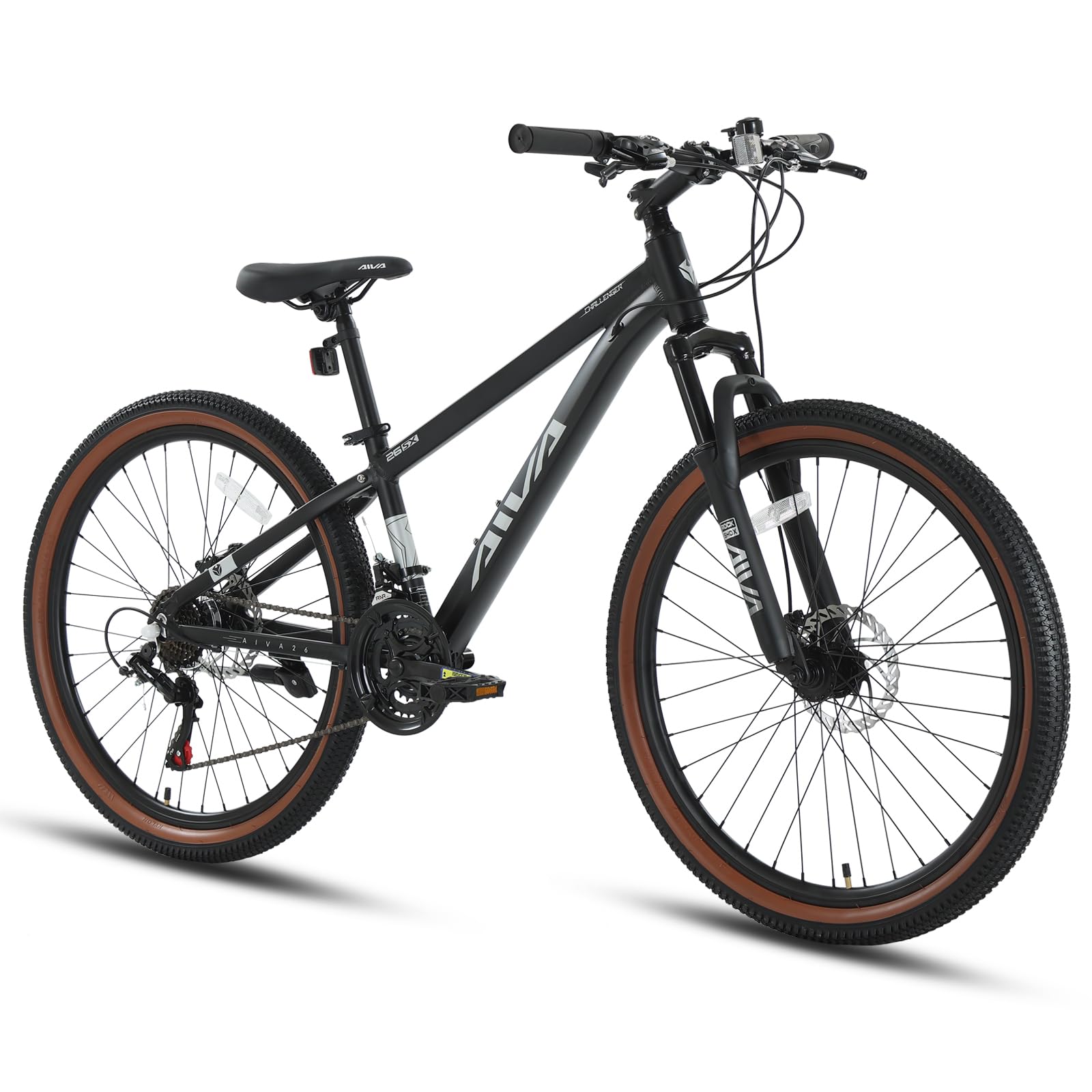
21-speed trigger shifters with a Shimano rear derailleur make the SPATIAL the top pick for riders who want crisp, reliable drivetrain performance without stepping up to enthusiast pricing.
The 33-pound aluminum frame keeps the bike manageable for carrying over obstacles, and the lockout suspension fork lets you stiffen the front end on paved sections so you don’t waste energy on smooth ground. Buyers report that the seller provided a longer seatpost for a taller rider who found the 29-inch version too small — a sign of responsive customer support that matters when a part doesn’t fit.
Owners mention that the plastic derailleur parts feel flimsier than the solid Shimano core they connect to, so rough handling might require an early replacement. For a rider who wants proven gear performance and a fork that adapts to mixed terrain, this is the most trustworthy choice on this list by a clear margin.
Why it’s great
- Shimano rear derailleur for reliable shifting
- Lockout suspension fork for mixed terrain
- Lightweight 33-lb aluminum frame
Good to know
- Plastic derailleur parts feel less robust
- Some buyers needed basic tools beyond what was included
2. HILAND 26/27.5 Inch Mountain Bike (18-Speed)
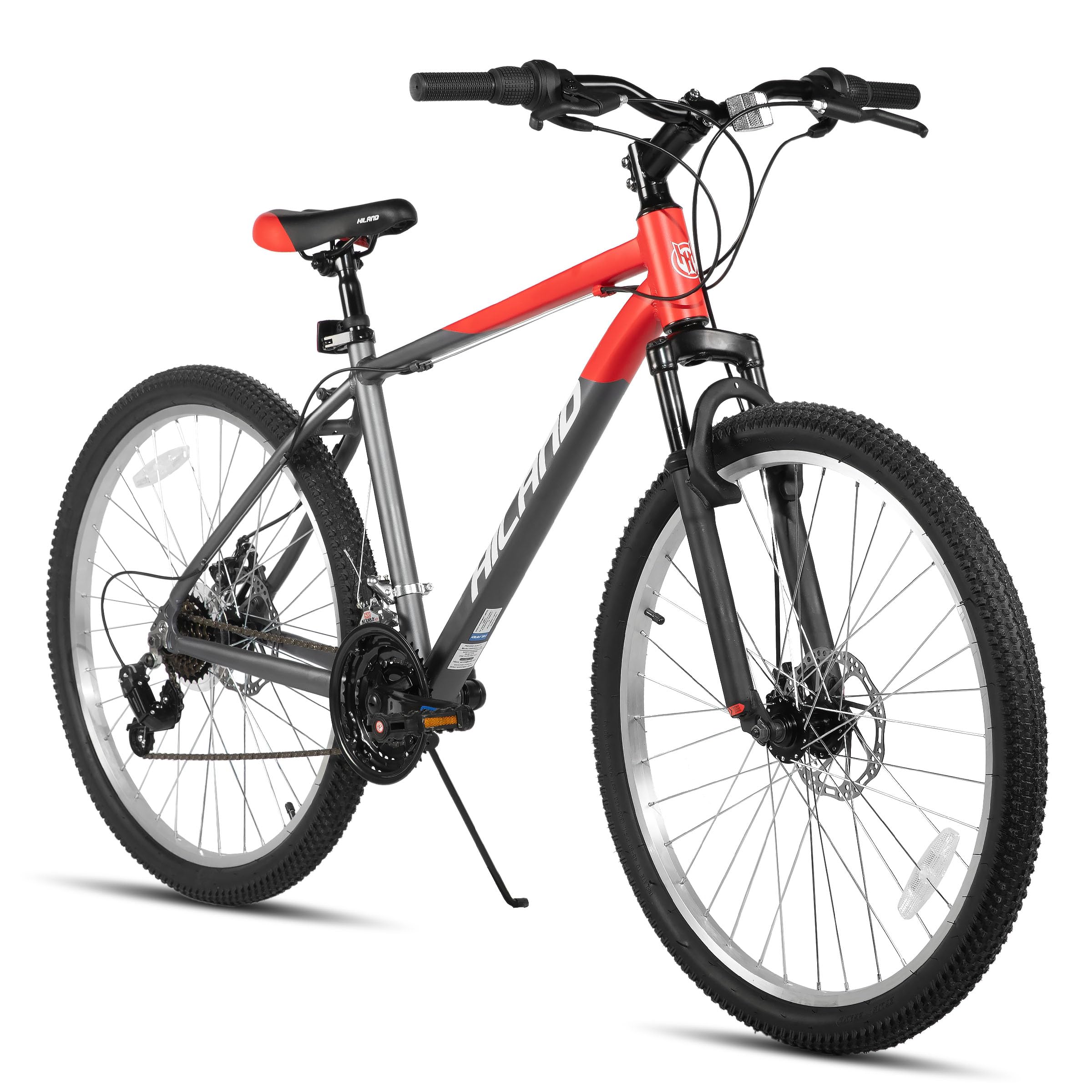
You get the widest rider size range on the list with this bike — it officially fits from 5’8″ to 6’5″, a full eight inches taller on the upper end than the SPATIAL. What you give up is three gear ratios (18 vs 21 speeds) and the bike uses more carbon steel parts in the frame, making it heavier on climbs. But it beats the SPATIAL on build polish: the internal cable routing keeps shift cables protected from mud and brush, a detail the SPATIAL lacks.
Customers note that the bike showed up a day early and went together in about 30 minutes with no missing hardware, which is a rare clean experience for an Amazon bike. The dual disc brakes deliver the stopping confidence you need on loose gravel, and the adjustable damping fork lets you fine-tune the front-end stiffness for your weight and trail conditions.
If you are over 6 feet tall and found the SPATIAL’s maximum of 195 cm (roughly 6’5″) too tight, this HILAND is the safer fit — the recommended range is more generous and the frame geometry leans toward longer torsos. It is also the better choice if you ride in wet conditions frequently, because the internal cables stay cleaner longer. Taller riders who value cable protection over gear count will find this the most comfortable fit.
Where it shines
- Fits riders up to 6’5″ comfortably
- Internal cable routing for cleaner shifting
- Quick 30-minute assembly reported by buyers
Worth noting
- Only 18 speeds vs 21 on most competitors
- Some units arrived with gear issues resolved under warranty
3. Mongoose Switchback Comp Expert Sport Trail Mountain Bike

If your priority is component quality that will survive a season of proper trail riding, the Switchback Comp is the bike that stands out: it ships with real Shimano derailleurs and shifters — not generic copies — and the aluminum frame welds are visibly cleaner than anything under it in price. Buyers who know bikes consistently call out the “quality Shimano components” and “excellent frame welds” as proof that Mongoose put the budget where it matters.
The 18-speed drivetrain with trigger shifters clicks through gears with a positive feel that cheap twist-grip shifters cannot match, and the internal cable routing protects the lines from snags when you brush past trailside branches. The mechanical disc brakes use the same cable-actuated design as the other picks here, but the calipers are from a tier that stops more predictably in wet conditions — a real advantage over the HILAND 18-speed on sloppy trails.
This bike is for the rider who knows they will be on dirt several times a week and wants a frame and drivetrain that can handle it. The front shock is soft — reviewers under 200 pounds say it works fine, but heavier riders may find it bottoms out — so consider a fork upgrade if you push past that weight. This is the best value-to-component ratio on the list by a decisive margin.
What stands out
- Genuine Shimano drivetrain components
- Premium aluminum frame with excellent welds
- Internal cable routing for durability on trails
The trade-offs
- Soft front fork may bottom out over 200 lbs
- No kickstand included; budget for a separate purchase
4. AVASTA Earth 26 27.5 inch Mountain Bike
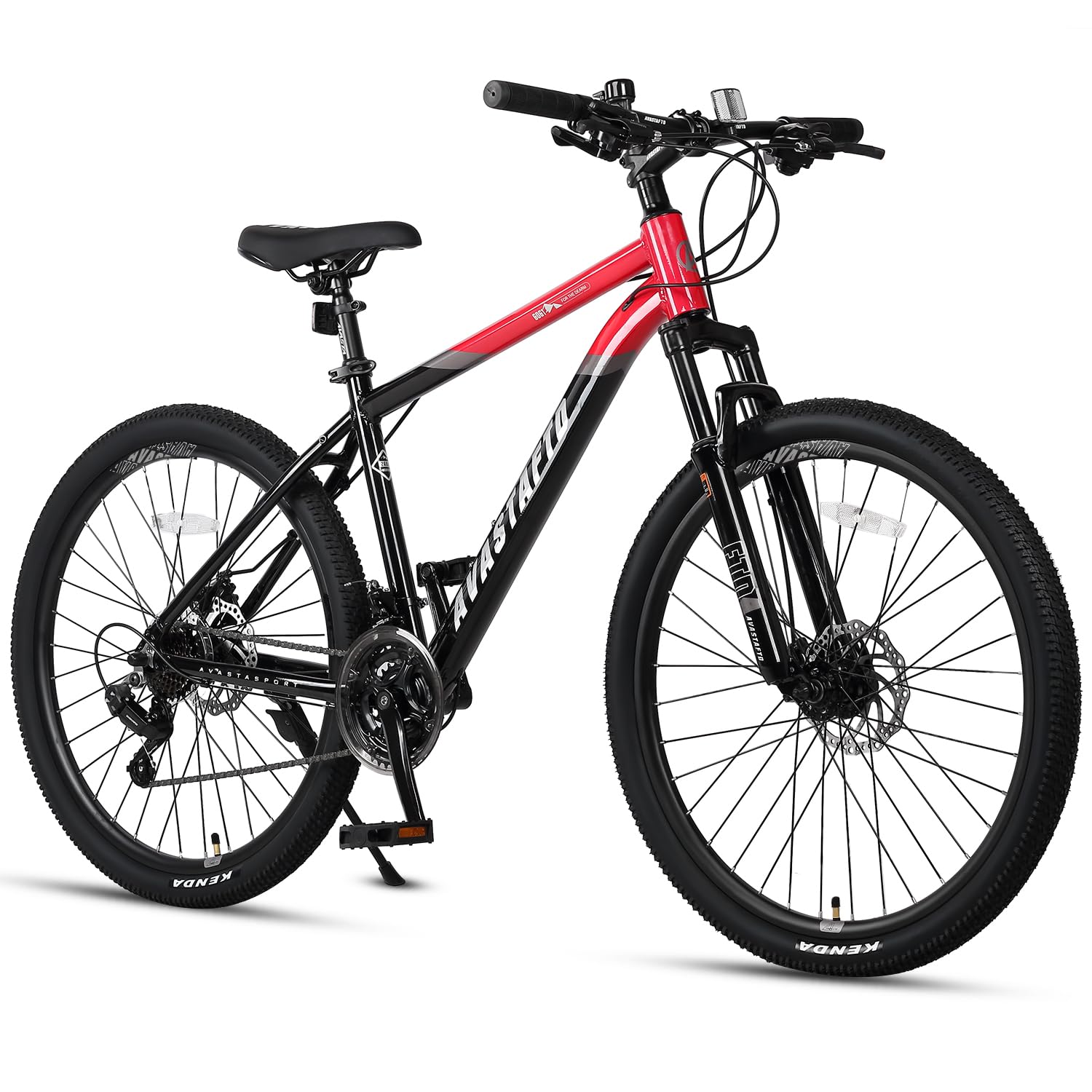
The single number that matters most in this category is the suspension fork lockout — and the AVASTA Earth scores a 1 for having a switchable fork you can toggle between cushioned and stiff. This means you can absorb bumps on the trail and then lock the fork for efficient pedaling on the road home, all on the same ride — a feature the Mongoose Switchback Comp lacks.
The downside is assembly: the bike ships only 75% pre-assembled, and some buyers found the handle bearing orientation confusing enough to need a video walkthrough. Reviewers point out that the forks bottom out easily on grass and mud, which limits aggressive off-road use, but for pavement and occasional grass riding the bike feels solid and the aluminum frame keeps it light.
At a mid-range price point, you get a 21-speed drivetrain with trigger shifters and a quick-release seat post — a feature that makes it easy to lower the saddle for descents and raise it for climbs. If your riding is split between pavement and packed dirt, this bike’s switchable fork alone justifies the purchase over cheaper fixed-fork alternatives, making it the most practical daily bike for its price-to-value.
The upsides
- Switchable suspension fork for road/trail versatility
- Quick-release seat post for on-the-go adjustments
- Lightweight aluminum frame and rims
Keep in mind
- Fork bottoms out easily in soft terrain
- Some packaging damage reported in transit
5. Mongoose Status Mountain Bike

What you actually get at this lower price is the only dual-suspension bike in this lineup — a rear shock alongside the front fork to soften bigger drops and root gardens, plus 2.3-inch-wide knobby tires that grip loose gravel and wet soil noticeably better than the 2.1-inch tires on most hardtails here.
What you give up for that rear suspension is frame simplicity: some buyers received units with bent front fork dropouts and misaligned brake calipers, and reviewer feedback indicates that quality control is uneven. The components on the lower end of the price spectrum are described as “bottom-tier” by experienced riders, so expect to spend time tuning the bike before it rides right.
If you are hitting moderate trails with exposed roots and small rock gardens, the rear shock will save your lower back on longer rides in a way no hardtail can. Just budget extra time for setup and be prepared to handle a potential return or fork straightening. The Status is a capable frame wrapped in inconsistent assembly — the frame itself is worth the price if you get a good unit. This bike is for rough-trail riders who are willing to gamble on quality control to get rear suspension at a low price.
Why we’d pick it
- Rear suspension for smoother rough trail rides
- Aggressive 2.3″ knobby tires for superior grip
- Stable ride on varied terrain
A few caveats
- Quality control issues with fork alignment
- Components are entry-level and may wear quickly
6. HILAND 26 Inch 27.5 Inch Mens Womens Mountain Bike (21-Speed)
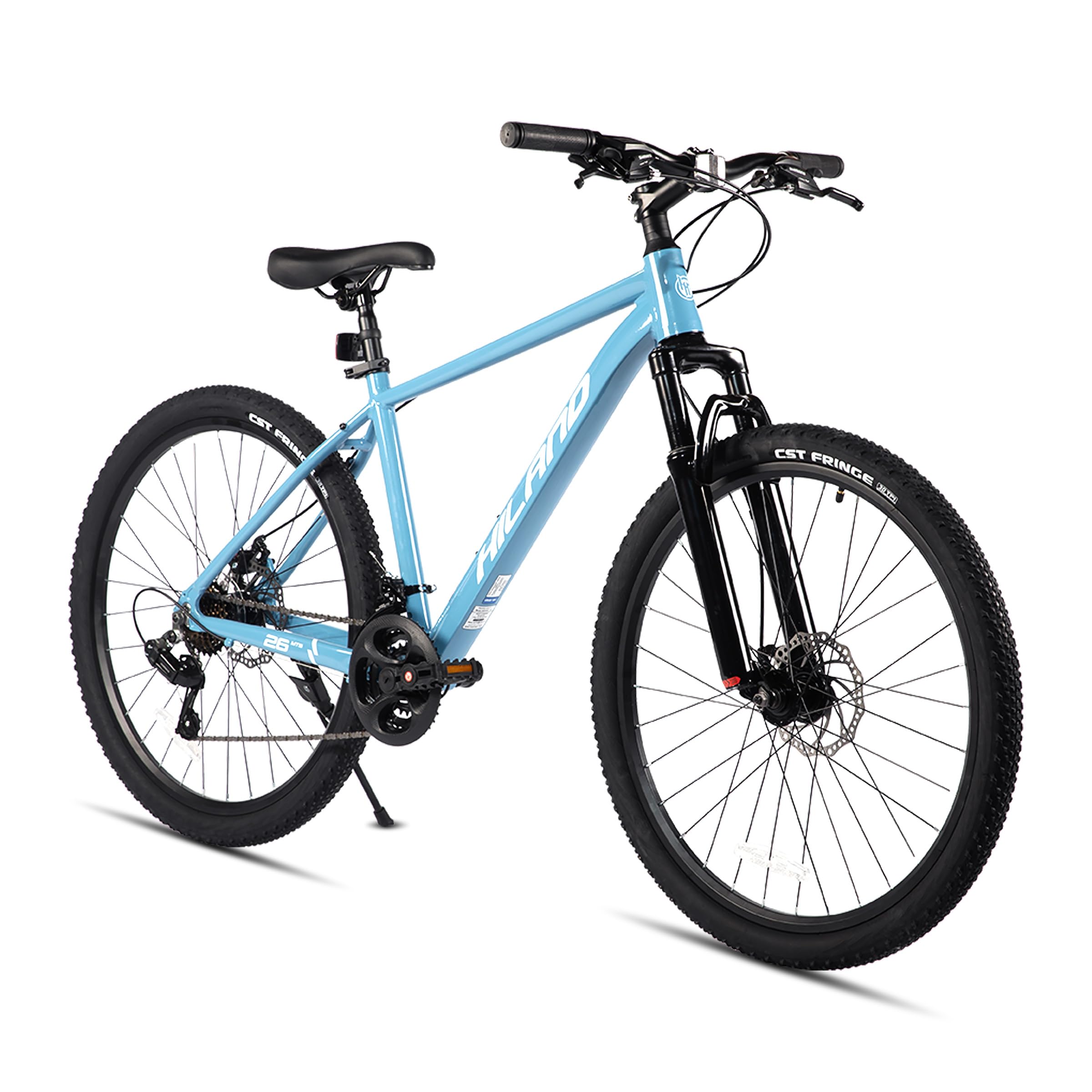
This HILAND is the perfect match for a teenager transitioning from a smaller bike — it comes with an adjustable seat and handlebars that accommodate growth, and the 21-speed drivetrain gives a young rider enough gear range to build confidence on hills without being overwhelmed. Shoppers say it was an “excellent value for teen transition” and that the 30-minute assembly was straightforward.
The carbon steel frame is heavier than aluminum, but for a rider still developing bike handling skills that extra heft actually adds stability and reduces the chance of the front end lifting on steep climbs. The dual disc brakes stop reliably, and buyers report that the second HILAND bike in a household matched the quality of the first — a sign of consistent manufacturing.
The honest caution: at least one young buyer experienced a gear failure that rendered the bike unusable, and the brand’s response time was not immediate. If you are buying for a child who treats bikes gently, this is a fine choice — but consider the SPATIAL if the rider is rougher than average on equipment.
Strong points
- Adjustable seat and handlebars for growing riders
- 21-speed drivetrain with smooth shifting
- Responsive customer service on warranty issues
Before you buy
- Carbon steel frame is heavier than aluminum
- Some units experienced gear failures
7. Ktaxon Mountain Bike 24/26/27.5 Inch

The Ktaxon is the cheapest bike on this list that still uses dual mechanical disc brakes instead of rim brakes — a crucial safety floor that makes it acceptable for light off-road use. You get a 21-speed drivetrain and a high-carbon steel frame that feels solid even if it adds weight, plus a suspension fork that smooths out moderate bumps.
What you give up at this price point is component longevity and customer support. One reviewer noted that the gear system fails to shift into higher gears (1 to 2 and 2 to 3), and the company only sends automated responses with no real help — a frustrating situation if you get a unit with alignment issues. Other owners mention the bike ships with minor issues like a “front wheel slightly bent (fixable)” which is the kind of DIY tolerance you have to accept at this tier.
The Ktaxon is for the budget buyer who is mechanically handy, knows how to true a wheel and adjust a derailleur, and just needs a rolling frame that won’t break the bank. If you want to ride without needing tools on day one, save up for the SPATIAL or the HILAND 18-speed — this bike demands a willing tinkerer.
What we like
- Dual disc brakes at the lowest price point
- 21-speed drivetrain for varied terrain
- Customers note 20-minute assembly time
The downsides
- Gear alignment issues reported without responsive support
- Front wheel and brake may arrive slightly bent
8. WEIZE Mountain Bike Adult Bicycle MTB 26 27.5-Inch
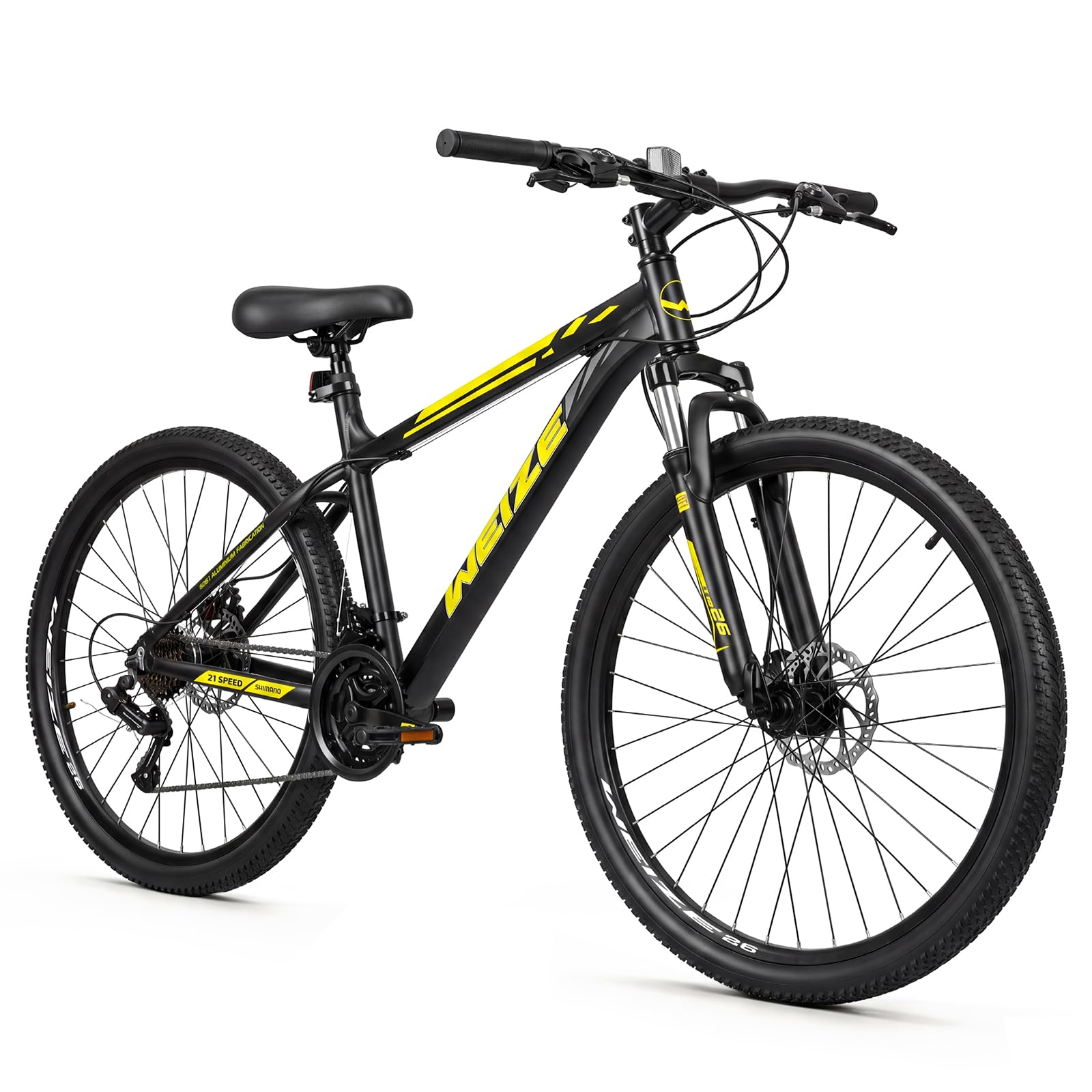
The 21-speed twist-grip shifters and front-and-rear derailleur combo give you the full gear range for climbing and coasting at a price that gets you an aluminum frame — lighter and more rust-resistant than the carbon steel frames on the Ktaxon and HILAND 21-Speed. Many budget bikes use steel, so finding aluminum at this tier is a real advantage for weight and longevity.
The trade-off is that quality control swings wildly. One buyer called it a “great beach cruiser” and loved the disc brakes, while another received a bike with a bent rear axle and leaking shock grease. The “front wheel slightly bent (fixable)” pattern appears here too, and the general feedback is that the WEIZE requires derailleur tuning out of the box — the gear cables arrive with slack that needs adjustment.
This bike is the right call if your budget is tight but you absolutely want an aluminum frame for the weight savings and rust resistance. Just be prepared to spend 30 minutes tuning the gears and be willing to request a replacement if the axle arrives bent. For the price, the frame alone is worth the gamble — the budget pick for someone who prioritizes material over hassle-free assembly.
Why it’s great
- Aluminum frame at a budget-tier price
- 21-speed drivetrain for versatile riding
- Rear disc brake provides reliable stopping power
Good to know
- Some units arrive with bent axle or fork issues
- Derailleur cables need adjustment out of the box
Understanding the Specs
Number of Speeds (Gear Count)
Most 27.5 inch mountain bike models list between 18 and 21 speeds — that means the number of gear combinations from the front chainrings multiplied by the rear cassette cogs (for example, 3 front rings × 7 rear cogs = 21 speeds). In plain English, having 21 speeds versus 18 means you have finer steps between gears, so you are more likely to find a cadence that feels comfortable whether you are grinding up a steep hill or spinning on flat pavement. One limitation is that more gears add complexity and a small weight penalty, but for beginners the wider range is almost always better.
Brake Types (Rim vs. Disc)
All the bikes in this guide use disc brakes — a caliper that squeezes a rotor attached to the wheel hub — rather than rim brakes that pinch the wheel’s outer edge. Disc brakes work better in rain, mud, and snow because the rotor stays cleaner than the rim surface, and they are less affected by wheel wobble. Mechanical disc brakes (the kind on every bike here) use a steel cable to actuate the caliper, while hydraulic disc brakes use fluid for more precise modulation. Mechanical disc brakes are cheaper and easier to adjust at home; hydraulic brakes stop harder but cost more and require specialized bleeding tools.
FAQ
Is a 27.5-inch mountain bike better for shorter riders than a 29-inch bike?
How much assembly should I expect when my bike arrives?
Final Thoughts: The Verdict
For most people, the best 27.5 inch mountain bike is the SPATIAL Mountain Bike because it combines a Shimano drivetrain with a lockout fork and a lightweight 33-pound aluminum frame at a mid-range price that outclasses everything else on component trust. If your frame size needs go beyond 6’5″, grab the HILAND 18-Speed with its internal cable routing. And for the buyer who wants an aluminum frame at the lowest possible price, the WEIZE 21-Speed delivers the material benefit if you are willing to tune it yourself.