
The jump from a standard 60Hz display to a 120Hz panel isn’t subtle—it’s the difference between a mouse cursor that leaves a faint ghost trail and one that tracks your hand with undetectable precision. When your monitor refreshes 120 times every second, system navigation, document scrolling, and the overhead camera pan in your favorite game all gain a fluidity that makes 60Hz feel sluggish by comparison. At the 27-inch size, that 120Hz cadence combines with enough screen real estate for multitasking and immersive gaming without dominating your desk.
I’m Min — the co-founder and writer behind Gadgets Feed. For this guide I’ve analyzed refresh-rate measurements, color-gamut coverage data, panel technology comparisons, and adaptive sync compatibility across the leading 27-inch 120Hz monitors to determine which models actually deliver on their numbers.
Whether your priority is crisp QHD gaming visuals, true-to-life IPS color for creative work, or a hybrid monitor that serves both roles, this guide breaks down exactly what the 27 inch 120hz monitor market offers today so you can match the hardware to your actual use case without overpaying for features you don’t need.
How To Choose The Best 27 Inch 120Hz Monitor
A 120Hz refresh rate at 27 inches offers a balanced blend of smooth motion and practical screen space, but the panel technology, resolution, and adaptive sync features determine whether that smoothness comes with accurate colors or motion artifacts. Focus on these three factors to avoid buyer’s remorse.
Panel Type: IPS vs OLED vs QD-OLED
IPS panels dominate the 27-inch 120Hz market because they combine wide viewing angles with consistent color reproduction, making them the default choice for mixed-use scenarios. OLED and QD-OLED panels deliver superior contrast ratios—approaching 1,000,000:1 versus the typical 1,000:1 of IPS—but come with lower peak brightness and potential burn-in risk over extended static desktop use. If you work with color-critical content eight hours a day and game at night, a high-quality IPS panel from a brand like LG or Dell offers the most predictable performance.
Resolution Scaling and Sharpness
At 27 inches, 4K UHD (3840×2160) provides pixel densities around 163 PPI, making text razor-sharp and enabling true side-by-side document viewing without scaling compromises. QHD (2560×1440) sits at roughly 109 PPI, which is still crisp for gaming and general use while demanding less GPU horsepower to maintain high frame rates. A 27-inch 1080p panel at 120Hz is noticeably softer for productivity but acceptable for budget-focused competitive gaming where raw refresh rate matters more than asset detail.
Adaptive Sync and Connectivity
FreeSync Premium and G-Sync Compatible certification both eliminate screen tearing, but their implementation depends on your GPU ecosystem. Most monitors in this category support both standards via DisplayPort, while HDMI 2.1 is required to hit 4K 120Hz on consoles like the PlayStation 5 or Xbox Series X. Verify that the monitor includes a DisplayPort 1.4 cable in the box—many budget models ship only HDMI 2.0, which limits refresh rate at higher resolutions.
Quick Comparison
On smaller screens, swipe sideways to see the full table.
| Model | Category | Best For | Key Spec | Amazon |
|---|---|---|---|---|
| Dell S2725QS | Premium Value | Mixed productivity and light gaming | 4K 120Hz, 1500:1 Contrast | Amazon |
| Acer Nitro VG270K | Mid-Range | Dual-mode 4K/FHD gaming | 4K 160Hz or FHD 320Hz DFR | Amazon |
| LG 27GR83Q-B | Premium | High-refresh QHD gaming | QHD 240Hz, 1ms IPS | Amazon |
| Alienware AW2725DM | Mid-Range | QHD gaming with G-Sync | QHD 180Hz, 1ms IPS | Amazon |
| ASUS ROG Strix XG27UCG | Premium | Competitive dual-mode gaming | 4K 160Hz / FHD 320Hz | Amazon |
| Samsung Odyssey OLED G5 | Premium | OLED picture quality on a budget | QHD 180Hz, QD-OLED | Amazon |
| AOC Q27GAZD | Premium | Entry-level QD-OLED gaming | QHD 240Hz, 0.03ms OLED | Amazon |
| Samsung ViewFinity S7 | Mid-Range | 4K productivity and creative work | 4K 60Hz, HDR10 | Amazon |
| LG 27US500-W | Budget-Friendly | 4K budget for Mac/Linux users | 4K 60Hz, IPS Panel | Amazon |
In‑Depth Reviews
1. Dell 27 Plus 4K Monitor – S2725QS

The Dell S2725QS hits the exact needle-mover combination for a 27-inch 120Hz monitor: a native 4K IPS panel running at 120Hz with a 1500:1 contrast ratio—50% higher than the typical 1000:1 found in competing IPS displays. That elevated contrast ratio translates to noticeably deeper blacks in dashboard UIs and darker game scenes, while the 350 cd/m² brightness keeps highlights punchy. The AMD FreeSync Premium certification means tear-free motion across the full refresh range, and the included HDMI 2.1 cable ensures you hit 4K 120Hz on current-gen consoles without needing a separate purchase.
Dell’s ComfortView Plus reduces blue light emission to 35% without muting the default color profile, which is rare for a monitor at this tier. The ash white finish and ultra-thin bezels look clean on a desk, and the fully adjustable stand (height, pivot, swivel, tilt) eliminates the need for a VESA arm unless you’re running a multi-monitor setup. Built-in speakers with deeper frequency response than the previous generation are functional for video calls and ambient audio, though external speakers remain preferable for immersive gaming.
Some users report minor ghosting in fast-paced first-person shooters, which is a known trade-off for a productivity-first IPS panel running at 120Hz rather than 240Hz. For mixed-use scenarios—spreadsheets, photo editing, console gaming, and media consumption—the S2725QS delivers the best all-around package without forcing you into a single-use compromise.
Why it’s great
- 4K 120Hz with 1500:1 contrast ratio for deeper blacks
- Full ergonomic stand with height, pivot, and swivel
- HDMI 2.1 cable included for console compatibility
- ComfortView Plus reduces blue light without color shift
Good to know
- Not ideal for competitive 240Hz FPS gaming
- Built-in speakers are adequate but not powerful
- Matte coating adds slight grain in very bright rooms
2. Acer Nitro 27” 4K UHD Gaming IPS Monitor (VG270K)

The Acer Nitro VG270K stands apart from standard 27-inch 120Hz monitors with its Dynamic Frequency Resolution technology, which lets you toggle between 4K at 160Hz and 1080p at 320Hz. That flexibility is a genuine advantage for gamers who want pixel-dense desktop quality during work sessions and maximum motion clarity during competitive rounds. The IPS panel covers 90% of DCI-P3, so colors in HDR10 content look vibrant without oversaturation, and the 0.5ms GTG response time keeps motion artifacts negligible even at the higher refresh rate.
Connectivity is future-proofed with two HDMI 2.1 ports and a DisplayPort 1.4, meaning you can run a PS5 and Xbox Series X simultaneously at 4K 120Hz without swapping cables. The zero-frame design makes multi-monitor setups near-seamless, and the small built-in speakers—while weak—are acceptable for system alerts. The ergonomic stand offers tilt adjustment only, so budget for a VESA arm if you need height or swivel.
Customer feedback highlights occasional HDMI port issues within the first month, so test both ports immediately upon arrival. The 1000:1 contrast ratio is standard for IPS, so don’t expect OLED-level black levels. For the price, you get a dual-mode monitor that effectively replaces two different displays, making it a strong mid-range contender for hybrid work-gaming setups.
Why it’s great
- DFR switches between 4K 160Hz and FHD 320Hz
- Dual HDMI 2.1 for multi-console setups
- 90% DCI-P3 coverage with HDR10 support
- Near-bezel-less design for multi-monitor arrays
Good to know
- Tilt-only stand; no height or swivel adjustment
- HDMI port reliability issues reported by some users
- Built-in speakers are weak for gaming audio
3. LG 27GR83Q-B Ultragear QHD IPS Gaming Monitor
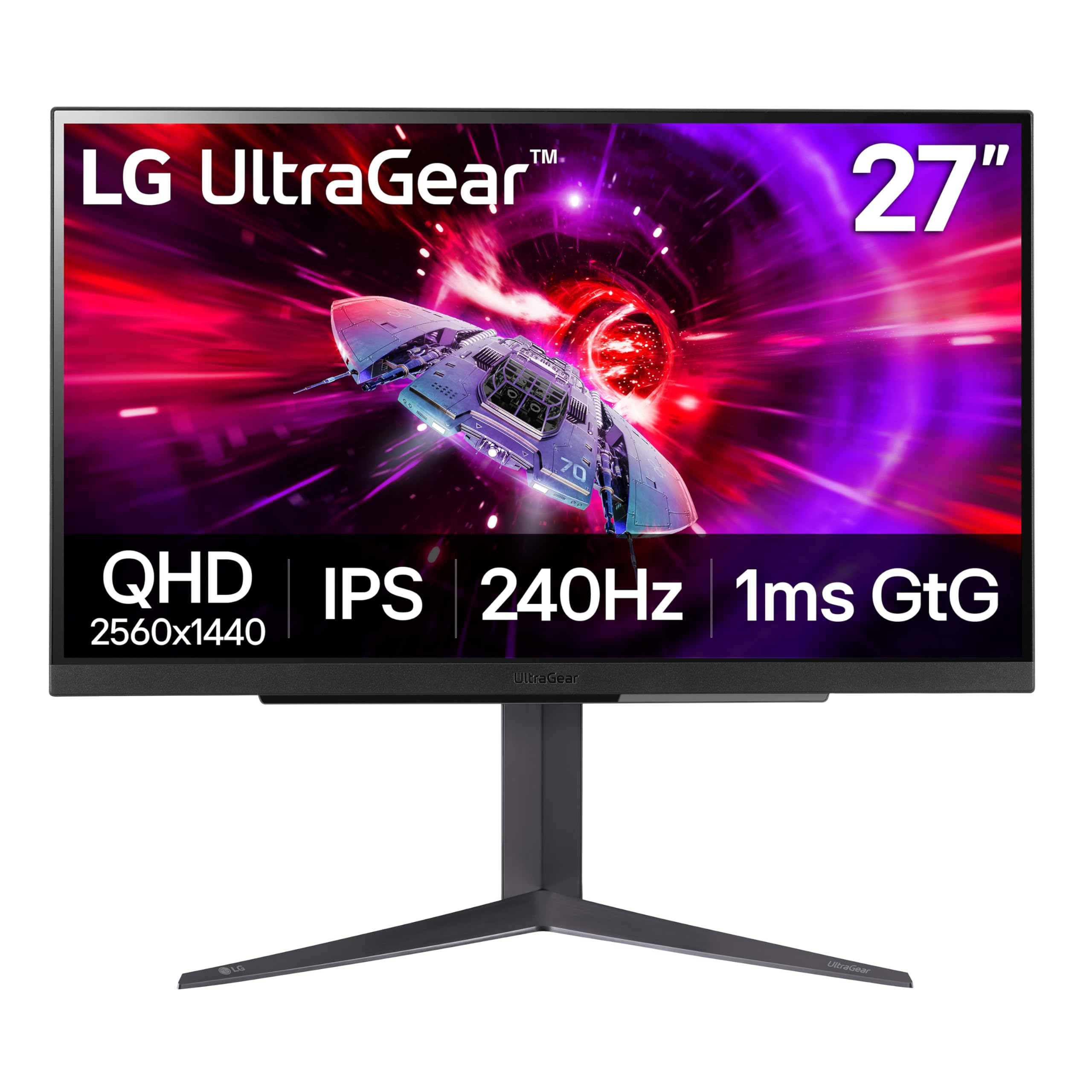
The LG 27GR83Q-B pushes well beyond the 120Hz baseline with a native 240Hz refresh rate at QHD resolution, making it one of the fastest IPS monitors in this size class. The 1ms GTG response time and G-Sync Compatible certification mean zero perceptible ghosting or tearing in fast-paced shooters, while the 95% DCI-P3 coverage and VESA DisplayHDR 400 certification deliver vibrant, punchy visuals that hold up against higher-priced OLED panels. The 4-pole headphone jack with DTS Headphone:X spatial audio is a thoughtful addition for late-night gaming sessions.
The fully adjustable stand—height, tilt, swivel, and pivot—provides desk flexibility unmatched by the Acer Nitro, and the on-screen control knob makes brightness and mode adjustments intuitive. Both HDMI 2.1 and DisplayPort 1.4 are present, so you can hit the full 240Hz from a PC while keeping a console at 4K 120Hz on a separate input. The 1000:1 contrast ratio is typical for IPS, so dark room performance won’t match OLED, but the overall motion clarity and color fidelity make this a top tier choice for dedicated QHD gamers.
Quality control is the main caveat: multiple user reports mention stuck pixels appearing within weeks of purchase. Check your unit thoroughly during the return window and be prepared to exchange if defects appear. For those who receive a flawless panel, the 27GR83Q-B offers the best motion-handling performance in the QHD space at this price point.
Why it’s great
- 240Hz refresh rate with 1ms GTG response
- G-Sync Compatible and FreeSync Premium
- 95% DCI-P3 with DisplayHDR 400
- Full ergonomic stand with height, pivot, swivel, tilt
Good to know
- Stuck pixel issues reported in some units
- 1000:1 contrast ratio is standard IPS level
- No built-in speakers
4. ASUS ROG Strix 27” 4K HDR USB-C Gaming Monitor (XG27UCG)

The ASUS ROG Strix XG27UCG offers a dual-mode setup similar to the Acer Nitro, but with a higher ceiling: 4K at 160Hz or 1080p at 320Hz, powered by Fast IPS technology with a 1ms GTG response time. Where it differentiates itself is the ELMB Sync technology, which allows simultaneous use of variable refresh rate and motion blur reduction—a feature that eliminates both tearing and ghosting without compromising brightness. The 130% sRGB and 95% DCI-P3 coverage make this monitor viable for color-sensitive work, not just gaming.
USB-C connectivity with DisplayPort Alt Mode means you can power and display a laptop with a single cable, reducing desk clutter for hybrid setups. The fully adjustable stand is built to the typical ROG standard—solid metal construction, smooth rotation, and enough weight to stay planted during frantic input. The included ROG pouch and cable management keep the build clean. The 400:1 contrast ratio quoted in specs is almost certainly a misprint (likely 1000:1 for Fast IPS), but black uniformity is strong for the panel type.
Some users note that the price nearly doubled after launch, so timing matters. The 4K 160Hz mode requires DisplayPort with DSC on NVIDIA cards, while HDMI tops out at 120Hz. For competitive gamers who want one monitor that handles 4K desktop work and 320Hz esports titles, the XG27UCG delivers flexibility without sacrificing build quality.
Why it’s great
- Dual-mode with 4K 160Hz and FHD 320Hz
- ELMB Sync works alongside VRR without brightness loss
- USB-C with DisplayPort Alt Mode for single-cable laptops
- Premium ROG build with full ergonomic stand
Good to know
- HDMI limited to 120Hz on NVIDIA GPUs
- 4K 160Hz requires DP 1.4 with DSC
- Price volatility—monitor cost fluctuates significantly
5. Samsung 27” Odyssey OLED G5 (G50SF)

The Samsung Odyssey OLED G5 brings QD-OLED panel technology to the 27-inch 120Hz+ market at a price that undercuts most OLED alternatives by a significant margin. With a 180Hz refresh rate and 0.03ms GTG response time, motion clarity is effectively instant—no ghosting, no smearing, no backlight bleed. The 1,000,000:1 contrast ratio produces perfect blacks that make IPS panels look washed out in side-by-side comparisons, and the Pantone Validated certification means color accuracy is on par with professional-grade monitors.
The OLED Safeguard thermal modulation system actively prevents burn-in by monitoring panel temperature, which addresses the primary longevity concern with OLED monitors. Glare Free technology keeps the screen readable in rooms with ambient light without the purple tint common on glossy QD-OLED panels. Auto Source Switch+ automatically detects active inputs, so switching between a PC and console is seamless. HDR10 support provides better highlight detail than the 280 cd/m² peak brightness suggests, though bright-room HDR performance is limited compared to high-nit LCDs.
The stand offers tilt adjustment only and the build is mostly plastic, which feels less premium than the ROG or LG offerings. No built-in speakers mean you need external audio. For users who prioritize picture quality—infinite contrast, per-pixel lighting, and 180Hz smoothness—over desk ergonomics, this is the best value entry point into OLED gaming at 27 inches.
Why it’s great
- QD-OLED with 1,000,000:1 contrast ratio
- 180Hz with 0.03ms GTG response
- OLED Safeguard burn-in prevention system
- Pantone Validated color accuracy
Good to know
- Limited to 280 nits peak brightness
- Tilt-only stand; no height or swivel
- No built-in speakers
6. Alienware 27 Gaming Monitor – AW2725DM

The Alienware AW2725DM delivers a 180Hz QHD IPS experience at a price that frequently dips into the budget-friendly tier, making it one of the strongest value propositions among 27-inch high-refresh monitors. The panel covers 95% DCI-P3 with VESA DisplayHDR 400 certification, producing vibrant, punchy visuals that compete well with monitors costing twice as much. The 1ms GTG response time keeps motion sharp, and both G-Sync Compatible and FreeSync Premium are supported, so it plays well with any GPU ecosystem.
Build quality is a highlight—the stand is sturdy, fully adjustable (height, tilt, swivel, pivot), and includes cable management routing. The dark black chassis with minimal Alienware branding looks restrained for a gaming monitor, making it desk-friendly for professional environments. A dedicated console mode optimizes the 180Hz refresh rate for 120Hz console output, eliminating the frame-skipping issues that sometimes occur when using PC-focused monitors with consoles.
HDMI input is limited to 144Hz; you need DisplayPort for the full 180Hz. There are no built-in speakers and no USB-C port, so factor in a DAC or external speakers if you need audio from the monitor. For buyers seeking a no-compromise QHD gaming monitor at a consistently low price, the AW2725DM delivers where it counts—color, motion, and build quality.
Why it’s great
- 180Hz QHD with 95% DCI-P3 coverage
- Full ergonomic stand included
- G-Sync Compatible and FreeSync Premium
- Console mode for smooth 120Hz output
Good to know
- HDMI limited to 144Hz
- No built-in speakers or headphone jack
- No USB-C connectivity
7. AOC 27″ QD OLED Gaming Monitor (Q27GAZD)
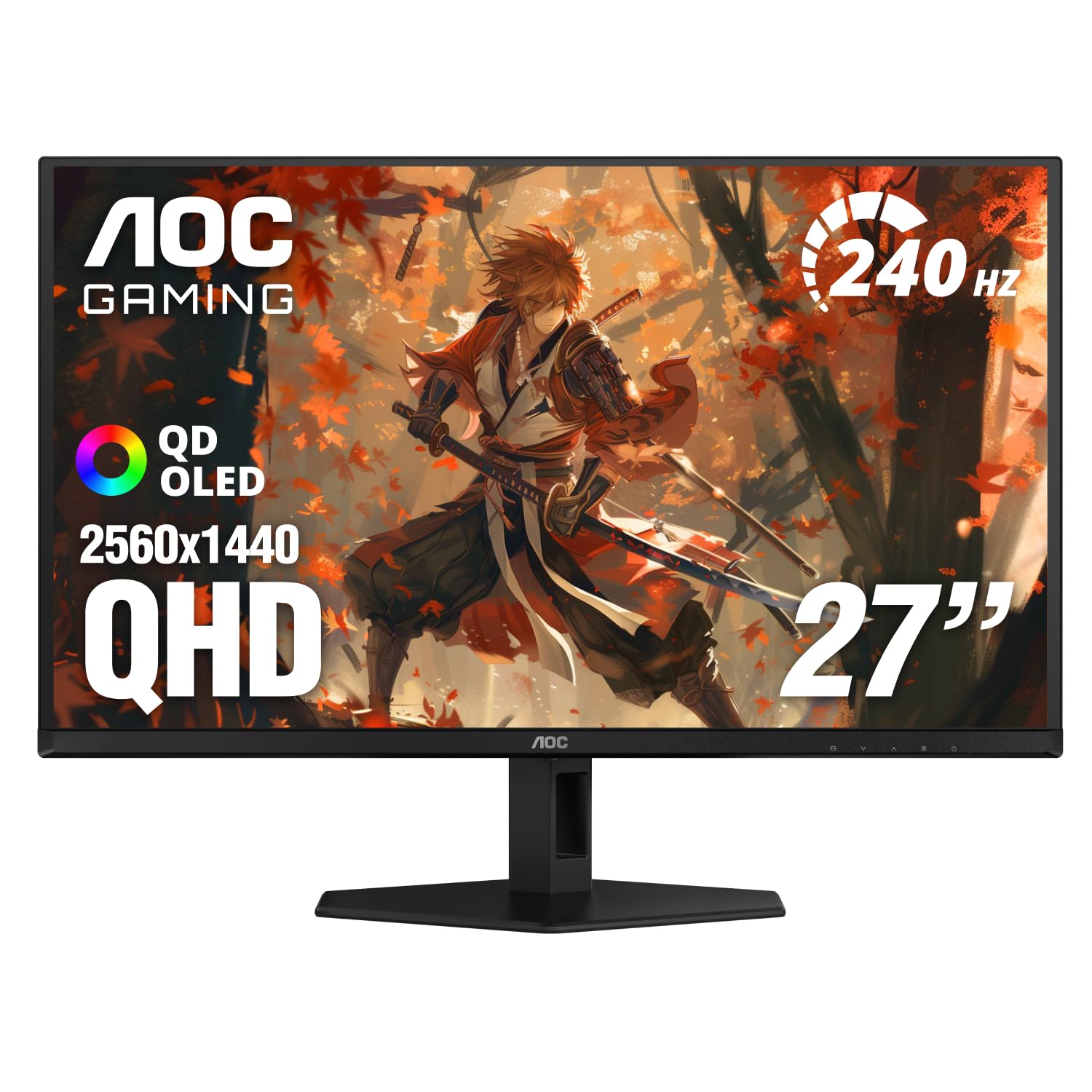
The AOC Q27GAZD brings QD-OLED technology to the 27-inch QHD space with a 240Hz refresh rate and 0.03ms GTG response time, positioning it as a direct competitor to the Samsung Odyssey G5 but with a higher motion ceiling. The 1,500,000:1 contrast ratio delivers the same perfect blacks and per-pixel lighting that define OLED, while the 147.6% sRGB and 110.2% DCI-P3 coverage make this one of the most color-saturated monitors available at this size. HDR400 True Black certification ensures shadow detail remains visible in dark scenes without crushing.
Adaptive-Sync compatibility (essentially G-Sync Compatible) pairs with the lightning-fast response to eliminate all visible tearing and stutter. The anti-glare coating is a matte finish, which reduces reflections better than the semi-glossy surface on the Samsung G5, making it more usable in rooms with overhead lighting. VESA mount compatibility (100x100mm) is standard, and the bezel-less design keeps the focus on the panel itself.
The included stand is basic—tilt only, no height adjustment—and the HDMI input is limited to 165Hz, so DisplayPort is required for the full 240Hz. Some units ship with a protective film that leaves adhesive residue if removed carelessly. For users ready to move from IPS to OLED without paying flagship prices, the Q27GAZD offers the highest refresh rate and widest color coverage in the QD-OLED budget segment.
Why it’s great
- QD-OLED with 1,500,000:1 contrast ratio
- 240Hz with 0.03ms GTG response
- 147.6% sRGB and 110.2% DCI-P3 coverage
- HDR400 True Black for shadow detail
Good to know
- Tilt-only stand; use VESA arm for ergonomics
- HDMI limited to 165Hz
- Protective film removal requires care
8. Samsung ViewFinity S7 (S70D) 27-Inch 4K Monitor

The Samsung ViewFinity S7 is a 4K UHD IPS monitor aimed squarely at productivity users, with a 60Hz refresh rate and HDR10 support that prioritizes color accuracy and text sharpness over gaming fluidity. The 99% sRGB coverage makes it a solid choice for photo editing, document work, and coding, where pixel density (163 PPI) and consistent color temperature matter more than motion clarity. The tool-less Easy Setup Stand snaps together in seconds, and the thin bezels give the display a modern look that pairs well with MacBooks and Ultrabooks.
Connectivity includes HDMI, DisplayPort, and USB-C, along with a built-in USB hub for peripherals. The TÜV-certified Intelligent Eye Care adjusts brightness and color temperature automatically based on ambient light, reducing eye strain during extended work sessions. The adjustable stand offers height, tilt, swivel, and pivot, providing full ergonomic flexibility out of the box—rare at this tier.
At 60Hz, this is not a gaming monitor. HDR performance is limited by the 350 cd/m² brightness and lack of local dimming, so HDR content will not look as impactful as on premium displays. Some users report that brightness control is locked when HDR is enabled, requiring manual switching. For pure productivity at 4K resolution without spending premium money, the ViewFinity S7 delivers where it counts.
Why it’s great
- 4K UHD IPS with 99% sRGB coverage
- Full ergonomic stand with height, pivot, swivel, tilt
- Tool-less assembly and thin bezels
- USB-C connectivity with built-in hub
Good to know
- 60Hz refresh rate—not suitable for gaming
- HDR brightness limited to 350 nits
- Brightness locked when HDR mode is active
9. LG 27US500-W Ultrafine 4K IPS Monitor
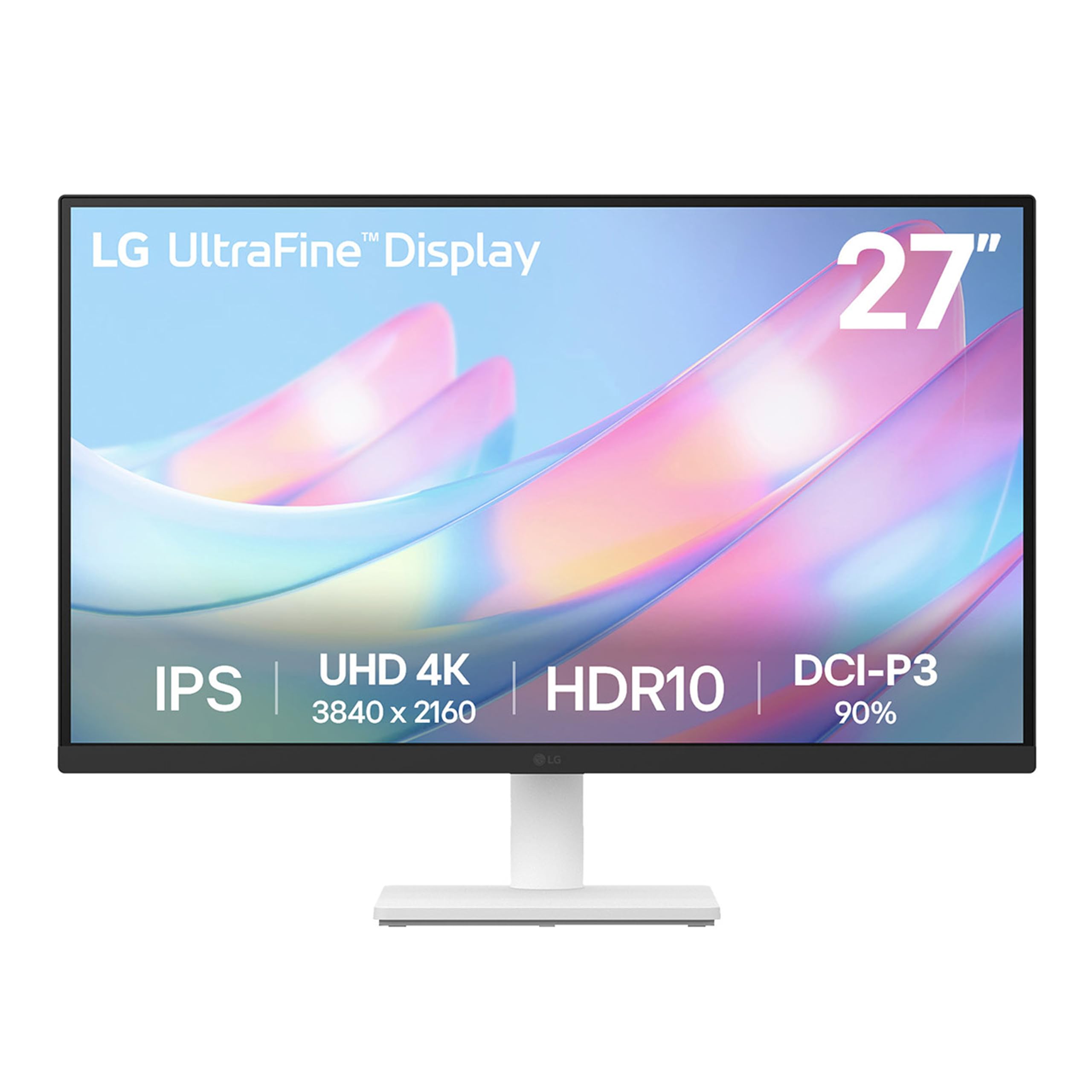
The LG 27US500-W is the most affordable entry point into 4K IPS territory at 27 inches, making it a strong candidate for budget-conscious users who prioritize resolution and color over refresh rate. The 60Hz panel covers 90% DCI-P3 with HDR10 support, and the 1000:1 contrast ratio is standard for IPS but produces acceptable black levels for typical office and media use. The borderless design keeps the focus on the screen, and the white finish gives the monitor a clean, modern aesthetic that stands out from the black bezel crowd.
Connectivity includes HDMI and DisplayPort, with Onscreen Control software that allows split-screen customization and basic monitor adjustments from your mouse. The ergonomic stand offers tilt adjustment only, but VESA 100x100mm compatibility makes it easy to pair with an aftermarket arm. The flicker-safe and reader mode features reduce eye strain during long work sessions, and the included HDMI cable saves an extra trip to the store.
At 60Hz, this is not a monitor for the 120Hz crowd. The white stand and rear panel are polarizing—some users find the bright color distracting on a dark desk. The steady-state 60Hz refresh rate means no adaptive sync benefit. For Linux users, Mac Mini owners, or anyone building a dual-monitor productivity setup on a tight budget, the 27US500-W delivers reliable 4K IPS performance with zero motion-handling pretense.
Why it’s great
- Lowest-cost 4K IPS panel at 27 inches
- 90% DCI-P3 coverage with HDR10
- Borderless design and VESA mount compatible
- Onscreen Control for mouse-based adjustments
Good to know
- 60Hz refresh rate—not for 120Hz gaming
- Tilt-only stand; no height adjustment
- White finish polarizing for some desk setups
FAQ
Can I use a 27-inch 120Hz monitor with a standard HDMI 2.0 cable?
Is 120Hz worth it over 60Hz for non-gaming use?
Does a 120Hz monitor use more power than a 60Hz monitor?
What GPU do I need to run a 4K 120Hz monitor?
Can I use a 27-inch 120Hz monitor as a primary display for photo editing?
Final Thoughts: The Verdict
For most users, the 27 inch 120hz monitor winner is the Dell S2725QS because it combines 4K resolution, a 120Hz refresh rate, superior contrast ratio, and a fully adjustable stand at a price that undercuts competitors with similar specs. If you want motion clarity beyond 120Hz for competitive gaming, grab the LG 27GR83Q-B for its 240Hz QHD performance. And for picture quality—infinite contrast and per-pixel OLED lighting—nothing beats the Samsung Odyssey OLED G5 at its price point.