
Our readers keep the lights on and my morning glass full of iced black tea. As an Amazon Associate, I earn from qualifying purchases.
Specs are compiled from manufacturer listings and verified buyer reviews and can change over time — please confirm the key details on the product page before buying.
When you shop for a 27-inch 1440p monitor, the first decision is speed versus color accuracy. Do you want a fast refresh rate for competitive gaming, or factory-tuned color for creative work? At this size and resolution, you get a sharpness upgrade over 1080p, and many options won’t break your budget.
I’m Min — the founder and writer behind Gadgets Feed. This guide is built by comparing the manufacturers’ published specifications and the patterns across verified customer reviews, so you get each pick’s real strengths and trade-offs instead of marketing spin.
Whether you’re chasing esports frames or photo-accurate color, this breakdown of the best 27 inch 1440p monitor options covers the specs that actually change your daily experience.
Our Picks at a Glance

How To Choose The Best 27 Inch 1440P Monitor
Every monitor on this list hits the same basic marks — a 27-inch screen and a 2560 x 1440 resolution. The differences that matter are in the panel technology, the refresh rate, and the ergonomics. Here’s how to weigh those before you buy.
Match the refresh rate to your hardware and habits
Refresh rate, measured in hertz (Hz), is how many times the screen redraws per second. A 144Hz panel feels dramatically smoother than a standard 60Hz display for everyday scrolling and gaming. If you play fast-paced shooters and your graphics card can push high frame rates, a 240Hz or even 360Hz panel gives you a real competitive edge. For office work and casual gaming, a 144Hz or 180Hz screen is plenty and often costs less.
Know the panel types: IPS vs. OLED
IPS panels (a type of LCD that shows consistent colors from wide angles) are versatile for work and play. OLED panels (where each pixel lights up on its own) deliver perfect blacks and high contrast, but they cost more and risk permanent image retention, or burn-in, if you leave static images on screen. Pick IPS for a balanced all-rounder; pick OLED for the best movie and game visuals.
Check the stand and ergonomics before you click
You will live with the stand every single day. Look for height, tilt, swivel, and pivot adjustments so you can position the screen comfortably. A monitor with a fully adjustable stand saves you from buying a separate VESA arm later. Also check the inputs: HDMI and DisplayPort are standard, but a USB-C port with power delivery can keep a desk tidy by charging your laptop and connecting it with one cable.
Quick Comparison
| Model | Best For | Panel & Refresh Rate | Brightness | Color Coverage | Amazon |
|---|---|---|---|---|---|
| Alienware AW2725DM★ Best Overall | Value Pick | Fast IPS / 180Hz | 400 | 95% DCI-P3 | Amazon |
| LG 27GS93QEAlso Great | Best Overall | OLED / 240Hz | 400 nits | 98.5% DCI-P3 | Amazon |
| LG 27GR83Q-BTop Performer | High-Refresh Gaming | IPS / 240Hz | 400 cd | 95% DCI-P3 | Amazon |
| Dell S2725DSM | Office & Media | IPS / 144Hz | 350 | 99% sRGB | Amazon |
| Samsung Odyssey G5 | High-Frame-Rate Gaming | IPS / 200Hz | 300 cd/㎡ | — | Amazon |
| Acer Nitro XV272U | Esports on a Budget | IPS / 240Hz | 400 | 99% sRGB | Amazon |
| ASUS ProArt PA278CV | Creative Professionals | IPS / 75Hz | 350 cd/m² | 100% sRGB | Amazon |
| ASUS ROG XG27AQDMG | Glossy OLED Immersion | OLED / 240Hz | — | 99% DCI-P3 | Amazon |
| MSI MPG 271QRX | Ultimate Speed | QD-OLED / 360Hz | 250 nits | — | Amazon |
In‑Depth Reviews
1. Alienware 27 Gaming Monitor AW2725DM
Our pick — over 4.5★ from 450+ verified ratings; the strongest balance of quality and price.
This 180Hz Fast IPS monitor offers a premium build and full ergonomic stand at a value price.
Alienware built its reputation on high-end gear, and this 27-inch QHD screen brings that design language to a much friendlier price point. It blends a smooth 180Hz refresh rate with a 1ms gray-to-gray response time, so the picture updates fast enough to keep up with twitchy shooters and racing games alike. The Fast IPS panel keeps colors vibrant from wide viewing angles, which is a bonus if you ever watch content from off-center.
For color work, it covers 95% of the DCI-P3 color space (a wide color standard used in film) and holds VESA DisplayHDR 400 certification, so bright highlights in games stay detailed. It supports FreeSync and G-Sync adaptive sync, which stop screen tearing by matching the monitor’s refresh rate to your graphics card’s output. The stand adjusts in height, pivot, swivel, and tilt, so you can set a comfortable viewing angle. Customers note it works well with a 16GB 5060 Ti build for Baldur’s Gate 3, and one notes, “I play a lot of baldur’s gate 3 and my computer isn’t until 9 with an RTX 5080,” showing compatibility with modern GPUs.
One honest note: there is no built-in audio output, so you will want external speakers or a headset. Also, while the panel is excellent for gaming and general use, it is not the right tool for professional color-grading work that demands perfect black levels.
Where It Shines
- Fully ergonomic stand included (height, pivot, swivel, tilt)
- Supports both G-Sync and FreeSync for tear-free play
- Sturdy, premium Alienware build quality
Where It Compromises
- No audio output — external speakers required
- IPS panel shows weaker blacks compared to OLED
Reach for this if: you want a great gaming and daily-use monitor with a premium stand, without stepping up to OLED pricing.
Look elsewhere if: you need speakers built-in or do color-critical work, since the IPS panel does have minor edge lighting in dark scenes.
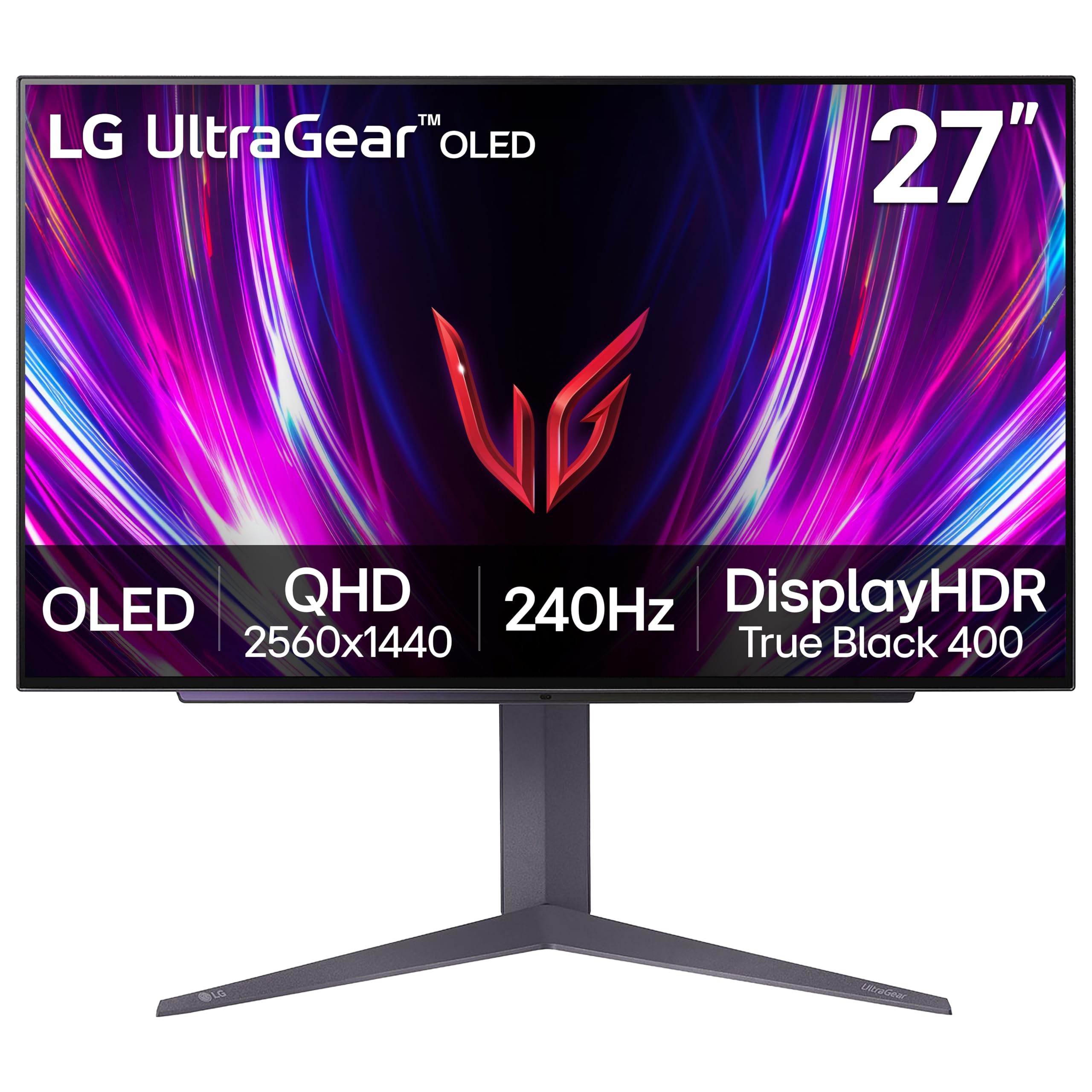
2. LG 27GS93QE 27-inch Ultragear OLED
This OLED panel delivers perfect blacks and 98.5% DCI-P3 color, making every other screen in the room look washed out.
Its 0.03ms response time and 240Hz refresh rate make it the benchmark for OLED gaming. The 0.03ms (GtG) response time is essentially instantaneous, so fast-moving objects stay crisp with no ghosting trail behind them. It also rocks a 240Hz refresh rate, which means the image refreshes 240 times per second — an immense upgrade if you are coming from a standard 60Hz screen.
The real star is the contrast. With a 1.5M:1 contrast ratio and VESA DisplayHDR True Black 400 certification, dark scenes in games and movies look genuinely black rather than gray. The color is spectacular too, covering up to 98.5% of the DCI-P3 spectrum — the wide color space used in modern film and game production — so HDR content looks rich and vibrant. The anti-glare screen also cuts reflections so you are looking at the picture, not your window.
Note: the “green/red” color option refers to RGB lighting accents on the back, not the screen. Buyers report it pairs well with a PS5 and MacBook, and they praise the deep black levels. It includes a 2-year limited warranty covering internal and functional parts and labor, including the OLED panel, so you get coverage for a premium buy.
What Wins People Over
- Perfect black levels — each pixel switches off individually
- Blazing fast 0.03ms response for zero motion blur
- Deep, rich color with 98.5% DCI-P3 coverage
The Trade-Offs
- OLED panels need care — use pixel-cleaning features to avoid burn-in
- Premium price tier compared to IPS options
Your move if: you want a screen that excels at rich single-player games and color-rich media, and you are willing to follow basic OLED maintenance.
Think about this: owners mention you should read the manual on maintenance — a quick pixel-clean routine keeps the panel healthy.
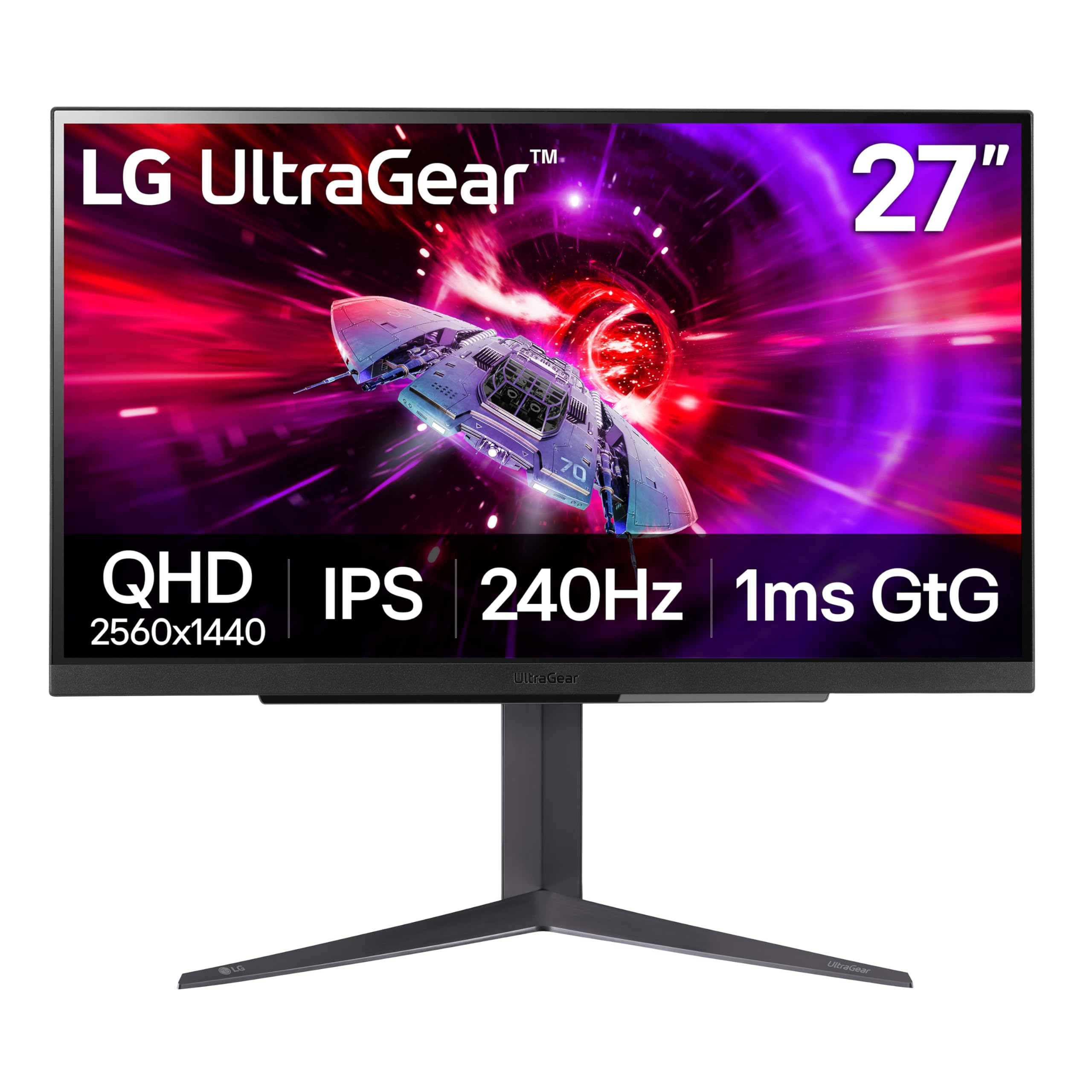
3. LG 27GR83Q-B Ultragear QHD
A high-refresh IPS workhorse that nails the fundamentals of competitive gaming.
If your priority is fast, fluid gameplay, this LG brings the full toolkit. It delivers a 240Hz refresh rate over both DisplayPort and HDMI 2.1, with a 1ms (GtG) response time, making it a superb choice for esports titles where milliseconds decide the fight. It is both G-Sync Compatible and AMD FreeSync Premium certified, so it reduces screen tearing and stutter whether you run an NVIDIA or AMD graphics card.
Beyond raw speed, the panel covers 95% of the DCI-P3 color gamut with VESA DisplayHDR 400, giving you well-saturated colors and decent dynamic contrast for a non-OLED screen. The stand is sturdy and adjustable with tilt, height, and pivot, and the on-screen controls use a simple joystick that buyers find easy to navigate. There is even a 4-pole headphone jack that supports DTS Headphone:X for 3D audio in games over a single connection.
What sets this apart from the Alienware above is the faster 240Hz refresh rate and the inclusion of HDMI 2.1, which future-proofs you for high-frame-rate console play. Reviewers point out it is a huge upgrade from a 1080p/144Hz panel, with smooth gameplay and excellent IPS colors. The main caveat is there are no built-in speakers, so plan your audio setup.
The Fast-Action Edge
- 240Hz refresh on both DP and HDMI 2.1
- Dual adaptive sync (G-Sync + FreeSync Premium)
- Advanced gaming aids: Black Stabilizer and crosshair
Points to Ponder
- No built-in speakers
- Some units have arrived with stuck pixels, a known QC point
Best suited to: competitive players who want a high refresh rate and adaptive sync support at a middle-tier price, without OLED’s premium cost.
A note for you: if you are sensitive to display imperfections, inspect the panel for stuck pixels right after arrival, since that is the most-cited issue.
4. Dell 27 Plus QHD Monitor S2725DSM
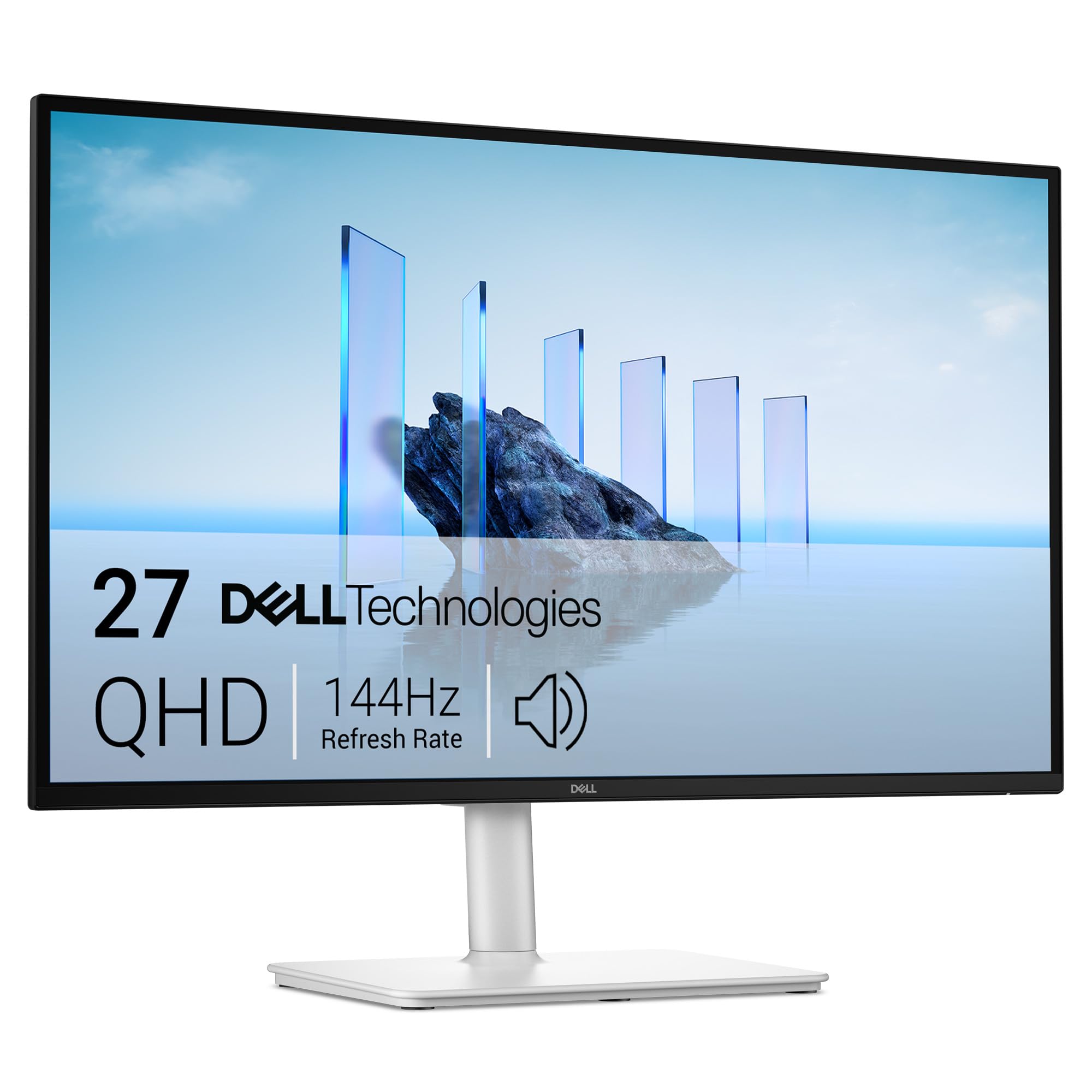
This 144Hz IPS monitor with built-in speakers and 99% sRGB coverage handles work and play with ease.
This Dell is the rare monitor that genuinely sounds good from the start. It includes integrated dual 3W speakers, and buyers are consistently impressed — one reviewer who replaced a 12-year-old Dell panel said: “I replaced a 12 year old Dell monitor with this model and I’m pleasantly surprised… the speakers are really impressive for a monitor built-ins.” That means you can skip the external speaker purchase if you just need clear audio for meetings, YouTube, and casual gaming.
This monitor uses a 27-inch IPS panel with QHD resolution (2560×1440) and a 1,500:1 contrast ratio, which is 50% higher than the 1,000:1 on the Alienware AW2725DM, so blacks look deeper in movies. The 144Hz refresh rate and 1ms MPRT (moving picture response time) keep motion smooth for everyday use and light gaming, while 99% sRGB coverage gives accurate colors. It is a 4-star TÜV-certified display that reduces blue light without washing out colors, so long work sessions are easier on your eyes.
The stand is a standout feature for productivity: it offers height, tilt, pivot, and swivel adjustments, and the ash white finish looks sleek on a modern desk. Shoppers say it works flawlessly as an external monitor for a MacBook and has been bought in bulk for office deployments, praising its crisp text and reliable performance.
Why it earns its spot: it is the only pick here with genuinely useful built-in speakers, making it the low-fuss choice for work and general use.
The honest limits: at 144Hz it is not a competitive esports display, and the 350 nits brightness is fine indoors but not class-leading.
Choose this one for: a clean single-cable or speaker-free desk setup where sharp text, great built-in audio, and a fully adjustable stand matter more than max refresh rate.
skip it if: you are chasing 240Hz+ esports speeds or need the deepest blacks for cinematic dark-room viewing.
5. Samsung 27” Odyssey G5 (G53F)
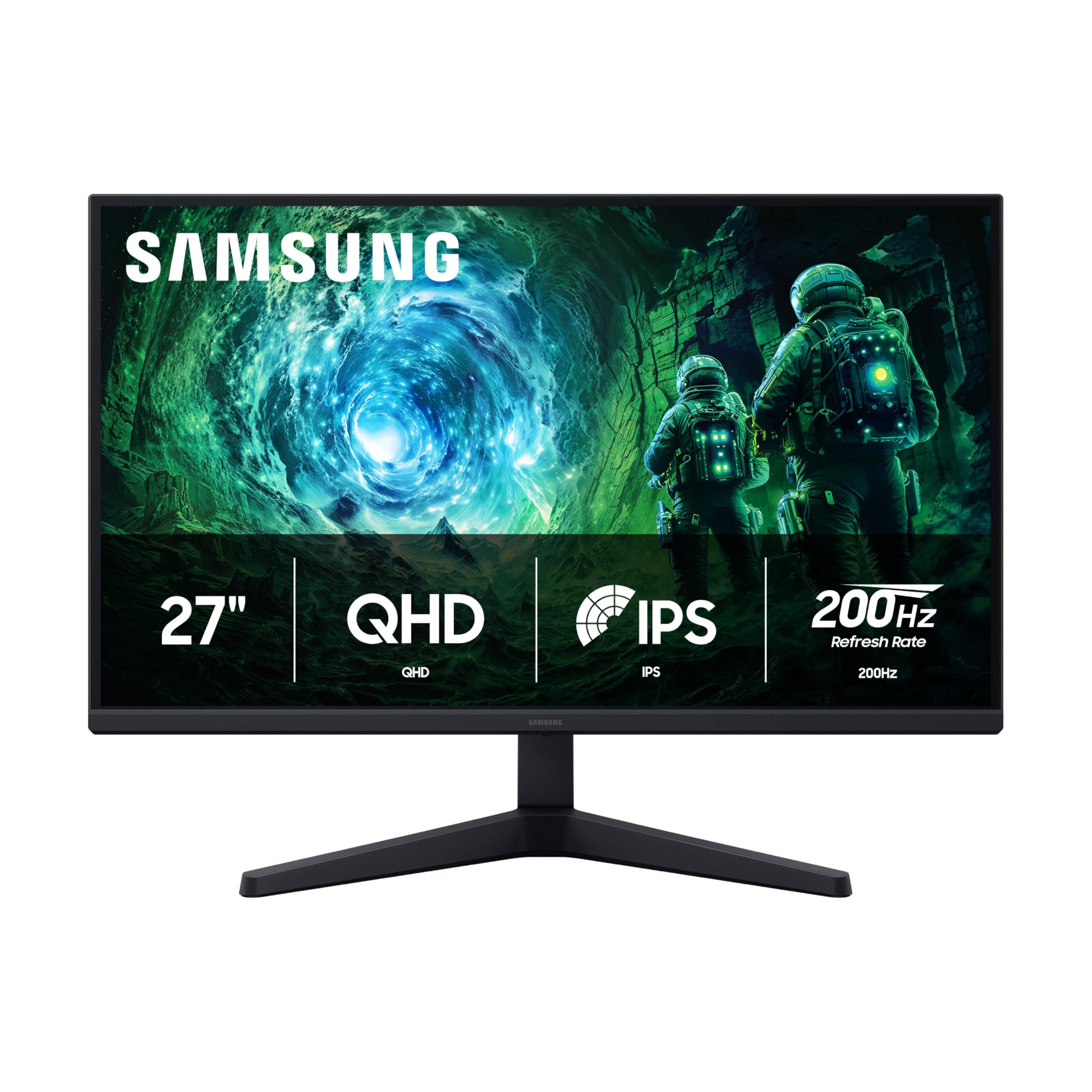
This 200Hz IPS monitor delivers high refresh rates at a budget-friendly price.
Samsung squeezed a 200Hz refresh rate into a budget-friendly, entry-level package, beating the Alienware’s 180Hz by about 11% and the Dell’s 144Hz by nearly 39%. That means if you are on a tight budget but still want buttery-smooth motion in fast games, this Odyssey G5 is a compelling pick. It pairs that speed with a 1ms response time (MPRT) and AMD FreeSync Premium, which cuts down screen tearing during intense matches.
The IPS panel delivers a wide 178° viewing angle, so colors stay consistent even when you are not sitting dead-center. It also carries HDR10 support for brighter highlights, plus gaming-specific tools like Black Equalizer to reveal enemies lurking in dark corners and a Virtual Aim Point that overlays a crosshair for accuracy. Buyers upgrading from 1080p are impressed by the vivid, accurate color and clean picture, with several noting it fits budget and mid-range builds perfectly.
There is a trade-off in ergonomics: the stand only offers tilt adjustment, with no height or swivel options, and the stand feels a bit cheap. That is the main reason it sits below the more adjustable picks here. But for pure gaming speed at this price, it is hard to look past.
The Speed Advantage
- Fast 200Hz refresh rate for smooth motion
- FreeSync Premium to prevent screen tearing
- Gaming aids: Black Equalizer and Virtual Aim Point
Where It Cuts Corners
- Stand only tilts — no height or swivel adjustment
- Plastic-y stand build with a broken cable loop reported on one unit
Own this if: refresh rate is your top priority and you are building a budget or mid-range gaming rig where every dollar counts.
Consider otherwise if: you need a height-adjustable stand for ergonomic comfort, since you would have to factor in a VESA arm cost here.
6. Acer Nitro XV272U W2bmiiprx

This 240Hz IPS monitor includes a fully adjustable Ergostand at a budget price.
Here is a budget-tier monitor that refuses to act like one. The Acer Nitro hits a 240Hz refresh rate over DisplayPort (and 144Hz over HDMI), making it one of the fastest panels you can get without climbing the price ladder. It is backed by AMD FreeSync Premium and a 1ms gray-to-gray response time, so it holds its own in fast-paced shooters and racing games.
Where it truly surprises is the stand. For an entry-level price, you get a full Ergostand with 360° swivel, plus/minus 90° pivot, height adjustment up to 4.7 inches, and tilt from -5° to 15°. That level of ergonomic flexibility is rare at this tier and saves you from buying a separate arm. The panel covers 99% sRGB for accurate colors and includes two 2-watt speakers so you are not stuck silent from the start.
The honest catch is quality control around the panel. While many buyers call the picture “amazing” and praise the positioning options, there are recurring reports of light bleed around the corners and some units arriving with pixel issues. It is also note the HDMI 2.0 ports cap console performance below the DP’s 240Hz, so PC gamers on DisplayPort get the full experience.
What Makes It a Champion
- Fast 240Hz refresh on DisplayPort
- Fully adjustable Ergostand with 360° swivel
- Value pricing for the spec sheet
The Realism Check
- Backlight bleed and pixel defects reported on some units
- HDMI 2.0 caps console gaming at lower refresh
Pick it up if: you are a PC gamer on a budget who wants esports-grade speed and a flexible stand without the premium markup.
Hold off if: you are wary of panel lottery (light bleed or dead pixels) or plan to game on a modern console via HDMI, since the ports limit that experience.
7. ASUS ProArt PA278CV

This Calman Verified monitor with 100% sRGB coverage and 65W USB-C power delivery is built for creative work.
This is the monitor for people who live in Photoshop, Lightroom, or a video timeline, not for chasing the highest refresh rate. The ProArt is Calman Verified with Delta E of less than 2, meaning the color error is practically invisible — what you see is what you print or publish. It covers 100% of the sRGB and 100% of the Rec. 709 color gamuts with factory calibration from the start, so photo editors and video editors can trust the screen immediately.
Its superpower is the single-cable desk setup. A USB-C port delivers up to 65W of power delivery, so it charges your laptop and transmits the display signal through one cable, clearing clutter. You can also daisy-chain up to four displays via DisplayPort, which is a huge productivity boost for multi-screen workstations. The ergonomic stand includes a 90° pivot, so you can flip it vertical for coding or reading long documents.
Reviewers praise its rich picture quality for daily Mac desktop work and note artists approve of the color accuracy. The trade-off is that this is a 75Hz panel, not a gaming screen — if you want 144Hz or higher, this is not the pick. The integrated audio is also weak, so plan to use your own speakers or headphones for anything serious.
The professional’s edge: factory-calibrated color with Delta E under 2 and dual 100% color gamut coverage make this a reliable creative tool.
Who should pass: gamers and anyone needing high refresh rates, since the 75Hz panel is built for precision, not speed.
Get this monitor for: professional photo or video work where color accuracy is non-negotiable, especially if you want USB-C power delivery and a vertical pivot for coding.
Think twice if: you plan to game competitively — this screen is about flawless color at a standard 75Hz, not esports speed.
8. ASUS ROG XG27AQDMG Glossy OLED
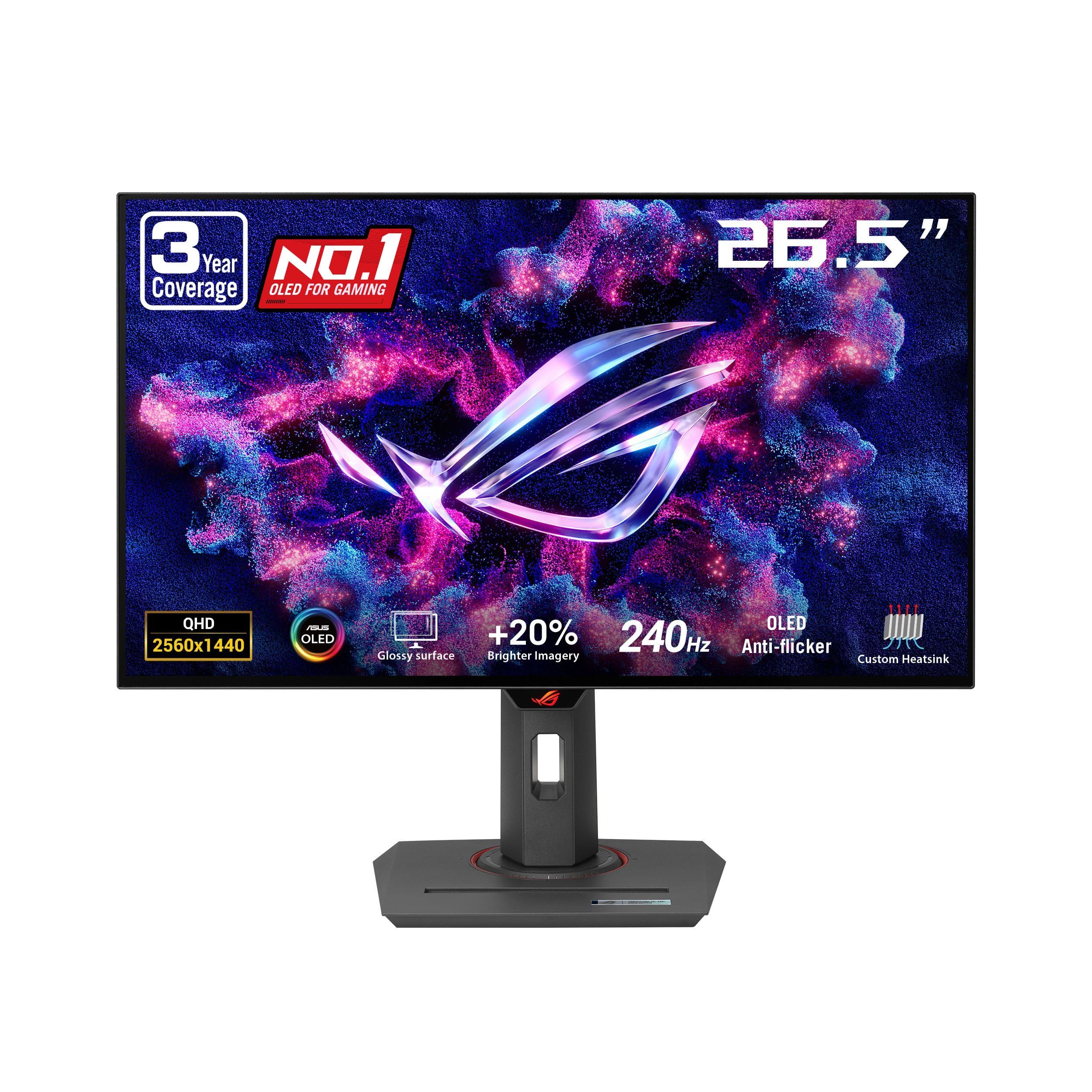
This glossy WOLED panel delivers inky blacks and 99% DCI-P3 color for rich gaming.
If you have ever wondered why a glossy screen looks better than a matte one, this ASUS shows you. The ROG XG27AQDMG uses a third-generation WOLED panel (a type of OLED with a white subpixel) with a glossy finish, making colors punchier and blacks deeper — buyers call it “crazy blacks.” It runs at a 240Hz refresh rate with a 0.03ms response time, so motion stays crisp, ideal for tactical shooters where spotting enemies fast matters.
Color accuracy is a highlight, with 99% DCI-P3 coverage making it excellent for both gaming and content creation. ASUS also includes OLED Care functions and an advanced cooling design, plus ROG-exclusive anti-flicker technology, all aimed at reducing the risk of burn-in and keeping the panel stable during refresh-rate shifts. It is G-SYNC Compatible, so NVIDIA graphics card owners get tear-free gameplay, and there is a uniform brightness setting for consistent luminance.
Buyers report zero burn-in after months of regular use when following the pixel-refresh routine, and the glossy surface handles room light well. The honest caveats: the 26.5-inch screen is essentially 27-inch class, VESA mount installation is reportedly tricky, and there are no built-in speakers. HDR brightness is also considered dimmer than SDR by some, which is typical of this generation of OLEDs.
The Glossy Advantage
- Inky blacks and vibrant color from the glossy WOLED panel
- 3-year warranty with burn-in coverage
- ROG OLED Care and anti-flicker tech for panel protection
What to Know
- No built-in speakers
- VESA mount attachment is a tight, tricky install
- Occasional image-retention reports from some units
Choose it for: the best-looking picture quality money can buy at 1440p, where the glossy finish and deep blacks make games and movies look their absolute best.
Consider the downside: you must run occasional pixel-cleaning routines and accept a dimmer HDR mode than some rivals.
9. MSI MPG 271QRX QD-OLED

The ultimate speed demon with a 360Hz refresh rate for players who refuse to miss a single frame.
Put simply, this is the fastest monitor on this list — and one of the fastest 27-inch 1440p screens you can buy. A 360Hz refresh rate means the image updates 360 times per second, a level of fluidity that competitive esports players can feel immediately. It pairs that with a lightning-fast 0.03ms GtG response time and a QD-OLED panel, which combines quantum-dot color with OLED’s perfect blacks for a stunning 1,000,000:1 contrast ratio (minimum).
This is not just about speed. The QD-OLED panel delivers Delta E ≤ 2 color accuracy, meaning colors are true-to-life from the start, and it is VESA DisplayHDR True Black 400 certified for deep, detailed dark scenes. It also packs useful productivity features: a KVM switch lets you control two devices with one keyboard, mouse, and monitor, and the USB-C port delivers 90W of power delivery to charge a MacBook over a single cable.
Owners mention the 360Hz refresh is very noticeable and that the glossy finish makes colors pop, with individual pixels visible for finer detail. OLED protection features have also caused occasional random shutdowns for some, a minor annoyance given the excellent overall performance.
The Speed & Color King
- Fastest 360Hz refresh rate on the list
- Rich QD-OLED color with perfect blacks
- Handy KVM switch and 90W USB-C power delivery
The Premium Cost
- Highest price tier — a serious investment
- Plastic stand feels cheap next to the premium panel
- OLED protection can trigger occasional shutdowns
Buy this if: you are a dedicated esports or competitive player who wants the absolute fastest refresh and best color in one package, and you value a tidy single-cable MacBook setup via USB-C.
Reconsider if: you are on a middle-tier budget or hate the idea of spending extra on a stand that feels less premium than the screen itself.
Understanding the Specs
Refresh Rate (Hz)
Measured in hertz, this is how many times the screen redraws its image each second. A 60Hz screen feels standard; 144Hz feels noticeably smoother; 240Hz to 360Hz feels almost impossibly fluid, which matters most in fast-paced competitive games. Higher refresh rates require a graphics card strong enough to output matching frame rates — otherwise the extra speed goes unused.
Response Time (ms)
This is how quickly a pixel can change color, measured in milliseconds. A faster response time (like 1ms or 0.03ms) means less motion blur and ghosting when objects move quickly across the screen. For gamers, a low response time is crucial; for office work it matters much less.
Panel Type: IPS, OLED, QD-OLED
IPS panels are the balanced choice — good colors, wide viewing angles, and reasonable prices. OLED panels have pixels that turn off individually, producing perfect blacks and incredible contrast, but they cost more and need burn-in care. QD-OLED is a newer OLED which adds a quantum-dot layer for even more vibrant color; it is typically the most expensive option.
Color Gamut (sRGB, DCI-P3)
A color gamut is the range of colors a monitor can display, usually given as a percentage of a standard like sRGB (the web standard) or DCI-P3 (the film and gaming standard). Higher percentages mean richer, more accurate colors. Anyone doing photo or video editing should look for 99% to 100% coverage of these standards.
FAQ
Is a 1440p 27-inch monitor worth it over a 1080p one?
What refresh rate do I need for gaming on a 1440p monitor?
Should I worry about OLED burn-in on a gaming monitor?
What is the difference between HDMI 2.0 and HDMI 2.1 on a 1440p monitor?
What does G-Sync or FreeSync actually do?
Can I use a 1440p gaming monitor for photo or video editing?
Is a height-adjustable stand worth paying more for?
What is a glossy vs. matte screen finish?
Should I buy a monitor with built-in speakers?
Will a 27-inch 1440p monitor work with a MacBook Pro?
Final Thoughts: The Verdict
If you want one dependable pick, the 27 inch 1440p monitor winner is the LG 27GS93QE because it balances speed and picture quality — a 240Hz OLED panel with perfect blacks and rich color at a price below rival OLEDs. For pure gaming value, the Alienware AW2725DM offers a fast 180Hz IPS panel and a premium adjustable stand. For creative work where color accuracy matters, the ASUS ProArt PA278CV delivers factory-calibrated color and single-cable USB-C power delivery.
How We Picked
We do not accept paid placement. Every pick is matched to a real buyer and a real use-case; we do not hands-on test units.
Sources & Methodology
Specifications: manufacturer listings and product documentation. Review insights: verified customer reviews, as of August 2026. Pricing: not shown on this page (it changes often); check the current price via the retailer link.
As an Amazon Associate, Gadgets Feed earns from qualifying purchases. This does not affect which products we feature.