
The jump from 1080p to 1440p is the single most impactful upgrade a competitive gamer can make—sharper images reveal enemies at range, while the wider canvas doesn’t demand the raw GPU power of 4K. A 27-inch QHD panel hits the ergonomic sweet spot where pixel density delivers crisp text and immersive gameplay without requiring a massive desk. The real challenge isn’t choosing resolution—it’s navigating the dizzying array of refresh rates, panel types, and motion-handling technologies that separate a good monitor from a great one.
I’m Min — the co-founder and writer behind Gadgets Feed. I’ve spent hundreds of hours analyzing technical specifications, cross-referencing real-world user data, and dissecting the performance characteristics of the latest 27-inch QHD gaming monitors to bring you a guide that cuts through the marketing noise.
This guide evaluates top-tier OLED, Fast IPS, and QD-OLED panels across refresh rates from 240Hz to a blistering 540Hz, weighing color accuracy, response time, and connectivity to help you find the 27 inch qhd gaming monitor that matches your hardware and playstyle for years to come.
How To Choose The Best 27 Inch QHD Gaming Monitor
Buying a 27-inch QHD gaming monitor means balancing panel technology, refresh rate, and connectivity against the games you play most. A wrong choice here means either paying for speed your GPU can’t deliver or settling for motion blur that hides opponents. Focus on the three pillars that matter most for this category.
Panel Technology: IPS vs OLED vs QD-OLED
Fast IPS panels (like ASUS’s 0.3ms ELMB Sync and LG’s 1ms GtG) offer excellent color accuracy and wide viewing angles at a lower price, but their contrast ratio typically sits around 1000:1, meaning blacks appear gray in dark rooms. OLED and QD-OLED panels deliver true blacks with infinite contrast and response times as fast as 0.03ms, eliminating ghosting entirely—but they cost more and require burn-in precautions. For mixed-use gamers who also do productivity work, a high-quality Fast IPS is still a strong choice; for pure competitive play and HDR immersion, OLED is transformative.
Refresh Rate and Response Time: Matching Your GPU
A 240Hz monitor pairs well with a mid-range GPU like an RTX 4070 or RX 7800 XT, which can push 200+ fps in esports titles at 1440p. Jumping to 360Hz or 480Hz requires a flagship card (RTX 5080 or 7900 XTX) and games that actually hit those frame rates—CS2, Valorant, Overwatch 2. Response time matters less for slow-paced RPGs, but for competitive play, aim for 0.03ms (OLED) or sub-1ms (Fast IPS) to minimize motion blur. The 0.02ms panels on LG’s Dual Mode monitors are the fastest available today.
Connectivity: HDMI 2.1 and DisplayPort Versions
To achieve 240Hz+ at QHD resolution, you need DisplayPort 1.4 with DSC (Display Stream Compression) or, ideally, DisplayPort 2.1 for uncompressed bandwidth. HDMI 2.1 supports 1440p at 240Hz and is essential for console gamers using PS5 or Xbox Series X. Avoid monitors with only HDMI 2.0 if you plan to hit 240Hz, as limited bandwidth will cap your refresh rate. Also check for USB-C with power delivery if you want single-cable laptop connectivity.
Quick Comparison
On smaller screens, swipe sideways to see the full table.
| Model | Category | Best For | Key Spec | Amazon |
|---|---|---|---|---|
| ASUS ROG Swift PG27AQWP-W | Premium OLED | Uncompromising speed & dual-mode versatility | Dual-Mode QHD 540Hz / HD 720Hz, 0.02ms | Amazon |
| LG 27GX790B-B (540Hz Dual Mode) | High-End OLED | Brightest OLED with Dual Mode flexibility | Dual-Mode QHD 540Hz / HD 720Hz, 0.02ms, DisplayHDR True Black 500 | Amazon |
| Sony INZONE M10S | Competitive OLED | Tournament-level FPS gaming | 480Hz, 0.03ms, 24.5″ mode, FPS Pro+ | Amazon |
| LG 27GX790A-B (480Hz OLED) | High-Performance OLED | Balanced high-refresh OLED with DisplayPort 2.1 | 480Hz, 0.03ms, 98.5% DCI-P3, DisplayPort 2.1 | Amazon |
| INNOCN 27″ OLED 500Hz | Value OLED | Budget-friendly 500Hz OLED performance | 500Hz, 0.03ms, QD-OLED, HDR500 | Amazon |
| Samsung Odyssey OLED G6 G60SD | Premium QD-OLED | 360Hz QD-OLED with advanced burn-in protection | 360Hz, 0.03ms, QD-OLED, Dynamic Cooling System | Amazon |
| MSI MPG 271QRX QD-OLED | Premium QD-OLED | Color-accurate QD-OLED for gaming and creative work | 360Hz, 0.03ms, Delta E≤2, True Black HDR 400 | Amazon |
| AOC Agon PRO AG276QZD2 | Mid-Range OLED | Entry-level QD-OLED with 240Hz smoothness | 240Hz, 0.03ms, QD-OLED, 101% DCI-P3 | Amazon |
| LG 27GR83Q-B Ultragear | Mid-Range IPS | Reliable 240Hz IPS with G-Sync and HDMI 2.1 | 240Hz, 1ms, IPS, DisplayHDR 400, G-Sync Compatible | Amazon |
| ASUS TUF Gaming VG27AQM5A | Best Value IPS | Ultra-affordable 300Hz Fast IPS | 300Hz, 0.3ms, Fast IPS, ELMB Sync, 95% DCI-P3 | Amazon |
| ASUS ROG Strix XG27UCDMG | Premium 4K QD-OLED | High-res QD-OLED with 240Hz and USB-C 90W PD | 4K QD-OLED, 240Hz, 0.03ms, 99% DCI-P3 | Amazon |
In‑Depth Reviews
1. ASUS ROG Swift 27″ OLED Gaming Monitor (PG27AQWP-W)
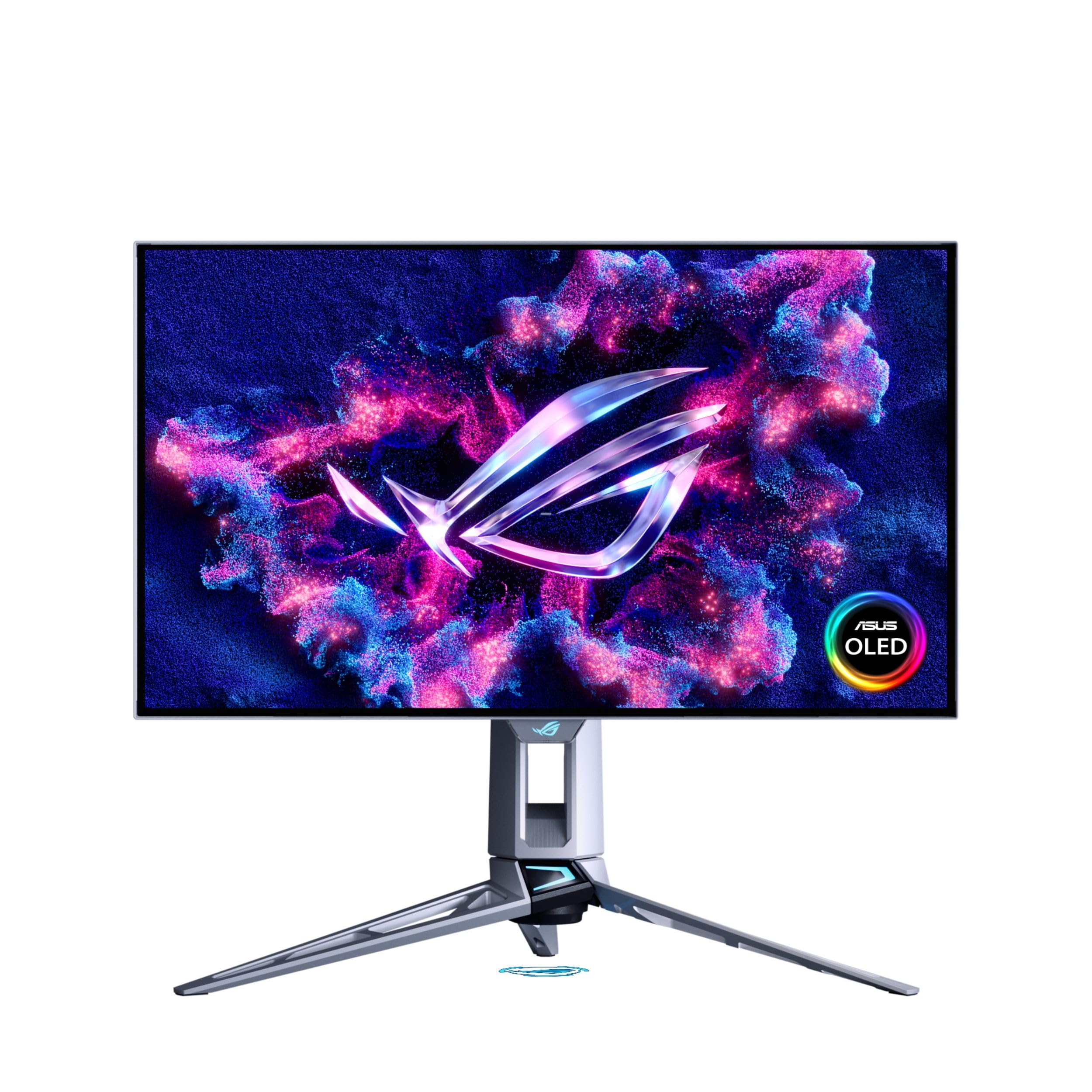
The ASUS ROG Swift PG27AQWP-W sets the benchmark for what a premium 27-inch QHD gaming monitor should be. Its new Tandem OLED technology delivers 15% higher peak brightness and 25% larger color volume than previous WOLED panels, translating to vivid HDR highlights and deep inky blacks that make every game pop. The TrueBlack Glossy surface eliminates haze, giving you exceptionally sharp imagery with zero diffusion—text looks crisp and colors appear punchy right out of the box.
The dual-mode capability is a game-changer for esports: toggle between QHD at 540Hz for ultra-smooth competitive play or HD at 720Hz when you need the absolute highest frame rate for twitch shooters. Response time hits 0.02ms, making motion blur a non-issue even during frantic spray transfers. Connectivity is future-proof with DisplayPort 2.1 offering full 80Gbps bandwidth, dual HDMI 2.1 ports, and USB-C for versatile device hookups.
ASUS OLED Care Pro with a Neo Proximity Sensor automatically dims the screen when you step away, significantly reducing burn-in risk. The 3-year warranty includes burn-in coverage, giving peace of mind for a flagship investment. If your build can push frames above 400Hz and you want the absolute best motion clarity available today, this is the monitor to beat.
Why it’s great
- Dual-mode QHD 540Hz / HD 720Hz with 0.02ms GtG delivers unmatched motion clarity.
- Tandem OLED produces 15% brighter highlights and larger color volume than prior-gen panels.
- DP 2.1 UHBR20 with 80Gbps bandwidth ensures uncompressed high-refresh gaming.
Good to know
- Premium price point places it at the top of the market.
- Some users report grey banding on solid-color backgrounds at this price tier.
2. LG 27GX790B-B 27″ Ultragear OLED Gaming Monitor
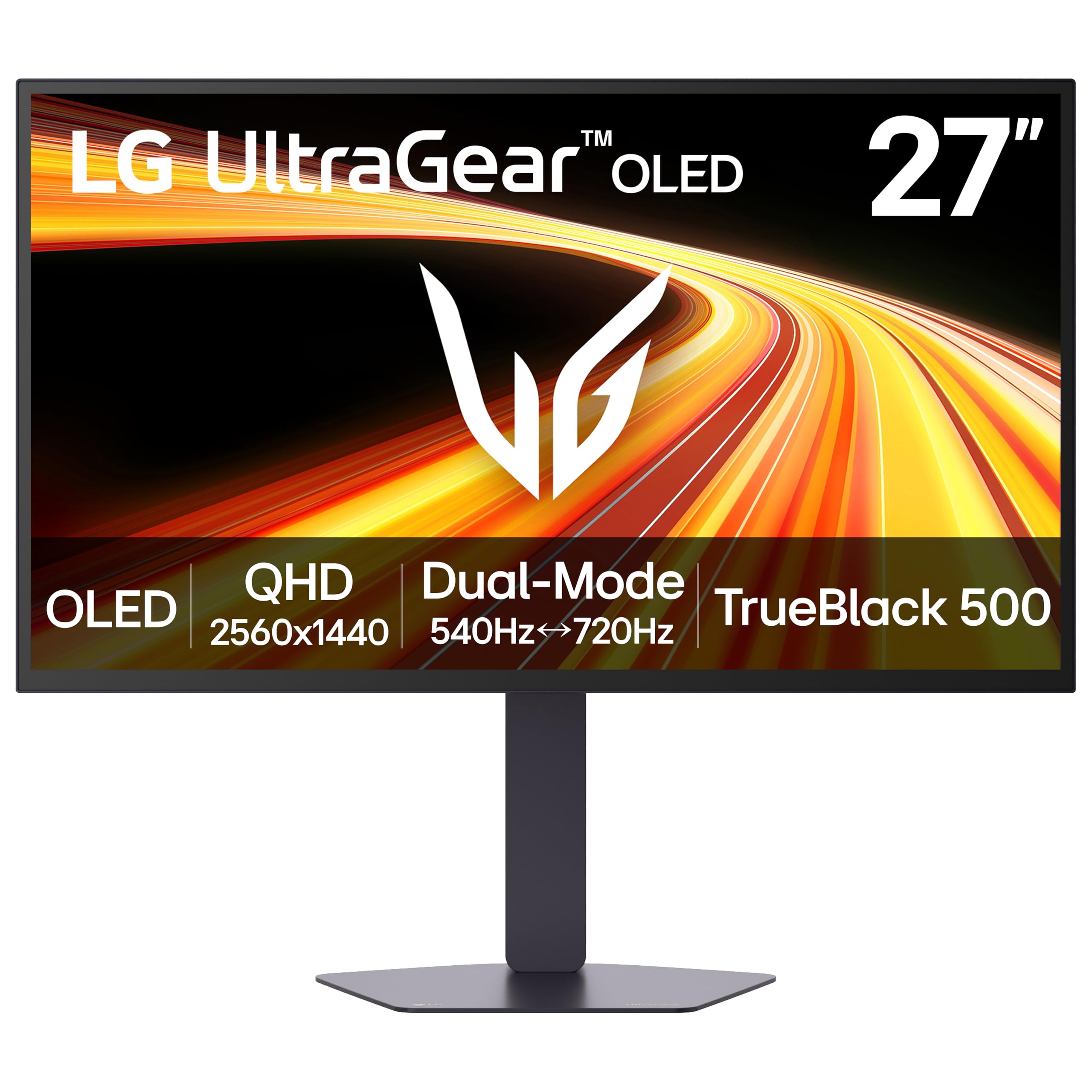
LG’s 27GX790B-B represents the brightest OLED gaming monitor the company has produced, thanks to its 4th Gen Primary RGB Tandem technology. Typical brightness reaches 335 nits, with enhanced APL and reduced ABL keeping critical visual details sharp during explosive action sequences—no more washed-out frags in bright scenes. The UL-verified Perfect Reproduction certification means actual game content is rendered faithfully, maintaining intended color and detail in both dark and bright environments.
Dual Mode lets you toggle between QHD at 540Hz for high-detail competitive play or HD at 720Hz when raw speed is the priority. Response time is an astonishing 0.02ms GtG, virtually eliminating reverse ghosting. The display covers 99.5% DCI-P3 with Delta E≤2 color accuracy, making it viable for creative work alongside gaming. DisplayPort 2.1 and dual HDMI 2.1 ports provide all the bandwidth you need for modern GPUs and consoles.
The matte finish is ideal for bright rooms, reducing reflections without washing out colors. HDR performance is certified as DisplayHDR True Black 500, delivering nuanced shadow detail that reveals enemies hiding in dark corners. For gamers who prioritize brightness and color volume without compromising speed, this LG is a top contender.
Why it’s great
- 335 nits typical brightness is the brightest OLED in this class, with reduced ABL.
- Dual Mode 540Hz QHD / 720Hz HD covers every competitive scenario.
- 99.5% DCI-P3 and Delta E≤2 make it suitable for color-critical work.
Good to know
- The bottom bezel is thicker than expected, which may bother some users.
- Proprietary power cable limits replacement flexibility.
3. Sony INZONE M10S 27″ OLED Gaming Monitor

The Sony INZONE M10S was developed in collaboration with Fnatic esports, and it shows in every design choice. The 480Hz refresh rate and 0.03ms GtG response time deliver buttery-smooth motion that makes tracking enemies in fast-paced shooters feel almost telepathic. The dedicated FPS Pro and FPS Pro+ modes enhance contrast for competitive games, while the 24.5-inch screen size mode lets you switch to a smaller viewport for more focused aiming, mimicking tournament monitor setups.
The low-profile stand is just 4mm thin at its base, freeing up desk space for wide mouse swipes. Height, tilt, and 180-degree swivel adjustments ensure you find the perfect viewing angle. DisplayPort 2.1 (UHBR10) and dual HDMI 2.1 ports provide high-bandwidth connectivity for both PC and console gaming. The fan-less passive cooling system with a custom heatsink prevents thermal throttling and extends panel lifespan without any noise.
Sony backs the panel with a 3-year limited warranty that includes OLED burn-in coverage. Colors are factory-calibrated, and the anti-glare coating minimizes distractions. If your primary focus is winning tournaments and you need a monitor that responds instantly to every flick and spray, the M10S is built for that mission.
Why it’s great
- 24.5-inch mode and FPS Pro+ profiles directly address competitive shooter needs.
- 480Hz with 0.03ms GtG provides near-instant pixel response.
- Fan-less passive cooling with custom heatsink ensures silent, long-lasting operation.
Good to know
- Premium price reflects the esports pedigree and dedicated features.
- Some early units have reported display artifacts; ensure you order from a reliable return policy.
4. LG 27GX790A-B 27″ Ultragear OLED Gaming Monitor
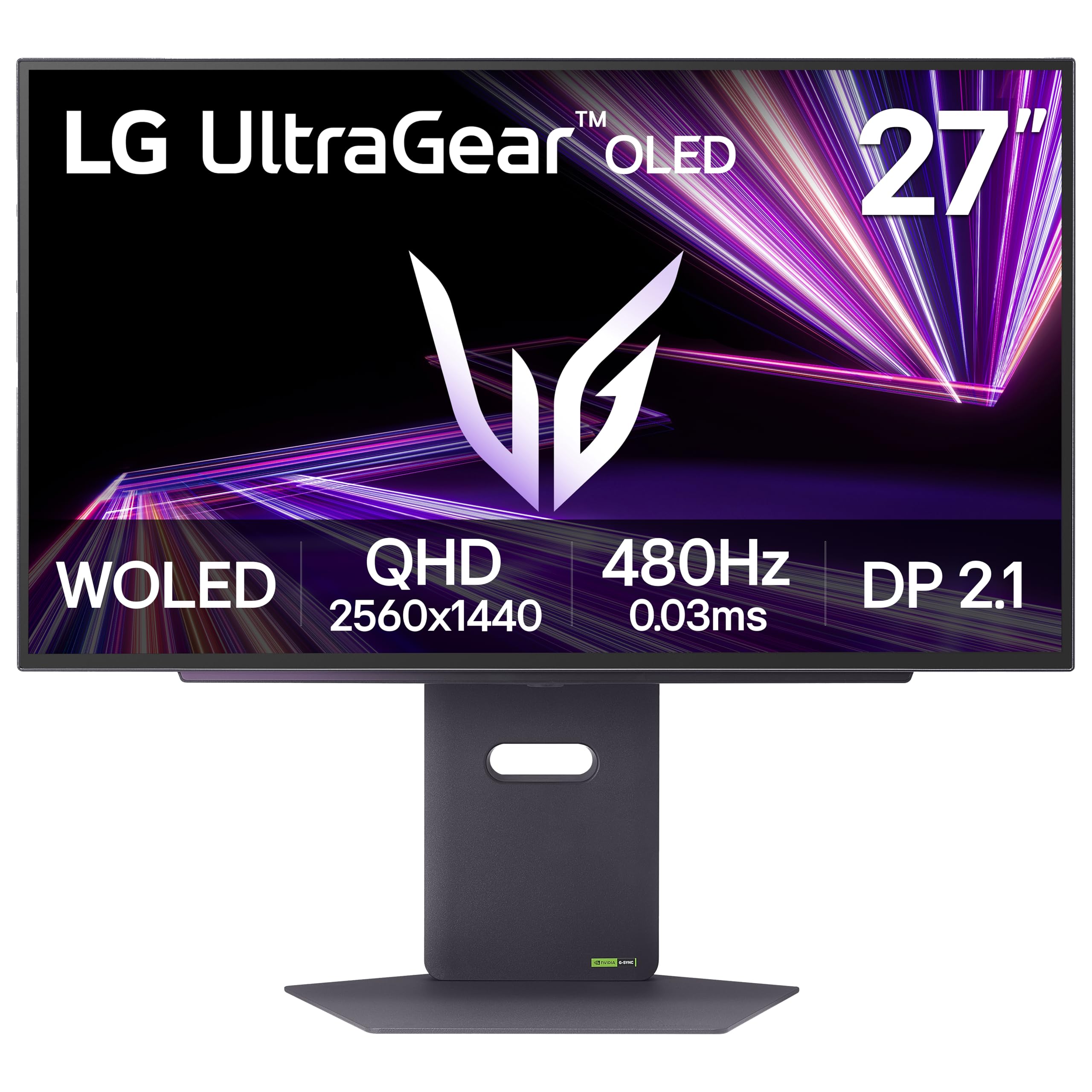
The LG 27GX790A-B delivers a 480Hz refresh rate and 0.03ms response time on a bright 27-inch QHD OLED panel, making it one of the fastest options available without the dual-mode complexity. Its DisplayPort 2.1 connection provides the bandwidth needed for uncompressed 480Hz gameplay, while dual HDMI 2.1 ports handle next-gen consoles at full speed. The virtually borderless design creates an immersive edge-to-edge view that pulls you into the action.
Color coverage hits 98.5% DCI-P3 with a 1.5M:1 contrast ratio, and DisplayHDR True Black 400 certification ensures deep blacks and brilliant highlights. The matte anti-glare surface keeps reflections to a minimum, which is crucial for maintaining visibility in brightly lit rooms. Dynamic Action Sync reduces input lag further, while Black Stabilizer helps spot enemies in dark areas.
The stand offers height, tilt, swivel, and pivot adjustments, giving you full ergonomic control. RGB hexagonal backlighting on the rear adds a subtle aesthetic touch to your battlestation. For gamers who want a high-refresh OLED with robust connectivity and excellent build quality, this LG hits the sweet spot.
Why it’s great
- 480Hz with 0.03ms GtG and DisplayPort 2.1 for uncompressed high-refresh.
- 98.5% DCI-P3 coverage and True Black 400 deliver vibrant HDR.
- Fully adjustable stand with height, tilt, swivel, and pivot.
Good to know
- Matte coating can appear slightly grainy on static bright web pages.
- Initial vertical banding may appear but usually fades after use.
5. INNOCN 27″ OLED 2K QHD 500Hz Gaming Monitor (GA27M1Q)
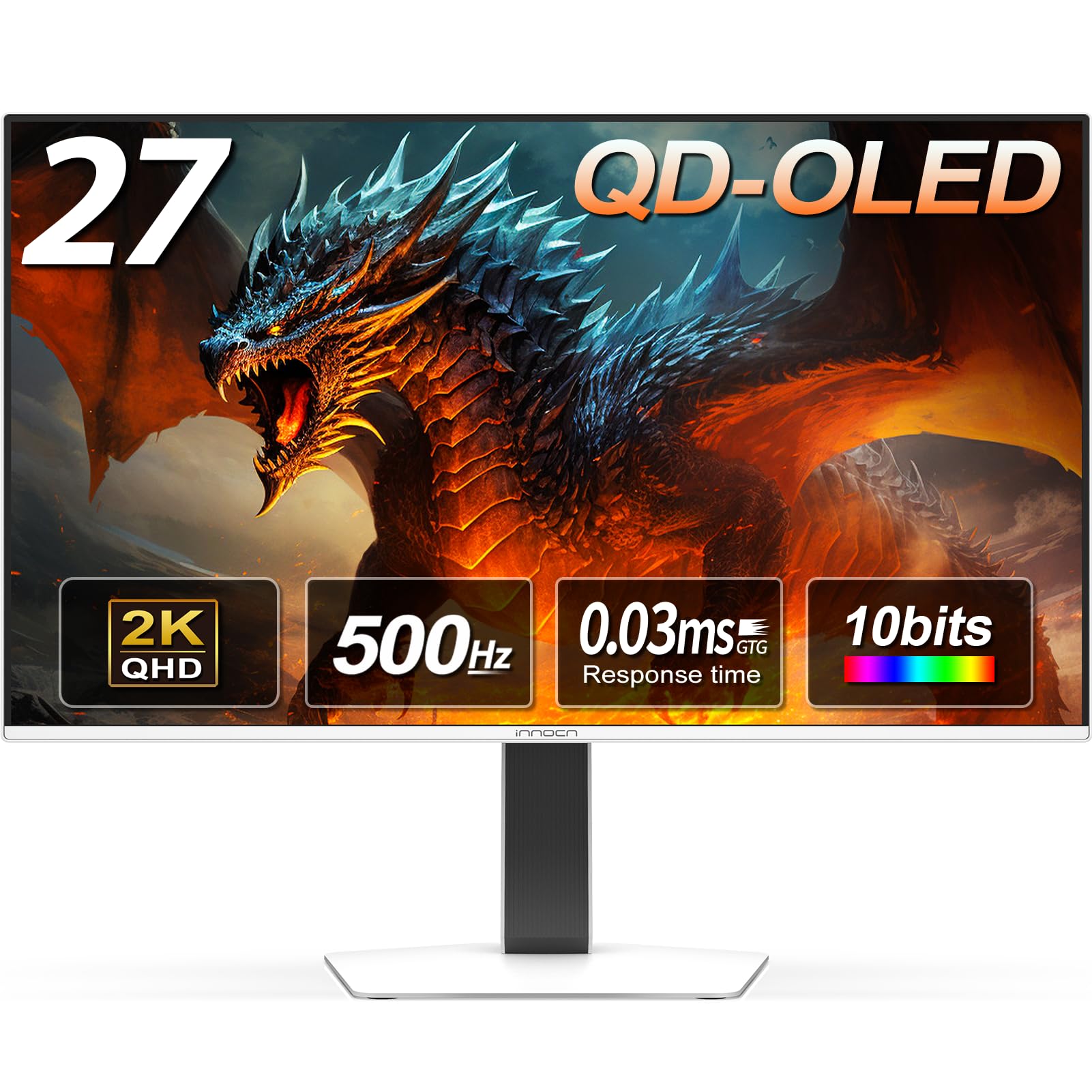
The INNOCN GA27M1Q proves you don’t need to spend flagship money for flagship-level refresh rates. This QD-OLED panel delivers a genuine 500Hz refresh rate at 1440p with a 0.03ms response time, making it one of the fastest panels on the market at a price that undercuts the competition significantly. Color performance is excellent with 99% DCI-P3 gamut and a 1,500,000:1 contrast ratio, providing deep blacks and vibrant colors that make games look lifelike.
Connectivity is robust with dual DisplayPort and dual HDMI 2.1 ports, accommodating PC, consoles, and even mobile devices via USB-C. The monitor supports G-Sync compatibility and VRR from 48Hz to 500Hz, ensuring tear-free gameplay across a wide frame rate range. The 3-sided ultra-narrow bezel and white aesthetic give it a clean, modern look that stands out from typical black gaming monitors.
The stand offers height, tilt, swivel, and pivot adjustments for ergonomic comfort. Built-in speakers are surprisingly usable for casual gaming. At its price point, this monitor delivers OLED quality and 500Hz performance that rivals monitors costing hundreds more. If you want high-refresh OLED without breaking the bank, the INNOCN is a compelling choice.
Why it’s great
- 500Hz refresh rate at 1440p with 0.03ms GtG is exceptional value.
- QD-OLED panel provides 99% DCI-P3 and 1,500,000:1 contrast.
- Dual HDMI 2.1 and DP inputs offer versatile connectivity.
Good to know
- Speakers are decent but not audiophile-grade.
- Requires a powerful GPU to push 500 fps in most titles.
6. Samsung 27″ Odyssey OLED G6 (G60SD)

Samsung’s Odyssey OLED G6 brings QD-OLED technology to the 27-inch QHD format with a 360Hz refresh rate and 0.03ms response time, delivering fluid motion and vibrant colors that make competitive games look stunning. The Dynamic Cooling System uses a pulsating heat pipe to dissipate heat five times better than traditional graphite sheets, reducing burn-in risk significantly. Thermal Modulation algorithms predict surface temperature and adjust brightness automatically to protect the panel.
The Glare Free technology is exceptional—it minimizes reflections from external light sources so the QD-OLED’s perfect blacks and vibrant colors remain distraction-free even in well-lit rooms. AMD FreeSync Premium Pro keeps the GPU and panel synced for tear-free gaming. Logo and taskbar detection automatically dims static elements to further prevent burn-in, while the screen saver kicks in after 10 minutes of inactivity.
The design is sleek at just 3.9mm at its thinnest point, and Core Lighting adds ambient lighting to match your mood. The 3-year warranty provides peace of mind for the OLED investment. For gamers who want QD-OLED color vibrancy with advanced burn-in prevention and a clean aesthetic, the G6 is a standout choice.
Why it’s great
- Dynamic Cooling System with pulsating heat pipe reduces burn-in risk.
- Glare Free technology maintains black levels and color in bright rooms.
- 360Hz QD-OLED provides excellent motion clarity and color vibrancy.
Good to know
- HDMI ports are 2.0, not 2.1, requiring DSC for 360Hz over HDMI.
- Some users note a purple tint in direct reflections.
7. MSI MPG 271QRX QD-OLED 27″ Gaming Monitor

The MSI MPG 271QRX QD-OLED combines a 360Hz refresh rate with factory-calibrated Delta E≤2 color accuracy, making it equally suited for competitive gaming and creative workloads. The QD-OLED panel delivers a 1,000,000:1 contrast ratio with perfect blacks and vibrant colors that make HDR content pop. True Black HDR 400 certification ensures deep shadow detail without crushing blacks.
MSI’s OLED Care 2.0 includes pixel shifting, panel refresh, and static image detection to mitigate burn-in risk over long-term use. The Gaming Intelligence app lets you create and switch between custom profiles for different game genres. KVM functionality allows you to control multiple devices with a single keyboard and mouse setup, which is a productivity bonus for streamers or multi-PC users.
Connectivity includes DisplayPort 1.4 with DSC, dual HDMI 2.1 ports with full 48 Gbps bandwidth for console gaming, and a USB-C port. The stand is solid with height, tilt, and swivel adjustments. For gamers who also do photo or video editing and need accurate colors out of the box, the MSI MPG 271QRX is a versatile workhorse.
Why it’s great
- Factory-calibrated Delta E≤2 color accuracy for creative work.
- 360Hz QD-OLED with True Black HDR 400 for stunning HDR gaming.
- KVM switch and Gaming Intelligence app add productivity value.
Good to know
- Stand has limited adjustability compared to some competitors.
- HDR performance needs in-game tweaks for best results.
8. AOC Agon PRO 27″ QD-OLED Gaming Monitor (AG276QZD2)

The AOC Agon PRO AG276QZD2 brings QD-OLED technology to a more accessible price point without sacrificing the core benefits of OLED: perfect blacks, infinite contrast, and a 0.03ms response time. The 240Hz refresh rate is well-suited for mid-to-high-end GPUs that can push 200+ fps in competitive titles at 1440p. Color coverage is exceptional at 101% DCI-P3 and 136.7% sRGB, making games look vibrant and lifelike.
G-Sync compatibility ensures smooth tear-free gameplay, and HDR10 support adds depth to supported content. The monitor includes AOC Shadow Control for adjusting dark-area visibility and six game modes for different genres. Built-in speakers are mediocre but functional for casual use. The RGB lighting on the rear adds ambiance without being distracting.
The stand is height-adjustable but has been noted as wobbly by some users—a VESA mount is recommended for a more stable setup. Text fringing is apparent on desktop use due to the QD-OLED subpixel layout, so it’s best for gaming-focused buyers. For the price, this is the most affordable way to get into 27-inch QD-OLED gaming without major compromises.
Why it’s great
- Most affordable entry into 27″ QD-OLED with 240Hz and 0.03ms.
- 101% DCI-P3 coverage delivers vivid, punchy colors.
- G-Sync compatible with HDR10 support for smooth HDR gaming.
Good to know
- Default colors appear washed out and require manual adjustment.
- Text fringing is noticeable due to QD-OLED subpixel layout.
9. LG 27GR83Q-B 27″ Ultragear QHD IPS Gaming Monitor
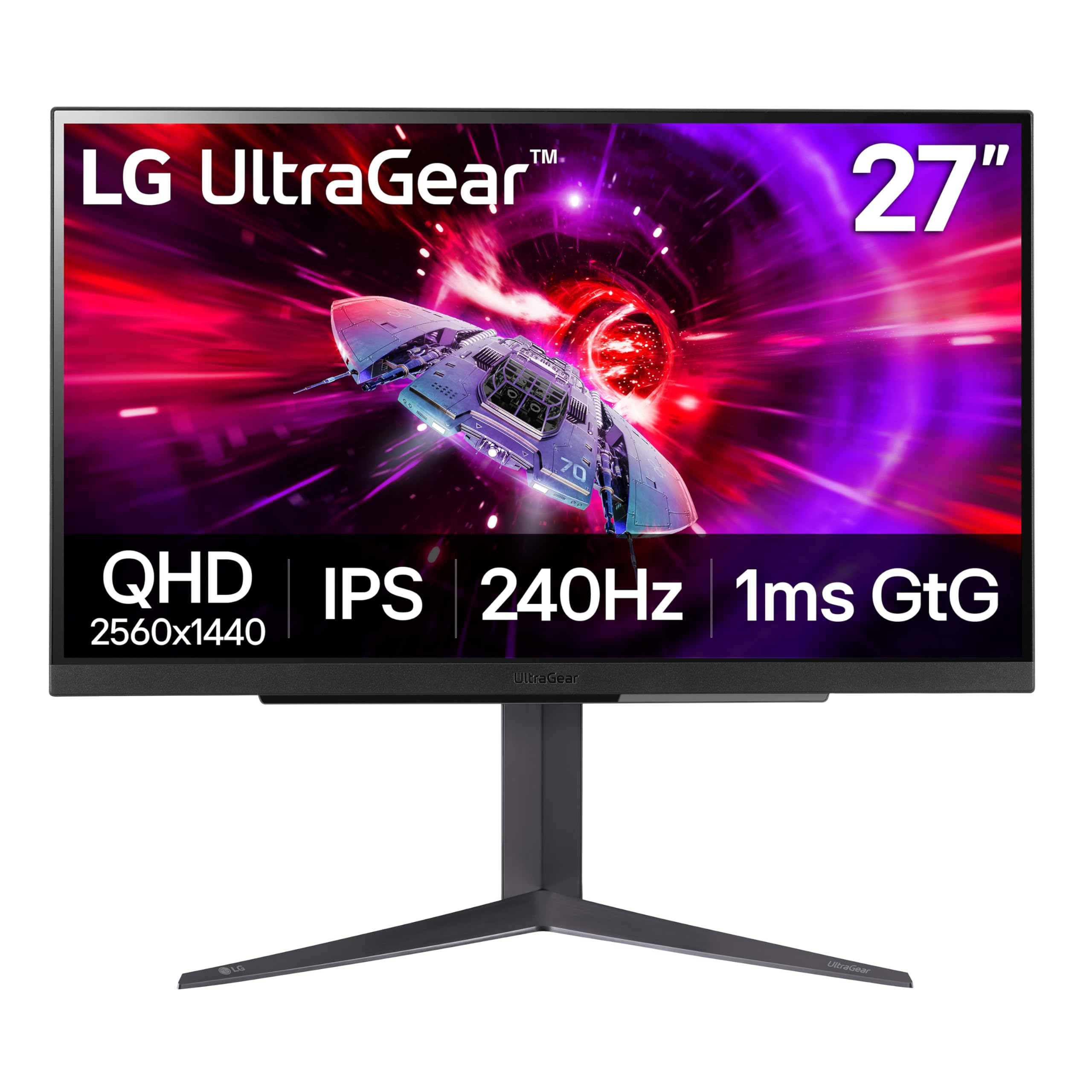
The LG 27GR83Q-B is a solid mid-range IPS option that delivers 240Hz refresh rate and 1ms GtG response time at a budget-friendly price point. The IPS panel provides vibrant colors with 95% DCI-P3 coverage and good viewing angles. DisplayHDR 400 certification adds a boost to HDR content, though it’s not true HDR like OLED panels—it’s enough to make games look more dynamic than standard SDR.
NVIDIA G-Sync Compatible and AMD FreeSync Premium support ensure tear-free gameplay across a wide range of frame rates. HDMI 2.1 ports allow 240Hz gaming on consoles and modern GPUs, while DisplayPort 1.4 handles PC connections. The stand is fully ergonomic with height, tilt, swivel, and pivot adjustments, making it comfortable for long sessions. Dynamic Action Sync and Black Stabilizer are useful gaming features that enhance responsiveness and visibility.
The 4-pole headphone jack with DTS Headphone:X provides spatial audio for headphones, adding immersion. Some users have reported stuck pixel issues, so quality control can vary. For gamers who want reliable 240Hz IPS performance with HDMI 2.1 and good color without spending on OLED, the LG 27GR83Q-B is a dependable choice.
Why it’s great
- 240Hz IPS with 1ms response time and G-Sync Compatibility.
- Full ergonomic stand with height, tilt, swivel, and pivot adjustments.
- HDMI 2.1 supports 240Hz on consoles for smooth cross-platform gaming.
Good to know
- Some units may have stuck pixels; check return policy before purchase.
- IPS contrast ratio of 1000:1 means blacks aren’t as deep as OLED.
10. ASUS TUF Gaming 27″ 1440P Monitor (VG27AQM5A)
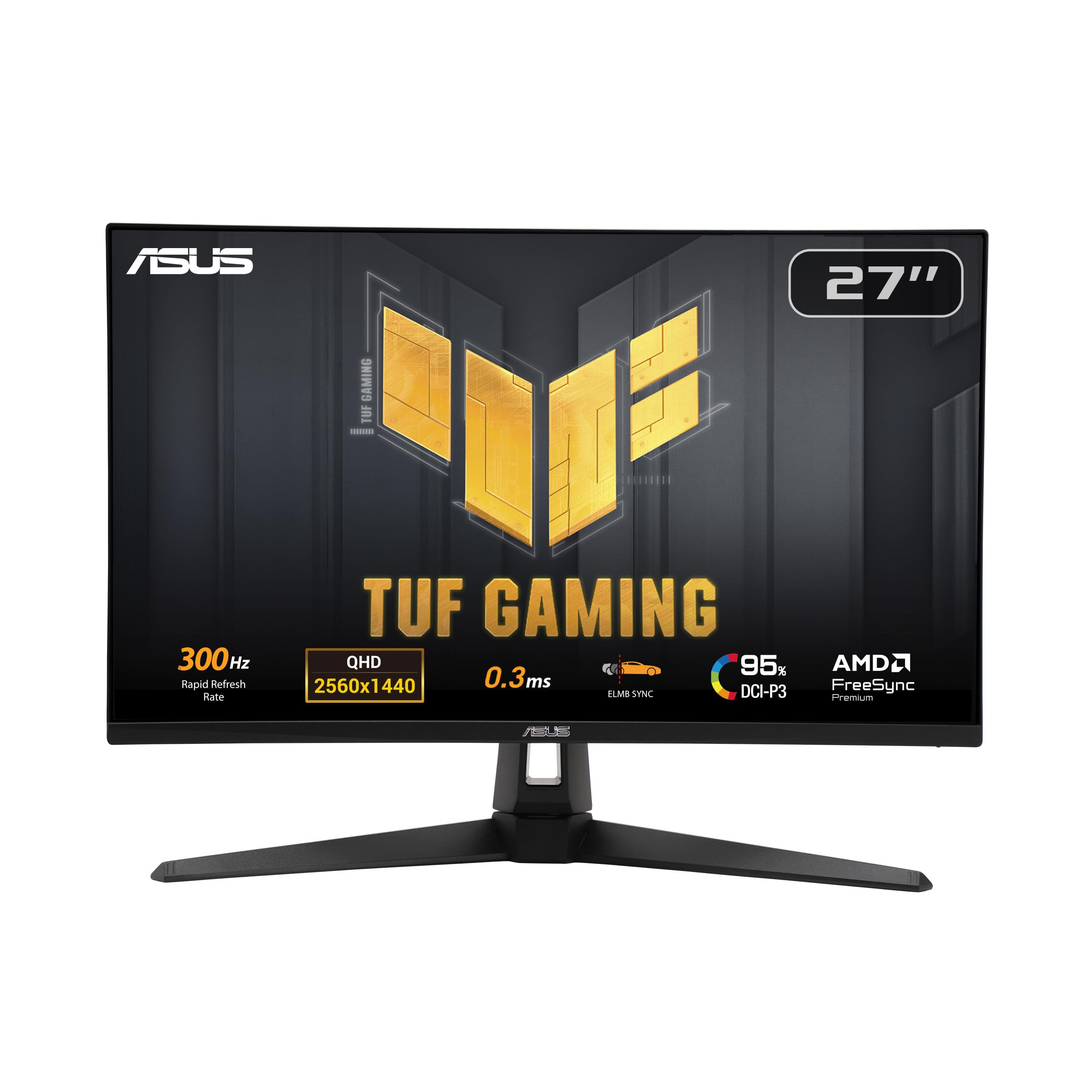
The ASUS TUF Gaming VG27AQM5A delivers a blistering 300Hz refresh rate and 0.3ms response time from a Fast IPS panel, making it one of the fastest non-OLED options at its price point. ELMB Sync technology allows ELMB (Extreme Low Motion Blur) to work simultaneously with variable refresh rate technologies, eliminating both ghosting and tearing for sharp, fluid motion. This is a huge advantage for competitive gamers who want minimal blur without sacrificing adaptive sync.
Color performance is strong for an IPS panel, covering 95% DCI-P3 for vibrant gaming visuals. Shadow Boost enhances dark-area details without over-exposing bright areas, giving you a tactical advantage in gloomy maps. The DisplayWidget Center software lets you adjust monitor settings with a mouse, saving you from fumbling with OSD buttons. The stand is ergonomic with height, tilt, and swivel adjustments.
Connectivity includes DisplayPort and HDMI inputs, though it lacks HDMI 2.1—so console gamers will be capped at 120Hz. The matte anti-glare screen surface works well in bright rooms. For the price, this monitor offers an incredible combination of speed and features. If you’re on a mid-range budget and want the highest possible refresh rate, the VG27AQM5A is a top contender.
Why it’s great
- 300Hz Fast IPS with 0.3ms response time at an affordable price.
- ELMB Sync eliminates ghosting and tearing simultaneously.
- 95% DCI-P3 color coverage for vibrant visuals.
Good to know
- No HDMI 2.1, so console refresh rate is limited to 120Hz.
- Moderate brightness and typical IPS contrast ratio of 1300:1.
11. ASUS ROG Strix 27″ 4K QD-OLED Gaming Monitor (XG27UCDMG)

The ASUS ROG Strix XG27UCDMG is technically a 4K monitor, but its 27-inch size and QD-OLED panel make it a compelling option for gamers who want retina-level sharpness alongside the perks of QD-OLED: infinite contrast, 0.03ms response time, and 99% DCI-P3 color gamut. The 240Hz refresh rate is paired with DisplayPort 1.4 with DSC, HDMI 2.1, and a USB-C port with 90W power delivery, making it a one-cable solution for compatible laptops.
ASUS’s OLED Care Pro with Neo Proximity Sensor detects user presence and dims the screen when you step away, reducing burn-in risk. The custom heatsink improves thermal management for longer panel life. The 3-year warranty with burn-in coverage provides reassurance for a premium investment. True 10-bit color and Delta E<2 ensure professional-grade color accuracy for content creation.
The glossy QD-OLED coating makes colors pop but also shows fingerprints and reflections more than matte panels. This monitor is best for those who prioritize image quality and have the GPU power to drive 4K at high frame rates. If you want the sharpest possible 27-inch QD-OLED experience, the XG27UCDMG delivers.
Why it’s great
- 4K QD-OLED provides exceptional sharpness and color vibrancy at 27″.
- USB-C with 90W power delivery simplifies laptop connectivity.
- OLED Care Pro with Neo Proximity Sensor and 3-year burn-in warranty.
Good to know
- Glossy screen shows fingerprints and requires careful cleaning.
- Lacks DisplayPort 2.1; uses DP 1.4 with DSC.
FAQ
Is 27-inch QHD the best resolution for competitive gaming?
How many Hz do I need for competitive FPS gaming?
Can my RTX 4070 or RX 7800 XT run a 360Hz QHD monitor?
What is HDMI 2.1 and do I need it for QHD gaming?
Final Thoughts: The Verdict
For most users, the 27 inch qhd gaming monitor winner is the ASUS ROG Swift PG27AQWP-W because its Tandem OLED dual-mode design delivers uncompromised motion clarity at 540Hz QHD or 720Hz HD, with excellent color and future-proof connectivity. If you want the brightest OLED with the best HDR performance, grab the LG 27GX790B-B. And for competitive esports players who need tournament-specific features, nothing beats the Sony INZONE M10S with its 24.5-inch mode and FPS Pro+ profiles.