
Our readers keep the lights on and my morning glass full of iced black tea. As an Amazon Associate, I earn from qualifying purchases.
Specs are compiled from manufacturer listings and verified buyer reviews and can change over time — please confirm the key details on the product page before buying.
If your truck wears a 285/55R20, you already know the problem: this is a big, wide footprint that most tire listings treat as an afterthought. The size fits a long list of half-ton pickups, lifted SUVs and heavy-duty rigs, and getting it wrong means rubbing, wandering or a set that howls the whole way to work. This guide sorts nine real options in this exact size by what each one actually does best — quiet highway miles, deep snow, mud, or hauling heavy loads — so you can pick the one that fits your week, not a spec sheet.
I’m Min — the founder and writer behind Gadgets Feed. This guide is built by comparing the manufacturers’ published specifications and the patterns across verified customer reviews, so you get each pick’s real strengths and trade-offs instead of marketing spin.
Fitment and ply rating matter more than badges here, so every pick below is a genuine E-rated 10-ply option in this size. Start with the load range and speed rating first, then choose your tread style, and you have a solid 285/55r20 tires shortlist for any truck or SUV build.
Our Picks at a Glance

How To Choose The Best 285/55R20 Tires
This size is a fitment decision before it is a brand decision. Get the size and load rating right and you can safely compare tread types; get them wrong and no amount of tread technology saves the ride.
Read the size code before anything else
The “285” is your tire’s width in millimeters across the tread — roughly 11 inches of footprint on the ground. The “55” is the sidewall height expressed as a percentage of that width, so a 55-series sidewall is a middle-height cushion that protects your wheel without ballooning. “R20” means it mounts on a 20-inch wheel, and the “R” simply notes radial construction, where the internal cords run straight across the tire for a flatter, cooler-running contact patch.
Load range and ply rating
A load range E tire is built with a 10-ply-rating carcass — a stiff, reinforced sidewall meant to carry heavy loads and shrug off rocks. Every tire in this guide is E-rated and 10-ply, so the differences you are comparing are elsewhere: tread pattern, speed rating, weight and treadwear warranty. Look at the load index, which is the number that translates to a real weight capacity per tire.
Match the tread type to your actual week
An all-terrain (A/T) tire balances highway manners with dirt and gravel grip, and it is the right call if most of your miles are on pavement. A rugged terrain (R/T) tire sits between an A/T and a mud tire, with a more open tread for heavier off-road use and a bit more noise on the road. Be honest about how much of your driving is actually off pavement — the more aggressive the tread, the more you trade quiet highway cruising for grip in loose ground.
Speed rating and treadwear
The speed rating is a single letter that certifies the tire to a maximum sustained speed, and treadwear warranties state how many miles the maker will stand behind. Both are worthwhile comparison points, so check them against how you actually drive and how much you tow. Heavier tires can dull acceleration and cut fuel economy slightly, so if your truck is a daily driver, weight is worth watching.
Quick Comparison
| Model | Best For | Tread Type | Load / Ply | Speed Rating | Amazon |
|---|---|---|---|---|---|
| Milestar Patagonia A/T R★ Best Overall | Buyers who want proven all-season grip | Rugged Terrain | 122/119 E (10 Ply) | R (106 mph) | Amazon |
| Evoluxx Rotator A/TBudget Champion | Budget buyers who want white-letter looks | All Terrain | 122/119 E (10 Ply) | S (112 mph) | Amazon |
| Armstrong Tru-Trac ATLongest Treadwear | Long treadwear on a light truck | All Terrain | 122/119 E (10 Ply) | S (112 mph) | Amazon |
| RBP Repulsor R/T | Aggressive looks with a quiet highway ride | Rugged Terrain | 122/119 E (10 Ply) | — | Amazon |
| Kenda Klever R/T KR601 | Winter grip and studdable traction | Rugged Terrain | 122/119 E (10 Ply) | R (106 mph) | Amazon |
| Michelin Defender LTX M/S2 | Highway comfort and long treadlife | All-Season | 116 XL | T (118 mph) | Amazon |
| Nitto Recon Grappler A/T | Daily driving with a mild off-road edge | All Terrain | 122/119 E (10 Ply) | S (112 mph) | Amazon |
| Nitto Ridge Grappler | Rugged looks without road noise | All-Terrain / Mud Hybrid | 119 E (10 Ply) | — | Amazon |
| BFGoodrich Mud-Terrain T/A KM3 | Serious mud and rock performance | Mud-Terrain | 122/119 E (10 Ply) | Q (99 mph) | Amazon |
In‑Depth Reviews
1. Milestar Patagonia A/T R LT285/55R20 Rugged Terrain E (10 Ply) Tire
Our pick — over 4.5★ from 900+ verified ratings; the strongest balance of quality and price.
The all-season all-rounder that keeps its manners after the honeymoon miles.
What wins people over here is quality — it is by far the most-discussed aspect of this tire in owner feedback, and the second most-mentioned thing is how quiet it stays on pavement. That pairing is unusual for a rugged-terrain tread. Owners driver this tire on rural dirt roads one day and a highway commute the next, and the recurring theme is a smooth ride that holds up long after the new-tire shine wears off.
The numbers behind that live up to it. This is a 10-ply-rated load range E tire carrying a 122 load index, which translates to 3,307 pounds of capacity per tire — more than most half-tons will ever ask of a single corner. The speed rating is R, certified to 106 mph, and the treadwear warranty runs 50,000 miles. That 50,000-mile figure is 10,000 miles short of the Armstrong Tru-Trac AT above, so if maximum covered miles is your deciding metric, Armstrong leads on paper.
What the road actually feels like is the part specs miss. One owner who took a set from a truck and camper into mountains and boats summed the pattern up well: “so far I have over 10K on the tires and they still looks great.” Others run them at 40 to 45 psi and report no pressure loss from sitting a month and no excessive noise. The recurring gripe is balance weight — a few sets want more lead to settle down. Buyers with one-ton trucks hauling heavy regularly note that snow traction unloaded can slip, which is normal for a wide all-season contact patch.
Where it earns its keep
- 3,307 lb load capacity per tire gives real headroom for hauling and towing
- Rugged-terrain construction with a 50,000-mile treadwear warranty
- Quiet, smooth highway behavior is the second most-praised quality in owner feedback
- All-season traction holds up in snow, standing water and dirt
Where it asks for patience
- At 61 pounds it is the heaviest pick in this guide
- Balance weight can run higher than tighter-built tires
- 50,000-mile warranty trails the Armstrong’s 60,000-mile cover
Ideal for: half-ton and heavy-duty drivers who want one tire to handle commuting, dirt roads and winter without a racket.
Think twice if: you tow at maximum load constantly — the weight and softer snow grip when unloaded are the honest trade-offs.
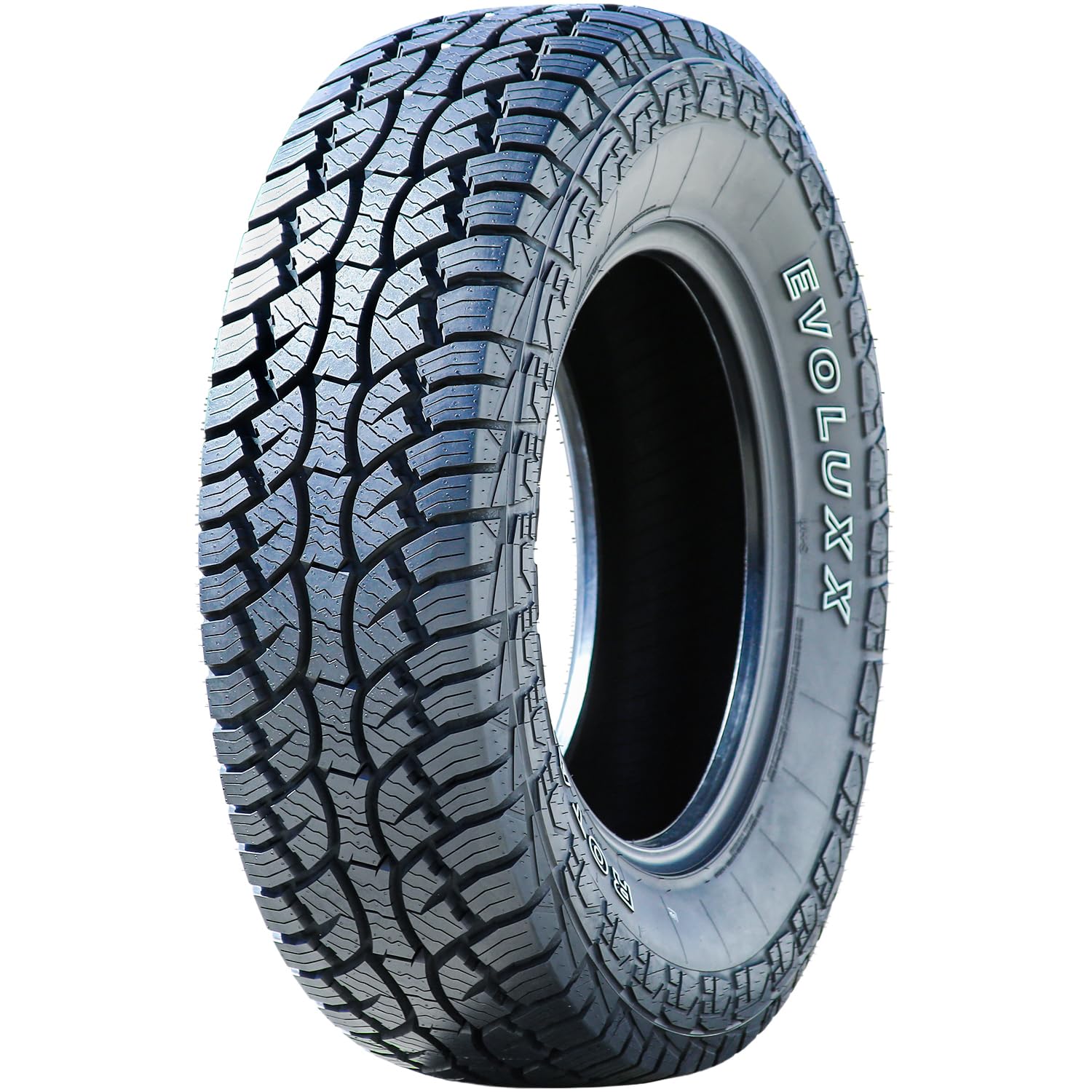
2. Evoluxx Rotator A/T LT285/55R20 All Terrain 122/119S E (10 Ply) (OWL) Tire
White-letter looks and real all-terrain grip for buyers counting every dollar.
Start with the money — not the sticker, the value verdict. Owner feedback singles out value-for-money as the second most-discussed aspect after the tires themselves, and the pattern is consistent: ranch roads, highway commutes and light mud, all on a budget that undercuts the name-brand all-terrains it gets stacked against. One repeat buyer put it plainly: “These tires are great so far! I would recomend them for anybody. Very, very reasonably priced too!”
Three things separate it from the tires above. First, it wears outlined white lettering on the sidewall — a styling choice the Milestar and Armstrong skip in favor of plain black. Second, the treadwear warranty runs 55,000 miles, between the Milestar’s 50,000 and the Armstrong’s 60,000. Third, the speed rating is S, certified to 112 mph, a step above the Milestar’s 106 mph R rating. At 53 pounds it sits lighter than the 61-pound Milestar, so acceleration and fuel economy feel slightly less strained.
The catch is consistency. Owner feedback praises the ride and the quiet highway manners in the same breath as it praises the price, and a Memphis-area 4×4 owner described cutting through two to three feet of snow and ice without a problem. But durability and fit carry mixed verdicts overall — most sets hold up fine, while an occasional one arrives out of round or fails early. That is a rare-outlier pattern rather than the norm, and it is worth having your installer check runout before you mount the whole set.
The value play: you get all-terrain traction, outlined white letters and a 55,000-mile warranty for far less than the premium all-terrains above — the best fit for budget-conscious owners who still want a real all-terrain, not a highway tire.
Reach for this if the budget is tight and you want quiet highway behavior plus white-letter styling.
Look elsewhere if you can’t accept any odds of a bad unit — a small number of sets arrive out of round.
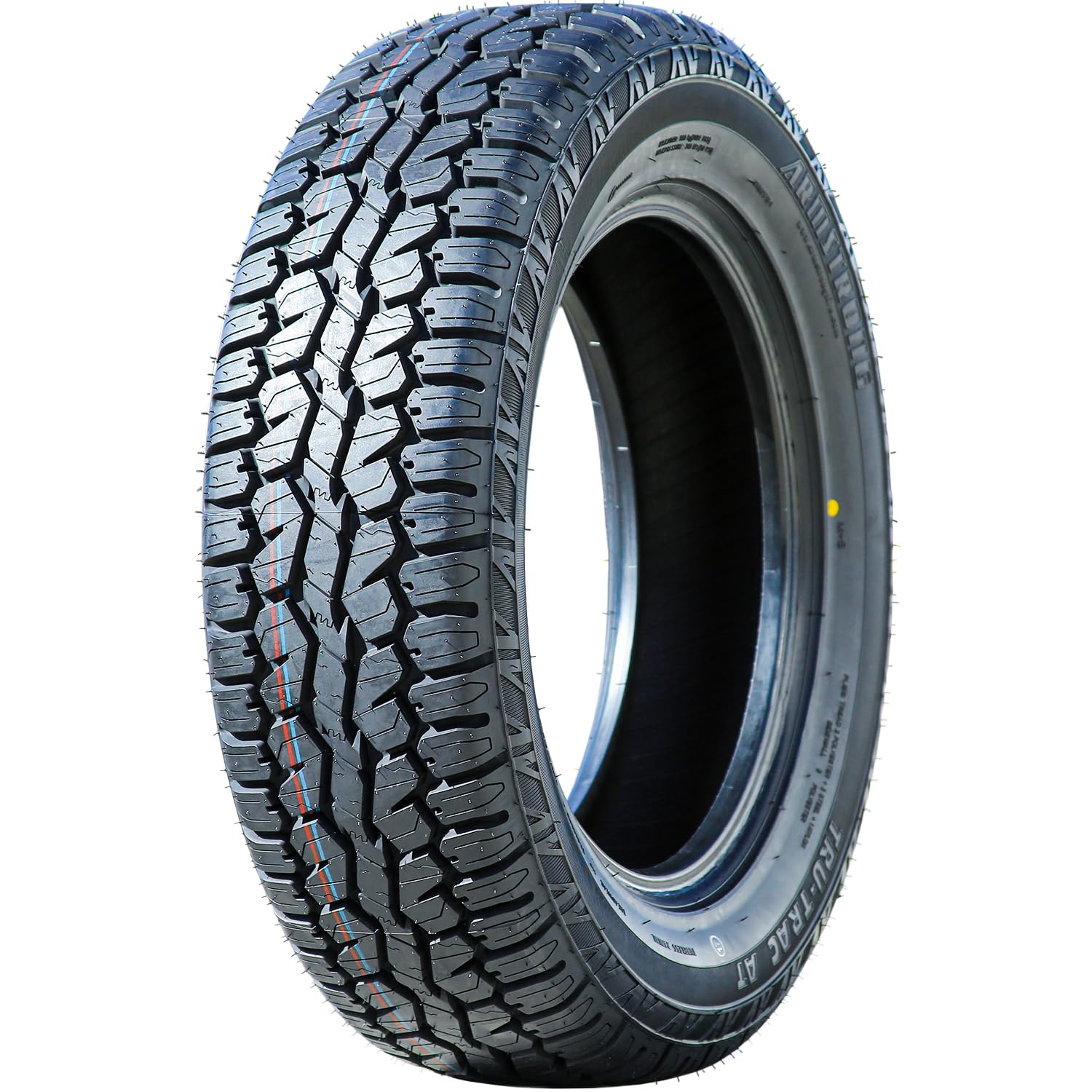
3. Armstrong Tru-Trac AT LT285/55R20 122/119S All Terrain E (10 Ply) Tire
The long-wear all-terrain that goes easier on your drivetrain than the big names.
Two numbers tell this tire’s story. At 50 pounds it is the lightest tire in this guide, a full 11 pounds lighter than the 61-pound Milestar. That matters every time you touch the accelerator: lighter rotating mass means crisper acceleration and less strain on your truck’s driveline day after day. Compare it directly with the Milestar and the Armstrong is the one you want if mileage and weight are your deciding factors.
Performance in the real world backs up the specs. Quality is the most-discussed aspect in owner feedback, with noise level a close second — the same quiet-highway story the Milestar earns, just in a lighter package. One owner who loaded 2,000 pounds and ran a mountain loop reported no tread wear after 4,000-plus miles, minimal balancing weight, and cornering without tire squeal. Others noted it biting through thick, soupy mud and handling wet roads at highway speed without fuss.
Where it gives up ground is refinement at the extremes. Owners describe stiffer rubber than most all-terrains, which bites hard but transmits more road texture, and one honestly sized-up buyer rated it a star lower because noise came in a little above expectations. A faint high-pitch hum above 65 mph shows up now and then in early miles and tends to fade as the tread seats. None of that undermines the package — it is a genuinely quiet tire — but it is the difference between comfort-first and grip-first ownership.
Why it’s the mileage pick: a 60,000-mile warranty and the lightest footprint in this guide make it the smart choice for trucks that log highway miles and need the tire to last.
Pick this for long highway stretches, moderate hauling and the longest covered treadwear here.
Pass if you need maximum ride plushness — a slightly stiffer rubber shows up through the seat.
4. RBP Repulsor R/T LT285/55R20 E/10PLY BSW (1 Tires)

The aggressive-tread tire that refuses to drone — a rare combination on big rigs.
Aggressive looks usually tax your ears. This one dodges that tax. Owner feedback rates quality highest and low road noise a close second, and the standout buyer comment is that despite the deep lugs and open shoulder notches, the tire runs quiet enough on pavement to forget you are on a rugged-terrain set. If you want the tall, planted stance on a lifted truck without a highway hum, this is the option built for you — the Milestar and Armstrong are quieter by a nose, but neither carries this tread pattern’s visual punch.
Technically, it’s a 10-ply-rated load range E tire with a 122 load index and a 3,305-pound capacity per tire — a hair under the 3,307 pounds the Milestar and Armstrong carry. At 62 pounds it is the heaviest tire in this guide, so expect a small hit to acceleration and fuel economy on a half-ton. That weight, though, comes with real durability: it takes balancing with just a couple of ounces in many owners’ experience, and it holds the road in standing water.
Sizing notes worth flagging: this is listed as a single tire, so you buy quantities to match your need. One owner rated it down slightly only because the tread hangs onto gravel — a minor cleanup quibble, not a durability issue. Multiple buyers report quiet, vibration-free highway miles and a comfortable ride over long haul distances, unperturbed even after a year of use. Rain performance holds well for most, though a Pacific Northwest owner noted it is not the strongest tire on the market for consistently wet conditions.
Pick this if you want maximum visual aggression without sacrificing the quiet ride you need for daily driving.
Reconsider if you drive through heavy rain often — the tread is built for mixed terrain more than deep standing water.
5. LT285/55R20 Kenda Klever R/T KR601 122R E/10 Ply BSW Tire

A studdable, high-sipe winter specialist built for ice, mud and everything between.
If your winters mean ice, this is the one tire here that can be studded for extra bite — a feature none of the others in this guide offer. The construction spells out why: three full carcass plies, an aggressive sidewall tread and a bead protector, all built for impact resistance on rocks. High sipe density gives it the grip you want on snow and ice, and large groove volumes channel water away to cut the risk of hydroplaning.
On paper it is a rugged-terrain 10-ply with a 122 load index and a 3,307-pound load capacity per tire, rated R to 106 mph — the same speed rating as the Milestar. Tread design uses interlocking center blocks for grip in mud, snow and wet, with a tread pattern built to bite when you’re climbing out of a rut. At 35 pounds it is the lightest tire here by a wide margin, so it restores the acceleration and steering response a heavier tire dulls.
Owner feedback runs short so far, but the theme is consistent: a set that improves a truck’s ride with a bit less road noise and a bit more smoothness than whatever came off. That quiet-ride verdict sits oddly beside one dissenting review that found the tire loud and heavy after 3,000 miles and pulled the set — a reminder that ride feel is partly vehicle-specific. Highway tracking is described as acceptable rather than razor-sharp, typical of a rugged-terrain tread. Plan on getting a proper alignment and rotate regularly if you’re a high-mileage highway driver.
Winter-first thinking: studdable construction and high sipe count make this the standout pick when ice and snow are the real threat — no other tire here can take studs.
Buy this when icy roads and winter driving are your main concern and you want the option to add studs.
Skip if you mostly run smooth highways — you’d be paying for winter capability you rarely use.
6. MICHELIN Defender LTX M/S2 All-Season Car Tire, Light Trucks, SUVs and Crossover – 285/55R20/XL 116T

The highway-focused all-season for owners who value quiet comfort and long treadlife over off-road bite.
This is a different tire from everything else in the guide — it’s an all-season designed for pavement, not a rugged-terrain or all-terrain tread. That changes your daily reality in a good way: it’s engineered with a maximum pressure of 50 psi and built around comfort, and it wears the longest treadlife warranty here at 70,000 miles, a full 10,000 miles longer than the Armstrong and 15,000 beyond the Evoluxx. If your truck is mostly a daily driver and weekend tow rig, that warranty length is the headline.
The comfort engineering is where the money goes. Michelin used an acoustic tuning process to smooth out tire noise and disturbance, and the compound carries full-depth sipes for grip that holds as the tread wears down — the opposite of tires that go soft in the wet once they’re half gone. The load index is 116, which is a lighter-duty setup than the 122 load range E tires above, so it fits half-tons and SUVs better than heavy-duty pickups pushed to their limits. The speed rating is T, certified to 118 mph — the highest here.
Owner feedback is brief but consistent: owners describe a superior, smooth ride with total control and low noise on the road, and traction that lives up to the Michelin name. Several mention the tire costing more than they expected but delivering what they paid for. If you want one tire that quietly handles your commute and shrugs off the lighter stuff — and lives a long life doing it — this is the pick. If you actually climb rock or plow through deep mud, look at the BFGoodrich KM3 instead.
The comfort-and-mileage angle: a 70,000-mile warranty and acoustic noise tuning make this the commuter and long-haul ideal — but it’s a road tire, not a trail tire.
Choose this when your 285/55R20 truck or SUV lives on pavement and you want the quietest, longest-wearing ride available.
Not for you if your weekends involve serious mud, rock or off-road abuse — the tread is built for road comfort, not crawling.
7. NITTO LT285/55R20/10 122/119S NITTO RECON GRAPPLER A/T

A premium all-terrain with the quiet highway manners of a stock tire and the look of a trail build.
The defining strength here is what owners keep coming back to: the tires themselves, with their appearance a clear second in owner feedback. That pattern makes sense once you see the tread — deep sidewall lugs give it an aggressive stance, staggered shoulder lugs add off-road bite, and large shoulder and tread blocks with tune siping keep the tire rigid for handling and stability in both wet and dry. Zigzag center and shoulder grooves add biting edges so the tire digs in where the road ends.
Premium touches show in the details. It’s backed by a 55,000-mile limited manufacturer treadwear warranty, carries a 122 load index with a 3,307-pound capacity — matching the Milestar and Armstrong — and is rated S to 112 mph. Vehicle-specific fitment is noted in the listing, so confirm your exact truck spec before ordering. At 57.2 pounds it’s on the heavier side, midway between the 50-pound Armstrong and the 62-pound RBP, and that weight is part of why it rides so planted.
Real ownership stories reinforce the quiet-confidence pitch. One Ram owner described the tires as gliding down the road with no audible hum at all; a Tundra driver who logs serious miles reported routinely getting 65,000 miles with proper rotation; and a Wrangler owner called them a perfect fit with a smooth, round, quiet ride. A Jeep driver noted they push past 70,000 miles before replacement, and buyers who repurchase the same set keep coming back. The one caution: verify the tire’s authenticity and read the warranty fine print, which voids if your vehicle exceeds the size or weight parameters.
Built for: owners who want premium ride quality on a daily-driven truck and will happily pay for the smooth, quiet, long-wearing result.
Not the pick if: you’re chasing maximum off-road bite — the tread is mild-aggressive all-terrain, not mud-terrain.
8. Nitto Ridge Grappler All-Terrain Radial Tire – LT285/55R20 119Q

A rugged-looking hybrid that stays surprisingly civil on the pavement it spends most days on.
This tire is built for the owner who wants mud-tire presence without mud-tire noise. The tread pattern blends all-terrain and mud-terrain traits, so it looks aggressive enough for a lifted truck while staying controlled on the highway — that “surprisingly quiet” reaction is the exact one owners have. It’s the tallest, most planted ride in the group, with a 55-series sidewall and a 32.5-inch overall diameter giving you a full, heavy-duty look on that 20-inch wheel.
The specs put it in premium territory: a 119 load index, a 2,998-pound capacity per tire, and a maximum cold pressure of 80 psi for a firm, wheel-protecting stance. It’s backed by a six-year limited manufacturer warranty. At 61.1 pounds it’s near the top of the weight scale, matching the Milestar within a pound. The lower 119 load index, versus the 122 that flags the E-rated all-terrains above, means this one is specced for load range E duty but with a slightly lighter-duty capacity than the Milestar, Armstrong and Nitto Recon Grappler — a fitment point to double-check against your truck’s gross weight.
Owner feedback is small in number but positive on the ride. One F-150 owner with 20×10 rims on this exact LT285/55R20 size reported a near-zero road noise level and an excellent look, with a slight rub only at near-maximum steering — a 2-inch lift fixes that, so factor it in if you’re lifted. Another owner who came off a well-known rival brand said the ride is decisively smoother. Note that the tread is designed for moderate snow and mud, not extreme terrain, so it is the versatile all-rounder, not the dedicated mud tool.
The hybrid angle: all-terrain and mud-terrain traits merged into one tire that looks mean and rides mild — the right pick when you want trail looks on a truck that lives on roads.
Best suited to lifted trucks and SUVs where looks and quiet highway cruises both matter.
Check first if you are running stock height — slight rubbing at near-full steering can show up without a lift.
9. BFGoodrich Mud Terrain T/A KM3 Radial Car Tire for Light Trucks, SUVs, and Crossovers, LT285/55R20/E 122/119Q
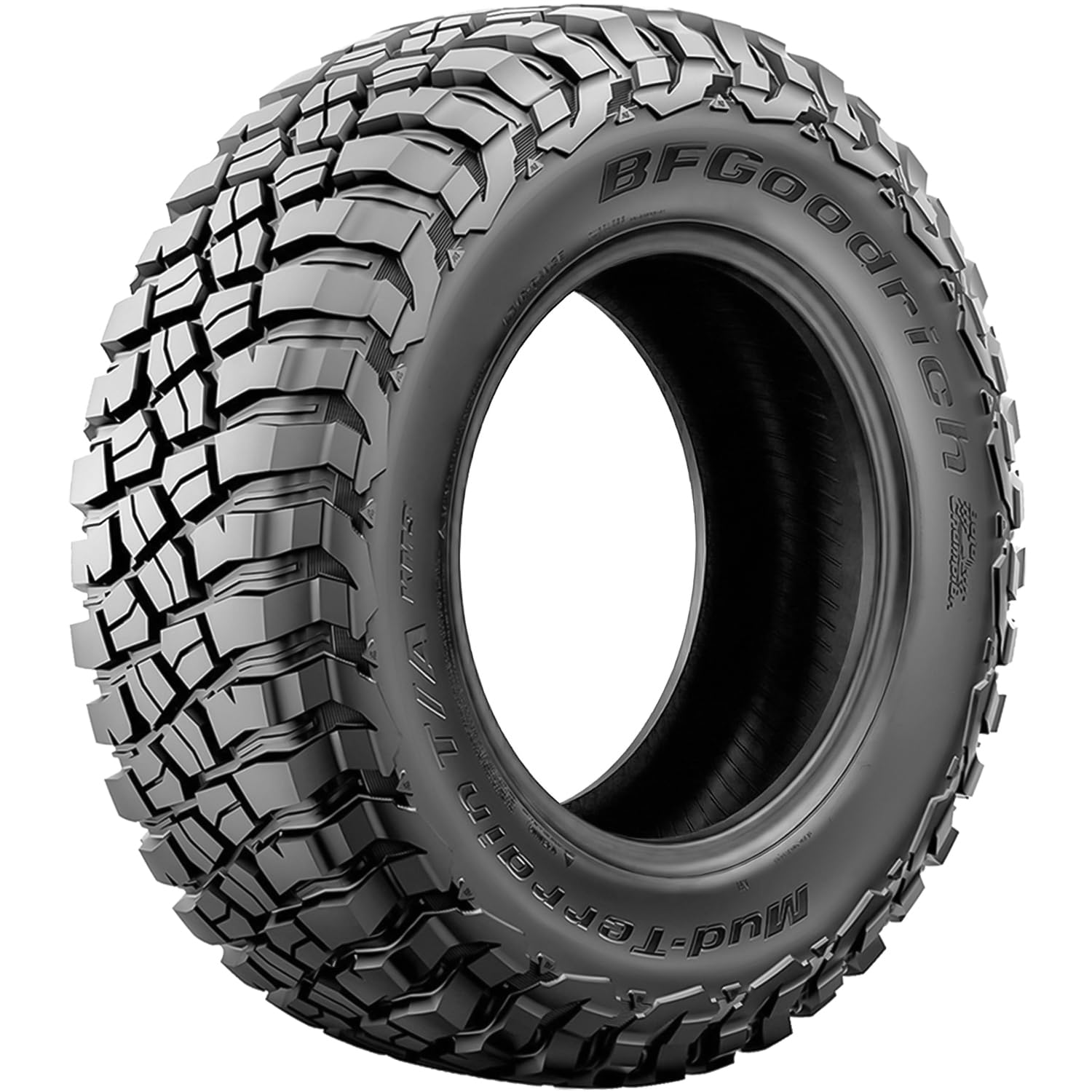
A purpose-built mud tire that levels up both grip and looks on serious off-road builds.
This is the specialist of the group — a mud-terrain tire made for the driver whose truck leaves pavement regularly. It carries Krawl-TEK technology for rock grip, a Terrain-Attack tread pattern with massive blocks, and race-proven construction that resists splitting or puncturing by adding thickness to the critical sidewall zone. Every tire here gets grip; this one is engineered specifically for the conditions that punish treads hardest. That focus on the sidewall matters most when you’re crawling rock.
Numbers back the build. It’s a 10-ply load range E with a 122 load index and a 3,305-pound capacity per tire — right in line with the Milestar and RBP — and it’s rated Q to 99 mph, the lowest speed rating in this guide because the focus is on off-road traction, not highway pace. At 65 pounds it’s the heaviest tire here by a clear margin, so expect a firm ride and slightly slower acceleration on a half-ton. The trade-off is the way it shrugs off rocky, rutted terrain that leaves less aggressive treads spinning.
The surprise here is the honesty about road manners. Owners repeatedly describe it as the quietest aggressive tire they’ve run — one likened the ride to adding softer shocks, even on a heavy-duty Duramax; another praised even wear and a calm, composed feel. That quietness matters because most mud tires punish you with drone. The honest limit is that it’s built for soft soil, mud and rock — an all-season or all-terrain will ride more comfortably and last longer on pure highway use. If most of your miles are pavement, look higher up this list.
The right tool for serious off-road enthusiasts who need maximum traction and sidewall toughness on mud, rock and soft soil.
Look past it if your truck rarely leaves the road — you’d trade ride comfort and highway durability for capability you will not use.
Understanding the Specs
Load Index and Load Range
The load index is the number that tells you how much weight one tire can safely carry — a 122 index works out to 3,307 pounds per tire, while a 116 index is lower and a 119 index sits in between. Load range E means the tire is reinforced with a 10-ply-rating carcass so it can carry that weight without squirming. For a 285/55R20 tire on a truck that tows or hauls, a 122 load index is the comfort zone, and matching all four tires to the rating your truck needs is the single most important safety step.
Speed Rating
The speed rating is the letter after the load index, and it certifies the maximum speed the tire is built to sustain safely. R is certified to 106 mph, S to 112 mph, T to 118 mph, and Q only to 99 mph — the last one belonging to the mud-terrain specialist that trades highway pace for off-road grip. Higher is not automatically better; it simply means the tire is engineered to tolerate higher sustained speeds. Match this to how fast you actually drive when loaded, and remember that heavy loads and low pressure both reduce safe operating speed.
A/T, R/T and Mud-Terrain Explained
An all-terrain (A/T) tread balances pavement comfort with dirt and gravel grip. A rugged-terrain (R/T) sits between A/T and a full mud tire — more open lugs for loose ground, more noise than a pure highway tread. A mud-terrain trades on-road refinement for maximum bite in deep soil, rock and ruts. The wider and more open the tread, the more grip you get off-road and the more road noise and rolling resistance you give up on it.
Plies, Sipes and Treadwear Warranty
Ply rating describes how many body-cord layers the tire’s construction is equivalent to — 10-ply is the heavy-duty mark that pairs with load range E. Sipes are the thin slits across the tread blocks that open up to grip slick surfaces, and higher sipe density usually means better ice and snow performance. The treadwear warranty, given in miles, is the manufacturer’s backing for how long the tread should last under normal rotation and inflation, and it is a fair benchmark for comparing how much usable life you actually get.
FAQ
What does 285/55R20 actually mean on a tire sidewall?
Will a 285/55R20 tire fit my truck without rubbing?
Is load range E and 10-ply too stiff for daily driving?
Do I need all four tires to match on a 4×4?
How many miles should these 10-ply tires last?
Are mud-terrain tires too loud for highway use?
Can any of these tires be studded for winter ice?
Should I buy 1 tire at a time or a full set of 4?
Does a heavier tire hurt fuel economy and acceleration?
Can I mix an all-terrain tire on one axle and a mud-terrain on the other?
Final Thoughts: The Verdict
The right pick for most trucks in this size is still the Milestar Patagonia A/T R, because it pairs 3,307 pounds of per-tire capacity and a 50,000-mile treadwear warranty with a quiet highway ride that suits almost any half-ton driver. If maximum covered mileage is what you’re after, the Armstrong Tru-Trac AT edges it out with 60,000 miles and a lighter 50-pound build. And when pavement is all you see, the Michelin Defender LTX M/S2 rewards you with a 70,000-mile warranty and the quietest all-season ride here. Whatever you choose, match all four tires in size and tread so your truck stays balanced and your investment lasts.
How We Picked
We do not accept paid placement. Every pick is matched to a real buyer and a real use-case; we do not hands-on test units.
Sources & Methodology
Specifications: manufacturer listings and product documentation. Review insights: verified customer reviews, as of September 2026. Pricing: not shown on this page (it changes often); check the current price via the retailer link.
As an Amazon Associate, Gadgets Feed earns from qualifying purchases. This does not affect which products we feature.