
Our readers keep the lights on and my morning glass full of iced black tea. As an Amazon Associate, I earn from qualifying purchases.
Specs are compiled from manufacturer listings and verified buyer reviews and can change over time — please confirm the key details on the product page before buying.
Choosing new rubber for your 29er can feel like a gamble with your ride quality. Width, tread, and puncture protection dictate how your 29er handles dirt, pavement, and everything between. This guide cuts through spec-sheet clutter to reveal which tires truly deliver on grip, durability, and rolling speed.
I’m Min — the founder and writer behind Gadgets Feed. This guide is built by comparing the manufacturers’ published specifications and the patterns across verified customer reviews, so you get each pick’s real strengths and trade-offs instead of marketing spin.
Whether you chase downhill speed or mostly cruise fire roads, finding the right 29 inch mountain bike tires starts with matching the tread and width to the terrain you actually ride.
Our Picks at a Glance

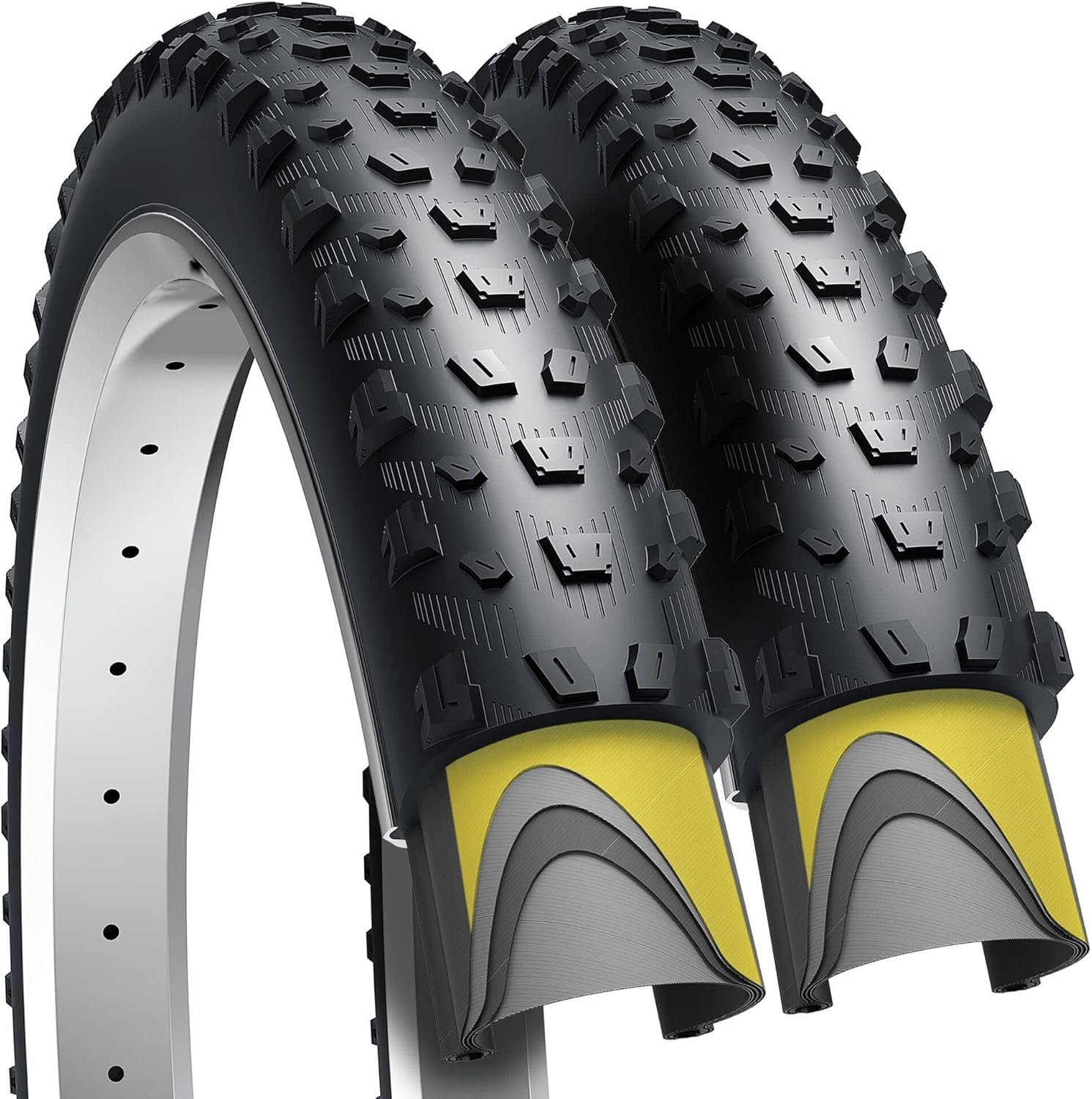

How To Choose The Best 29 Inch Mountain Bike Tires
The first decision is width. A 2.6″ tire offers more grip and a plusher ride, while a 2.1″ rolls faster and weighs less. Match your tire choice to the terrain you ride most.
Match the tread to your trail
Aggressive knobs with big gaps shed mud and bite into loose dirt, making them ideal for enduro and downhill. A tighter, more continuous tread pattern rolls smoother on hardpack and pavement but gives up some off-road bite.
Check the casing and puncture protection
TPI (threads per inch) tells you how dense the casing is — higher numbers like 60 TPI are more supple and resistant to cuts. Many tires add a nylon or Kevlar layer under the tread to stop sharp rocks and thorns from reaching the tube.
Do not forget tubeless compatibility
A tubeless-ready tire holds sealant inside and drops the inner tube’s weight and pinch-flat risk. If your rims are tubeless-compatible, this upgrade changes the feel of the ride noticeably.
Quick Comparison
| Model | Best For | Width | Weight | Casing | Amazon |
|---|---|---|---|---|---|
| Maxxis Minion DHR II★ Best Overall | Aggressive Trail & Rear Grip | 2.3″ | 0.86 kg | EXO, 60 TPI | Amazon |
| Fincci 29×2.6 PairWidest Grip | Max Traction & Snow/Ice | 2.6″ | 1000 g | 1mm Nylon, Kevlar bead | Amazon |
| VESPETON 29×2.10 PairBest Value | Lightweight Folding & Speed | 2.1″ | — | 60 TPI, Kevlar bead | Amazon |
| Continental Cross King | All-Round Trail & E-Bike | 2.2″ | 300 g | PureGrip, ShieldWall | Amazon |
| BWSHLF 29×2.125 Pair | Budget Street & Commute | 2.125″ | 1070 g | Kevlar, Anti-puncture | Amazon |
| WEEROCK 29×2.3 Pair | Complete Kit with Tubes | 2.3″ | — | High-resilience rubber | Amazon |
| Fincci 29×2.25 Pair | Versatile Trail & Gravel | 2.25″ | 925 g | 1mm Nylon, 60 TPI | Amazon |
| YUNSCM 29×2.10 Pair | Complete Set with Tubes | 2.1″ | — | Butyl rubber | Amazon |
| MOHEGIA 29×2.4 Set | Knobby All-Terrain Value | 2.4″ | — | 30 TPI | Amazon |
In-Depth Reviews
1. Maxxis Minion DHR II
Our pick — over 4.5★ from 950+ verified ratings; the strongest balance of quality and price.
The rear-tire specialist that turns braking into a confident, predictable stop.
The Minion DHR II takes its side knobs from the legendary Minion DHF and widens them for more support, so you get cornering grip that stays planted when you lean hard. In a 2.3″ width and weighing 0.86 kg, it is built for riders who want rear-end traction they can trust on descents.
What wins people over is the dual compound — two distinct rubber formulations in the tread that balance rolling resistance with grip.
It is faster-rolling than both the High Roller and Ikon models in direct comparison, with better braking on steep descents. The trade-off is that on pavement the ride feels bumpy, and it gives up some speed on long flat stretches.
trail shredding grip
- Braking traction is the standout — owners single out the confident stops on steep, loose ground
- Dual compound stretches the balance between grip and rolling speed
- EXO casing adds cut and abrasion resistance for rocky trails
- E25 rated, so it suits light e-bikes up to 16.1 MPH assist
heavy casing weight
- Rough on pavement — the aggressive knobs buzz on tarmac
- Struggles on off-camber hardpack and mud, where grip fades
- Heavier than lighter XC options, so it is not the fastest flat-road roller
trail favorite: you want a proven rear tire that stays predictable in loose dirt, sand, and rock gardens.
weight weenies: your rides are mostly pavement — the aggressive tread will feel slow and buzzy.
2. Fincci 29×2.6 Pair
A 2.6-inch-wide pair that turns snow and ice into a non-issue.
At a wide 2.6 inches with a 1mm Nylon anti-puncture layer, this Fincci pair is built for riders who prioritize confidence over weight. Each tire weighs 1000 g (2.2 lb) and packs down thanks to the Kevlar folding bead.
The thing everyone raves about is the traction — owners describe “excellent” grip on snow and ice during a blizzard, as well as solid performance on Schwinn Axum DP bikes. The less-than-15% land ratio design helps with dirt drainage, so mud sheds rather than clogging the tread.
The catch is fit: on some setups the rear tire locks against the suspension bar during reinstall, though the company resolved that issue for buyers who reached out. There is roughly a 24% width gap compared to a 2.1″ tire, so check your frame clearance before committing.
budget friendly traction: the width and nylon belt make this a confident pick for loose, wet, or icy conditions.
short lifespan: a tight frame or suspension layout may need a clearance check before this wide pair fits.
3. VESPETON 29×2.10 Pair
A feathery folding pair that rewards riders who value speed and easy packing.
The VESPETON pair rolls on a 2.1″ width and 60 TPI casing, a density that improves puncture resistance over 30 or 27 TPI alternatives. The Kevlar construction makes them foldable for easy carrying, and the deeper tread adds 25% more grip than standard tires.
These shine for riders who have moved away from aggressive trails — the tread is not aggressive, and owners call them “perfect” for country dirt roads and the paved roads connecting them. They seat easily on 2″ rims and roll quieter with lower rolling resistance than stock knobbies.
What some call a trade-off is the thin Kevlar construction, which feels less substantial than thick rubber tires. The grip also reads as less than expected in a panic stop, so they are better for moderate riding than hard charging.
soft ground: light-duty riding where low rolling resistance and portability matter more than maximum bite.
hardpack speed: you need aggressive trail knobs — this is a smoother, faster-rolling profile.
4. Continental Cross King
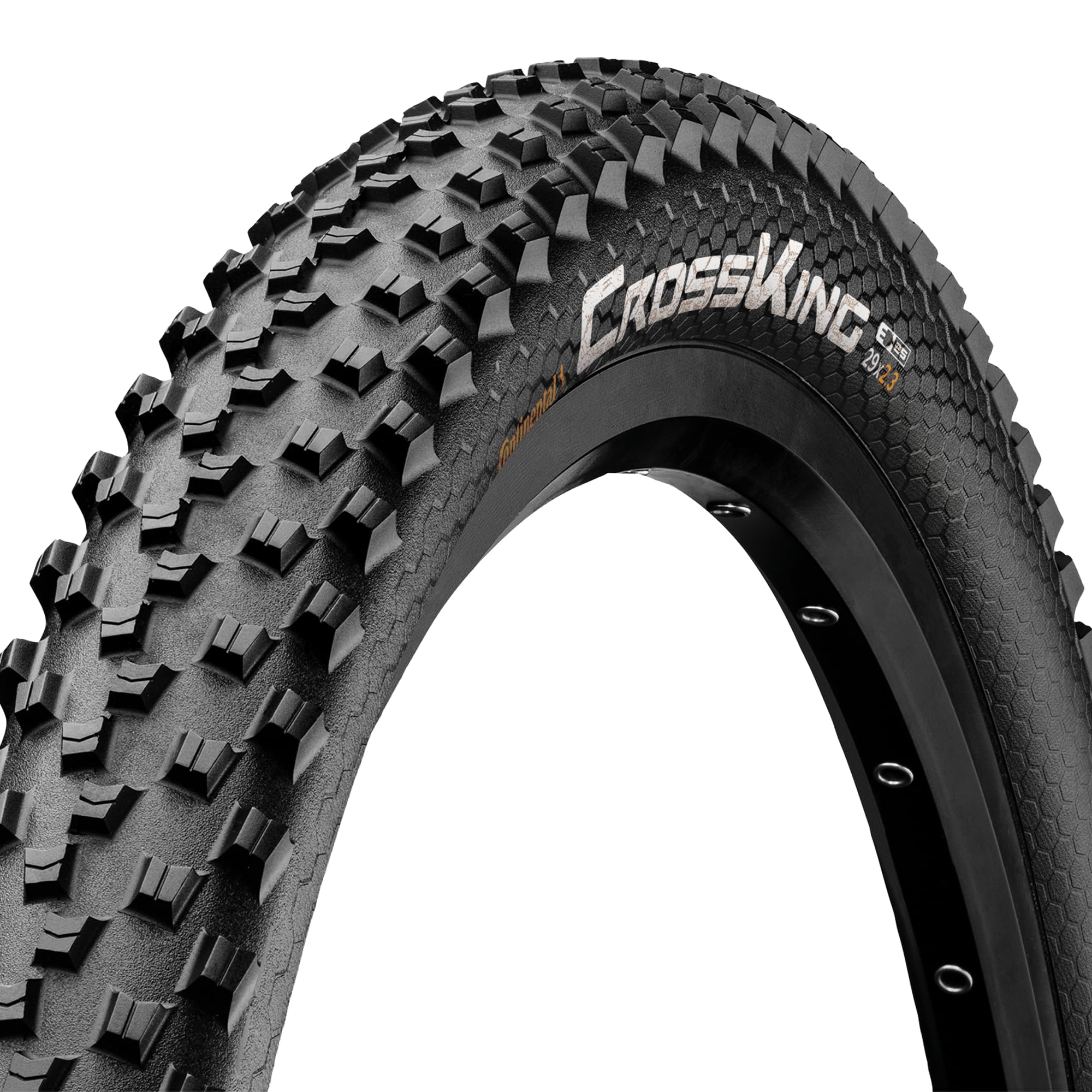
The versatile tire that rides smooth on pavement and holds corners on hardpack.
The Cross King is Continental’s all-rounder, adapting to any terrain through a special tread that keeps grip while rolling easily. At a 2.2″ width and 300 g, it is a lighter option that pairs well with a tubeless setup.
You get a smooth, easy ride on pavement because these tires roll with low resistance, and owners call them “great for trail riders that ride to the park.” The ShieldWall casing (a protective layer built into the tire) adds all-round protection while keeping that low rolling resistance, and the E25 rating (a European standard for e-bike compatibility) means they handle light e-bike duty without wearing out early.
The PureGrip compound comes from an activated Silica blend that balances grip and durability. It is slightly aggressive for pure road riding, but it has held up well after a season of mostly paved use.
all-round versatility: one tire that bridges pavement, hardpack, and loose rocks without complaint.
moderate cornering: a touch heavier than the lightest XC tires, though owners say it never feels heavy.
5. BWSHLF 29×2.125 Pair
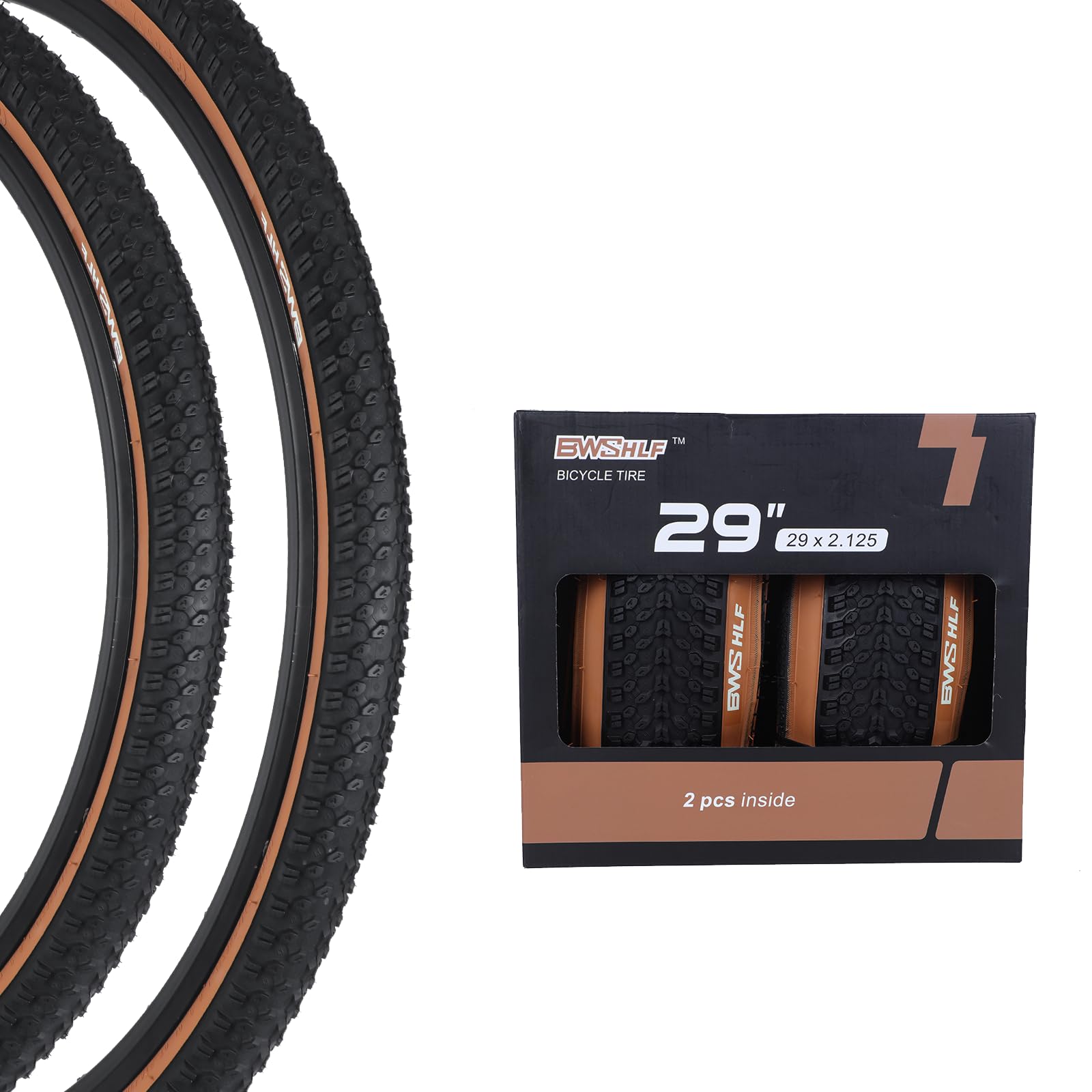
A tan-wall looker that dresses up a big-box mountain bike while staying affordable.
These BWSHLF tires measure 29″ x 2.125″, weigh 1070 g each, and are rated to 40 PSI. The tight tread pattern lowers rolling resistance while raising cornering grip, and the Kevlar bead folds flat for storage.
The look matters too — owners say the tan-and-black sides “changed the vibe on a big box mountain bike.” An anti-puncture layer sits under the tread to block sharp objects, and some riders report these tires sealed up tubeless (without an inner tube) on the first try.
The honest limits: durability is mixed, with some tires splitting after two years, and a slight wobble can appear at higher speeds. They are best treated as a comfortable street and cruiser option rather than a hardcore trail tire.
casual rides: pavement trails and commuter duty where looks and value matter.
rough trails: aggressive off-road use — the durability consensus points to street riding.
6. WEEROCK 29×2.3 Pair
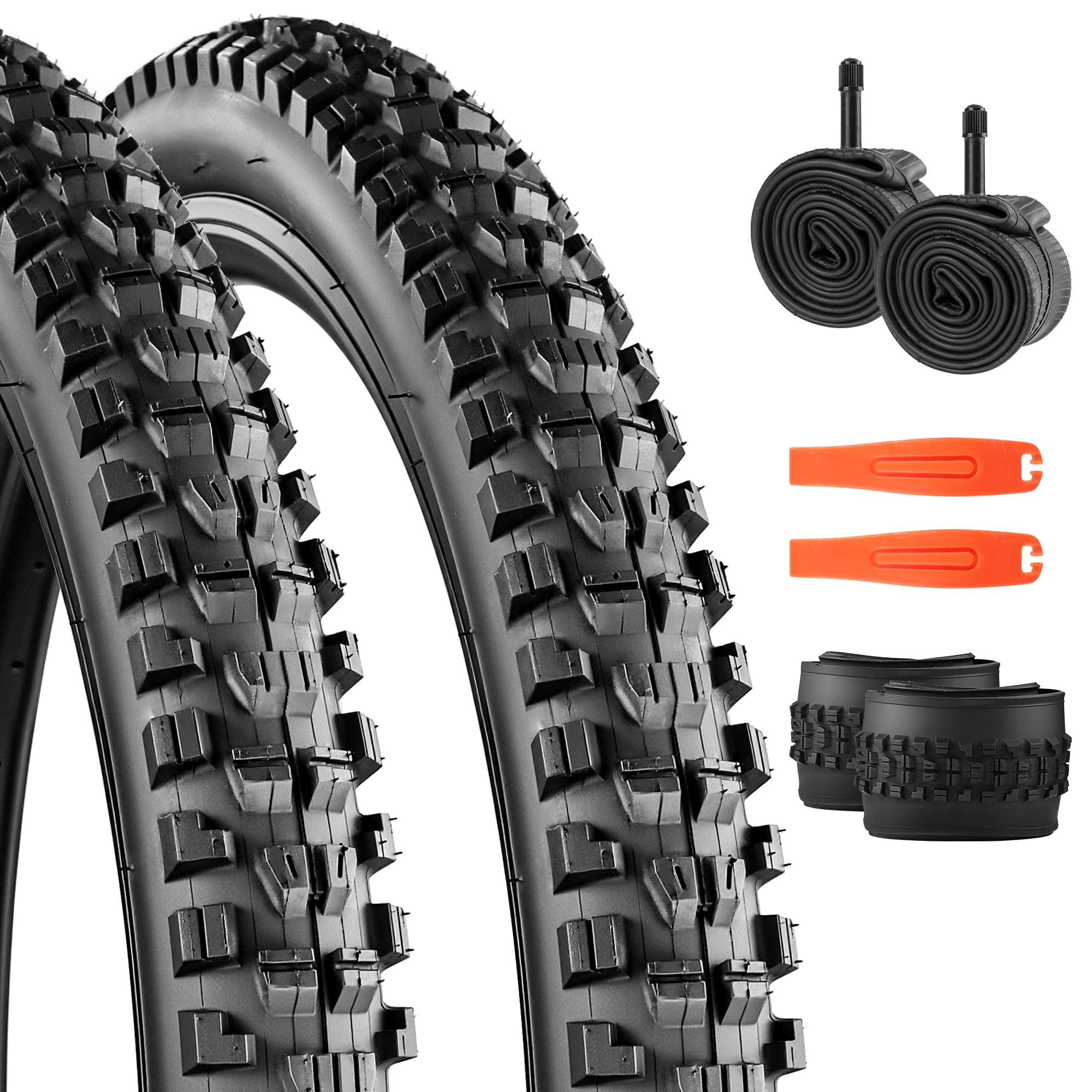
Everything you need to swap worn tires in one box, tubes and levers included.
The WEEROCK two-pack includes 29 x 2.3-inch tires, matching 29 x 2.125/2.35 inner tubes with 48mm Schrader valves, and two tire spoons for installation. Inflate between 40-65 PSI to tune the ride, going low for muddy grip or high for paved speed.
The semi-slick tread keeps things quiet and efficient on the road while still finding grip on trails, which is exactly what commuting riders want. One owner swapped out their Nimbus tires and called the first rides “smooth and enjoyable.”
The uneven point is durability — a few buyers report the tread separating from the sidewall after a short period, while others note the rubber feels tough with no visible road wear. The gum sidewall seems more prone to issues than the black wall.
entry level value: the included tools and tubes remove the friction of your first tire change.
limited tread depth: quality control on the sidewall seam is the variable to watch.
7. Fincci 29×2.25 Pair
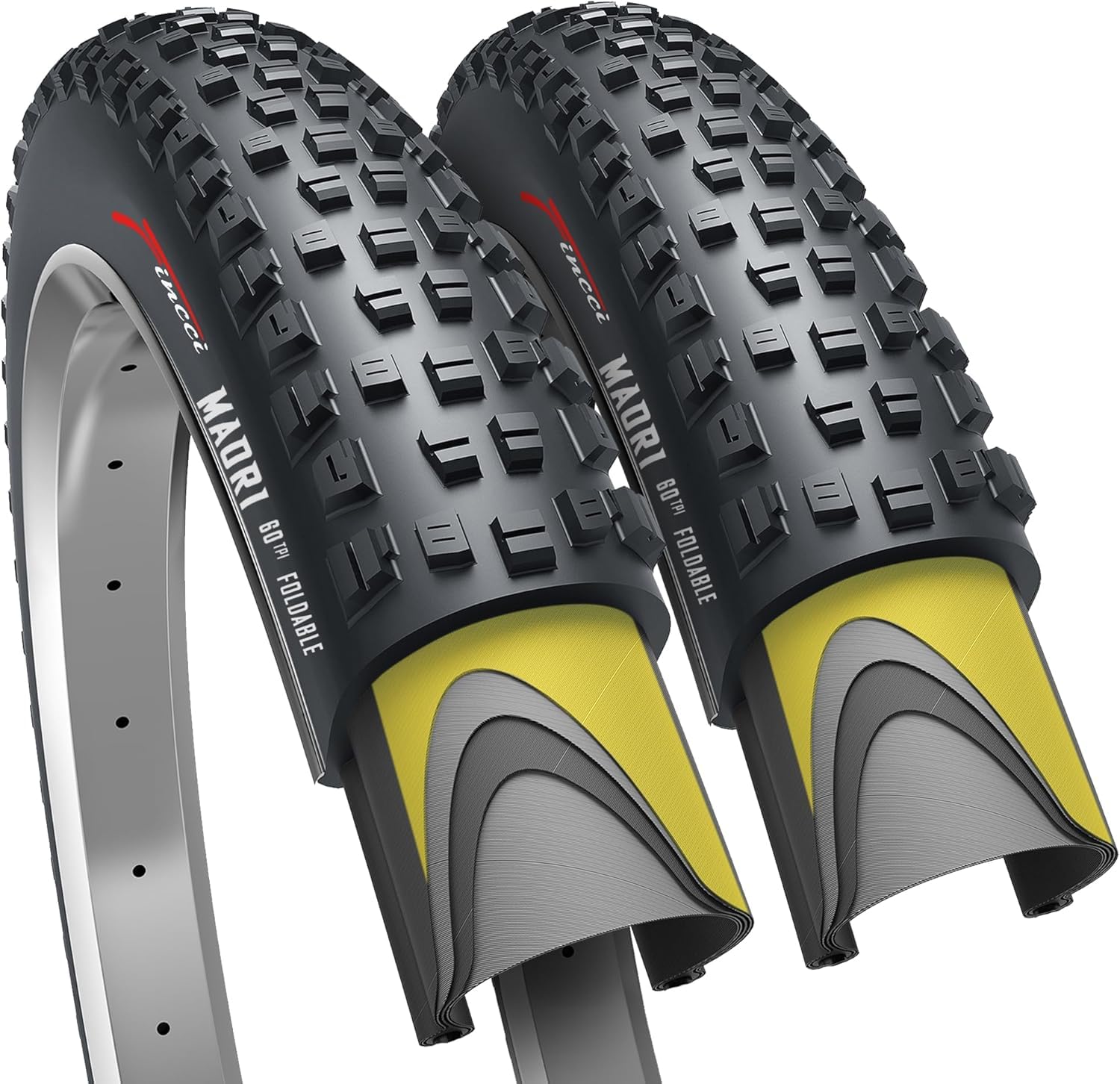
A balanced 2.25-inch trail tire that mixes speed, grip, and flat protection.
The Fincci 29×2.25 tires use a 60 TPI casing (threads per inch, a measure of fabric density — owners say this is the most sturdy option) wrapped around a Kevlar wire bead that folds flat for easy storage. Each tire weighs 925 g (2.04 lb), and the 1mm Nylon anti-puncture layer protects against goathead thorns and rocky debris.
Stability is the recurring praise — owners mention “good grip and stability” on a 2017 Specialized Rockhopper, with no flats after hundreds of miles. The fast-rolling, high-traction tread is designed for uneven surfaces like tarmac and pavement while still finding grip on gravel.
The only real trade-off is width — these are wider than a prior set, which sacrifices a little top-end speed. One owner has 600 miles on them with the tread nubs still intact, a solid durability data point.
daily driver: a dependable mix of dirt and pavement riding where flat protection matters.
extreme terrain: the stability comes at a small speed cost from the added width.
8. YUNSCM 29×2.10 Pair
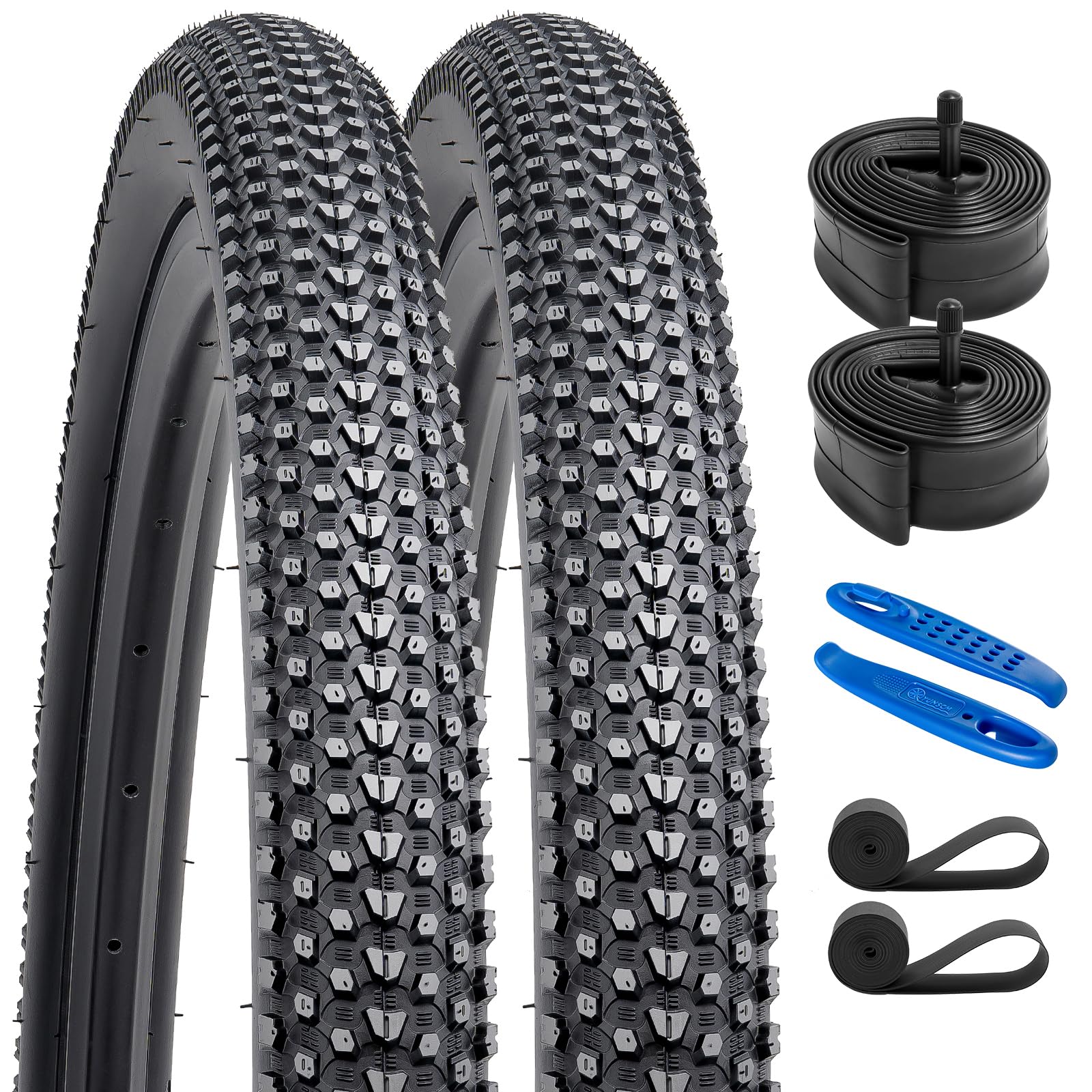
A budget-minded pair that brings the essentials, from tires to tubes to rim strips.
The YUNSCM package includes two 29×2.10 folding tires, two 29×1.75/2.125 Schrader valve tubes, and two rim strips. Inflate to 40-60 PSI and you have a complete wheel setup for light off-road and gravel riding.
The classic 7-row continuous off-road pattern adds non-slip lines at the base to improve sand and mud discharge while keeping the ride stable on good roads. Owners have “been pounding em all summer” and describe the quality as good for the price.
The weak point is the included tubes — customers note they fail, so plan on swapping in your own tubes for confidence. The tires themselves hold up well on a mix of pavement and gravel.
affordable option: a complete wheel refresh for light-duty riding with easy installation.
weak puncture guard: the bundled tubes draw the most criticism, so budget for replacements.
9. MOHEGIA 29×2.4 Set
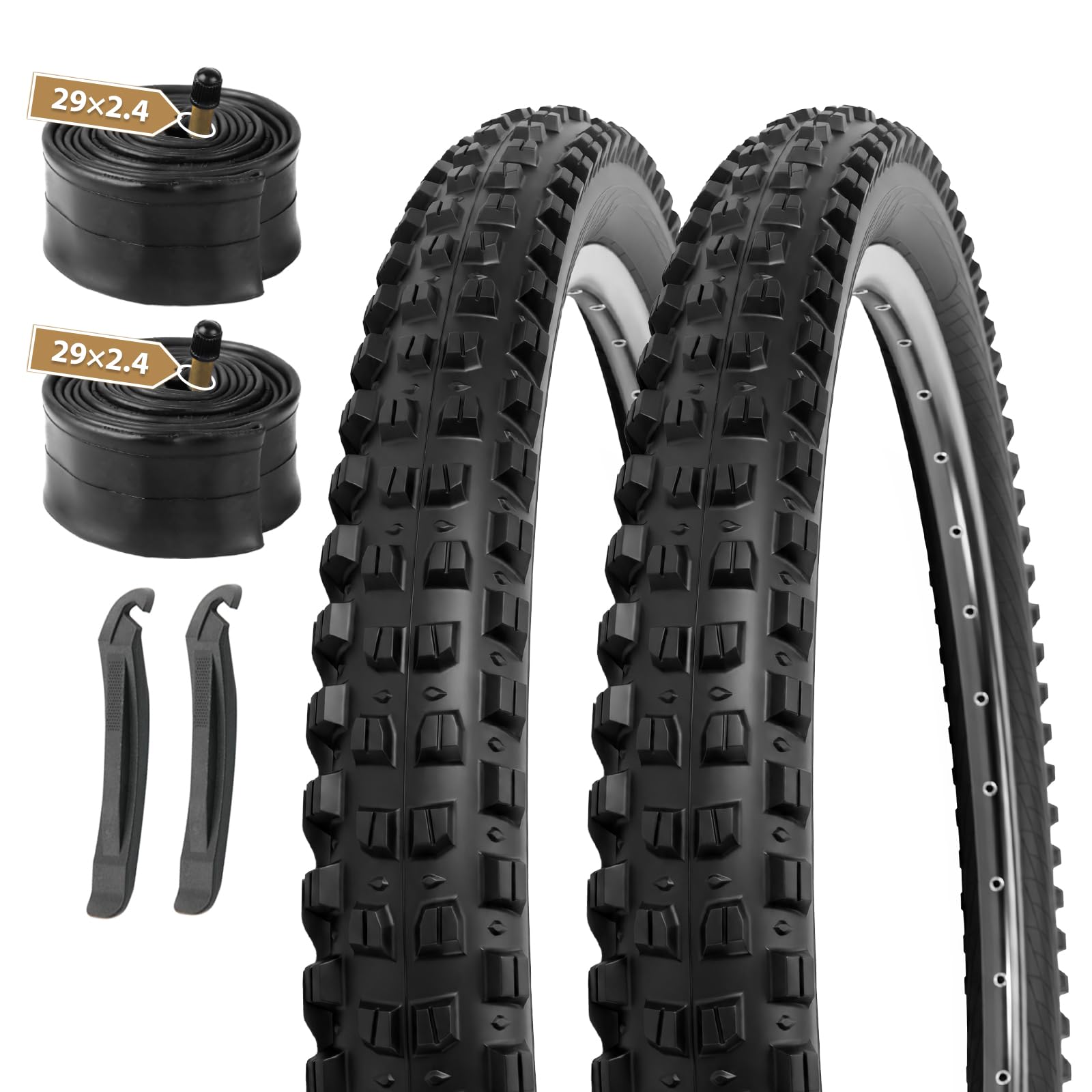
A wide, aggressive-knob pair that handles gravel, hardpack, and winter chunks.
The MOHEGIA set brings two 29×2.4 tires, two matching inner tubes (29×1.95-2.35 with AV 32mm Schrader valves), and two tire levers. The 30 TPI carcass is built for long-lasting performance, with an evenly spaced knobby tread that bites into rocks and absorbs shock.
Reviewers point out these “grip very well in the dirt” and handle gravel, hardpack, rocks, and roots without drama. The tread pattern is similar to a Maxxis Minion but slightly more spaced, with one owner measuring the actual width at 2.51 inches versus the rated 2.4-inch spec.
The fit is the variable — inflated at 40 PSI, the tire runs wider than advertised and may not clear a tight frame or chainstay gap. These are best suited to basic and medium abuse rather than aggressive alpine park riding.
comfort ride: varied terrain riding on a bike with generous clearance, especially in winter muck.
climbing speed: the real-world width can exceed the spec, so confirm your frame gap before buying.
Understanding the Specs
Width and ETRTO
Width is the single biggest factor in how a tire feels. A 2.6″ tire gives more traction and a cushier ride, while a 2.1″ rolls faster and weighs less. The ETRTO number (like 68-622 or 57-622) is the exact sizing standard — the first number is the width in mm, the second is the rim diameter, so it removes all guesswork about compatibility.
TPI and Casing
TPI means threads per inch, and it tells you how dense the casing fabric is. Higher numbers like 60 TPI are more supple, fold more easily, and resist punctures better than lower counts like 30 TPI. A Kevlar or nylon bead also lets the tire fold flat for storage, while a steel bead stays rigid and cheaper.
FAQ
What does TPI mean on a mountain bike tire?
Will a 29 inch tire fit my 29er mountain bike?
What is the difference between a 2.1 and a 2.6 inch tire?
Can I run these tires tubeless?
What does E25 rated mean on a bike tire?
What PSI should I run in a 29 inch mountain bike tire?
Are folding Kevlar tires better than steel bead tires?
How long does a mountain bike tire last?
Final Thoughts: The Verdict
For most riders, the 29 inch mountain bike tires winner is the Maxxis Minion DHR II because it delivers the braking and cornering confidence that defines a great trail ride. If you want a wide, snow-ready pair without spending big, the Fincci 29×2.6 Pair is the value pick. And for a complete wheel refresh with tubes and tools included, the WEEROCK 29×2.3 Pair is the one to reach for.
How We Picked
We do not accept paid placement. Every pick is matched to a real buyer and a real use-case; we do not hands-on test units.
Sources & Methodology
Specifications: manufacturer listings and product documentation. Review insights: verified customer reviews, as of August 2026. Pricing: not shown on this page (it changes often); check the current price via the retailer link.
As an Amazon Associate, Gadgets Feed earns from qualifying purchases. This does not affect which products we feature.