
A 29er trail bike isn’t just a wheel size; it’s a geometry commitment that dictates how you roll over roots, how you lean into corners, and how much arm pump you get on a four-mile descent. The wrong choice leaves you fighting the bike instead of the trail, turning what should be flow into a wrestling match with a 31-pound frame.
I’m Min — the co-founder and writer behind Gadgets Feed. I’ve spent hundreds of hours dissecting mountain bike geometry charts, suspension kinematics, and groupset hierarchies to map exactly where your dollar buys real trail performance versus marketing weight.
Whether you’re chasing a snappy hardtail or a full-suspension enduro rig, this guide filters the noise to help you find the absolute best 29er trail bike for your riding style and budget.
How To Choose The Best 29er Trail Bike
A 29er trail bike must balance rollover capability with nimble handling. The larger wheels provide momentum and obstacle clearance, but they also introduce longer chainstays and a taller bottom bracket that can make tight switchbacks feel sluggish. Your choice boils down to frame material, suspension design, drivetrain spec, and how those components match your local terrain.
Frame Material and Geometry
Aluminum frames dominate the mid-range because they offer a durable, relatively lightweight platform at a sensible price. Carbon fiber saves about 3 to 4 pounds and adds vibration damping, but it costs significantly more. Geometry is the real differentiator: a slacker head angle (65 to 67 degrees) improves downhill stability, while a steeper seat tube angle (75 to 77 degrees) keeps you centered on climbs. Short chainstays (430 to 445 mm) make the bike feel playful; longer ones add high-speed stability. Look for a reach measurement that matches your torso length rather than just your height.
Suspension Travel and Design
Trail bikes typically carry 120 to 150 mm of rear travel and 130 to 160 mm up front. Hardtail 29ers are lighter and more efficient for climbing and cross-country flow, while full-suspension bikes absorb square-edge hits and maintain tire contact on rocky descents. Air shocks with lockout levers let you firm up the suspension for pavement climbs, then open it up for the descent. Pay attention to the suspension linkage design — a dual-link system reduces pedal bob better than a single-pivot layout.
Drivetrain and Braking
A 1x drivetrain (single chainring up front) is the standard for modern trail riding because it eliminates front derailleur clutter and chain drops. Look for a wide-range cassette — 11-46T or 11-51T — paired with a clutch-equipped rear derailleur to keep chain slap quiet. Shimano Deore M6100 12-speed offers excellent shift precision and durability at a reasonable cost. Hydraulic disc brakes with at least 180 mm rotors provide the stopping power needed for steep, technical terrain. Four-piston calipers offer more consistent braking on long descents than dual-piston designs.
Quick Comparison
On smaller screens, swipe sideways to see the full table.
| Model | Category | Best For | Key Spec | Amazon |
|---|---|---|---|---|
| SAVADECK Titan 612 | Full Suspension | Enduro & technical descents | Carbon frame, 12-speed Deore, 2.4″ tires | Amazon |
| SAVADECK Carbon Gravel | Gravel/Road | Mixed-surface endurance rides | T800 carbon, GRX400 20-speed, 22.9 lbs | Amazon |
| Mongoose Passage | Hardtail | Value-oriented trail riding | Aluminum frame, 100mm fork, 1×9 drivetrain | Amazon |
| Mongoose Switchback Comp | Hardtail | On/off-road versatility | Tectonic T1 aluminum, 27.5″ wheels, disc brakes | Amazon |
| Mongoose Switchback 18-Speed | Hardtail | Budget entry-level trails | Triple chainring, front/rear derailleur | Amazon |
In‑Depth Reviews
1. SAVADECK Titan 612 Carbon Fiber Soft Tail Mountain Bike
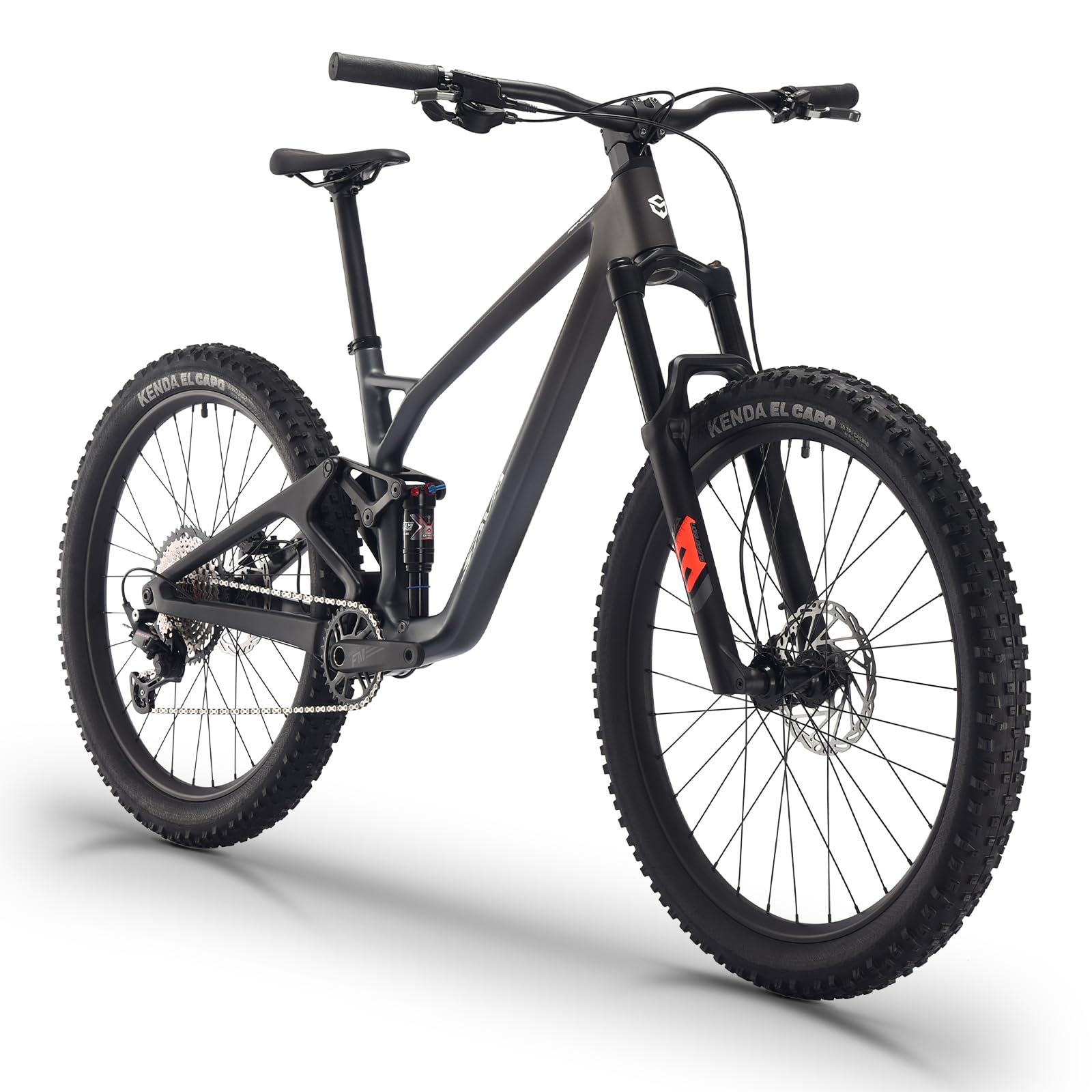
The SAVADECK Titan 612 is a full-carbon soft-tail that punches well above its price segment. The dual-link suspension paired with a DNM air shock provides 120mm of rear travel with a three-stage lockout for climbing efficiency, while the 2.4-inch Continental tires offer aggressive grip on mud, gravel, and roots. The T800 carbon frame keeps weight low without sacrificing torsional stiffness through high-speed corners.
Shimano’s Deore M6100 12-speed groupset delivers crisp shifts across a wide gear range, and the four-piston hydraulic disc brakes offer consistent stopping power on long descents without fade. Internal cable routing keeps the lines clean and protects cables from trail debris. The bike ships 85% assembled, and early user feedback highlights that the frame sizing runs slightly large — riders under 5’4″ should double-check the standover height.
Several buyers noted that the seller resolved a wrong-frame issue quickly, and the bike rolls smoother than comparable models from established brands. The rear triangle is reinforced for technical trail abuse, and the ability to upgrade to 2.6-inch tires adds future flexibility. This is a genuine full-suspension platform that competes with bikes costing significantly more.
Why it’s great
- Full carbon frame with dual-link suspension and lockout for climb/descend versatility
- Shimano Deore M6100 12-speed drivetrain offers precise, durable shifting
- Four-piston hydraulic brakes provide excellent heat dissipation on long descents
Good to know
- Frame sizing runs large; shorter riders may struggle with standover height
- Some assembly expertise required for derailleur and brake setup out of the box
2. SAVADECK Carbon Gravel Bike
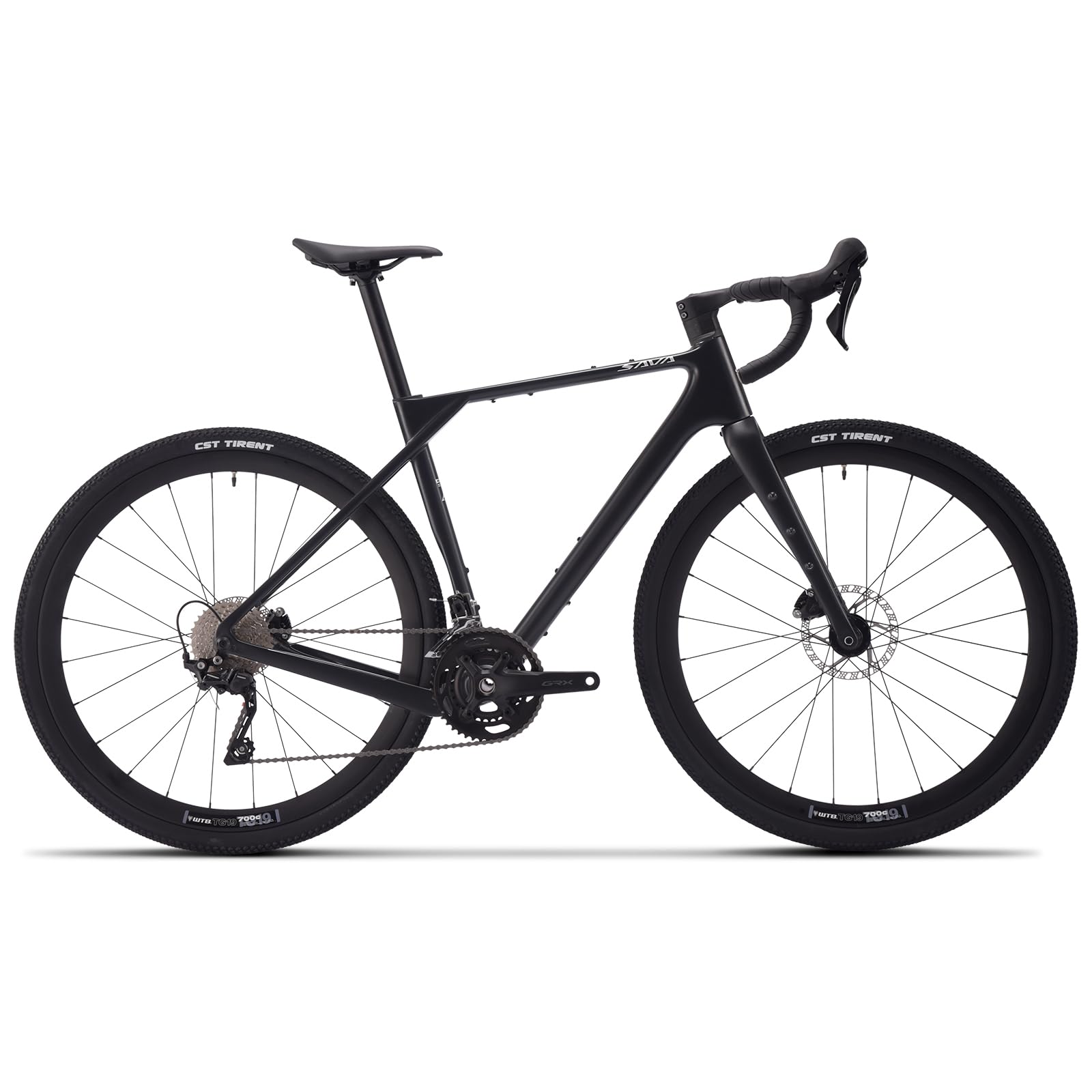
The SAVADECK Carbon Gravel Bike is a 22.9-pound T800 carbon frame with a full carbon fork, designed for riders who split their time between pavement and light off-road trails. The Shimano GRX400 20-speed groupset is gravel-specific, offering a wider gear range than typical road groupsets, and the hydraulic disc brakes with 160mm rotors provide controlled stops on loose surfaces. The 700x40c tires balance low rolling resistance on pavement with enough volume for gravel chatter.
The fully internal cable routing gives the bike a clean aesthetic while protecting cables from mud and debris. The tapered head tube adds steering precision, and the frame geometry leans slightly more endurance-oriented than aggressive race geometry, which translates to less back strain on long days. Setup required about 20 minutes of assembly, though some buyers reported needing to adjust the rear derailleur and straighten the hanger before the bike shifted smoothly.
Several experienced riders noted that the frame and fork appear identical to offerings from larger brands, suggesting SAVADECK may manufacture for other labels. The included tool kit is basic but sufficient for assembly, and the bike comes with computer mounts and clearance for wider tires up to 45c. If your definition of a trail includes gravel roads, fire roads, and smooth singletrack, this is a fast and flickable option.
Why it’s great
- T800 carbon frame and fork keep weight at 22.9 lbs for snappy acceleration
- Shimano GRX400 groupset delivers reliable shifting for mixed-surface riding
- Fully internal cable routing and hydraulic disc brakes offer clean looks and strong stopping power
Good to know
- Rear derailleur may need tuning out of the box for smooth shifting
- Not suited for aggressive singletrack or technical rock gardens
3. Mongoose Impassse

The Mongoose Impasse is a full-suspension 29er that brings hydraulic disc brakes and a 1×9 drivetrain to an accessible price point. The RST Blaze fork offers 100mm of travel with a lockout feature, letting you climb without bob and descend with adequate bump absorption. The Microshift 1×9 drivetrain uses an 11-46 cassette paired with a narrow-wide chainring for decent gear range without a front derailleur.
The aluminum 17-inch frame is designed for riders 5’7″ to 5’10”, and the bike arrives 80% assembled. Assembly requires a Phillips screwdriver, 4-8mm Allen wrenches, an adjustable wrench, and pliers for pedal installation. Several buyers reported that the derailleur hanger is aluminum and may bend or break under hard use — a steel replacement is recommended for aggressive riders. The rear wheel bearings and pedal bearings have been noted as potential weak points after the first few dozen miles.
For casual trail riding and green-blue flow trails, the Impasse delivers a comfortable ride with capable disc brakes and a gear range that handles moderate hills. The full-suspension platform absorbs chatter that would rattle a hardtail, but the budget-level components mean you should inspect the bike thoroughly after the first week of riding. It’s a solid entry point for riders who want rear suspension without jumping straight into a premium build.
Why it’s great
- Full suspension with hydraulic disc brakes at an entry-level price
- 1×9 drivetrain eliminates front derailleur complexity and chain drops
- RST Blaze fork with lockout improves climbing efficiency
Good to know
- Aluminum derailleur hanger may require replacement with steel for durability
- Rear wheel bearings and pedal bearings reported as potential early failure points
4. Mongoose Switchback Comp Expert Sport 18-Speed

The Mongoose Switchback Comp Expert Sport in its 18-speed (2×9) configuration uses a triple chainring setup up front, offering a wider gear range for riders who encounter both steep climbs and flat sections on the same ride. The Tectonic T1 aluminum frame keeps the bike lightweight, and the internal cable routing protects shift and brake lines from snagging on brush. The 27.5-inch wheels roll smoothly over roots and rocks while maintaining a lower standover height than a 29er.
The Shimano drivetrain and disc brakes are praised for their smooth operation, and the frame welds are clean with reinforcing plates at high-stress junctions. Assembly is straightforward at about 45 minutes, with derailleurs often pre-adjusted out of the box. However, some buyers received units with loose headsets or bent derailleur hangers that required a professional tune-up. The plastic shifters feel less durable than metal-bodied alternatives, and the stock pedals and crankset may not survive repeated heavy landings.
Several riders noted that the medium frame fits a 5’7″ rider comfortably, though the seatpost may sit too high for those with a 29-inch inseam due to the accessory mount screws. The bike tops out around 13 mph on level trails, which is fine for entry-level flow but limiting for experienced riders. It’s a competent hardtail for neighborhood paths, light off-road adventures, and riders transitioning from pavement to gravel.
Why it’s great
- Triple chainring drivetrain provides wide gear range for mixed terrain
- Internal cable routing and reinforced frame welds improve durability
- Disc brakes offer reliable stopping power in wet or dusty conditions
Good to know
- Plastic shifters feel less durable than metal-bodied alternatives
- Some units require professional derailleur adjustment out of the box
5. Mongoose Switchback Comp Expert Sport 21-Speed

The Mongoose Switchback Comp Expert Sport in its 21-speed (3×7) trim is the most affordable entry point into the Switchback family. It shares the same Tectonic T1 aluminum frame and internal cable routing as its 18-speed sibling, but uses a 3×7 drivetrain that provides even more gear combinations for casual riders who want fine-grained cadence control on rolling terrain. The 27.5-inch wheels and disc brakes are identical to the 18-speed version.
Assembly is simple at around 45 minutes, and the included Shimano components shift reliably once adjusted. The frame feels stiff and well-constructed for the price, with smooth welds and a matte finish that looks more expensive than it is. A few buyers reported that the front wheel arrived slightly out of true, and the chain may need tensioning after the first few rides as cables settle. The plastic shifters are a common complaint, but they function adequately for light trail use.
Riders around 5’7″ to 5’11” will find the large frame comfortable, and the bike is nimble enough for paved bike paths, dirt roads, and smooth singletrack. The triple chainring drivetrain is heavier than a modern 1x setup, but it offers the lowest gear ratio for steep climbs among all the Mongoose options here. If your priority is minimizing upfront cost while still getting a disc-brake hardtail with a quality frame, this is the most approachable choice.
Why it’s great
- Triple chainring offers the widest gear range for steep climbing at entry-level price
- Quality aluminum frame with internal cable routing and clean welds
- Disc brakes provide reliable stopping power in varied conditions
Good to know
- Plastic shifters feel less durable than metal alternatives
- Front wheel may require truing; chain may need retensioning after break-in
FAQ
What head tube angle is ideal for a trail 29er?
Can I replace an aluminum derailleur hanger with a steel one?
Final Thoughts: The Verdict
For most riders, the best 29er trail bike is the SAVADECK Titan 612 because it combines a full carbon frame, dual-link suspension, and Shimano Deore 12-speed groupset at a price that undercuts comparable builds from legacy brands. If you want a lightweight gravel bike for mixed-surface endurance days, grab the SAVADECK Carbon Gravel. And for an entry-level full-suspension trail bike that won’t break the bank, the Mongoose Impassse is your best bet.