
Our readers keep the lights on and my morning glass full of iced black tea. As an Amazon Associate, I earn from qualifying purchases.
Specs are compiled from manufacturer listings and verified buyer reviews and can change over time — please confirm the key details on the product page before buying.
You want a 29×2.4 tire that floats over roots and rocks but still accelerates out of a corner. The problem is that many options roll slow, wash out in loose turns, or puncture on the first sharp edge. This guide compares five real contenders by their rubber compounds, casing toughness, and tread patterns so you land on a pair that matches your local trails.
I’m Min — the founder and writer behind Gadgets Feed. This guide is built by comparing the manufacturers’ published specifications and the patterns across verified customer reviews, so you get each pick’s real strengths and trade-offs instead of marketing spin.
After reading through the spec sheets and dozens of buyer experiences, here is a clear breakdown of the strongest 29×2.4 mtb tires available right now, ranked by real-world performance and durability.
Quick Picks
- Schwalbe Big Betty — Toughest Casing
- American Classic Basanite — Best Value Premium
- Maxxis Minion DHR II — Cornering King
- Maxxis Ardent — All-Condition Bargain
- YunSCM 29×2.40 2-Pack — Budget Pair
How To Choose The Best 29×2.4 MTB Tires
Picking a tire involves more than just matching the sidewall number. You choose between how fast you want to roll and how much grip you need to keep the rubber side down. Here are the three specs that separate a mediocre tire from one you will trust on a steep descent.
Casing and Puncture Protection
The casing is the fabric layer under the tread. A basic casing works for light cross-country (XC) riding but folds easily on sharp rocks. Upgraded casings like Maxxis EXO (a cut and abrasion-resistant material) or Schwalbe Super Gravity (for aggressive riders, combining high stability with robustness) add weight but drastically reduce flats. If your trails are littered with shattered rock or you ride Enduro lines, avoid standard casings.
Tread Pattern and Compound
Center knobs dictate rolling speed; side knobs decide cornering grip. Ramped center knobs (as on the Maxxis Ardent) keep you moving faster on hardpack, while tall, blocky side knobs (like the Minion DHR II) dig in when leaned over. The rubber compound itself matters too — a single compound is simpler and cheaper, while a dual compound puts a harder center for durability and softer edges for grip.
Tubeless Readiness and Bead Type
A folding bead (made of flexible wire) is lighter and easier to pack for trail repairs. A wire bead is cheaper but stiffer. “Tubeless ready” tires have an airtight casing and a bead profile designed to lock against the rim, allowing you to run sealant and drop to lower pressures for better traction without pinch flats. Not all tires sold as 29×2.4 are designed for tubeless use — check the manufacturer’s spec before removing your tubes.
Quick Comparison
On smaller screens, swipe sideways to see the full table.
| Model | Best For | Casing | Compound | Bead Type | Amazon |
|---|---|---|---|---|---|
| Schwalbe Big Betty | Aggressive enduro/downhill | Super Gravity | Addix Soft | Folding | $64.05Amazon |
| Maxxis Minion DHR II | Steep terrain cornering | EXO | Dual | Folding | $66.94Amazon |
| American Classic Basanite | Rear-focused enduro | Enduro Rated | Triple-Compound | Folding | $50.00Amazon |
| Maxxis Ardent | All-condition trail riding | EXO | Single | Wire | $43.91Amazon |
| YunSCM 29×2.40 | Budget mixed-use | Standard | Butyl rubber | Folding (wire) | $57.19$61.74Amazon |
In‑Depth Reviews
1. Schwalbe Big Betty
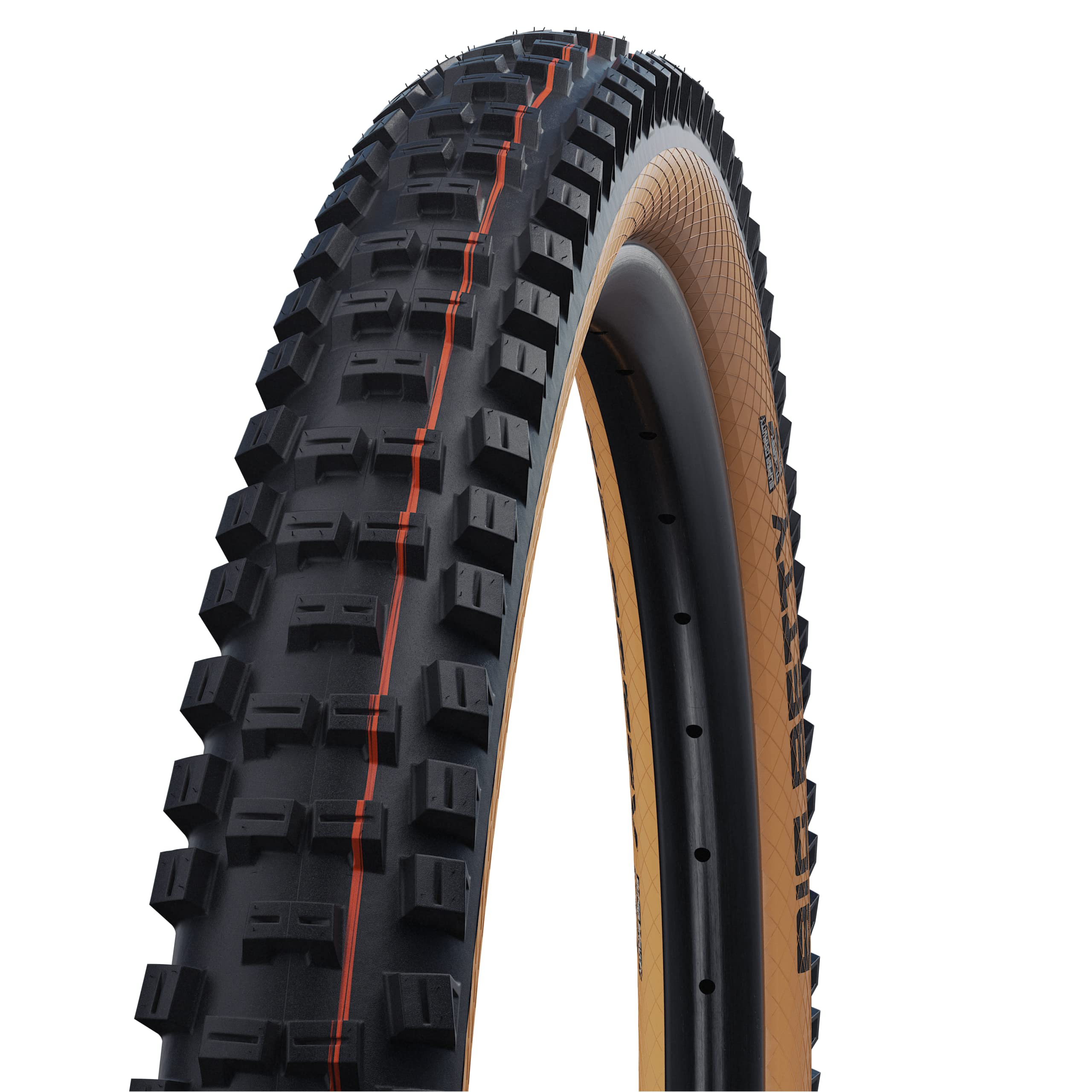
The Big Betty is built for riders who charge down loose, dry descents and want predictable braking at the rear.
You get long, supported braking edges — that means when you grab the rear brake on a steep chute, the tire digs in rather than skips. The tread is open and aggressive, so mud and loose dirt clear out instead of packing into the knobs. Schwalbe uses Addix Soft compound here, a rubber blend that stays tacky across Enduro and downhill paces.
The Super Gravity construction is the real story. Buyers report the casing is extremely stable and resists pinch flats far better than standard trail casings. One reviewer called the grip “superior for cornering and steep descents,” noting the tread inspires confidence on rough trails. At 1305 grams, it is noticeably heavier than a cross-country tire, and you feel that weight on long climbs. But if your priority is staying upright through rock gardens at speed, the extra heft is worth every gram.
The Big Betty is designed for dry to damp conditions — don’t expect it to float over deep mud. Schwalbe recommends pairing it on the rear with a Magic Mary up front for the best all-around aggressive setup. Warranty terms vary by seller and manufacturer listing; check the retailer and brand documentation for the current coverage details.
What it dominates at: The Super Gravity casing and Addix Soft compound make this the pick for Enduro and downhill riders who punish rear tires on loose, rocky terrain.
The honest trade-off: It is a heavy tire — 1305 grams — and the pedal traction on smooth hardpack suffers compared to tires with ramped center knobs.
Reach for this if your local trails are loose, steep, and rough — you prioritize brute-force puncture protection and cornering bite over weight.
Look elsewhere if you spend most of your time on smooth, rolling singletrack or need the lightest possible rotating mass.
2. American Classic Basanite
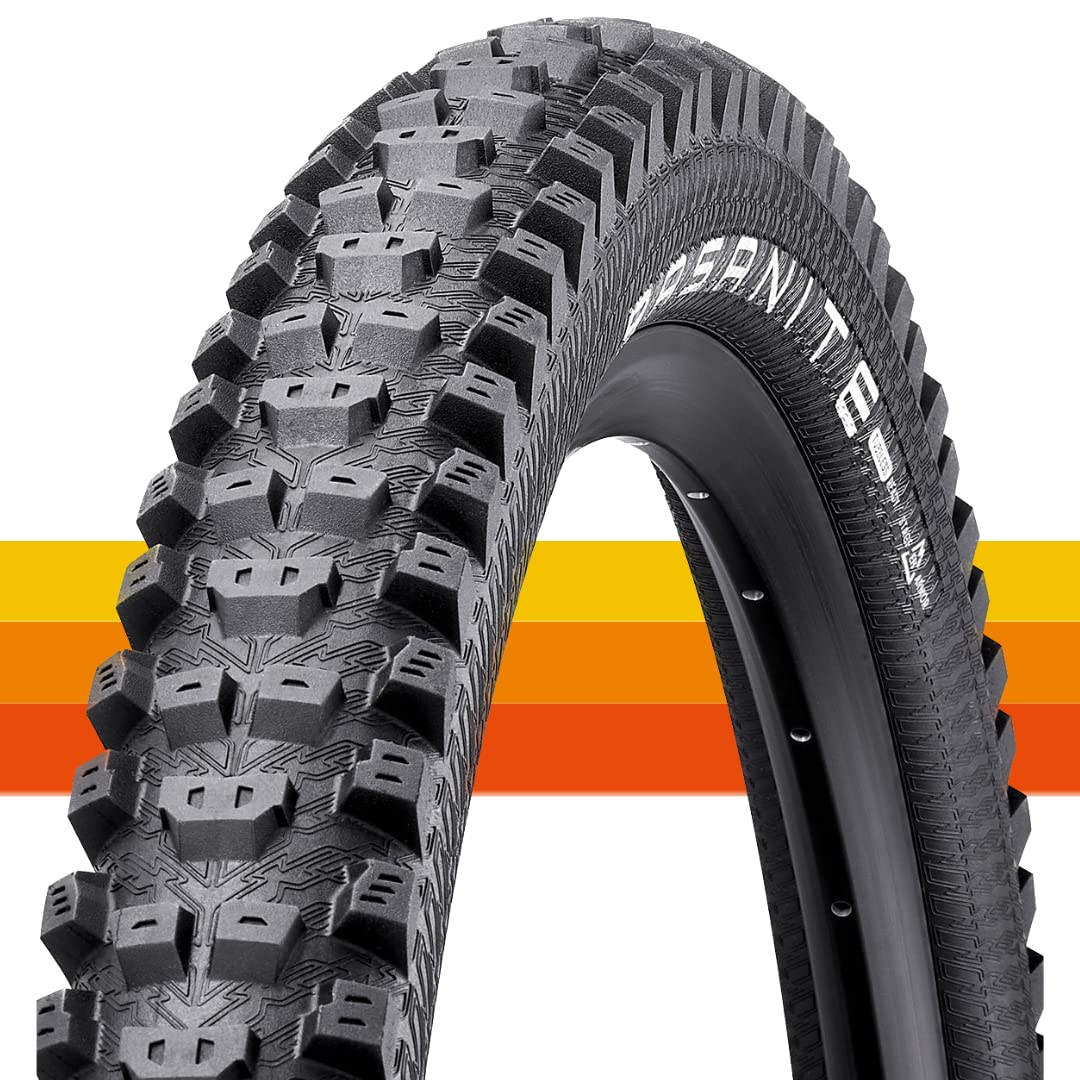
A rear-focused Enduro tire that punches well above its price point on braking control and cornering grip.
The Basanite uses ramped center knobs that alternate in shape and size — a design choice that improves braking traction because the different edges bite into the trail instead of skidding over it. The side knobs include hatch marks (small slits that act like mini treads) so you get extra purchase on hard-packed berms. American Classic builds this with a soft triple-compound rubber that enhances damping and slows rebound, meaning the tire stays planted through chattery sections.
Owners mention “predictable corner feel, fast rolling, good under braking” after sustained use. One reviewer, after 25 miles of riding, said it was “holding up great.” The Enduro-rated casing is noticeably thick — reviewers describe the sidewalls as “very tough” and “thick and durable.” The trade-off is that mounting it tubeless takes more effort than a standard trail casing. Several owners noted the grip is “very tacky” and they never found the limit in corners, but the weight makes punchy climbs harder. The Basanite is designed for 30mm internal width rims, so double-check your rim width before buying.
Where it beats the competition: The triple-compound rubber combined with the Enduro-rated casing delivers a grip-to-durability ratio that rivals tires costing much more — buyers consistently call it “the best tire under.”
The main drawback: The tough, thick casing makes tubeless mounting a wrestling match, and the tire is heavy on sustained climbs.
Best for aggressive trail and Enduro riders who want dependable cornering and braking without paying for a boutique brand.
Not ideal for XC racers or anyone who needs a lightweight rear tire for smooth, pedally loops.
3. Maxxis Minion DHR II

The DHR II borrows side knobs from the legendary Minion DHF and widens them for even more support when the trail tilts.
That borrowed side-knob design means you can lean this tire deeper into a turn without the tread folding under. The center tread is ramped to keep rolling resistance manageable, while the widened outer lugs dig in hard when you need them most. Maxxis uses a dual compound here — a harder rubber in the center for durability and a softer compound on the edges for grip — which strikes a practical balance between tread life and cornering bite. The tire carries an E25 rating, which is a certification for light-duty e-bikes with pedal assistance up to 16.1 MPH.
One reviewer noted they “have been running these on my commencal meta tr 29 for years now” and praised the “trust the grip” feeling when cornering. Another reviewer pointed out that pairing a DHR II rear with a DHF front creates a “unison” setup that works well across varied terrain. The EXO casing (a cut and abrasion-resistant material added to the sidewalls) offers decent puncture protection for trail riding, though it is not as bombproof as a full Enduro casing. The 2.4 WT version is optimized for wider rims — Maxxis recommends a 30mm internal width — but riders report it performs fine on rims from 19mm to 35mm.
Why riders love it
- Widened side knobs provide exceptional cornering support on loose and hardpack turns
- Dual compound balances rolling speed with long tread life
- E25 rated for light e-bike use, expanding its compatibility
The catch
- EXO casing is not as puncture-resistant as a dedicated DH or Enduro casing for rocky terrain
- Tan sidewall color might not match every build aesthetic
Grab it if cornering grip is your top priority and you ride trail or light Enduro on varied terrain where you can push the bike into turns.
Pass if you need the heaviest-duty puncture protection for sharp, jagged rock gardens — step up to a DH casing instead.
4. Maxxis Ardent

A versatile trail tire that rolls fast thanks to ramped center knobs, with large block side knobs for cornering traction.
The Ardent is one of Maxxis’s most popular all-condition designs because it does not commit to an extreme. The center knobs are ramped, so they push forward with less drag on smoother sections, while the large block side knobs give you bite when the trail tilts. Maxxis uses a single compound here — one rubber formulation throughout — which keeps the price low and the tread predictable across its life. The EXO casing adds a layer of cut and abrasion resistance to the sidewalls, making it suitable for rides ranging from gravel to XC to light trail duty.
Buyers consistently call it a “great value tire” and note it is “durable with fewer punctures than entry-level XC tires.” One owner mentioned the “trade-off: slightly higher rolling resistance on paths and picks up pebbles/rocks.” That pebble-collecting trait is common with the Ardent’s open tread pattern. Another reviewer pointed out that the tire is labeled as non-tubeless, yet they “set it up as one and it works fine” — so you can run it tubeless if you are comfortable testing the seal. The wire bead makes it heavier and less packable than a folding bead option.
Its best quality: The combination of EXO casing and ramped center knobs delivers better puncture protection and faster rolling than comparable budget tires — a genuine step up from basic XC rubber.
Where it falls short: The open tread picks up small loose rocks in loose-over-hardpack conditions, and the single compound wears faster than a dual-compound tire under hard braking.
Choose it when you want one tire that handles everything from fire roads to moderate singletrack while staying affordable.
skip it if you ride aggressive Enduro lines or need a dedicated tubeless-ready bead — step up to a folding-bead Enduro tire for higher sidewall security.
5. YunSCM 29×2.40 2-Pack
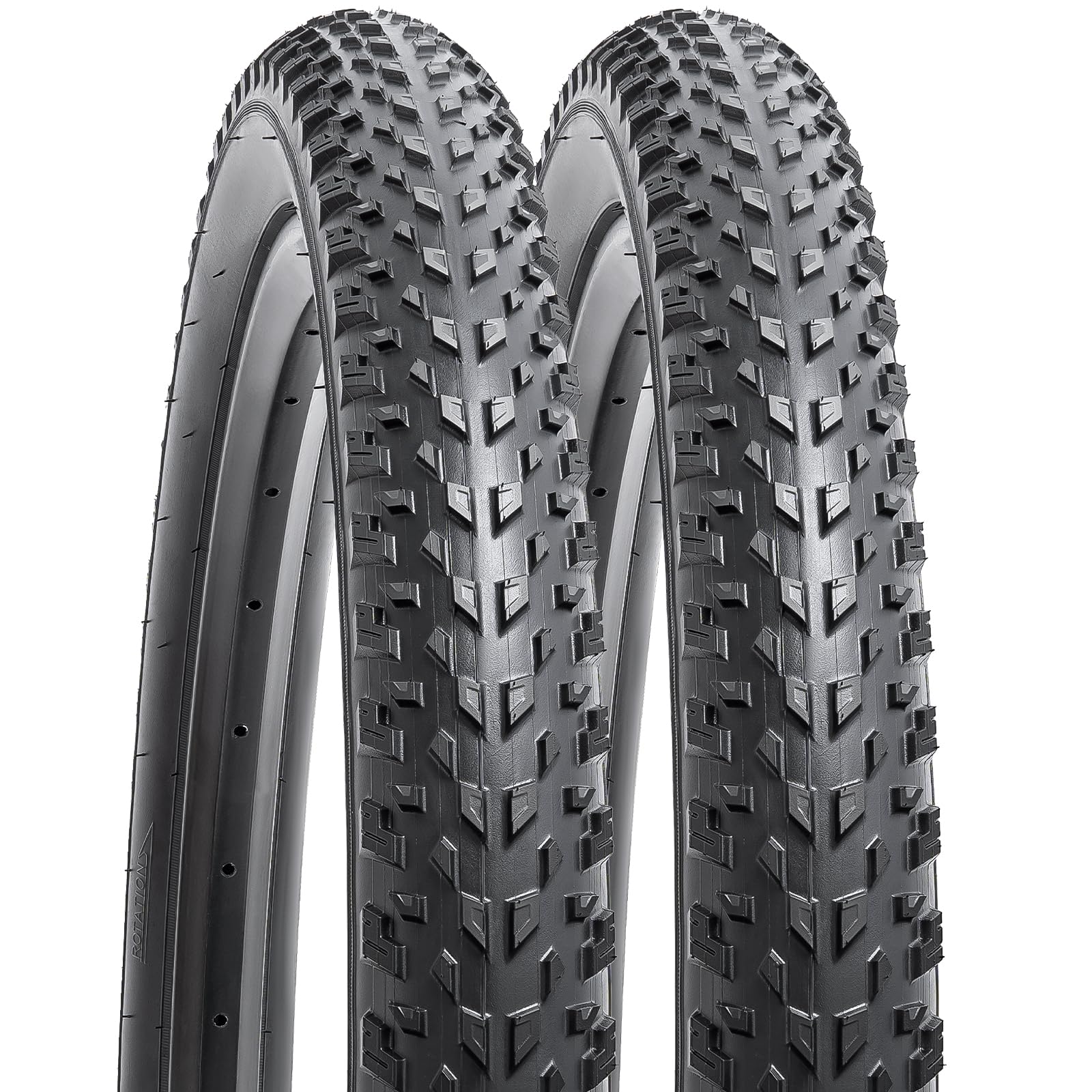
A two-pack of 29×2.40 folding tires aimed at riders who want an affordable mixed-use option for pavement and light trail.
YunSCM uses a high-content butyl rubber formula, which they claim is more environmentally friendly and has less odor than standard rubber. The tread pattern is a multi-functional design intended to handle both on-road and off-road conditions. The tires are foldable, which makes them easy to stash in a pack as a spare. The specified inflation range is 30-50 PSI, which is higher than a typical MTB tire — that pressure hint tells you these are built more for rolling speed than aggressive cornering.
The buyer experiences here are split. One reviewer who inflated to 50 PSI for street riding experienced a tube explosion, and recommends sticking to 40 PSI. Another owner noted the “tread is good” but described them as “a little heavy compared to my bontrager tires.” A less satisfied buyer reported the tire would not stay seated on skinny mountain bike rims, causing tube bubbles. The set sells as two tires for a low price, which is the main draw — but the inconsistent bead seating and higher weight mean these are best reserved for casual riders or as an emergency backup.
What the price buys you
- Two tires in one purchase — enough for a full bike setup at entry-level cost
- Foldable for compact storage or carrying a spare on longer rides
The real-world limits
- Inflating near the top of the 50 PSI range can cause tube failures with tubes; multiple reviewers recommend staying at 40 PSI
- Bead may not lock securely on narrow rims, leading to tube bubbles and loss of sealant
Works for a budget-conscious rider who needs a pair of tires for light dirt roads and paved commutes without investing in premium rubber.
Look past it if you ride technical singletown, rely on tubeless setups, or need consistent bead seating on modern mountain bike rims.
Understanding the Specs
EXO vs Super Gravity Casing
EXO is a cut and abrasion-resistant material that Maxxis adds to the sidewalls of many gravel and MTB tires. It is best for XC, trail, and light Enduro riding. Schwalbe’s Super Gravity construction is a step tougher — it provides high stability and robustness with better puncture protection, making it the go-to for aggressive riders who put maximum force through the tire. If you ride sharp, jagged terrain, choose Super Gravity or an Enduro-rated casing over a standard EXO.
Single vs Dual Compound
A single compound uses one rubber formulation throughout the whole tread. It is simpler, cheaper, and wears evenly but can feel less grippy in corners compared to a dual compound. A dual compound uses two rubbers — a harder compound in the center for low rolling resistance and durability, and a softer compound on the edges for cornering grip. The trade-off is that dual tires usually cost more and the softer side compound can wear faster if you do a lot of hard braking while leaned over.
FAQ
Will a 29×2.4 tire fit my current rims?
Can I run these tires tubeless?
What pressure should I run in a 29×2.4 MTB tire?
What is the difference between the Schwalbe Big Betty and the Maxxis Minion DHR II?
How long does a Maxxis Ardent last?
Are the YunSCM tires good for my mountain bike?
What does “WT” mean on the Maxxis Minion DHR II?
Can I use a 29×2.4 tire on a 29×2.35 rim?
Final Thoughts: The Verdict
For most riders, the strongest 29×2.4 mtb tires pick is the Schwalbe Big Betty because the Super Gravity casing and Addix Soft compound deliver the best combination of puncture protection and cornering grip for aggressive trails. If you want a rear-focused performer that punches above its price, grab the American Classic Basanite. And for cornering precision on loose terrain, the Maxxis Minion DHR II is the tire experienced riders trust most in turns.
How We Picked
We do not accept paid placement, and we did not hands-on test every unit. Instead, we match each pick to a real buyer and use-case by comparing the manufacturers’ published specifications against the patterns in verified customer reviews — so you get each pick’s real strengths and trade-offs instead of marketing copy.
Sources & Methodology
Specifications: manufacturer listings and product documentation. Review insights: verified customer reviews, as of July 2026. Pricing: not shown on this page (it changes often); check the current price via the retailer link.
As an Amazon Associate, Gadgets Feed earns from qualifying purchases. This does not affect which products we feature.
Product prices and availability are accurate as of the date/time indicated and are subject to change. Any price and availability information displayed on Amazon at the time of purchase will apply to the purchase of this product. As an Amazon Associate I earn from qualifying purchases.
CERTAIN CONTENT THAT APPEARS ON THIS SITE COMES FROM AMAZON. THIS CONTENT IS PROVIDED "AS IS" AND IS SUBJECT TO CHANGE OR REMOVAL AT ANY TIME.
Amazon and the Amazon logo are trademarks of Amazon.com, Inc. or its affiliates.