
The jump from 1080p to 1440p is the most impactful visual upgrade you can make in PC gaming, but it demands a graphics card that can push that many pixels without choking. The wrong 2K GPU leaves you micro-stuttering through the campaign you waited months to play.
I’m Min — the co-founder and writer behind Gadgets Feed. I’ve spent hundreds of hours cross-referencing benchmark data, clock speeds, VRAM bandwidth, and real-world thermals to separate the cards that truly handle 1440p from those that barely scrape by.
After analyzing 11 different models across price tiers and architectures, I’ve built this definitive guide to the best 2k gpu for every type of builder and budget.
How To Choose The Best 2K GPU
Picking a graphics card for 2560×1440 gaming requires balancing resolution demands with budget. A card that crushes 1080p can feel sluggish at 1440p if its memory bandwidth or VRAM capacity is too low.
VRAM Capacity — The 1440p Wall
Modern titles at 1440p often consume 6 GB to 10 GB of video memory at high settings. An 8 GB card is the baseline today, but 12 GB or 16 GB gives you breathing room for texture-heavy games and future-proofing against upcoming releases that demand more.
Memory Bus Width and Bandwidth
A wider memory bus (192-bit or 256-bit) paired with fast GDDR6 or GDDR7 memory directly transfers more data per clock cycle. This matters at 1440p because higher resolutions need more pixel data shuffled every frame — a 128-bit bus can become a bottleneck regardless of core clock speed.
Quick Comparison
On smaller screens, swipe sideways to see the full table.
| Model | Category | Best For | Key Spec | Amazon |
|---|---|---|---|---|
| GIGABYTE RTX 5060 WINDFORCE OC | Premium | DLSS 4 + GDDR7 efficiency | 8GB GDDR7 128-bit | Amazon |
| PNY RTX 5070 Epic-X ARGB OC | Premium | High-refresh 1440p gaming | 12GB GDDR7 192-bit | Amazon |
| MSI RTX 5070 Gaming Trio OC | Premium | Premium cooling + 1440p | 12GB GDDR7 192-bit | Amazon |
| Sapphire Nitro+ RX 9070 XT | Premium | Raw 1440p/4K raster power | 16GB GDDR6 256-bit | Amazon |
| PowerColor Reaper RX 9070 XT | Premium | Value-focused high-end 1440p | 16GB GDDR6 256-bit | Amazon |
| XFX Swift RX 9060 XT | Mid-Range | High VRAM at value price | 16GB GDDR6 128-bit | Amazon |
| GIGABYTE RX 9060 XT Gaming OC | Mid-Range | Silent 1440p with 16GB | 16GB GDDR6 128-bit | Amazon |
| ASUS Dual RTX 5060 OC | Mid-Range | SFF builds, GDDR7 efficiency | 8GB GDDR7 128-bit | Amazon |
| ASRock Intel Arc B580 Challenger | Mid-Range | Budget 1440p with 12GB | 12GB GDDR6 192-bit | Amazon |
| EVGA RTX 3070 XC3 Ultra Gaming | Mid-Range | Last-gen value at 1440p | 8GB GDDR6 256-bit | Amazon |
| MSI RTX 3050 LP 6G OC | Budget | Slim/entry-level 1080p-1440p | 6GB GDDR6 96-bit | Amazon |
In‑Depth Reviews
1. GIGABYTE GeForce RTX 5060 WINDFORCE OC 8G

The GIGABYTE RTX 5060 WINDFORCE OC is the sweet spot for 1440p gaming in 2025. Powered by the NVIDIA Blackwell architecture with DLSS 4, it delivers framerates that rival last-gen upper mid-range cards while sipping power at a 150W TDP. The 8GB GDDR7 memory on a 128-bit bus is the limiting factor for ultra-texture packs, but at high settings this card pushes well over 60 FPS in demanding titles like Cyberpunk 2077 and DOOM.
The WINDFORCE cooling system keeps the dual fans quiet under load, and the card measures under 8 inches in length — fitting comfortably in most mid-tower cases. The PCIe 5.0 interface ensures compatibility with the latest motherboards, though the card works fine on PCIe 4.0 as well.
Real buyers report smooth 1440p performance with over 250 FPS in competitive shooters and stable thermals with a 750W power supply. The 8GB VRAM requires some settings management in the heaviest titles, but DLSS 4’s frame generation effectively boosts performance without sacrificing image quality.
Why it’s great
- DLSS 4 provides massive performance uplift at 1440p
- GDDR7 memory delivers high bandwidth despite 128-bit bus
- Compact dual-fan design fits most cases easily
Good to know
- 8GB VRAM can be limiting for 4K texture packs
- Requires DDU driver wipe for clean install from older cards
2. PNY NVIDIA GeForce RTX 5070 Epic-X ARGB OC Triple Fan
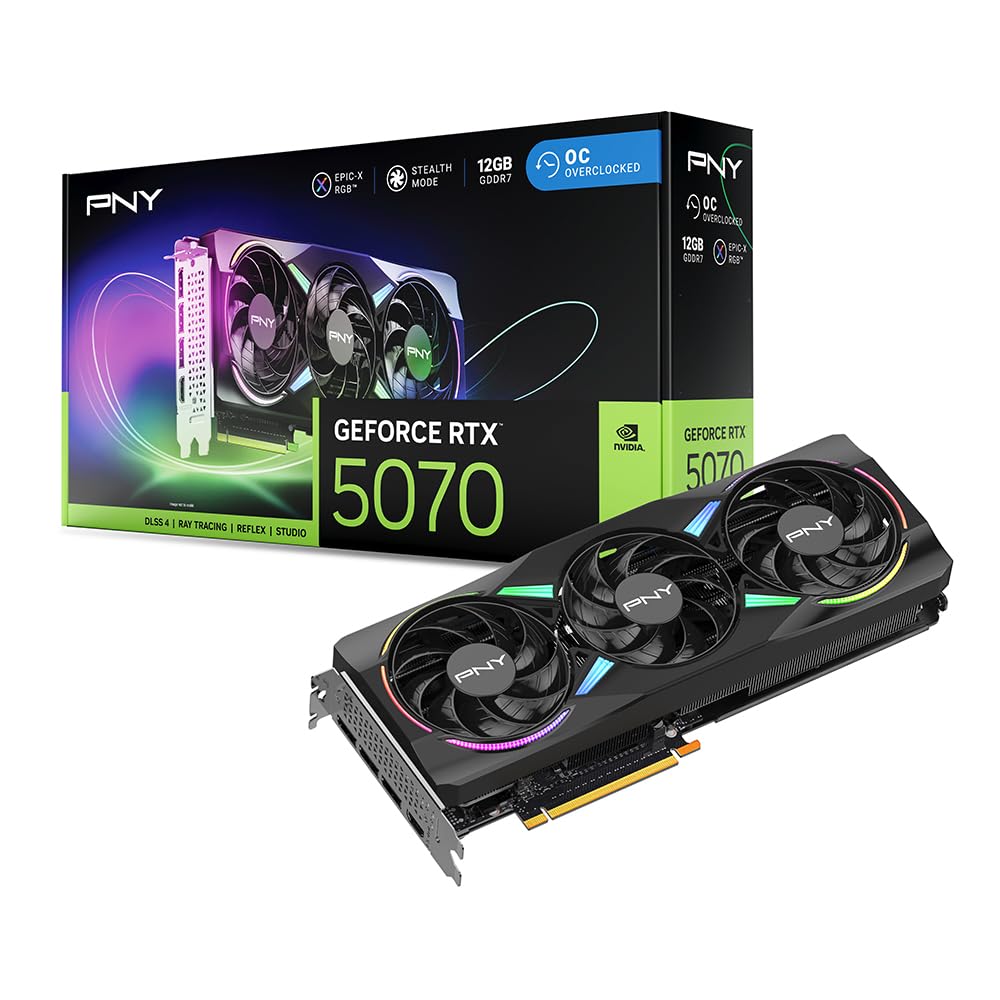
The PNY RTX 5070 Epic-X delivers the kind of 1440p performance that makes you forget you ever gamed at lower resolutions. With 12GB of GDDR7 on a 192-bit bus, it has the memory bandwidth to handle high-refresh 1440p gaming — pushing over 100 FPS in most AAA titles on ultra settings. The Blackwell architecture brings fifth-gen Tensor Cores and fourth-gen Ray Tracing Cores that make DLSS 4 frame generation nearly indistinguishable from native rendering.
The triple-fan Epic-X cooler runs remarkably quiet, with real users noting significant case temperature reductions compared to previous cards. The 2.4-slot design is SFF-ready, fitting smaller cases while still delivering the 2685 MHz boost clock. It comes with a dual 8-pin to 12-pin adapter, making it compatible with standard 750W power supplies.
Reviewers confirm full 80 ROPS and performance that beats the RTX 4070 Super by a meaningful margin, especially when DLSS 4 is enabled. The card pulls around 250W under full load, keeping power draw reasonable for its performance class.
Why it’s great
- 12GB GDDR7 provides headroom for 1440p ultra textures
- Exceptionally quiet triple-fan cooling under load
- Compact SFF-ready design fits mini towers
Good to know
- Premium pricing places it at the high end of mid-range
- Requires case length check — some SFF cases may be tight
3. MSI RTX 5070 12G Gaming Trio OC

The MSI RTX 5070 Gaming Trio OC is built for gamers who prioritize cooling and noise levels above all else. The TRI FROZR 4 thermal design uses STORMFORCE fans with seven blades and claw texturing to push massive airflow while staying whisper-quiet. A nickel-plated copper baseplate captures heat from the GPU and memory, transferring it through square-core pipes that maximize surface contact with the heatsink.
At 2625 MHz boost clock out of the box, this card delivers excellent 1440p performance in everything from competitive shooters to narrative-driven single-player titles. The 12GB GDDR7 on a 192-bit bus gives it enough bandwidth to maintain high frame rates even with ray tracing enabled, and DLSS 4 takes over when native performance dips.
Buyers report smooth 4K gaming without DLSS in less demanding titles, and exceptional thermal performance that keeps the card cool and quiet even during extended sessions. The build quality feels premium, and the installation is straightforward. MSI’s Afterburner software provides granular control over fan curves and overclocking.
Why it’s great
- Premium TRI FROZR 4 cooling stays nearly silent under load
- 12GB GDDR7 handles 1440p ray tracing comfortably
- High factory overclock with extra headroom
Good to know
- Larger triple-fan design may not fit small cases
- Premium price reflects the top-tier cooling solution
4. Sapphire 11348-01-20G Nitro+ AMD Radeon RX 9070 XT Gaming OC

The Sapphire Nitro+ RX 9070 XT is the definitive choice for pure raster performance at 1440p. With 16GB of GDDR6 on a full 256-bit bus, this card has the memory subsystem to feed massive textures and high-resolution assets without breaking a sweat. Based on AMD’s RDNA 4 architecture, it delivers boost clocks that regularly hit 3.0 GHz out of the box, translating to 60-90% performance uplift over a previous-gen 6750 XT.
The Nitro+ cooling solution is legendary for a reason — buyers consistently report low temperatures, no coil whine, and quiet operation even under sustained load. The dual HDMI and dual DisplayPort outputs support multi-monitor setups at high refresh rates, and the 256-bit memory interface ensures smooth 1440p and even 4K gameplay in most titles.
The card is physically large, occupying 3+ slots and exceeding 300mm in length, so case compatibility is essential. While ray tracing lags behind NVIDIA’s best, the raw raster performance and 16GB VRAM make this a future-proof choice for 1440p gaming that will remain relevant for years.
Why it’s great
- 16GB VRAM on 256-bit bus is best-in-class for 1440p
- RDNA 4 delivers exceptional raster performance at 3.0 GHz+
- Superb cooling runs cool and quiet under full load
Good to know
- Very large triple-slot design requires spacious case
- Ray tracing still trails competing NVIDIA cards
5. PowerColor Reaper AMD Radeon RX 9070 XT 16GB
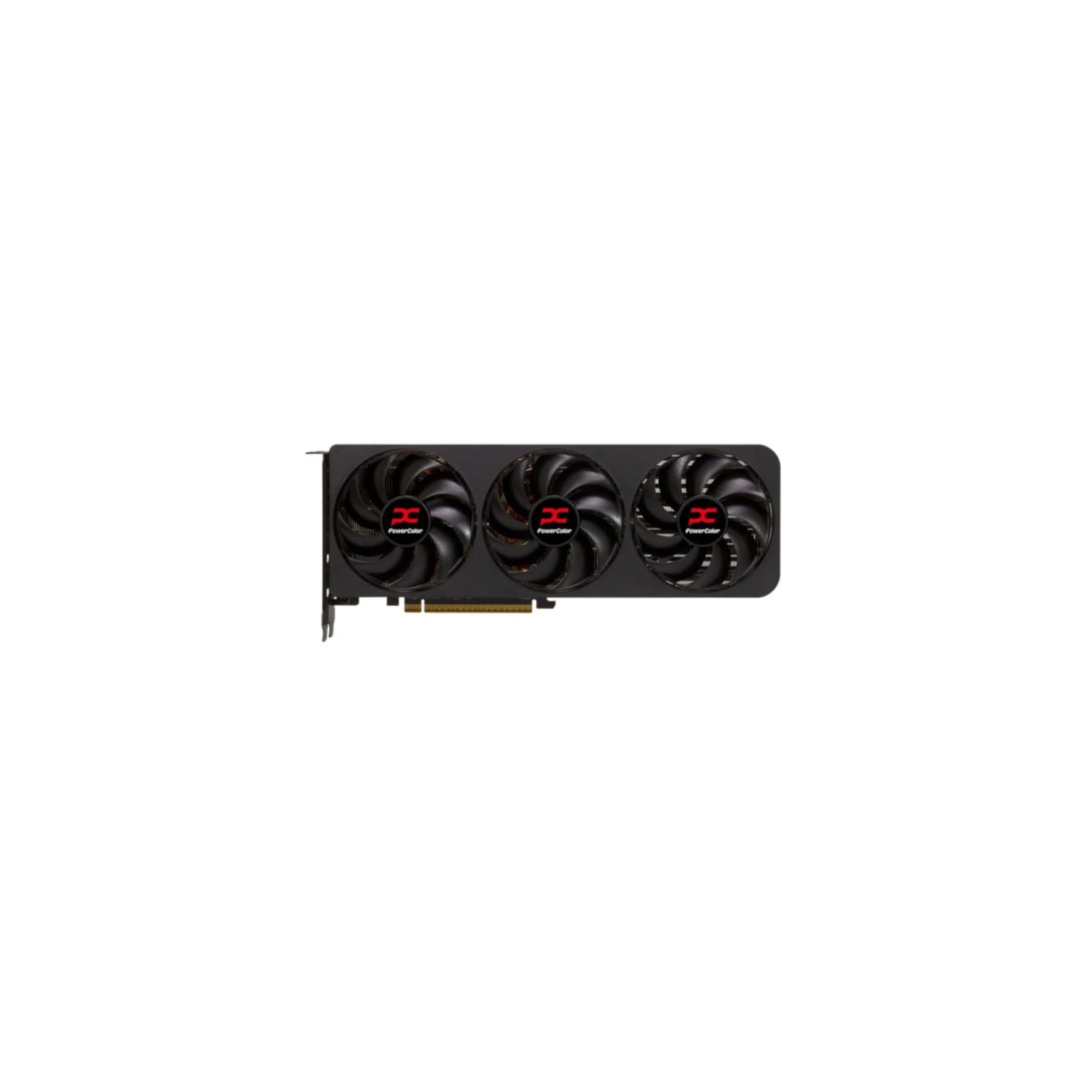
The PowerColor Reaper RX 9070 XT strips away the RGB flash and delivers the same core RDNA 4 silicon at a more accessible price point. With 16GB GDDR6 and a 256-bit bus, it offers the same memory capacity and bandwidth as the premium Nitro+ card, making it a fantastic value for 1440p gaming. The boost clock reaches 2400 MHz, and the card pulls power through two standard 8-pin connectors, avoiding the 12VHPWR adapter drama.
The dual-fan design keeps the card relatively compact at 289mm length, fitting most mid-tower cases. Temperatures max out around 85°C under load, which is within spec for RDNA 4, and the fans ramp up noticeably at that point — but not to objectionable levels. The 750W minimum power supply recommendation is realistic and common among modern builds.
Real buyers upgrading from an RTX 3080 note that while raw FPS gains are modest, the 16GB VRAM eliminates the VRAM bottleneck that plagued earlier cards. Gamers coming from an RTX 2070 report a night-and-day difference at 1440p, with smooth performance in everything they throw at it.
Why it’s great
- Best value entry to 16GB RDNA 4 1440p performance
- Standard 8-pin power connectors, no adapter needed
- Compact dual-fan design fits most mid-tower cases
Good to know
- Fans get noticeable at higher temperatures
- Requires understanding of AMD driver ecosystem
6. XFX Swift AMD Radeon RX 9060 XT OC 16GB
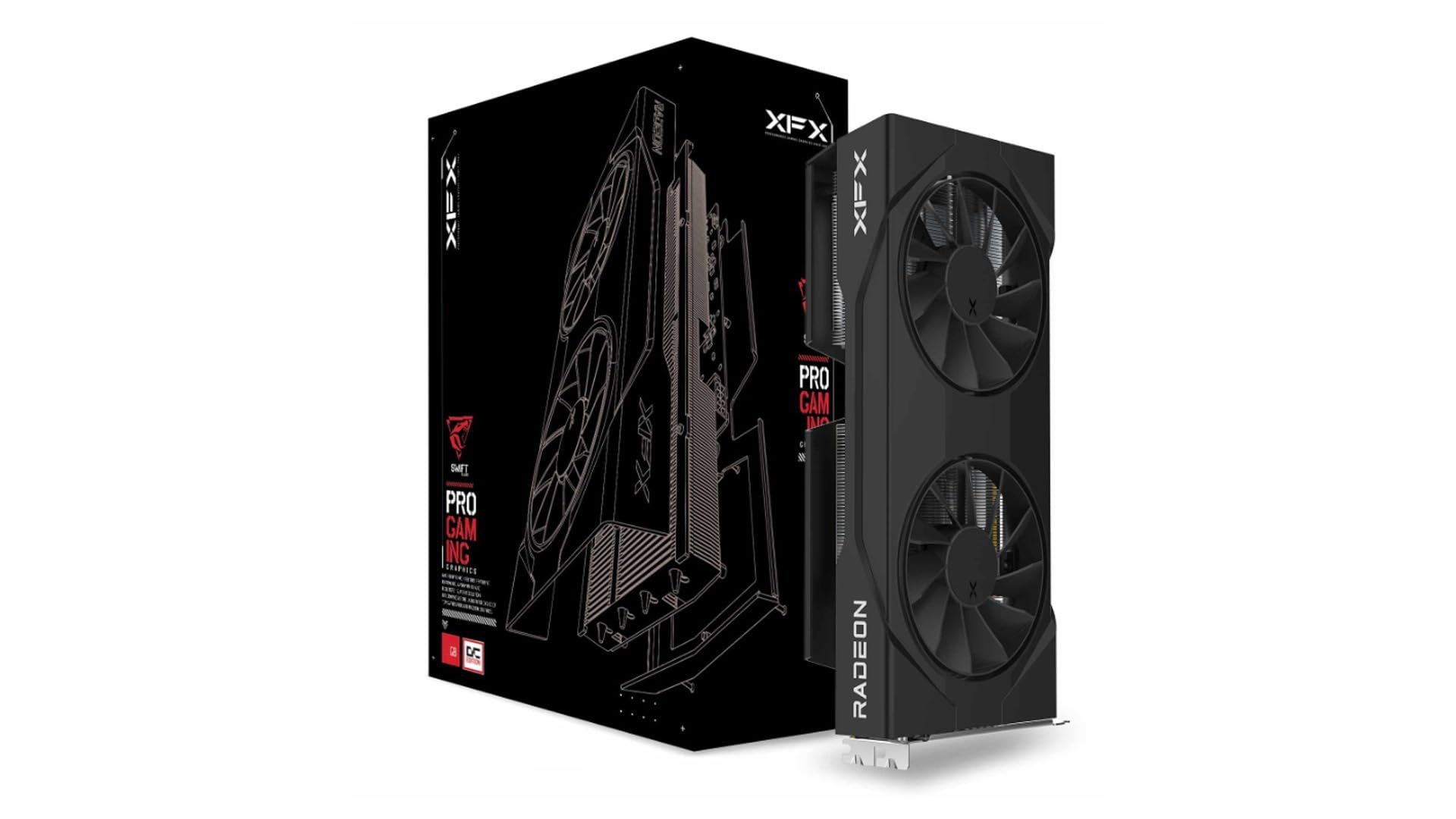
The XFX Swift RX 9060 XT offers an unusual proposition: 16GB of VRAM at a mid-range price point. While the memory bus is 128-bit, the raw boost clock of 3320 MHz helps compensate, delivering strong 1080p and solid 1440p performance on most titles. Timespy scores around 17000 confirm this card punches above its weight class in synthetic benchmarks.
The dual-fan SWFT cooling solution keeps the card under 60°C in most gaming scenarios, and the build quality is solid with a metal backplate. The card measures 10.63 inches, so it fits in standard ATX cases without issue. Power efficiency is excellent, with the RDNA 4 architecture drawing less power than comparable NVIDIA offerings.
Buyers using this for 1080p max settings report clearing 95% of AAA titles without issue, and 1440p performance is strong in most games. The 16GB buffer is also useful for non-gaming workloads like AI, video editing, and stock trading setups requiring multiple monitors.
Why it’s great
- 16GB VRAM at a mid-range price is exceptional value
- Extremely quiet and cool operation with dual fans
- Excellent power efficiency from RDNA 4
Good to know
- 128-bit memory bus limits 1440p ultra texture performance
- Only 3 display outputs (2 DP, 1 HDMI) may limit multi-monitor setups
7. GIGABYTE Radeon RX 9060 XT Gaming OC 16G

The GIGABYTE RX 9060 XT Gaming OC combines GIGABYTE’s excellent WINDFORCE cooling with AMD’s RDNA 4 silicon in a package that prioritizes silence and stability. The Hawk fan design and server-grade thermal conductive gel ensure that heat is efficiently pulled away from the GPU die, enabling the zero-RPM fan mode to work most of the time during light gaming and desktop use.
With 16GB of GDDR6 and PCIe 5.0 support, this card is ready for the latest motherboards and CPU architectures. The boost clock of 2700 MHz delivers smooth 1440p performance in titles like Cyberpunk 2077 and Hogwarts Legacy at high settings, while the RGB lighting adds a subtle aesthetic touch. The card measures 11.06 inches, so check case clearance before purchasing.
Buyers consistently praise the card’s thermal performance and stability, with many noting zero crashes even when overclocked. The 16GB VRAM buffer is ideal for high-resolution texture packs and future game releases, making this a smart pick for gamers who want to keep their card relevant for several years.
Why it’s great
- WINDFORCE cooling provides near-silent operation with zero-RPM mode
- 16GB VRAM future-proofs for upcoming 1440p titles
- PCIe 5.0 ready for latest platforms
Good to know
- Large card length requires careful case measurement
- Ray tracing performance trails NVIDIA equivalents
8. ASUS Dual NVIDIA GeForce RTX 5060 8GB GDDR7 OC Edition

The ASUS Dual RTX 5060 OC Edition brings the Blackwell architecture and GDDR7 memory to a compact 2.5-slot form factor that’s SFF-Ready. With 623 AI TOPS on tap, DLSS 4 performance is exceptional, enabling high-refresh 1440p gaming even in demanding titles. The OC mode pushes the boost clock to 2565 MHz, while the default 2535 MHz still beats last-gen mid-range cards comfortably.
The Axial-tech fan design uses a smaller hub to accommodate longer blades and a barrier ring that increases downward air pressure, improving cooling efficiency. The 0dB technology stops the fans completely under light load, making this an excellent choice for quiet PC builds. The dual fans are sufficient to keep the 150W TDP card cool even during extended gaming sessions.
Real buyers report 140+ FPS in Fortnite at 1440p and smooth performance in Cyberpunk 2077 with DLSS enabled. The 8GB VRAM is the main trade-off — it handles 1440p high settings well but may require texture quality adjustments in the heaviest titles. The card fits easily in older systems, with users successfully installing it in 8-year-old computers.
Why it’s great
- GDDR7 memory and DLSS 4 deliver excellent 1440p frame rates
- Compact SFF-ready design fits small cases
- 0dB fan mode provides silent desktop operation
Good to know
- 8GB VRAM is the entry-level baseline for 1440p
- No RGB lighting for those wanting aesthetic flair
9. ASRock Intel Arc B580 Challenger 12GB OC

The ASRock Intel Arc B580 Challenger is a serious dark horse for 1440p gaming on a budget. Powered by Intel’s Xe2-HPG architecture with 20 Xe cores, it packs 12GB of GDDR6 on a 192-bit bus — memory configuration that beats many similarly-priced alternatives. The 2740 MHz GPU clock delivers smooth 1440p performance at 60+ FPS on ultra settings, with some titles hitting 165Hz on less demanding scenes.
The dual-fan design with 0dB Silent Technology keeps the card completely silent during desktop use, and the striped axial fans efficiently dissipate heat under load. The metal backplate reinforces the PCB, and the subtle LED indicator adds a touch of style without being obtrusive. DisplayPort 2.1 support with UHBR13.5 ensures compatibility with the latest high-refresh monitors.
Buyers note that Intel’s Arc drivers have matured significantly, delivering polished performance with no stuttering or crashes in 1440p gaming. The card requires Resizable BAR support (10th-gen Intel or newer) for optimal performance. Power draw is remarkably low — around 100W at 60Hz and 150W under full load — making it one of the most efficient 1440p cards available.
Why it’s great
- 12GB on 192-bit bus is exceptional memory at this price
- Very low power draw (150W max) for a 1440p card
- DisplayPort 2.1 ready for future monitors
Good to know
- Requires Resizable BAR support for full performance
- Driver installation process is more involved than NVIDIA/AMD
10. EVGA 08G-P5-3755-KR GeForce RTX 3070 XC3 Ultra Gaming

The EVGA RTX 3070 XC3 Ultra Gaming remains a compelling option for 1440p gaming if you can find it at the right price. With 8GB of GDDR6 on a 256-bit bus, it has the memory bandwidth to handle high-refresh 1440p in most titles — beating the Founder’s Edition by 3-5 FPS out of the box. The iCX3 cooling technology with three HDB fans keeps temperatures at 62-65°C under load with fan speeds of only 35-45%.
The all-metal backplate and adjustable ARGB LED give it a premium look, and the 1770 MHz boost clock ensures solid performance in ray-traced titles like Cyberpunk 2077 at medium settings. The card measures 11.23 inches and requires a sag bracket for long-term reliability. The triple fans are among the quietest in the RTX 30 series.
Buyers report excellent 1080p performance with streaming capabilities, and the card handles 1440p gaming well in competitive titles. The 8GB VRAM is the main limitation for future-proofing — texture-heavy games at 1440p will push against this wall. EVGA’s Precision X1 software gives full control over all three fans, something afterburner cannot do with this model.
Why it’s great
- 256-bit bus provides strong memory bandwidth for 1440p
- iCX3 cooling is exceptionally quiet and effective
- Overclocking headroom adds 125-150 MHz core
Good to know
- 8GB VRAM limits 1440p ultra texture settings
- Requires sag bracket or support for long-term installation
11. MSI GeForce RTX 3050 LP 6G OC

The MSI RTX 3050 LP 6G OC is a niche product built for a specific purpose: upgrading prebuilt office PCs with low-profile slots to handle 1080p gaming and entry-level 1440p. The 6GB GDDR6 on a 96-bit bus is limited, but the low-profile design allows it to fit in HP Pavilion and Dell SFF cases that can’t accept full-height cards. The 1492 MHz boost clock is modest, but buyers report solid Fortnite performance at console-beating quality.
The dual fans and oversized heatsink keep this card cool and quiet — many users report forgetting it’s even in the system. The custom PCB with hardened circuits and optimized trace routing adds durability, and MSI Center allows real-time monitoring. The card supports 4K output via HDMI 2.1, making it useful for media center PCs as well.
This is not a card for serious 1440p gaming, but it can handle lighter titles at lower settings. Its real value is in giving old office PCs a second life for gaming. Buyers using it for GSPro golf simulation apps, basic machine learning tasks, or light Fortnite gaming report excellent value for their specific use case.
Why it’s great
- Low-profile design fits SFF and prebuilt office PCs
- Very quiet dual-fan cooling with low power draw
- HDMI 2.1 supports 4K output for media center use
Good to know
- 6GB VRAM and 96-bit bus limit 1440p to lighter titles
- Not suitable for demanding modern AAA games at high settings
FAQ
How much VRAM do I need for 1440p gaming in 2025?
Does a 128-bit memory bus bottleneck 1440p performance?
Should I prioritize raw raster performance or ray tracing for 1440p?
Final Thoughts: The Verdict
For most users, the best 2k gpu winner is the GIGABYTE RTX 5060 WINDFORCE OC because it combines Blackwell architecture with DLSS 4 and GDDR7 at a price that undercuts the higher-tier cards while still delivering excellent 1440p performance. If you need more VRAM for ultra textures and future titles, grab the PowerColor Reaper RX 9070 XT for its 16GB buffer and 256-bit bus. And for silent operation with top-tier 1440p ray tracing, nothing beats the MSI RTX 5070 Gaming Trio OC with its TRI FROZR 4 cooling.