
The second-hand camera lens market is where photographers unlock professional reach and optical quality without paying retail premiums. Whether you’re chasing wildlife, nailing portraits, or expanding your wide-angle perspective, buying used glass demands a sharp eye for compatibility, condition, and the specific physics of each focal length and aperture design.
I’m Min — the co-founder and writer behind Gadgets Feed. I’ve spent hundreds of hours cross-referencing sensor formats, mount compatibility charts, and real-world user reports to build a guide that cuts through the guesswork of used lens shopping.
This guide ranks nine proven pre-owned optics by real-world performance, covering Nikon F, Canon EF/EF-S, and Sony E mounts, so you can confidently choose your next 2nd hand camera lens.
How To Choose The Best 2nd Hand Camera Lens
Buying a pre-owned lens isn’t just about saving money — it’s about picking the right optical formula for your sensor. Three core factors decide whether your used lens delivers sharp, contrast-rich images or ends up as a shelf ornament.
Mount and Sensor Format Compatibility
Not every lens fits every camera. Nikon’s AF-P lenses, for instance, require a body with the latest firmware to operate autofocus — older D7000 and D90 bodies won’t focus at all. Canon EF-S lenses only mount on APS-C bodies, while full-frame EF glass works on both. Sony E-mount lenses are interchangeable across the Alpha line, but full-frame lenses on APS-C bodies crop the field of view by 1.5x. Always verify your camera’s mount type and firmware generation before clicking buy.
Aperture and Focal Length Strategy
Telephoto zooms (70-300mm, 55-250mm) are the most popular used buys because new versions cost hundreds more for the same glass formula. For low-light performance, look for f/2.8 or f/1.8 primes — these retain value on the used market and rarely show optical degradation. Kit zoom lenses like the 18-55mm are abundant and cheap used, but their plastic mounts wear faster.
Physical Condition and Glass Quality
Check the front and rear elements for scratches, separation, or fungus using a backlit photo. Zoom rings should turn smoothly without gritty resistance — stiff rings indicate internal debris or dried lubricant. A used lens with a dented filter thread is cosmetic; one with oily aperture blades is a repair risk. Sticking to “Renewed” or “Certified Refurbished” listings adds a 90-day warranty buffer.
Quick Comparison
On smaller screens, swipe sideways to see the full table.
| Model | Category | Best For | Key Spec | Amazon |
|---|---|---|---|---|
| Nikon AF-P DX 70-300mm f/4.5-6.3G ED VR (Renewed) | Premium Telephoto | Sharp reach with VR stabilization | VR Image Stabilization | Amazon |
| Sony FE 20mm F1.8 G (SEL20F18G) | Premium Prime | Ultra-wide with pro sharpness | 20mm / f/1.8 Aperture | Amazon |
| Canon EF 75-300mm f/4-5.6 III Kit | Mid Telephoto Kit | Budget telephoto reach with filters | 75-300mm / 7-Blade Diaphragm | Amazon |
| Nikon AF-S DX 18-140mm f/3.5-5.6G ED VR (Renewed) | Premium All-in-One | Travel versatility with VR | 18-140mm / 7.5x Zoom Range | Amazon |
| SONY E 55-210mm f/4.5-6.3 (Renewed) | Mid Telephoto Zoom | APS-C reach for Sony shooters | Optical Steady Shot / 315mm | Amazon |
| Nikon AF-P DX 70-300mm f/4.5-6.3G ED | Mid Telephoto Zoom | Quiet AF for new Nikon bodies | Stepping Motor / 300mm | Amazon |
| Nikon 55-200mm f/4-5.6G ED (White Box) | Compact Telephoto | Budget travel zoom for beginners | 255g / Silent Wave Motor | Amazon |
| Canon EF-S 55-250mm f/4-5.6 IS | Mid Telephoto Zoom | Best value Canon APS-C zoom | Optical IS / 250mm | Amazon |
| Nikon AF-P DX 18-55mm f/3.5-5.6G VR | Budget Kit Zoom | Wide-to-standard reach on budget | VR Stabilization / 18-55mm | Amazon |
In‑Depth Reviews
1. Nikon AF-P DX NIKKOR 70-300mm f/4.5-6.3G ED VR (Renewed)
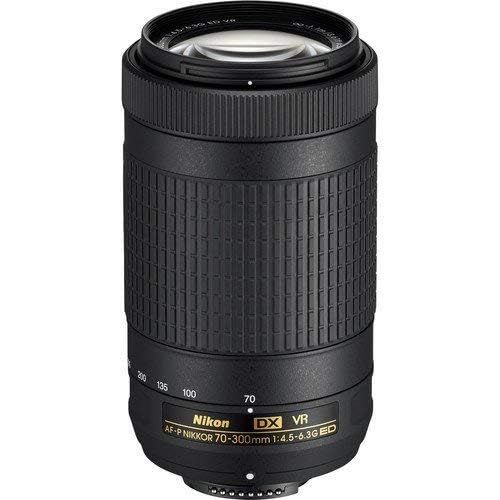
The Certified Refurbished version of Nikon’s AF-P DX 70-300mm VR is the smartest used telephoto buy for Nikon F-mount shooters. It packs a 105-450mm full-frame equivalent range with optical VR that delivers sharp handheld images at 300mm — a feat most budget telephotos can’t match. The pulse stepping motor autofocus is silent and fast, making it ideal for wildlife and sports where quiet operation matters.
At just over half the price of a new unit, this renewed lens undergoes functionality testing, cleaning, and repackaging with a 90-day warranty. Real-world reviews confirm the glass arrives in near-pristine condition with no front element imperfections. The rounded 7-blade diaphragm produces smooth bokeh at f/6.3, and the Super Integrated Coating effectively suppresses ghosting in backlit scenes.
Keep in mind that AF-P lenses require a compatible Nikon body — older models like the D5100 and D7000 may not support autofocus. For shooters using a D5600, D7500, or D850, this is the best-performing used telephoto zoom under .
Why it’s great
- VR image stabilization sharpens handheld telephoto shots
- Quiet pulse motor AF is ideal for video and wildlife
- Renewed condition includes 90-day warranty
Good to know
- Limited compatibility with older Nikon DSLR bodies
- Plastic mount may feel less durable than metal alternatives
2. Sony FE 20mm F1.8 G (SEL20F18G)

The Sony FE 20mm F1.8 G is a premium ultra-wide prime that commands its price on the used market because the optical formula is near-perfect. It delivers stunning edge-to-edge resolution wide open at f/1.8, with minimal chromatic aberration — even on high-resolution full-frame sensors like the a7R IV. The two XD (Extreme Dynamic) linear motors provide lightning-fast, silent autofocus that locks onto subjects in video and stills alike.
Weighing just 13.2 ounces and measuring compact for a full-frame prime, this lens is ideal for travel, vlogging, and astrophotography. The Nano AR Coating and Fluorine Coating on the front element resist smudges and flare, so used copies often retain excellent contrast. The physical aperture ring with a detent switch is a welcome tactile feature for video pullers.
The trade-off is no optical stabilization — rely on your Sony body’s IBIS for steady handheld footage. Used prices hover in the premium tier, but the build quality and optical consistency make this a long-term investment that retains value.
Why it’s great
- Exceptional wide-open sharpness with minimal CA
- Fast, silent XD linear AF for hybrid shooting
- Compact and lightweight for a full-frame prime
Good to know
- No in-lens image stabilization
- Aperture ring can be bumped accidentally
3. Canon EF 75-300mm f/4-5.6 III Telephoto Zoom Lens Kit

This 8-piece kit bundles the Canon EF 75-300mm f/4-5.6 III with a 2x telephoto converter, HD wide-angle attachment, filter set, lens hood, and carrying pouch — making it a jackpot deal for beginners entering telephoto photography. The base lens itself covers portrait to medium wildlife reach with a 4x zoom range, and the Super Spectra Coating reduces flare for higher contrast compared to older kit optics.
The 7-blade diaphragm produces smooth bokeh at longer focal lengths, isolating subjects effectively. At 16.8 ounces, it’s light enough for all-day walkaround use. The included accessories include a tulip shade and UV filter that add real value, though the telephoto converter introduces noticeable softness at 600mm.
Buyers should know this lens lacks image stabilization — you’ll need a tripod or high shutter speeds below 1/300s. The DC micro motor autofocus is audible but reasonably fast for its class. Used copies show the most wear at the zoom ring; ensure smooth rotation before purchasing.
Why it’s great
- Versatile 75-300mm range with smooth bokeh
- Includes filter kit, hood, and carrying case
- Very lightweight for extended handheld use
Good to know
- No image stabilization — tripod recommended
- Telephoto converter reduces sharpness significantly
4. Nikon AF-S DX NIKKOR 18-140mm f/3.5-5.6G ED VR (Renewed)

The Nikon AF-S DX 18-140mm VR is a jack-of-all-trades zoom that replaces the need for a separate wide-angle and telephoto lens when traveling. Covering 18mm wide to 140mm telephoto (27-210mm full-frame equivalent), it handles landscapes, portraits, and close-ups with a single twist. The VR image stabilization delivers sharp results at the telephoto end down to 1/30s shutter speeds.
Renewed copies include a 90-day warranty and all original accessories. The Silent Wave Motor (SWM) enables near-silent autofocus tracking, and the ED (Extra-low Dispersion) glass element reduces chromatic aberration noticeably compared to kit-grade zooms. Minimum focus distance of 1.48 feet allows for macro-style close-ups with good background separation at 140mm.
One caveat: the lens is heavier than typical kit glass at 1.5 pounds, and some renewed units may show cosmetic wear on the mount ring. Verify the VR switch functions correctly before mounting — a stuck VR mechanism requires service.
Why it’s great
- Extremely versatile 7.5x zoom eliminates lens changes
- VR stabilization enables sharp handheld telephoto shots
- Close-focus macro capability for detail work
Good to know
- Heavier than standard kit zooms
- Some renewed copies may show cosmetic mount wear
5. SONY E 55-210mm F4.5-6.3 (Renewed)

For Sony APS-C shooters on the Alpha 6000 series or ZV-E10, the 55-210mm f/4.5-6.3 (82-315mm full-frame equivalent) is the entry-level telephoto that punches above its weight class. The Optical Steady Shot image stabilization compensates for the slower f/6.3 aperture at the long end, delivering usable handheld shots in daylight and overcast conditions.
Renewed units undergo functionality testing and arrive in like-new condition. The internal focusing mechanism keeps the lens length constant during zoom, which is a practical advantage for video gimbal work. Color reproduction benefits from Sony’s Super Spectra Coating, maintaining accurate tones across the zoom range.
Sharpness peaks between 55-105mm, making it a strong portrait lens for the price. At 210mm, resolution softens, but cropping from a 24MP sensor still yields good results. The plastic build is lightweight at 1.04 pounds, though the mount is metal — a reassuring touch for durability.
Why it’s great
- Effective Optical Steady Shot for handheld telephoto
- Constant-length zoom design great for video
- Metal mount adds durability at this price point
Good to know
- Image softens noticeably at 210mm
- Slow maximum aperture limits low-light performance
6. Nikon AF-P DX NIKKOR 70-300mm f/4.5-6.3G ED

This is the non-VR version of Nikon’s AF-P 70-300mm DX lens, which means you trade stabilization for a lower used price and identical optical quality. The stepping motor delivers autofocus that is noticeably quieter and smoother than older AF-S lenses — a clear advantage for video recording on Nikon D5600 and D7500 bodies.
Optically, the ED glass element suppresses chromatic aberration better than the older 55-200mm designs, producing cleaner images at 300mm. The lens is also exceptionally light at 0.4 kilograms, making it easy to pack for travel. The rear cap and front cap are included, and used copies often show minimal wear since the AF-P line is relatively modern.
The critical limitation is compatibility: older bodies like the D5100, D7000, and D90 cannot autofocus with AF-P lenses. Also, without VR, you’ll need shutter speeds of 1/400s or faster to avoid blur at 300mm handheld. Tripod shooting is the safe route.
Why it’s great
- Silent stepping motor AF ideal for video
- ED glass reduces chromatic aberration effectively
- Very lightweight and compact for travel
Good to know
- No VR — requires fast shutter or tripod at 300mm
- AF-P system incompatible with many older Nikon DSLRs
7. Nikon 55-200mm f/4-5.6G ED AF-S DX (White Box)

The Nikon 55-200mm f/4-5.6G ED DX is an ultra-compact 3x telephoto zoom that’s ideal for beginners who want reach without the bulk. At just 255 grams, it’s one of the lightest telephoto zooms ever made for Nikon DX cameras, pairing well with entry-level bodies like the D3300 and D5600. The Silent Wave Motor provides fast, quiet autofocus that tracks subjects reliably.
Optically, the Super Integrated Coating minimizes ghosting and flare, and the ED element reduces color fringing for clean contrast. The white box packaging indicates a non-retail surplus unit, but buyers report these lenses arrive in pristine condition with zero fingerprints or dust. The 55mm start gives you a natural portrait length, and the 200mm end delivers decent reach for sports and wildlife.
The plastic mount is the main compromise — it wears faster than metal and can crack under heavy strain. Always mount and remove the lens by gripping the camera body, not the lens barrel. Also, this lens does not have VR, so stabilize against a surface or use a monopod for sharp images at 200mm.
Why it’s great
- Extremely lightweight at 255g for travel
- Silent Wave Motor provides fast, quiet AF
- Good contrast and minimal flare from Super Integrated Coating
Good to know
- Plastic mount prone to wear over time
- No VR — tripod or high shutter speed required
8. Canon EF-S 55-250mm f/4-5.6 IS
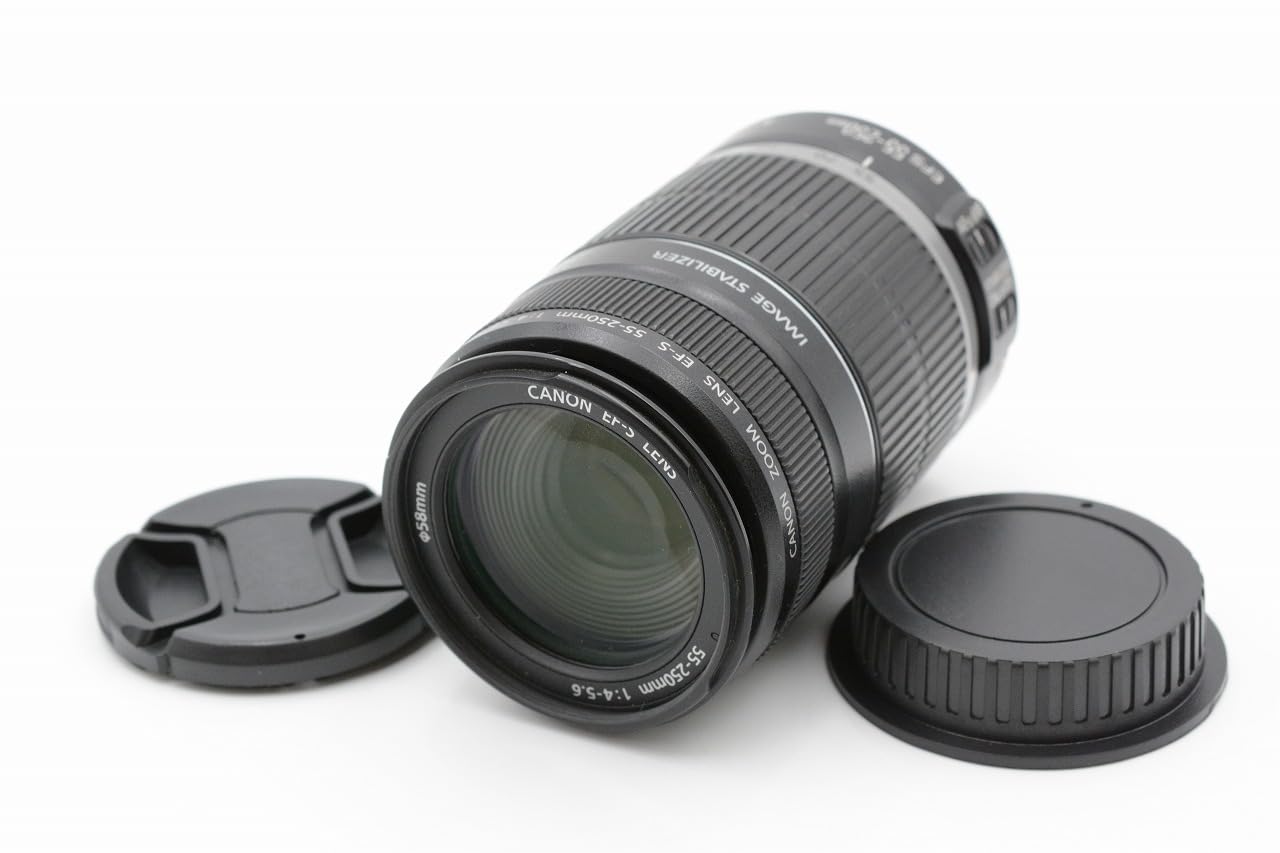
The Optical Image Stabilizer compensates for up to 4 stops of shake, allowing sharp handheld shots at 250mm down to 1/30s in good light. At 390 grams, it’s light enough for all-day carrying.
Sharpness is excellent from 55-150mm and remains acceptable at 200mm, with some softness at the 250mm extreme — typical for this class. The autofocus is fast and accurate for still subjects, though it hunts in low contrast scenes. The plastic build is durable enough for casual use but lacks weather sealing, so keep it dry.
This international version comes without warranty, so inspect the front element for scratches and test the zoom ring for smoothness before buying. The IS system is optical and works with any Canon APS-C body, including the T7i, 80D, and 90D. It’s the best-value telephoto entry point for EOS users.
Why it’s great
- Effective 4-stop Optical IS for handheld reach
- Great value used — abundant clean copies available
- Sharp central images from 55-150mm
Good to know
- Softens at 250mm maximum zoom
- Plastic build with no weather sealing
9. Nikon AF-P DX NIKKOR 18-55mm f/3.5-5.6G VR
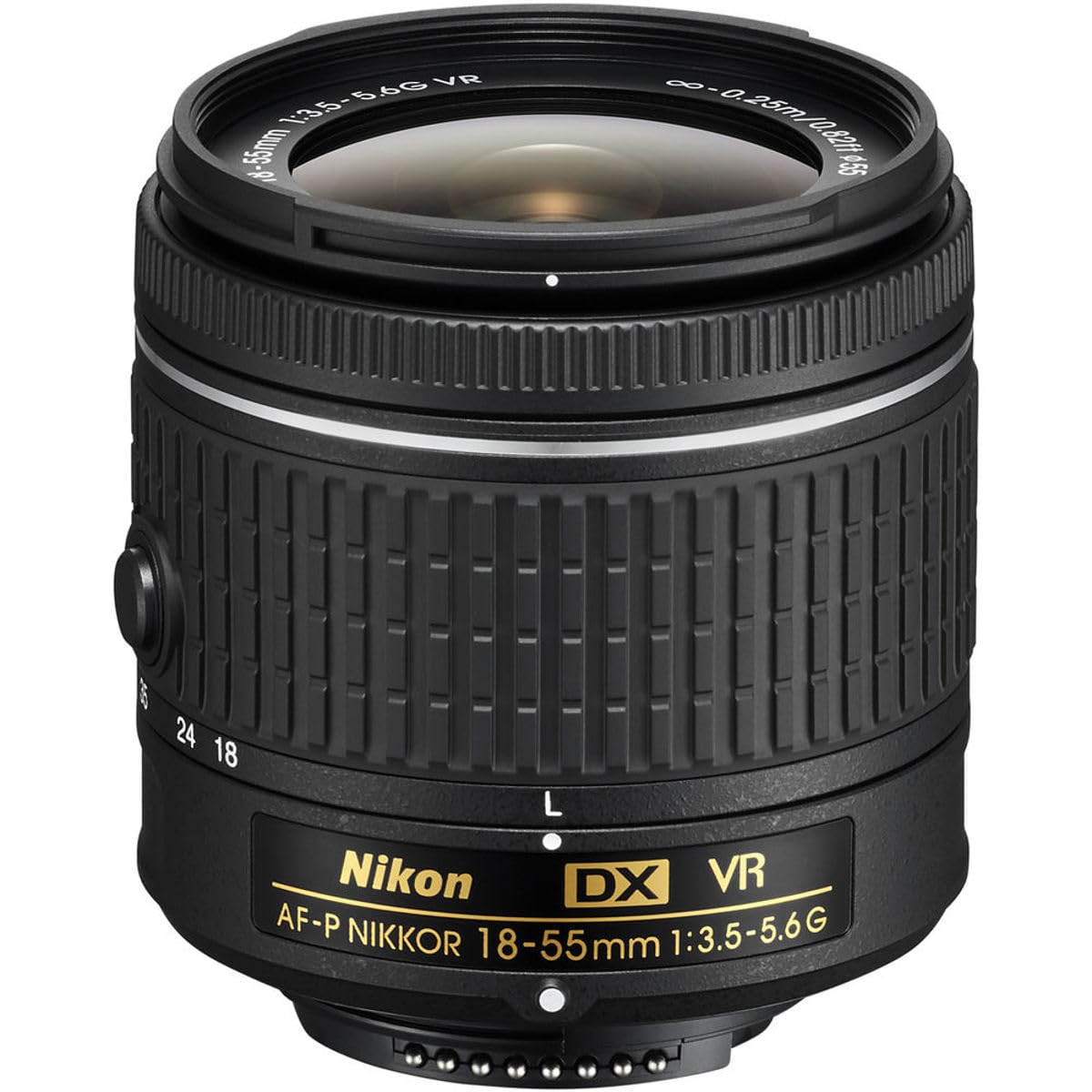
The Nikon AF-P DX 18-55mm f/3.5-5.6G VR is the latest iteration of Nikon’s standard zoom kit lens, and buying it used is the cheapest way to get VR image stabilization on your DX body. The stepping motor autofocus is silent and fast — a clear upgrade over older AF-S kit lenses. The 18-55mm range covers landscape to portrait-equivalent perspectives.
Optically, this lens is sharper than the VR II version it replaces, with better edge-to-edge consistency at f/5.6. VR reduces camera shake by up to 3.5 stops, making it usable for handheld video and low-light interiors. The 7-blade iris creates more circular bokeh than the 5-blade designs found on older budget zooms.
The major trap: AF-P lenses are not compatible with many older Nikon DSLRs. The D7000, D90, D300 series, D3100, and D3200 will not autofocus with this lens. Check your camera’s firmware version and compatibility list before purchasing. Also, the VR toggle is only accessible via the camera menu — there’s no physical switch on the barrel.
Why it’s great
- Silent stepping motor AF improves video audio quality
- VR stabilization enables sharper low-light handheld shots
- Improved optical formula over previous kit versions
Good to know
- Incompatible with many older Nikon DSLR bodies
- VR control only via camera menu, no physical switch
FAQ
Can I use a full-frame lens on my APS-C camera?
How do I check if an AF-P lens works with my Nikon DSLR?
What should I inspect on a used lens before buying?
Final Thoughts: The Verdict
For most users, the 2nd hand camera lens winner is the Nikon AF-P DX 70-300mm VR (Renewed) because it combines VR stabilization, a silent stepping motor, and ED glass at a price far below new. If you want ultra-wide prime sharpness for Sony full-frame, grab the Sony FE 20mm F1.8 G. And for beginner telephoto reach on Canon APS-C, nothing beats the value of the Canon EF-S 55-250mm IS.