
The jump from a mechanical drive to an internal SSD is the single most impactful upgrade you can make to any PC or laptop, but the choice today between SATA III, PCIe Gen 4, and the new PCIe Gen 5 interfaces is where the real decision begins. Your operating system boots, games load, and video projects render at speeds dictated entirely by the NAND flash controller and the PCIe lanes your motherboard provides, making the interface generation the primary spec to nail down before buying.
I’m Min — the co-founder and writer behind Gadgets Feed. I’ve spent hundreds of hours dissecting controller architectures, comparing NAND types (TLC vs. QLC), and correlating real-world transfer benchmarks with the advertised sequential speeds to separate marketing wins from genuine performance gains in this generation of solid-state storage.
Whether you are upgrading a legacy laptop with a SATA bay, slotting a Gen 4 drive into a PS5, or building a workstation around a Gen 5 slot, this guide breaks down the top contenders for the best 2tb internal solid state hard drive for your specific build and budget.
How To Choose The Best 2TB Internal Solid State Hard Drive
Selecting the right 2TB internal SSD boils down to three interconnected variables: the interface your motherboard supports (SATA III, PCIe 3.0, 4.0, or 5.0), the NAND flash type (TLC offers better endurance; QLC offers higher capacity at a lower cost), and whether you need a heatsink for sustained performance under heavy write workloads.
Interface Generation: SATA vs. NVMe PCIe 4.0 vs. PCIe 5.0
A SATA III SSD caps out around 550 MB/s, making it perfect for reviving older laptops or adding bulk game storage where load times are still a massive upgrade over a hard drive. NVMe PCIe Gen 4 drives (7,000–7,500 MB/s read) are the current sweet spot for gaming and content creation on modern motherboards and the PS5. PCIe Gen 5 drives (10,000–14,700 MB/s) only deliver their full speed on compatible Intel 13th/14th gen or AMD Ryzen 7000-series boards — installing one in a Gen 4 slot wastes its potential.
NAND Type: TLC vs. QLC and DRAM Cache
Triple-Level Cell (TLC) NAND offers higher write endurance (measured in TBW — Terabytes Written) and more consistent sustained write speeds compared to Quad-Level Cell (QLC) NAND, which is cheaper but slows down during large file transfers after the SLC cache fills. Drives with a dedicated DRAM cache (or HMB — Host Memory Buffer) maintain steady random read/write performance for operating system tasks, while DRAM-less drives rely on the system’s RAM.
Quick Comparison
On smaller screens, swipe sideways to see the full table.
| Model | Category | Best For | Key Spec | Amazon |
|---|---|---|---|---|
| Samsung SSD 9100 PRO 2TB | NVMe PCIe 5.0 | AI/Creator Workstations | 14,700 MB/s Read | Amazon |
| BIWIN Black Opal NV7400 2TB | NVMe PCIe 4.0 | PS5 & High-End Gaming | 7,450 MB/s Read | Amazon |
| Bestoss GM988 2TB NVMe | NVMe PCIe 4.0 | Budget Gen 4 Upgrade | 7,350 MB/s Read | Amazon |
| WD Blue SN5100 2TB | NVMe PCIe 4.0 | Everyday PC & Creative | 7,100 MB/s Read | Amazon |
| Kingston NV3 2TB | NVMe PCIe 4.0 | Laptop/Desktop OS Drive | 6,000 MB/s Read | Amazon |
| Crucial BX500 2TB | SATA III | Legacy Laptop Upgrade | 540 MB/s Read | Amazon |
| TEAMGROUP T-Force Vulcan Z 2TB | SATA III | Budget Bulk Game Storage | 550 MB/s Read | Amazon |
| fanxiang S101 4TB | SATA III | Max SATA Capacity | 500 MB/s Read | Amazon |
| Lexar ES3 1TB External | External USB-C | Portable Mac/iPad Storage | 1,050 MB/s Read | Amazon |
In‑Depth Reviews
1. Samsung SSD 9100 PRO 2TB

The Samsung 9100 PRO 2TB sets a new ceiling for consumer internal SSDs with its PCIe 5.0 x4 interface delivering sequential read speeds up to 14,700 MB/s and writes up to 13,400 MB/s — roughly double the throughput of the previous generation 990 PRO. This is the drive for users who regularly move 100GB+ video files, run local AI model inference, or compile large codebases where every second of I/O latency reduction compounds into minutes saved per session.
Under the hood, the 5nm controller improves power efficiency by up to 49% over the 990 PRO, but the drive still requires active motherboard cooling or a robust aftermarket heatsink to avoid thermal throttling during sustained writes. Customers reported idle temperatures in the low 50s°C and load temps hitting 57°C under a GPU when using a third-party heatsink — within spec but warm enough to warrant attention in tight laptop chassis.
Samsung Magician software remains one of the best proprietary drive management suites, offering firmware updates, drive health monitoring, and hardware encryption. The 2TB model comes with a 2GB DRAM cache, ensuring consistent random IOPS for multitasking workloads. This is the undisputed flagship if your motherboard has a Gen 5 M.2 slot and your workflow demands maximum bandwidth.
Why it’s great
- Industry-leading sequential throughput at 14.7 GB/s
- 5nm controller delivers best-in-class power efficiency for PCIe 5.0
- Full Samsung Magician suite with robust firmware and encryption features
Good to know
- Requires a Gen 5 motherboard slot — wasted in PCIe 4.0 mode
- Runs hot without an adequate M.2 heatsink
- Premium price positions it above the value of most users’ needs
2. BIWIN Black Opal NV7400 2TB

The BIWIN Black Opal NV7400 2TB hits the Gen 4 performance ceiling at 7,450 MB/s sequential reads and 6,500 MB/s writes, making it an ideal match for a PS5 expansion slot or a desktop gaming rig on a Z690/B650 board. It uses 3D TLC NAND with a 0.5mm graphene aluminum heatsink that kept drive temperatures at a consistent 42°C as an OS drive in user reports — well within the safety zone without requiring extra cooling hardware.
BIWIN includes PMIC power management for better energy efficiency and HMB (Host Memory Buffer) technology that uses system RAM to handle the mapping table, which is a common DRAM-less architecture. The random read/write performance reaches 1,000K IOPS, which translates to snappy app launches and quick texture streaming in open-world games. The NV7400 also comes with free BIWIN Intelligence software for performance testing and firmware updates.
Installation is straightforward for any M.2 2280 slot, and a small set screw is included in the package — a thoughtful touch that many premium drives omit. At this price point and performance level, the NV7400 competes directly with the WD SN850X and Samsung 990 PRO, often undercutting them while delivering nearly identical synthetic benchmarks.
Why it’s great
- Class-leading 7,450 MB/s read speed for full Gen 4 saturation
- Integrated graphene heatsink keeps temps stable without motherboard cooling
- Included screw kit and management software add genuine value
Good to know
- DRAM-less design relies on HMB for mapping table management
- BIWIN brand recognition is lower than Samsung or WD
- Warranty length is not explicitly stated in the package
3. Bestoss GM988 2TB NVMe
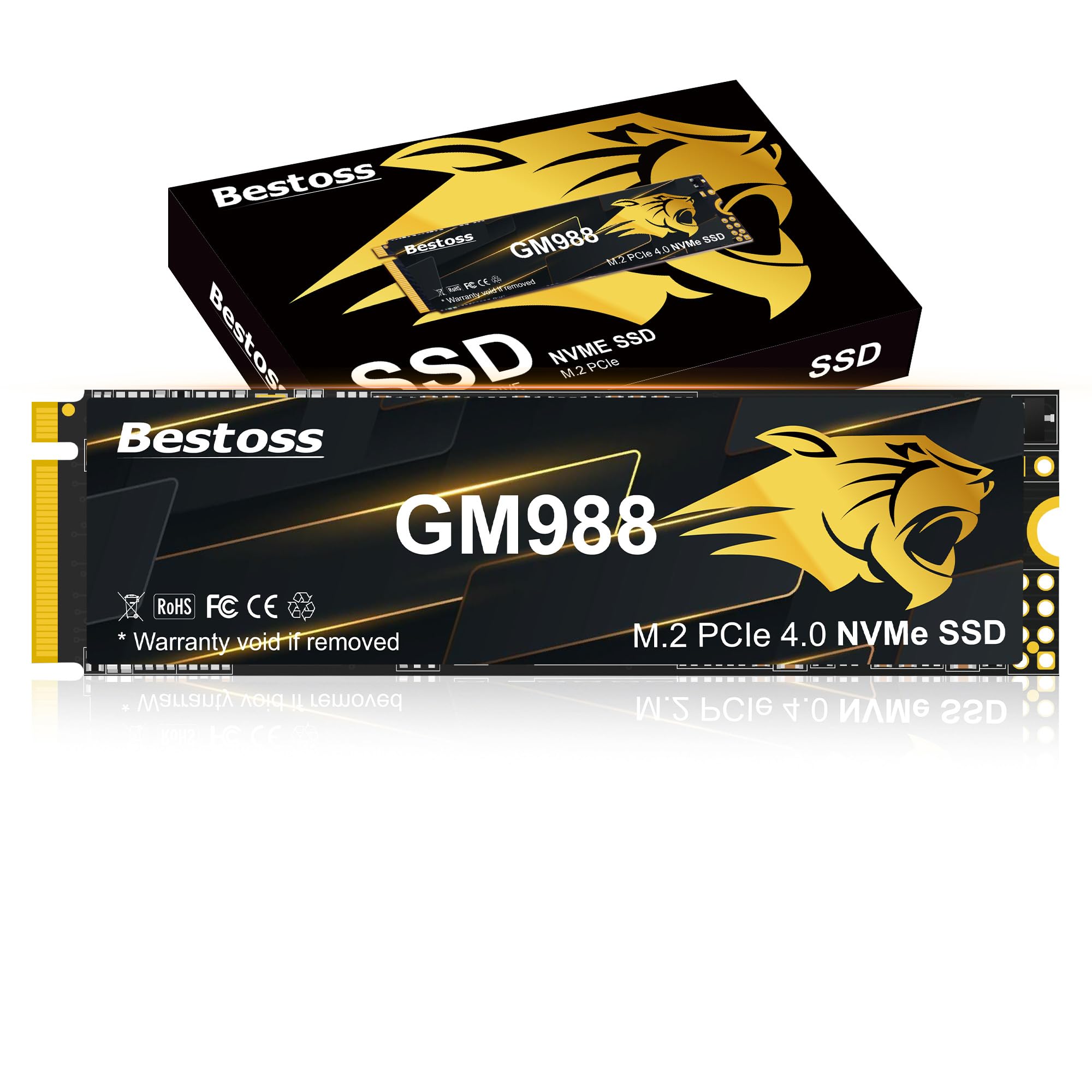
The Bestoss GM988 2TB NVMe is a PCIe Gen 4 drive that claims sequential read speeds up to 7,350 MB/s and writes up to 6,600 MB/s, punching well above its price bracket. It uses a graphene copper cooler to manage heat, and several user reviews confirm the drive works flawlessly inside a PS5 and in laptops like the Alienware m17 R3, maintaining stable performance without throttling during extended gaming sessions.
The GM988 employs HMB plus Dynamic SLC Cache to sustain burst write performance, though the sustained write speed after the SLC cache fills will depend on the underlying NAND architecture — a common trade-off at this price level. The included 3-year limited warranty and lifetime technical support provide a safety net that offsets the relative obscurity of the Bestoss brand.
For users building a mid-range gaming PC or upgrading a workstation on a strict budget, the GM988 offers near-flagship Gen 4 speeds at a fraction of the cost of premium options. The drive supports Windows and Linux out of the box, and its PS5 compatibility is confirmed by multiple buyers who reported zero installation issues.
Why it’s great
- Very competitive Gen 4 speed for the price
- Compatible with PS5 and wide range of laptops/desktops
- Graphene copper cooling reduces thermal throttling risk
Good to know
- Brand has limited track record compared to Samsung or WD
- Sustained write performance may dip after SLC cache fills
- DRAM-less design relies entirely on HMB
4. WD Blue SN5100 2TB
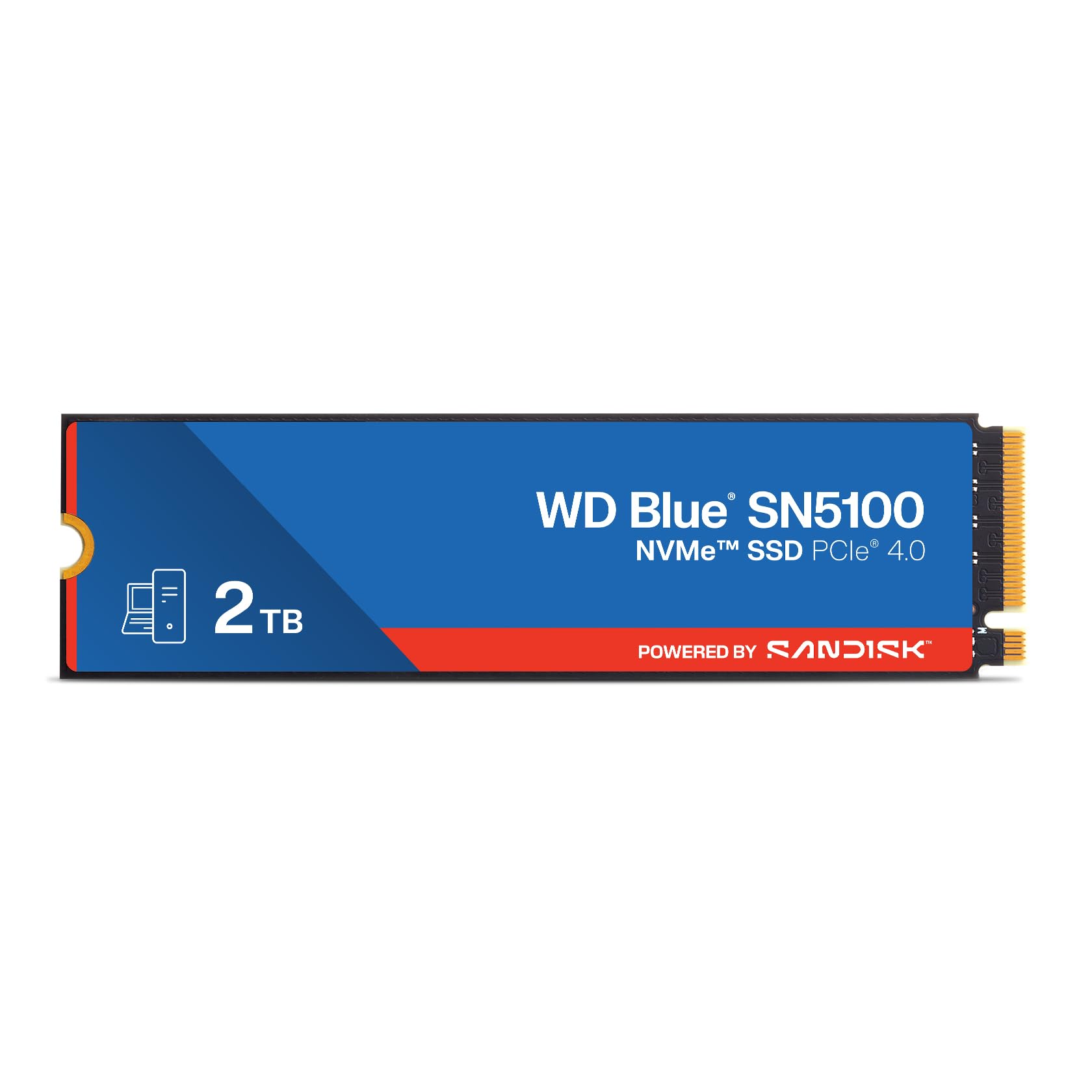
The WD Blue SN5100 2TB targets the creative professional who needs reliable PCIe Gen 4 performance (7,100 MB/s read) without the premium of the WD Black lineup. It leverages Sandisk 3D CBA NAND technology and nCache 4.0 for accelerated large-file copying, making it a solid choice for photo libraries, 4K video proxy editing, and daily OS duties where consistent throughput matters more than peak burst speeds.
Sandisk backs the SN5100 with a robust 5-year limited warranty, which signals confidence in the NAND endurance. The included Acronis True Image for Sandisk download simplifies data migration from an old drive — a major convenience for users upgrading a laptop or pre-built desktop. Several buyers reported using two SN5100 units in a RAID 0 pair without issues, demonstrating solid driver stability.
One practical note: the drive ships without a mounting screw, so you will need to source an M.2 screw from your motherboard kit. The form factor is standard M.2 2280, compatible with almost any modern laptop or desktop that supports NVMe. For a balanced, high-confidence upgrade from an older SATA or Gen 3 drive, the SN5100 is a well-rounded workhorse.
Why it’s great
- 5-year warranty with proven Sandisk NAND reliability
- nCache 4.0 technology accelerates large file transfers
- Free Acronis migration software included for easy upgrades
Good to know
- No mounting screw included in the package
- Speeds are slightly lower than top-tier Gen 4 drives
- DRAM-less design may affect random performance in heavy multitasking
5. Kingston NV3 2TB

The Kingston NV3 2TB is a PCIe Gen 4 drive rated at 6,000 MB/s sequential reads, which is about 20% slower than the Gen 4 ceiling but perfectly adequate for boot drives, game libraries, and general productivity. Kingston’s reputation for reliable NAND and consistent firmware makes this a low-worry choice for users who prioritize stability over chasing the highest synthetic score.
Users reported the drive running cool and stable inside a Mac Studio via a Thunderbolt hub, as well as inside older ThinkPads where it still delivered over 1,300 MB/s read due to the PCIe 3.0 lane limitation. That backward compatibility is a key strength — the NV3 works in Gen 3 slots without issue, making it a future-proof option for a system you might upgrade later.
The 2TB capacity uses 3D TLC NAND and includes support for TRIM and S.M.A.R.T monitoring. Kingston does not specify a DRAM cache in the slim product documentation, so this likely uses an HMB architecture. For a simple, no-nonsense upgrade that boots your system in seconds and keeps apps snappy, the NV3 is a reliable workhorse from a trusted brand.
Why it’s great
- Trusted Kingston build quality and firmware stability
- Full backward compatibility with PCIe Gen 3 slots
- Runs cool without needing a dedicated heatsink
Good to know
- 6,000 MB/s is mid-tier for Gen 4 — not for bandwidth-bound workflows
- Likely uses HMB instead of dedicated DRAM
- No software suite or migration tool included
6. Crucial BX500 2TB

The Crucial BX500 2TB is a SATA III 2.5-inch SSD that delivers up to 540 MB/s sequential reads — roughly the SATA interface cap and a massive leap over any mechanical hard drive. For users reviving an older laptop with a 2.5-inch bay, or adding a dedicated game storage drive to a desktop with spare SATA ports, the BX500 offers the most cost-effective path to instant boot times and silent operation.
Powered by Micron 3D NAND (the same parent company that manufactures Crucial), the BX500 uses a DRAM-less architecture that relies on the SLC cache for burst writes. Buyers reported boot times under 15 seconds on a 2018 laptop and transfer speeds up to 323 GB/s (likely a misreported figure for GB/s, but the sentiment confirms excellent real-world performance). The drive is 45x more energy efficient than a spinning hard drive, which can extend laptop battery life.
The 3-year limited warranty from Crucial/Micron provides solid assurance, though some users noted the bundled Acronis cloning software failed during large-capacity migrations (DiskGenius worked as a replacement). If your system lacks an M.2 slot or you simply want to max out SATA storage affordably, the BX500 is a proven choice.
Why it’s great
- Maximum SATA III speeds for legacy laptop upgrades
- Very energy efficient — extends battery life over HDDs
- Micron 3D NAND with 3-year Crucial warranty
Good to know
- DRAM-less design with SLC cache — sustained writes may drop
- QLC NAND may have lower endurance than TLC alternatives
- Branded software can be unreliable for large clones
7. TEAMGROUP T-Force Vulcan Z 2TB

The TEAMGROUP T-Force Vulcan Z 2TB is a SATA III 2.5-inch internal SSD that targets gamers on a tight budget who need drop-in storage for older consoles or secondary PC drives. It advertises sequential read/write speeds of 550/470 MB/s, which is at the top end of the SATA III spec, and uses 3D NAND QLC with an SLC cache to maintain burst performance.
Customer experiences are mixed regarding consistency. While multiple buyers reported five-star experiences with drives running strong for years (one user purchased four units in 2023 for a media server), another review flagged that the drive underperformed its advertised spec, delivering 402/343 MB/s in testing — a 20% deficit. This suggests potential NAND quality variation between batches, which is a known risk with entry-level QLC drives.
The Vulcan Z is compatible with PS5, Xbox Series X/S, and desktop PCs via standard SATA III. It includes an intelligent health monitoring feature and a TB-level capacity for worry-free game storage. For users who prioritize the lowest possible entry price for a 2TB SATA drive and can accept some performance variance, the T-Force Vulcan Z is a viable option.
Why it’s great
- Very low price per gigabyte in the SATA market
- Compatible with PS5 and Xbox for external storage expansion
- Multiple users reported long-term reliability over 3 years
Good to know
- QLC NAND with SLC cache — performance varies between units
- Some units underperform advertised sequential speeds
- Not ideal for OS drive due to potential speed inconsistencies
8. fanxiang S101 4TB

It reads up to 500 MB/s and uses 3D NAND with an SLC cache and S.M.A.R.T monitoring, making it a compelling option for a media server, a dedicated game install drive, or a massive upgrade for a laptop with a single 2.5-inch bay.
Buyer feedback is positive overall, with users noting boot times under 10 seconds on older laptops and large file transfers completing quickly for a SATA drive. However, there are isolated reports of corruption after a few months of use, particularly in older systems that may have underlying power delivery issues. The drive includes a 3-year after-sales service and lifetime technical support from fanxiang.
The S101 supports TRIM, ECC, and advanced wear-leveling for improved reliability, and it works with Windows, Linux, and macOS without additional drivers. If your primary need is cramming the most storage into a SATA-limited machine without breaking the bank, the fanxiang S101 4TB delivers the highest density in a familiar 2.5-inch form factor.
Why it’s great
- 4TB capacity — highest in the SATA 2.5-inch class
- Boot times under 10 seconds on legacy hardware
- Strong SLC cache for burst writes
Good to know
- Some reports of failure after several months of use
- fanxiang is a lesser-known brand with limited support infrastructure
- SATA III speeds are a limiting factor for productivity workflows
9. Lexar ES3 1TB External
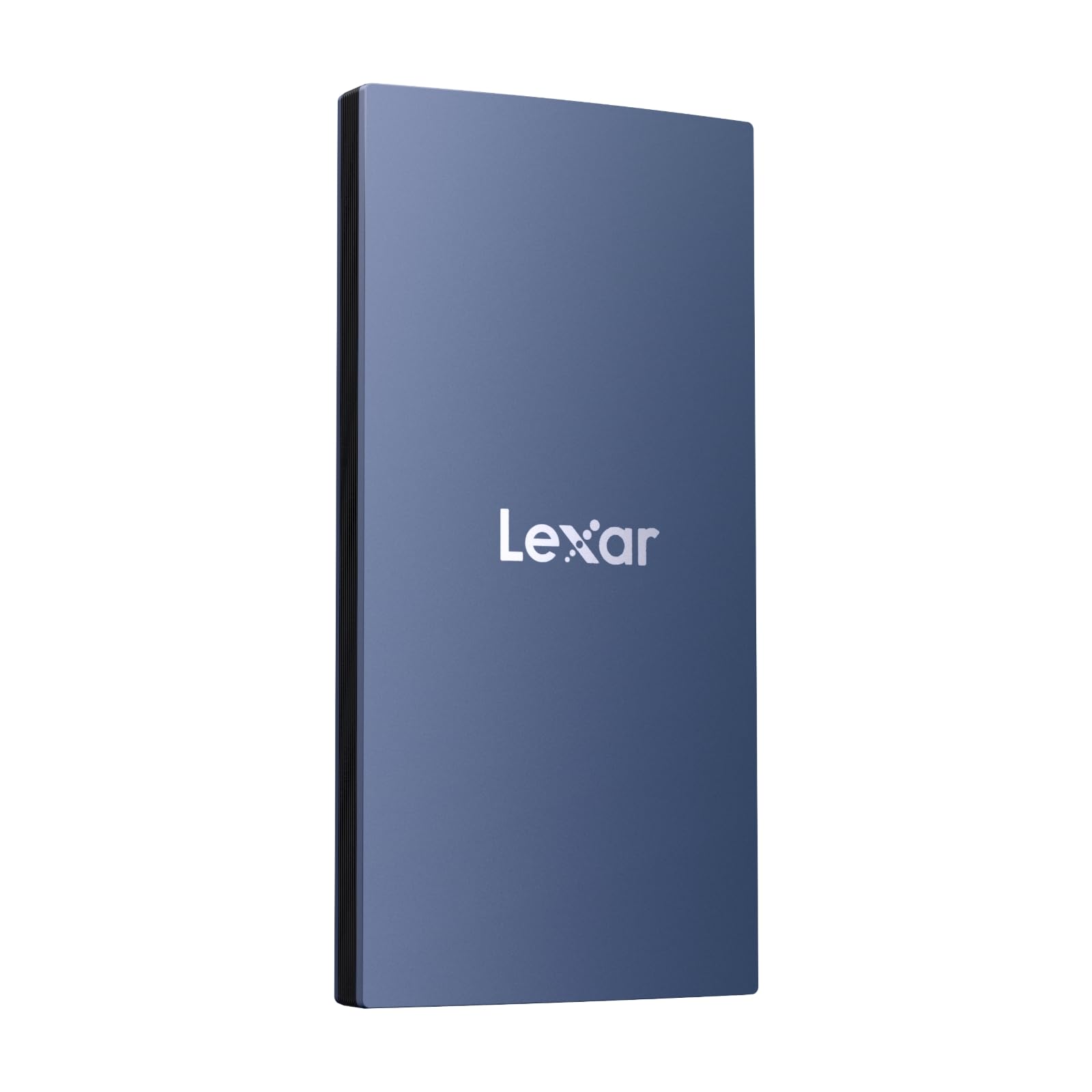
The Lexar ES3 1TB External SSD is not an internal drive, but it serves users who need blazing-fast portable storage that works seamlessly with iPhone 17 series, MacBooks, iPads, and gaming consoles via a USB 3.2 Gen 2 Type-C connection. Its compact form factor weighs just 42g and is only 10.5mm thick, smaller than a credit card, making it ideal for on-the-go backups and media transfers.
The drive delivers up to 1,050 MB/s reads and 1,000 MB/s writes when connected to a USB 3.2 Gen 2 port, and it is compatible with PS4, PS5, Xbox Series X/S, and Android devices. Lexar includes DataShield 256-bit AES encryption software for file protection, and the drive works out of the box with Macs without needing formatting — a major convenience for Apple ecosystem users.
While the ES3 is limited to 1TB (not the 2TB of the other entries), its portability and wide device compatibility make it a valuable companion for creative professionals who shuttle files between devices. Note that MagSafe attachment is not available on this version, and the iPhone 17 compatibility does not extend to iPhone 14 or older models.
Why it’s great
- Ultra-portable 42g design — smaller than a credit card
- USB 3.2 Gen 2 speeds up to 1,050 MB/s
- Works with iPhone 17, Mac, PS5, and Xbox out of the box
Good to know
- 1TB capacity — half the storage of the 2TB-focused roundup
- External SSD, not an internal drive for fixed installation
- No MagSafe support in this version
FAQ
Can I use a PCIe Gen 5 SSD in a Gen 4 slot?
How do I tell if my laptop supports a 2.5-inch SATA or an M.2 NVMe SSD?
Does an SSD always need a heatsink?
What is TBW and why does it matter?
Final Thoughts: The Verdict
For most users, the best 2tb internal solid state hard drive winner is the BIWIN Black Opal NV7400 2TB because it delivers the full PCIe Gen 4 ceiling at a price that undercuts premium brands while including a graphene heatsink and a free screw kit. If you need bleeding-edge PCIe Gen 5 speed for AI and video workloads, grab the Samsung SSD 9100 PRO 2TB. And for the most cost-effective upgrade to an older laptop or a bulk storage drive, nothing beats the Crucial BX500 2TB for pure SATA value.