
TV speakers have a dirty secret: they physically cannot produce the spatial audio your 4K screen deserves. A 3.1.2 soundbar solves that by adding two dedicated up-firing channels that bounce sound off your ceiling, creating the overhead dimension that Dolby Atmos demands. Without those upward-firing drivers, you are hearing a flat mix — missing the helicopter flyover and the rain on the roof.
I’m Min — the co-founder and writer behind Gadgets Feed. I’ve spent countless hours cross-referencing driver configurations, wireless codecs, and real-world user reports to separate the bars that genuinely simulate height from those that just claim to. This guide ranks the top 11 models based on measurable acoustic performance, not marketing buzzwords.
After weeks of comparing channel counts, subwoofer sizes, and HDMI eARC compatibility, I’ve built the definitive ranking of the best 3.1.2 soundbar options for every room size and budget tier.
How To Choose The Best 3.1.2 Soundbar
A 3.1.2 soundbar delivers three front channels (left, center, right), one subwoofer channel, and two overhead-firing channels. That configuration is the sweet spot for Atmos: the center channel locks dialogue to the screen, while the up-firing drivers create a believable height layer without requiring ceiling-mounted speakers. Before you buy, evaluate these three pillars.
Driver Configuration and Up-Firing Authenticity
Not every “3.1.2” soundbar is built the same. True 3.1.2 systems have physically separate up-firing drivers angled toward your ceiling. Models that rely on psychoacoustic processing to simulate height without dedicated drivers deliver a noticeably weaker vertical soundstage. Look for explicit driver counts — if a spec sheet mentions “virtual” surround instead of “up-firing,” the overhead effect will be muted in side-by-side comparison.
Wireless Subwoofer Integration and Bass Extension
The .1 in 3.1.2 refers to the dedicated subwoofer channel, but subwoofer size and driver material vary wildly. An 8-inch driver with a bass-reflex port can shake a medium living room, while a 6.5-inch sealed unit is better suited for apartments where deep bass would disturb neighbors. Check whether the subwoofer connects via dedicated 2.4 GHz wireless or standard Bluetooth — dedicated wireless links have lower latency and fewer dropouts during intense movie scenes.
HDMI eARC Passthrough and Gaming Support
For a modern home theater, the soundbar must support HDMI eARC to pass lossless Dolby Atmos and DTS:X from your TV. Gamers need 4K 120Hz passthrough to maintain high refresh rates from a PlayStation 5 or Xbox Series X. Some mid-range bars cap at 4K 60Hz, which introduces input lag on fast-paced titles. Verify the HDMI version before purchase — HDMI 2.1 is the gold standard for passthrough bandwidth.
Quick Comparison
On smaller screens, swipe sideways to see the full table.
| Model | Category | Best For | Key Spec | Amazon |
|---|---|---|---|---|
| Samsung Q990D | Premium | Full cinema immersion with rears | 11.1.4 channels, 4 up-firing drivers | Amazon |
| Sonos Arc Ultra | Premium | Music-first multi-room ecosystem | 9.1.4 channels, Sound Motion tech | Amazon |
| JBL Bar 1300XMK2 | Premium | Room-shaking bass & detachable rears | 12″ subwoofer, 6 up-firing drivers | Amazon |
| JBL Bar 1300X | Premium | Detachable battery-powered surrounds | 1170W total power, 12″ sub | Amazon |
| Bose Smart Ultra | Premium | AI-enhanced dialogue clarity | 6 transducers, TrueSpace processing | Amazon |
| Bose Smart 600 + Bass Module | Mid-range | Compact bundle with wall mounts | Dolby Atmos, Bass Module 500 included | Amazon |
| Sony BRAVIA Theater Bar 6 | Mid-range | Voice Zoom 3 with BRAVIA TVs | 160mm wireless sub, DSEE up-mixer | Amazon |
| Klipsch Flexus CORE 200 | Mid-range | Horn-loaded tweeter for vocal clarity | 4 x 2.25″ ceramic drivers, 2 built-in subs | Amazon |
| Samsung HW-Q600F | Mid-range | Q-Symphony with Samsung TVs | AI Adaptive Sound, Game Pro Mode | Amazon |
| LG S70TY | Mid-range | WOW Orchestra with LG QNED TVs | Up-firing center channel, 4K 120Hz pass | Amazon |
| Hisense AX3120Q | Budget | Best bang-for-buck Atmos entry | 6.5″ sub, 7 EQ presets, Bluetooth 5.3 | Amazon |
In‑Depth Reviews
1. SAMSUNG Q990D 11.1.4ch Soundbar

The Samsung Q990D is the definitive 3.1.2 experience blown out to 11.1.4 channels — it includes a dedicated rear speaker kit with side- and up-firing drivers out of the box, something no other soundbar in this list does at this tier. The result is a full bubble of spatial audio with true overhead presence from the four up-firing channels, not just a vague front-wall of sound. The wireless subwoofer pairs instantly, and Q-Symphony lets Samsung TV speakers and the bar operate as a single unified array.
Game Mode Pro automatically detects a connected console and shifts the soundstage to emphasize directional cues, which is critical for competitive shooters where footstep location matters. The HDMI eARC port supports 4K 120Hz passthrough, so the PlayStation 5 or Xbox Series X retains full bandwidth. SpaceFit Sound Pro analyzes your room’s acoustics in real time and adjusts EQ and bass levels accordingly — a feature that fixes muddy low-end in oddly shaped living rooms.
At its price point, the Q990D competes with the Sonos Arc Ultra and the JBL Bar 1300X, but it wins on value because the rears and sub are in the box. The only recurring complaint is an occasional one-second audio dropout over eARC — a documented issue that Samsung has addressed with firmware updates, but buyers should update immediately via USB rather than relying on OTA.
Why it’s great
- Truly immersive 11.1.4 sound with included rear satellites
- 4K 120Hz HDMI 2.1 passthrough for next-gen gaming
- SpaceFit Sound Pro automatically calibrates to your room
Good to know
- May require manual firmware update via USB to fix eARC dropouts
- Bulky subwoofer requires floor space
2. Sonos Arc Ultra Soundbar 9.1.4

The Sonos Arc Ultra uses an entirely reengineered acoustic architecture called Sound Motion that packs more driver displacement into a slimmer chassis. With 9.1.4 channels — including four dedicated height channels — it produces the most convincing overhead Atmos bubble without requiring a separate subwoofer for bass extension. The AI-powered Speech Enhancement mode dynamically adjusts the center channel to pull dialogue above the background score, which is a lifesaver for Christopher Nolan movies where the score often buries the conversation.
Trueplay room calibration uses the microphone on your iPhone to map the dimensions and furniture placement of your room, then fine-tunes each driver’s timing and EQ. The result is a soundstage that feels wider than the physical bar — voices appear locked to the screen, and sound effects pan smoothly into the side walls. The Arc Ultra supports Sonos Voice Control and Amazon Alexa, and it integrates into a whole-home multi-room system natively. Streaming via AirPlay 2, Spotify Connect, or the Sonos app is flawless.
The biggest consideration is the ecosystem lock-in: to get true surround, you need to add the Sonos Sub and Era 300 rears, which doubles the total investment. As a standalone bar, the Arc Ultra outperforms the Bose Smart Ultra for music fidelity and spatial accuracy, but the Q990D delivers a more complete cinema experience at a lower price because it includes the rears and sub in the box.
Why it’s great
- Room-filling 9.1.4 spatial audio from a single bar
- AI Speech Enhancement for crystal-clear dialogue
- Trueplay room calibration tailored to your space
Good to know
- Full surround requires expensive add-on sub and rears
- Setup requires the Sonos app and an internet connection
3. JBL Bar 1300XMK2 11.1.4 Channel
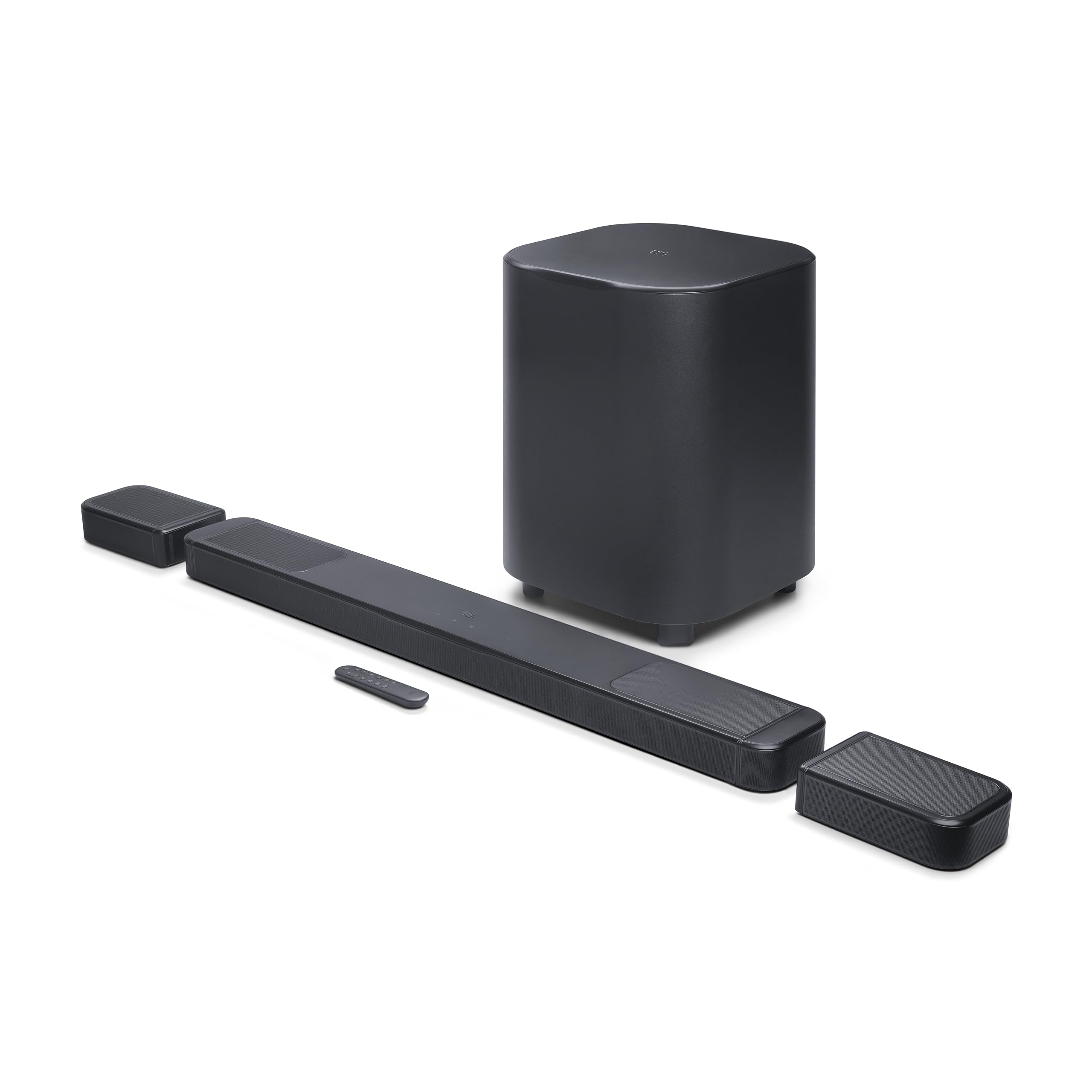
The JBL Bar 1300XMK2 is the most aggressive soundbar on this list when it comes to low-frequency headroom. Its 12-inch wireless subwoofer produces chest-thumping bass that rivals dedicated subwoofers in traditional 5.1 systems. The soundbar itself houses six up-firing drivers — two in the main bar and two in each detachable surround speaker — creating a full Atmos bubble without the need for ceiling-mounted speakers. The detachable surrounds are battery-powered and latch magnetically onto the main bar to recharge, so there are zero wires behind your seating position.
PureVoice 2.0 is JBL’s proprietary dialogue enhancement that analyzes ambient noise in the scene and your volume level to boost vocal frequencies without making explosions sound tinny. MultiBeam 3.0 expands the virtual soundstage by steering beams toward the side walls, which is particularly effective in open-concept living rooms where the soundbar must fill a wide space. The SoundShift feature lets you broadcast the TV audio to one detachable speaker while you move to the kitchen — a genuinely useful trick for sports fans.
The Achilles’ heel is the “Smart Mode” that resets to default every time the bar powers on, forcing users to re-select their preferred EQ and night mode settings via the JBL ONE app. Some users also report that the right surround speaker develops a clicking sound over time, though JBL’s warranty covers replacement. Despite these quirks, the 1300XMK2 delivers more visceral bass than the Samsung Q990D and more portable rear flexibility than the Sonos Arc Ultra.
Why it’s great
- Massive 12-inch wireless subwoofer for deep, room-shaking bass
- Detachable battery-powered surrounds with up-firing drivers
- PureVoice 2.0 keeps dialogue intelligible even at low volume
Good to know
- Smart Mode resets to default on each power cycle
- Rear speaker battery life is around 4-5 hours per charge
4. JBL Bar 1300X 11.1.4 Channel

The original JBL Bar 1300X shares the same detachable surround speaker design as the MK2 but at a slightly lower total power output of 1170W compared to the newer model’s 1570W. The 12-inch subwoofer is identical — it moves enough air to make the floorboards vibrate during action sequences. The four up-firing drivers (two on the main bar, one on each detachable speaker) deliver a convincing height layer, though the overall soundstage feels slightly less refined than the MK2’s due to the older MultiBeam processing.
Setup is genuinely wireless: the rear speakers clip onto the bar for charging and require no power cables behind your couch. For apartment dwellers, the Night Mode significantly reduces the subwoofer output without completely muting it. The soundbar supports Wi-Fi with AirPlay 2, Chromecast, and Alexa multi-room music — all the streaming standards are covered. Dialogue reproduction is solid with the dedicated center channel, though it lacks the AI enhancement found on the MK2.
The biggest drawback is the lack of a wired subwoofer output if you ever want to upgrade the bass module. Some early units had a clicking issue with the right surround speaker, and Amazon support sometimes offers a refund rather than a replacement. If the price gap to the MK2 is small, the newer model is the better buy, but the 1300X remains a formidable choice for buyers prioritizing bass impact and wireless flexibility.
Why it’s great
- Detachable rears with battery — true wireless surround
- Powerful 12-inch subwoofer with room-filling bass
- Wide streaming support including AirPlay 2 and Chromecast
Good to know
- No wired subwoofer output for future upgrades
- Smart Mode resets to default on power-on
5. Bose Smart Ultra Dolby Atmos Soundbar

The Bose Smart Ultra Soundbar packs six transducers, including two custom-engineered upward-firing dipole speakers, into a chassis that is only 2.25 inches tall. TrueSpace technology analyzes incoming audio in real time and upmixes stereo content into a spatial sound field, making even standard YouTube videos feel wider. The A.I. Dialogue Mode is not a simple EQ boost — Bose trained it on thousands of hours of content to isolate the human voice and dynamically pull it forward without crushing the surround effects. It is the most effective dialogue enhancement system on this list, beating the Sony and Samsung solutions in side-by-side tests.
ADAPTiQ room calibration uses a supplied headset to measure five listening positions around your room, then adjusts the timing and output of each driver. The bar supports Amazon Alexa and Google Assistant, plus Bose Voice4Video lets you control the TV and cable box with voice commands — no remote needed. The ultra-compact design means it fits under most TVs without blocking the bottom bezel, even on shallow media consoles.
The catch is that the Smart Ultra is a single-bar system. The subwoofer is not included, and the bass from the built-in drivers is adequate but not thunderous. To match the Samsung Q990D’s low-end punch, you need the Bose Bass Module 700, which adds significant cost. The app-dependent setup process also frustrates some users — the physical remote is nearly useless without the app. If you value dialogue clarity and a clean design over absolute bass power, this is the bar to beat.
Why it’s great
- AI Dialogue Mode delivers industry-best vocal clarity
- ADAPTiQ room calibration with five measurement points
- Ultra-slim design fits under most TV bezels
Good to know
- Subwoofer sold separately — bass sounds thin without it
- App-dependent setup can be frustrating for less tech-savvy users
6. Bose Smart Soundbar 600 with Bass Module 500
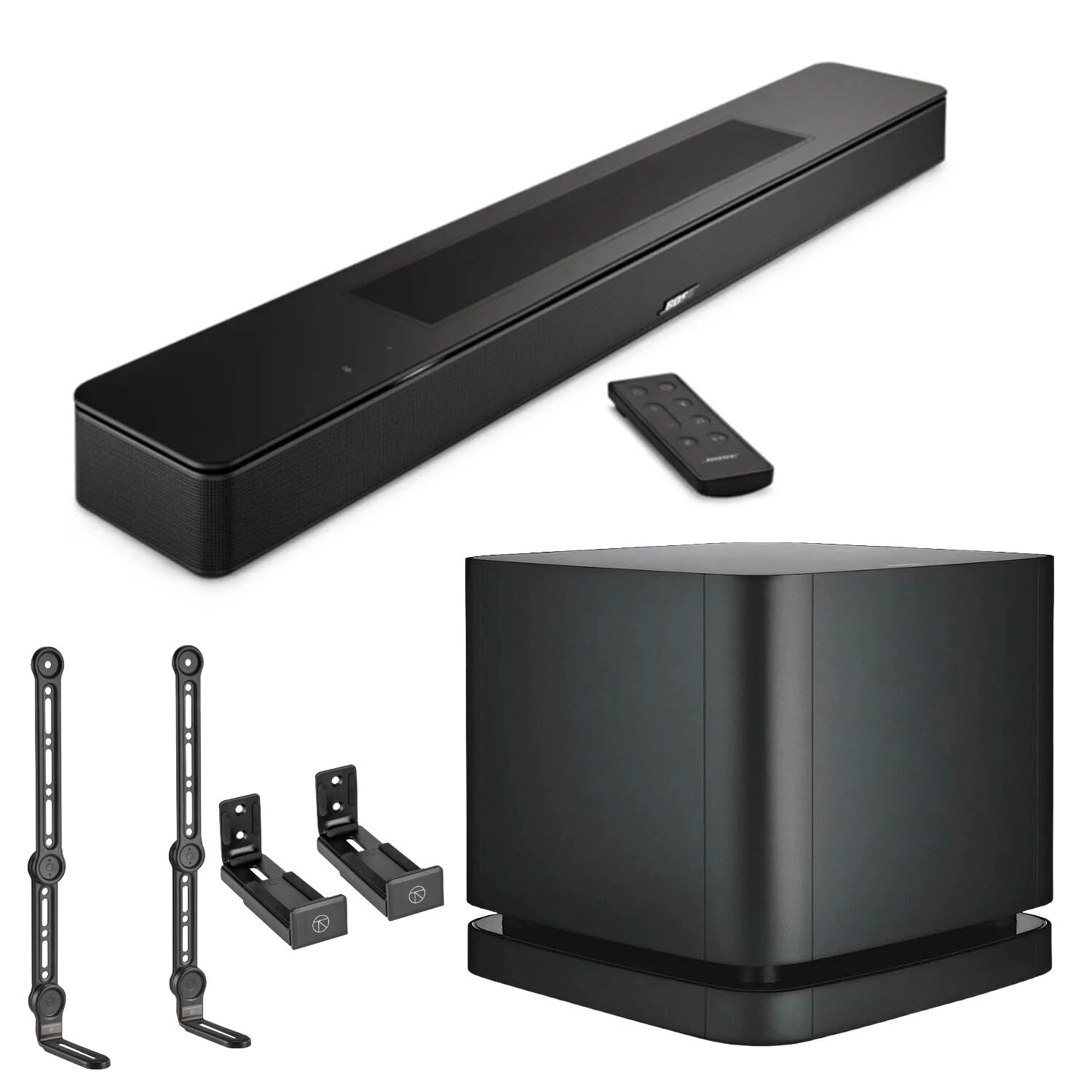
This bundle pairs the Bose Smart Soundbar 600 — a 3.0.2 bar with Dolby Atmos and TrueSpace — with the Bass Module 500 wireless subwoofer, plus a Turnstile wall-mount kit. The soundbar itself has two upward-firing drivers that create a height effect surprisingly close to the Smart Ultra, given the price gap. TrueSpace upmixes stereo and 5.1 content to simulate overhead audio, and while it is not as convincing as the Ultra’s dipole design, it is perfectly serviceable for casual movie watching.
The Bass Module 500 uses a 5.25-inch driver in a compact sealed enclosure that pairs elegantly with the small soundbar. It digs down to around 40 Hz, which is enough for action movies and hip-hop without rattling the walls. The bundle also includes wall-mount brackets that attach to the back of a TV stand or directly to the wall, saving you the hassle of buying separate hardware. The Bose Music app provides full EQ control, and voice assistants work without a hitch.
The limitation is that the Soundbar 600 is a 3.0.2 system, not 3.1.2 — the .1 comes from the bundled subwoofer, which is fine, but there is no dedicated center channel driver. Dialogue clarity is good but not at the level of the Ultra or the Sony. For buyers who want the Bose ecosystem and a dedicated subwoofer at a lower entry point than the Ultra 700 bundle, this is a smart compromise.
Why it’s great
- Includes dedicated Bass Module 500 subwoofer in one box
- TrueSpace upmixing creates a convincing virtual Atmos layer
- Wall-mount brackets included for a clean install
Good to know
- No separate center channel driver for dialogue
- Setup process is heavily app-dependent
7. Sony BRAVIA Theater Bar 6 HT-B600

The Sony BRAVIA Theater Bar 6 is a 3.1.2-channel system designed to pair seamlessly with Sony’s BRAVIA TV lineup. The dedicated center channel speaker and two up-firing drivers handle Dolby Atmos and DTS:X with authority, and the included wireless subwoofer uses a 160mm (6.3-inch) bass-reflex driver that delivers deep, rich low-end without dominating the room. Voice Zoom 3 is Sony’s answer to dialogue enhancement: it analyzes the incoming audio and adjusts vocal prominence in real time, and when paired with a compatible BRAVIA TV, the TV’s processor assists in the analysis for even better results.
The BRAVIA Connect app allows you to adjust sound profiles, set up the bar, and access advanced settings like the DSEE up-mixer, which restores high-frequency detail to compressed audio streams from streaming services. The bar supports Bluetooth streaming, but the codec is limited to SBC — no LDAC or aptX — so audiophiles will want to use HDMI eARC for lossless playback. The design is sleek and low-profile, measuring just over 2.5 inches tall, fitting under most Sony TVs without blocking the infrared receiver.
The main trade-off is that the Theater Bar 6 is optimized for Sony TVs — features like Voice Zoom 3 and automatic sound mode selection are less effective with other brands. The music playback profile leans heavily into vocals and midrange, which is excellent for dialogue but can leave rock and electronic tracks feeling a bit thin in the upper bass. For Sony TV owners, this is a no-brainer upgrade; for everyone else, the Samsung or Bose options offer more flexibility.
Why it’s great
- Voice Zoom 3 delivers exceptional dialogue clarity
- Seamless integration with BRAVIA TV menus and remote
- Powerful 160mm wireless subwoofer included
Good to know
- Best features are locked to Sony BRAVIA TV ecosystem
- Bluetooth streaming limited to SBC codec
8. Klipsch Flexus CORE 200 3.1.2
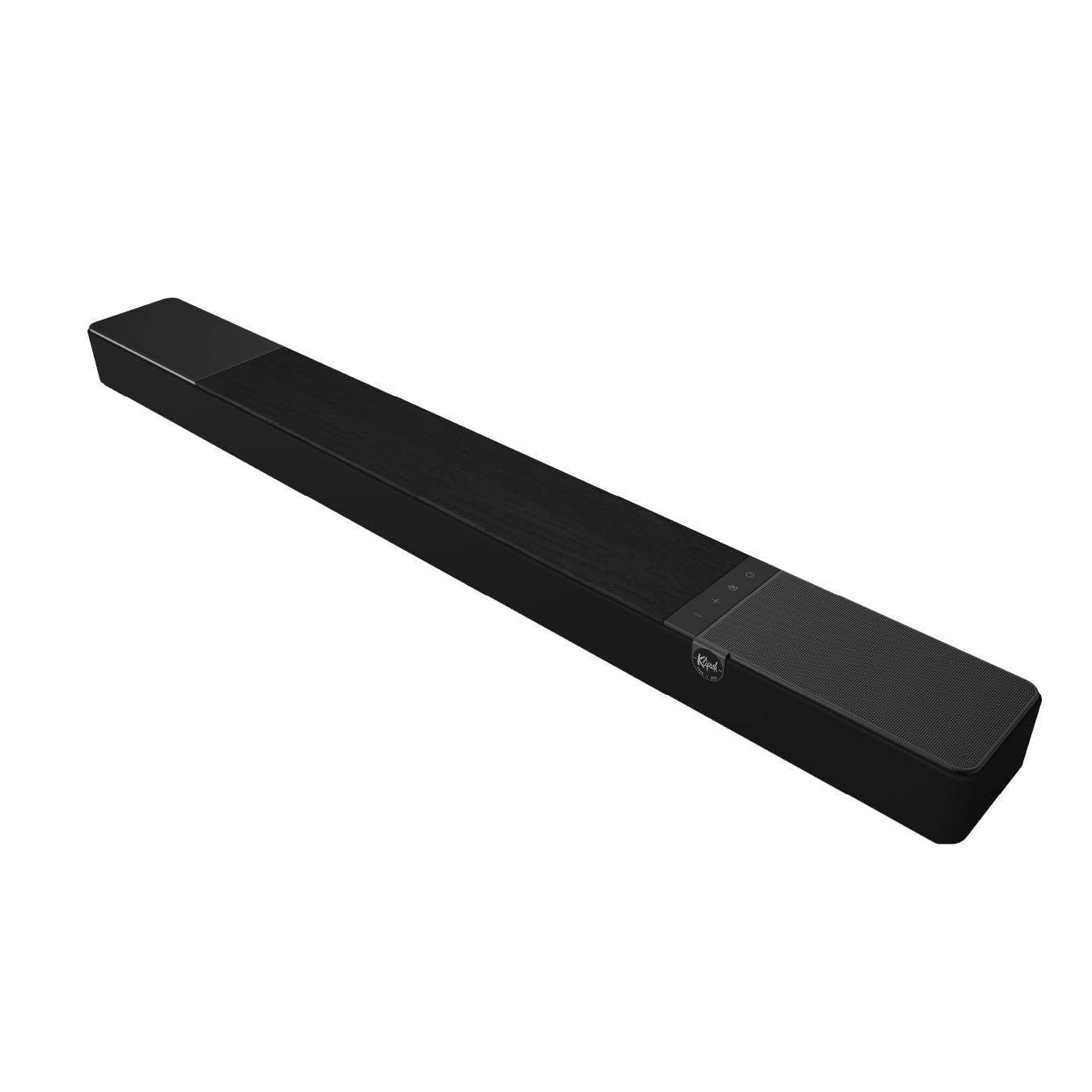
The Klipsch Flexus CORE 200 is a 3.1.2-channel soundbar powered by Onkyo’s engineering and voiced by Klipsch’s acousticians. The standout feature is the horn-loaded tweeter for the center channel — a design borrowed from Klipsch’s reference speakers — which projects dialogue with laser-sharp clarity. The four 2.25-inch ceramic drivers and dual 4-inch built-in subwoofers produce best-in-class bass for a single-bar system, hitting 50 Hz cleanly without an external subwoofer. That is rare in the 3.1.2 category, where most bars rely on a separate sub to reach below 60 Hz.
The soundbar is built like a tank: a combination of wood, metal, and high-density plastic gives the 44-inch chassis a premium weight that resists resonance. Dolby Atmos is handled by two dedicated elevation speakers that bounce sound off the ceiling, and the Klipsch Transport technology ensures that the left-to-right panning is seamless. The CORE 200 includes a wired subwoofer output (RCA), so you can add a third-party subwoofer later — a rare and welcome feature at this price point.
The main downside is that the CORE 200 does not include a wireless subwoofer in the box — the built-in drivers are surprisingly capable, but bass-heads will want to add an external unit. The app is functional but basic, lacking the granular EQ controls of the Sonos or Bose apps. For listeners who prioritize vocal clarity and want a future-proof single-bar that can accept a wired sub, the Klipsch is a standout.
Why it’s great
- Horn-loaded center tweeter delivers unmatched dialogue clarity
- Built-in dual subwoofers hit 50 Hz without external box
- RCA subwoofer output for upgrading to a larger sub
Good to know
- No wireless subwoofer included in the box
- App lacks advanced EQ customization
9. Samsung HW-Q600F 3.1.2ch Soundbar
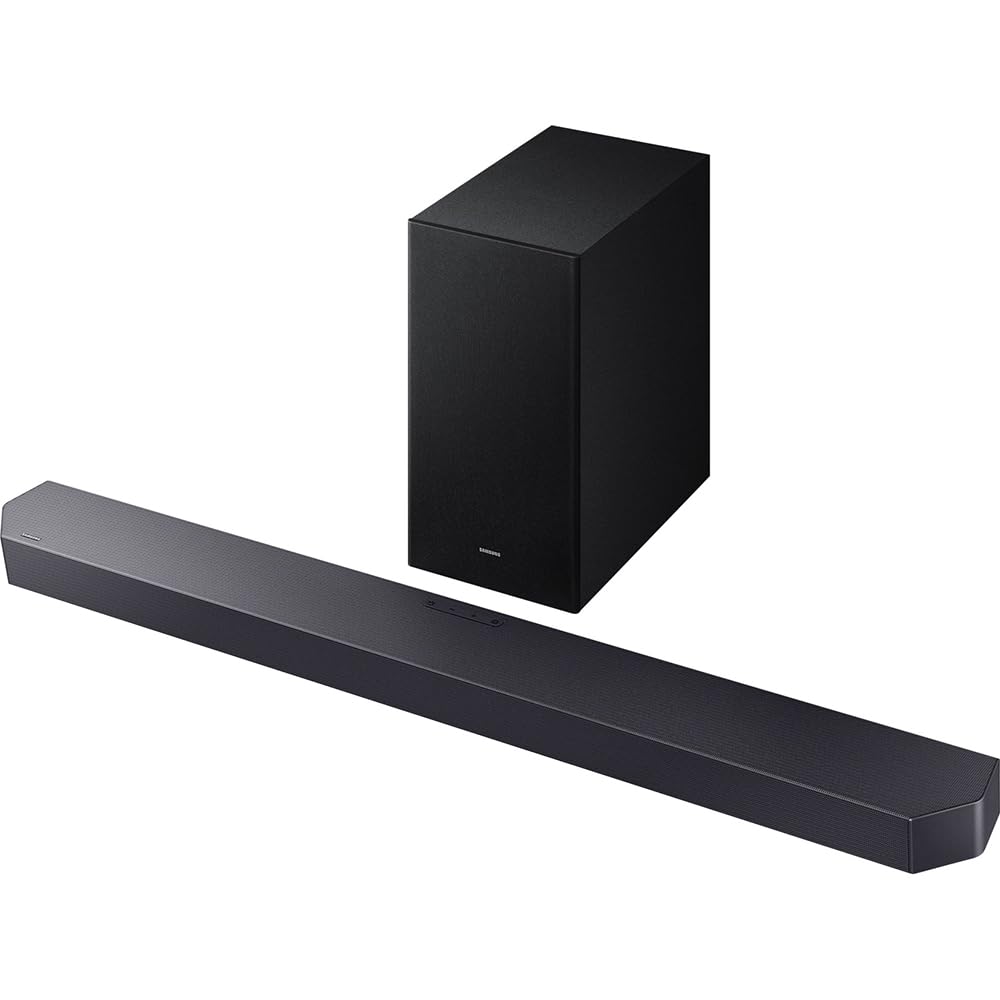
The Samsung HW-Q600F is a true 3.1.2 channel system with two dedicated up-firing drivers and a wireless subwoofer, all at a mid-range price that undercuts the LG and Klipsch options significantly. Q-Symphony technology synchronizes the soundbar’s drivers with compatible Samsung TV speakers, creating a wider front soundstage that makes the bar sound bigger than its physical dimensions. Adaptive Sound analyzes each scene in real time and adjusts the EQ to emphasize dialogue or effects depending on the content — it is surprisingly effective for an algorithm-driven system.
Game Pro Mode is the star for console gamers: when a game console is detected via HDMI, the bar switches to a mode that emphasizes directional audio and spatial cues. Footsteps and weapon reloads become easier to locate, and the up-firing drivers add a vertical dimension to in-game environments. SpaceFit Sound calibration uses a microphone to analyze the room and automatically adjusts the subwoofer output and frequency crossover, which helps in rooms with problematic bass nodes.
The biggest compromise is the single HDMI input — if you have multiple sources, you must route them through your TV’s eARC port. The subwoofer, while adequate for a mid-size room, uses a 6.5-inch driver that cannot match the depth of the Samsung Q990D’s larger unit. Audiophiles may find the soundstage slightly congested at high volumes, but for the price, the HW-Q600F delivers the essential 3.1.2 experience without cutting corners that matter.
Why it’s great
- Q-Symphony creates a wider soundstage with Samsung TVs
- Game Pro Mode improves directional audio for console gaming
- SpaceFit Sound auto-calibrates for your room’s acoustics
Good to know
- Only one HDMI input — must use TV eARC for multiple sources
- Subwoofer is decent but not as deep as premium models
10. LG S70TY 3.1.1ch Soundbar
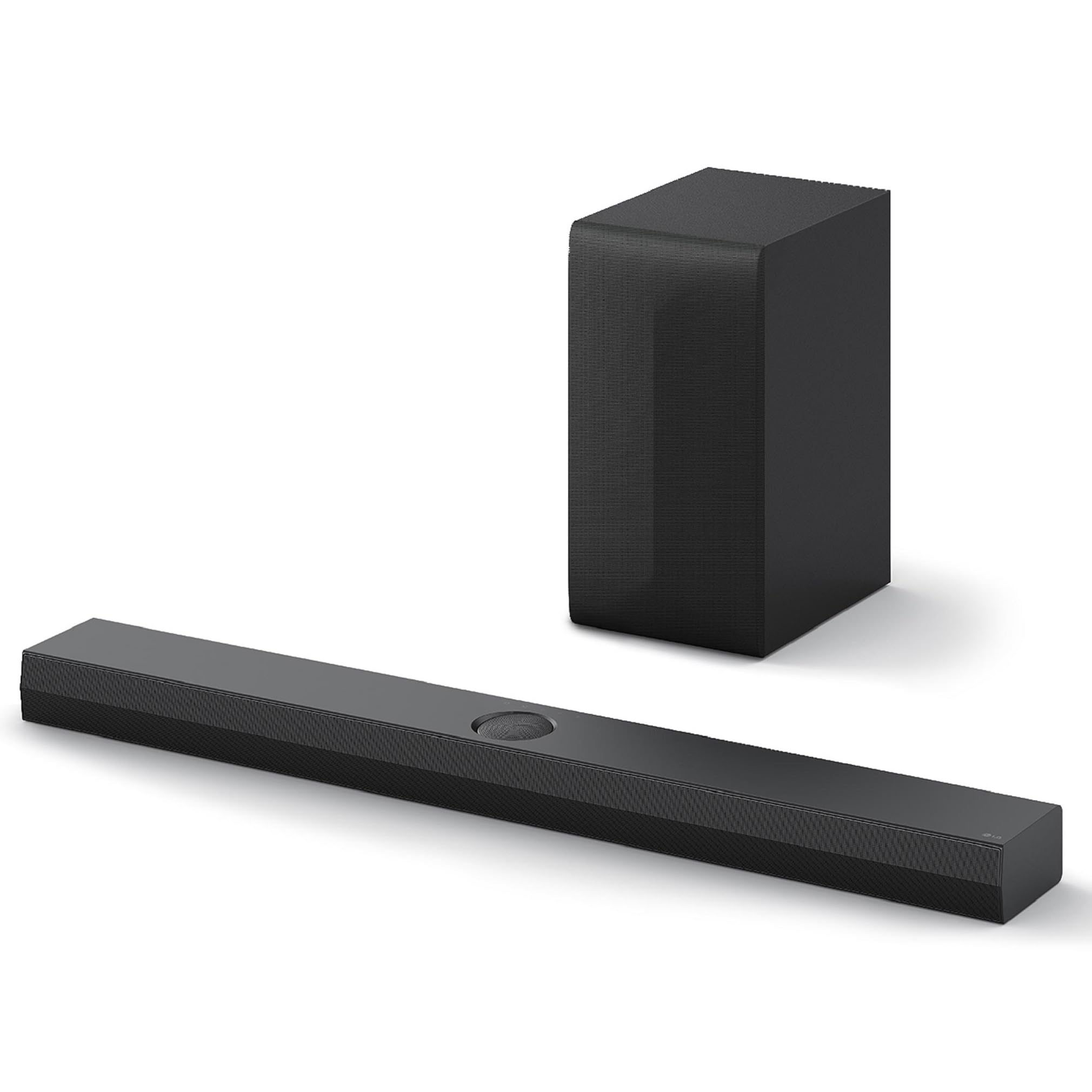
The LG S70TY is a 3.1.1 channel soundbar with a unique up-firing center channel — LG calls it the industry’s first — which focuses dialog energy toward the ceiling to improve vocal clarity in rooms with high ceilings or lots of glass. The included wireless subwoofer is compact but punches above its weight, delivering satisfying bass for action movies without rattling the entire apartment. WOW Orchestra allows the soundbar to use both its drivers and the LG TV’s internal speakers simultaneously, creating a fuller soundstage than either could produce alone.
WOW Interface displays the soundbar’s settings on the LG TV screen, so you do not need to guess which audio mode is active — a small but appreciated touch. The soundbar supports HDMI eARC with 4K 120Hz passthrough, making it suitable for next-gen gaming. The design is slim enough to fit under a QNED TV without blocking the screen, and the metal grille helps keep dust away from the drivers.
The limitation is that the S70TY is a 3.1.1 system, not 3.1.2 — it has one up-firing channel (the center) instead of two separate height channels. The rear surround speakers are sold separately and are nearly impossible to find in the US, making true surround expansion impractical. For LG TV owners who want a seamless one-remote experience and easy setup, the S70TY is a solid choice, but the channel count technically falls short of a true 3.1.2 spec.
Why it’s great
- Unique up-firing center channel improves dialogue clarity
- WOW Orchestra combines TV and soundbar speakers
- 4K 120Hz HDMI eARC passthrough for gamers
Good to know
- Only 3.1.1 — one height channel instead of true 3.1.2
- Rear speakers are unavailable in the US market
11. Hisense AX3120Q 3.1.2ch Soundbar
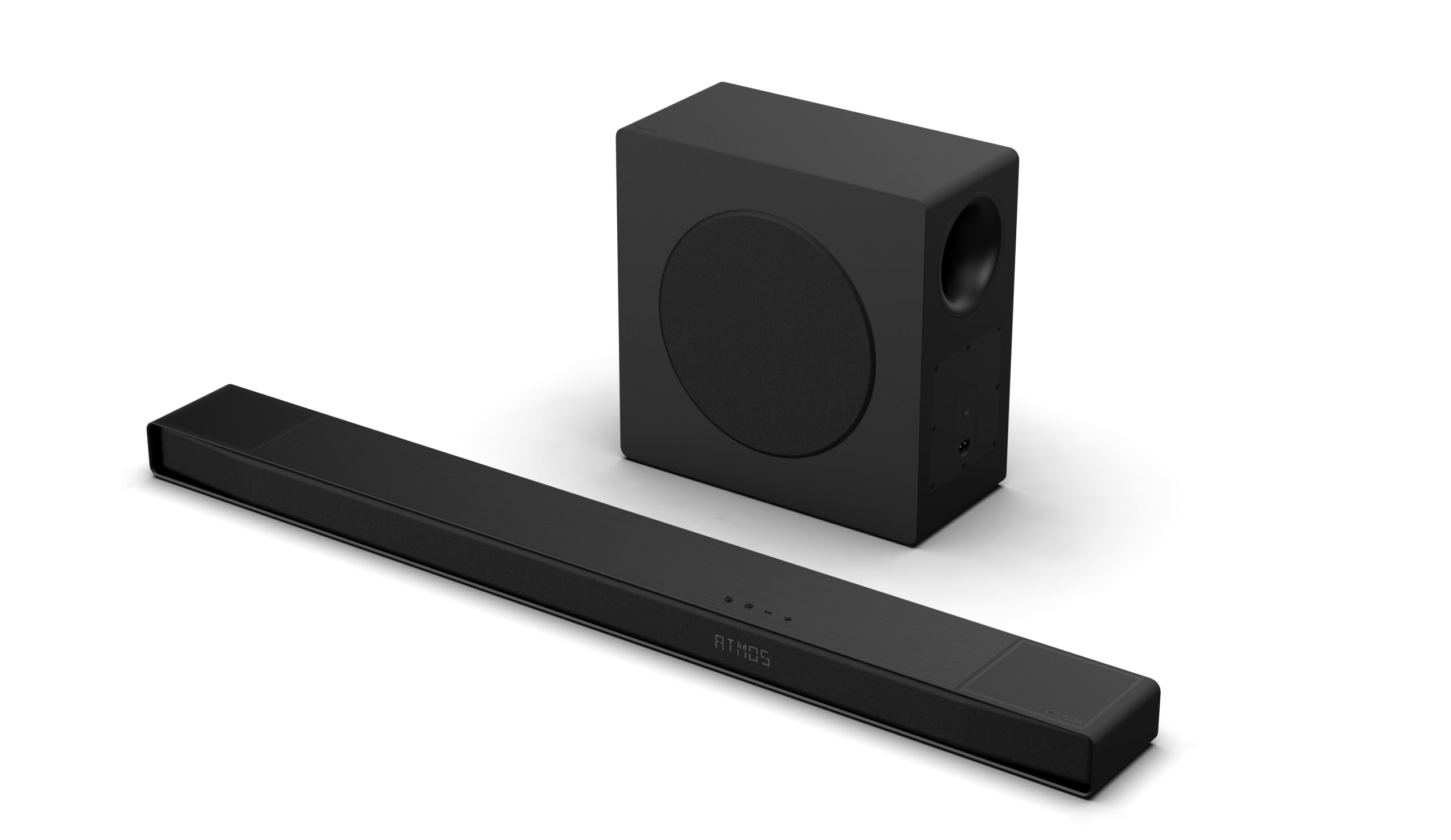
The Hisense AX3120Q is a true 3.1.2 channel soundbar with five front-firing and two up-firing speakers, plus a 6.5-inch wireless subwoofer — all at an entry-level price. It supports Dolby Atmos and DTS:X natively, and the up-firing drivers deliver a noticeable height effect that most sub- bars cannot touch. Seven EQ presets (Music, Movie, News, Night, Voice, Standard, Bass Boost) let you tailor the sound to the content quickly without diving into an app.
Bluetooth 5.3 provides stable, low-latency streaming from any smartphone, and HDMI eARC supports 4K 60Hz HDR passthrough — enough for most streaming setups, though not for 120Hz gaming. The bar is designed to pair with Hisense Roku TVs, but it works just fine with any brand via HDMI or optical. The wireless subwoofer syncs automatically and produces deep, punchy bass that never overwhelms the dialogue channel.
The limitations are typical for the price point: the up-firing speakers are less powerful than premium models, so the overhead effect is more subtle than room-filling. The subwoofer uses a fabric cone rather than a paper or ceramic driver, which can sound slightly boomy in the upper bass at high volumes. For anyone building a first-time home theater on a tight budget, the AX3120Q delivers the full 3.1.2 experience at a price that leaves room for a better subwoofer down the line.
Why it’s great
- Genuine 3.1.2 channel layout with up-firing drivers
- Wireless subwoofer included — no extra purchase needed
- Seven EQ presets for quick content-specific tuning
Good to know
- Up-firing drivers are less powerful than premium competitors
- Subwoofer can sound boomy at higher volume levels
FAQ
Is a 3.1.2 soundbar worth it over a 2.1 or 3.1 system?
Do I need ceiling speakers if I have a 3.1.2 soundbar?
Can I add rear speakers to any 3.1.2 soundbar?
Final Thoughts: The Verdict
For most users, the best 3.1.2 soundbar winner is the Samsung Q990D because it delivers true 11.1.4 spatial audio with included rear speakers and a wireless subwoofer at a price that undercuts similarly specced competition. If you want the best single-bar solution with exceptional dialogue clarity, grab the Bose Smart Ultra Soundbar. And for room-shaking bass with detachable wireless surrounds, nothing beats the JBL Bar 1300XMK2.