
Our readers keep the lights on and my morning glass full of iced black tea. As an Amazon Associate, I earn from qualifying purchases.
Specs are compiled from manufacturer listings and verified buyer reviews and can change over time — please confirm the key details on the product page before buying.
If you are replacing a cracked fuel line on a small engine, a scooter, or a piece of garage equipment, the one number that tells you whether the hose will last or leak in a year is the working pressure rating. A hose rated for 50 psi might look fine in the package, but under the vibration and heat of an engine bay, that margin disappears fast — which is why the best 3/16 fuel line options push well past that floor.
I’m Min — the founder and writer behind Gadgets Feed. This guide is built by comparing the manufacturers’ published specifications and the patterns across verified customer reviews, so you get each pick’s real strengths and trade-offs instead of marketing spin.
You will see exactly which hoses hold up to fuel blends, which resist kinking under tight routing, and where spending a bit more gets you a noticeably thicker wall. This is the honest 3/16 fuel line breakdown you need before you order another spool.
Quick Picks
- Dojobkinb 25ft 3/16″ Fuel Line Hose — Top Performer
- Continental 65125 3/16″ Fuel Hose — Best Value
- Gates 27001 Fuel Line/PCV/EEC Hose — Trusted Brand
- Tygon F-4040-A PVC Fuel Tube — Best for Visibility
- LokoCar 10ft NBR Fuel Hose — Solid Mid-Range
- EVIL ENERGY 5ft 3/16 Fuel Hose — Budget Champion
How To Choose The Best 3/16 Fuel Line
Fuel line might look like a simple rubber tube, but the differences in material, pressure rating, and wall thickness decide whether you are replacing it next season or leaving it alone for years. Here are the three specs that matter most.
Working Pressure and Burst Pressure
Working pressure is the continuous pressure the hose can handle while the engine runs. A hose rated at 50 psi works fine on a gravity-fed carburetor or a low-pressure fuel return line, but a 300 psi hose gives you a much bigger safety margin if the system has a fuel pump. Burst pressure is the number that tells you where the hose fails completely. In this lineup, examples include 250 psi burst for a 50 psi Continental hose and 1200 psi burst for 300 psi LokoCar and EVIL ENERGY hoses. The higher both numbers, the less risk of a surprise leak.
Material: NBR Rubber vs. PVC
NBR (nitrile butadiene rubber) fuel line resists oil, gasoline, diesel, and biodiesel without swelling or hardening the way standard PVC tubing can over time. PVC tubing like Tygon is more flexible and lets you see the fuel flow, but it has a lower maximum pressure and can stiffen with age. For an engine bay or any spot with heat and vibration, NBR is the more durable choice.
Length and Wall Thickness
Buying a 25-foot roll usually works out cheaper per foot than a 10-foot or 5-foot piece — as buyers often mention. A thicker wall helps the hose resist kinking when you route it around tight corners. Outside diameter matters if you are clamping the hose into a fixed bracket; most 3/16″ ID hoses measure between 0.41 and 0.5 inches on the outside, so check your clearance before buying.
Quick Comparison
On smaller screens, swipe sideways to see the full table.
| Model | Best For | Working Pressure | Length | Material | Amazon |
|---|---|---|---|---|---|
| Dojobkinb 25ft | High-pressure fuel systems | 300 psi | 25 ft | NBR Synthetic Rubber | $22.77Amazon |
| Continental 65125 | Durable long-term replacement | 50 psi | 25 ft | Nitrile | $42.47Amazon |
| Gates 27001 | Carburetor and return lines | 50 psi | 25 ft | Rubber | $34.71Amazon |
| Tygon F-4040-A | Visible fuel flow monitoring | 35 psi | 10 ft | PVC | $21.89Amazon |
| LokoCar 10ft | General-purpose push lock | 300 psi | 10 ft | NBR Synthetic Rubber | $16.88Amazon |
| EVIL ENERGY 5ft | Exact short replacement pieces | 300 psi | 5 ft | NBR Rubber | $16.99Amazon |
In‑Depth Reviews
1. Dojobkinb 25ft 3/16″ Fuel Line Hose

The 25-foot spool with a 300 psi working wall that resists kinking under tight routing.
This is the hose to grab when you need both length and pressure headroom. With a working pressure of 300 psi and a burst pressure of 1160 psi, it covers everything from a carbureted lawnmower to a fuel-injection return line without breaking a sweat. The outside diameter measures 0.43 inches, and buyers report the wall thickness — around 1/8 inch — makes the hose stiff enough to resist kinks, a real advantage when you are snaking it through a tight engine bay.
Where this pick beats the Continental 65125 is the pressure gap: the Continental is rated at 50 psi working versus 300 psi for the Dojobkinb, so if your system has a pump, the Dojobkinb is the safer call. The material is NBR synthetic rubber with braided polyester fiber, which resists diesel, biodiesel, and gasoline without swelling. One reviewer noted it “looks almost like the original and solid fit.” The only trade-off is the brand name — Dojobkinb is not a household name like Gates or Continental — but the specs and reviews line up with a hose that outperforms its price tier.
What Makes It Stand Out
- 300 psi working pressure handles fuel pumps easily
- 1160 psi burst pressure gives a wide safety margin
- 25-foot roll at a strong per-foot value
The One Caveat
- Lesser-known brand compared to Gates or Continental
- One buyer found it softer than expected, though it still worked
Reach for this if: you need a full 25 feet of 300 psi hose that resists kinks for a fuel pump or injection system.
Look elsewhere if: you only need a short repair piece and prefer a well-known brand name on the spool.
2. Continental 65125 3/16″ Fuel Hose

A 25-foot Made-in-USA spool that resists hardening better than most SAE 30R7 hoses.
The Continental 65125 is a 50 psi working-pressure hose, SAE 30R7 rated, with a burst pressure of 250 psi. The EVIL ENERGY hose is rated at 1200 psi burst, but for carbureted engines, gravity-fed systems, and fuel return lines, 50 psi is plenty. Where this hose stands apart is longevity: multiple owners mention that it “doesn’t harden anywhere as much as other brands and doesn’t crack at the ends.” The 25-foot roll measures 0.41 inches outside diameter, and the nominal wall thickness is 0.06125 inches, making it a slimmer profile than the thicker-walled picks like the Gates or Dojobkinb.
One reviewer called it “real legit USA fuel line,” and another mentioned it survived vibration that chafed through other hoses. The trade-off is the same as the Gates hose — you cannot use it on a fuel-injection system because of the 50 psi ceiling, as the hose itself is printed with the warning. If your equipment is all low-pressure, this is the spool that will outlast cheaper imports.
Long-Term Reliability
- Made in the USA, with consistent quality reports
- Resists hardening and cracking better than many alternatives
- 25-foot roll saves money over buying short pieces
Watch Out For
- Only 50 psi working pressure — not for fuel injection
- Thinner wall than some 300 psi hoses
Best suited for: small engines, carburetors, PCV, and return lines where 50 psi is plenty and long-term durability matters most.
Not for: any fuel-injection system — the hose itself says so, and the spec confirms it.
3. Gates 27001 Fuel Line/PCV/EEC Hose
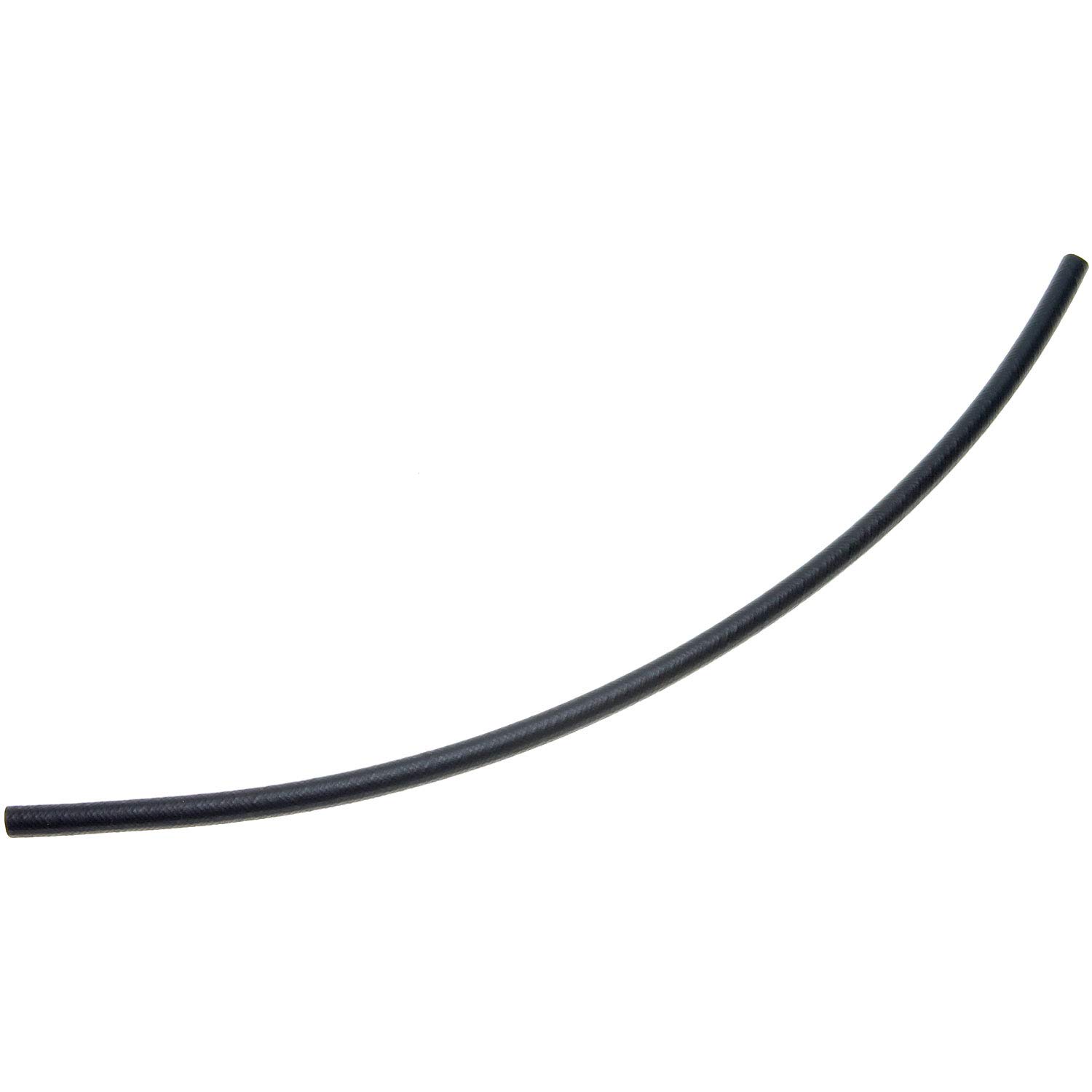
The 50 psi SAE 30R7 hose with a 0.5-inch outside diameter for a broader clamping surface.
Gates is a name most mechanics recognize, and the 27001 hose delivers exactly what the spec sheet promises: a spiral-reinforced construction that resists heat, oil, and weathering. The working pressure is 50 psi, same as the Continental, but the outside diameter is larger at 0.5 inches versus 5/16 inch OD on the Tygon or 0.41 inches on the Continental. That extra width gives clamps more to bite into, which can reduce the chance of a leak under vibration. Customers note that the hose is “very pliable, handles curves well,” which makes routing around tight engine compartments easier.
Reviewers consistently mention the same caution: this hose is marked as “not for fuel injection,” and at 50 psi, it sits exactly where an EFI system’s pressure is. It is a great upgrade over cheap cracked hose on carbureted engines, but if your application involves a fuel pump, you need the 300 psi hoses in this list instead. One buyer pointed out you can get this at local parts stores for about a foot, while the 25-foot roll here works out to roughly a dollar a foot.
Why Pick This One
- Gates brand reputation and spiral-reinforced construction
- 0.5-inch OD gives clamps a solid grip
- Very pliable for tight routing
Limitations
- 50 psi max — not suitable for fuel-injection systems
- Made in Mexico, which some buyers noted
Choose this for: a brand-name hose for carbureted engines, PCV, or emission lines where the extra OD helps clamping.
Avoid if: you need fuel-injection pressure capacity — the Gates is explicitly labeled against that use.
4. Tygon F-4040-A PVC Fuel Tube

The yellow translucent tubing that lets you see fuel flow and resist fuel swelling.
Tygon is the odd one out in this lineup because it is PVC, not rubber, but it earns its spot for a specific use case: situations where you want to visually confirm fuel is moving through the line or where quick identification among other tubes matters. The working pressure is 35 psi, compared with 50 psi for the Continental and Gates hoses and 300 psi for the higher-pressure hoses in this list. This means it is strictly for low-pressure gravity-fed or return applications. The outside diameter is listed as 5/16 inch OD, versus 0.5 inch on the Gates 27001, so it fits into tighter spaces.
Buyers are emphatic about its quality. One review states, “Tygon yellow fuel line is 500% better than stock green line; flexible, thick, and durable,” and another calls it the “best fuel line you can buy” for small engines. The PVC material resists swelling, hardening, and embrittlement from hydrocarbon fluids, and the temperature range of -35 to 165°F covers most outdoor equipment use. The catch is the 10-foot length only, so if you need to replace lines on multiple machines, you might run short.
What You Get
- Translucent yellow lets you spot air bubbles or fuel flow issues
- Resists swelling and hardening from gasoline and diesel
- Made in the USA, with a strong reputation among small-engine owners
Trade-offs
- Only 35 psi working pressure — no use with fuel pumps
- 10-foot roll is shorter than most rubber alternatives
Grab this if: you are running a small engine, diesel heater, or gravity-fed system where seeing the fuel move tells you the system is healthy.
Pass if: you need pressure capacity above 35 psi or more than 10 feet in a single run.
5. LokoCar 10ft NBR Fuel Hose
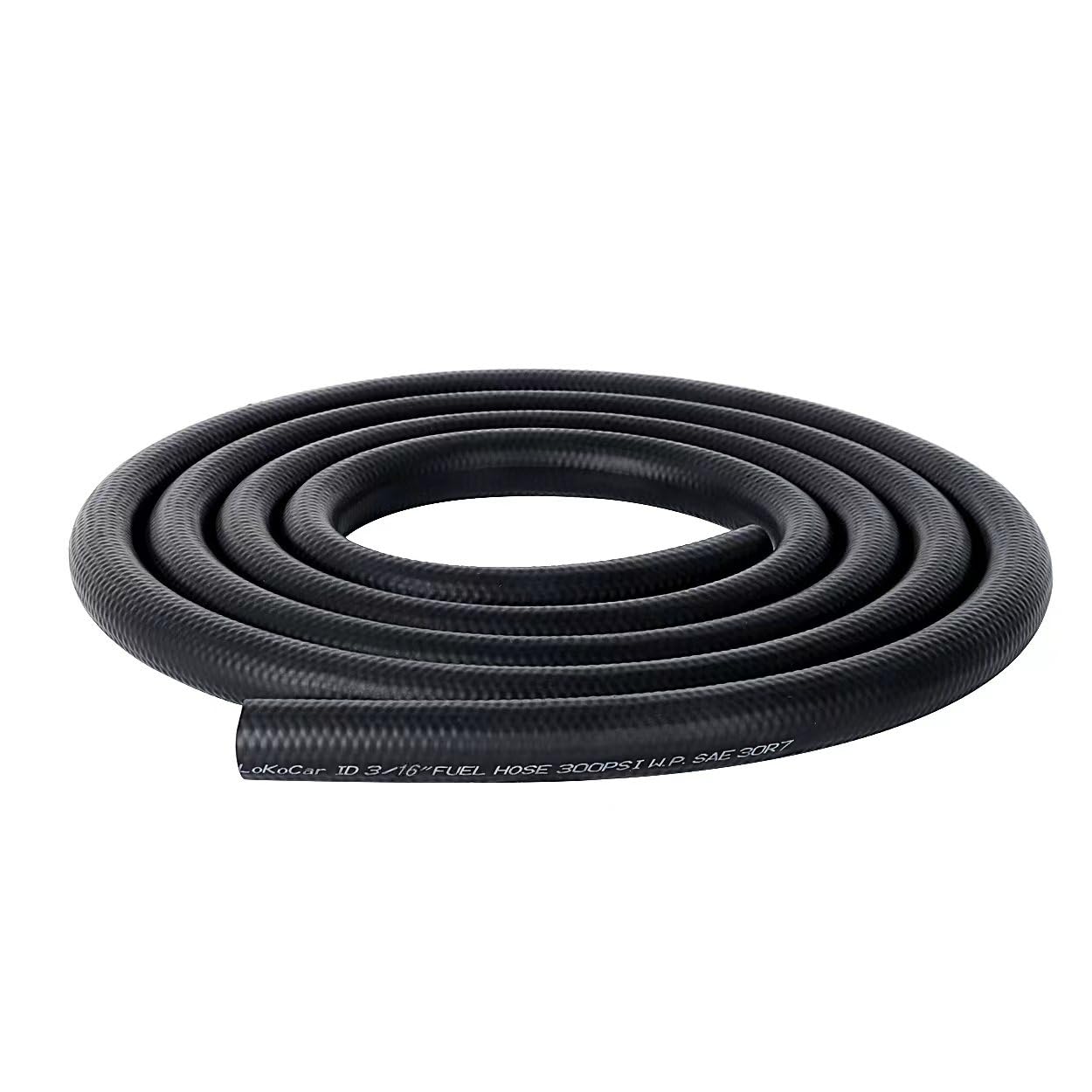
A 300 psi push-lock hose with a 3 mm wall that reviewers point out fits exactly as described.
The LokoCar hose shares nearly identical specs with the EVIL ENERGY hose — 300 psi working, 1200 psi burst, -40°F to 257°F temperature range, NBR material with braided polyester fiber — but comes in a 10-foot length instead of 5 feet. The nominal wall thickness is 3 millimeters (roughly 1/8 inch), and one reviewer simply said, “Hose was a great fit and exactly as described.”
Where it sits compared to the Dojobkinb 25-footer: the working pressure is identical at 300 psi, but the Dojobkinb offers 1160 psi burst versus the LokoCar’s 1200 psi burst — essentially the same safety margin. The big difference is the length and price point. If you know you only need 10 feet, the LokoCar saves you from having 15 feet of leftover hose, and the SAE 30R7 rating means it handles diesel, gasoline, biodiesel, and oil without trouble.
Why It Works
- 300 psi working pressure handles fuel pumps
- 1200 psi burst pressure for a wide safety margin
- 3 mm wall resists kinking
One Thing
- 10-foot length is a middle ground — not as much per-foot savings as a 25-foot roll
- Less brand recognition than Gates or Continental
Reach for this when: you need a 10-foot 300 psi hose that fits standard push-lock fittings without guessing.
skip it if: you can use the extra 15 feet from the Dojobkinb roll for a similar per-foot cost.
6. EVIL ENERGY 5ft 3/16 Fuel Hose
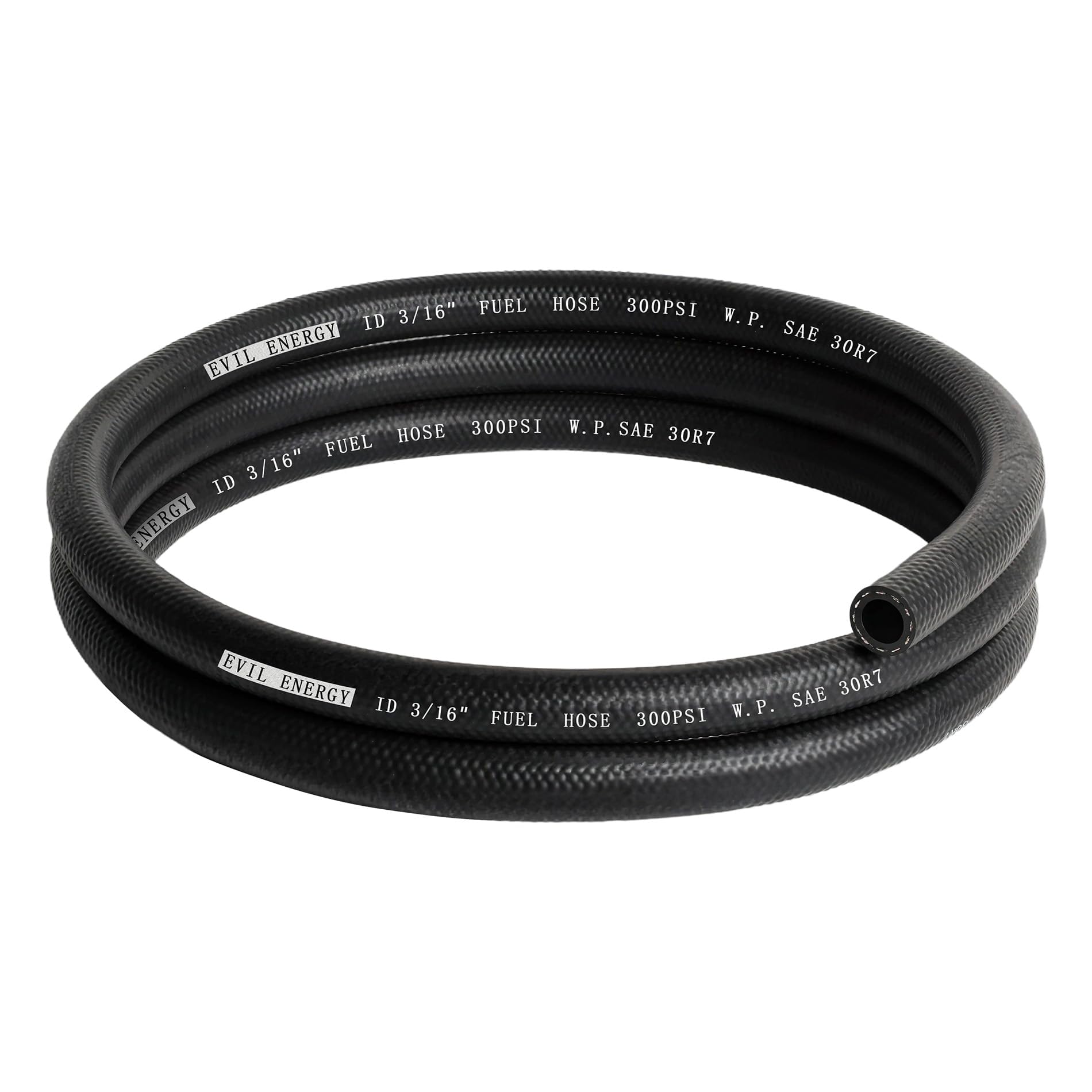
The 5-foot, 300 psi NBR hose that reviewers call a perfect replacement for expensive OEM lines.
If you need a short, exact piece to replace a single cracked section of fuel line, the EVIL ENERGY hose is the most straightforward pick. The working pressure is 300 psi, the burst pressure is 1200 psi, and the build is NBR rubber with braided polyester fiber, meeting SAE 30R7 standards. The outside diameter is 0.43 inches, exactly the same as the Dojobkinb and LokoCar hoses, so it fits standard clamps and push-lock fittings without adapters.
One reviewer with a heavy-duty truck wrote, “This rubber hose worked perfectly as a replacement for the expensive PACCAR low-pressure line on X-15” — a real-world example of this hose saving money over OEM parts. Another buyer noted it is used on race cars with EVIL ENERGY fittings and has never had fitment or longevity issues. The catch is the 5-foot length: for 25 feet, you would need to buy five of these, which costs more per foot than the Dojobkinb roll. But for a single repair, this is the one to beat.
The Advantages
- 300 psi working pressure with a strong 1200 psi burst rating
- Works as a direct replacement for OEM lines on trucks and race cars
- NBR material resists fuel and oil degradation
Limitation
- Only 5 feet — high per-foot cost if you need more length
- Brand name might not suit all buyers
Ideal for: a single short replacement where 5 feet is enough and 300 psi gives the safety margin over stock OEM lines.
Not ideal if: you are stocking up for multiple repairs — the 25-foot rolls deliver better value.
Understanding the Specs
Working Pressure vs. Burst Pressure
Working pressure is the continuous pressure the hose sees while your engine is running — think of it as the safe cruising speed. Burst pressure is the breaking point. A hose rated at 50 psi working and 250 psi burst is fine for gravity-fed carburetors, but a 300 psi working / 1200 psi burst hose gives you enough headroom for a fuel pump and some margin if a blockage spikes the pressure.
SAE 30R7 and Material Types
SAE 30R7 is a standard for low-pressure fuel and emission hoses with a textile reinforcement layer. Hoses meeting 30R7 can handle gasoline, diesel, and ethanol blends up to E-85. The material — whether NBR rubber or PVC — determines flexibility, temperature tolerance, and resistance to fuel swelling. NBR handles higher temperatures and resists oil better, while PVC offers visibility and is easier to cut cleanly.
FAQ
Can I use a 50 psi 3/16 fuel line on a fuel-injection system?
What is the difference between NBR rubber and PVC fuel line?
Will a 3/16 fuel line work with push-lock fittings?
How long do NBR fuel lines last compared to standard rubber?
Can I use 3/16 fuel line for diesel or biodiesel?
What does SAE 30R7 mean on a fuel hose?
Is a larger outside diameter better for clamping?
Why does my fuel line keep cracking at the ends?
Final Thoughts: The Verdict
Across the board, the 3/16 fuel line winner is the Dojobkinb 25ft hose because it delivers 300 psi working pressure, a 25-foot spool, and enough wall thickness to resist kinks — all at a per-foot cost that beats buying short pieces. If you need a low-pressure hose that will outlast cheap alternatives on a small engine, grab the Continental 65125. And for a short, exact replacement that one reviewer called perfect for a PACCAR line, the standout is the EVIL ENERGY 5-foot hose.
How We Picked
We do not accept paid placement, and we did not hands-on test every unit. Instead, we match each pick to a real buyer and use-case by comparing the manufacturers’ published specifications against the patterns in verified customer reviews — so you get each pick’s real strengths and trade-offs instead of marketing copy.
Sources & Methodology
Specifications: manufacturer listings and product documentation. Review insights: verified customer reviews, as of July 2026. Pricing: not shown on this page (it changes often); check the current price via the retailer link.
As an Amazon Associate, Gadgets Feed earns from qualifying purchases. This does not affect which products we feature.
Product prices and availability are accurate as of the date/time indicated and are subject to change. Any price and availability information displayed on Amazon at the time of purchase will apply to the purchase of this product. As an Amazon Associate I earn from qualifying purchases.
CERTAIN CONTENT THAT APPEARS ON THIS SITE COMES FROM AMAZON. THIS CONTENT IS PROVIDED "AS IS" AND IS SUBJECT TO CHANGE OR REMOVAL AT ANY TIME.
Amazon and the Amazon logo are trademarks of Amazon.com, Inc. or its affiliates.