
That moment when the Pacific swell hits your chest and an ice-cold flush runs down your spine can ruin an otherwise perfect session. A 3/2 wetsuit is your primary defense against the 55–65°F water temperature that dominates spring and fall surfing, but the market is flooded with options that either sacrifice flexibility for warmth or leak cold water the moment you paddle hard. Matching the right neoprene thickness, seam construction, and entry system to your specific build and water conditions is the difference between a four-hour marathon session and a shivering exit after thirty minutes.
I’m Min — the co-founder and writer behind Gadgets Feed. I’ve spent countless hours analyzing technical specifications, customer feedback, and thermal performance data across the full spectrum of 3/2 wetsuits to provide the most detailed buying guide possible.
This guide focuses entirely on the 3/2 wetsuit category, breaking down critical differences in neoprene quality, seam taping methods, and entry systems that determine how warm, flexible, and durable each suit actually performs in real-world conditions.
How To Choose The Best 3/2 Wetsuit
Selecting a 3/2 wetsuit goes far beyond picking your size and a color you like. The “3/2” designation means 3mm neoprene in the torso and 2mm in the arms and legs, but the actual thermal retention and flexibility depend heavily on the neoprene compound, the seam construction, and the entry system. Understanding these variables will prevent a costly mistake that leaves you cold and restricted.
Neoprene Type and Stretch
Not all neoprene is created equal. Standard petroleum-based neoprene offers decent warmth at a lower cost but stiffens considerably in cold water. Premium limestone-based neoprene, used in suits like the Ho Stevie! and Hyperfreak, provides significantly more stretch per millimeter, reduces paddle fatigue, and conforms more closely to your body without restrictive pressure points. Look for terms like “SuperStretch” or “Ultraflex” in the manufacturer’s description — these indicate a higher-quality compound that retains flexibility through repeated use.
Seam Construction: The Water Barrier
Flatlock stitching is the cheapest method but creates thousands of needle holes that allow water to seep through — acceptable only for tropical or rental suits. Glued and blind-stitched (GBS) seams involve gluing the neoprene panels together and stitching without penetrating the outer layer, creating a watertight bond. Fully taped GBS seams add an additional layer of tape over the interior seam, offering the highest level of water exclusion. For a 3/2 suit intended for 55–65°F water, GBS is non-negotiable.
Entry System: Back Zip vs. Chest Zip
Back-zip suits are easier to don and doff independently — the long zipper runs vertically down the spine and typically includes a Velcro flap to prevent flushing. Chest-zip systems, found on premium models like the O’Neill Hyperfreak and Hyperflex VYRL, use a horizontal zipper across the chest that eliminates the primary channel through which cold water enters a back-zip suit. Chest-zip suits run slightly warmer but require more effort to take off, often needing assistance or a clever technique to reach the zipper pull behind your neck.
Quick Comparison
On smaller screens, swipe sideways to see the full table.
| Model | Category | Best For | Key Spec | Amazon |
|---|---|---|---|---|
| O’Neill Hyperfreak 3/2+mm | Premium | Maximum flexibility and warmth | Technobutter neoprene, 3.2mm, GBS + fully taped seams | Amazon |
| Ho Stevie! 3/2mm | Premium | Surfing in cold water | Limestone-based SuperStretch neoprene, GBS seams | Amazon |
| Hyperflex VYRL 3/2mm | Premium | Tall surfers needing extra length | Quantum Foam neoprene, chest zip, GBS sealed | Amazon |
| Bare Revel 3/2mm | Premium | Diving and water sports | Armor-flex knee pads, low profile collar, 3D anatomical fit | Amazon |
| Synergy Volution 3/2mm | Premium | Triathlon and open water swimming | SmoothSkin neoprene, PowerMAX arm panels, YKK zipper | Amazon |
| Cressi Morea 3mm | Mid-Range | Snorkeling and paddle boarding | Ultraspan arms for mobility, rubberized chest, YKK dorsal zip | Amazon |
| O’Neill Youth Reactor-2 3/2mm | Mid-Range | Kids and youth surfers | Ultraflex neoprene, flatlock seams, ankle zippers | Amazon |
| Hevto 3/2mm Plus Size | Value | Plus-size individuals needing a tailored fit | 2.5mm neoprene, back zip, extended sizing | Amazon |
| Seaskin 3mm Front Zip | Value | Budget-friendly water aerobics and snorkeling | 3-layer nylon/neoprene/thermal lining, flatlock seams | Amazon |
In‑Depth Reviews
1. O’Neill Hyperfreak 3/2+mm Chest-Zip Full Wetsuit
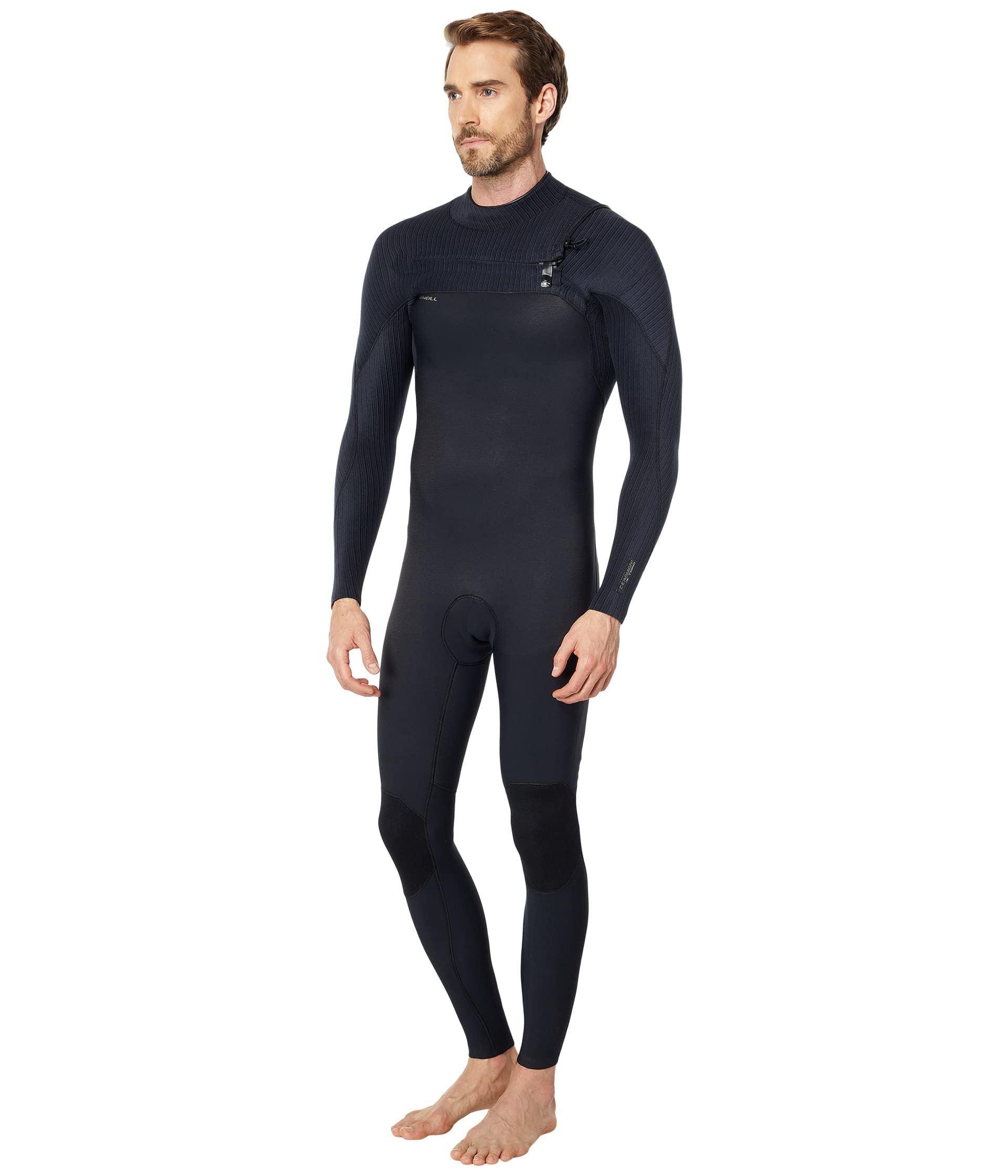
The O’Neill Hyperfreak represents the pinnacle of 3/2 wetsuit engineering with its proprietary Technobutter neoprene — a material that delivers an almost unnerving level of stretch while maintaining excellent thermal retention. At 3.2mm in the torso and 2mm in the limbs, the suit manages to feel lighter than its actual thickness suggests, making paddling sessions feel less laborious over extended periods. The F.U.Z.E. chest-zip closure incorporates a 360-degree barrier system that effectively limits water entry at the neckline, and the fully taped GBS seams ensure that no cold water sneaks through the stitch lines even after dozens of sessions.
What sets this suit apart from others in the premium tier is the quick-drying microfleece lining, which not only adds a layer of warmth but also reduces the clammy sensation when you peel it off after a session. The drain holes strategically placed around the zip area allow any minimal water that enters to escape rather than pooling at your lower back. Owners report that the suit breaks in rapidly — within two or three wears — conforming to the body shape without developing thin spots or frayed edges. The Technobutter compound also resists compression, meaning the 3.2mm torso retains its insulating loft longer than standard neoprene.
The only real trade-off is the chest-zip removal process, which requires some practice to manage alone. You’ll need to reach behind your neck to grab the pull loop, which can be awkward if your shoulder mobility is limited. However, once on, the suit seals so effectively that flushing is virtually non-existent, even during aggressive duck dives and wipeouts in overhead surf.
Why it’s great
- Exceptional Technobutter neoprene stretch reduces paddle fatigue significantly
- Fully taped GBS seams provide near-complete water exclusion
- Quick-drying microfleece lining adds warmth without bulk
Good to know
- Chest-zip removal requires practice to do alone effectively
- Premium price point places it at the top end of the 3/2 market
2. Ho Stevie! 3/2mm Surfing Wetsuit

Ho Stevie! has carved a reputation for delivering premium-grade materials at a price that undercuts the legacy surf brands, and their 3/2mm fullsuit is a textbook example of that philosophy. The suit uses limestone-based SuperStretch neoprene, which offers noticeably better flexibility than petroleum-based alternatives — especially in the shoulders and arms where paddle stroke freedom matters most. The chest-zip opening eliminates the cold-water back flush that plagues traditional back-zip suits, and the GBS (glued and blind-stitched) seams are then glued and taped internally for maximum watertight integrity.
The company rates the 3/2mm thickness for water temperatures of 56°F and warmer, which aligns well with the typical spring and fall conditions found from Northern California to the UK. A built-in key loop behind the chest zipper is a thoughtful touch for solo surfers who want to stash a car key securely. The long torso option (LT) accommodates taller riders up to 6’4″ without the suit riding up during paddling, and the overall fit runs slightly generous to accommodate layering.
Some users note that the neck opening feels restrictive initially, particularly if you have a larger neck circumference — the tight seal is intentional to prevent flushing but can feel claustrophobic before the neoprene relaxes after a few sessions. A few isolated zipper durability issues have been reported, though the company’s 30-day satisfaction guarantee and responsive customer service mitigate the risk. For the combination of stretch, warmth, and construction quality, this suit challenges suits costing significantly more.
Why it’s great
- Limestone-based neoprene delivers excellent stretch without sacrificing warmth
- GBS plus taped seams create a genuinely watertight barrier
- LT sizing available for taller surfers with longer torsos
Good to know
- Neck may feel tight until neoprene breaks in over several sessions
- Zipper durability has been inconsistent in a small number of units
3. Hyperflex 3/2mm VYRL Fullsuit
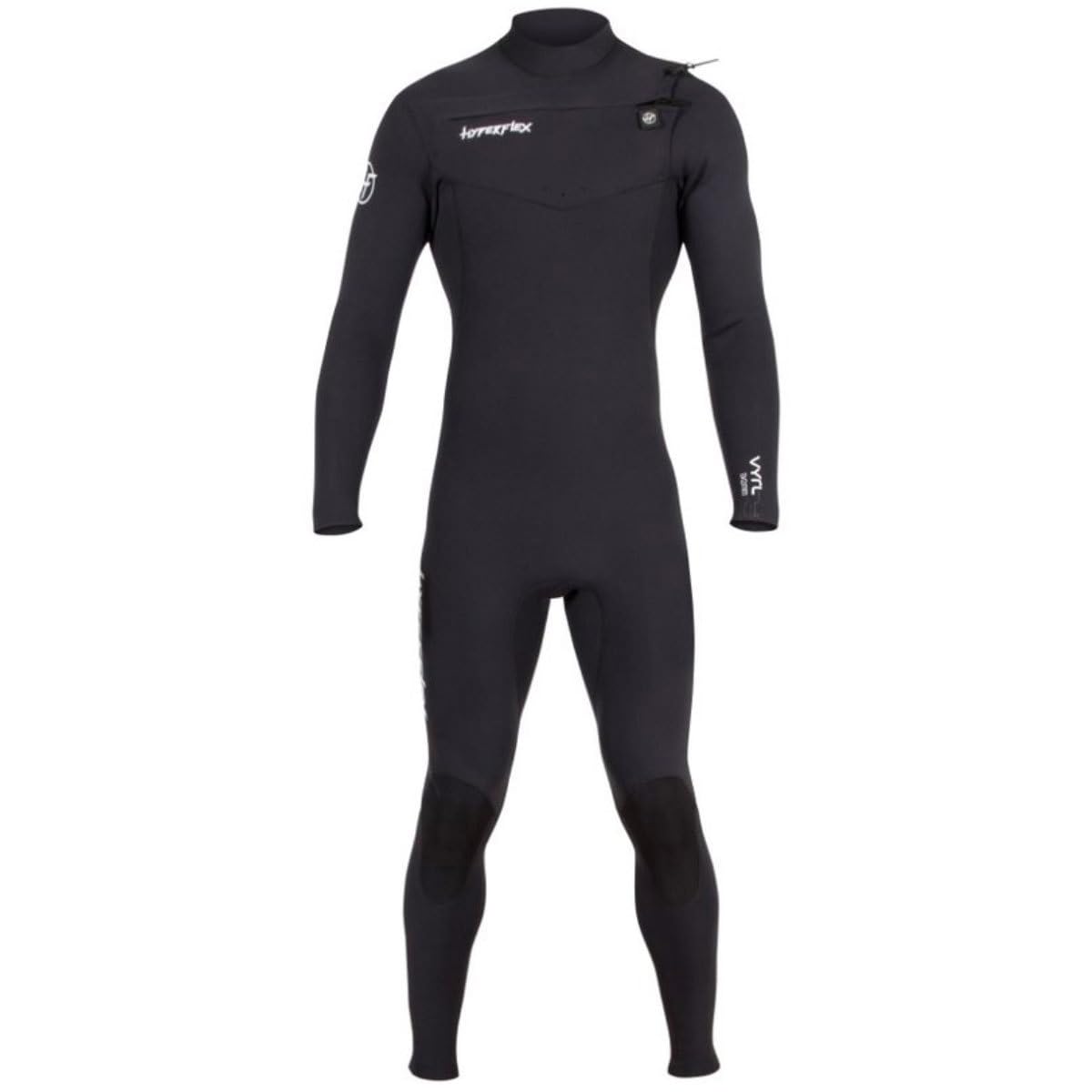
Hyperflex’s VYRL series bridges the gap between mid-range pricing and premium features, offering a chest-zip entry and Quantum Foam neoprene — a lightweight, highly stretchable material that directly competes with offerings from O’Neill and Rip Curl at a lower price point. The Cocoon Entry chest-zip system includes an anti-flush head gusset panel that prevents water from intruding at the neckline, and the GBS sealed seams are glued and blind-stitched for water resistance. The suit also features a GlideSkin collar that minimizes chafing and rashing around the neck during extended sessions.
The XLT size option is a standout feature for tall surfers who struggle with standard sizing — it accommodates heights up to 6’7″ with appropriate arm and leg length, eliminating the uncomfortable ride-up that shorter suits cause during paddling. The microfleece lining accelerates drying between sessions and adds a noticeable warmth boost in 58–62°F water. The minimal seam design reduces internal friction points, and the suit’s overall weight is noticeably lower than comparable 3/2 suits, making it easier to pack and travel with.
Where the VYRL falls slightly short is in the seam construction for extremely cold conditions. Some users report that the seams are glued but not fully blind-stitched in all panel junctions, allowing minimal water seepage during extended submersion below 55°F. Additionally, Hyperflex’s customer service has been described as less responsive than competitors, so sizing correctly on the first order is important. For warmer conditions and everyday surfing in temperate waters, however, this suit offers remarkable value.
Why it’s great
- XLT sizing accommodates tall surfers up to 6’7″
- Quantum Foam neoprene is exceptionally lightweight and stretchy
- Chest-zip system with anti-flush gusset keeps water out effectively
Good to know
- Seam construction may not be fully blind-stitched in all panels
- Customer service responsiveness is inconsistent
4. Bare Revel 3/2mm Full Suit
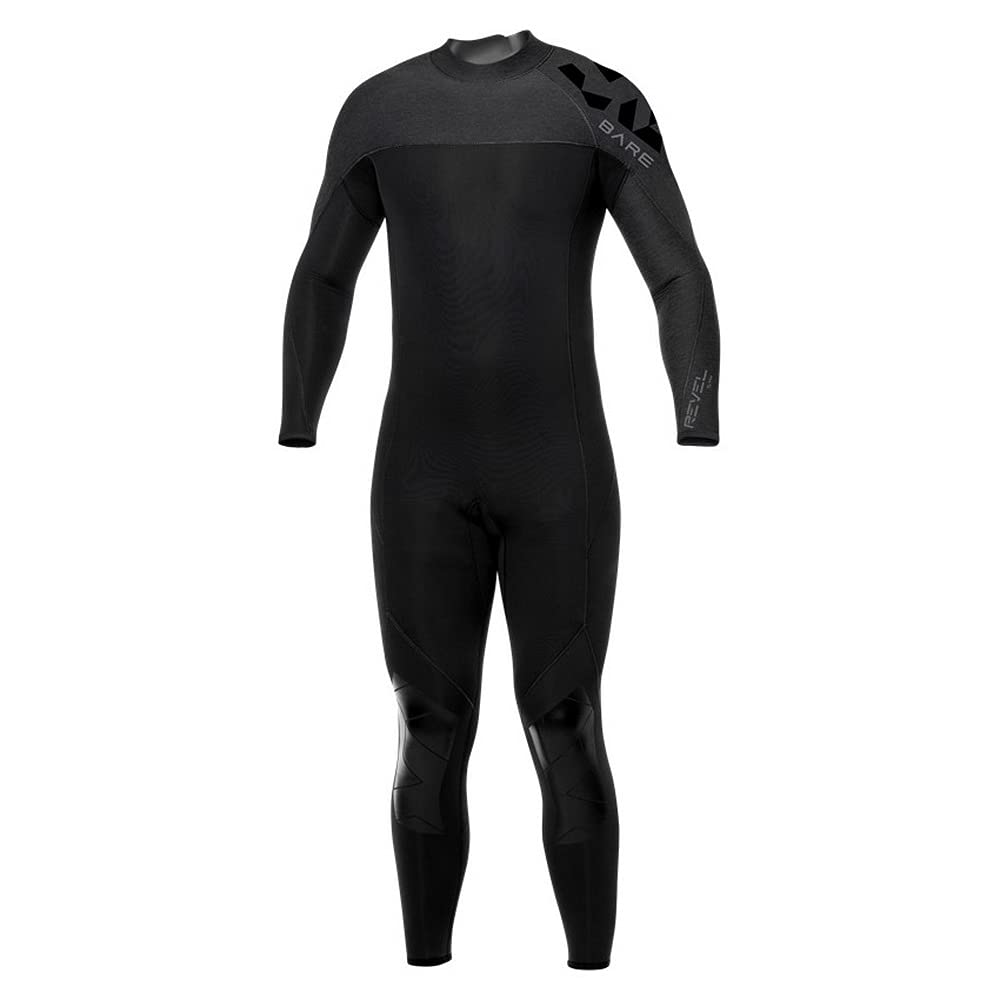
Bare may be best known in the diving world, but their Revel 3/2mm full suit translates that technical expertise into an excellent multi-sport wetsuit for surfers, paddlers, and divers alike. The suit uses a 3/2mm neoprene and laminate blend that prioritizes a lightweight, soft feel against the skin without compromising on thermal retention. The standout design element is the anatomically correct pattern in the shoulder and neck area, which eliminates the pressure points that cause shoulder fatigue during prolonged paddling or diving sessions.
The extra-long heavy-duty back zipper is a welcome feature for anyone who has struggled to reach a traditional back zip — the extended pull cord makes donning and doffing noticeably easier, even with wet hands. The low-profile collar with a Velcro tab avoids the snagging issue common on suits where the collar flap catches on the zipper pull. Armor-flex knee pads add meaningful durability in the knee area, a high-wear zone that typically shows wear first in surf suits used for duck diving and kneeling on boards.
The Revel fits true to size for most athletic builds, with several users reporting that their calculated size matched perfectly without needing to size up. The suit performs best in water temperatures between 60–70°F, where its 3/2mm thickness provides adequate warmth without overheating. For colder temperatures, you may need to layer with a thermal rash guard underneath. The back-zip design, while easier to manage independently, does introduce a potential flush channel that chest-zip suits eliminate.
Why it’s great
- Anatomical shoulder patterning reduces fatigue during long sessions
- Armor-flex knee pads significantly extend suit lifespan
- Extra-long back zipper makes independent entry and exit much easier
Good to know
- Back-zip design allows more water flush than chest-zip alternatives
- Best suited for temperate water 60°F and above
5. Synergy Volution 3/2mm Triathlon Wetsuit
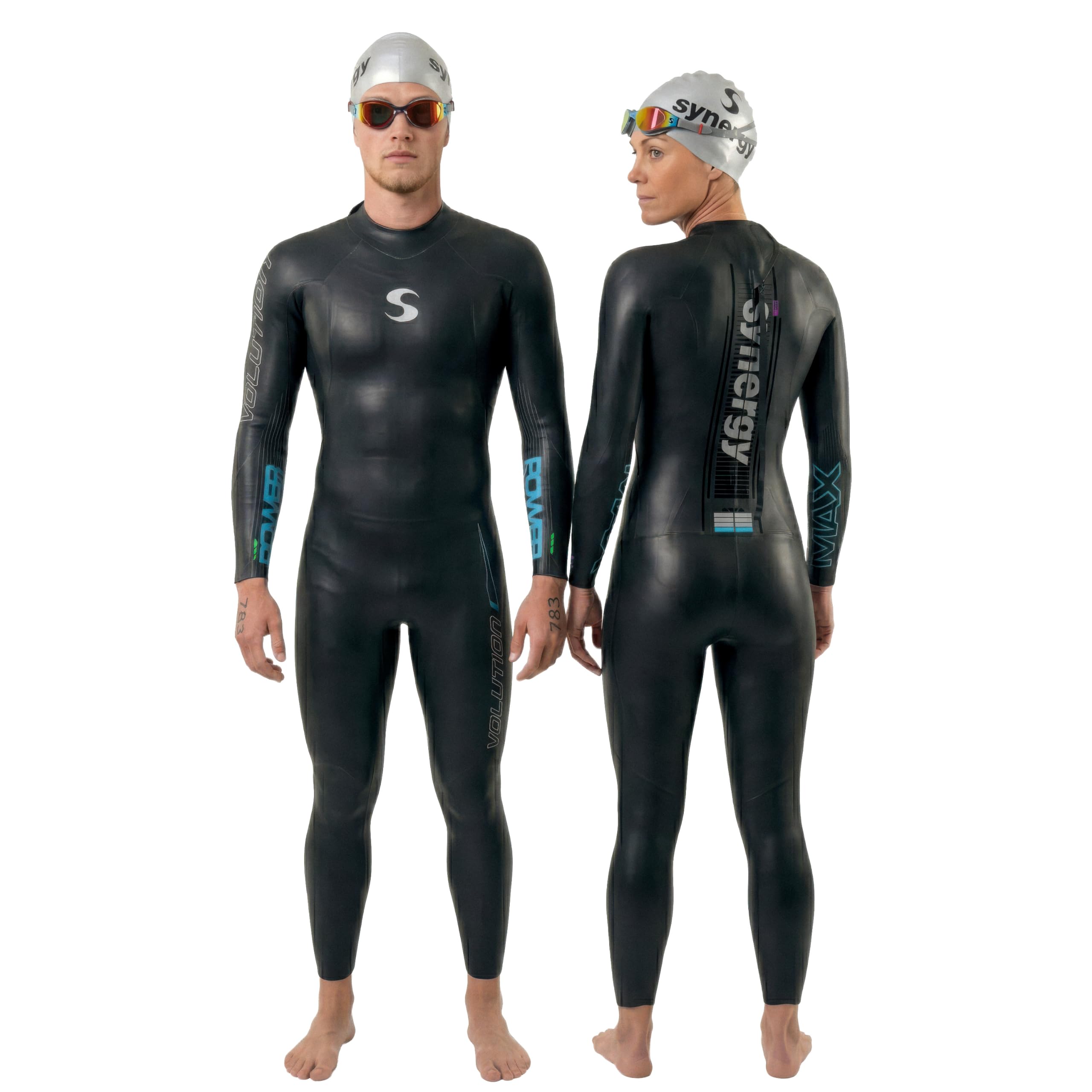
The Synergy Volution is built with a specific purpose — open-water swimming and triathlon — which means its design priorities differ from a traditional surfing wetsuit. The 3/2mm SmoothSkin neoprene core panel delivers targeted buoyancy in the chest and back, helping athletes maintain a higher body position in the water without excessive leg kick. The PowerMAX arm panels use a high-stretch neoprene that allows the catch and pull phases of the stroke to feel completely unrestricted, reducing fatigue over race-distance swims of 1.5km or more.
The super-soft SmoothSkin low-neck collar is a critical feature for triathletes who may be nervous about neckline comfort during long swims — it eliminates the choking sensation that many full-sleeve suits create, and the soft material lines both the inside and outside of the neck opening. The zero-drag internal YKK zipper lies flat against the back, reducing hydrodynamic drag and preventing the zipper-catch issue that can slow down transition times. The suit is designed to feel snug on land but release entry to water, making it easier to remove quickly in T1.
Sizing has been a point of friction for some buyers — the size chart can be challenging to interpret, and multiple customers reported needing to exchange sizes. The suit’s specialized triathlon focus means it lacks the knee pad reinforcement and durability features of surf-specific suits, so it’s not ideal for frequent duck diving or board contact. However, for pure swimming performance, buoyancy, and reduced drag, the Volution delivers a noticeable speed advantage over general-purpose wetsuits.
Why it’s great
- SmoothSkin core panel provides targeted buoyancy for better swimming position
- PowerMAX arm panels allow unrestricted stroke mechanics
- Soft neck collar eliminates chafing and choking sensation
Good to know
- Size chart interpretation can be inconsistent across body types
- Not designed for surf or board contact use — lacks knee reinforcement
6. Cressi Morea 3mm Scuba Diving Wetsuit

Cressi’s Morea wetsuit comes from a brand with seven decades of diving heritage, and the design reflects that focus on function over flash. The suit uses 3mm premium neoprene with a smart material split — the arms and legs are constructed from Ultraspan neoprene for maximum mobility during fin kicks and arm movements, while the chest panel uses a more rigid rubberized neoprene to retain core body heat where it matters most. The dorsal YKK zipper is equipped with an Aquastop flap that reduces water leaks through the zipper channel, and the overlock cuffs at the wrists and ankles provide a clean seal.
Knee protection is built into the suit with a thicker pad area that resists abrasion from kneeling on boat decks or rocky shorelines — a feature that divers and paddle boarders will appreciate. The anatomical cuts accommodate a range of body shapes without excessive bunching, and the Italian design influence shows in the clean color blocking and streamlined silhouette. The suit performs well in 65–80°F water, making it a versatile option for warm-water diving, snorkeling, and paddle boarding.
One common sizing note is that the Morea runs slightly small compared to US sizing, so ordering one size larger than your typical measurement is a safe approach. The back-zip system is simple and reliable, though the lack of a chest-zip option means more water circulation around the core during extended submersion. For a pure diving or snorkeling wetsuit at this price point, the build quality and attention to thermal zoning are hard to beat.
Why it’s great
- Smart thermal zoning with rubberized chest and flexible Ultraspan limbs
- YKK dorsal zipper with Aquastop flap reduces water entry
- Knee pads add durability for boat and shore entry
Good to know
- Runs small — plan to order one size up from your normal fit
- Back-zip design allows more water movement than premium chest-zip options
7. O’Neill Youth Reactor-2 3/2mm Back Zip Full Wetsuit
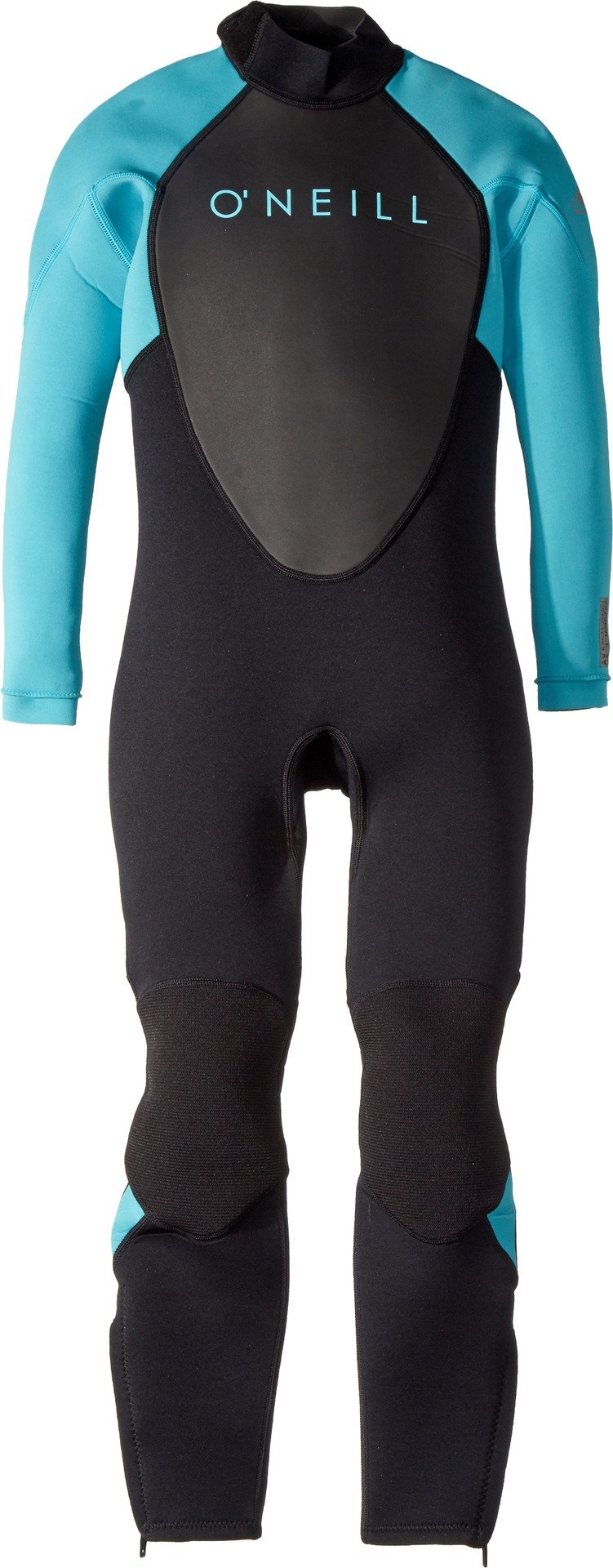
The O’Neill Youth Reactor-2 brings the same design philosophy as the adult Reactor line but scaled for younger water enthusiasts. The Ultraflex neoprene provides the stretch that growing kids need for unrestricted movement during swim practice, surf lessons, or paddle boarding sessions. Flatlock-stitched seams keep the interior smooth against sensitive skin, reducing the irritation that can turn a child off from wearing a wetsuit altogether. The back-zip entry is straightforward for parents to assist with, and the ankle zippers are a practical feature that dramatically simplifies the doffing process for young users.
The 3/2mm thickness provides adequate warmth for 58–68°F water conditions, which covers the typical range for youth surf camps and school swim programs. Knee pads are integrated into the design, providing protection for kids who spend time kneeling on boards or crawling on sandy beaches. Multiple parents have reported that the suit holds up well across multiple children over several years, which speaks to the durability of the construction and neoprene quality for a youth product.
Sizing can be tricky since children grow at unpredictable rates — the Reactor-2 tends to run slightly long in the arms and legs, so some buyers intentionally size up to extend the usable lifespan of the suit. The flatlock stitching, while comfortable, does allow more water flow than GBS seams, so the suit is best suited for warmer conditions where a little water exchange is tolerable. For a youth wetsuit that balances quality, durability, and affordability, this remains a benchmark choice.
Why it’s great
- Ankle zippers make entry and exit much easier for children
- Ultraflex neoprene provides excellent stretch for active kids
- Knee pads enhance durability for kneeling and crawling
Good to know
- Arms and legs run slightly long — may need to size up for growth
- Flatlock seams permit more water exchange than GBS alternatives
8. Hevto Plus Size 3/2mm Neoprene Full Shorty Wetsuit
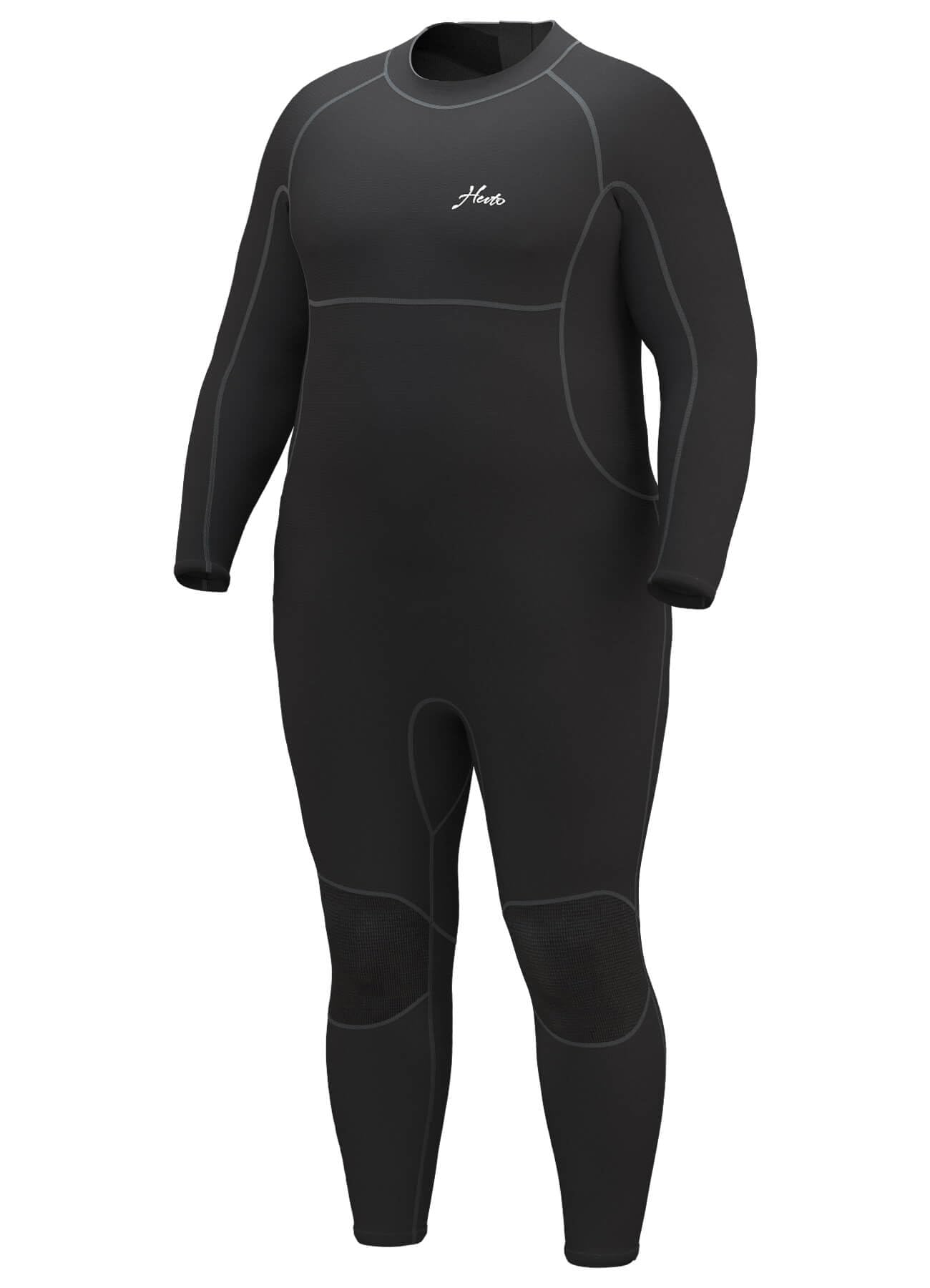
Hevto addresses a genuine gap in the wetsuit market by offering extended sizing that accommodates larger body types who are frequently underserved by mainstream brands. The 3/2mm neoprene construction uses a 2.5mm average thickness that balances flexibility with thermal retention, making it suitable for snorkeling, swimming, and stand-up paddle boarding in temperate water. The back-zip entry incorporates a long pull cord and a generous zipper track that allows users to don and doff the suit without needing a partner’s assistance.
The cut is designed specifically for plus-size individuals, with extra room through the chest, stomach, and hips while maintaining a snug seal at the neck, wrists, and ankles to minimize water exchange. Several users with chest measurements up to 56″ reported that the extended sizes (up to 5X) provided a functional fit where standard wetsuits would be unwearable. The neoprene is reinforced at high-stress points to prevent tearing during the stretching required to put on a tight-fitting suit.
The primary compromise is in the neoprene quality — it does not match the stretch or durability of premium limestone-based alternatives, and the flatlock stitching allows more water flow than GBS-sealed suits. Some users noted that the sizing chart required them to order significantly larger than their typical clothing size, and the fit across the forearms and calves can be loose if your body shape doesn’t match the pattern. For the price, however, it provides a functional entry point for plus-size individuals who need a wetsuit that fits.
Why it’s great
- Extended sizing (up to 5X) accommodates larger body types
- Back-zip design with long pull cord enables solo entry and exit
- Reinforced construction at stress points prevents tearing
Good to know
- Flatlock seams allow water exchange — best for warmer water
- Sizing chart may require going up several sizes from normal clothing
9. Seaskin 3mm Front Zip Full Wetsuit

Seaskin’s full wetsuit represents the entry-level tier of the 3/2 category, and it serves a specific role well: providing thermal protection for casual water activities like water aerobics, snorkeling, and paddle boarding on a tight budget. The 3mm three-layer construction uses an outer nylon fabric for durability, a middle neoprene layer for insulation, and a soft inner lining for comfort against the skin. The front-zip entry is unique at this price point — it’s easier to manage than a back zip for some users and provides UV protection plus defense against jellyfish and other biological irritants.
The flatlock-stitched seams prioritize comfort and chafe prevention over water exclusion, which limits the suit’s effectiveness in colder water below 60°F. Multiple users report that the suit fits well for its price — a 5’7″, 140-pound user found the small size perfect, while a 5’3″, 115-pound user reported the women’s small provided a snug but not restrictive fit. The ankle zippers on some models add convenience for removal, and the neoprene does stretch slightly over the first few uses to achieve a more comfortable fit.
The primary limitations are in the neoprene quality and seam construction — the material lacks the stretch and recovery of premium suits, and the flatlock stitching means you will feel water exchange with every movement. Some users noted a strong chemical odor from the new neoprene that required airing out before use, which is common in budget suits. For anyone whose main concern is staying warm during light water activity on a strict budget, the Seaskin provides functional performance that punches above its price point.
Why it’s great
- Front-zip entry is intuitive and easy to manage alone
- Three-layer construction provides decent warmth for the price
- UV and biological protection adds value for snorkeling and aerobics
Good to know
- Flatlock stitching permits water exchange — not for cold conditions
- Neoprene may have a strong odor initially that requires airing out
FAQ
What water temperature is a 3/2 wetsuit actually good for?
Should I buy a chest-zip or back-zip 3/2 wetsuit?
How tight should a 3/2 wetsuit fit me?
Can I use a wetsuit designed for surfing for triathlon swimming?
Final Thoughts: The Verdict
For most surfers and water enthusiasts looking for a 3/2 wetsuit, the winner is the O’Neill Hyperfreak 3/2+mm because it combines Technobutter neoprene’s exceptional stretch with fully taped GBS seams that keep you warm in the 55–62°F range without restricting paddle power. If you want the best warmth-to-value ratio in a chest-zip design, grab the Ho Stevie! 3/2mm. And for tall surfers who struggle with suit length, nothing beats the Hyperflex VYRL 3/2mm with its XLT sizing and lightweight Quantum Foam neoprene.