
Our readers keep the lights on and my morning glass full of iced black tea. As an Amazon Associate, I earn from qualifying purchases.
Specs are compiled from manufacturer listings and verified buyer reviews and can change over time — please confirm the key details on the product page before buying.
Choosing a 3/4 fiddle for a young student depends on one question: will it actually stay in tune and sound decent, or will it frustrate them in the first month? You want an instrument that arrives playable, holds its tuning during a lesson, and includes the accessories you’d otherwise have to hunt down separately. This guide breaks down nine kits that range from budget-friendly starters to premium step-up instruments, so you can match the right one to your player’s age and commitment level.
I’m Min — the founder and writer behind Gadgets Feed. This guide is built by comparing the manufacturers’ published specifications and the patterns across verified customer reviews, so you get each pick’s real strengths and trade-offs instead of marketing spin.
Whether it’s a first school orchestra instrument or a birthday gift for a growing musician, finding the right 3/4 fiddle means weighing setup quality against the included accessories and the tonewoods that shape the sound.
Our Picks at a Glance

How To Choose The Best 3/4 Fiddle
A 3/4 violin is the fractional size most often recommended for children roughly 9 to 12 years old, or smaller-framed teens and adults. Getting the size right matters, but the real difference between a fiddle a child loves and one they abandon often depends on setup — how well the bridge is fitted and whether the pegs hold a tune.
Prioritize Setup Over Brand Names
A violin is only as good as its setup. If the bridge isn’t carved to the right height or the pegs aren’t fitted, the instrument will be hard to play and frustrating to tune. Look for kits that say the instrument is “assembled,” “quality checked,” or “ready to play from the start” — these save you a trip to a luthier or a frustrated first lesson. Remember that some kits ship with the bridge unset intentionally to avoid damage, so plan for a simple bridge placement.
Know Your Tonewoods
The wood determines the voice of the instrument. A solid spruce top paired with a maple back is the classic combination — it produces a warmer, more resonant tone that projects well. This is different from laminated or plywood tops, which tend to sound thinner and often lack the depth that helps a student develop a good ear. “Hand-carved” and “solid” in the description are the keywords to look for if you want a fiddle that will grow with the player.
Look For The Complete Kit
Beyond the instrument itself, calculate what else you’ll need: a bow, rosin, a shoulder rest, extra strings, and a case. A well-stocked kit saves you from buying these separately and usually costs less than assembling the pieces individually. Pay attention to whether the case is a lightweight hard case with backpack straps or a soft gig bag — the former offers far better protection for the instrument on the way to school. A digital tuner or a tuner with a metronome is a huge plus for a beginner who can’t yet tune by ear.
Quick Comparison
| Model | Best For | Tonewoods | Setup | Bow | Amazon |
|---|---|---|---|---|---|
| Bunnel Pupil (Kennedy)★ Best Overall | Best Overall Value | Solid Maple & Spruce | Assembled in USA | Giuliani Brazilwood | Amazon |
| Vangoa VA-400SBest Value | Slim Travel Case | Solid Spruce & Maple | Needs Tuning | Brazilwood | Amazon |
| Kmise MI9903Most Complete | Complete Starter Kit | Solid Spruce Top | Easy Tuning System | Included Bow | Amazon |
| Mendini MV300 | Gift-Friendly Entry | Carved Spruce Top | Bridge Unset | Included Bow | Amazon |
| MeloCrest MVA-800 | Transitional Sizing | Solid Spruce Top | Smooth Pegs | Brazilwood | Amazon |
| Cecilio CVN-300 | Classic Beginner Kit | Solid Spruce Top | Bridge Unset | 2 Bows Included | Amazon |
| Cremona SV-130 | Educator’s Choice | Hand-Carved Spruce | Precise Setup | Balanced Bow | Amazon |
| Cremona SV-500 | Premium Step-Up | Flamed Maple | MENC Standards | Deluxe Brazilwood | Amazon |
| Bunnel G1 (Kennedy) | Top-Tier Premium | Solid Maple & Spruce | Fully Assembled | Giuliani Brazilwood | Amazon |
In-Depth Reviews
1. Bunnel Pupil Violin Outfit 3/4 (Kennedy Violins)
Our pick — over 4.5★ from 450+ verified ratings; the strongest balance of quality and price.
The gold standard for a student fiddle that arrives fully assembled and ready to play from the start.
This is the rare kit that skips the guessing game entirely. The Bunnel Pupil is handcrafted from solid maple and spruce tonewoods with genuine ebony fittings, and Kennedy Violins completes the final assembly and setup in the USA — not in a distant factory. That means the bridge is placed, the strings are installed, and the instrument is quality-checked before it reaches you. The result is a clear, warm, live sound that owners describe as resonant and beautiful right from the first practice session.
The complete package includes a Giuliani Brazilwood bow, Giuliani rosin, D’Addario Prelude strings installed, a Portland oblong violin case, an extra set of Portland Strings, and a Portland Carbon Fiber Shoulder Rest. The case earns special praise for its high quality and built-in hygrometer (a small device that measures humidity to protect the instrument).
It’s marked down due to a slight cosmetic defect that buyers report is barely noticeable — buyers find the near-perfect finish doesn’t affect the playability or sound. The instrument is backed by a lifetime warranty and a 45-day money-back guarantee, giving parents of younger beginners real confidence.
What Owners Rave About
- Sound quality is the standout — 81 owners single out its warm, resonant tone.
- The appearance impresses, with a beautiful satin oil finish that looks far more expensive than it is.
- Fully assembled and pre-tuned, so a student can start playing the same day it arrives.
Fair Warnings
- Be prepared to rosin the bow — it arrives with grey hair that needs a coating to grip the strings.
- The box is labeled “VIOLIN,” which ruins the surprise if this is meant to be a secret gift.
- A few owners note it ships without a shoulder rest despite the listing, so it’s worth double-checking the box.
Reach for this if: You want a teacher-approved, fully assembled fiddle that a student can play immediately — the crowd favorite among families who value setup over tinkering.
Look elsewhere if: You’re on a tight budget and just want to test whether a child will stick with lessons before making a bigger commitment.
2. Vangoa 3/4 Solid Wood Acoustic Violin
A compact, well-priced starter kit that an 8-year-old’s instructor actually recommended.
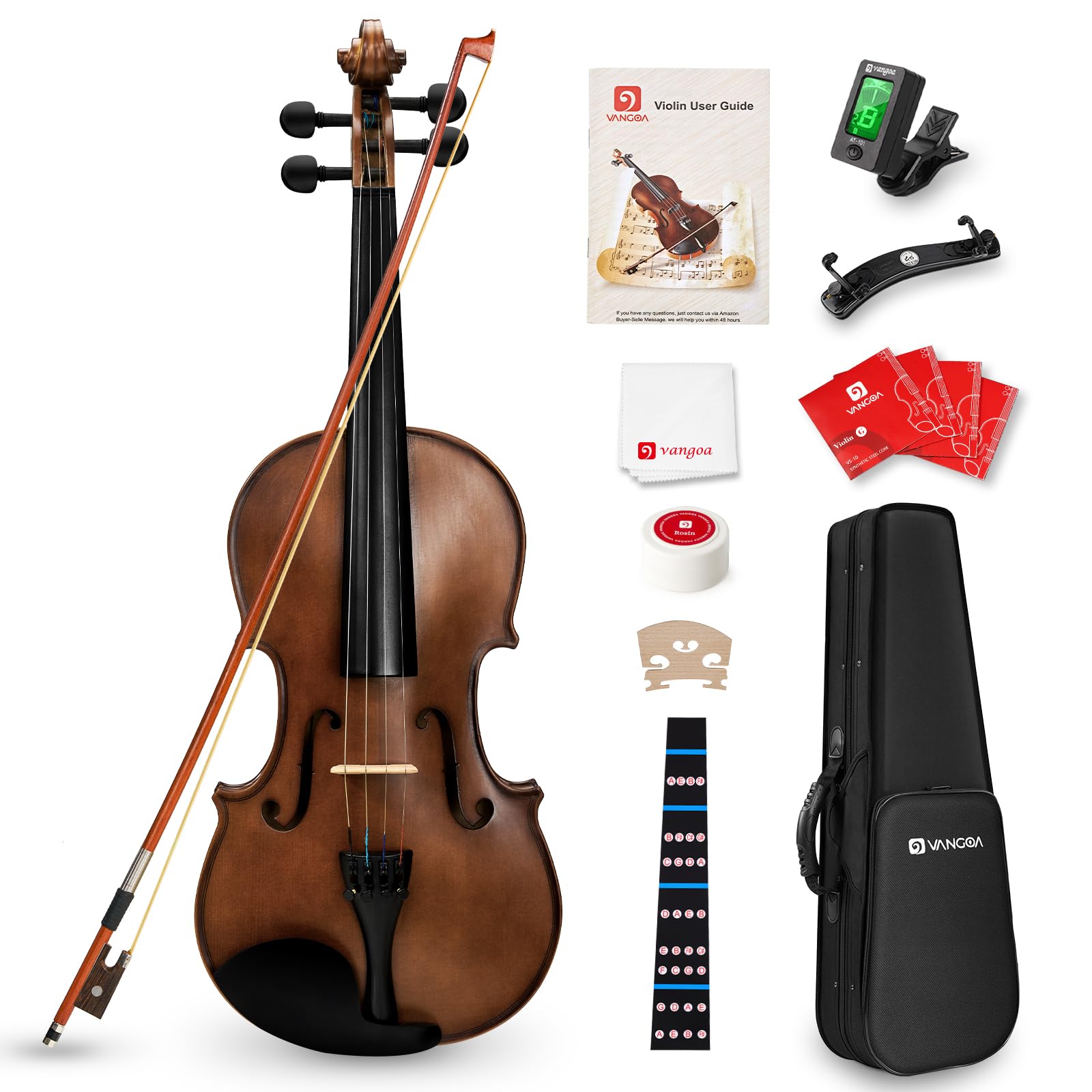
The Vangoa earns its place on this list because of the specific way it shows up in real-world use: one 8-year-old’s violin teacher specifically recommended it. That’s the kind of endorsement that matters more than any spec sheet. It’s crafted from solid spruce for the top and maple for the neck, back, and sides, producing a warmer, more uniform sound than cheaper laminated alternatives. The antique varnish body gives it an elegant, vintage appearance that appeals to young players.
Where this kit shines is the sheer completeness of the package. It ships with a digital tuner, violin case, guide book, rosin, note sticker, shoulder rest, extra strings, violin bow, a violin mute (which lowers the volume during quiet practice), and a cleaning cloth. That’s a lot of value packed in — the mute alone is a thoughtful addition for apartment dwellers.
The item dimensions are 7.87 x 3.94 x 26.77 inches, which makes it notably smaller in profile than the Kmise kit’s 27 x 8 x 4 inches — a 3.4x gap in bulk that could matter if storage space is tight. Owners mention it’s lightweight, well-made, and easy to tune, with the quality tuning pegs helping it hold pitch.
Why It’s a Smart Buy
- A digital tuner and a practice mute are both included — two accessories most kits skip.
- The hard case secures the violin properly while remaining lightweight for a child to carry.
- Suitability for beginners is the most-praised aspect, with 25 owners noting it’s a great starter.
The Trade-Off
- One owner hit a dud — the included strings were too low-quality to produce sound with the bow.
- It’s not a premium instrument, so an advancing student will eventually outgrow it.
Best if: You want a complete, teacher-recommended starter kit for a child without spending a premium — the compact case is a bonus for tight spaces.
Think twice if: A child is showing serious long-term commitment and you’d rather invest once in a higher-tier instrument that will last through intermediate levels.
3. Kmise Violin 3/4 Size Starter Kit
A flame amber beauty with a humidity-meter case and a full beginner kit that teachers approve of.
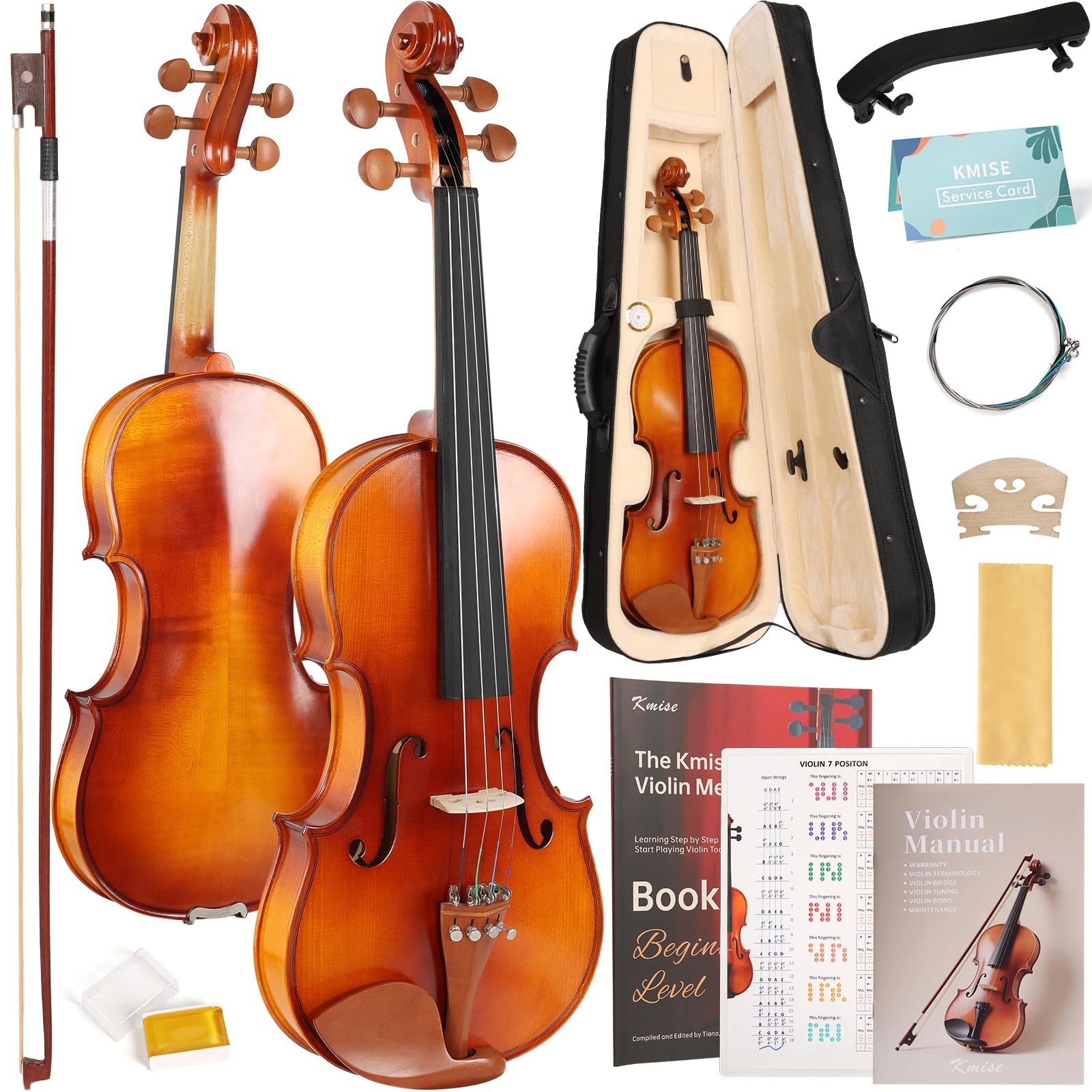
The Kmise stands out for the quality of its included case — it has a humidity meter built in, a feature usually reserved for much pricier instruments. That’s a thoughtful touch for protecting a wooden instrument from warping in dry winter months. The fiddle itself features a solid spruce top with a maple back and sides, finished in a striking flame amber polish. The matched jujube wood pegs, chin rest, and tailpiece give it a warm vintage appearance that owners call beautiful.
It’s built for beginners in a practical way: a smooth ebony fingerboard, tune string height, and 4 fine tuners on the tailpiece make it easy for small hands to press strings and stay in tune. The kit includes a case, bow, shoulder rest, rosin, bridge, strings, cleaning cloth, and a fingering chart — everything a student needs to start.
At 27 x 8 x 4 inches, this is the bulkiest case in this roundup, but it’s also the roomiest for storing accessories and sheet music. Owner feedback is strong: a daughter and her teacher were satisfied after a month of use, and one buyer’s son called it “perfect for a student.” The recurring note is that strings need a little settling time, which is normal for a new instrument.
Standout Features
- The humidity meter in the case is a premium feature that protects the instrument long-term.
- The flame amber finish and matched jujube wood components create a genuinely elegant look.
- Excellent supplier support — customers note issues are resolved immediately.
Little Gripes
- The included shoulder rest tends to collapse; consider upgrading it for comfort.
- No violin mute is included, which is a minor miss for quiet practice.
Choose this if: You want the most complete kit with a protective case that actively monitors humidity — ideal for climates with big seasonal changes.
Pass if: You have very limited storage space and need the slimmest possible case profile.
4. Mendini By Cecilio 3/4 Violin Set

A satin antique starter with a lesson book and tuner — the classic “let’s see if they stick with it” gift.
The Mendini is the entry point that most families try first, and it’s easy to see why. It features a premium solid hand-carved spruce top with evenly spaced grains and a maple back, which helps produce a lighter, more vibrant sound. The satin antique finish gives it an old-world look that photographs beautifully for a gift. The kit is exceptionally complete: a violin, bow, extra set of strings, 2 violin bridges, rosin, an adjustable shoulder rest with padding, a tuner, a Mendini lesson book, and a lightweight hard case with pockets and backpack straps.
For a curious kid or a teen who wants to test the waters, this kit is a smart low-commitment choice. The included lesson book means a beginner can start learning even before their first formal lesson. The tuner helps them get each string to pitch without needing a parent who knows how to play.
It’s fair to be honest about the trade-offs here. Owner feedback is deeply split on durability: many praise it as a “GREAT BEGINNER VIOLIN” that a teacher approved, while others report the bow falling apart or the bridge breaking within a week. The bridge arrives unset for shipping safety, which is good, but it also means parents must place it carefully. This is a “test the interest” instrument, not a heirloom.
Why It Works
- Includes a tuner, lesson book, 2 bridges, and extra strings — everything to start learning immediately.
- The hard case has both backpack and shoulder straps for easy school transport.
- Solid hand-carved spruce top provides a surprisingly resonant tone for the price tier.
Realistic Expectations
- Durability is the biggest concern — the bow is the weak point and may need replacing.
- The pegs can slip, making it hard to stay in tune without peg spray.
Best for: A curious beginner testing whether they love the instrument — it’s a low-stakes, fully-loaded way to find out.
Not for: A student who’s already committed and needs a reliable instrument for daily school practice without gear issues.
5. MeloCrest 3/4 Violin for Kids

The perfect “in-between” fiddle for a student outgrowing a smaller size but not ready for full.
MeloCrest designed this kit specifically for the growing musician — the kid who’s transitioning from a smaller violin or the teen who needs an instrument that will grow with them. The 3/4 size is the balance for students aged roughly 9 to 12, and this kit targets that exact window. Made from premium spruce for the top and maple for the back, it produces a bright, clear tone that helps developing players hear their intonation clearly.
The varnish finish gives it a polished look that owners describe as impressive for the price. One professional violinist approved it, noting the warm, clear tone and well-built construction — the kind of endorsement that reassures parents who can’t evaluate an instrument themselves. It comes with a durable hard case, brazilwood bow, adjustable shoulder rest, clip-on tuner, fingerboard sticker, extra strings, rosin, and a cleaning cloth.
The trade-off is that some fiddles ship without a bridge installed, which is a significant hurdle for a family new to string instruments. One owner’s son arrived at his first lesson with a violin that wasn’t playable because the bridge was missing — the teacher had to break the news. Check the box immediately upon arrival and order a spare bridge if needed.
Why It’s Special
- A professional violinist and multiple teachers approved the sound quality — strong validation.
- Built specifically for the transition size window, making it a thoughtful gift for a growing student.
- The included electronic tuner makes pitch-perfect tuning achievable for beginners.
Watch Out For
- Some units ship without a bridge, making the violin unplayable until one is added.
- The clip-on tuner is helpful but not a substitute for learning to tune by ear.
Pick this if: You’re buying for a child in the 9–12 window who’s committed and needs a fiddle that sounds good enough to keep them motivated.
skip it if: You don’t want to risk a missing bridge — verify the contents as soon as the box arrives.
6. Cecilio 3/4 Violin Solidwood with D’Addario Strings

Comes dressed in premium D’Addario strings and ships with two bows — a practical edge for school use.
This Cecilio gets a real head start over most kits because it ships with D’Addario Prelude strings already installed — the same brand that the premium Bunnel kits use. That’s a notable upgrade at this price point, and it’s why owners describe the sound as “nice” with good projection. The solid spruce top with antique finish and inlaid purfling (the decorative border lines) give it the classic look of a more expensive instrument. The ebony fingerboard and pegged tailpiece round out the elegant design.
The kit is generous: it includes 2 bows, an extra bridge, quality rosin, an adjustable shoulder rest with padding, a chromatic string tuner with metronome, a lightweight hard case, and an early lessons book. Having a second bow is a practical lifesaver for school use — when one breaks mid-year, there’s a backup ready. The tuner with built-in metronome is also a great tool for practicing rhythm.
Owner experience over long-term use is mostly positive: one family reported it “durable for 2 years of school use” by a child. The instrument needs a bit of patience — the bridge arrives unset for shipping safety, and the pegs should be pushed in while turning them to keep them seated. The honest limitations are a rusty G-string after extended use and a bow that limits advanced techniques like staccato.
Why It’s a Smart Pick
- D’Addario Prelude strings deliver a noticeably better tone than generic stock strings.
- Two bows included means a spare when one breaks — key for rough school handling.
- The tuner with metronome is a built-in practice tool beginners actually use.
Honest Limits
- Strings can break within months of heavy use; budget for replacements.
- The bow is slightly heavy and limits advanced playing techniques.
- Some reviewers point out it needs frequent retuning, so peg care matters.
Reach for it if: You want a solid, well-dressed beginner fiddle with premium strings and a backup bow for school wear-and-tear.
Think twice if: Your student is already advancing past first position — the bow and build will hold them back.
7. Cremona SV-130 Premier Novice Violin Outfit

A bestselling novice fiddle trusted by educators for over a decade — the safe, proven choice.
When a violin has been a top seller for over 10 years, that longevity itself is a signal. The Cremona SV-130 is the instrument that music teachers already know and recommend, and it’s built around US-made Prelude strings that educators prefer for beginners and advancing students. The hand-carved solid spruce top and maple body with durable hardwood fittings give it a rich sound that owners praise for its warm tone — well beyond what you’d expect from a student-tier instrument.
The player comfort details show real design thought: a low-profile Kaufman-style chinrest, an oiled neck, and a well-balanced bow that make it easy to hold and play for longer practice sessions. The precise setup — correct string height and spacing — directly supports accurate finger positioning, which is critical for a beginner developing muscle memory. The hardwood pegs and lightweight composite tailpiece with 4 smooth fine tuners make tuning simple and precise.
At 22.5 x 7.75 x 3.25 inches, the case is more compact than the Kmise at 27 x 8 x 4 inches, making it easier to store in a locker or small closet. It’s a value play too — owners describe it as owning a great student violin at a rental price. The most-cited praise is overall quality, with 120 owners specifically calling it out.
Why Educators Trust It
- US-made Prelude strings are the same ones teachers recommend — no swap needed.
- Ten-plus years as a bestseller means a proven, reliable design.
- The low-profile chinrest and balanced bow support comfortable, longer practice.
Small Caveats
- The included rosin is poor quality — budget for a better cake.
- A few units show minor finish imperfections or glue residue.
Best for: Parents who trust the collective wisdom of music teachers — this is the safest, most proven starter you can buy.
Not ideal if: You want an instrument with zero setup — the bridge may need fitting and the rosin needs upgrading.
8. Cremona SV-500 Premier Artist Violin Outfit

Praised by Strings Magazine — the step-up fiddle for a student whose tone is outgrowing a starter kit.
This is the instrument you buy when a student has shown they’re serious. The Cremona SV-500 is praised by Strings Magazine as “a good choice for anyone looking for a first or second violin,” and it’s trusted by teachers and advancing students worldwide. The difference is in the details: a hand-carved solid spruce top, flamed maple back and sides, and a hand-applied reddish-brown varnish finish that enhances both tone and visual beauty. It looks expensive because it’s built to a higher standard.
The professional setup is what truly separates it. It’s expertly set up to MENC Standards at the Cremona workshop in California, featuring a French-made Aubert bridge and U.S.-made Prelude strings. The premium Swiss-style ebony fittings and lightweight composite tailpiece with four fine tuners provide smooth, accurate tuning. Owners — including one who played for 10 years — describe the tone as rich, full, and authentic, with excellent projection that helps an advancing student progress confidently.
At 4.6 pounds, it’s a heavier instrument than the SV-130, which speaks to the denser, higher-quality woods. One owner called it “absolutely mesmerizing quality for the price,” noting it would cost significantly more at a local music store. The trade-off is that a handful of units show minor issues like a rough neck seam or slipping pegs, but the consensus is that the sound quality — the most-praised aspect at 37 mentions — justifies the investment.
The Investment Worth Making: This is the fiddle for the student who’s past the “try it and see” phase and needs an instrument that won’t hold them back through intermediate levels. The sound quality is the standout — 37 owners call it out specifically — and the MENC-standard setup means it plays like a much pricier instrument.
The Honest Catch: The included rosin is too hard and dry, so budget for a softer replacement for better bow grip. A few units arrive with minor cosmetic flaws.
Choose this if: Your student has committed to playing and you want an instrument that will carry them through intermediate and early-advanced levels without holding them back.
Pass if: You’re still testing whether a child will stick with lessons — this is an investment for a confirmed passion.
9. Bunnel G1 Violin Outfit 3/4 (Kennedy Violins)

The premium Kennedy offering — a teacher-recommended, fully assembled fiddle with a velvet-lined case.
If the Bunnel Pupil is the gold standard for value, the Bunnel G1 is the gold standard for premium build quality from the same trusted shop. It includes the violin, an “Intro to Violin” book, the Portland Gold Shoulder Rest, D’Addario Prelude strings installed, a backup set of strings, Kaplan Artcraft rosin, a Giuliani Brazilwood bow, and a Portland oblong carrying case. The solid wood construction with ebony, maple, and spruce materials delivers a warm, rich tone that owners describe as deep and non-scratchy — ideal for beginners developing their ear.
The case is a highlight: velvet-lined with a dedicated place for books and sheet music, which owners love for keeping everything organized for school. One family reported the company’s customer service was so prompt and kind that when they thought the rosin was missing, Kennedy sent a replacement anyway — only for them to find it later tucked inside the case’s accessory receptacle. That level of service is what you’re paying for at this tier.
Shoppers say the pegs stay in place and the instrument tunes well, with tuning stabilizing after about 5 days with minor fine-tuning. A violin teacher specifically recommended this as a starter, noting it plays better than pricier Amazon alternatives. The most-cited strength is overall quality, with 87 owners singling it out. The honest limit: it’s built for beginners and early intermediate players, not advanced students.
Why It’s the Premium Pick
- Velvet-lined case with a dedicated storage spot for books and sheet music.
- Outstanding customer service — one owner got a replacement rosin shipped before finding the original.
- The most-cited praise is quality, with 87 owners calling it out.
The Real Trade-Off
- Built for beginners and early intermediates — an advanced player will outgrow it.
- Some owners replace the included shoulder rest with a different brand like a Kun for a better fit.
Best overall premium choice: You want the confidence of a fully assembled, teacher-recommended instrument with exceptional customer support and a case that protects and organizes.
Consider if: You value service and build quality over saving a few dollars on a budget kit.
Understanding the Specs
Tonewoods: Solid vs. Laminated
The wood choice is the single biggest factor in how a violin sounds. A solid spruce top produces a warmer, more resonant tone that projects well — ideal for a student learning to hear pitch. A maple back adds brightness and durability. Laminated or plywood tops are cheaper but sound thinner and don’t develop that rich, live quality. Look for “solid spruce top” or “hand-carved” in the description to ensure you’re getting a real instrument, not a toy-shaped box.
Setup: Bridge and Pegs
A violin with a poorly fitted bridge or slipping pegs is a nightmare for a beginner. The bridge height controls string action — too high is painful to press, too low causes buzzing. Many budget kits ship with the bridge unset to avoid shipping damage, which means you’ll need to place it carefully. Quality tuning pegs have the right friction to hold pitch while still turning smoothly. Kits that are “assembled in the USA” or “ready to play from the start” save you this hassle entirely.
Included Accessories: What Actually Matters
Calculate the value of a kit by what’s inside. A digital tuner is essential for a beginner who can’t tune by ear. A shoulder rest prevents the fiddle from slipping and reduces neck strain. Extra strings are inevitable — they break. A hard case with backpack straps protects the instrument on the walk to school. And a practice mute is a thoughtful bonus for apartment dwellers who want to practice quietly. The more of these included, the less you’ll spend separately.
The Bow: The Unsung Hero
The bow is often the weakest link in budget kits. A brazilwood bow is a solid, standard choice for beginners. Check that the bow hair is straight and properly tensioned — a wavy or loose bow produces no sound and frustrates new players. Budget for a quality rosin cake; the included rosin is often too hard or dry to properly grip the strings. Some premium kits include two bows, which is a practical lifesaver for school use.
FAQ
What size violin does a 10-year-old need?
Is a 3/4 violin the same as a full size violin?
Should I buy a 3/4 violin kit or rent one?
What does “bridge unset” mean on a violin?
Why won’t my violin stay in tune?
What is the difference between a violin and a fiddle?
Do I need to buy extra strings right away?
How do I rosin a new violin bow for the first time?
Is a more expensive violin better for a beginner?
How much should I spend on a first 3/4 violin?
Final Thoughts: The Verdict
For most families, the 3/4 fiddle winner is the Bunnel Pupil because it arrives fully assembled, stays in tune, and delivers a warm, resonant sound that keeps a young student motivated — backed by a lifetime warranty and a 45-day money-back guarantee. If you want a teacher-recommended compact kit with a built-in digital tuner and practice mute, grab the Vangoa. And for the advancing player whose tone is outgrowing a starter kit, the Cremona SV-500 is the step-up fiddle to reach for.
How We Picked
We do not accept paid placement. Every pick is matched to a real buyer and a real use-case; we do not hands-on test units.
Sources & Methodology
Specifications: manufacturer listings and product documentation. Review insights: verified customer reviews, as of August 2026. Pricing: not shown on this page (it changes often); check the current price via the retailer link.
As an Amazon Associate, Gadgets Feed earns from qualifying purchases. This does not affect which products we feature.