
Our readers keep the lights on and my morning glass full of iced black tea. As an Amazon Associate, I earn from qualifying purchases.
Specs are compiled from manufacturer listings and verified buyer reviews and can change over time — please confirm the key details on the product page before buying.
When you turn that handle, you need a 3/4 gas valve that seals completely the first time—a leak here isn’t a drip, it’s a hazard. You’ll match the right valve to your natural gas or propane line by focusing on three real differences: brass construction, pressure ratings, and thread types. Some valves handle a generator hookup flawlessly, while others are built for a 300,000 BTU fire pit—knowing which is which keeps you safe.
I’m Min — the founder and writer behind Gadgets Feed. This guide is built by comparing the manufacturers’ published specifications and the patterns across verified customer reviews, so you get each pick’s real strengths and trade-offs instead of marketing spin.
Whether you are swapping a corroded shutoff or building a new gas appliance line, this breakdown of the 3/4 gas valve market highlights which brass ball valves actually deliver a leak-free seal under real-world pressure.
Our Picks at a Glance

How To Choose The Best 3/4 Gas Valve
Before you pick a valve, you need to confirm two things: the size of your pipe and the type of gas you’re running. This guide focuses on valves that accept a 3/4 inch connection (either NPT threads or compression), so you’re already in the right ballpark for standard residential gas lines.
Know Your Thread Types
The most common mistake is buying a valve with the wrong thread configuration. FIP (Female Iron Pipe) threads screw onto a male pipe, while NPT (National Pipe Tapered) is the standard for gas fittings. A flare connection is different again—it uses a nut that tightens onto a flared tubing end. Match the valve’s connection to your existing pipe or fitting to avoid a frustrating trip back to the hardware store.
Pressure and Certification Matter
Gas valves are rated for specific maximum pressures, and exceeding that rating is dangerous. A valve rated for 175 PSI is plenty for a standard household natural gas line, which typically runs at a fraction of that. However, you must also check for certification like CSA or UL, which confirms the valve has been tested and approved for gas service—never use a water-only valve on a gas line. The higher the BTU rating, the more gas flow the valve can handle for high-output appliances like fire pits.
Quick Comparison
| Model | Best For | Max Pressure | Material | Connection | Amazon |
|---|---|---|---|---|---|
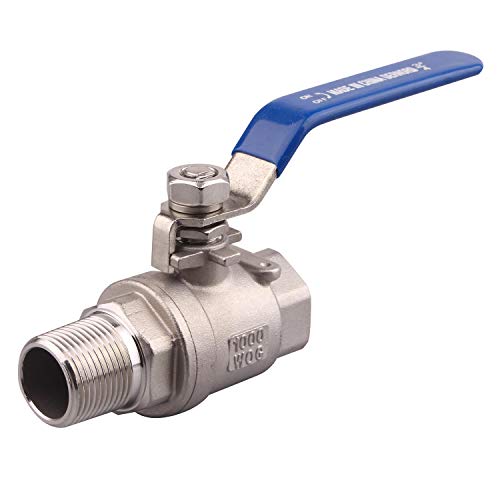
| DERNORD Full Port Ball Valve★ Best Overall | High-pressure & industrial use | 1000 psi | 304 Stainless Steel | 3/4″ Male x Female NPT | Amazon |
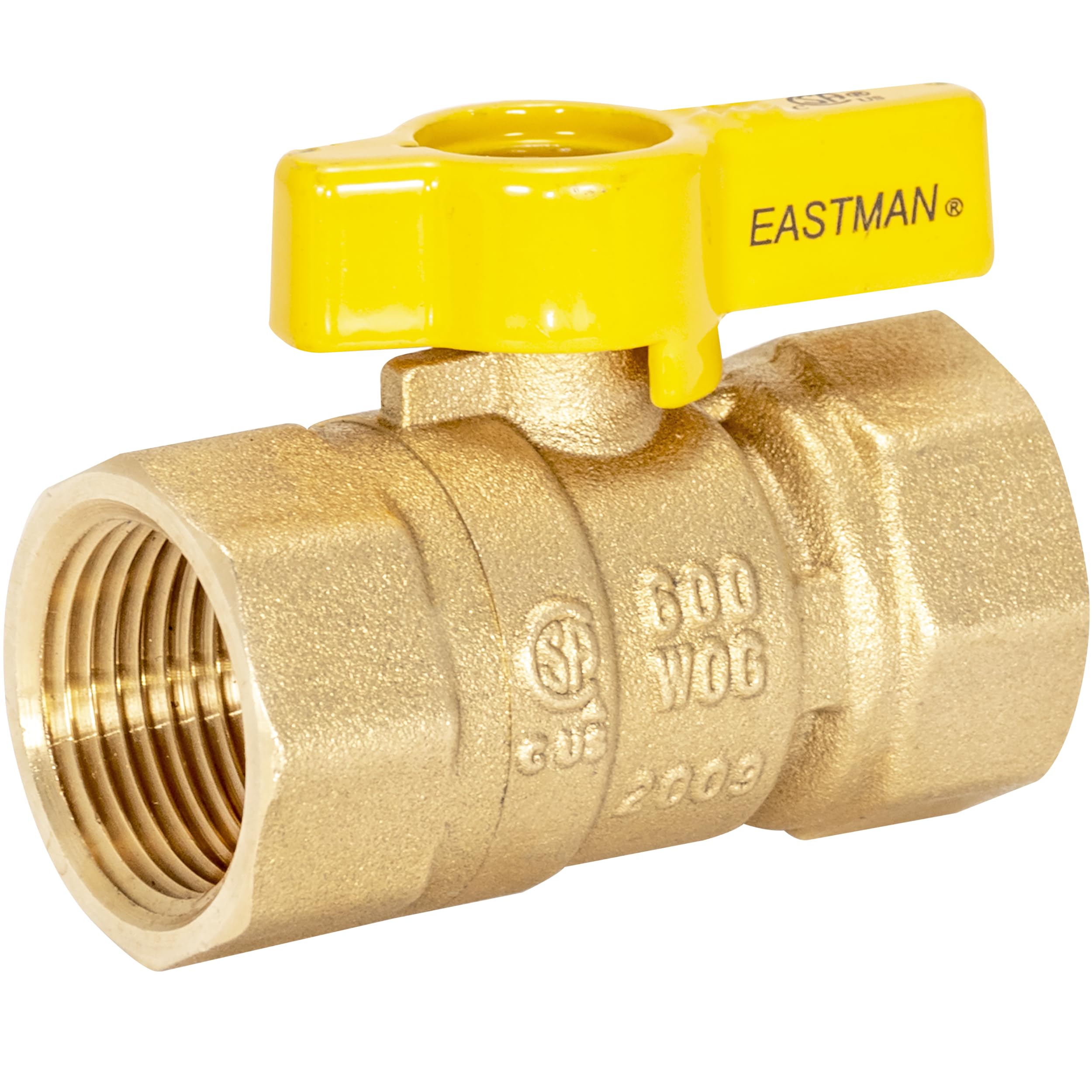
| Eastman Straight Gas Ball ValveBest for Generators | Generator & appliance hookups | 175 psi | Brass | 3/4″ FIP x 3/4″ FIP | Amazon |
| EFIELD Gas Brass Ball ValveBest Value | Budget-friendly residential use | 0.5 psi | Brass | 3/4″ FIP x 3/4″ FIP | Amazon |
| MIDLINE VALVE Brass Gas Ball Valve | Flare to pipe conversions | 600 psi WOG | Forged Brass | 5/8″ Flare x 3/4″ FIP | Amazon |
| Boltigen Brass Gas Ball Valves | Two-valve multi-appliance setups | 175 psi | Brass | 3/4″ FIP x 3/4″ FIP | Amazon |
| Stanbroil Shut-Off Valve Kit | High-BTU fire pits | — | Brass | 3/4″ FNPT x FNPT | Amazon |
| Skyflame Straight Gas Key Valve Kit | Custom fire pit builds | 3 psi | Brass | 3/4″ NPT | Amazon |
| Midwest Hearth Fire Pit Gas Valve Kit | Complete decorative kits | 0.5 psi | Brass | 3/4″ NPT | Amazon |
In‑Depth Reviews
1. DERNORD Full Port Ball Valve 3/4 Inch
Our pick — over 4.5★ from 350+ verified ratings; the strongest balance of quality and price.
The stainless steel brute that shrugs off a sandblaster’s punishment.
If you need a valve that can survive harsh conditions beyond just gas, this DERNORD is a standout. It’s built from 304 stainless steel, not brass, and it’s rated for a massive 1000 psi—a 5.7x gap over the 175 psi rating of the Eastman brass valve. That pressure capacity makes it suitable for water, oil, and gas applications, giving you one rugged valve for multiple jobs.
The full-port design means the ball opens completely, so there’s no restriction to flow, which is critical for high-volume applications. It’s also serviceable—you can take it apart via the threads to clean or replace the ball, something many cheaper valves don’t allow. The temperature range of -60°F to 450°F covers everything from freezing outdoor lines to hot interior runs.
What wins people over is the sheer quality of construction. Buyers report that after running 600 lbs of media through it in a sandblaster, the inside was “still perfect”—proof of its durability. The majority of owners praise its solid feel and leak-free performance, although a handful note mixed experiences with the male side threading, so it pays to use gas-rated tape and thread sealant.
Built like a tank: The 304 stainless steel body and 1000 psi rating put this in a different league from standard brass valves.
Minor thread quibble: A few owners found the male threads needed a little patience, so have sealant ready.
Reach for this if: you want a multi-purpose, high-pressure valve that won’t corrode.
Look elsewhere if: you’re doing a simple indoor appliance hookup where brass is sufficient.
2. Eastman Straight Gas Brass Ball Valve
The dependable cutoff that kept a generator running through a three-hour blackout.
This Eastman valve is purpose-built for straight, in-line gas shutoffs, making it ideal for connecting two pipes going in the same direction. It’s constructed with a two-piece brass body and double O-ring packing, which is exactly what you want for a secure, long-lasting connection on a natural gas or liquid propane line. The quarter-turn aluminum lever makes flow control precise and easy.
Its real claim to fame is reliability in emergency scenarios. Owners mention using it as a cutoff for a tri-fuel generator, where it passed hookup tests and showed no leaks during a three-hour blackout. This is the valve you want when failure isn’t an option. The large wrench flats make installation simple without needing special tools, and it’s CSA certified for gas service up to 175 PSI.
Owners consistently describe it as well-built and sturdy, ideal for replacing corroded valves. The temperature range of 32 to 125 degrees F is standard for indoor gas appliance shutoffs. If you’re feeding a backup generator or a gas appliance that must not fail, this is the pick.
Why It Earns Its Spot
- Double O-ring packing for a dependable seal
- Large wrench flats make for an easy install
- Proven leak-free during an extended outage
Keep In Mind
- Lower 175 psi rating vs. stainless steel options
- Brass body is heavier than some alternatives
The verdict: A rock-solid, certified brass valve for critical appliance and generator hookups.
3. EFIELD 3/4″ FIP Straight Gas Brass Ball Valve
A certified brass valve that handles serious LP backup systems without leaking.
The EFIELD is a straightforward, no-frills brass ball valve that gets the job done. It’s CSA and UL approved, meaning it’s been independently tested and certified for both natural gas and propane service, which is a critical safety checkbox. It’s suitable for both indoor and outdoor stationary gas appliances, and its -40°F to 150°F operating range gives it a wider cold-weather tolerance than the Eastman’s 32°F lower limit.
This is the valve people choose for serious backup systems. Customers note using it to create a system side shutoff to isolate an auxiliary 100 lb LP gas bottle—an emergency supply in case a 500 gallon main tank runs dry between deliveries. That’s a high-stakes job, and this valve handled it. Owners consistently describe it as well-made, with a perfect fit and zero leaks.
It has earned its reputation for durability, with one owner noting it lasts well outdoors. Its reliable performance and budget-friendly price make it a solid choice for standard residential gas shutoffs. If you need a certified valve that performs without costing a premium, this is a smart middle-ground pick.
Certified and capable: CSA and UL approval plus a wide temperature range make it a safe bet for indoor or outdoor use.
Simple by design: You won’t find fancy features, just a solid quarter-turn shutoff that works.
Best for: budget-conscious buyers who want full certification without the premium price tag.
Think twice if: you need a high-pressure or full-port flow valve for a demanding application.
4. MIDLINE VALVE Brass Gas Ball Valve
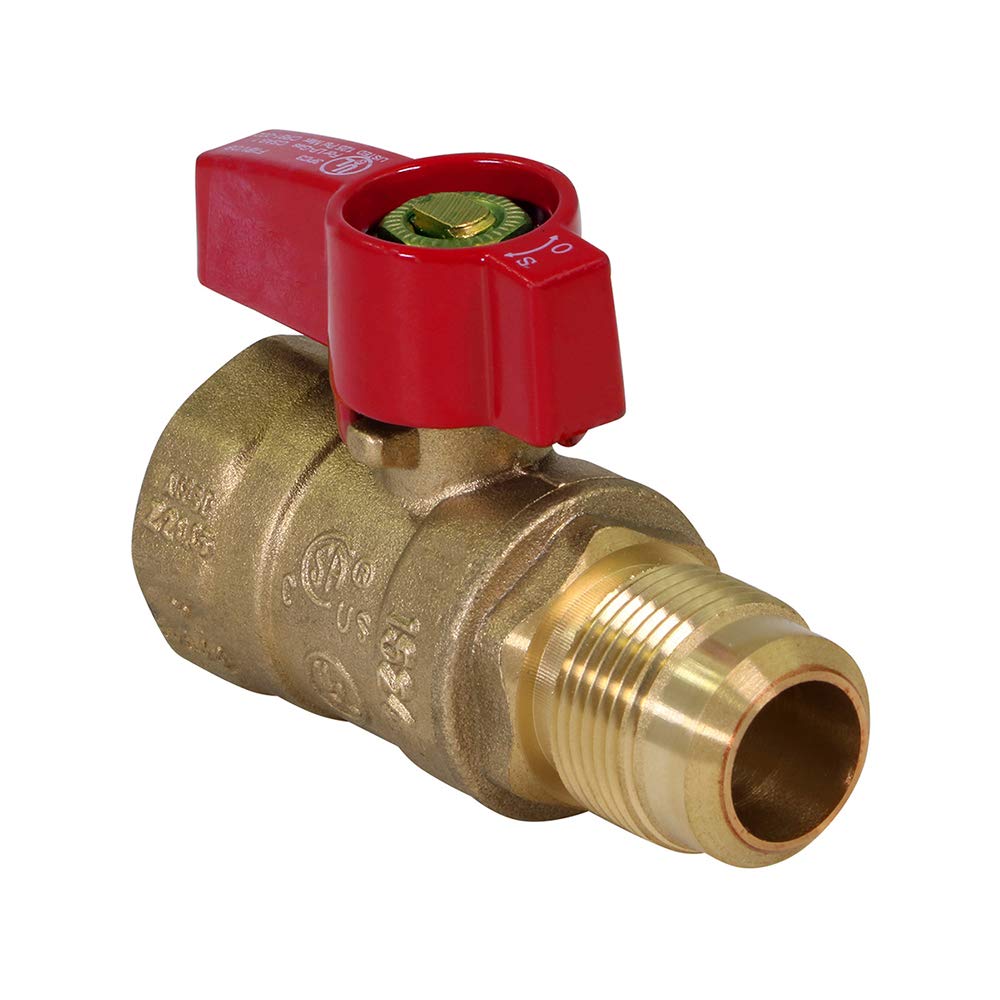
The flare-to-pipe adapter that fixed a gas leak dinner for less than a service call.
This MIDLINE valve answers a specific need: connecting a 5/8″ OD flare line to a 3/4″ FIP pipe fitting. That makes it the go-to when you’re adapting a gas appliance with a flared connector to a standard threaded pipe. It features a forged brass body and a stainless steel ball, giving it maximum strength and corrosion resistance.
It’s rated to handle up to 600 PSI WOG (Water, Oil, Gas) and 175 PSI WSP (Working Steam Pressure), with a temperature range of -4°F to 149°F. That broad certification suite—ANSI, CSA, ASME, and UL Listed—means it’s been tested across multiple standards for gas service. This is a valve that doesn’t cut corners on safety.
Buyers specifically praise it for emergency repairs. One owner found it after a hardware store didn’t carry it, ordered it online, installed it, and fixed a gas leak in two days—saving hundreds versus calling a professional. The aluminum alloy handle provides smooth operation, and the value is a recurring theme, with owners noting significant savings compared to big-box hardware stores.
Why It Stands Out
- Solves specific flare to FIP connection needs
- Multiple certifications for gas safety
- Forged brass with stainless steel ball
Things To Note
- The flare connection can be tricky if you’re not familiar with it
- Size is specific at 5/8″ x 3/4″, not a universal fit
Who it suits: DIYers adapting a flared gas line to a threaded pipe.
Not for: standard FIP-to-FIP pipe connections.
5. Boltigen Brass Gas Ball Valves (2-Pack)
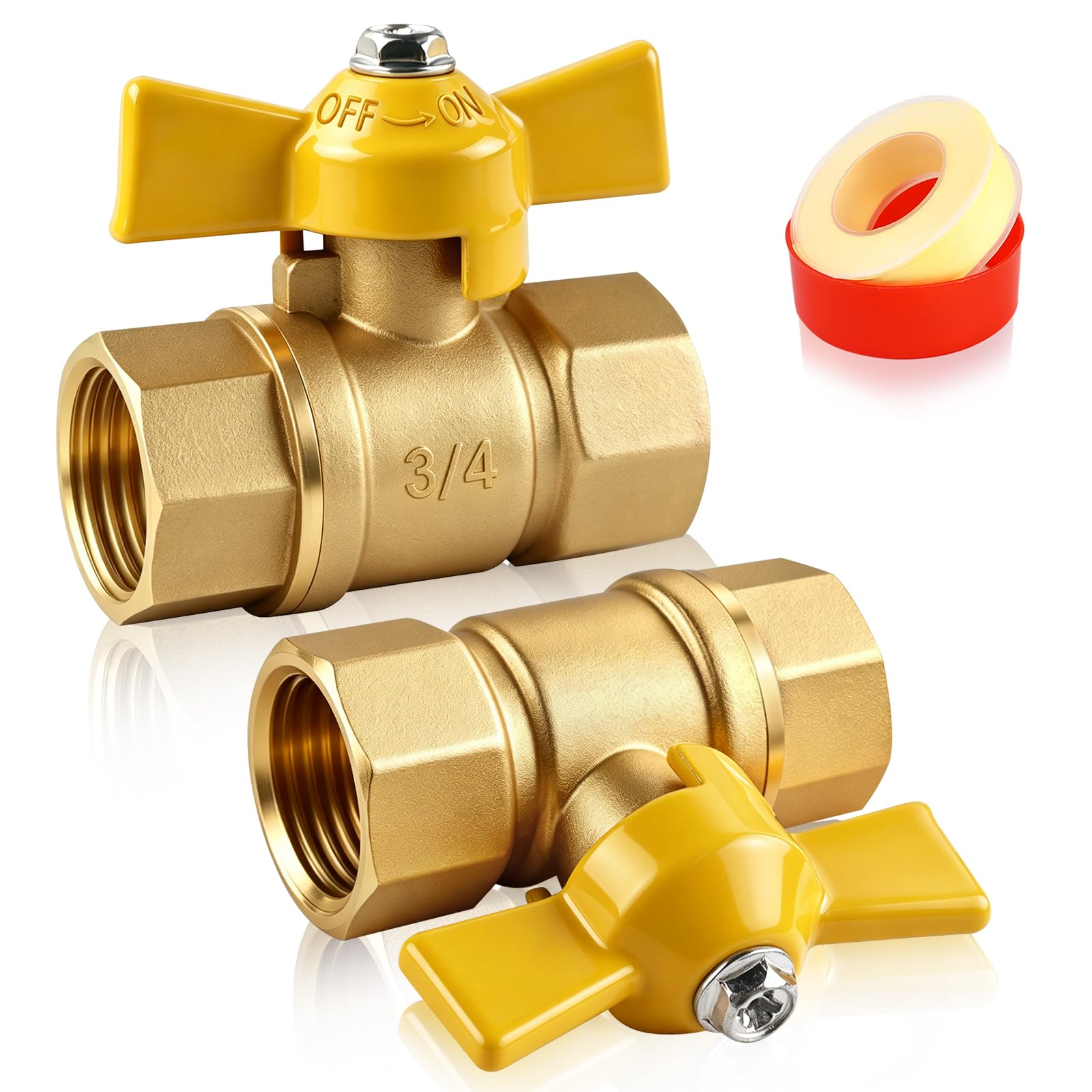
Two solid brass valves with tape included—the practical buy for multi-appliance projects.
When you need to shut off multiple appliances, this Boltigen two-pack offers clear value. It comes with two 3/4″ FIP x 3/4″ FIP brass ball valves and a roll of thread sealing tape, so you have everything to complete two installations right from the start. It’s rated for air mixtures up to 175 PSI, with a temperature range of 32 to 125 degrees F, making it suitable for standard natural gas and propane systems.
The solid brass construction is heavy-duty and well-made. Owners highlight that the valves fit well even with fittings from different manufacturers, which is a practical compatibility win. One reviewer noted using it on a gas line after a plumber suggested swapping valves without turning off the gas—a move they wisely avoided—but the valve performed flawlessly once installed with yellow gas tape.
It’s certified to meet American CSA standards, adding a layer of safety assurance. This is a great option if you’re doing a project that requires multiple shutoffs, like a manifold or a setup with both a stove and a water heater. The included tape is a thoughtful touch that saves a trip to the store.
Practical value: Getting two certified valves plus tape makes this a smart buy for multi-point projects.
Standard specs: The 175 psi rating is solid for residential gas, not for high-pressure industrial lines.
Reach for this if: you’re installing or replacing shutoffs on two appliances at once.
skip it if: you only need a single valve and want to minimize upfront cost.
6. Stanbroil Straight Quarter-Turn Shut-Off Valve Kit

A complete kit that brought a 300k BTU fire pit to life with zero pressure drop.
This Stanbroil kit is designed specifically for high-output gas fire features. It’s rated for use with up to 300,000 BTUs of natural gas or propane, which is the spec that matters most for a roaring fire pit. The kit includes the straight brass valve, a floor plate, and a 3-inch universal key, so you have everything for a clean install.
The ball valve provides excellent on/off control without the pressure drop you’d get from a globe valve. This means your fire pit gets the full gas flow it needs for the best flame performance. Both the inlet and outlet use 3/4 inch female national pipe thread (NPT), fitting standard gas lines perfectly.
Owners confirm it “worked great” on a 300k BTU fire pit. The quarter-turn operation makes it easy to ignite or extinguish the flame, and the solid brass construction feels durable. It’s a purpose-built solution for anyone assembling a fire pit, fire bowl, or outdoor kitchen, saving you the hassle of sourcing a valve, key, and plate separately.
Complete package: Valve, floor plate, and key all included for a straightforward fire pit install.
Flow-focused: The ball valve design ensures maximum gas delivery to high-BTU burners.
The verdict: The go-to kit for DIY fire pit builders who want a guaranteed flow match.
7. Skyflame 3/4 Inch Straight Gas Key Valve Kit
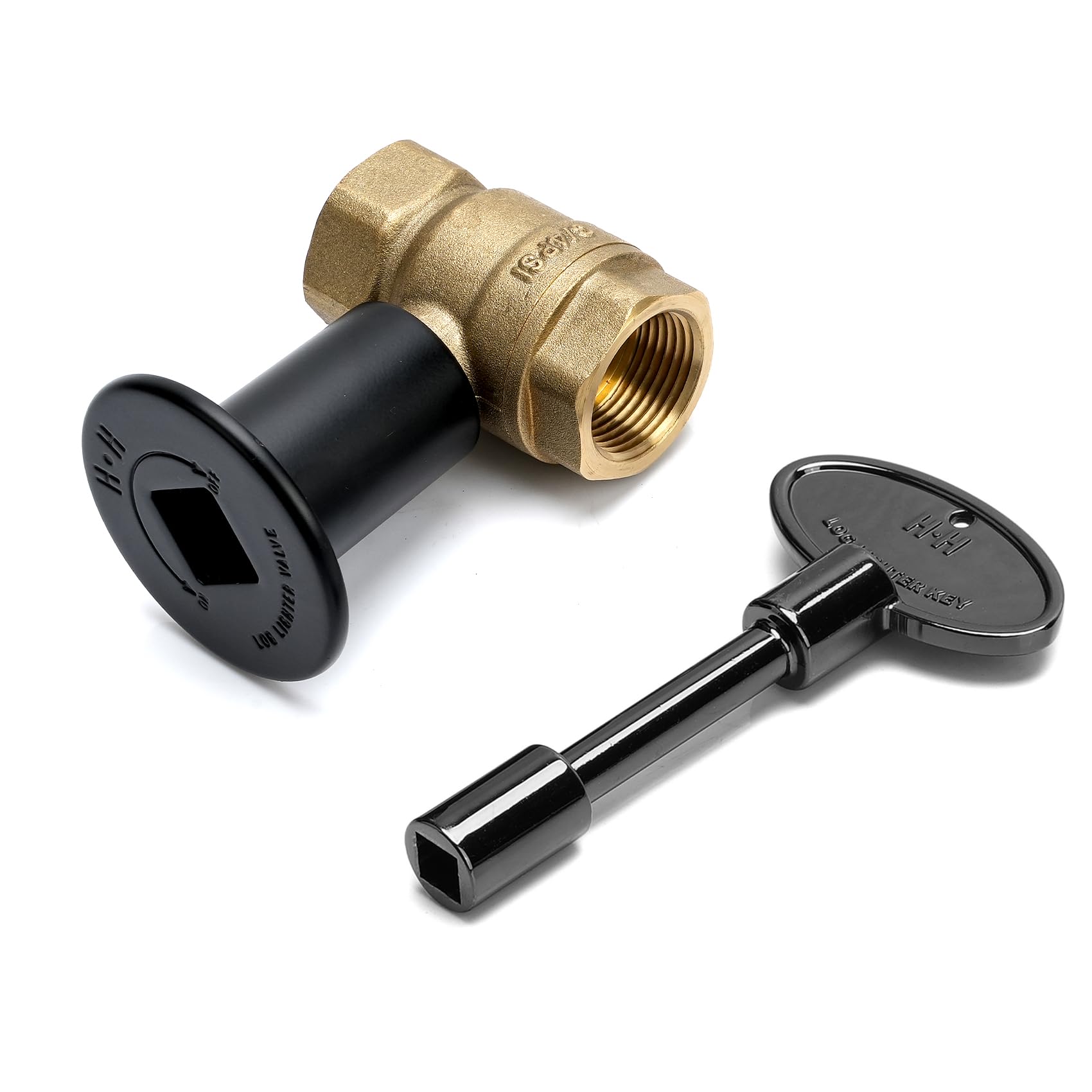
The flat black kit that doubles as a discreet kitchen stove safety shutoff.
This Skyflame kit stands out for its aesthetics and its safety-conscious key design. The flat black finish on the floor plate and key adds a modern, non-reflective look that complements contemporary outdoor kitchens. The included key is a genuine safety feature—without it, the valve cannot be operated, preventing accidental gas flow.
Under the hood, it’s a high-capacity ball valve rated at 300,000 BTU, with a 3/4 inch inlet and outlet using standard female NPT threads. It’s designed for natural gas or liquid propane, making it versatile enough for fire pits, fire bowls, fire tables, and even fireplaces. The brass construction is built to last whether installed indoors or outdoors.
Interestingly, owners have found creative uses beyond the fire pit marketing. One buyer installed it as a kitchen stove safety shutoff valve, drilling a cabinet hole to mount it cleanly. Others use it for outdoor fire pits, with one noting they had to buy a longer key for a specific installation—a minor planning consideration. Its thoughtful design and high value earn consistent praise.
Why It Works
- Safety key prevents accidental operation
- Flat black finish for a sleek look
- Versatile for fire pits and stoves
Before You Buy
- The key length may not fit every installation depth
- Max pressure is a modest 3 psi
Best for: builders who want a safety-key valve with a specific visual finish.
Consider others if: you need a higher pressure rating for a non-standard application.
8. Midwest Hearth Fire Pit Gas Valve Kit

A polished chrome kit with strict ANSI certification for a premium fire feature finish.
If your fire pit is a centerpiece, the Midwest Hearth kit delivers the premium look. It includes a solid brass straight ball valve, a polished chrome floor plate, and a 3-inch universal Zamak die-cast key. The bright chrome finish adds a clean, decorative touch that stands out against stone or brick surrounds, ideal for outdoor kitchens.
Safety is the headline here: the kit is ANSI Z21.5 CSA Certified, meeting strict North American standards for natural gas and liquid propane appliances. It’s rated at 300,000 BTU with 3/4″ NPT fittings and a 1/2 PSIG max pressure, giving high-output fire features the flow they need. The 1/4-turn on/off control provides precise, zero-pressure-drop operation.
Owners find the ball valve a bit stiff on the first turn, but note that’s to be expected and loosens up with use. The full valve specs are clearly documented, including the standard 1/2″ NPSM threads on the floor plate. One buyer did report a mismatched shroud in their kit, so it’s worth checking your parts upon arrival, but the overall quality is praised as good and exactly as expected.
Premium presentation: The chrome plate and key give your fire pit a high-end, finished appearance.
Certified safety: ANSI Z21.5 CSA certification is the gold standard for gas appliance components.
Reach for this if: aesthetics and top-tier safety certification are your priorities.
Look elsewhere if: you want a lower-cost, matte-finish valve kit for a hidden installation.
Understanding the Specs
Pressure Ratings (PSI & WOG)
This is the maximum pressure the valve can safely handle. You’ll see two common ratings: PSI (pounds per square inch) and WOG (Water, Oil, Gas). A residential natural gas line typically runs at a fraction of a PSI, so a valve rated 175 PSI is already overkill for most homes. However, if you’re using the valve for air compressors or other high-pressure systems, you’ll need a much higher rating like the 1000 psi you find on stainless steel models.
BTU Capacity and Flow
For gas appliances, BTU (British Thermal Units) measures the heat output the valve can support. A standard gas log set might need 40,000 BTU, while a high-output fire pit can demand 300,000 BTU. The ball valve’s full-port design—where the ball opens completely—ensures you get maximum flow without pressure drop. This is why ball valves are superior to globe valves for high-capacity fire features.
FAQ
What is the difference between FIP and NPT connections on a gas valve?
Can I use a water ball valve for natural gas?
How do I know if a 3/4 gas valve will fit my existing pipe?
What does the BTU rating mean for a gas valve?
Is a quarter-turn ball valve better than a globe valve for gas?
How do I seal the threads on a gas valve to prevent leaks?
What is a full port valve and why does it matter?
Can I install a gas valve myself or do I need a professional?
Why does my new gas valve feel stiff when I turn the handle?
What is the difference between propane and natural gas valves?
Final Thoughts: The Verdict
The best 3/4 gas valve for you depends entirely on your installation’s pressure and flow needs. For maximum durability and high-pressure versatility, the DERNORD stainless steel ball valve is the standout choice, outperforming brass options with its 1000 psi rating. If you’re connecting a generator or critical appliance where reliability is non-negotiable, the Eastman brass valve has proven itself in real-world outage scenarios. And for a complete, high-BTU fire pit installation, the Stanbroil kit delivers everything you need in one box.
How We Picked
We do not accept paid placement. Every pick is matched to a real buyer and a real use-case; we do not hands-on test units.
Sources & Methodology
Specifications: manufacturer listings and product documentation. Review insights: verified customer reviews, as of August 2026. Pricing: not shown on this page (it changes often); check the current price via the retailer link.
As an Amazon Associate, Gadgets Feed earns from qualifying purchases. This does not affect which products we feature.