
Our readers keep the lights on and my morning glass full of iced black tea. As an Amazon Associate, I earn from qualifying purchases.
Specs are compiled from manufacturer listings and verified buyer reviews and can change over time — please confirm the key details on the product page before buying.
Fighting a full-size guitar neck is frustrating — a 3/4 guitar fixes that. The shorter scale and smaller body make chords easier to reach and the instrument less of a chore, without making it sound like a toy. This guide sorts through the best picks for beginners, travelers, and anyone with smaller hands, sticking to real specs and honest buyer feedback so you know exactly what you are getting.
I’m Min — the founder and writer behind Gadgets Feed. This guide is built by comparing the manufacturers’ published specifications and the patterns across verified customer reviews, so you get each pick’s real strengths and trade-offs instead of marketing spin.
choosing the best 3/4 guitar means matching scale length (the distance from the nut to the bridge — roughly 23 inches on these guitars), tonewood, and build quality to how you actually plan to play, whether that is campfire strumming or plugged-in practice sessions.
Our Picks at a Glance

How To Choose The Best 3/4 Guitar
A 3/4 guitar is not just a smaller version of a full-size instrument — the scale length, body dimensions, and build materials all shift to create a different feel and voice. Knowing what to check first saves you from buying a pretty box that plays poorly.
Scale Length and Body Size
The scale length (the distance from the nut to the bridge on a string instrument) on a 3/4 guitar usually falls around 23 inches. That shorter span means less finger stretch between frets, which is the main reason beginners and younger players find them easier to handle. The body, often around 36 inches total length, keeps the instrument light and manageable.
Tonewoods and Build Quality
Top wood matters most for sound. A solid spruce top (a single piece of real wood, not a thin veneer pressed onto cheaper wood) tends to deliver brighter, more responsive tone. Laminate bodies (thin layers of wood glued together) are more durable against humidity changes and cost less, which is why most entry-level and travel guitars use them. Check fret edges too — rough frets are a common pain point on budget models.
Acoustic vs. Acoustic-Electric
An acoustic-electric guitar has a built-in pickup (a sensor under the bridge or saddle that captures string vibration) and a preamp with controls so you can plug into an amplifier or PA system. If you plan to play on stage, record, or practice at higher volume, the extra cost is worth it. For pure couch strumming or campfire use, a standard acoustic gives you the same basic sound for less.
Quick Comparison
| Model | Best For | Scale Length | Top Wood | Pickup | Amazon |
|---|---|---|---|---|---|
| Pyle Acoustic Guitar Kit★ Best Overall | Budget-Friendly All-in-One Kit | 23.2″ | Linden Plywood | None | $107.99Amazon |
| Yamaha APXT2Also Great | Plugged-in Performance | 23″ | Spruce | System 68 Piezo | $229.99Amazon |
| Martin LXK2 Little Martin | Premium Travel / Rich Tone | 23″ | Koa Pattern HPL | None | $449.99Amazon |
| Fender FA-15 | Trusted Brand Starter | 23″ | Agathis | None | Amazon |
| Vangoa Electric Acoustic | Complete Beginner Bundle | 23.2″ | Spruce | Piezo w/ 2-Band EQ | Amazon |
| Hola! Music | Surprisingly Loud Acoustic | 23.2″ | Solid Spruce | None | Amazon |
| LyxPro Electric Guitar Kit | Electric Starter with Amp | — | Phoenix wood | S-S-S (3 single-coil) | Amazon |
In‑Depth Reviews
1. Pyle Acoustic Guitar Kit, 3/4 Junior Size
Our pick — over 4★ from 950+ verified ratings; the strongest balance of quality and price.
The budget kit that gets a beginner strumming in under five minutes — box to couch.
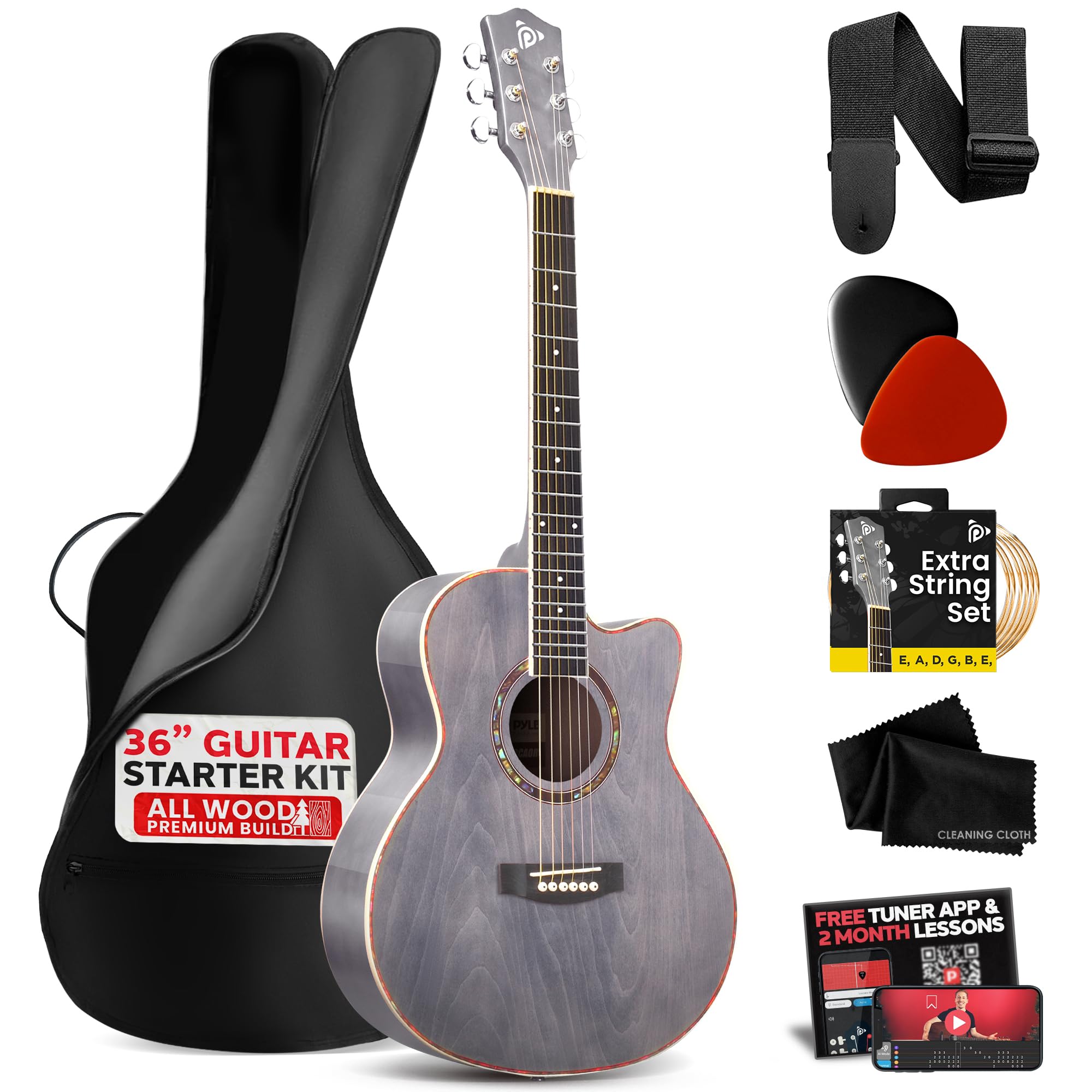
Pyle packs everything into one box: the 36-inch cutaway acoustic (a body shape with a notch at the lower bout, letting your hand reach higher frets more easily), a padded gig bag, six spare strings, three picks, a cleaning cloth, and a detachable shoulder strap. The linden plywood body and engineered wood fretboard keep costs low, but buyers still report “solid build, no issues” and “low action without buzz” on most units. The 23.2-inch scale and 20 frets give beginners enough range to learn open chords and simple solos without feeling cramped. One reviewer noted a “buzzing at second fret fixed via truss rod adjustment,” so a basic tool and a little expertise can solve the most common issue.
Where the Pyle falls short is sound quality and components. The included tuner is notoriously inaccurate per multiple owners, and the factory strings tend to oxidize quickly (especially in humid climates, as one buyer in Hawaii reported). The matte gray finish can look “slightly pixelated up close,” according to a reviewer, which is a cosmetic detail but note if the instrument’s looks matter. If you have the budget for the Vangoa above, you get a better top wood and a pickup system. But if you are trying out guitar for the first time with a tight budget and zero expectations of premium tone, the Pyle gets you playing.
Getting started
- Full kit with bag, strap, picks, spare strings, and cloth — nothing else to buy
- Cutaway body design improves access to higher frets for lead playing
- Low action on most units; no sharp fret ends reported at scale
The downside
- Included tuner is inaccurate; budget for a standalone clip-on tuner
- Strings deteriorate faster in humid environments; plan for early replacement
- Matte finish may look pixelated or uneven up close
Best for: a complete newbie or parent who wants the lowest entry cost to test interest.
Not for: anyone who cares about rich acoustic tone or accurate out-of-box tuning.
2. Yamaha APXT2 3/4-Size Acoustic-Electric Guitar
The acoustic-electric that sounds big enough for a stage, small enough for a suitcase.
The Yamaha APXT2 works in two worlds at once — that is why it tops the list. Unplugged, the spruce top pushes surprising volume from the 36.22-inch body; buyers report it has a “great voice” and stays comfortable for adult women, who note the lower volume is actually welcome for quiet evening practice. Plugged in, the System 68 piezo pickup (a sensor under the saddle that converts string vibration into an electrical signal) and the built-in tuner let you walk onto a stage without extra gear. The 23-inch scale and rosewood fingerboard keep playability smooth for smaller hands, though reviewers mention the action (the height of the strings above the frets) makes barre chords a bit tough right from the start.
At 4.53 inches deep, the body is thinner than many acoustics, which is why it packs so easily for travel. One buyer called it the “perfect 3/4 travel guitar” and praised how well the electronics hold up through an amplifier. The trade-off is that the high strings can sound a little twangy unplugged due to the smaller body cavity, and the tuning pegs need minor tweaks every day, according to some owners.
Compared to the Vangoa acoustic-electric below, the Yamaha costs more but benefits from a brand known for durable, consistent factory setups — fewer fret-end issues and less need to adjust the truss rod immediately.
Why it leads the list
- Built-in tuner saves buying a separate clip-on device
- Thin body (4.53″) slides into overhead bins and tight car trunks
- Strong plug-in sound; piezo pickup handles stage volume with clarity
One realistic catch
- Twangy high strings unplugged; fuller tone requires the amp
- Tuning pegs adequate but need daily touch-ups per multiple reviewers
Reach for this if: you want a single guitar that travels, busks, and records without swapping instruments.
Look elsewhere if: you only ever play unplugged and want the warmest pure acoustic tone for the money.
3. Martin LXK2 Little Martin Koa Pattern HPL Top

The road warrior that outplays solid-wood guitars without flinching.
Martin built the LXK2 from high-pressure laminate (HPL) — a tough, synthetic material that resists humidity and scratches much better than natural wood — so you can toss it in an RV or take it to a beach bonfire without panicking. Despite the synthetic build, owners mention the koa-pattern top produces “balanced, clear tone” with “better note separation than solid-topped” competitors. The rich lower notes are especially impressive for a 3/4 scale, and multiple reviewers claim the intonation (how accurately each fret reproduces the correct pitch) is spot-on straight from the start.
At 8.45 pounds, it is notably heavier than the average 3/4 guitar (the Fender FA-15 is about 3.75 lbs, by comparison, making the Martin 8.45 lbs versus the Fender FA-15’s 3.75 lbs), so that rugged build comes with a weight cost. A few owners note the nut (the small slotted piece at the top of the neck that guides the strings) has sharp edges out of the factory, and the low-ratio tuners can be finicky to dial in, especially on the low E string. One reviewer swapped in Grover Roto-grips for a smoother feel. The included gig bag is basic, so if you plan on air travel, an aftermarket hardshell case is a smart upgrade.
Against the Yamaha APXT2 above, the Little Martin wins on pure acoustic warmth and projection but loses the plug-and-play pickup — there is no built-in electronics here, so you cannot amplify it without a separate aftermarket pickup.
What makes it special
- Scratch-resistant HPL top survives drops, rain, and temperature swings
- Rich, balanced tone with standout note separation for its size
- Excellent factory intonation; minimal setup needed
The honest trade-off
- Heavy for a 3/4 — 8.45 lbs
- No built-in pickup; cannot plug in without modification
- Nut edges can be sharp; low-ratio tuners frustrate precise tuning
Grab this one if: you need an indestructible travel guitar that sounds like a much larger instrument.
Pass if: you want to plug into an amp for stage or recording work right away.
4. Fender FA-15 3/4 Scale Steel String Acoustic Guitar

A famous name on the headstock, a 3.75-pound body in your lap, and a sound that punches well above its size.
The Fender FA-15 is a pure acoustic that focuses on simplicity. Its agathis top over sapele back and sides gives it a warm, balanced voice that one reviewer called “nice and loud” for a 3/4 — loud enough to keep up at campfire jams or family sing-alongs. The 23-inch scale and walnut fingerboard make fingering easy for kids ages 7 to 15, according to parents, and the low action (the strings sit relatively close to the frets, so pressing them down requires less fingertip force) is beginner-friendly — though buyers warn that aggressive strumming can produce buzz. The fret edges come smoothly finished from the factory, a point that multiple reviewers highlighted as unusual at this price level.
What is not included is any electronics or accessories beyond the gig bag. That keeps the cost down, which matters if you are buying for a child who may lose interest after a few months. A few owners mentioned the missing free Fender Play lesson code, so do not bank on the online lessons the brand sometimes bundles. If the Yamaha APXT2 is over your budget and you want a trusted brand name on a pure beginner instrument, this is the pick.
Why beginners love it
- Lightweight 3.75 lbs — easy for kids to hold during long practice sessions
- Smooth factory fretwork; low action for comfortable chord pressing
- Loud, warm projection that holds its own outdoors
One thing to know
- No pickup; purely acoustic, so no easy path to amplification
- Aggressive strumming may cause string buzz against the frets
Best for: young students and small-handed adults who want their first real acoustic from a brand that stores across the country carry.
Not for: anyone who needs to plug in or wants a full starter kit in the box.
5. Vangoa Electric Acoustic Guitar 3/4 Size

The value king that includes everything but a teacher — even the extra strings.
Opening the Vangoa box feels like Christmas morning. Inside you get the 36-inch acoustic-electric guitar, a padded gig bag, a capo (a clamp that shortens the strings to raise the key), a clip-on tuner, a strap, a cleaning cloth, picks, and an extra set of strings — basically everything a first-time buyer needs to start playing in one purchase. The guitar itself features a spruce top over a sapele body and a piezo pickup system with 2-band EQ (bass and treble controls built into the body side) so you can plug into an amp. Customers note that “after 4 months, guitar is outstanding” and that it holds tune well, with a bright, clear unplugged sound that is “surprisingly loud” for its size.
The catch is the QC (quality control) variability. Several reviewers mention that the fretboard arrives dry (needing oil), some fret ends are slightly sharp (easy to buff with fine sandpaper), and the nut may pop off — but these are all straightforward fixes. The 18:1 ratio sealed nickel tuning pegs hold tuning steadier than the chrome pegs found on cheaper models. One owner noted they swapped the factory strings for coated 10/47 gauge strings (thinner strings that produce less tension, making bending notes easier) and loosened the truss rod (the metal rod inside the neck that counteracts string tension) to deepen the tone and remove initial buzz.
Compared to the Fender FA-15 above, the Vangoa gives you the same-sized body but adds plug-in capability and a pile of accessories for a similar investment. That makes it the obvious choice for a beginner who does not know yet whether they want to perform or just strum at home.
What you get in the box
- Full accessory kit: gig bag, capo, tuner, strap, picks, extra strings, cable, cloth
- Piezo pickup with bass/treble EQ for plugged-in practice or performance
- 18:1 sealed tuners that resist tuning drift better than chrome pegs
The fine print
- Fret ends may need filing; fretboard may need conditioning oil from the start
- Included strings are stiff; swapping to coated 10/47 strings improves playability
Perfect for: a first-time buyer who wants one order that covers instrument, case, and accessories.
skip it if: you expect a “ready to go, no adjustments needed” experience right from the case.
6. Hola! Music 3/4 Size Acoustic Guitar Bundle

The little acoustic that one reviewer says can “out-volume my brother’s full-size guitar.”
That quote alone tells you what Hola! Music prioritized — projection. The solid spruce top over a mahogany back and sides delivers a bright, loud sound that does not sound thin or boxy like many small-bodied guitars. Buyers confirm that “the sound is really nice and loud, especially for a 3/4 guitar size,” and that the instrument holds tune well after the initial stretching period. The bundle adds a padded gig bag, three picks of different gauges (thicknesses that affect resistance and tone), a pickguard, a hex key, and a strap. It comes pre-strung with D’Addario EXP16 coated phosphor bronze strings (a premium string choice that resists corrosion and lasts 3-4 times longer than uncoated strings), which is rare at this price level.
The main drawback is action variability. Some units arrive with high action (strings sitting too far from the frets, making them harder to press down), which one buyer described as requiring a trip to a luthier (a guitar repair professional) to sand down the bridge. A few buyers also encountered buzzing at the 2nd fret caused by a high 3rd fret. If you are comfortable with basic setup or have a local repair shop, these are solvable issues. If you want a truly playable guitar straight from the box with zero tinkering, the Fender or Yamaha may suit you better.
Why it stands out
- Solid spruce top produces bright, loud projection — bigger than most 3/4 bodies
- Premium D’Addario EXP16 coated strings included from the factory
- Nice bundle with padded bag, picks, and strap
The catch
- Action often arrives high; some units need professional setup
- Fret quality can be inconsistent — buzzing reported in isolated spots
Choose this if: you want the loudest acoustic sound in this size range and do not mind a little setup work.
Avoid if: you need a dead-simple, play-it-now instrument without any adjustments.
7. LyxPro 36 Inch Electric Guitar and Kit
The electric route for a young player who wants to rock — not just strum.
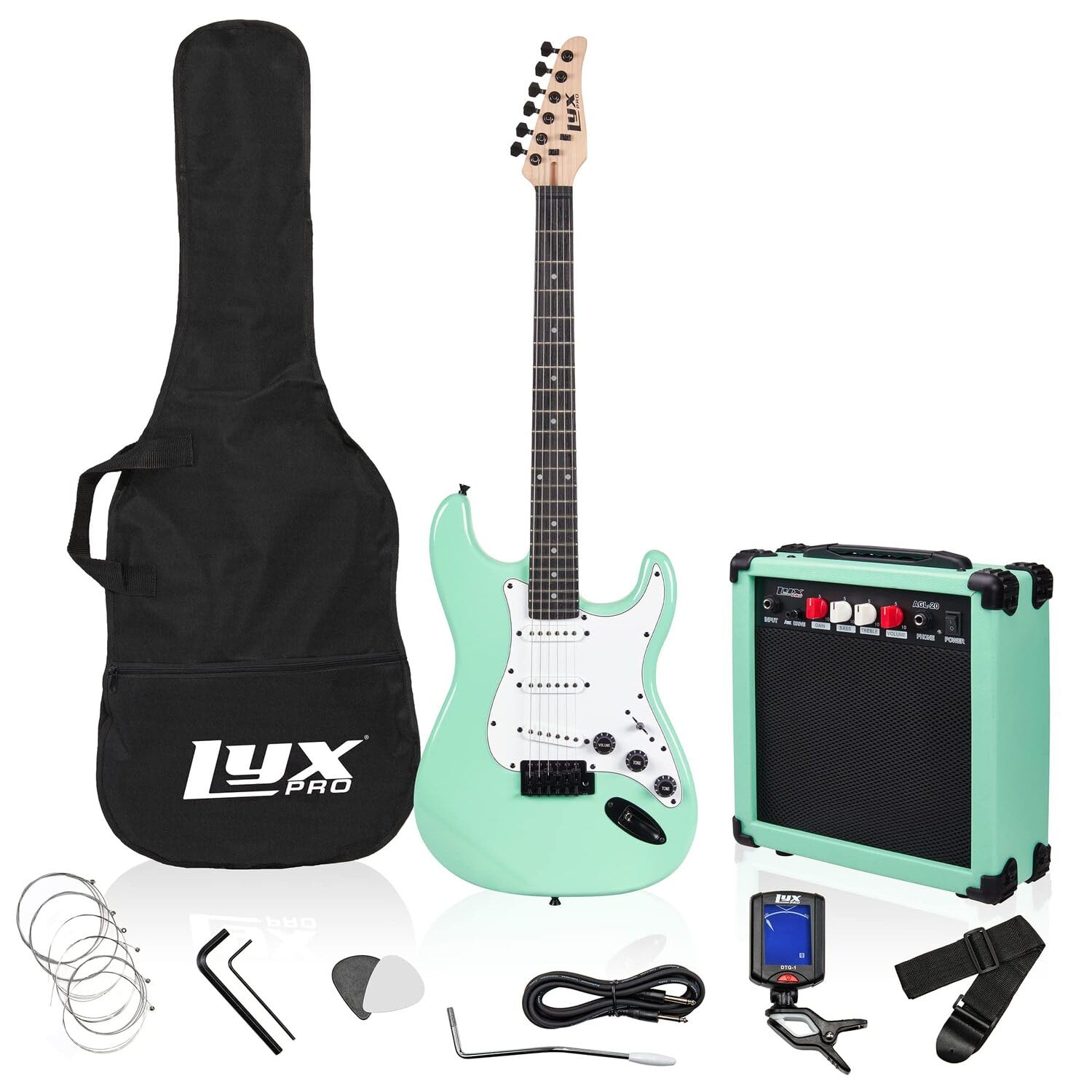
This is the only electric guitar on the list, which makes it a different beast from the acoustic-focused picks above. The 3/4-size maple neck fits kids aged 9 to 13 comfortably, and the three single-coil pickups (S-S-S configuration: three magnetic pickups that each capture a different tonal frequency range) let them switch between a bright bridge pickup and a warmer neck pickup for variety. The 20-watt amplifier has gain, bass, treble, volume, and grind controls, plus a headphone jack (so they can practice without disturbing the house) and an AUX input (to play along with songs from a phone). The kit also includes a clip-on tuner, six strings, two picks, a shoulder strap, a cable, and a soft gig bag.
Quality is where the LyxPro splits buyers into two camps. Many love it — one owner said “I absolutely love this guitar already” and praised the neck width for small adult hands (4-inch-wide hands, per their measurement). Others report sharp fret ends, finish cracks, and tuning instability. One detailed review noted the parts are non-standard, meaning swapping the bridge or tuners for upgrades is difficult. The strap is thin, the cable is low-quality, and an owner who bought two units found the zipper on the gig bag could not support the guitar weight. Compare this to the Pyle kit: same budget-friendly philosophy, but the LyxPro adds an amplifier for the electric experience while the Pyle keeps it purely acoustic.
What the kit includes
- 20W amp with headphone jack, AUX input, gain, and grind controls — stage-ready for a small room
- 3/4 size fits kids 9-13 and adults with smaller frames comfortably
- Three single-coil pickups give tonal variety for learning different genres
Honest concerns
- Inconsistent factory QC — fret ends, finish cracks, and tuning issues reported
- Non-standard parts make upgrades difficult; strap and cable are low-grade
- Tremolo bar sometimes missing from package per buyer reports
Reach for this if: you are buying for a child who is excited about electric guitar and wants to learn on a proper amp setup.
pass on it if: you want reliable out-of-box playability without the need for immediate string and tuner upgrades.
Understanding the Specs
Scale Length and Fret Access
Scale length is the distance from the nut (the small slotted guide at the top of the neck) to the saddle (the piece on the bridge that holds the string ends). A 3/4 guitar typically has a scale length around 23 inches, compared to about 25.5 inches on a full-size acoustic. That shorter span means the frets are closer together, so your fingers do not have to stretch as far to form chords — the main reason beginners and younger players find 3/4 guitars easier to handle. The number of frets also matters: 20 frets gives you enough range for most pop and folk songs, while 18 frets limits you slightly for solos in higher positions.
Tonality and Top Wood
The top wood (the soundboard that vibrates to produce sound) is the single biggest factor in a guitar’s voice. A solid spruce top delivers bright, articulate tones with good projection — ideal for strumming and fingerpicking alike. Laminate tops (thin layers of wood pressed together) are more resistant to humidity and temperature changes but typically sound less resonant. Body back and side wood matters too: mahogany warms the tone with a fuller midrange, while rosewood adds sparkle and bass response. For a 3/4 guitar, a solid wood top is a strong sign of quality, while a laminate build is fine for travel and budget instruments.
FAQ
What does 3/4 guitar mean exactly?
Can an adult play a 3/4 size guitar comfortably?
What is the difference between an acoustic and an acoustic-electric 3/4 guitar?
How do I know if a 3/4 guitar has good action for a beginner?
Are 3/4 guitars good for travel?
Why does my 3/4 guitar sound tinny or thin compared to a full-size?
How often do I need to replace strings on a 3/4 guitar?
What accessories are essential for a 3/4 guitar beginner?
Final Thoughts: The Verdict
If you want one dependable pick, the 3/4 guitar winner is the Yamaha APXT2 because it combines a built-in tuner, reliable plugged-in performance, and a comfortable thin body for both kids and adults. If you want the richest unplugged tone in an indestructible shell, grab the Martin LXK2 Little Martin. And for a beginner bundle that gives you everything including the pickup, go with the Vangoa Electric Acoustic.
How We Picked
We do not accept paid placement. Every pick is matched to a real buyer and a real use-case; we do not hands-on test units.
Sources & Methodology
Specifications: manufacturer listings and product documentation. Review insights: verified customer reviews, as of July 2026. Pricing: not shown on this page (it changes often); check the current price via the retailer link.
As an Amazon Associate, Gadgets Feed earns from qualifying purchases. This does not affect which products we feature.
Related Guides
Product prices and availability are accurate as of the date/time indicated and are subject to change. Any price and availability information displayed on Amazon at the time of purchase will apply to the purchase of this product. As an Amazon Associate I earn from qualifying purchases.
CERTAIN CONTENT THAT APPEARS ON THIS SITE COMES FROM AMAZON. THIS CONTENT IS PROVIDED "AS IS" AND IS SUBJECT TO CHANGE OR REMOVAL AT ANY TIME.
Amazon and the Amazon logo are trademarks of Amazon.com, Inc. or its affiliates.