
Our readers keep the lights on and my morning glass full of iced black tea. As an Amazon Associate, I earn from qualifying purchases.
Specs are compiled from manufacturer listings and verified buyer reviews and can change over time — please confirm the key details on the product page before buying.
You want the open-road feel without a bare skull, and you want to know which of these actually fits a real head. Here is the short answer: the VCAN V88 is the one to buy first. It carries both ECE 22-05 and DOT certification, it has an integrated sun visor, and the appearance and fit are what riders talk about most in their feedback. Everything below explains why the rest of the list earns its place, and which one suits your riding instead.
I’m Min — the founder and writer behind Gadgets Feed. This guide is built by comparing the manufacturers’ published specifications and the patterns across verified customer reviews, so you get each pick’s real strengths and trade-offs instead of marketing spin.
A 3/4 helmet sits in a useful middle ground — more face coverage than a half shell, more air and peripheral vision than a full-face. The trick is matching the certification, the shell material, and the sizing chart to your own head. That is exactly what the picks below let you do, and it is why this shortlist works as a practical starting point for the 3/4 motorcycle helmet.
Our Picks at a Glance


How To Choose The Best 3/4 Motorcycle Helmet
Most buyers get this wrong in one specific way: they order the size they wear in a jacket. Helmet sizing is head circumference, and it varies enough between brands that the fit section of any listing is worth reading before you commit. Get the size right and the visor, buckle, and liner all fall into place.
Start with the certification, not the paint job
DOT means the helmet meets Federal Motor Vehicle Safety Standard (FMVSS) 218 — the US baseline test for impact absorption, penetration resistance, and chin strap strength. ECE 22-05 is a separate European standard, and a helmet carrying both has passed two different lab routines. On this list, the VCAN V88 and the BEON B-120 are the two that name both.
The shell material decides the weight on your neck
Thermoplastic and ABS are moulded plastics — affordable and perfectly serviceable, and you will find them across the mid-range picks here. Polycarbonate blends and fiberglass cost more and typically shave grams. Weight matters on a 3/4 helmet because the shell is shorter at the chin but often carries a visor and hardware up top.
Visors: fixed, flip-down, or both
A clear outer shield keeps bugs and road grit off your face. A retractable inner sun visor drops down behind it when the sun gets low, so you are not squinting into a sunset. Some helmets give you both, some give you one, and a few ship with an extra long outer visor for highway speeds. Decide if you need a clear shield, a drop-down sun visor, or both before you shop.
Get your head measured before you order
Wrap a soft tape around your forehead just above the eyebrows and around the widest part of the back of your head. That number in centimetres is what the size chart is asking for. Do not guess from a hat size, and do not assume a brand runs true — several helmets on this list draw mixed sizing feedback, and a size up solves most of it.
Quick Comparison
| Model | Best For | Certification | Shell Material | Stated Weight | Amazon |
|---|---|---|---|---|---|
| VCAN V88★ Best Overall | Best overall for most riders | ECE 22-05 & DOT | Thermoplastic resin | 1.77 kg | Amazon |
| LS2 SpitfireBest Build Quality | Best finish and build quality | Not stated in listing | Not stated in listing | — | Amazon |
| GMax OF-2Most Family-Friendly | Best for family and off-road use | DOT, FMVSS 218 | Plastic | — | Amazon |
| VCAN V85C | Best for a compact, lighter shell | DOT, FMVSS 218 | Advanced ABS | 1.61 kg | Amazon |
| Daytona 3/4 Shell | Best for cruiser and scooter style | DOT | Not stated in listing | 2.1 lb | Amazon |
| BEON B-120 | Best for retro looks and dual visors | DOT FMVSS 218 & ECE 22.05 | Advanced thermoplastic / ABS | 1.77 kg | Amazon |
| ILM Z302 | Most versatile visor setup | Not stated in listing | Not stated in listing | — | Amazon |
| HJC i31 | Best for riders who wear glasses | DOT, FMVSS 218 | Polycarbonate / ABS blend | 3.4 lb | Amazon |
| Shoei RJ Platinum-R | Best premium build and lowest noise | DOT, FMVSS 218, SNELL | Fiberglass and EPS | 2.9 lb | Amazon |
In‑Depth Reviews
1. VCAN V88 3/4 Open Face Motorcycle Scooter Helmet ECE & DOT Approved
Our pick — 4.5+★ from 300+ verified ratings; the strongest balance of quality and price.
Two certifications, a drop-down sun visor, and a shell that riders keep comparing to helmets far above its tier.
The VCAN V88 carries ECE 22-05 and DOT certification at the same time — two separate lab tests covering impact absorption and chin strap strength. For you, that means a helmet that has been checked against both the US standard (FMVSS 218) and the European one, not just the easier of the two. The thermoplastic resin shell is moulded plastic, and at 1.77 kg it sits on the heavier side of this list for a 3/4 design.
You stop squinting into a low winter sun or a bright afternoon commute, because the integrated sun visor (a second tinted shield built into the helmet) drops down behind the clear shield. Flick it down at the light and back up when you pull away. The anti-scratch coating on the outer visor keeps it clear through daily wiping instead of going milky.
What wins people over first is the look — the finish reads like a more expensive helmet than it is, and the shape flatters a wide range of heads. Fit is the close second, and that is the part a lot of 3/4 helmets get wrong. The micrometric buckle (a ratchet-style clasp you set once) closes with one hand in gloves, which is the difference between wearing the helmet and leaving it on the peg. It also runs two shell sizes, so the proportions stay right instead of looking like a bucket on smaller heads.
An honest note on weight: 1.77 kg is not the lightest shell here, so if you are coming off a half helmet, the first few rides will feel like more helmet on your neck. The trade for that is a fuller 3/4 shell and the visor hardware.
What Earns The Top Spot
- ECE 22-05 and DOT together — two standards, not one
- Integrated sun visor drops down without swapping shields
- Removable, washable lining keeps it fresh through summer
- Micrometric buckle closes one-handed in gloves
- Anti-scratch visor holds up to daily cleaning
Where It Costs You
- 1.77 kg is on the heavier side for a 3/4 shell
- Thermoplastic shell, not fiberglass or blended polycarbonate
Buy this one if: you want the safest combination of certification, sun visor, and fit in the mid-range tier and you ride daily.
Think again if: neck weight is your main concern — a lighter shell down this list will suit you better.
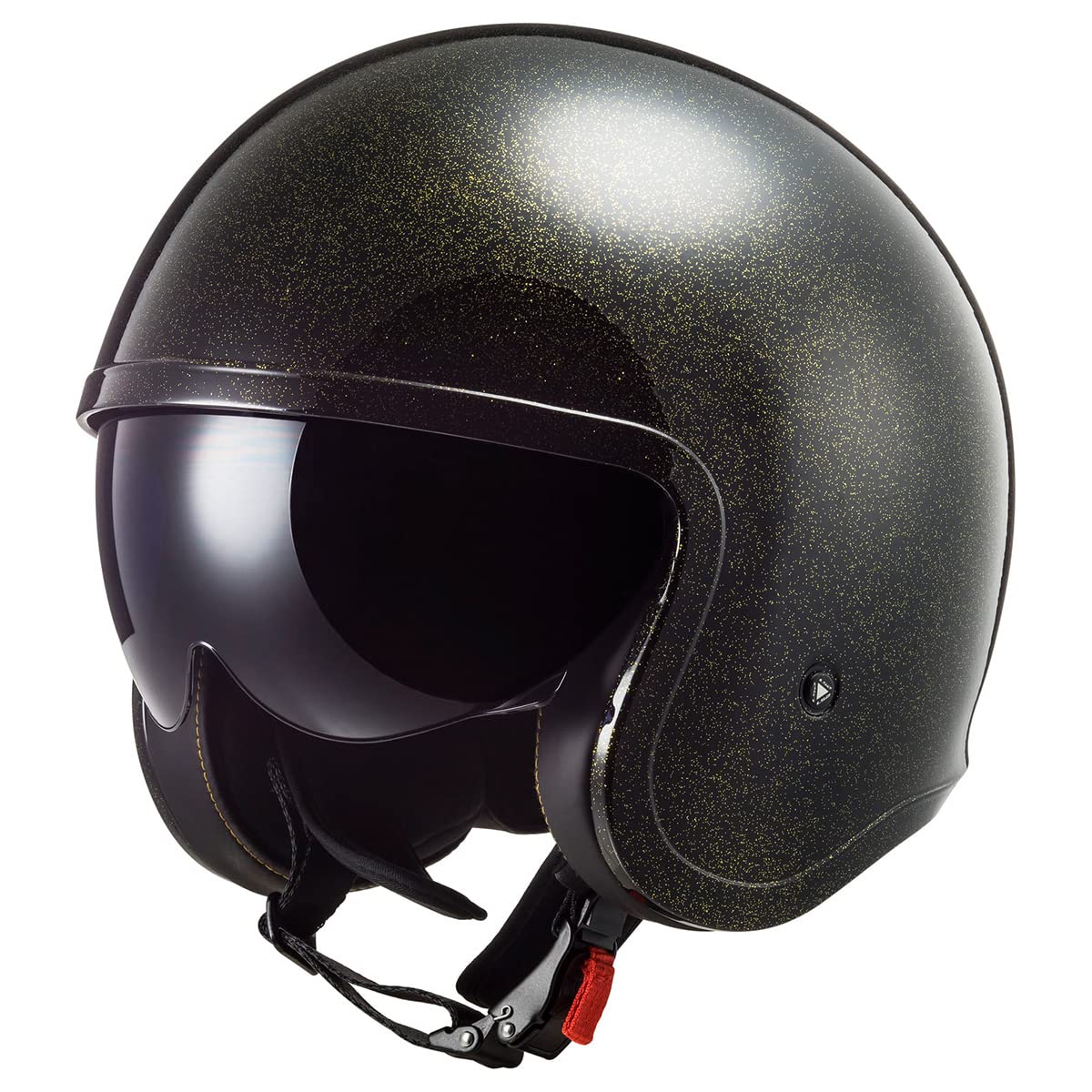
2. LS2 Helmets Open Face Spitfire Helmet
The one where the paint and the moulding get more praise than the spec sheet ever could.
LS2 built its name in-house — the company started in 1990 and now runs a 330,000 sq ft factory turning out more than 2 million helmets a year, with a North American warehouse in Chicago. That scale is the reason the Spitfire’s finish is the single thing riders bring up most. The paint reads deep and even, and the moulding lines are clean where budget helmets usually show a seam.
On the road it stays light on the head, and the quick-release buckle unlatches with one motion — a real convenience at a petrol stop with gloves on. The visor mechanism works smoothly and the shield is easy to flip and clean. LS2 names its AREM technology as the impact structure, tested in-house rather than borrowed from a supplier.
The catch is sizing. This is a helmet where the size chart does not always match what arrives, so measure your head in centimetres and read the fit notes before you order rather than trusting your usual label. It is also aimed at lighter-duty use — a city and back-road helmet rather than a long-distance tourer. Neither is a build fault — they just define the city-and-back-road rider this one suits.
Finish First: the exterior quality is what owners bring up more than anything else, and it shows in the paint depth and the clean shell seams.
Know Before You Order: sizing runs inconsistent against the chart, so go by measured circumference, not your usual size in another brand.
Reach for this if: you care how the helmet looks on the bike and you want an easy one-hand buckle for short city hops.
Look elsewhere if: you need a documented dual certification or a guaranteed fit straight from the start.
3. GMax 72-5366 OF-2 Open-Face Helmet Wine Red
One helmet shape that covers the whole garage — street bike, scooter, or the ATV in the shed.
GMax designed the OF-2 for riders who want the wind on their face and a wide field of view, then made it work across vehicle types. It is DOT-approved and complies with FMVSS 218, so it is legal on street motorcycles, scooters, and mopeds, and it does double duty as an ATV or UTV helmet. If one helmet has to serve a whole family, this is the shape that does it — the OF-2 comes in both youth and adult sizes.
The mounting system is the practical detail. Five built-in snaps let you fit a variety of shields, and a 3-snap sun visor is included, so you are not locked into one visor choice forever. Inside, the liner is removable, washable, and adjustable, which is the difference between a helmet you keep wearing and one that starts to smell by August. The plastic shell keeps the cost down and the fit is the thing owners like most about it.
Two honest notes. Weight draws split opinions — some riders find it light, others call it heavy for an open-face. And at speed the shell can pick up a whistle, so if you ride highway miles rather than back roads, a quieter design elsewhere on this list will suit you better.
Why It Works For A Household
- Available in youth and adult sizes from one model
- Five built-in snaps accept a range of shields
- DOT and FMVSS 218, legal on street and off-road machines
- Removable, washable, adjustable liner
Where It Gives Ground
- Weight draws split opinions in owner feedback
- Some riders hear a whistle at higher speeds
Suits you if: one helmet needs to cover street, scooter, and ATV duty and you want visor options later.
skip it if: you spend most of your miles at highway speed and noise is a priority.
4. VCAN V85C 3/4 Open Face Motorcycle Helmet DOT Approved

The same VCAN family, trimmed down to a lighter shell for riders who feel every gram by mile fifty.
Here is the direct comparison worth knowing: the V85C weighs 1.61 kg while the VCAN V88 above weighs 1.77 kg. That is a real difference on your neck at the end of a long ride, and it is the whole reason this one exists on the list. The shell is advanced ABS — moulded plastic with decent impact behaviour — and it comes in two outer shell sizes so the proportions stay right on smaller heads.
The padding is the standout. VCAN uses a washable, removable ultra-suede comfort liner, which feels softer against the skin than the usual mesh on a budget helmet and comes out for a wash after a hot week. The sun visor is removable, so you can run it plain or with the shade depending on the season. DOT approval and FMVSS 218 compliance are both stated, backed by the maker’s 1-year manufacturer warranty.
Now the recurring gripe, and it is worth treating seriously: the fit draws mixed feedback — several riders find it too snug and lean toward a size up, so measure first rather than trusting the label. That is a fit mismatch rather than a build problem, and the quality of the shell and the look of the gold metallic finish are what most owners stay happy about. Order up a size and this is an easy helmet to live with.
The Weight Story: at 1.61 kg this is the lighter of the two VCAN helmets here, and you feel that difference on longer rides rather than in the driveway.
The Fit Story: sizing runs snug, so go up a size if you measure between two, and expect a snug first wear either way.
Pick this if: you want the VCAN look and liner comfort with less weight on your head, and you are happy to size up.
Pass if: you want the dual ECE-plus-DOT certification — this one carries DOT only.
5. Daytona Helmets 3/4 Shell Open Face Motorcycle Helmet

A cruiser-culture helmet with the paint to match, and a box full of extras before you ride a mile.
Your neck carries less all day, because the Daytona weighs 2.1 pounds — the lightest helmet on this list by a clear margin. The Shoei RJ Platinum-R is 2.9 pounds and the HJC i31 is 3.4 pounds. That lightness suits riders who rack up miles on a cruiser or scooter rather than short city hops. DOT approval (the US Department of Transportation safety standard) covers it for street and powersports use.
The finishes are the draw. Daytona runs graphic schemes including a metal-flake blue, and the shape avoids the bulbous, top-heavy look that gives open-face helmets a bad name — as the review pages put it, it does not give a spaceman look. The quick-release chin strap comes off in one pull, and the ventilation moves air through on hot days without blasting your eyes.
The catch is sizing, and it is the most consistent complaint across the feedback: this one tends to run small. Measure your head and add a size if you sit between two on the chart, because the fit is otherwise the thing riders like most about it. The box also includes a cloth drawstring helmet bag, a keychain, a headwrap, and a snap-on bubble visor, which is more in the package than most helmets at this level.
What Makes It A Cruiser Helmet
- 2.1 lb — the lightest shell in this lineup
- Metal-flake and graphic finishes that hold their depth
- Quick-release chin strap releases in one pull
- Ships with helmet bag, keychain, headwrap, and snap-on bubble visor
The Honest Catch
- Runs small — size up if you measure between two sizes
- DOT only, with no second certification listed
Right for you if: you ride a cruiser or scooter, you want a lighter shell, and the look on the bike matters to you.
Not for you if: you want a documented second certification or a guaranteed true-to-label fit.
6. BEON Half 3/4 Face Motorcycle Helmet, DOT Approved, Retro Vintage Style

Two visors, one gloved hand, and a retro shell that has quietly become the crowd favourite of this whole list.
The BEON B-120 meets DOT FMVSS 218 and ECE 22.05 — the second dual-certified helmet here alongside the VCAN V88. The shell is advanced thermoplastic with a high-density EPS liner (the foam layer that absorbs impact) and a soft mesh inner liner against your head. The quick-release buckle is built to pop open with one gloved hand, and the metal visor base unscrews by hand if you ever want to change the shield without hunting for a tool.
Where it separates from the pack is the visor system. The outer clear visor is anti-scratch, and a retractable inner sun visor drops down behind it with UV protection when the sun is in your eyes. BEON also throws in a longer outer visor for highway speeds, so you can run short or long depending on the ride. The liner comes out for washing, and there is room in the shell for earbuds — a detail commuters notice immediately.
Buyers report the strongest overall feedback in the lineup, and build quality is why: the shell feels solid, the finish is deep, and the comfort lines up with far more expensive helmets. Sizing is the one thing to watch — some find it correctly sized and others find it runs large. Check the chart against your measured circumference and do not assume.
The Visor Advantage: a clear outer shield plus a retractable sun visor means you handle glare without stopping to swap shields, and the spare long visor covers highway duty.
The One To Check: sizing feedback splits between correct and too large — measure before ordering rather than defaulting to your usual size.
Go for this if: you ride in changing light, want both certifications, and want the retro look that actually holds up close.
Weigh it against: a lighter shell — at 1.77 kg this is on the heavier end for a 3/4 design.
7. ILM Open Face Motorcycle 3/4 Half Helmet Adult Full Face Retro Helmet Z302
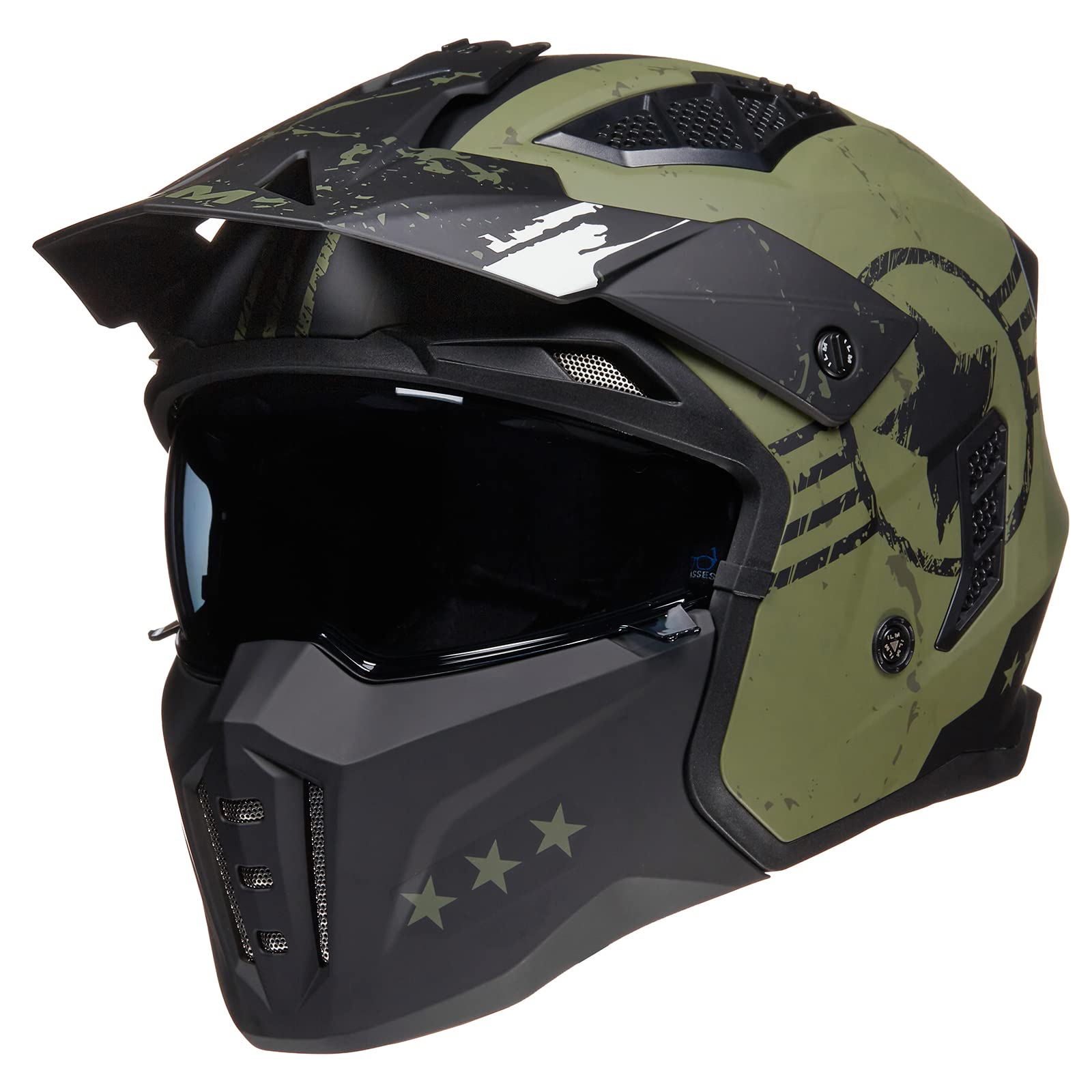
The tinkerer’s helmet — the visor tilts where you want it and the camera mount is a screw away.
ILM gives you a top screw that tilts the sun visor to any angle you like, and — the clever part — the visor angle does not disturb the action camera mount at the same time. If you ride with a GoPro or a similar camera on the helmet, that independence saves you from re-aiming the shot every time the sun moves. The retention buckle is metal rather than plastic, with a red lift-lever release that is built to survive daily use on and off.
The fabric side is just as practical. The sweat-absorbing inner pad is removable and washable, so the helmet stays clean through a hot commuting season. Airflow is one of the more-discussed positives in the feedback, and the fit accommodates a balaclava underneath if you ride in the cold. Replacement chin straps and replacement clear visors are both available as separate parts, which matters for a helmet you plan to keep for years.
The design draws the strongest praise — the shape reads purposeful on the bike rather than generic. Worth knowing: the visor visibility and ease-of-use feedback both come in mixed, so try the shield flip before you commit to a long ride, and check the size chart since sizing feedback is split. Neither is a build fault; both show up in the first week of riding.
Built For Customising
- Top screw tilts the sun visor without moving the camera mount
- Metal quick-release buckle with a red lift-lever release
- Removable, washable sweat pad for hot-weather comfort
- Replacement chin straps and visors sold separately
What To Try Before You Commit
- Visor visibility feedback is mixed
- Sizing feedback is split — measure before ordering
Made for you if: you run a camera on the helmet or you want a visor you can aim at will.
Think twice if: you want a simple set-and-forget visor — this one rewards riders who like to adjust.
8. HJC i31 Solid Open Face Motorcycle Helmet, DOT Approved (White, X-Large)

Cutouts in the liner mean your glasses arms finally have somewhere to sit at highway speed.
The HJC i31 solves a problem most helmet listings ignore: glasses. The interior has dedicated glasses grooves so the arms of your frames sit in a channel instead of getting pinched against your temples. Combined with removable, washable crown and cheek pads, the result is a helmet you can wear with eyewear for a full ride rather than a short one. The cheek pads are interchangeable across all shell sizes, so you can tune the fit.
The visor is Pinlock-ready, which means it accepts a separate anti-fog insert (sold separately) to stop the shield misting on a cold morning. The HJ-43 visor states 99% UV protection with an anti-scratch coating, and a Dark Smoke Sun Shield is already installed. The shell is a blend of polycarbonate and high-impact ABS, and the Advanced Channeling Ventilation System pushes air front to back to clear heat. At 3.4 pounds this is the heaviest helmet here, so it is built for stability rather than lightness.
Two practical notes before you order. The ventilation draws mixed feedback — some riders want more openings than the layout provides. And the chin strap is the most-discussed complaint, with the strap coming up short and awkward to reach for some riders. Shell quality holds up, and the field of view is wider than a 3/4 shape usually gives you.
The Glasses Solution: the liner grooves and interchangeable cheek pads make this the strongest pick for anyone riding in prescription frames.
The Strap Note: the chin strap comes up short for some riders and awkward to reach — check it fits your hands early rather than at the roadside.
Choose this if: you wear glasses, you want a Pinlock-ready shield, and you prefer a stable, heavier shell.
Choose differently if: you want a light helmet — at 3.4 pounds this is the heaviest design in the group.
9. Shoei RJ Platinum-R Open Face Motorcycle Helmet

The one that gets out of your way at speed — quieter, aerodynamic, and built like a long-term purchase.
The RJ Platinum-R is the only helmet here carrying SNELL alongside DOT and FMVSS 218 — three separate bars rather than one. The shell is Shoei’s Advanced Integrated Matrix (AIM), a blend of fiberglass and EPS foam that reduces drag and lift on the open road. In plain terms: the helmet sits steady on your head at highway speed instead of pushing back, and at 2.9 pounds it stays comfortable rather than light.
Noise is the real separation. Shoei designed the shell to cut wind noise, and the result is that you can hear your bike, your exhaust, and your surroundings instead of a roar at 60. The interior is fully removable, washable, and replaceable, made from a soft breathable fabric. Four vents (intakes and exhausts) move air through on warm days and pull humidity out on long rides. The closure is a double-ring, the classic two-D-loop setup that threads and tightens in one pull.
The build quality is the thing riders mention most, and it shows up in the details — the finish, the stitching, and the way the shell holds up over seasons rather than months. It also takes a Sena communicator and works with goggles, so comms and off-road use are both covered. The honest trade is the closure type: a double-ring takes a few seconds longer than a quick-release buckle each time you put it on, which matters if you stop and start constantly.
Where The Money Goes: the AIM fiberglass shell, the noise reduction, and the three-standard certification are what you are paying for, and none of them are cosmetic.
The Daily Cost: the double-ring closure is slower to put on than a quick-release buckle — a real friction if you commute with frequent stops.
This is your helmet if: you ride long distances, you value quiet over convenience, and you want a shell built to last multiple seasons.
You can skip the premium here if: you need one-hand on and off at every stop — a quick-release buckle will serve you better.
Understanding the Specs
DOT vs ECE vs SNELL certification
DOT means the helmet meets Federal Motor Vehicle Safety Standard 218 — the US baseline, tested for impact absorption, penetration resistance, and chin strap strength. ECE 22-05 is a separate European standard with its own test routine, so a helmet with both has passed two different labs. SNELL is a voluntary standard that goes further still. When a listing names only DOT, that is perfectly legal for US road use — it just means one test, not two.
Shell material and what it means for weight
Thermoplastic, ABS, and polycarbonate are moulded plastics — affordable, easy to shape, and solid for everyday riding. Fiberglass, as on the Shoei, costs more and typically keeps weight down while reducing flex. Weight matters because a 3/4 helmet carries visor hardware up front. A 1.61 kg shell feels noticeably different on your neck after two hours than a 1.77 kg one, which is the practical trade between the VCAN V85C and the V88.
Visor systems explained
A clear outer shield blocks bugs and grit. A retractable inner sun visor drops behind it for low sun, so you are not swapping shields at the roadside. Pinlock-ready visors accept a separate anti-fog insert (sold separately) to keep the shield clear in cold weather. Snap systems let you mount different shields to the same helmet — five built-in snaps on the GMax OF-2, for example, open up your options later.
Retention systems: buckle vs double-ring
A micrometric buckle is a ratchet clasp you set once and click closed with one gloved hand. A quick-release buckle is similar — one pull and it opens. A double-ring is two D-loops you thread and tighten by hand; it is the classic racing closure and takes a few extra seconds. The right one depends on your ride: frequent stops favour a quick release, long uninterrupted miles make the double-ring a non-issue.
Sizing, and why brands disagree
Helmet size is head circumference in centimetres, measured around the forehead and the widest point of the back of the skull. Brands build their shells around different head shapes — some round, some oval — which is why the same label fits differently across models. Several helmets here draw split sizing feedback in both directions, so the safest move is to measure and read the chart rather than assume your usual size carries over.
Liner and ventilation
A removable, washable liner is the single most underrated feature on a 3/4 helmet — it lets you keep the interior fresh through a hot summer rather than living with the smell. Ventilation runs through channels or vents in the shell (front intakes and rear exhausts on the better designs), pulling heat and humidity out as you ride. More vents mean more airflow but also potentially more noise, which is the trade-off to weigh.
FAQ
Is a 3/4 helmet safe enough compared to a full-face helmet?
What is the difference between DOT and ECE certification on a helmet?
How do I measure my head for a 3/4 motorcycle helmet?
Can I wear glasses with a 3/4 open face helmet?
What does Pinlock-ready mean on a helmet visor?
How do I stop my helmet visor fogging up on a cold ride?
Should I choose a quick-release buckle or a double-ring closure?
Are 3/4 helmets legal for ATV and UTV use?
How long does a 3/4 motorcycle helmet liner last before it needs replacing?
Does an integrated sun visor actually help on a bright commute?
Final Thoughts: The Verdict
For most riders the answer is straightforward: the VCAN V88 is the helmet to buy, because it pairs ECE 22-05 and DOT certification with an integrated sun visor and a fit that riders keep praising. It costs mid-range money for two lab standards and a drop-down shade, and that combination is why it holds the top spot.
If you want the retro look with the best dual-visor setup, the BEON B-120 earns its place firmly. For anyone riding in prescription glasses, the HJC i31 is the one to reach for. And if quiet at speed and a shell built for seasons matter more than convenience at a stop, the Shoei RJ Platinum-R is the helmet you will still be wearing years from now.
One thing before you click through: the single biggest factor in how a 3/4 helmet feels is the sizing chart, not the badge on the shell. Measure your head in centimetres and read the fit notes on whichever pick you choose. Do that, and any helmet on this list will fit and protect as intended.
How We Picked
We do not accept paid placement. Every pick is matched to a real buyer and a real use-case; we do not hands-on test units.
Sources & Methodology
Specifications: manufacturer listings and product documentation. Review insights: verified customer reviews, as of November 2026. Pricing: not shown on this page (it changes often); check the current price via the retailer link.
As an Amazon Associate, Gadgets Feed earns from qualifying purchases. This does not affect which products we feature.