
Replacing a rotted rubber fuel line or a rusted brake tube under your classic truck, hot rod, or daily driver demands a material that can withstand pressure, resist corrosion, and bend cleanly without collapsing. The 3/8-inch aluminum tubing category solves exactly that: a lightweight, corrosion-proof metal line that outlasts rubber by years and can be shaped by hand to follow chassis contours, engine bays, and transmission cooler paths without special tooling.
I’m Min — the co-founder and writer behind Gadgets Feed. I’ve spent years poring over material datasheets, pressure ratings, alloy compositions, and real-world user feedback to nail down which tubing coils deliver on their promises and which ones kink, crack, or flare poorly under a wrench. (And Homer 🐱 quality-checked every coil from his perch on the workbench, tail twitching at the first sign of a bad bend).
Whether you are plumbing a high-performance EFI system, building an air-ride suspension, or running a long vent line from tank to engine bay, picking the wrong alloy or wall thickness can mean leaks, fire risk, or rework you did not budget for. This guide compares the seven most reliable coils on the market so you can choose the best 3/8 aluminum tubing for your exact project without wasting time on returns.
How To Choose The Best 3/8 Aluminum Tubing
Picking the right coil is not just about the diameter. Alloy grade, wall thickness, temper, and coil memory all determine whether your line seats cleanly into a 37-degree AN fitting or collapses on a tight 90-degree bend around a frame rail.
Alloy Grade: 3003 vs. 1060 vs. 6061
3003 is the most common alloy for fuel and brake lines because it offers excellent workability and corrosion resistance without needing annealing. 1060 is softer and easier to bend but has lower tensile strength — fine for low-pressure vent lines but not ideal for high-pressure fuel injection systems. 6061 is stronger and more durable but harder to flare; it requires precise technique and a quality flaring tool to avoid cracking the seat. Match the alloy to the pressure demands of your system.
Wall Thickness and Burst Pressure
The wall thickness directly dictates how much pressure the tubing can hold and how easily it bends. A 0.035-inch wall is the standard for fuel lines and transmission cooler circuits, offering a good balance of flexibility and strength. A 0.04-inch wall is slightly stiffer and better for applications where vibration or external impact is a concern, such as brake lines or air-ride systems. Thinner walls (0.030 inch) bend very easily but increase the risk of kinking and limit maximum working pressure.
Coil Memory and Straightening
All 25-foot rolls arrive coiled, which creates a natural curve in the metal. Some alloys hold that coil memory more stubbornly than others. A quality tube straightener or a gentle hand-over-hand pull can remove most of the curve before cutting. If you need perfectly straight sections for long runs, look for tubing with a softer temper (like 3003-H14) that straightens with less effort.
Quick Comparison
On smaller screens, swipe sideways to see the full table.
| Model | Category | Best For | Key Spec | Amazon |
|---|---|---|---|---|
| A-Team Performance | Premium | High-performance fuel & transmission systems | 0.035″ wall, 3003 alloy, TIG-weldable | Amazon |
| Allstar ALL40180 | Pro-Grade | Classic car restorations & hot rod fuel lines | 0.035″ wall, 3003 alloy, 25-ft coil | Amazon |
| Podavelle | Mid-Range | Air-ride suspension & high-pressure lines | 650 PSI max, 0.89mm wall, 3003 alloy | Amazon |
| Vigorous | Mid-Range | Refrigeration & compressor lines | 0.04″ wall, 1060 alloy, ±0.03mm tolerance | Amazon |
| Shonee | Value | Fuel lines, gas tank vents & return lines | 0.035″ wall, flexible 25-ft roll | Amazon |
| MuHize | Budget | High-pressure EFI & race car fuel systems | 14,213 PSI max, 0.030″ wall, 1060 alloy | Amazon |
| Tynulox (6061) | Budget | DIY projects, spacers, bushings & decoration | 0.04″ wall, 6061 alloy, 4×12″ straight pieces | Amazon |
In‑Depth Reviews
1. A-Team Performance 3/8″ Aluminum Fuel Line
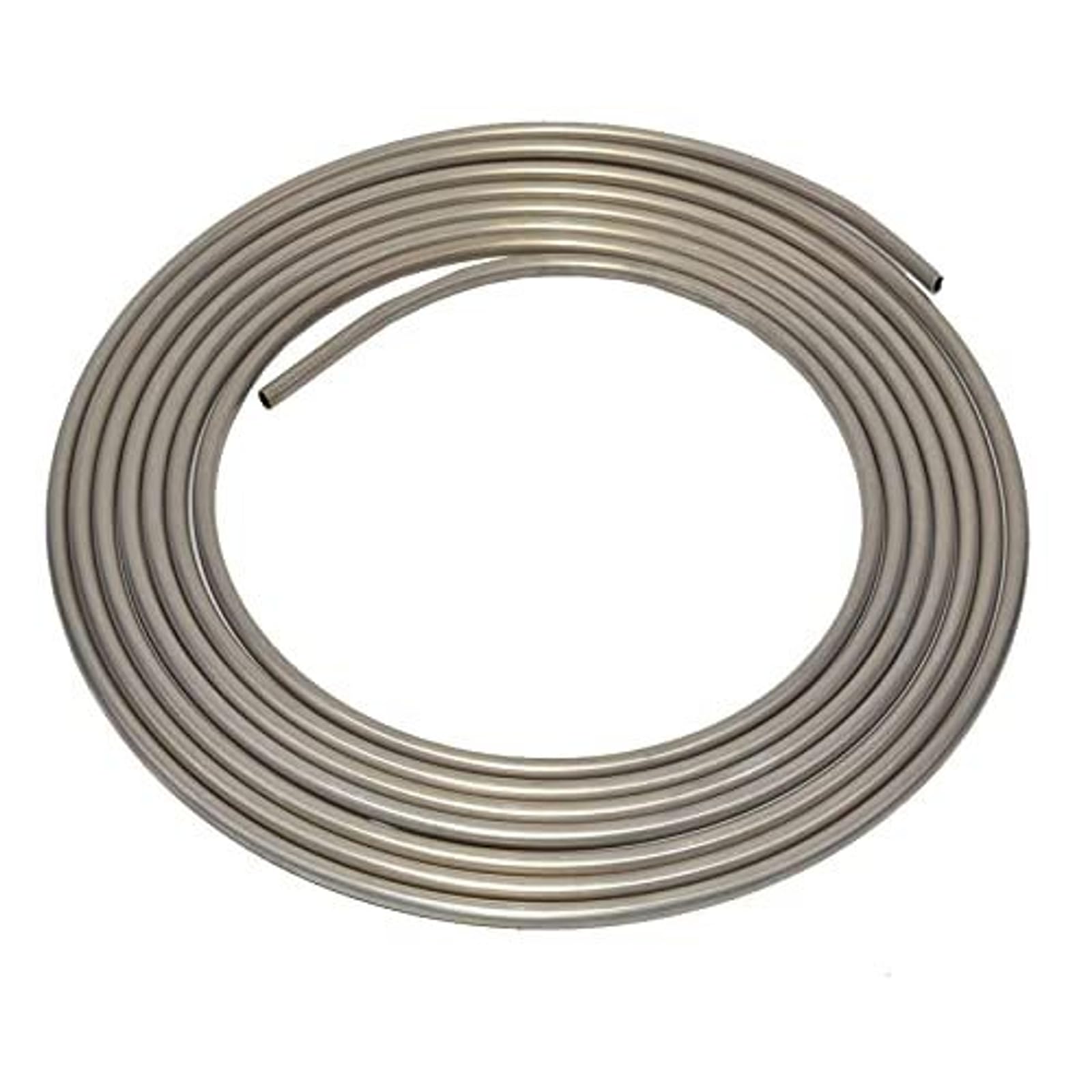
The A-Team Performance coil is built from 3003-grade aluminum with a 0.035-inch wall, the industry standard for fuel delivery and transmission cooler circuits. The alloy strikes an excellent balance: it is soft enough to hand-bend tight 90-degree radii around frame rails without kinking, yet stiff enough to resist collapsing under the pressure of a high-volume fuel pump. Users report successful TIG welding on this line, which is rare for coiled tubing at this price tier.
The 25-foot roll gives you plenty of slack for long chassis runs, and the protective coating keeps the surface clean during shipping. Several reviewers specifically call out its compatibility with GM transmission lines and the ability to make sharp bends without the tube wall pinching — a common failure point on cheaper coils. The inside diameter is consistent, which matters when you are sliding a rubber hose one size smaller over the end for a swedgeless connection with ethanol-rated fuel.
On the downside, the coiled memory is noticeable straight out of the box, and you will need a tube straightener or a patient hand to get perfectly straight sections for engine bay routing. A few users mention that the 25-foot length is overkill for short jobs, but you can always store the remainder for the next project. For a premium alloy with verified weldability and flare-friendly behavior, this coil earns its reputation.
Why it’s great
- Hand-bends to small radii without kinking
- TIG-weldable 3003 alloy with protective coating
- Consistent ID/OD for swedgeless rubber hose connections
Good to know
- Coil memory requires straightening before cutting
- 25 ft is more than needed for small engine bay jobs
2. Allstar ALL40180 3/8″ Aluminum Coiled Tubing

Allstar Performance has a long-standing reputation in the automotive aftermarket, and this 3/8-inch coil reflects that pedigree. Made from 3003-grade aluminum with a nominal wall thickness that aligns with 0.035-inch standard, the tubing arrives coiled in a compact package that ships fast. The material is easy to hand-bend without creasing, provided you work slowly and maintain a consistent radius — several users with classic cars like the 1957 Bel Air and 1939 Chevy confirm it dresses up engine compartments nicely.
At just under two pounds for the full 25-foot roll, this is one of the lighter options in the premium tier, but the alloy density gives it a solid feel. The tubing works well with standard flaring tools, and the 37-degree AN fitting compatibility means you can use it with push-lock or compression-style connectors without issues. Users have reported it lasting over two years in both fuel and transmission cooler applications with no signs of corrosion or fatigue.
The main caveat is that the coil comes tightly wound, and bending it by hand without a tube straightener can introduce small ripples if you rush. A few users also noted that the 90-day manufacturer warranty is shorter than some competitors, but in practice the material rarely fails within that window. If you want a brand-name coil with proven longevity in vintage restorations, this is a solid pick.
Why it’s great
- Proven two-year durability in fuel and transmission use
- Easy to hand-bend without creasing when worked slowly
- Compatible with 37-degree AN fittings and standard flaring tools
Good to know
- Tight coil memory needs a straightener for long runs
- Warranty is only 90 days from manufacturer
3. Podavelle 3/8″ Aluminum Hard Fuel Line

Podavelle brings a 3003-grade coil with a 0.89mm (roughly 0.035-inch) wall thickness and a rated maximum working pressure of 650 PSI, making it a strong fit for air-ride suspension systems and high-pressure fuel delivery where burst resistance matters. The alloy is extruded to tight tolerances, which means the outside diameter stays consistent at 0.38 inches across the full 25-foot length — critical when you are threading it through tube nuts and sleeves.
Users have successfully used this line for complete air-ride setups, noting that it handled 90-degree and even greater bends without kinking. The 650 PSI rating provides a generous safety margin for most automotive fuel and air systems, and the compatibility with 37-degree flared AN fittings means you can build a clean, professional-looking hardline network under the hood or chassis. One reviewer reported a full year of trouble-free service as a return line with no cracking or fatigue.
The only real drawback is that the wall thickness, while standard, is not quite as thick as the 0.04-inch options from Vigorous or Tynulox — so if you are routing through a high-vibration area like a transmission tunnel, you may want the extra stiffness. Also, the coil can be a bit stubborn to straighten fully by hand. But for the price-to-performance ratio, this is one of the most versatile coils on the list.
Why it’s great
- Rated 650 PSI max for high-pressure systems
- Bends to 90 degrees without kinking
- Consistent OD for AN fitting compatibility
Good to know
- Coil memory requires effort to straighten
- Not as stiff as 0.04-inch wall options for high-vibration areas
4. Vigorous 3/8″ Aluminum Coiled Tubing

Vigorous uses a 1060-grade aluminum alloy with a 0.04-inch wall thickness — the thicker profile on this list — which gives it a distinct advantage in applications where vibration resistance and structural integrity are priorities. The 1060 alloy is softer than 3003, making it exceptionally easy to bend by hand even at this wall thickness, but it also means the tensile strength is lower. That trade-off works perfectly for refrigeration lines, compressor tubing, and low-pressure fuel return circuits.
With a diameter tolerance of just ±0.03mm, the consistency is impressive for the price tier. Users have used it for custom under-dash heaters, hard fuel lines, and even costume props, all reporting that it bends easily and flares cleanly with a standard tool. The 25-foot coil gives you enough material to make multiple runs or practice a few bends before committing to the final shape. The surface finish is a matte silver that polishes up nicely if you want a brighter look.
Because 1060 is a softer alloy, it is more prone to denting if handled roughly, and it is not recommended for high-pressure fuel injection systems where the line sees constant 60+ PSI pulses. Stick to return lines, vent lines, and low-pressure circuits, and this coil delivers outstanding value. A few users noted that the coil arrived with some surface scuffs from shipping, but the metal itself was undamaged.
Why it’s great
- Thick 0.04-inch wall resists vibration damage
- Soft 1060 alloy bends and flares very easily
- Tight ±0.03mm diameter tolerance
Good to know
- Not recommended for high-pressure fuel injection systems
- Softer alloy is more prone to dents and scuffs
5. Shonee 3/8″ Aluminum Fuel Line

Shonee’s 3/8-inch fuel line comes in a 25-foot roll with a 0.035-inch wall thickness, placing it squarely in the standard-duty category for automotive fuel and vent applications. The aluminum alloy is flexible enough to unroll and shape by hand, and users have successfully used it for gas tank vents, transmission cooler lines, and even as a vertical antenna element on a fiberglass mast — an unconventional but creative validation of its electrical and structural properties.
The tubing is easy to cut with a standard tubing cutter, and the ID/OD dimensions are consistent enough for rubber hose connections with standard clamps. One reviewer reported using it as a fuel line on a truck with no leaks after installation, while another noted that it works well for return lines when connected to a Holley EFI system. The coil does not have the same surface protection as the A-Team Performance line, so some users found minor oxidation spots after extended outdoor exposure.
The biggest knock against this coil is flaring: several users report that it does not flare reliably with a standard flaring tool, often cracking or splitting the seat. If your installation depends on flared fittings rather than compression or push-lock connectors, you may want to look at the Podavelle or A-Team options instead. For simple bent-line connections with rubber hose ends, however, this is a very affordable and serviceable choice.
Why it’s great
- Flexible enough for hand-bending without special tools
- Works for fuel, vent, transmission, and even antenna projects
- Consistent ID for rubber hose connections
Good to know
- Difficult to flare without cracking the seat
- Surface oxidation may appear with prolonged outdoor exposure
6. MuHize 3/8 Inch Aluminum Tube
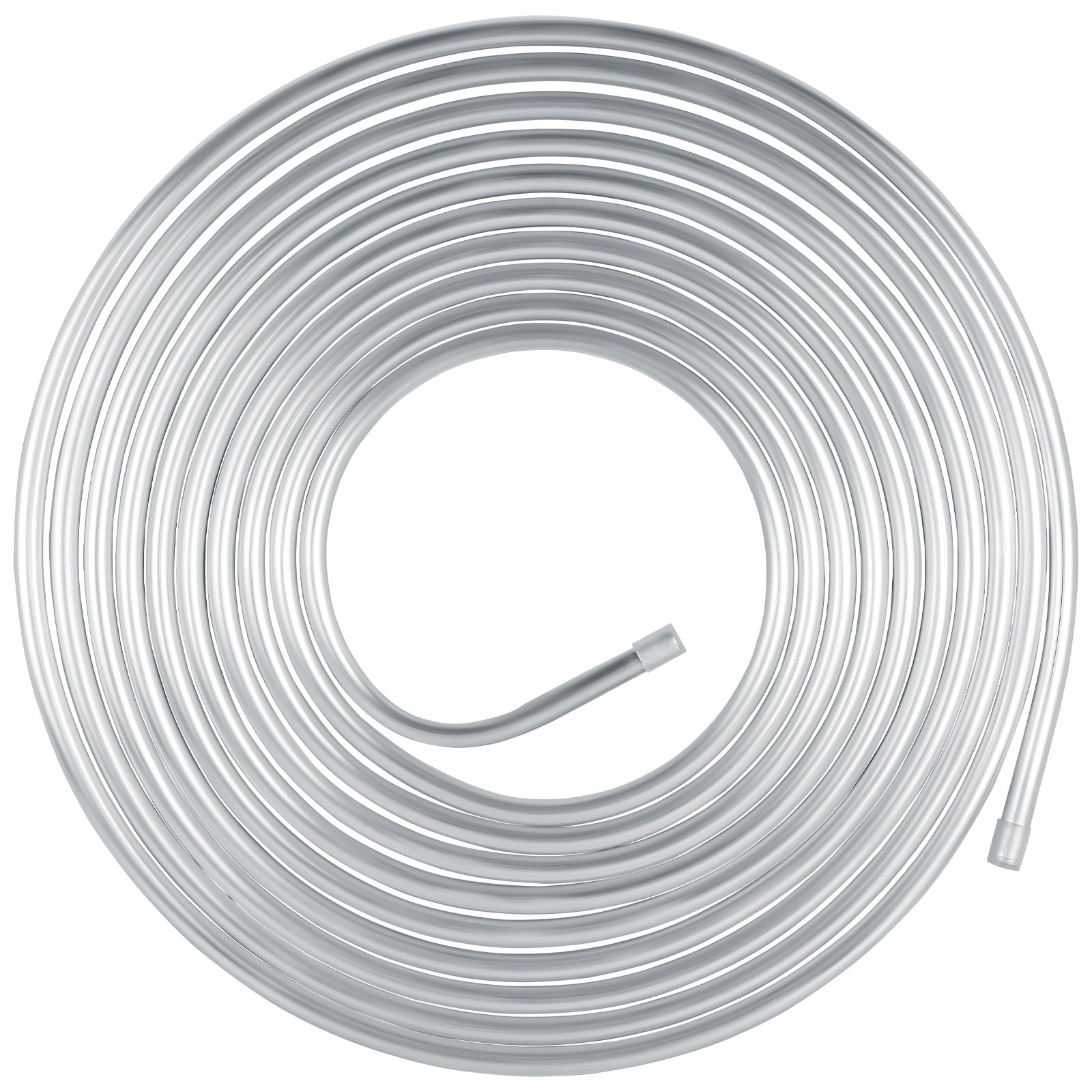
MuHize claims a staggering 14,213 PSI maximum working pressure for this 3/8-inch tubing, a figure that immediately catches the attention of anyone building a high-pressure EFI system or a race car fuel circuit. The tubing is extruded from 1060-grade aluminum with a wall thickness of 0.030 inches — the thinnest wall on this list — which explains both the extreme pressure claim and the ease of bending. The material is very soft and bends almost like annealed copper, making complex routing quick work.
The 25-foot coil (7.61 meters) arrives cleanly coiled, and users report that it cuts cleanly with a standard tubing cutter. One reviewer created a complete return fuel line on a 1967 Cougar and praised how easy it was to make bends by hand without kinking. The tubing is rated for use with gasoline, diesel, ethanol, and E85, which covers virtually all modern fuels. The soft temper also means it polishes to a nice shine with minimal effort.
The thin 0.030-inch wall is the trade-off: while the pressure rating is high, the physical wall is less resistant to impact damage and vibration fatigue than thicker options. If your line runs along a frame rail where rocks or road debris are a concern, the extra durability of a 0.035-inch or 0.04-inch wall may be worth the reduced flexibility. Also, some users reported debris inside the line from manufacturing, so purging before installation is a smart precaution.
Why it’s great
- Extremely high 14,213 PSI burst rating
- Very soft temper bends easily by hand without kinking
- Compatible with gasoline, diesel, ethanol, and E85
Good to know
- Thin 0.030-inch wall is less impact-resistant
- Some debris found inside the coil — purge before installing
7. Tynulox 6061 Aluminum Tubing (4-Pack)
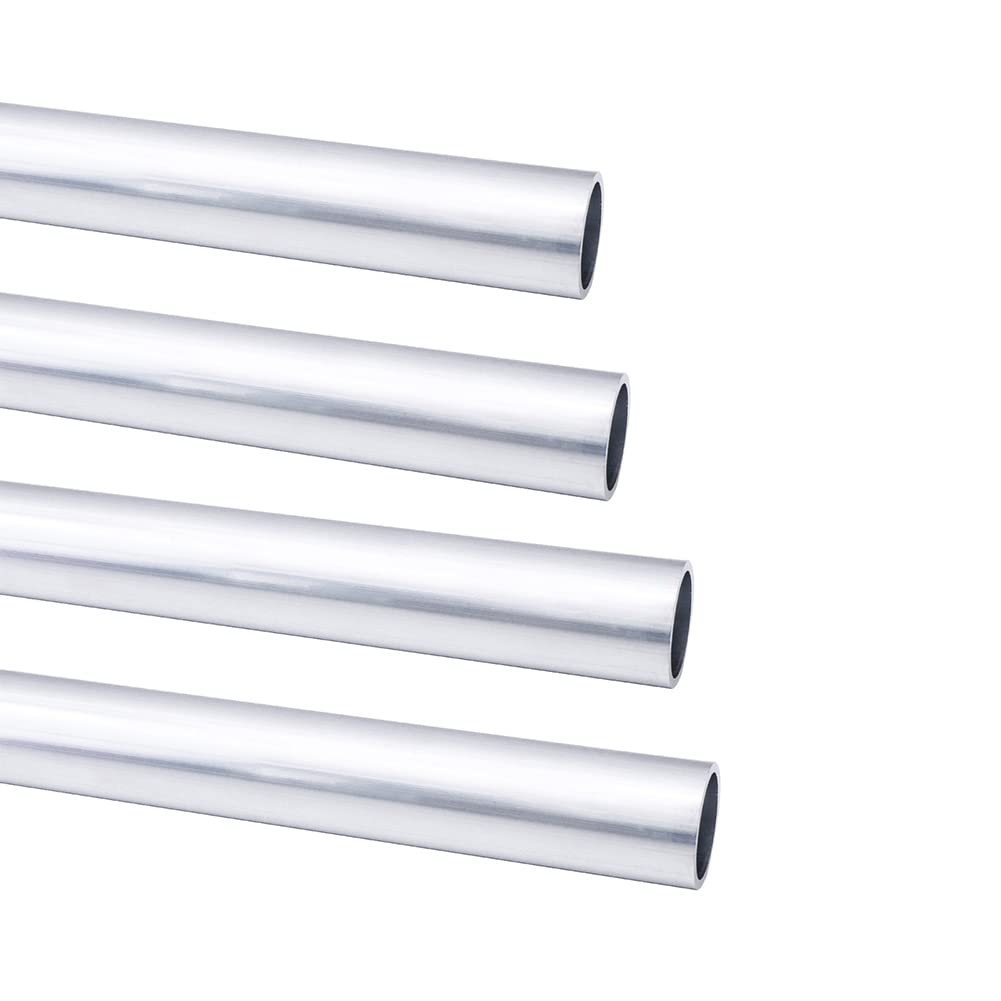
Tynulox takes a different approach from the coiled options: four pre-cut 12-inch straight pieces of 6061 aluminum tubing with a 0.04-inch wall thickness and a seamless construction. This is not a coil for long chassis runs — it is a precision pack for spacers, bushings, model building, wind chimes, and small structural components. The 6061 alloy is significantly harder than 3003 or 1060, offering superior weldability and corrosion resistance for industrial and decorative use.
The inside diameter is 7.5mm (5/16-inch), which makes it ideal for creating custom bushings to adapt small wheel axles or dowel pins. Users have used it to make 6mm-to-8mm bushings for small diameter wheels, go-kart axle spacers, and even artistic home decor. The surface has a moderate shine that polishes easily to a reflective finish, and the seamless bore means no internal weld line to interfere with sliding components.
The limitation is obvious: at only 12 inches per piece, you cannot use this for fuel lines, brake lines, or any application requiring long continuous runs. It also requires a proper tubing cutter or hacksaw with a fine blade to cut cleanly, as 6061 is much tougher than the softer coil alloys. But if your project calls for short, precise segments of strong aluminum — and you want the corrosion resistance of 6061 — this four-pack is a perfect solution.
Why it’s great
- Strong 6061 alloy for structural and industrial use
- Seamless construction with smooth interior bore
- Four pre-cut 12-inch pieces save measuring time
Good to know
- Too short for fuel lines or long chassis runs
- 6061 alloy requires more effort to cut than softer coils
FAQ
Can I use 3/8 aluminum tubing for a brake line?
What is the difference between 3003 and 1060 aluminum for fuel lines?
Do I need a tube bender for 3/8 aluminum tubing?
Final Thoughts: The Verdict
For most users, the best 3/8 aluminum tubing winner is the A-Team Performance coil because its 3003 alloy, 0.035-inch wall, and TIG-weldability make it the most versatile and reliable choice for fuel lines, transmission coolers, and custom hardline assemblies. If you need a thick wall for high-vibration environments like air-ride suspension, grab the Podavelle with its 650 PSI rating. And for a budget-friendly coil that bends like butter for return lines and vent circuits, nothing beats the Vigorous 0.04-inch wall option.