
A 3/8-inch line sits at a crossroads—thick enough for high-volume fuel or brake systems, yet slender enough to snake into tight engine bays and brew kettles. The problem is that not all coils are created equal: some arrive wound so tight that bending them straight becomes a fight, while others lack the wall thickness to hold a clean flare.
I’m Min — the co-founder and writer behind Gadgets Feed. This guide is the result of hours spent cross-referencing hundreds of buyer reports, spec sheets, and corrosion ratings to identify the 3/8 stainless steel tubing options that actually deliver on their promises.
Whether you are rebuilding a classic car’s fuel system, fabricating a homebrew wort chiller, or running hydraulic lines in a corrosive environment, you need a tube that bends, flares, and seals without drama. This is your data-backed guide to the best 3/8 stainless steel tubing.
How To Choose The Best 3/8 Stainless Steel Tubing
Three factors will decide whether your project ends with a leak-tight seal or a trip back to the parts bin: material grade, wall thickness, and temper condition. Ignore any one and you will fight the tubing on every bend and flare.
Material Grade: 304 vs. 316/316L
Type 304 stainless is the workhorse for automotive fuel lines, brake lines, and general plumbing where occasional moisture is the worst exposure. Type 316/316L adds molybdenum for superior chloride resistance—mandatory for marine environments, chemical processing, and outdoor wort chillers that see acidic rinse water daily. The dual-certified 316/316L seamless tube in this list offers the highest corrosion margin, but 304 is more than adequate for most garage and shop work.
Wall Thickness and Flaring Performance
A thicker wall (0.060″ or 0.065″) provides more material for the flare die to grip, producing a stronger, more consistent 45° or 37° double flare. Thin-wall coils (0.028″–0.035″) are easier to bend by hand but require careful technique and a high-quality flaring tool to avoid splitting. For brake systems, SAE recommends a minimum wall thickness of 0.035″ for 3/8″ OD tubing. Wort chiller coils benefit from a thin wall for faster heat transfer, but 0.035″ is still the practical floor for durability during repeated coiling and uncoiling.
Seamless vs. Welded Construction
Seamless tubing is drawn from a solid billet with no longitudinal weld seam, making it inherently stronger and less prone to splitting under flare pressure. Welded tubing starts as a flat strip rolled and fused—it is cheaper and perfectly fine for low-pressure fuel returns or water lines, but the weld zone can act as a stress riser. For brake systems, fuel injection lines, or any application above 150 PSI, seamless is the safer long-term bet.
Quick Comparison
On smaller screens, swipe sideways to see the full table.
| Model | Category | Best For | Key Spec | Amazon |
|---|---|---|---|---|
| FITOK 316/316L Seamless (3pcs) | Seamless | High-pressure hydraulic & marine | 0.035″ wall, 316/316L, annealed | Amazon |
| BACOENG Wort Chiller 50ft | Coil | Homebrew wort cooling | 50 ft length, 304, immersion coil | Amazon |
| The Stop Shop 16ft SS Fuel Line | Fuel Line | Automotive fuel & brake lines | 304, 0.031″ wall, 16 ft | Amazon |
| Vigorous SS Tubing 25ft | General Purpose | Plumbing & custom fab | 304, 25 ft, 0.06″ wall | Amazon |
| The Stop Shop Steel Line 25ft | Steel | Budget gas line replacement | Steel, 0.094″ wall, 25 ft | Amazon |
| Vigorous SS Tubing 10ft | Short Coil | Small repairs & test runs | 304, 10 ft, 0.06″ wall | Amazon |
| X AUTOHAUX Brake Line 25ft | Zinc-Plated | Budget brake/fuel lines | Zinc-plated metal, 25 ft | Amazon |
In‑Depth Reviews
1. FITOK 316/316L Stainless Steel Seamless Tubing (3pcs)

This is the only tubing in the roundup certified as 316/316L dual-grade, annealed, and seamless to ASTM A269 standards. The three 40-inch sticks ship straight (not coiled), which eliminates the spring-back headache that plagues coiled tubing. The 0.035-inch wall and controlled 80 HRB maximum hardness mean compression fittings like Swagelok-style connectors seat leak-tight on the first pull-up.
Buyers confirm the OD and ovality tolerances are tight enough for instrumentation-grade work, and the annealed condition bends easily in a standard tube bender without work-hardening. The mechanically polished surface resists pitting in marine and chemical environments far better than 304 ever could. If you need a leak-free connection at high pressure, this is the set to buy.
The only trade-off is value perception. Local suppliers may sell similar 316L seamless sticks for less, but the FITOK quality control and packaging (tubes arrive flawlessly straight and wrapped) justify the premium for critical systems. Three sticks give you 120 inches of worry-free line.
Why it’s great
- Dual-certified 316/316L offers maximum corrosion resistance.
- Seamless construction handles higher pressure than welded tube.
- Straight sticks eliminate coil memory issues.
Good to know
- No polish finish—surface is matte industrial.
- Premium pricing; check local surplus before buying.
2. BACOENG 3/8″ x 50Ft Wort Chiller Coil
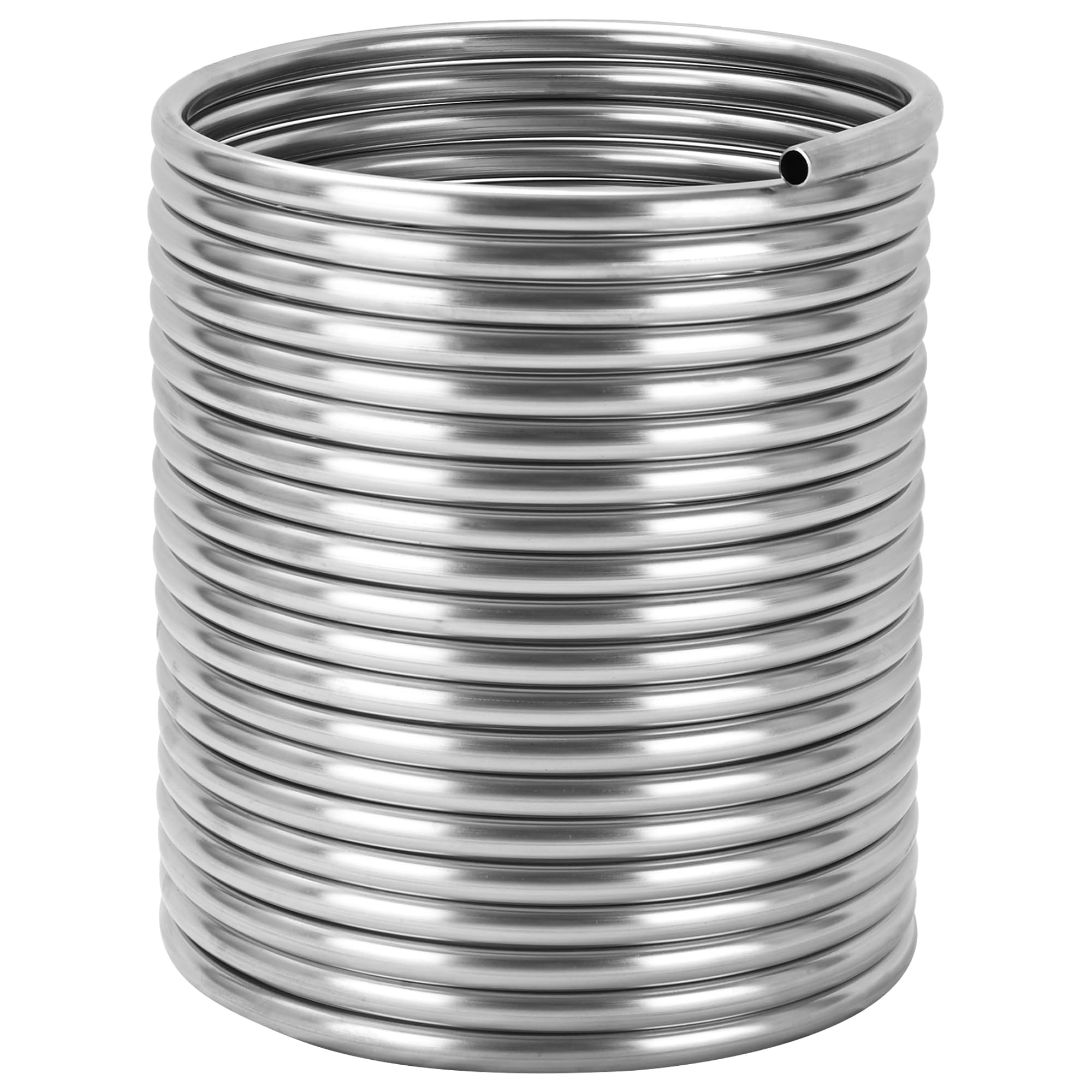
The BACOENG is purpose-built for one job: dropping a 5-gallon kettle of boiling wort to pitching temperature as fast as possible. The 50-foot length of 3/8-inch 304 stainless provides enough surface area to knock a 212°F batch down to 75°F in around 15 minutes with moderate tap water flow. That is a massive time save over an ice bath.
Homebrewers report that the coil fits neatly inside a standard brew kettle without blocking the dip tube. The stainless construction avoids the metallic off-flavors associated with copper chillers and cleans easily with a quick soak in PBW or Star San. For brewers who recirculate pond or well water, the 304 grade handles the variable water chemistry without concern.
The weak point is the attached vinyl hose and clamps—multiple buyers report leaks at the barbed connections under normal household water pressure. Replacing the clamps with quality Oetiker ear clamps or swapping to braided vinyl hose resolves the issue entirely. Once the connections are sorted, the chiller is an absolute workhorse.
Why it’s great
- 50 ft of 3/8″ 304 SS chills wort in ~15 minutes.
- Easy to clean and sanitize for batch-to-batch use.
- SS avoids copper off-flavors in finished beer.
Good to know
- Stock hose clamps are weak—upgrade immediately.
- No setup instructions included for hose attachment.
3. The Stop Shop 16 Ft Stainless Steel Fuel Line Coil

The Stop Shop has a reputation among hot-rod builders for consistent quality, and this 16-foot coil of 3/8-inch 304 stainless continues that streak. The 0.031-inch wall is on the thinner side, but owners report it flares cleanly with both 37° AN and 45° double-flare tools when cut with a hacksaw rather than an abrasive wheel, which can work-harden the edge and cause cracking.
The coil memory is manageable—users pair it with a simple tubing straightener before bending and get straight runs for transmission cooler lines and chassis fuel rails. Stainless is inherently harder to work than plain steel tubing, but the payoff is a corrosion-proof system that will outlast the vehicle. Buyers specifically note they used it for brake booster vac lines, fuel supply lines, and AN conversion projects.
One caution: because the wall is thin, a cheap flaring tool can crush or split the tube. Invest in a quality flaring kit with a step clamp designed for stainless. Also keep in mind that stainless work-hardens quickly—bend it once with a bender rather than repeatedly trying to adjust the angle by hand.
Why it’s great
- Trusted brand among restoration and hot-rod builders.
- Flaring capability proven with AN and double-flare tools.
- Never have to redo the line—stainless lasts indefinitely.
Good to know
- Thin wall requires good flaring technique and quality tools.
- Do not cut with abrasive wheels—use a hacksaw.
4. Vigorous Stainless Steel Tubing Coil 25ft

Vigorous offers the same 25-foot length of 304 stainless as the premium options but at a more accessible price point. The nominal wall thickness listed on the spec sheet is 0.06 inches, which gives it noticeably more backbone than the thin-wall fuel-line coils. That extra material helps the tube resist kinking during tight-radius bends and provides more meat for the flare die to bite into.
Buyers using this for fuel line replacements and general automotive plumbing report that it is shapeable without being stiff—it sits in the sweet spot between workability and strength. The coil relaxes enough after unrolling with a straightener to produce reasonably straight runs. The 304 grade offers adequate corrosion protection for engine-bay exposure, though it will not match 316 in marine salt spray.
Some users note that the inner layers of the coil retain a tighter curl even after straightening, which is a common complaint across all coiled products. If your project requires multiple straight segments from a single piece, buy a few extra feet and plan to cut around the tightest sections near the core.
Why it’s great
- Heavier 0.06″ wall resists kinking and flares well.
- Generous 25-ft length covers most automotive projects.
- Affordable entry into 304 stainless for plumbing/fuel.
Good to know
- Inner coil layers hold tight curl—plan extra length.
- Not as corrosion resistant as 316/316L.
5. The Stop Shop Roll of 3/8″ Steel Line 25 Feet

This is the plain steel option in the list, and it serves a specific purpose: budget-conscious gas line and transmission cooler replacement where stainless is overkill. The 0.094-inch wall is the thickest of any product here, giving it excellent resistance to vibration fatigue and making flare formation very forgiving. Buyers report flaring it easily with manual tools, even on the first try.
The Stop Shop brand is well-regarded in the hot rod community, and this 25-foot coil comes as a no-frills roll that cuts and bends predictably. The steel will corrode over time if exposed to road salt or moisture, but for interior-frame runs and applications where the line is dry, it will last years. Several owners used it to replace trans cooler lines and booster vacuum lines with zero leaks.
Keep in mind that this is steel, not stainless—do not use it in salt-belt vehicles or marine environments unless you plan to coat or paint it. The thick wall also makes tight-radius bends harder to achieve without a dedicated tube bender; hand-bending will likely kink the tube.
Why it’s great
- Thickest wall (0.094″) makes flaring easy and strong.
- Proven quality from Stop Shop—hot rod favorite.
- Very affordable per-foot cost.
Good to know
- Steel will rust—not suitable for marine or salt exposure.
- Thick wall requires a proper bender to avoid kinks.
6. Vigorous Stainless Steel Tubing Coil 10ft
The 10-foot coil from Vigorous is essentially a shorter version of the 25-foot coil above, using the same 304 stainless with a 0.06-inch wall. This length is ideal for small projects: a single brake line, a short fuel return, or a test run before committing to a full 25-foot coil. The price point makes it a low-risk way to check whether your flaring tool likes the material.
User reports mirror the 25-foot version—the tubing cuts easily with a tubing cutter, deburrs cleanly, and flares without splitting provided the tool is well-maintained. Several buyers used it to fabricate custom fuel lines and praised the semi-rigid feel that holds shape after bending. The corrosion resistance of 304 is sufficient for engine bay and chassis use.
The limitation, of course, is the length. Ten feet disappears fast once you account for straightening losses and the tight coil memory near the center. If your project requires multiple long segments, the 25-foot coil is the smarter buy per dollar. The 10-footer is best reserved for patch repairs and tight single-run jobs.
Why it’s great
- Low-cost way to test 304 stainless before bulk purchase.
- 0.06″ wall offers good kink resistance.
- Easy to cut, bend, and deburr.
Good to know
- Only 10 ft—runs out fast for multi-line projects.
- Coil core is tight; plan for waste on the inner wraps.
7. X AUTOHAUX 3/8″ Car Brake Line Tubing 25ft
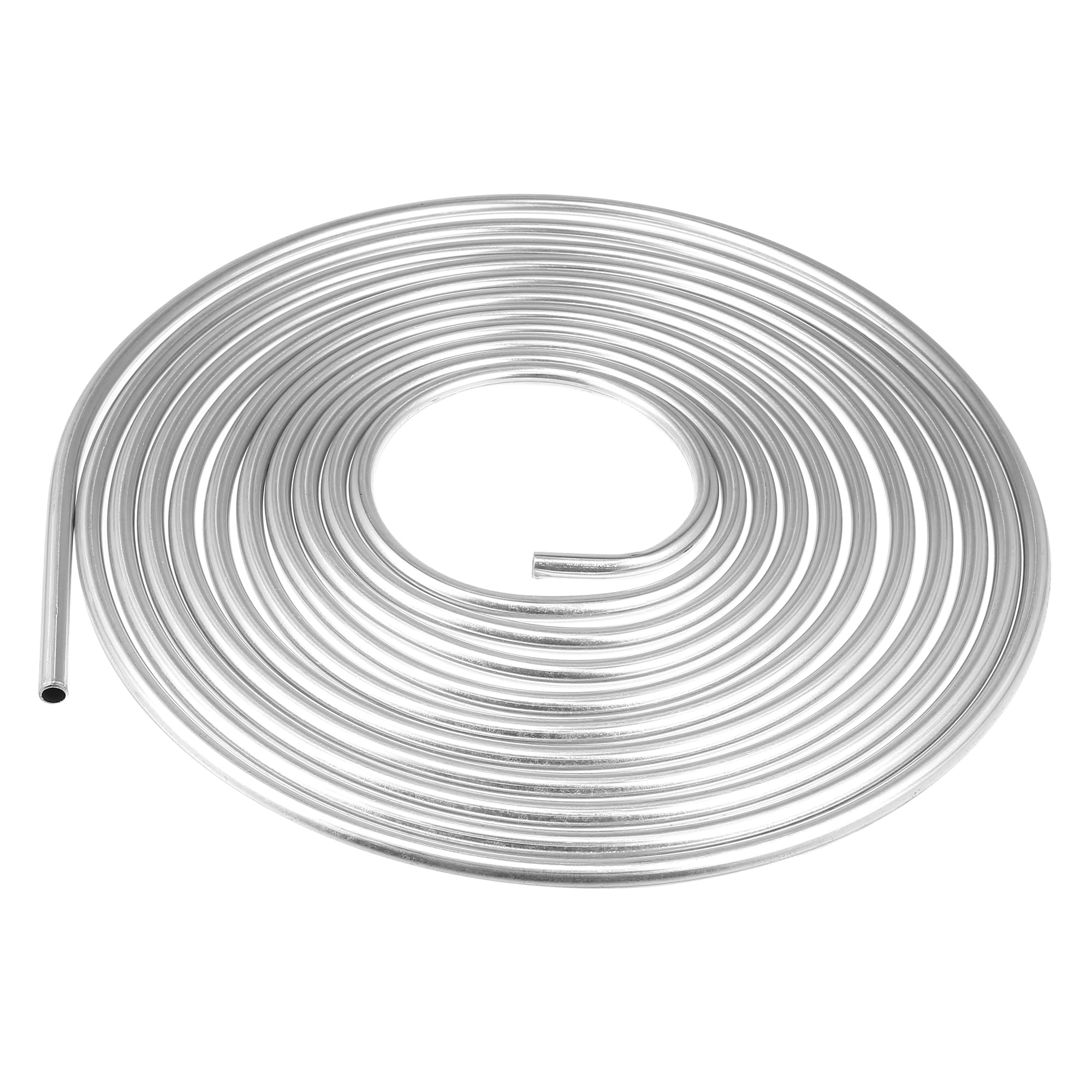
X AUTOHAUX takes a different approach by using zinc-plated metal tubing rather than stainless steel. The plating provides a reasonable barrier against rust for interior brake and fuel applications, and the 25-foot length is generous for the price. The nominal wall thickness is listed at 4.75 mm (roughly 0.187 inches), which is exceptionally thick and makes flaring very easy—the flare die has plenty of material to deform without risking a split.
Customer feedback highlights a critical mechanical issue: the coil is wound extremely tight. Multiple buyers report that the inner 10–15 feet of the roll have severe coil memory that resists straightening even with a bender tool. For short brake line segments (2–4 ft each), this may not matter, but if you need a long straight run, prepare for a struggle. The outer wraps work fine for most projects.
This is not a stainless product—the zinc coating will eventually wear or corrode in harsh environments. For a budget brake line on a dry-climate daily driver, it gets the job done at a fraction of the cost of stainless. But if you want the corrosion resistance and longevity of true stainless, skip this and move up to the Vigorous 25-foot coil.
Why it’s great
- Budget-friendly per-foot price for brake/fuel lines.
- Thick wall makes flaring nearly foolproof.
- Outer wraps of the coil are easy to work with.
Good to know
- Core of coil is wound too tight—hard to straighten.
- Zinc-plated metal, not stainless—corrosion is possible.
FAQ
Can I use 3/8 stainless steel tubing for brake lines?
What is the difference between 304 and 316/316L stainless for tubing?
How do I properly flare 3/8 stainless steel tubing?
Final Thoughts: The Verdict
For most users, the best 3/8 stainless steel tubing winner is the FITOK 316/316L Seamless Tubing (3pcs) because its seamless construction, dual-certified corrosion resistance, and straight-stick format eliminate the coil-memory and pressure-rating headaches that plague other options. If you want the best value for a longer automotive project, grab the Vigorous 304 Stainless Coil 25ft. And for rapid wort chilling on brew day, nothing beats the dedicated BACOENG 50ft Wort Chiller Coil.