
Our readers keep the lights on and my morning glass full of iced black tea. As an Amazon Associate, I earn from qualifying purchases.
Specs are compiled from manufacturer listings and verified buyer reviews and can change over time — please confirm the key details on the product page before buying.
The right 3/8 vacuum hose holds a deep vacuum without leaking back on you. This guide sorts the silicone automotive lines from the heavy-duty HVAC evacuation hoses so you can pick the one that fits your actual job.
I’m Min — the founder and writer behind Gadgets Feed. This guide is built by comparing the manufacturers’ published specifications and the patterns across verified customer reviews, so you get each pick’s real strengths and trade-offs instead of marketing spin.
A 3/8-inch hose moves far more air than the skinny 1/4-inch lines most people start with, which cuts evacuation time on AC work and gives boosted engines a steadier vacuum signal. Here is every option worth considering when you search for the best 3/8 vacuum hose.
Our Picks at a Glance
How To Choose The Best 3/8 Vacuum Hose
Two hoses can both say 3/8 inch and still do completely different jobs. One is a soft silicone line for an engine bay; the other is a brawny rubber hose for pulling deep vacuum on a refrigerant system. Get the material and the fitting wrong and the hose either collapses or refuses to thread on.
Match the material to the job
Silicone stays soft and bendy in a hot engine bay, which is why boosted and turbo setups lean on it. Rubber with a reinforced core is the choice when the hose has to hold serious suction pressure against an HVAC pump. Neither material is better overall — each answers a different job.
Wall thickness is the quiet decider
A 3mm wall is the number that keeps a silicone hose from pinching shut under suction. Thinner walls seal poorly at the fitting and can split; a thicker wall gives a snug push onto the barb, which is exactly what you want for an airtight connection.
Fittings and length before looks
Check both ends. Some 3/8 hoses run 3/8 to 3/8, others run 3/8 down to 1/4, and a few use straight thread instead of flared. Order the wrong combination and you are hunting adapters. Length is the other easy miss — a 5-foot hose reaches an engine bay fine but comes up short on a rooftop unit.
Quick Comparison
| Model | Best For | Inner Diameter | Length | Max Pressure | Amazon |
|---|---|---|---|---|---|
| EVIL ENERGY 3/8″ Silicone Vacuum Tubing★ Best Overall | Turbo and boost lines | 10mm (3/8″) | 10 ft | 130 psi | Amazon |
| DMiotech Silicone Vacuum LineBest Value | Engine and washer lines | 10mm (3/8″) | 10 ft | 130 psi | Amazon |
| AotoKoop 3/8 Silicone Vacuum TubingBest Color Match | Tidy engine bay routing | 10mm (3/8″) | 10 ft | 130 psi | Amazon |
| Lichamp HV1S Vacuum Hose | HVAC pump connection | 3/8″ | 6 ft | 4000 psi | Amazon |
| Wadoy 3/8 Inch HVAC Vacuum Pump Hose | Flexible AC service | 3/8″ | 5 ft | 3000 psi | Amazon |
| Elyaspedy 3/8″ Vacuum Refrigerant Hose | Faster evacuation flow | 3/8″ | 6 ft | 4000 psi | Amazon |
| GELRIUNY Upgraded HV1S Vacuum Hose | Deep micron pulls | 3/8″ | 6 ft | 4000 psi | Amazon |
| Fieldpiece HV1 Vacuum Hose | Pro HVAC evacuation | 3/8″ | 5 ft | 4000 psi | Amazon |
| Yellow Jacket 26060 Plus II | Holding deep vacuum | 3/8″ | 60 in | 600 psi | Amazon |
In‑Depth Reviews
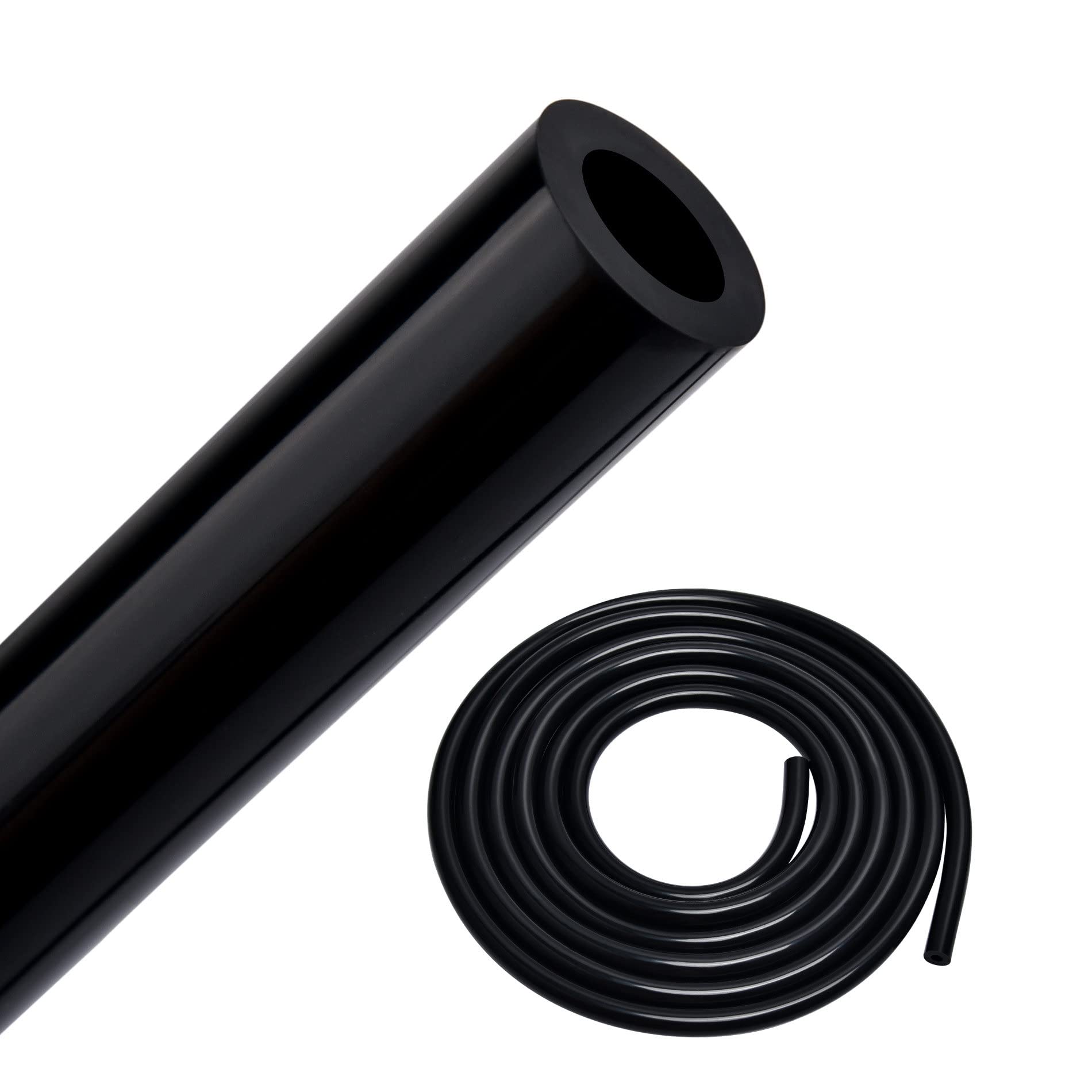
1. EVIL ENERGY 3/8″ Silicone Vacuum Tubing Hose Line 10FT Black (10mm ID)
Our pick — over 4.5★ from 850+ verified ratings; the strongest balance of quality and price.
The turbo line that survives heat cycles without cracking or blowing off
If you run boost or a turbo vacuum circuit, the number that decides everything here is the 3mm wall. That thicker silicone wall is what stops the hose pinching shut when suction builds and what lets it grip a barb tightly enough to stay put. Keeping the line sealed under boost matters more than any color or brand badge.
What wins people over is the silicone itself — it is FDA compliant food grade pure silicone, so no odd rubber smell in a hot bay. Temperature range runs from -40°F to 428°F, which is why it shrugs off engine bay heat where a cheap rubber line hardens and cracks. Buyers report the same thing that gets it noticed on turbo builds: “Good hose, its been on my turbo vacuum line and hasn’t overheated or blown off.” The same line bends easily without kinking, so routing it around tight corners stays simple.
The working pressure is 43PSI with a 130PSI burst rating at room temperature, and the 10-foot length gives you enough slack to re-route a whole vacuum circuit without splicing. The outer diameter is 16mm, so plan your clips and clamps around that. As for the honest catch: Amazon buyers put size at mixed — the 3/8 fit is deliberately snug, so if you are used to a loose push-on you may need a touch more patience seating it. That snugness is exactly what makes the seal hold, though.
Where It Earns Its Spot
- 3mm wall resists collapse and splits under vacuum
- Runs -40°F to 428°F for hot engine bay duty
- 130PSI burst rating with a 10-foot working length
Worth Knowing First
- Snug 10mm bore needs patience to seat on fittings
- 16mm outer diameter means checking your clamps fit
Grab this one: boosted engines, turbo vacuum lines, and any bay hot enough to cook ordinary rubber.
Pass on it: if you need flared HVAC fittings for a refrigerant pump — this is a push-on silicone line, not a charging hose.
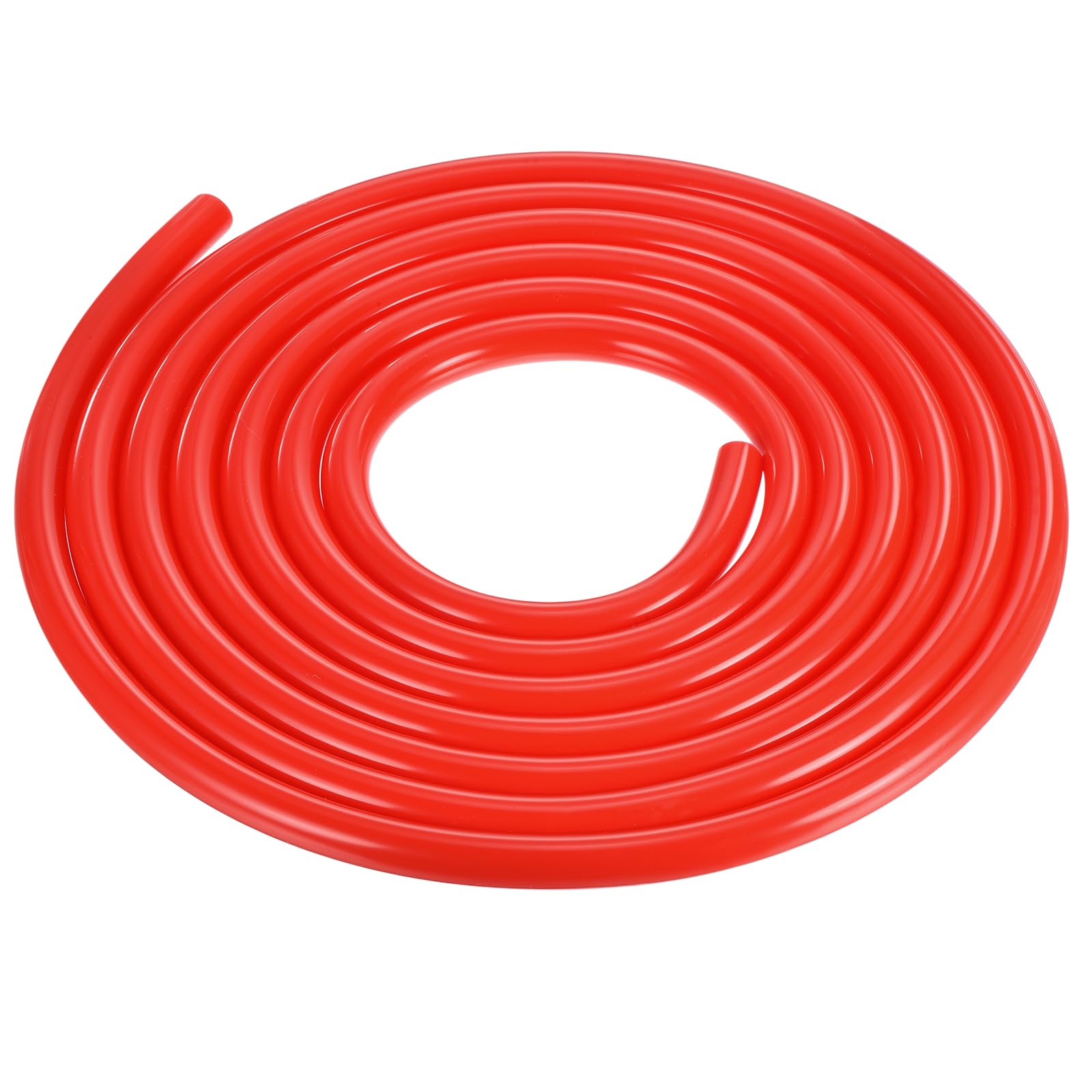
2. DMiotech Silicone Vacuum Line 10Ft 3/8″(10mm) 3mm Wall Thickness Red
The pliable red line that seals a tight push-on without fighting back
Reach for this if you are chasing flexible silicone. It stays workable in the cold of a November engine bay and pushes onto a barb without a wrestling match. That pliability is the trait buyers keep mentioning.
It handles an operating range of -40°C to 240°C, which is a serious ceiling for a hose you will wrap around an intake. The 10-foot roll has a 16mm outer diameter and a 130PSI burst rating, so it will not split under normal vacuum. Slip over to the automotive use case and it fits an old car: a buyer put it to work from the switch to the washer pump on a 1962 Corvette.
Do not run fuel, oil, or coolant through it — this is a silicone line for air and water only, and it is not built for the slick of oil or the pressure of coolant. The 3mm wall also means one-piece brass fittings are off the table; you need real hose clamps, and pushing it onto a small port takes a firm hand. For a silicone line at a friendly price, none of that is a deal-breaker.
The route you will take: flex first, everything else second — the soft silicone bends into places a stiff rubber hose simply will not.
Fits best when: you are tidying engine vacuum lines or replacing washer fluid plumbing on a project car.
Look elsewhere if: you need to move fuel, oil, or coolant — this hose is air and water only.
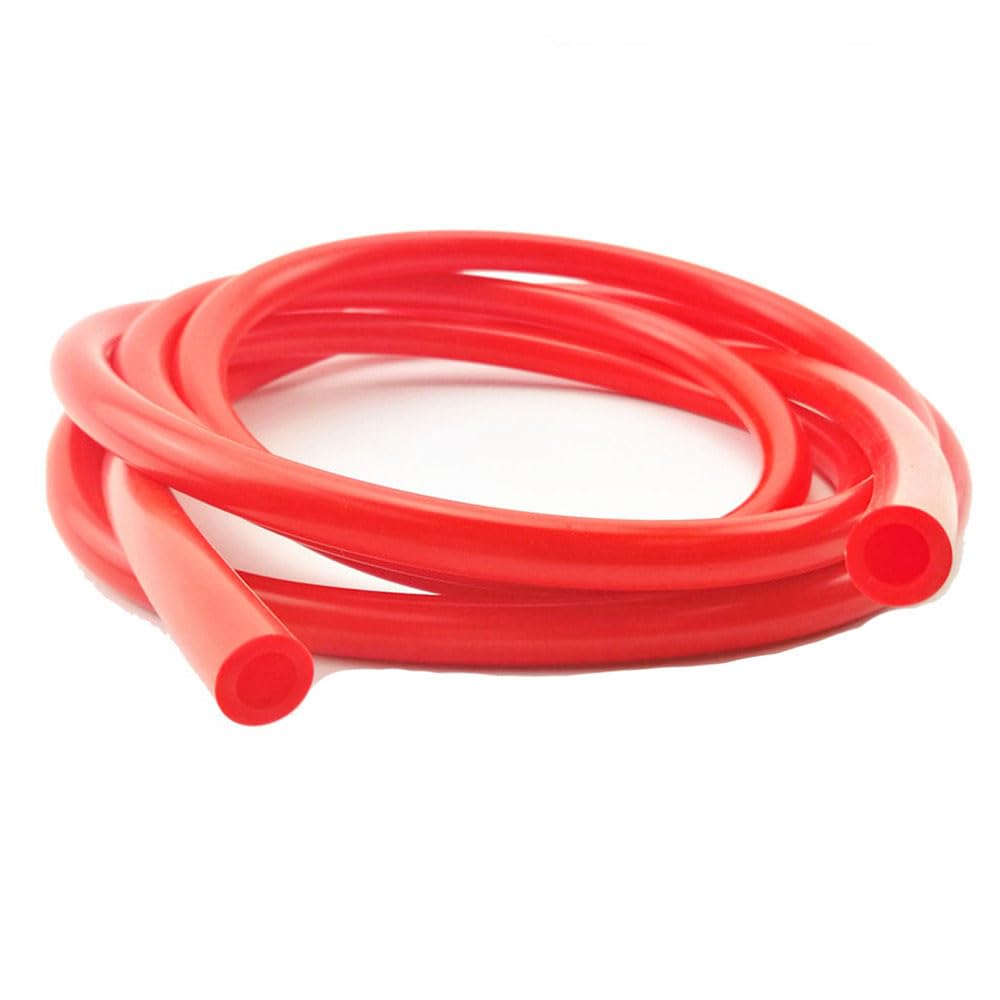
3. 3/8 Silicone Vacuum Tubing Hose Line 10 FT 130PSI Max Pressure Red (10mm ID)
Colored silicone that routes easily and tidies up an engine before the show
Picture a weekend of swapping parts and cleaning up the plumbing. This red silicone line slips onto fittings and stays put, which is the reason a lot of owners reach for it. One put it plainly: “Great Product. Used this to swap carbs and clean up the vacuum hoses.” The bright color also does real work — you can trace exactly where each line runs.
What the reviews center on is functionality first, then appearance, and that tracks. Working range spans -76F to 374F, comfortable for engine bay duty, and the 130PSI maximum rating with a 3mm wall keeps it from ballooning or collapsing. The 16mm outer diameter is standard practice for hands on this size hose, and it expands to fit over slightly different fittings for a tight grip. The 9.84-inch item length is worth a look before ordering if you have several runs to cover.
One honest note from the listing: the material is a premium-grade red silicone, and it will not tolerate fuel, oil, or coolant the way a reinforced rubber hose would. The pull-on flexibility is excellent, but on stubborn fittings you will want a little silicone lube rather than force. from the start it is a fuss-free install.
What It Does Right
- Flexible enough to route without kinking
- Bright color makes tracing lines easy
- 130PSI working rating with a 3mm wall
Before You Order
- Silicone: keep it off fuel, oil, and coolant
- Color choice is a strong commitment across multiple runs
- Long runs may need more than one length
Your hose if: you value clean routing and want a line you can see across the bay.
Not your hose if: the job is HVAC evacuation or moving any fuel or coolant.
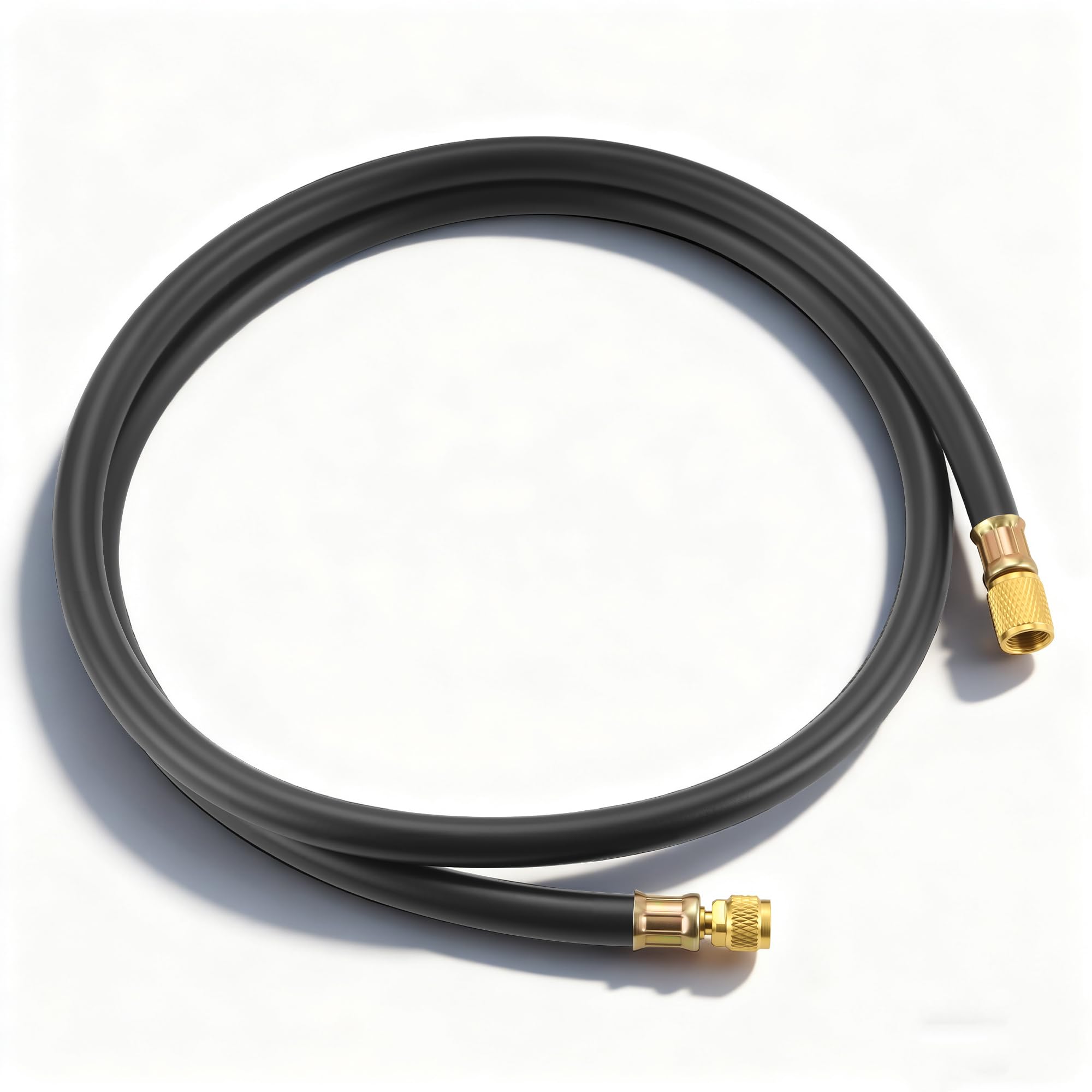
4. Lichamp HV1S Vacuum Hose, 3/8″ Heavy Duty Charge Hose, 6 ft, Black
Built like a tank for the pump end of an HVAC job
The pressure rating here is the headline: this hose is engineered to handle 800 PSI working pressure and 4000 PSI burst pressure. That is not silicone-line territory. It is built to sit between your vacuum pump and your manifold under serious suction without flinching or weeping at the seam.
The premium brass ends are machined and the PTFE seals back them up, with knurled nuts you can tighten down firmly by hand. It plays nicely with the common refrigerants — R410A, R134a, R407C, R502 and R404A — so it slots into most service kits. The flexible rubber core means you can maneuver it around tight compressor corners without fighting the hose.
The measured build is 6 feet long, with one end at 3/8 and the other at 1/4 — check you know which side your pump takes before you commit. The stated temperature range is not, so if you are fussy about heat specs confirm with the manufacturer. In the field, pros treat this as a working hose rather than a showpiece, and it has the pressure headroom to keep up.
Real-world read: the pressure ceiling and brass ends put it in pro-tool territory at a much friendlier price.
Points at: HVAC techs hooking a pump to a manifold on routine evacuation work.
Think twice if: you wanted a straight 3/8-to-3/8 hose — one end here is 1/4.
5. 3/8 Inch HVAC Vacuum Pump Hose, 5 FT AC Refrigerant Charging Hose 15660
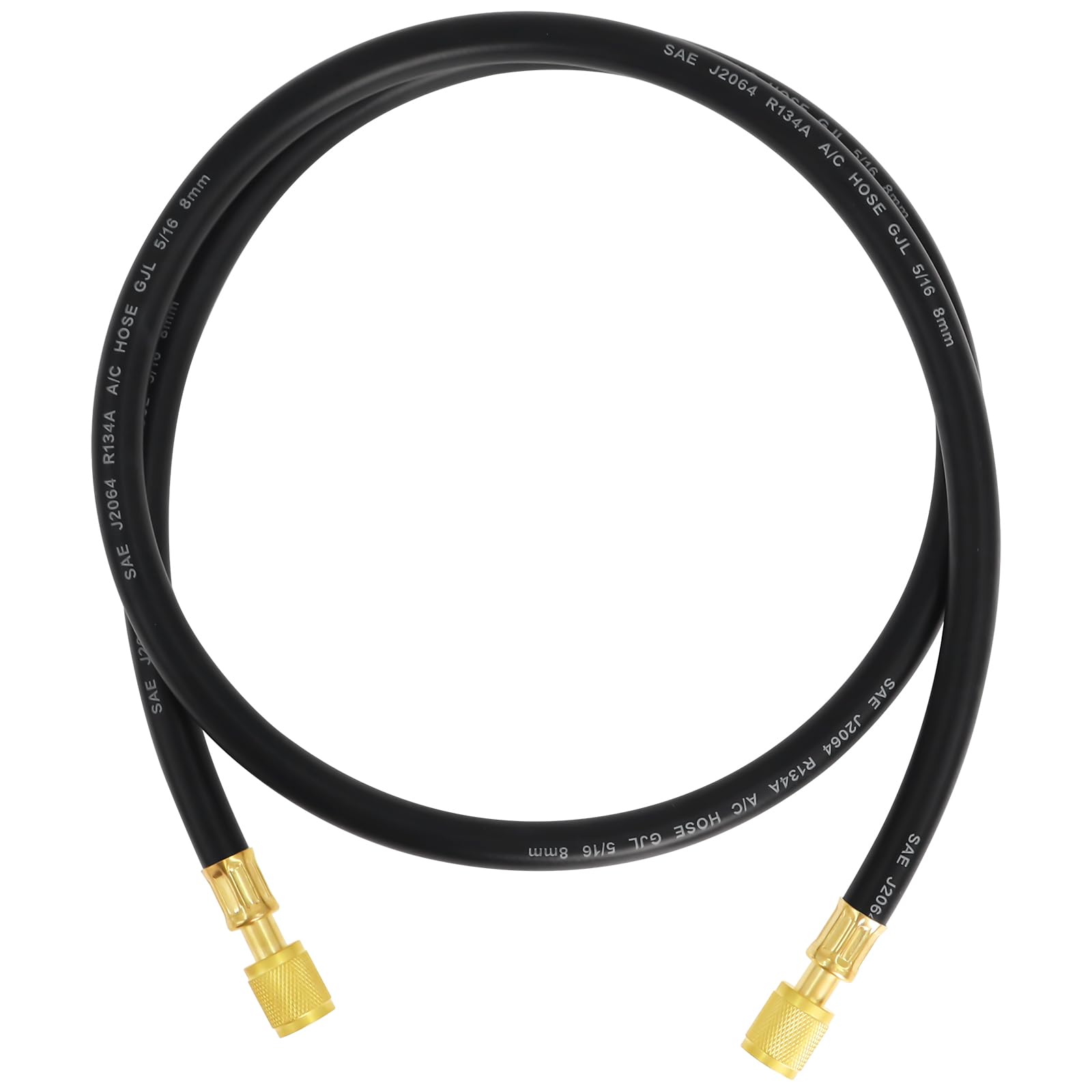
The kink-resistant service hose that keeps up without tiring your arm
Pull this one on a hot rooftop unit and the reinforced synthetic rubber stays soft instead of stiffening up. The 3/8-inch SAE threaded connectors mean it threads straight onto most gauges and equipment with no adapter. If you have ever fought the wrong thread on a service call, you already see the value.
The 5-foot length is on the tight side for a rooftop, and the 11.2 ounces of hose hang light enough to move without dragging your manifold around. Burst pressure sits at 3000 PSI and working pressure at 600 PSI, which is plenty for evacuation work. Buyers love the fit and finish — a commonly noted use is matching a hose straight to a Blackstone-style connector without hunting for a part.
The honest wrinkle: this piece is sold as a multi-purchase item, and buyers have flagged that the listing leans on gas plumbing when the product itself is engineered for deep vacuum. If a leak shows up, it usually traces to a fitting torque problem rather than the hose body. Thread it on, snug it down, and you will not hear from it.
What Buyers Like
- 3000 PSI burst and 600 PSI working ratings
- 3/8″ SAE threads fit most gauges without adapters
- Kink-resistant rubber stays flexible in tight spaces
The Fine Print
- 5 feet is short for a rooftop reach
- Listing framing mentions propane use — check your application fits
Right pick for: quick, flexible service connections where you move the gauge a lot.
Skip if: you need a long run to a distant pump — 5 feet runs out fast.
6. 2026 Upgraded 3/8″Diameter Hose,6FT,3/8″ FL‑1/4″ FL Vacuum Refrigerant Hose
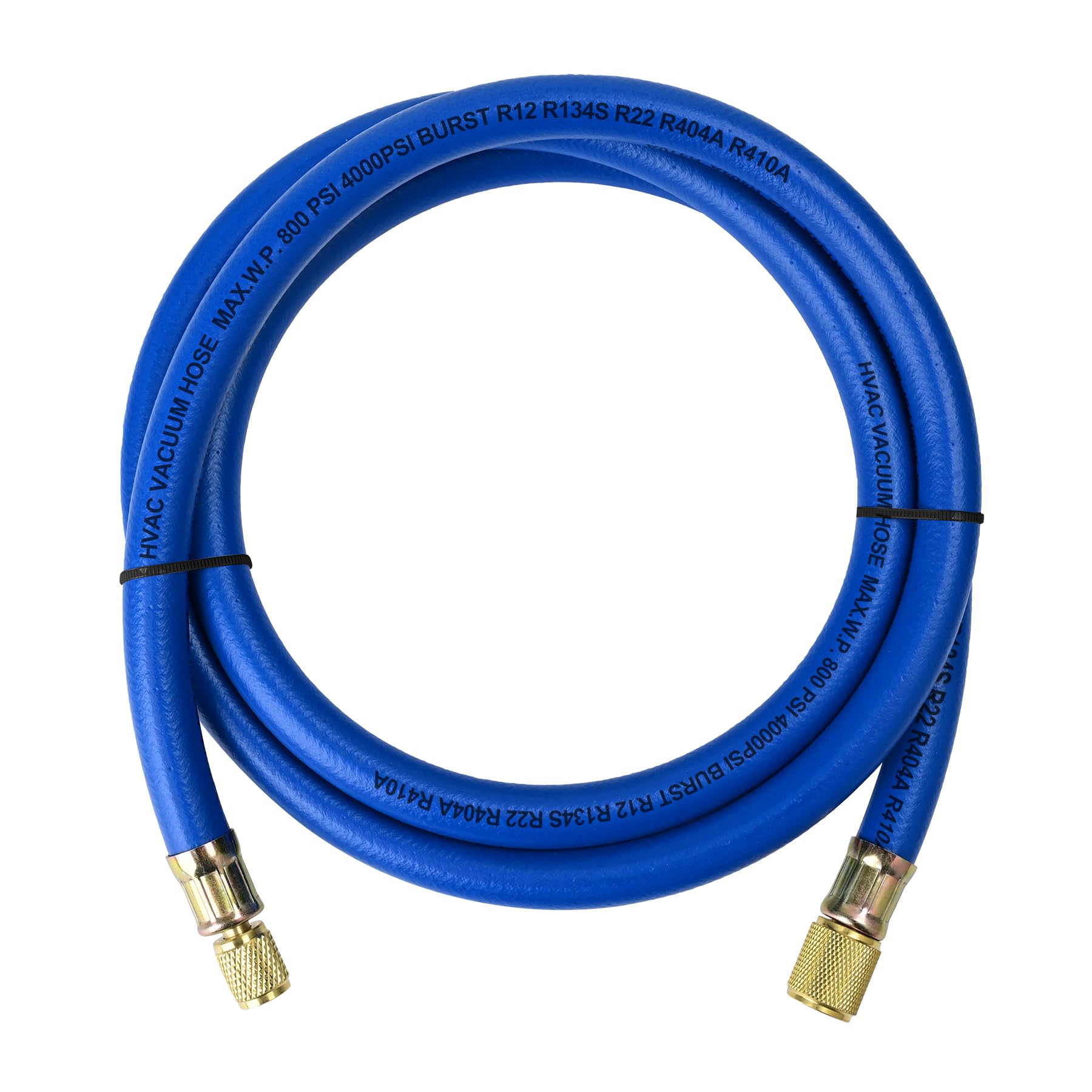
The budget route to faster pulls on a Vevor-style pump
Grab this if you own an orange Vevor pump and know your vacuum port is the 3/8 size but your service port is the smaller 1/4. The 3/8-to-1/4 configuration is exactly why owners flag it as hard to find elsewhere. It lets you connect a 3/8 port to a refrigerant port without hunting down an adapter.
The 6-foot length with a 4000 PSI burst rating covers the job, and the brass-and-rubber build with PTFE gaskets aims at a tight seal. It is rated for a long list of refrigerants — R410a, R134a, R407C, R502, R12, R22 and more — so it works across common systems. What wins people over is the evacuation speed: the larger-than-typical bore pulls a vacuum quickly instead of leaving you waiting. One buyer who struggled to find this size put it: “This 1/4″ fitting on a 3/8″ hose works well. I can pull a vacuum again.”
Here is the real trade-off, and it is a loud one in the reviews: sealing is hit or miss. Some units leak right out of the gate, and the hoses that hold are the ones that got full attention during install. Treat it as a low-cost spare or backup adapter hose, tighten every connection down hard, and you will get your money’s worth. Do not expect it to be your one and only hose for a critical service call.
Worth it if: you already know your fitting sizes and need a specific 3/8-to-1/4 hose at a value price.
Best for: a spare or adapter hose for a Vevor pump owner who knows their ports.
Not your pick if: you need a primary, leak-free hose for critical evacuation work.
7. Upgraded HV1S 3/8″Heavy Duty Vacuum Hose, 3/8″ to 1/4″ Fittings, 6 Ft

Built to chase very deep vacuums and actually hold them
The number that matters here is how deep it pulls. This hose is designed specifically for high-vacuum work, with a dense core engineered to stop the slow leak-back that ruins an evacuation. Owners mention pulls into the very low microns with a 9cfm pump, a reading that confirms the seal holds. Reach for it if your gauge needs to stay deep and steady for a long while.
The rest of the build backs that up: 800 PSI working and 4000 PSI burst ratings, standard 1/4-inch SAE threaded connectors that drop onto most equipment without adapters, and a flexible synthetic-rubber body that snakes around tight corners. The silicone materials meet 100% FDA standards with no odor, a nice touch if you keep the hose near your face or your van.
Fittings run 3/8 to 1/4 SAE, so confirm your kit matches before ordering — that mismatch is the one thing that stops an otherwise strong hose cold. If your ports line up, this is a deep-vacuum hose that behaves far above what its price would suggest.
The Case Its Way
- Holds very low micron readings without leak-back
- 800 PSI working and 4000 PSI burst ratings
- Odor-free silicone meeting 100% FDA standards
Check Before Ordering
- Fittings are 3/8 to 1/4, not straight-through
- Dense core is not the hose for a casual, occasional user
Built for: techs chasing a deep vacuum that has to hold steady on a mini-split or rooftop unit.
Wrong fit if: your ports are both 3/8 — this one steps down to 1/4 on one end.
8. Fieldpiece HV1 3/8″ x 3/8″ Vacuum Hose, 5 Ft HVAC Evacuation Hose
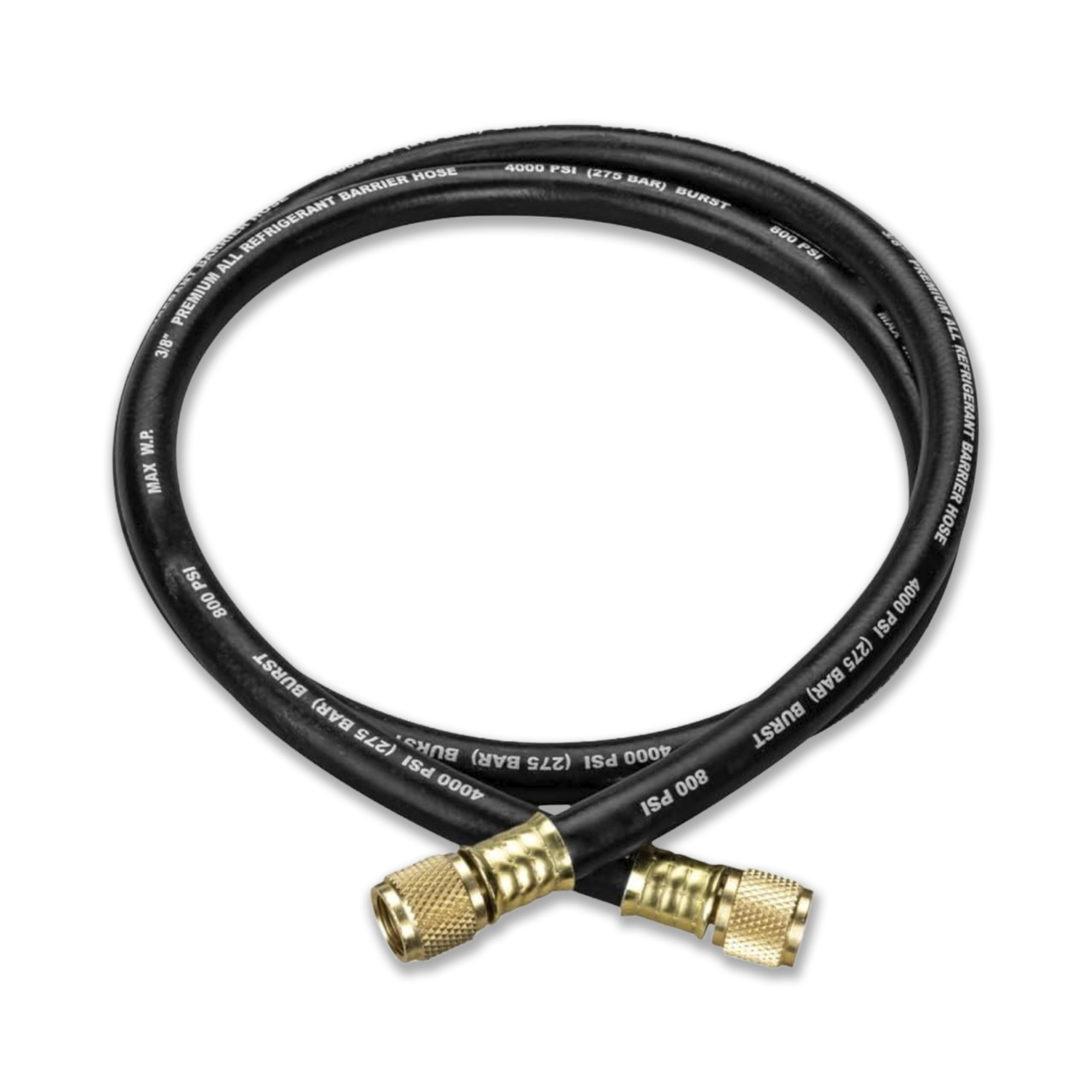
The pro-standard hose when you are done fiddling with cheap imports
Both ends are full 3/8 — no stepping down, no adapter. That is the whole point: a straight-through bore means maximum flow from the pump to the system, and it is why techs reach for this size when they want quicker evacuations without waiting around. Reach for it if your last hose failed on you at the worst moment.
What wins people over is the build: the full-ring triple crimp and 4-layer construction keep the ends attached and the core sealed through punishing service work. It is rated 800 PSI working and 4000 PSI burst, same pressure headroom as the pro-grade gear. And it is A2L compatible with a permeation barrier meeting SAE J2196, which covers modern refrigerants as well as classic ones.
So where does it leave the bargain hunter? You can find cheaper lines, and several of them drain or rupture quickly once the season heats up. That failure pattern is what sends buyers to a hose like this. If they are, this is the hose you keep, not the one you replace.
Strongest point: the triple-crimp and 4-layer build mean the ends are the last part to fail.
Choose this: professional HVAC work where reliability beats price and your ports are both 3/8.
Leave it: if you are strictly working to a tight budget and can live with a cheaper hose’s shorter service life.
9. Yellow Jacket 26060 Plus II 3/8″ Heavy Duty Combination Charging or Vacuum Hose, 60″, Black

The valve-equipped original that makes holding a vacuum feel simple
Buy this when you want to shut off the hose at the pump without breaking the vacuum seal. The combination valve is the feature that separates it from plain hoses, and it is why it stays in play even at the top of the price ladder. If you have ever lost a deep pull just by touching a fitting, you know the value of a valve.
The heavier gauge build holds its shape through long service, and the 60-inch run has a 600 PSI rating that covers normal charging and evacuation duty. Working temperature spans -22º to 176ºF, so it is comfortable across a wide band of climates. The material is a nylon-and-polyurethane blend — lighter and more flexible than plain rubber. Buyers regularly praise the valve as the extra that makes pulling and holding a vacuum easier, and the larger bore speeds the whole process up.
Here is the honest qualifier: the price sits at the premium end, and a few buyers mention the valve adds a small weight penalty to the hose end. Nothing about that changes the job, but it is worth knowing before you thread it onto a small manifold.
Why Pros Keep It
- Built-in valve lets you hold a vacuum without breaking the seal
- 600 PSI rating handles charging and evacuation
- Handles a wide -22º to 176ºF working range
The Cost of That Valve
- Premium pick at the top of the ladder
- Valve adds weight and bulk at the fitting end
- 60-inch length is the shortest in the HVAC class
Best for: field techs who want to hold a deep vacuum without breaking the connection.
Better to avoid if: you only need a basic hose and would rather not pay for the valve.
Understanding the Specs
Inner Diameter 3/8 Versus 1/4
Inner diameter is the width of the hole air travels through. A 3/8-inch hose moves more air per second than a 1/4-inch line, which shortens evacuation time on HVAC jobs and gives boost engines a steadier vacuum signal. That is why every hose here is rated at 3/8 — the extra flow is the whole upgrade.
Wall Thickness and Why It Matters
The wall is the silicone or rubber shell around the inner hole. A 3mm wall stops a silicone hose from pinching shut under suction, and a thicker wall on rubber keeps it from ballooning. A thin wall seals poorly at the fitting, which is exactly the failure buyers complain about with cheaper hoses.
Working Pressure Versus Burst Pressure
Working pressure is the level the hose can handle all day, every day. Burst pressure is the point where it would fail. A silicone line rated at 130PSI burst is fine for engine vacuum, while HVAC hoses run into the thousands of PSI because a pump can push hard. Match the rating to the job or you are buying the wrong hose.
Silicone Versus Rubber for Vacuum
Silicone stays bendy at high heat and does not harden, which suits hot engine bays. Rubber with a reinforced core holds high suction without collapsing, which suits a refrigerant pump. Neither material is better overall — each is the right tool for a specific job, and buying the wrong one is the most common mistake.
FAQ
Can I use a 3/8 silicone vacuum hose for HVAC work?
What is the difference between 3/8 to 3/8 and 3/8 to 1/4 fittings?
How long should a vacuum hose last?
Does a 3/8 vacuum hose evacuate faster than 1/4?
Will a 3/8 silicone vacuum line work on a turbo boost setup?
Do I need hose clamps with a silicone vacuum line?
Can I swap a 1/4 hose for a 3/8 without changing fittings?
Why does my vacuum hose leak at the fitting?
Is silicone better than rubber for a vacuum hose?
What wall thickness should I look for in a 3/8 silicone hose?
Final Thoughts: The Verdict
For most buyers, the 3/8 vacuum hose winner is the EVIL ENERGY 3/8″ Silicone Vacuum Tubing because it pairs a heat-resistant silicone body with a 3mm wall that resists collapse, and the owner feedback on durability keeps it the safest pick in the mid-range. If you want maximum flow straight-through for HVAC work, grab the Fieldpiece HV1. The Fieldpiece HV1 backs that up with 4.8 stars across 800+ ratings. And for holding a deep vacuum without breaking the seal, the Yellow Jacket 26060 Plus II is the one to reach for.
How We Picked
We do not accept paid placement. Every pick is matched to a real buyer and a real use-case; we do not hands-on test units.
Sources & Methodology
Specifications: manufacturer listings and product documentation. Review insights: verified customer reviews, as of September 2026. Pricing: not shown on this page (it changes often); check the current price via the retailer link.
As an Amazon Associate, Gadgets Feed earns from qualifying purchases. This does not affect which products we feature.