
You plug a 3-foot cable between your mixer and speakers. The wrong one brings hum, signal loss, or a mid-set snap. The right one lets you hear clean audio and nothing else. The core difference comes down to the connector type — XLR (a three-pin plug that carries a balanced, noise-rejecting signal) or 1/4-inch TS (tip-sleeve, a two-contact plug for unbalanced instrument signals) or RCA (a standard phono plug for line-level gear like turntables) — plus build quality that keeps interference out. The FosPower RCA 2-Pack earns the top spot because its dual shielding and gold-plated connectors deliver clean sound at a price that beats cheaper cables, making it the smartest value for line-level RCA links.
I’m Min — the co-founder and writer behind Gadgets Feed. This guide is built by comparing the manufacturers’ published specifications and the patterns across verified customer reviews, so you get each pick’s real strengths and trade-offs instead of marketing spin.
You need the correct connector for your gear. Whether you need an XLR to link a mixer to a powered speaker or a braided instrument cable for a compact pedalboard, this guide covers the best 3 ft dj cords for a clean setup and quiet audio.
How To Choose The Best 3 Ft DJ Cords
Short cables are your setup’s quiet backbone. The wrong choice introduces hum or noise, or simply won’t fit your gear physically. Focus on three things: the connector type that matches your equipment, the shielding that keeps the audio clean, and the build quality that survives repeated packing and unpacking.
Match Your Connector: XLR, 1/4-Inch TS, or RCA
XLR connectors provide a balanced signal, meaning they reject interference over longer cable runs, but even at 3 feet the balanced connection offers a standard, noise-free link for mixers, powered speakers, and microphones. A 1/4-inch TS (tip-sleeve) connector is the standard for guitars, keyboards, and some DJ mixer inserts — it carries an unbalanced signal, so good shielding in the cable becomes critical. RCA connectors handle line-level audio from turntables, CDJs, and some DJ mixers, also unbalanced and very sensitive to interference. Pick XLR for balanced pro links, 1/4-inch TS for instruments and inserts, and RCA for line-level playback gear.
Check the Shielding
Even a 3-foot cable picks up electromagnetic and radio frequency interference (EMI/RFI) from nearby power cables, lighting dimmers, and wireless gear. Look for a combination of a braided copper shield and an inner foil wrap for the best noise protection. For 1/4-inch TS and RCA cables — both unbalanced — heavy shielding is essential to keep the signal clean at short distances. Buyers report that a cable with proper shielding delivers “clear audio improvement over cheaper cables” and eliminates static.
Gauge Your Build
For XLR and 1/4-inch instrument cables, the conductor gauge matters for signal strength, especially in short runs where tiny resistance differences can matter. A 22-gauge conductor is standard for pro instrument cables and provides a strong signal path. For RCA cables, a lower gauge number means a thicker conductor — a 12-gauge RCA cable is exceptionally heavy-duty and reduces signal loss over any distance. A flexible PVC or braided jacket that does not kink or retain a coil shape (often called “physical memory”) makes setup and tear-down faster.
Quick Comparison
On smaller screens, swipe sideways to see the full table.
| Model | Category | Best For | Key Spec | Amazon |
|---|---|---|---|---|
| FosPower RCA (2-Pack) | RCA | Turntable to mixer | 26 AWG gauge | Amazon |
| Amazon Basics XLR (2-Pack) | XLR | Mixer to powered speaker | 3-pin connectors | Amazon |
| Fender Professional Series | 1/4-Inch TS | Guitar to pedalboard | 22 AWG conductor | Amazon |
| Cable Matters Braided (2-Pack) | 1/4-Inch TS | Synth to mixer | Braided jacket | Amazon |
| EBXYA XLR (4-Pack) | XLR | Multi-channel patching | 24 AWG gauge | Amazon |
| CNCESS RCA (12 AWG) | RCA | High-end line-level gear | 12 AWG gauge | Amazon |
In‑Depth Reviews
1. FosPower RCA (2-Pack)
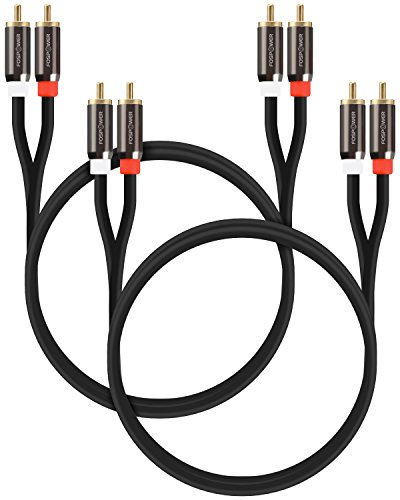
The 26 AWG conductor and dual shielding (copper braid plus aluminum foil) make the FosPower RCA 2-pack the top pick for anyone needing a clean, interference-free line-level link between a turntable and mixer or a CDJ and line input.
Each cable uses 24K gold-plated connectors (resisting corrosion that would degrade the signal over time) and a Polyethylene Foam dielectric insulator that minimizes signal loss in the high frequencies. Owners mention these cables “sound great” and are a “good quality upgrade for turntable to preamp connection.”
The honest limit is the thin 26 AWG conductor — at 5.3 ounces per pack and significantly lighter than the CNCESS RCA’s 12 AWG, this cable is not built for high-current applications or the heaviest abuse. For line-level audio in a home or booth setup, it is a value champion that outperforms its price bracket.
Why it’s great
- Dual shielding (braid + foil) reduces EMI/RFI noise effectively
- 24K gold plating resists tarnish and ensures reliable contact
- Excellent value with clear sound improvement reported by buyers
Good to know
- 26 AWG conductor is thinner than typical RCA cables
- Not ideal for heavy-duty, high-vibration environments
2. Amazon Basics XLR (2-Pack)

The Amazon Basics XLR 2-pack beats the top pick FosPower on weight at 7.04 ounces for the pair (versus 5.3 ounces for the FosPower pair), but that heft comes from a thicker 6mm PVC jacket and zinc alloy connectors that customers note are “indistinguishable from high-end cables in sound quality.”
This cable uses all-copper conductors with inner copper spiral shielding to reduce noise, and buyers confirm it “connects two 650W PA speakers flawlessly” with no audible difference from cables costing more than twice as much. The flexible PVC jacket coils easily and resists kinking.
Choose this over the top pick if your gear uses XLR connectors — the balanced signal path automatically rejects interference at the source, making it the more pro-grade solution for live sound. It lacks the braided jacket of the premium picks, but for standard XLR patching it delivers the same clean signal quality at a fraction of typical pro cable prices.
Where it shines
- Balanced XLR connection rejects interference naturally
- Reviewers point out no sound quality difference vs. expensive cables
- Durable zinc alloy 3-pin connectors with metal housing
Worth noting
- PVC jacket is durable but not as kink-resistant as braided nylon
- Some buyers wished it felt heavier-duty
3. Fender Professional Series Instrument Cable
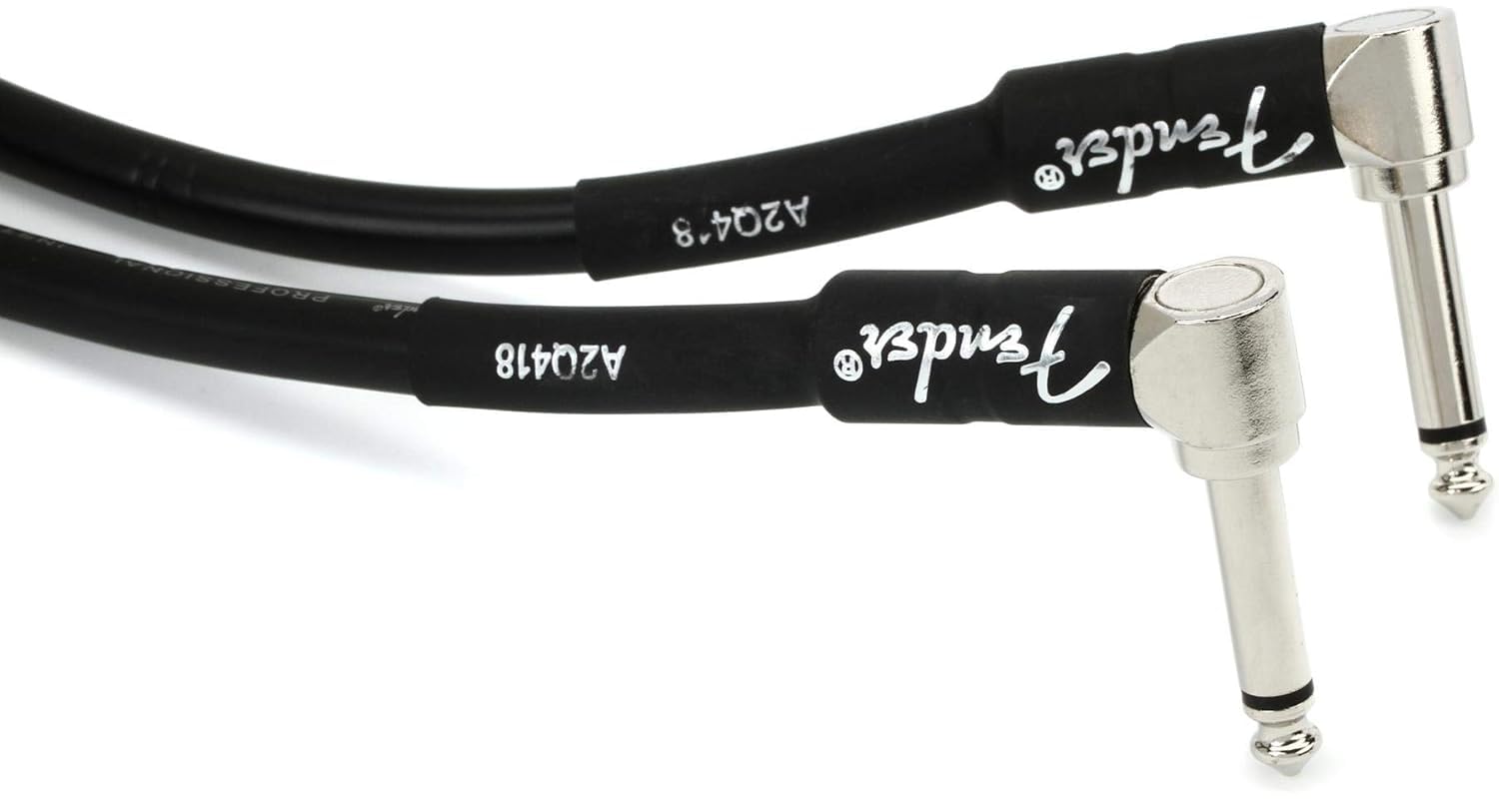
If you run a guitar into a pedalboard or a DJ mixer insert that needs a 1/4-inch instrument cable, the Fender Professional Series is engineered to avoid twisting and kinking — a common pain point with cheaper cables that develop a “memory” coil. The right-angle connectors on both ends are a bonus for tight spaces where a straight plug would stick out awkwardly.
Its 22 AWG conductor is thicker than the 26 AWG on the FosPower RCA cable, providing a stronger signal path for the amp-level signal from a passive guitar pickup, and the 95% oxygen-free copper spiral shielding eliminates handling noise. Shoppers say it is “durable and good quality” with “cable strain relief near the plug good at preventing kinks when used by kids.”
The standout spec is the 22-gauge conductor combined with the 8mm PVC jacket — this gives it a pro-grade thickness that resists damage from being stepped on or pinched, at a price that buyers call “the best bang for the buck.”
What stands out
- 22 AWG conductor provides strong signal path for instruments
- Right-angle connectors fit tight spaces behind pedalboards
- Spiral shielding eliminates handling noise effectively
The trade-offs
- One buyer received a damaged unit on first shipment
- Unbalanced connection requires good shielding (which it has)
4. Cable Matters Braided 1/4-Inch TS (2-Pack)
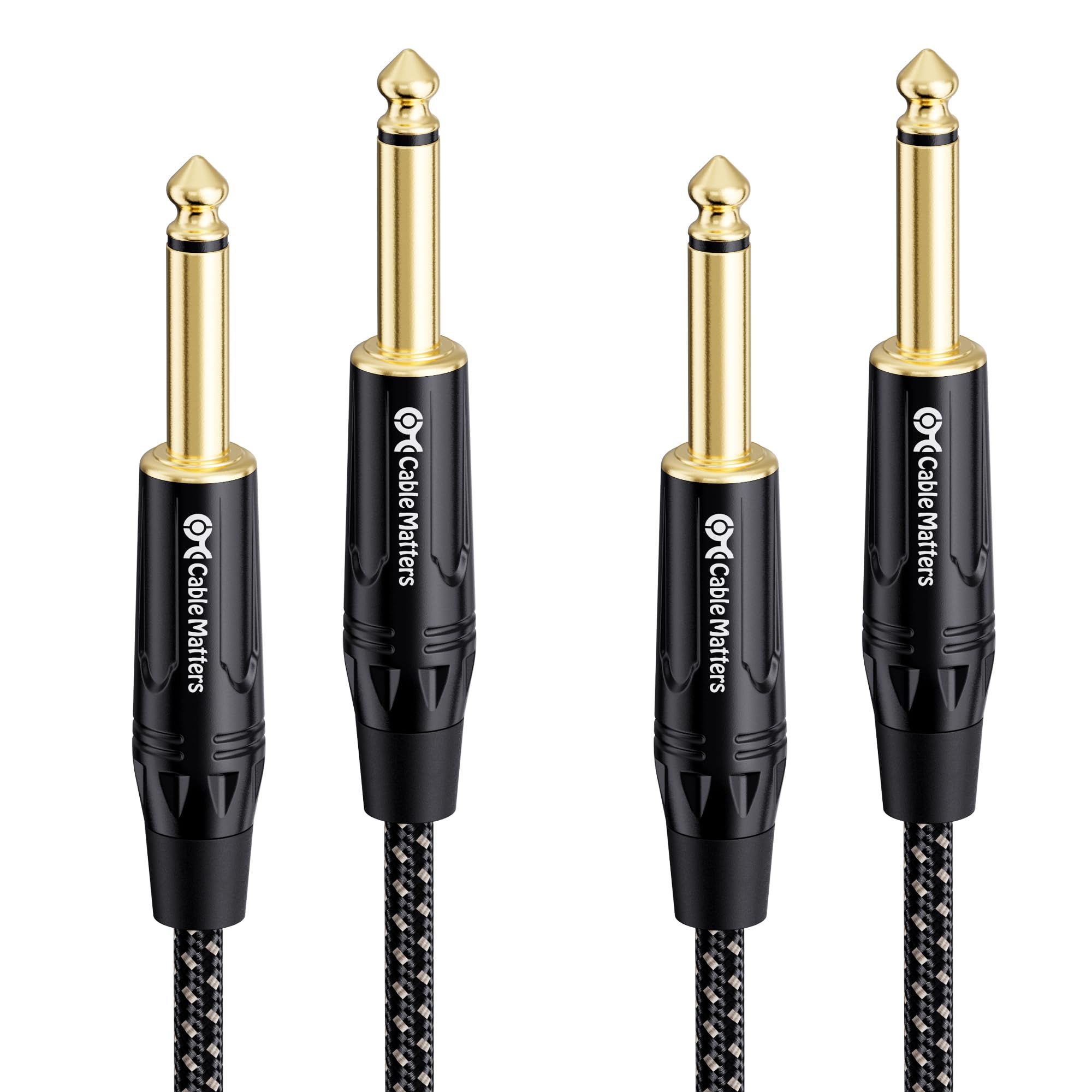
The single number that matters most in this category is durability, and the Cable Matters 2-pack scores highly with a braided nylon jacket that resists kinking, a feature buyers in a synth and drum machine studio appreciate — one reviewer notes “I use quite a few Cable Matters cable in my home Music Recording Studio for all of my Synthesizers, Drum Machines etc.” The braided jacket lays flat and does not tangle, which is a real advantage when you have multiple short cables on a desk.
It pairs gold-plated tips with braid shielding and oxygen-free copper conductors for clean signal transmission, and the 2-pack gives you a spare for connecting two instruments to a mixer. Buyers describe them as “very solid and make great patch cables” for guitar pedals.
The catch is that the braided jacket, while flexible, adds a slight stiffness compared to a standard PVC cable. If you need a patch cable that slips into a tight rack without catching, this is still a great pick, but the Fender’s smooth PVC may slide in easier — a solid price-to-value pick for the durability and included spare.
The upsides
- Braided nylon jacket resists kinking and tangling
- Gold-plated tips ensure corrosion-free signal transmission
- 2-pack offers spare cable for multi-instrument setups
Keep in mind
- Braided jacket can feel slightly stiff in tight racks
- Not as thick a conductor gauge as the Fender
5. EBXYA XLR 4-Pack

The EBXYA XLR 4-pack is the choice for DJs and producers who need to patch multiple balanced XLR links on a mixer or audio interface. You get four individually color-coded cables, so you can identify each channel at a glance, and buyers report “fast delivery, well-packaged, exactly as described” before adding it “performs perfectly, easy to use.”
It uses 24 AWG oxygen-free copper conductors with a dual shielding combination (foil plus copper braid) for maximum interference rejection on short runs, plus a self-locking connector design that is easy to pull out but holds firmly. Buyers call it “super tough XLR’s that are perfect for audio rack connections.”
At 24 AWG, its conductor gauge is slightly thinner than the Amazon Basics’ unspecified gauge but matches the typical standard for pro XLR cables. If you need more than two XLR cables for your setup and value color coding, this pack delivers the same balanced signal quality as the Amazon Basics at a comparable per-cable cost, with tougher shielding.
Why we’d pick it
- 4-pack with color-coded connectors for easy channel identification
- Dual shielding (foil + braid) blocks interference well
- Self-locking connector holds securely but is easy to remove
A few caveats
- 24 AWG gauge is typical but not the thickest available
- Some users may need longer lengths; 3 feet works for rack patching
6. CNCESS RCA (12 AWG)
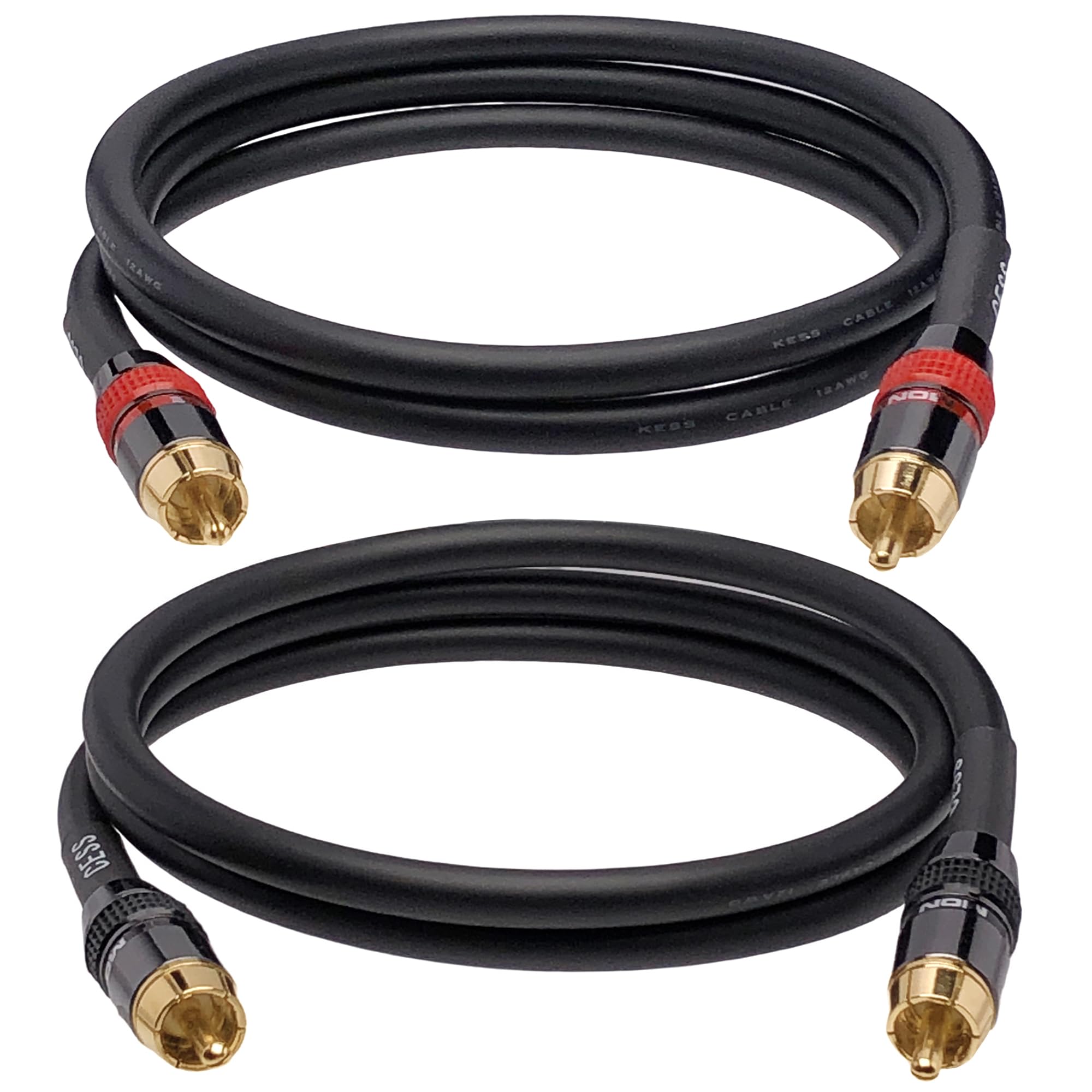
The CNCESS RCA cable is the premium pick for high-end turntables, CDJs, or amplifiers where you want maximum signal integrity. At 7.2 ounces, it is the heaviest single cable here — compare that to the lighter FosPower’s 5.3 ounces per pair — and that weight comes from its extraordinarily thick 12 AWG coaxial conductor, which is over twice the thickness of a standard RCA cable.
This cable uses 24K gold-plated connectors and thick shielding to prevent EMI and RFI interference, and owners mention it is “thick, supple 12awg signal wire with good RCA connectors” and that “audio quality equal to WBC cables in 7.2.4 Atmos setup.” It is made in the USA with waterproof glue and heat shrink at the connector junctions for added durability.
The one reason to choose this over the lighter and cheaper FosPower is the 12 AWG gauge — if you are running a long signal path with multiple connections or simply want the most overbuilt RCA cable possible for critical listening, the CNCESS delivers a level of construction that the field does not touch. Just be aware that its extra heft and stiffness can make it harder to route in tight spaces behind a rack.
Strong points
- 12 AWG gauge is exceptionally thick for maximum signal integrity
- Customers note audio quality equal to much pricier cables
- Made in the USA with waterproof glue and heat shrink sleeves
Before you buy
- Overkill for basic consumer-level RCA connections
- Stiff cable may be harder to route in tight spaces
Understanding the Specs
Conductor Gauge (AWG)
The American Wire Gauge (AWG) number tells you the thickness of the copper wire inside. A lower number means a thicker wire — 12 AWG is very thick, 22 AWG is standard for instrument cables, and 26 AWG is thin and typically used for line-level RCA interconnects. For a 3-foot cable, a thicker conductor (lower gauge) reduces resistance, but for short RCA runs, a 26 AWG gauge is perfectly adequate for signal transfer.
Balanced vs. Unbalanced
XLR cables carry a balanced signal with three pins: the signal, its inverted copy, and a ground. A balanced connection cancels out any electromagnetic interference picked up along the cable — useful even at 3 feet if you run cables near power supplies. Unbalanced 1/4-inch TS and RCA cables carry the signal on a single conductor with a ground, so they are more prone to noise, which makes the quality of the internal shielding critical.
FAQ
Can I use a guitar cable for a DJ mixer connection?
Why would I pick a 3-foot cable over a longer one for DJ gear?
Final Thoughts: The Verdict
If you want one dependable pick, the best 3 ft dj cords winner is the FosPower RCA (2-Pack) because it delivers excellent shielding and gold-plated connectors at a price that undercuts much of the competition, making it the smartest value for line-level RCA links. If you need balanced XLR cables for a live PA or speaker setup, grab the Amazon Basics XLR (2-Pack). And for the heaviest-duty RCA signal path, the standout is the CNCESS RCA (12 AWG).