
A 3-layer rain jacket is the single most misunderstood piece of technical outerwear on the market. Most buyers grab a shiny shell thinking waterproof numbers alone define performance, only to end up clammy, restricted, or wet from the inside out. The real story lies in the lamination—the bonded membrane, the inner face fabric, and how those three layers interact when you’re actually moving in the rain.
I’m Min — the co-founder and writer behind Gadgets Feed. I’ve spent hundreds of hours analyzing technical rain shell specifications, comparing membrane technologies, face fabric deniers, and seam constructions to separate marketing hype from genuinely waterproof, breathable protection.
Whether you’re hiking ridgelines, grinding through a wet round of golf, or just want one shell that does it all without making you feel like you’re wearing a plastic bag, this guide to the best 3 layer rain jacket breaks down exactly what separates a true investment from a closet regret.
How To Choose The Best 3 Layer Rain Jacket
A true 3-layer jacket bonds an outer face fabric, a waterproof-breathable membrane, and an inner liner into one inseparable laminate. This construction eliminates the loose mesh or scrim found in 2-layer jackets, making the shell lighter, more durable, and dramatically more breathable. The catch? Not all 3-layer jackets are built for the same purpose.
Membrane Technology Determines Breathability
Gore-Tex dominates the premium tier with its ePE and Pro membranes, offering proven waterproofing and impressive moisture vapor transfer. Pertex Shield Stretch provides exceptional freedom of movement for active sports like golf. Mammut’s Dry Active technology balances lightweight packability with solid 20,000mm waterproofing. The membrane choice dictates how much heat and sweat escapes when you’re working hard.
Face Fabric Denier Dictates Durability
The outer fabric weight, measured in denier (D), directly correlates with abrasion resistance. A 40D face fabric keeps weight low for day hikes, while 70D or 80D fabrics hold up against rock contact and heavy pack straps during mountaineering. The Arc’teryx Beta AR uses an 80D reinforcement in high-wear areas for a reason—thin shells delaminate fast under real abuse.
Fit and Articulation Matters More Than You Think
A 3-layer shell without proper articulation restricts movement and traps heat. Look for shaped sleeves, repositioned side seams, and adjustable hem systems. Golf-specific shells like the Andrew jacket incorporate chest tabs to prevent fabric ballooning during a swing. Mountain-oriented jackets use articulated arms and helmet-compatible hoods that don’t compromise peripheral vision.
Quick Comparison
On smaller screens, swipe sideways to see the full table.
| Model | Category | Best For | Key Spec | Amazon |
|---|---|---|---|---|
| Arc’teryx Beta Jacket | Mid-Range | Versatile all-day wear | 80D 3L Gore-Tex ePE | Amazon |
| Rab Men’s Kangri GTX Jacket | Premium | Hiking and backpacking | 70D Gore-Tex Performance | Amazon |
| Mammut Hardshell Hooded Jacket | Mid-Range | Lightweight hiking and everyday | 190g / 20,000mm Dry Active | Amazon |
| Andrew Waterproof Golf Jacket | Premium | Active golf performance | Pertex 3-Layer Stretch | Amazon |
| Arc’teryx Beta AR Jacket | Premium | Alpine and mountaineering | N80d Gore-Tex Pro | Amazon |
In‑Depth Reviews
1. Arc’teryx Beta Jacket Men’s | Gore-Tex ePE Shell
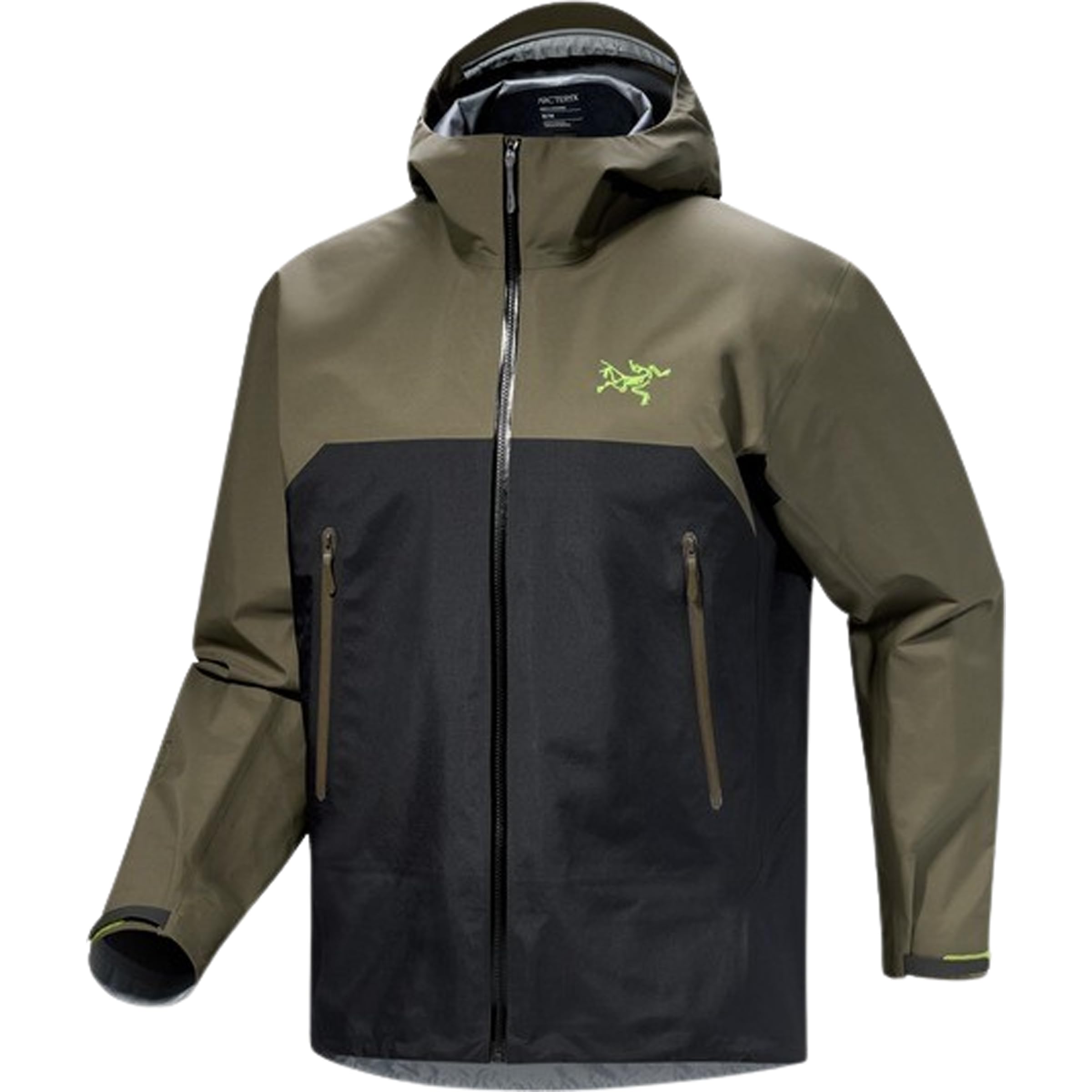
The Arc’teryx Beta Jacket strikes the hardest-to-find balance in the 3-layer category: genuine mountain capability in a package that’s quiet, comfortable, and wearable daily. Its 80-denier 3-layer Gore-Tex ePE fabric delivers the waterproof and windproof protection you expect from Arc’teryx, but the real upgrade here is the C-KNIT backer technology. This inner face is soft against skin, highly breathable, and eliminates the crinkly noise that plagues many hardshells, making it the most versatile pick for everything from trail running to urban commutes.
The StormHood adjusts with a single pull and maintains peripheral vision—a detail that separates premium shells from budget alternatives. At 5’11” and 160lbs, a medium fits perfectly with room for a mid-layer, and reviewers consistently praise its lightweight feel compared to the Beta SV. The PFC-free DWR treatment and reduced carbon footprint also matter if you care about what goes into your gear.
Where this jacket truly shines is in prolonged wet exposure. Pacific Northwest fishermen and hikers report staying bone-dry during full-day downpours, while the fabric dries quickly when packed away. The embedded RECCO reflector adds a safety net for backcountry scenarios. This is the benchmark that other mid-range 3-layer shells are measured against.
Why it’s great
- 80D face fabric offers excellent durability without excessive weight
- Gore-Tex ePE membrane is PFC-free and highly breathable
- Single-pull StormHood preserves peripheral vision
Good to know
- Regular fit runs slightly small—size up if layering thick mid-layers
- Return process can be slow if sizing is off
2. Rab Men’s Kangri GTX Jacket
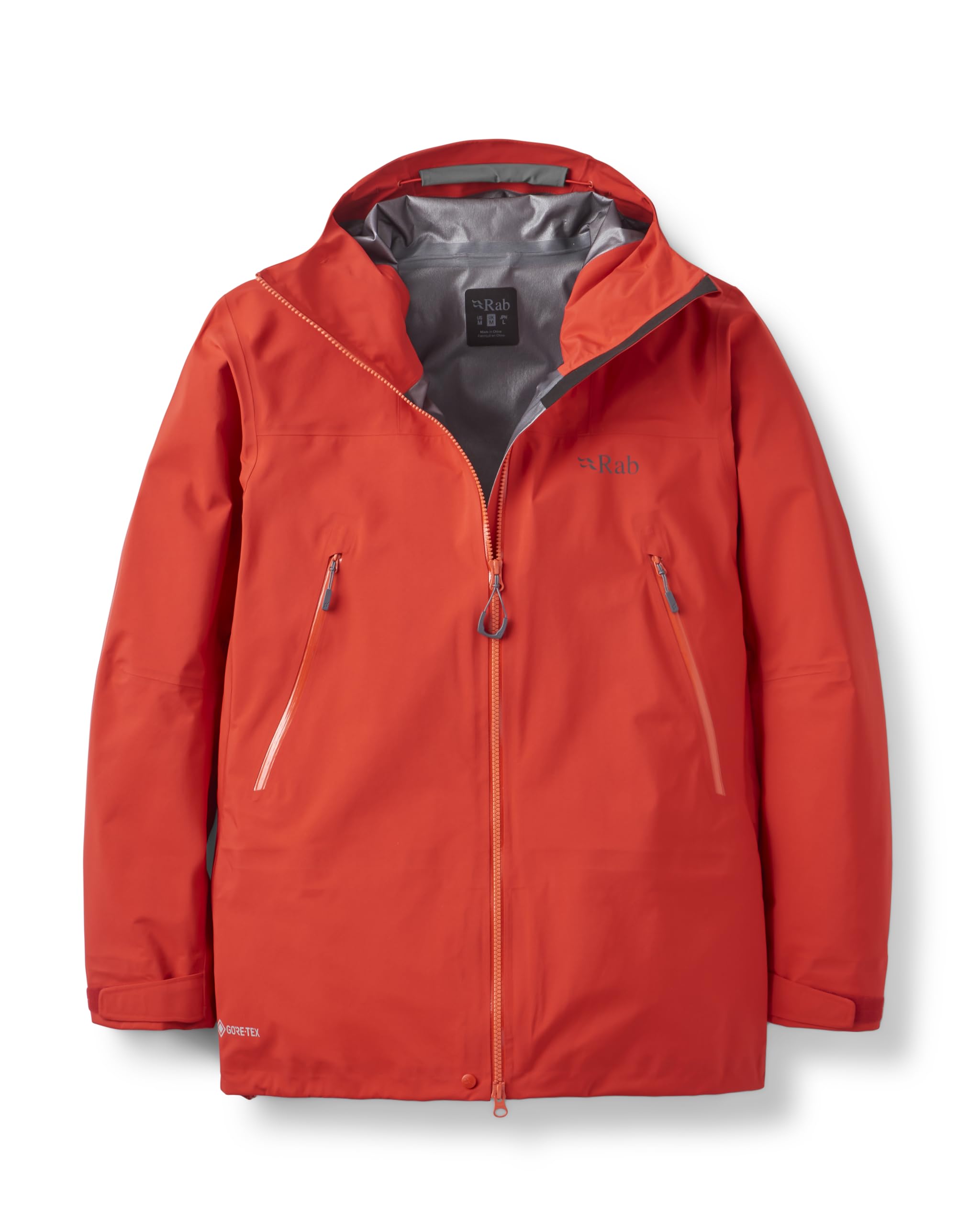
The Rab Kangri GTX Jacket uses a 70-denier Gore-Tex Performance fabric that feels noticeably more substantial than lighter 40D shells without adding the stiffness of an alpine beast. That 70D face fabric is the sweet spot for hikers and backpackers who need a jacket that shrugs off brush, pack straps, and the occasional rock scrape while remaining packable enough to stuff in a summit bag. The Kangri weighs just 7.8 ounces, which is remarkable for a jacket in this durability class.
Two-way underarm vent zippers provide critical dump-ability when you’re climbing a pass and working hard, and the fully adjustable hood features a stiffened, flexible peak that holds its shape in wind-driven rain. Reviewers consistently note the thoughtful pocket placement and the fleece-lined neck cuff that prevents chin chafing and beard pull—a small detail that makes a huge difference on multi-day trips. The two-way front zipper with a bottom snap adds further usability when harnessed.
Where the Kangri edges ahead of similarly-priced competitors is in its total package: a thicker, more durable fabric than the Arc’teryx Beta at a similar price point, plus better pocket configuration and venting. It performs excellently in heavy rain and holds up over years of use. For hikers who prioritize durability and function over minimum weight, this is the smarter buy.
Why it’s great
- 70D face fabric offers exceptional durability for the weight class
- Two-way underarm vents provide active temperature control
- Fleece-lined neck cuff prevents chafing
Good to know
- Heavier than ultralight 40D shells for minimalists
- Fit runs true to size but may feel snug with thick down layers
3. Mammut Mens Outdoor Hardshell Hooded Jacket
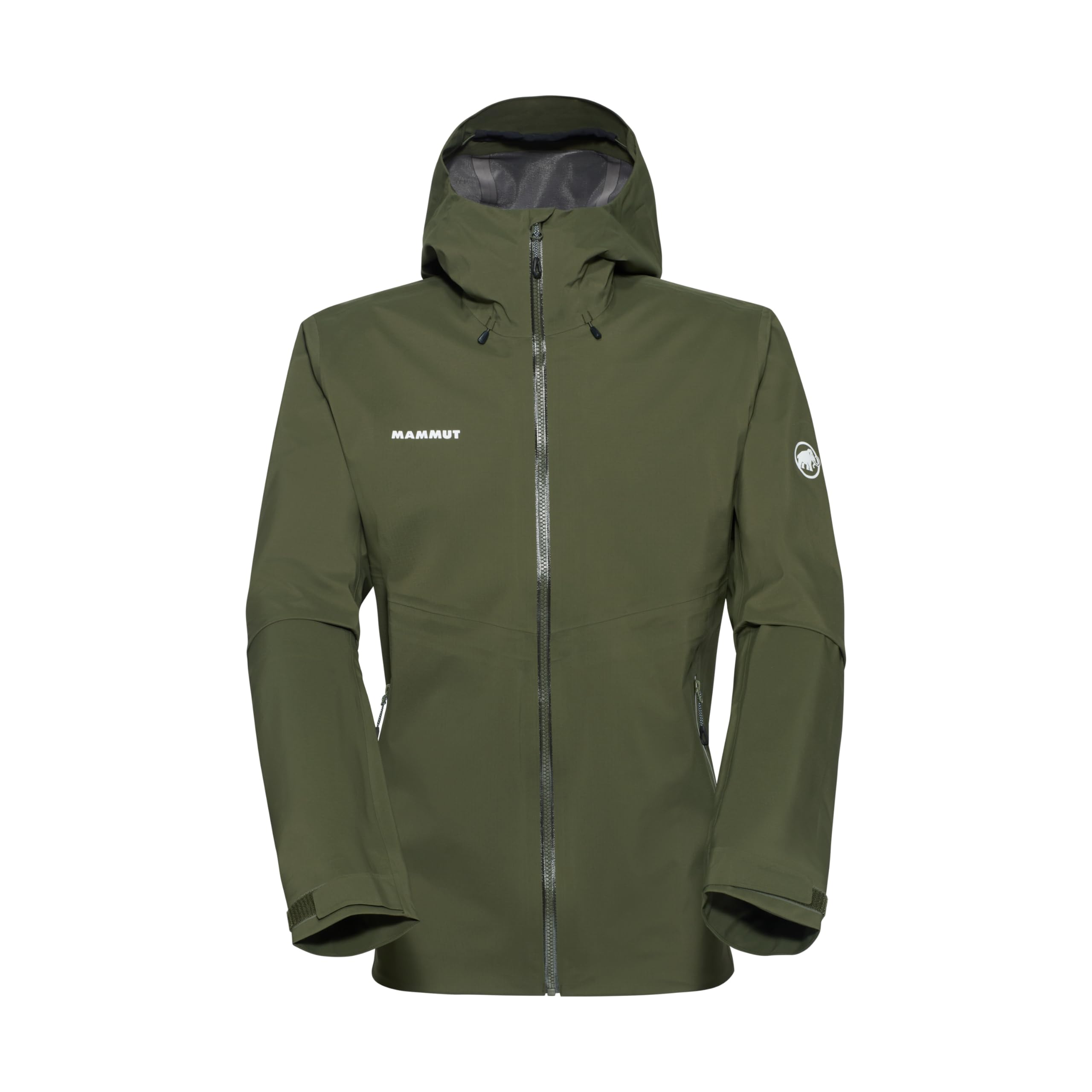
The Mammut Hardshell Hooded Jacket achieves something rare in the 3-layer category: genuine waterproof performance at a sub-200 gram weight. Using Mammut’s own Dry Active 3-layer technology, this jacket delivers a 20,000mm waterproof rating and 20,000 g/m²/24h breathability rating while weighing only 190 grams. For hikers and trail runners who count every ounce, that’s a dramatic weight savings over traditional hardshells that often push past 350 grams.
The 100% recycled polyamide face fabric is a genuine sustainability win without cutting corners on durability. Reviewers praise the athletic fit for freedom of movement during mountain climbing and trail running, and the Dark Marsh color offers a subdued earthy aesthetic that works equally well on the trail and around town. The jacket packs into its own chest pocket, making it a perfect emergency shell in a summit pack or day bag.
What you give up with this weight reduction is long-term abrasion resistance. The face fabric is lighter than the 70D or 80D shells in this roundup, so it won’t handle repeated rock contact or heavy pack abrasion as well. But for its intended use—lightweight hiking, running, and everyday wear—the Mammut delivers 3-layer performance at a weight that barely registers on your back. The fit allows comfortable layering underneath without feeling constrictive.
Why it’s great
- Extremely lightweight at 190g for a true 3-layer construction
- 20,000mm/20,000g breathability is excellent for active use
- 100% recycled polyamide face fabric is eco-conscious
Good to know
- Lighter face fabric is less abrasion-resistant than 70D+ shells
- Fit is athletic; those wanting a looser cut should size up
4. Andrew Waterproof Golf Jacket Men, Pertex 3-Layer Stretch PFAS-Free

The Andrew Waterproof Golf Jacket is the most niche product in this roundup, and that focus is exactly why it excels. Built around Pertex Shield Stretch 3-layer fabric, this jacket is PFAS-free and engineered specifically for the golf swing. Repositioned side seams, shaped sleeves, and adjustable chest tabs prevent the fabric from ballooning at the top of your backswing—a problem every golfer in a standard rain jacket has experienced. The stretch fabric moves with your body rather than restricting rotation.
This jacket is 100% waterproof and windproof while remaining highly breathable for an entire round. At 14.4 ounces, it’s light enough to pack in a golf bag without adding noticeable weight. The chest tabs allow you to adjust the fit whether you’re wearing a polo or a thicker mid-layer, and the elastic drawstring hem seals out drafts during windy approaches. Reviewers universally praise the unrestricted movement and quiet fabric that doesn’t rustle during the swing.
The biggest trade-off is the lack of a hood and the premium price tag, which is justified for dedicated golfers but harder to swallow for casual players. The left-side zipper is a quirk that may take some getting used to. However, if you play through wet conditions regularly and need a shell that doesn’t sabotage your swing mechanics, the Andrew jacket’s Pertex 3-layer construction is unmatched in the golf category. The build quality and materials are world-class.
Why it’s great
- Swing-engineered seams and chest tabs prevent binding and ballooning
- Pertex Shield Stretch fabric is quiet, breathable, and fully waterproof
- PFAS-free construction with premium Galvin Green craftsmanship
Good to know
- No hood—not ideal for non-golf use in heavy rain
- Left-side zipper is unusual and may feel awkward initially
5. Arc’teryx Beta AR Men’s Jacket | Gore-Tex Pro Shell

The Arc’teryx Beta AR is the benchmark for what a 3-layer Gore-Tex Pro shell should be, and it’s been setting that standard for years. Using N80d most rugged Gore-Tex Pro fabric in high-wear areas, this jacket is built for alpine professionals and serious mountaineers who need the absolute highest level of waterproof, windproof, and breathable protection. The 3-layer Pro construction is noticeably thicker and more substantial than standard Gore-Tex, with a face fabric that shrugs off ice, rock, and abrasion that would destroy lighter shells.
The helmet-compatible Drophood adjusts smoothly over a climbing helmet while still providing full coverage and peripheral vision when worn without one. WaterTight external zippers, Rain Shield pocket zippers, and die-cut Velcro adjustable cuffs keep moisture out in the worst conditions. The embedded RECCO reflector adds search-and-rescue capability for backcountry missions. Reviewers who have owned previous Beta AR models report them lasting 10-15 years of hard use, making this the most durable option in the roundup.
The trade-offs are real and worth considering. The sleeves run long—one reviewer at 6’4″ with a 34/35″ sleeve found the size L covered his knuckles. The jacket is also heavier and less packable than lighter 3-layer options, and the premium price positions it as a long-term investment rather than an impulse buy. But for mountaineers, ice climbers, and anyone who needs a shell that survives alpine abuse for a decade, the Beta AR’s N80d Gore-Tex Pro construction is the gold standard.
Why it’s great
- N80d Gore-Tex Pro fabric offers unmatched abrasion resistance
- Helmet-compatible Drophood works seamlessly with and without a helmet
- Proven 10-15 year lifespan under heavy alpine use
Good to know
- Sleeves run very long—try on before buying if possible
- Heavier and less packable than lighter 3-layer alternatives
FAQ
What exactly makes a jacket a true 3-layer rain jacket?
How does Gore-Tex Pro differ from standard Gore-Tex in 3-layer shells?
Can a 3-layer rain jacket be used for activities like running or golf?
Why do some 3-layer jackets feel crinkly while others are quiet?
Final Thoughts: The Verdict
For most users, the best 3 layer rain jacket winner is the Arc’teryx Beta Jacket because it delivers the ideal balance of durability, breathability, and daily wearability in a single package. If you want maximum durability for alpine terrain, grab the Arc’teryx Beta AR. And for ultra-light hiking or trail running where every gram counts, nothing beats the Mammut Hardshell Jacket.