
Scouting a hundred acres with a single trail camera leaves too many gaps. A 3-pack allows you to cover pinch points, food sources, and water holes simultaneously without doubling back. But not all multi-packs deliver the same detection range, image clarity, or battery discipline — and the wrong pick means missed bucks and wasted trips into the timber.
I’m Rikta — the co-founder and writer behind Gadgets Feed. I spend my time cross-referencing sensor specs, trigger latencies, and night-vision throw distances to separate the legitimate scouting tools from the flashy duds. (And Homer 🐱 supervised this entire breakdown from the warm spot on my laptop lid).
Whether you are covering a new lease or filling in coverage on a familiar property, this guide cuts through the noise to identify the best 3 pack trail cameras that balance real-world performance with reliable night vision and long-term durability.
How To Choose The Best 3 Pack Trail Cameras for Your Property
A 3-pack can transform an evening of guessing into a season of knowing — but only if each unit in the box performs. The specs that matter change depending on whether you are scouting public land, monitoring a feeder, or watching a trail intersection. Here is what separates a useful pack from a frustrating one.
Trigger Speed and Detection Zone
Nothing stings like a photo of an empty frame or a blurry rump exiting stage left. Trigger speed, measured in seconds, is the time between an animal entering the detection zone and the shutter firing. Look for 0.5 seconds or faster — ideally 0.1 to 0.2 seconds — especially if you are targeting mature bucks that rarely pause. The detection angle (typically 60 to 120 degrees) and range (80 to 100 feet) determine how much of the trail your camera actually covers. A wide detection angle with a fast trigger is the single highest-leverage spec for trail cameras in this class.
Night Vision Type: No-Glow vs. Low-Glow
The infrared LED array determines whether the camera spooks game after dark. No-glow (940nm) LEDs produce zero visible light — the camera is invisible to passing deer and humans alike. Low-glow (850nm) LEDs emit a faint red glow that can alert wary animals, but they often deliver brighter, more detailed night images because the shorter wavelength hits the sensor harder. If you are hunting pressured deer or setting cameras on public land, no-glow is the safer choice. If raw night image quality is your priority and the deer are accustomed to cameras, low-glow offers a noticeable edge.
Battery Life and Power Management
A 3-pack that requires weekly battery swaps is not a scouting tool — it is a chore. Battery life is shaped by three factors: the number of captures per day, whether you use video or stills, and the brand of battery. Lithium AA cells typically last 3 to 6 times longer than alkaline in cold weather and are the standard recommendation for trail cameras. Some cellular models support external solar panels or rechargeable lithium battery packs that extend deployment to months. If you plan to set cameras in hard-to-reach spots, prioritize models with proven battery efficiency or optional solar compatibility.
Image Resolution and Video Quality
Megapixel counts on trail cameras are often interpolated, meaning the effective resolution is lower than the advertised number. A true 20MP sensor will out-shoot an interpolated 64MP sensor for daylight identification of antler points and body markings. For video, look for 1080p or 1296p at a minimum, with H.264 encoding to keep file sizes manageable. The large file sizes from 2K or 4K video can fill a 32GB SD card in days if the camera triggers frequently, so consider loop recording capability and card capacity before relying on high-resolution video.
Durability and Build Quality
Trail cameras live in rain, snow, dust, and direct sun. An IP66 rating means the housing is protected against powerful water jets and dust ingress — enough for a monsoon or a desert sandstorm. Pay attention to the mounting strap quality as well: cheap plastic buckles snap in freezing temperatures, and a camera lying in the mud is useless. Models with reinforced strap loops and weather-sealed battery compartments consistently outlast budget alternatives in real-world deployments.
Quick Comparison
On smaller screens, swipe sideways to see the full table.
| Model | Category | Best For | Key Spec | Amazon |
|---|---|---|---|---|
| Meidase P70 2-Pack | Mid-Range | No-Glow discretion, strong value | 0.1s trigger, 100ft no-glow night vision | Amazon |
| Moultrie Edge 3 | Cellular | Real-time cellular scouting | 0.5s trigger, AI buck detection, 40MP | Amazon |
| Tactacam Reveal X 3.0 | Cellular | Best battery life in cellular class | Sub-0.5s trigger, 4K photo, 6+ month battery | Amazon |
| MUDDY Merge 3-Pack | Cellular 3-Pack | Dual SIM cellular coverage | 0.4s trigger, 26MP, color night vision | Amazon |
| Stealth Cam Browtine Bundle | Value Bundle | Budget-friendly 3-pack with SD cards | 14MP, 18 IR LEDs, burst rapid-fire mode | Amazon |
| WOSODA 3-Pack | Premium Non-Cellular | High-res 2K video, wide detection zone | 0.2s trigger, 120° detection, 40MP | Amazon |
| Folgtek 64MP 3-Pack | Premium Non-Cellular | High-resolution 64MP stills, wide night view | 0.1s trigger, 64MP, 120° lens, IP66 | Amazon |
In‑Depth Reviews
1. Meidase P70 2-Pack (Can be combined into 3-pack with an additional single)
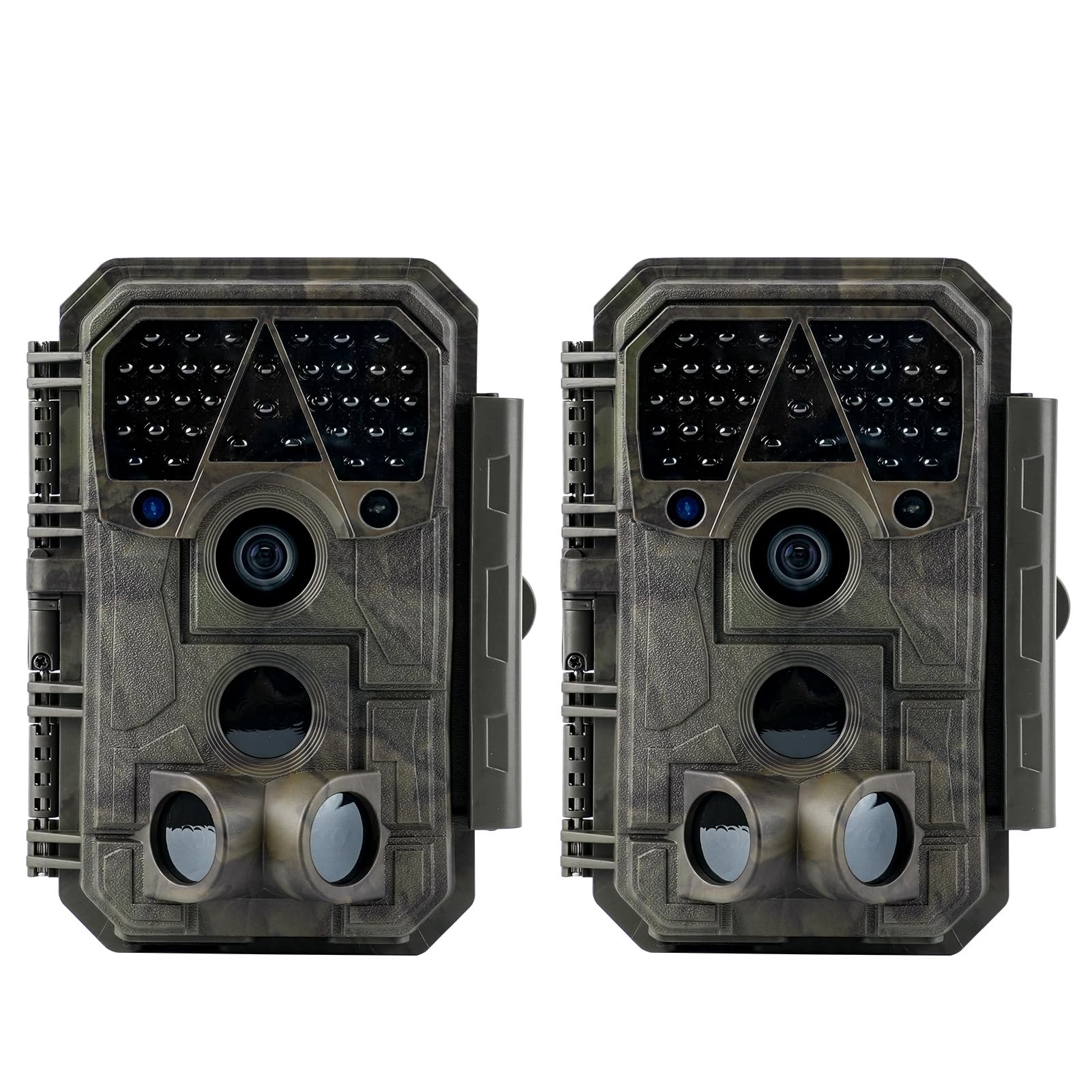
The Meidase P70 2-Pack punches well above its price tier by combining a 0.1-second trigger speed with no-glow 940nm infrared LEDs that reach 100 feet. That trigger latency is among the fastest in its class — and it is achieved through two side sensors that catch movement entering the central zone from the periphery, a detail most budget cameras skip. The 64MP stills and 1296p HD video with H.264 compression mean you do not have to sacrifice file quality for manageable download times.
Real-world reports confirm the P70 survives Florida heat, tropical storms, and wilderness camping trips without hiccups. The 2.4-inch color display and intuitive button layout make in-field setup straightforward, though the calendar and time reset after a battery change — a minor annoyance for hunters moving cameras between spots. Several users note that Energizer Lithium batteries are essential for reliable performance, as standard rechargeable cells struggle with the camera’s power draw, especially in video mode.
For the price of a two-pack, you are getting a 100-foot detection radius, motion-activated video with sound, and a 1-year warranty. The optional Meidase SP350 solar panel adds nearly unlimited deployment for high-activity areas. If you can buy a third separately, this becomes a near-perfect foundation for a 3-pack scouting arsenal that does not rely on cellular subscriptions.
Why it’s great
- No-glow night vision avoids spooking deer
- Side sensors enable 0.1s trigger from any approach angle
- H.264 encoding keeps file sizes small without quality loss
Good to know
- No built-in WiFi or cellular — SD card retrieval required
- Clock resets after each battery swap
- Lithium batteries recommended for consistent cold-weather performance
2. Moultrie Edge 3 Cellular Trail Camera
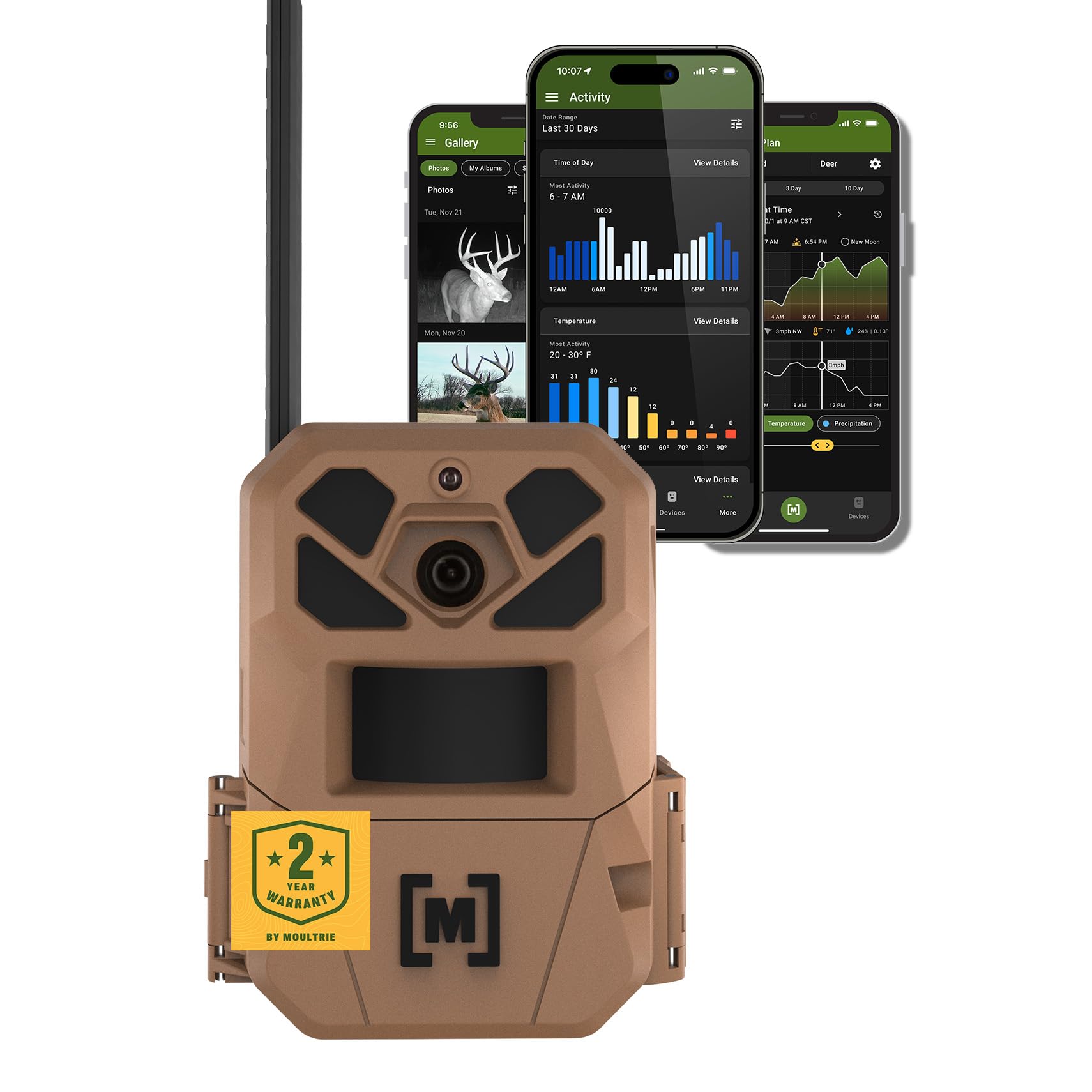
The Moultrie Edge 3 is a cellular trail camera designed for hunters who want real-time intel without hiking to every camera location. Its AI buck detection filters out blank triggers and doe-only events, sending only mature buck photos to your phone. The multi-carrier auto-connect scans four major U.S. networks and picks the strongest signal at your exact location — no SIM swapping, no dead-zone guesswork. With 40MP photos and 1080p HD video recorded by a low-glow IR flash, the image quality holds up at night without spooking deer.
Battery life is a mixed story: the Edge 3 is efficient during low-activity periods, but heavy uploads from frequent cellular transmission drain power faster than non-cellular units. Several reviewers recommend pairing it with the compatible Edge Series lithium battery pack or solar panel for extended deployments. The onboard Bluetooth-powered Live Aim feature lets you preview the camera view from your phone before committing to a tree, saving time and avoiding misaligned shots.
The built-in GPS automatically logs each camera’s location in the Moultrie app, so you never lose track of which unit is covering which trail. Flexible data plans start at a reasonable monthly fee with no long-term contract, allowing seasonal activation. For landowners monitoring multiple properties or hunters covering a large lease, the Edge 3 transforms a 3-pack into a full-time scouting network that delivers actionable intel to your pocket.
Why it’s great
- AI eliminates false alerts for mature bucks
- Auto-connects to strongest carrier without manual setup
- Live Aim preview ensures perfect camera placement
Good to know
- Cellular plan required (starting at /month)
- Battery life shorter than non-cellular models with heavy uploads
- Solar or lithium battery pack recommended for remote sites
3. Tactacam Reveal X 3.0 Cellular Trail Camera
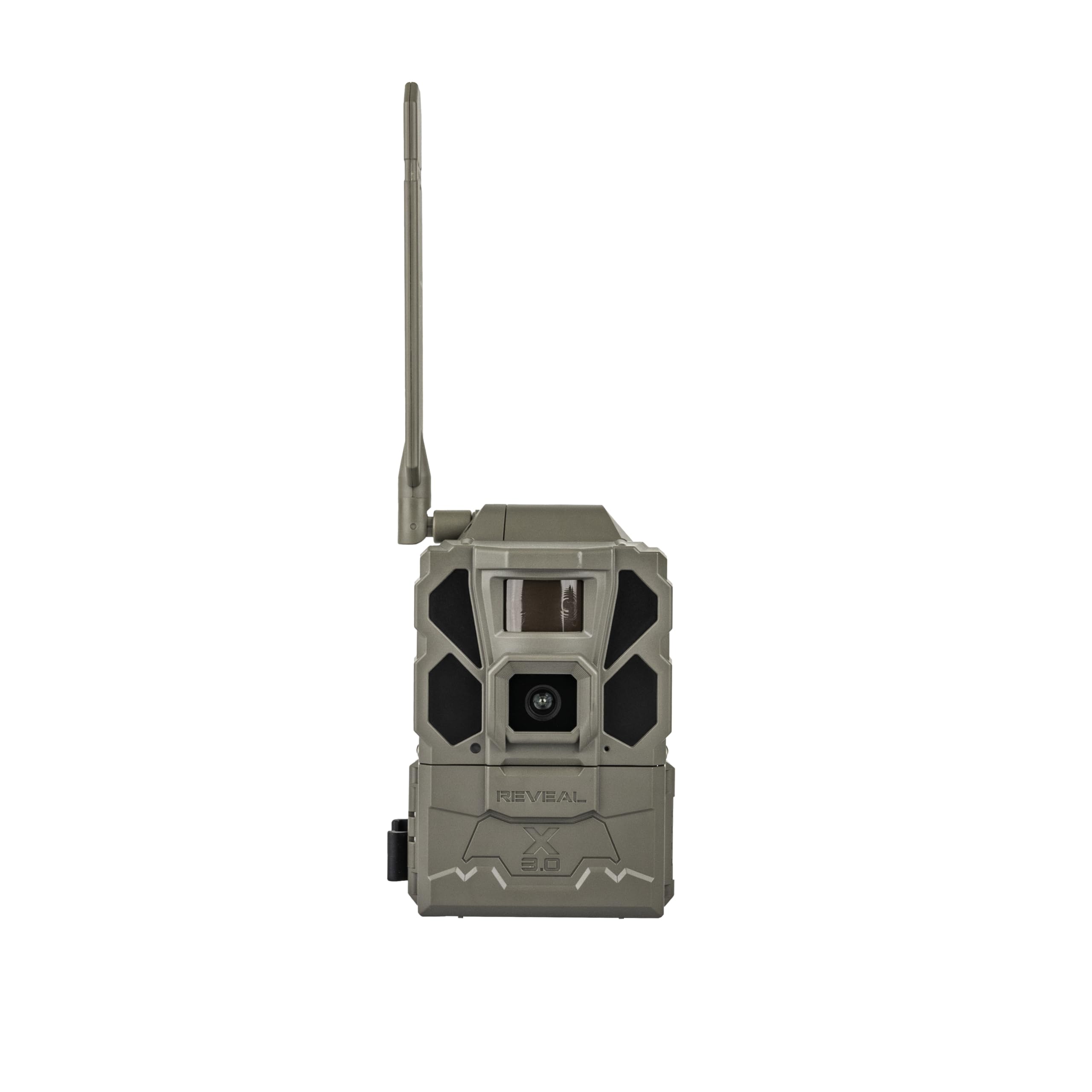
The Tactacam Reveal X 3.0 has earned its reputation as the battery life king of the cellular trail camera segment. Independent testing puts its runtime at over six months on a set of lithium AA cells, a figure that doubles or triples when paired with the Tactacam Lithium Cartridge or folding solar panel. That translates to one trip to the woods per hunting season instead of monthly battery swaps. The built-in storage eliminates the need for an SD card — photos go straight to your phone without formatting issues or card failures.
Image capture reaches 4K still resolution and 1080p video, with a sub-half-second trigger and a 3-shot burst mode that fires three consecutive frames per event. The multi-carrier LTE SIM (AT&T and Verizon) auto-connects without user intervention, and the QR-code-based setup in the REVEAL app has most hunters receiving photos within ten minutes of opening the box. The 60-degree field of view is narrower than some competitors — a trade-off for the battery efficiency — so placement strategy matters more for covering wide trails.
Rural landowners and property managers also rely on the Reveal X 3.0 as a no-WiFi security monitor for gates, equipment, and remote acreage. The GPS location tracking in the app keeps each camera pinned on your digital map. If your priority is minimizing site visits and maximizing uptime across a 3-pack deployment, the Tactacam Reveal X 3.0 is the clear leader in this category.
Why it’s great
- Exceptional battery life reduces maintenance visits
- Built-in storage — no SD card needed
- Fast multi-carrier auto-connect with simple QR setup
Good to know
- 60° FOV is narrower than many non-cellular models
- Cellular subscription required after initial trial
- 3-shot burst can fill internal storage quickly in high-traffic areas
4. MUDDY Merge 3-Pack Cellular Trail Cameras
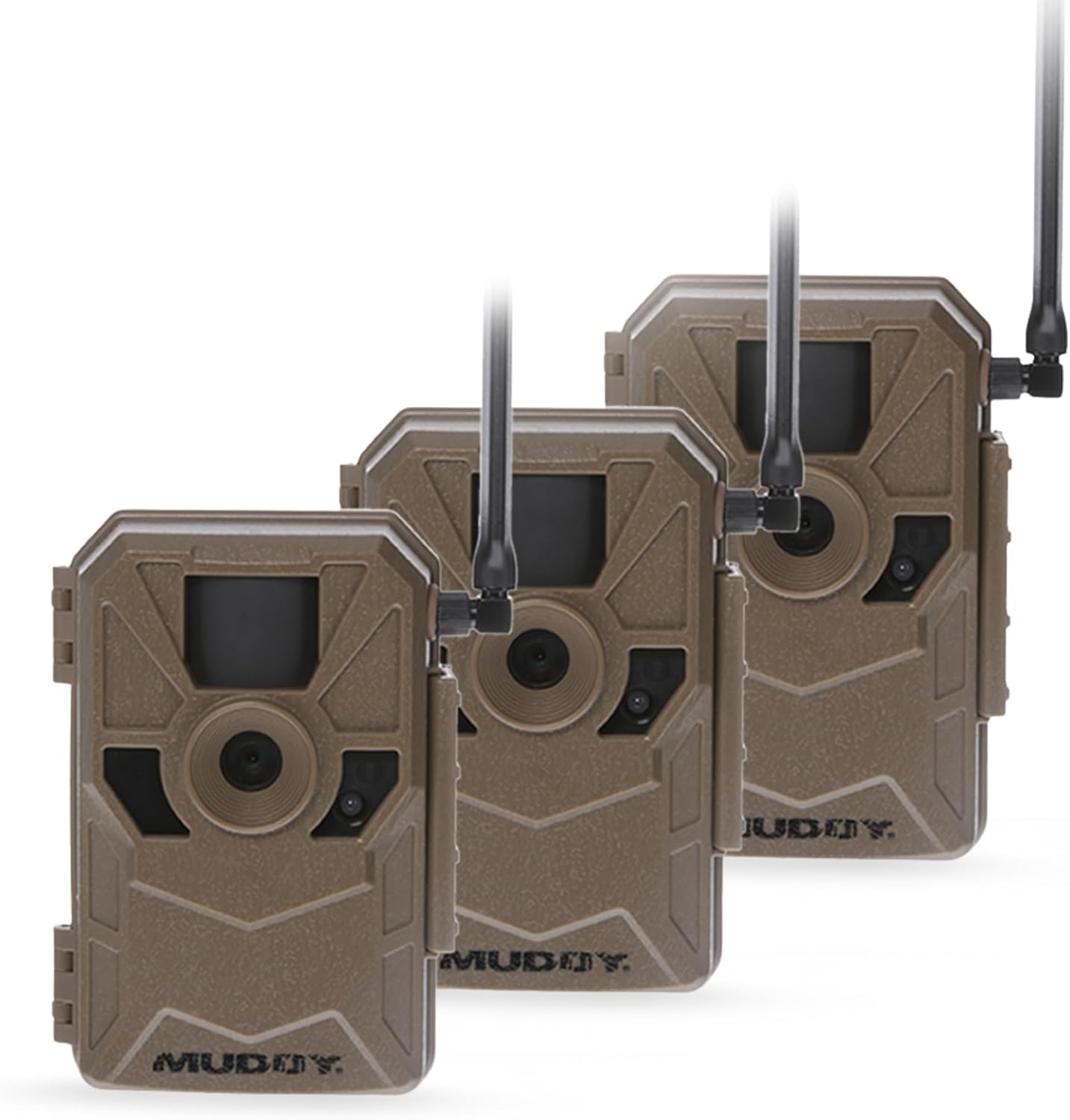
The MUDDY Merge 3-Pack is one of the few offerings that ships as a true three-unit kit designed for cellular operation right out of the box. Each camera features dual SIM support for Verizon and AT&T networks, switching between carriers to maintain a connection in areas where one provider drops out. The 0.4-second trigger speed is competitive for a cellular camera, and the updated Burst Mode captures 1 to 6 images per trigger event, giving you multiple angles of a passing animal.
Color night vision is a standout feature in this price tier — the 50nm Power LEDs illuminate the scene with enough light to capture color images after dark, which can reveal subtle coat patterns and antler details that monochrome IR hides. The COMMAND app allows remote tagging of animals (buck, doe, hog, turkey, human) directly in the image library, and the On Demand feature lets you trigger a real-time photo or video before walking into a stand. Setup is handled via QR code through the Command Pro app.
Buyers should note that SD cards are required but not included in the package — each camera needs a card for storage. Some early units experienced connectivity failures out of the box, though MUDDY’s customer support has been responsive with replacements. For a hunter who wants a coordinated 3-camera cellular network with color night vision and dual-carrier redundancy, the MUDDY Merge 3-Pack delivers a complete solution in one shipment.
Why it’s great
- True 3-pack cellular kit with no single-unit scavenging needed
- Color night vision improves animal identification
- Dual SIM auto-selects best carrier signal
Good to know
- SD cards required and not included
- Some reports of connectivity issues requiring replacement
- Cellular data plan required for remote image transfer
5. Stealth Cam Browtine 14MP Trail Camera Bundle (3-Pack)
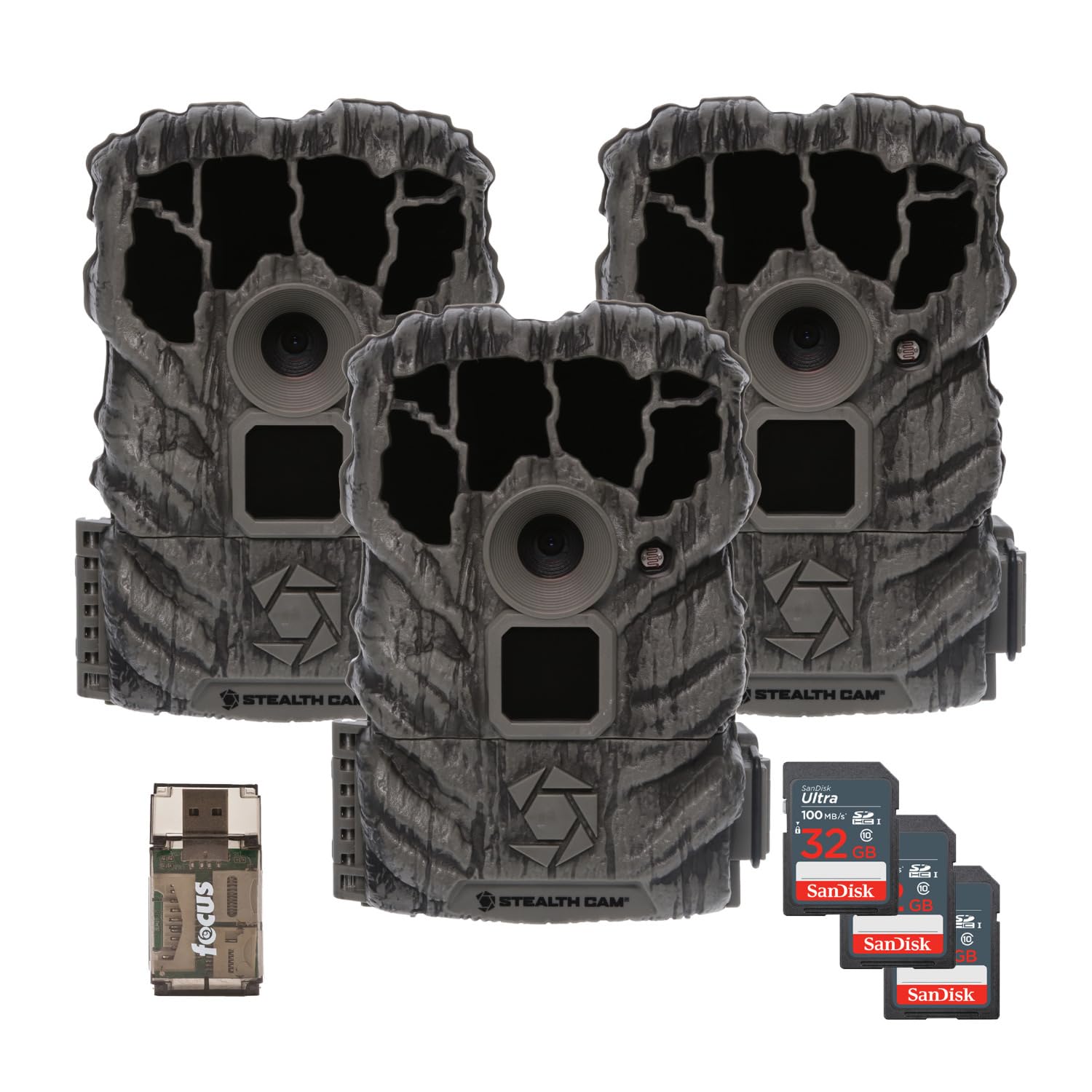
The Stealth Cam Browtine bundle is built for the hunter who wants to open a single box and have three working cameras with memory cards ready to deploy. The kit includes three Browtine 14MP cameras, three 32GB Ultra SDHC UHS-I cards, and a high-speed USB card reader — everything except the AA batteries. The 14MP effective resolution is modest by modern standards, but the burst rapid-fire mode captures multiple exposures per trigger, increasing the odds of a usable angle on a fast-moving buck.
The 18 IR LED array provides adequate nighttime illumination for trails and food plots at typical deployment distances. Quick Set (QSET) options allow one-button configuration of common settings, so you can move through the setup of all three cameras in under ten minutes. Several users report that the Browtine holds up well across multiple seasons without unexpected shutdowns, a reliability edge over some finicky higher-priced models. The included card reader is a thoughtful addition for hunters who prefer to offload images to a laptop in camp.
The trade-off for the low entry cost is the lack of WiFi or cellular connectivity — every photo requires a physical SD card retrieval. The 14MP sensor is adequate for identifying deer at moderate distances but falls short of the detail needed for reading ear tags or subtle antler characteristics at night. For a budget-conscious scout setting up cameras on a small property or hunting club, the Browtine bundle removes the friction of buying accessories separately and delivers dependable day-to-night performance.
Why it’s great
- Complete bundle includes cameras, SD cards, and card reader
- Burst mode captures multiple frames per trigger event
- One-button Quick Set simplifies multi-camera deployment
Good to know
- 14MP resolution is lower than most competitors
- Requires physical SD card retrieval (no wireless or cellular)
- Night image sharpness is acceptable but not class-leading
6. WOSODA 3-Pack Trail Cameras with 32GB SD Cards
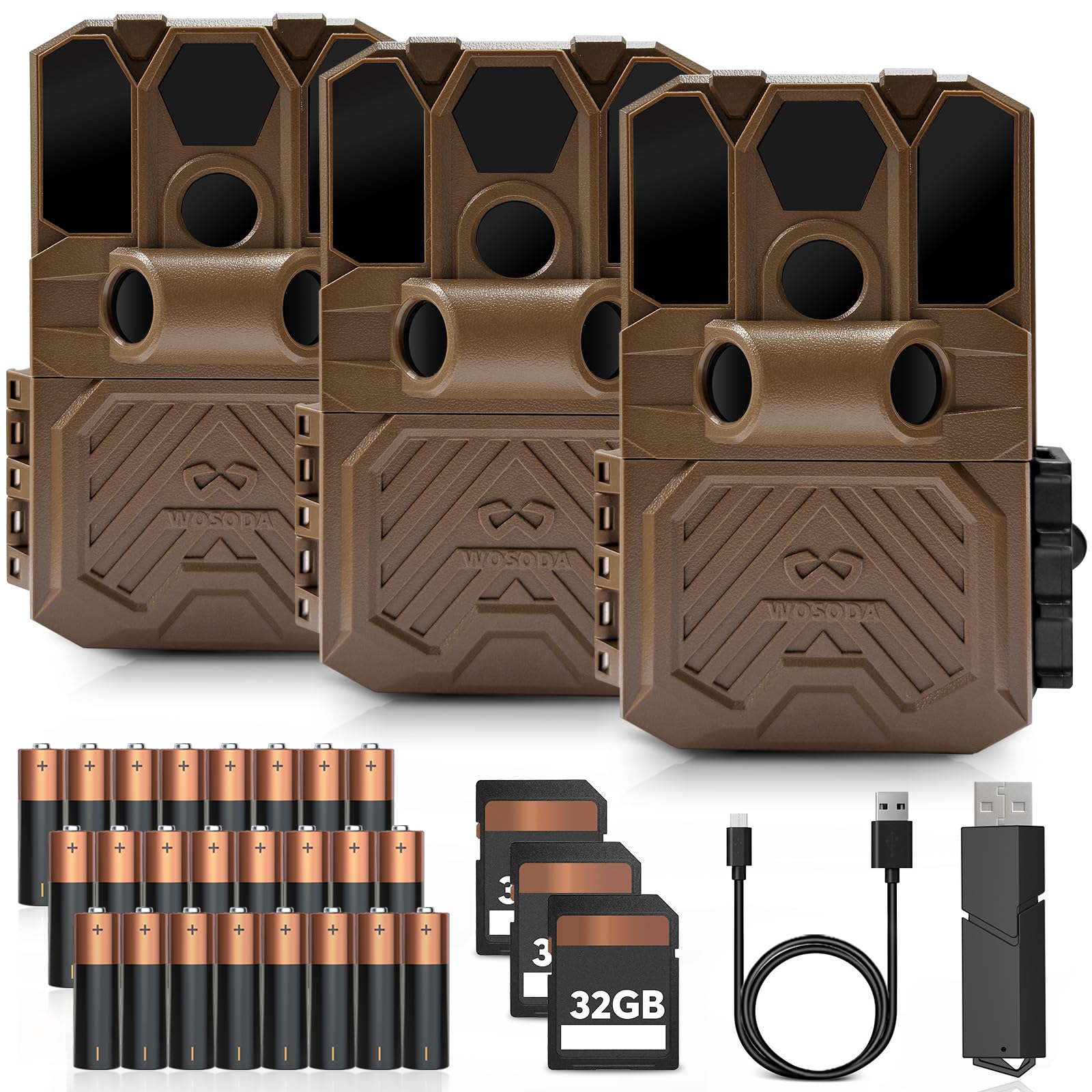
The WOSODA W300 3-Pack targets hunters who prioritize field of view and video resolution above all else. With a 120-degree detection angle — one of the widest in this roundup — and a 0.2-second trigger speed, each camera covers an expansive zone without gaps at the edges. The 2K HD video (2560×1440) delivers noticeably smoother and more detailed footage than standard 1080p, especially for slow-motion review of deer behavior at scrapes and rub lines.
Each camera in the pack ships with a 32GB SD card, a card reader, and four AA batteries, so you can open the box and start mounting within minutes. The IP66 waterproof rating ensures the cameras survive heavy rain and dust without leaking, and the built-in PIR motion sensor is tuned to reduce false triggers from swaying grass or temperature shifts — a common pain point with cheaper scouting cameras. The 40MP adjustable still resolution (8/16/32/40MP) gives you flexibility to trade file size for detail depending on the location.
The 2-inch color LCD display gives you on-device preview and password protection for security. The WOSODA operates strictly on local SD card storage — there is no WiFi or cellular radio, which means zero subscription fees but requires physical retrieval of footage. For hunters scouting private land where cellular coverage is irrelevant and wide-angle 2K video provides the tactical edge, the WOSODA 3-Pack delivers premium image quality without monthly costs.
Why it’s great
- 120° detection angle covers wide trails without overlap
- 2K video captures more detail than standard HD
- Includes SD cards, card reader, and batteries — deploy immediately
Good to know
- No wireless connectivity — SD card retrieval required
- High-resolution video fills storage faster than 1080p
- Password protection adds a layer of security if cameras are stolen
7. Folgtek 64MP 1296P 3-Pack Trail Camera

The Folgtek 64MP 3-Pack delivers a 64-megapixel still resolution and 1296p video encoding that rivals many single-unit premium cameras. The 0.1-second trigger speed is the equal of the Meidase P70 and, paired with a 120-degree wide-angle lens and 90-foot detection range, makes this one of the most responsive non-cellular packs available. The 36-piece 940nm no-glow LED array fires 90 feet at full darkness with zero visible signature — critical for high-pressure public-land setups.
The IP66 waterproof housing has held up through major rain events, and the adjustable mounting straps give you flexibility on trees of varying diameters. The camera supports SD cards up to 512GB, which is useful for the high-megapixel stills that can fill a 32GB card in weeks of heavy activity. Some users note that the instruction manual is sparse and that enabled video mode without loop recording can fill a card and stop captures — the fix is to enable loop recording in the menu, a step that should be done at setup.
One common early-adopter issue involved the micro SD card slot design; the Folgtek uses a full-size SD slot, which avoids the fragile micro-SD adapters that fail in cold weather. Some units have shown internal moisture on the display lens after extreme rain, though the camera continued recording. For the hunter who wants the highest possible still resolution in a 3-pack without cellular costs, the Folgtek provides exceptional pixel density and a fast trigger that captures split-second trail crossings.
Why it’s great
- 64MP stills deliver industry-leading detail for identification
- 0.1s trigger and 90ft detection cover fast-moving game
- Full-size SD card slot avoids fragile adapter failures
Good to know
- No Bluetooth or WiFi for remote viewing
- Video mode without loop recording can fill card silently
- Some units report minor internal moisture on the display lens
FAQ
What trigger speed do I need for a 3 pack trail camera?
Should I choose no-glow or low-glow infrared for my trail cameras?
How many batteries do 3 pack trail cameras typically need?
Can I mix cellular and non-cellular cameras in the same 3 pack deployment?
Final Thoughts: The Verdict
For most hunters and landowners, the best 3 pack trail cameras winner is the Meidase P70 2-Pack (add a third unit separately) because it combines a blazing 0.1-second trigger, no-glow 100-foot night vision, and the reliability of local SD card storage at a price that leaves room for a third camera in the budget. If you want real-time cellular alerts and AI buck detection to your smartphone, grab the Moultrie Edge 3 for its multi-carrier auto-connect and Live Aim placement tool. And for pure image quality in a 3-pack with 2K video and 120-degree coverage, nothing beats the WOSODA W300 3-Pack for immersive slow-motion scouting without monthly fees.