
A 3-season tent needs to balance three demands that often pull against each other: staying dry in a surprise downpour, packing light enough for a multi-mile hike, and still offering enough headroom to change clothes without feeling claustrophobic. Too many options lean hard on one of those at the expense of the others, leaving you with either a waterproof brick or a drafty coffin.
I’m Min — the co-founder and writer behind Gadgets Feed. I’ve spent long hours cross-referencing hydrostatic head ratings, pole gauges, and packed weights across dozens of models to find the tents that actually deliver on their claim without forcing you to compromise on livable space or trail weight.
This guide separates the legit shelters from the marketing hype, covering freestanding domes, trekking-pole trekkers, and tunnel designs to help you pick the right best 3 season tent for your trips this spring, summer, and fall.
How To Choose The Best 3 Season Tent
The right 3-season tent is a direct answer to the conditions you’ll actually face: spring drizzle, summer bugs, and the occasional autumn wind gust. You do not need a four-season bomb shelter for a ridge-line hike in July. Focus on the metrics that separate a good night’s sleep from a miserable, damp shuffle.
Weight vs. Livable Space
A sub-4-pound 2-person tent is heaven for your back but can feel like a coffin if the floor is under 30 square feet and the peak height barely clears your shoulders. Measure your pad width and add 6 inches for wall slope. A true 2-person tent should fit two 25-inch wide pads side by side without forcing your shoulders into the mesh.
Waterproofing and Breathability
Look for a fly with a hydrostatic head of at least 1500mm for reliable rain protection; 3000mm is better for sustained downpours. A bathtub floor with taped seams prevents ground moisture from wicking up. Double-wall designs with mesh inner walls let condensation escape while a solid fly keeps the wet out — critical for humid summer nights.
Setup Speed and Pole Design
Freestanding domes with color-coded clips and pole hubs go up in under five minutes, even in the dark. Tunnel tents pitch faster once you learn the sequence but require perfect staking for shape and tension. Pre-attached guylines and shark-mouth stuff sacks are small details that save major frustration at the end of a 12-mile day.
Quick Comparison
On smaller screens, swipe sideways to see the full table.
| Model | Category | Best For | Key Spec | Amazon |
|---|---|---|---|---|
| Big Agnes Copper Spur UL | Premium Freestanding | Ultralight thru-hikers | 3.8 lbs trail weight, 43″ peak height | Amazon |
| Gale Lite 2 Tunnel | Ultralight Tunnel | Alpine and bikepacking | 2.89 lbs, 2000mm silicone-coated fly | Amazon |
| The North Face Stormbreak 2 | Premium Dome | Car campers and weekenders | 5.9 lbs total, 30.56 sq ft floor | Amazon |
| OneTigris COSMITTO 2 | Mid-Range Freestanding | Budget-conscious backpackers | 29 sq ft, 7001 aluminum poles | Amazon |
| LANSHAN Ultralight 2P | Trekking-Pole Shelter | Gram-counting solo trekkers | 2.6 lbs, 6000mm bathtub floor | Amazon |
| Kelty Grand Mesa 2P | Mid Freestanding | Thru-hikers wanting simplicity | 4 lbs 7 oz packed, 44″ peak height | Amazon |
| Kelty Discovery Trail 2P | Entry-Level Backpacking | First-time backpackers | 4 lb 5 oz min, 33 sq ft floor | Amazon |
| Coleman Skydome 4P | Car Camping Dome | Family base camp trips | 6 ft center height, 80 sq ft floor | Amazon |
| Naturehike Mongar 2P | Budget Freestanding | Budget-friendly entry to backpacking | 5.3 lbs, 3000mm fly/floor waterproofing | Amazon |
In‑Depth Reviews
1. Big Agnes Copper Spur UL
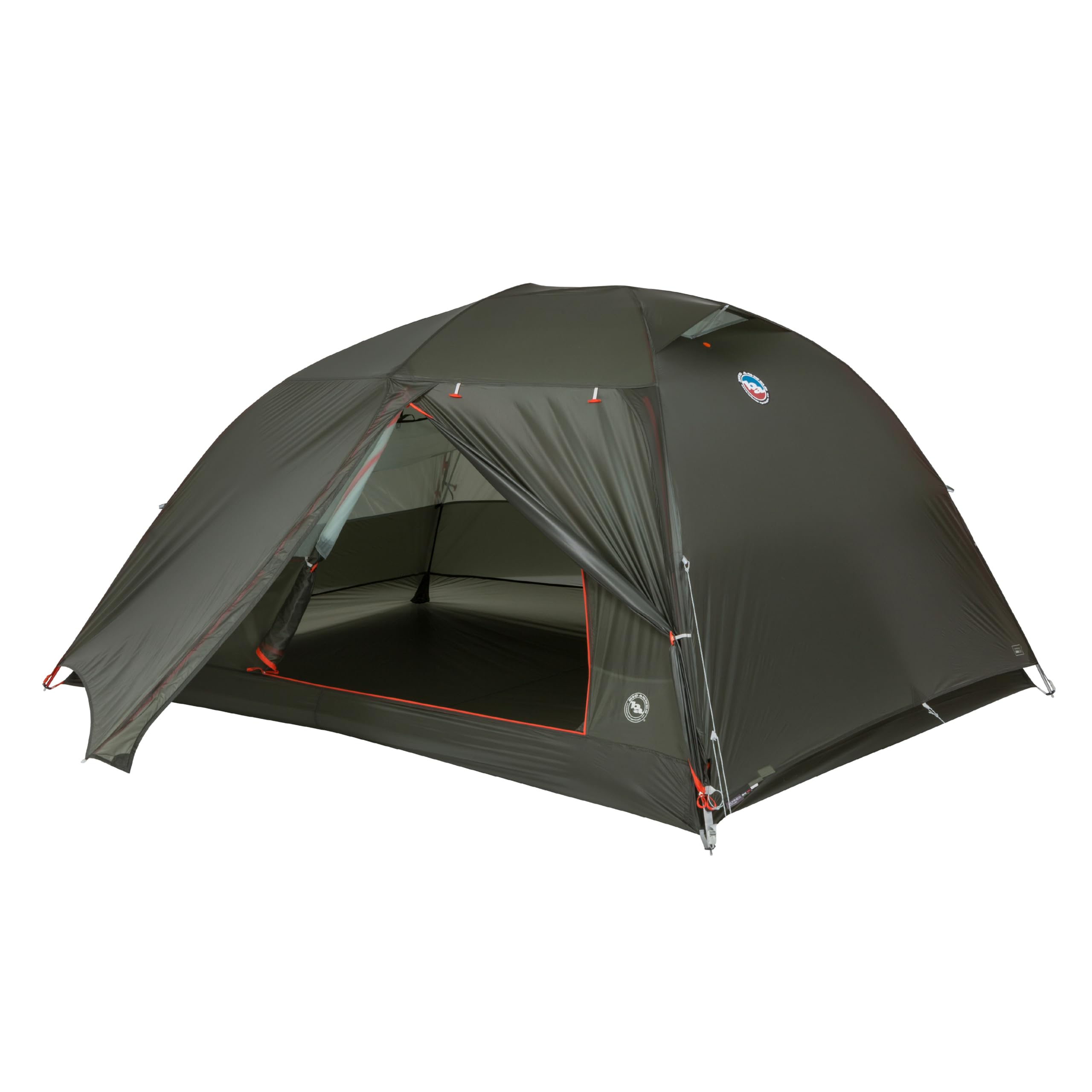
The Copper Spur UL is the benchmark that other lightweight tents try to match. At 3.8 pounds trail weight with a 43-inch peak height and 90 inches of floor length, it offers real living space for two adults without the bulk of heavier cabin-style tents. The DAC Green anodized poles shave ounces without sacrificing rigidity, and the TipLok buckles combine pole capture, fly attachment, and stake tensioning into one intuitive motion.
HyperBead waterproofing on the 15D nylon fly and floor provides a 1500mm rating without intentionally added PFAS, which means you stay dry in sustained rain without the environmental trade-off. The awning-style doors create protected vestibules that keep packs and boots accessible while freeing up the interior floor. Mesh pockets and a Quick Stash door keeper keep small items organized and entry clear.
The trade-off for ultralight construction is durability — at least one user reported a hole through the footprint and floor on gravel. Big Agnes recommends the separate footprint (), which feels less like an option and more like a mandatory shield. For hikers who treat their gear carefully and prioritize pack weight above all else, this is the tent to beat.
Why it’s great
- Exceptional weight-to-space ratio for a freestanding tent
- Tool-free pole assembly with TipLok buckles for fast setup
- PFAS-free HyperBead waterproofing on fly and floor
Good to know
- Floor durability is low without the separate footprint
- Cramped for two large adults with wide sleeping pads
2. Gale Lite 2 Tunnel Tent
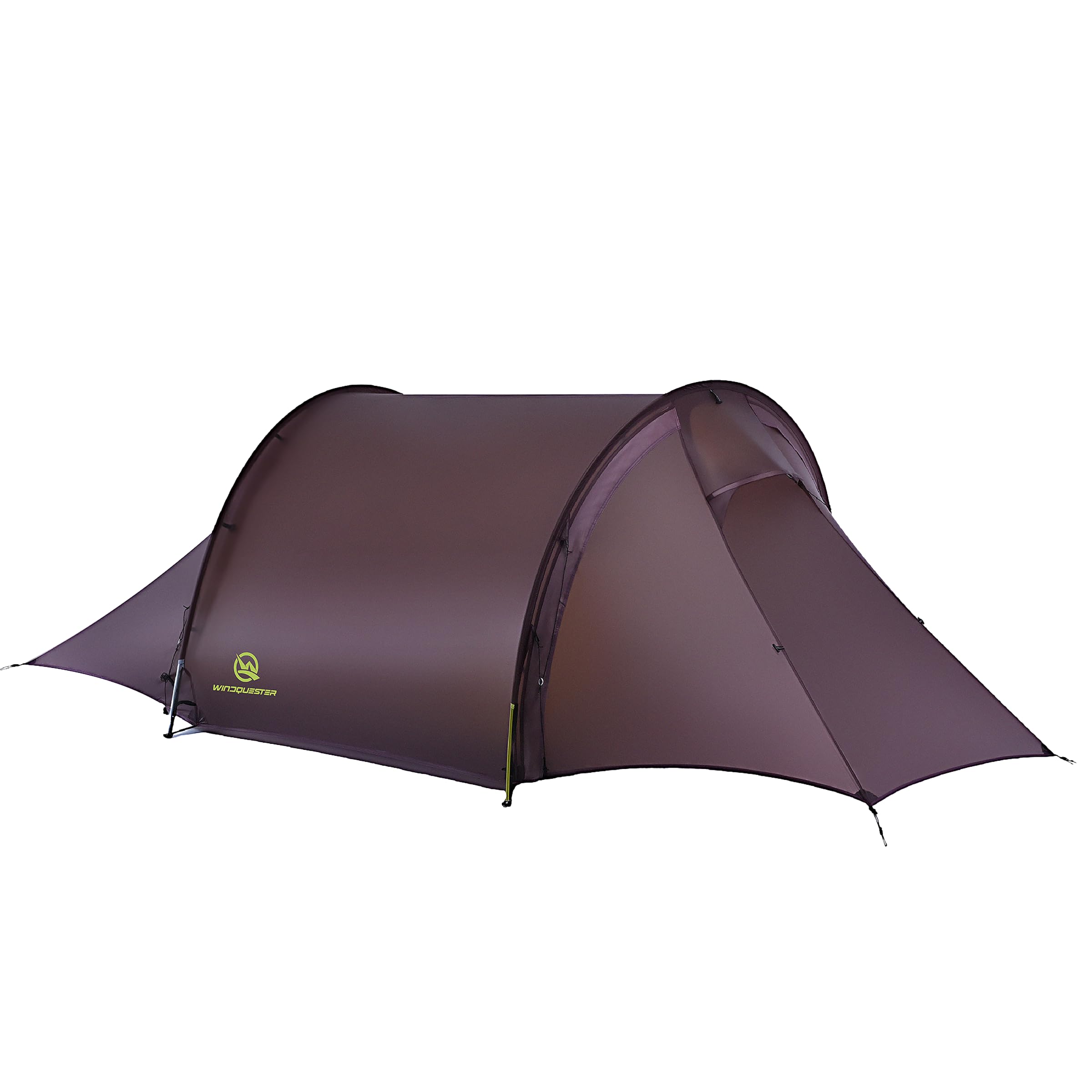
The Gale Lite 2 breaks the ultralight mold by using a tunnel architecture instead of a conventional dome. Weighing just 2.89 pounds with a packed size of 16 by 5 inches, it slips into the bottom of a backpack without stealing volume from your sleep system or food bag. The 10D double-silicone nylon fly carries a 2000mm hydrostatic head rating, which matches much heavier 4-season shelters in sheer waterproofing capability.
Two full-height doors and a large front vestibule mean both occupants can store gear outside the sleeping area and still have clear egress. The aerodynamic tunnel shape sheds wind naturally — a major advantage for exposed ridge-line camping where dome tents catch gusts like a sail. Dyneema guylines and YKK waterproof zippers feel premium in hand, and the back vent plus full-mesh inner wall keep condensation under control.
Setup requires learning the tunnel sequence — you must stake the rear and front correctly before inserting poles, or the entire structure collapses. It is not a tent you can pitch on a rock slab or loose sand without auxiliary anchor points. For hikers who master the pitch, the Gale Lite 2 delivers a weight-to-durability ratio that few freestanding tents can touch.
Why it’s great
- Elite ultralight weight under 3 pounds
- 2000mm double-silicone fly outperforms most dome tents in rain
- Aerodynamic tunnel design handles high-wind sites
Good to know
- Requires perfect staking for shape and stability
- Does not pitch in shallow soil or on hard rock without heavy modification
3. The North Face Stormbreak 2

The Stormbreak 2 prioritizes set-and-forget durability over ultralight obsessiveness. Its 75D polyester fly and floor are substantially thicker than the 10D and 15D fabrics found on weight-weenie tents, so it shrugs off gravel, sticks, and the occasional drop without needing a footprint. The fully seam-taped canopy and non-PFC DWR finish deliver reliable waterproofing that held up in heavy rain during its first night out, with a bathtub floor that kept condensation from wicking inward.
Two large doors with mesh stash pockets make entry and exit smooth, and the twin-zip vestibules offer enough room for two packs and a pair of boots. High-low ventilation openings let you open vents near the ground and at the peak to create cross-flow that dries out interior moisture without letting rain blow in. Setup is genuinely tool-free — the clips and pole sleeves are straightforward enough that you can pitch it in the dark after a late arrival.
The heft — nearly 6 pounds total — makes it a poor choice for long-distance thru-hikes where every gram counts. It is built for the weekend warrior who drives to a trailhead, hikes a few miles, and wants a bombproof shelter that won’t fail in a surprise storm. For that use case, the Stormbreak 2 is hard to fault.
Why it’s great
- Thick 75D fabric resists punctures and abrasion far better than ultralight alternatives
- High-low ventilation system manages condensation effectively
- Two large doors with gear vestibules improve livability
Good to know
- Trail weight of nearly 6 pounds is heavy for backpacking
- Footprint is sold separately
4. OneTigris COSMITTO 2

The COSMITTO 2 is a freestanding dome that punches above its price point by using 7001 aluminum alloy poles and a 20D plaid ripstop polyester fly. Its 360-degree mesh inner provides unobstructed views and airflow while the rainfly with vent standoffs keeps water out even during steady rain. The 75D nylon bathtub floor resists punctures better than the gossamer-thin floors of premium ultralight shelters.
Setup takes under five minutes thanks to the symmetrical pole structure and color-coded clips. The fly attaches via Line Loc 3 tensioners that are quick to adjust, and the vestibules are large enough to store two backpacks out of the weather. Early buyer feedback noted the symmetrical design makes pairing with the brand’s Stella footprint seamless, and the interior feels genuinely spacious for two adults as long as neither is a restless sleeper.
The included stakes are serviceable but not exceptional — upgrading to titanium shepherd hooks is cheap and saves weight. Some users reported the zippers snagging on the rainfly when closing, so care is needed during setup. For the money, you get a durable, well-ventilated shelter that competes directly with tents costing significantly more.
Why it’s great
- 7001 aluminum poles offer strength without excess weight
- Full-mesh inner with vented fly prevents condensation buildup
- Snag-free setup once you learn the zipper path
Good to know
- Zippers can snag on the rainfly if not aligned properly
- Stakes are adequate but not durable for hard-packed ground
5. LANSHAN Ultralight 2P
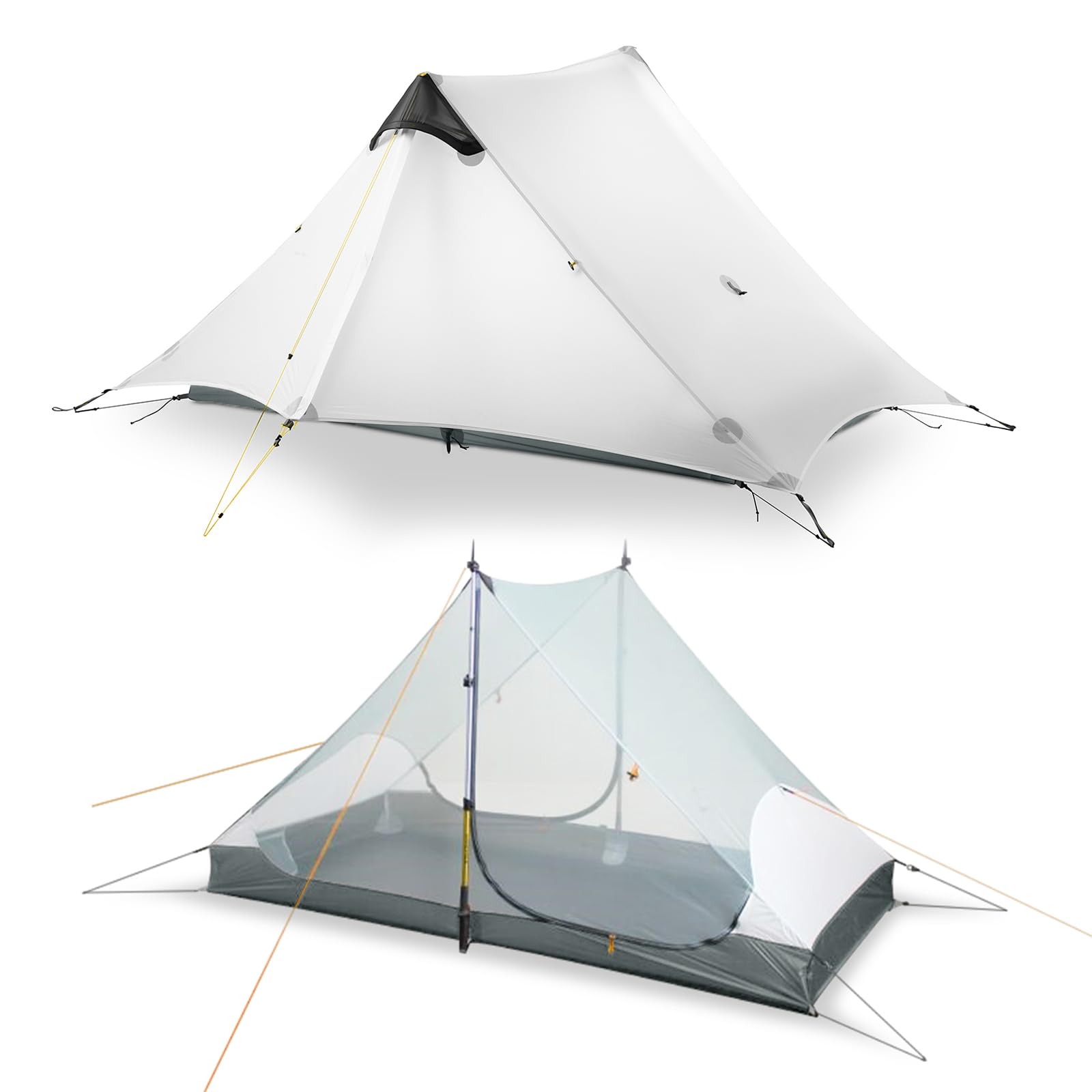
The LANSHAN 2P is a trekking-pole shelter that achieves a 2.6-pound trail weight by eliminating the pole set entirely — you bring your own hiking poles for the structure. The 15D nylon rainfly carries a 5000mm hydrostatic head rating, and the bathtub floor bumps that to 6000mm, making it one of the most waterproof shelters at any weight. The dual-wall design with a full mesh inner lets you pitch with the fly only, as a mesh sanctuary, or fully enclosed depending on conditions.
Packed size is remarkably small at 12.6 by 5.9 inches, which frees up serious pack volume for food and extra layers. The integrated mesh pockets and a gear hook let you hang a lantern or fan, while the two ventilation windows (on the 2-person version) help dump warm, moist air before condensation forms. Setup takes 5 to 10 minutes for first-timers but speeds up quickly with practice.
The catch is that you must seam-seal the tie-out points and fly edges before use — several owners reported leaks at factory seams during thunderstorms. The fly edges are short enough that water can pool and splash inward if not staked aggressively. This is a tent for gram-counters willing to do a DIY seam-sealing session at the kitchen table before hitting the trail.
Why it’s great
- Outstanding 5000mm fly and 6000mm floor waterproof ratings
- Ultra-compact packed size for minimalist packing
- Versatile pitch options for different weather and bugs
Good to know
- Requires DIY seam sealing before first use
- Not freestanding — requires proper stake placement
6. Kelty Grand Mesa 2P

The Grand Mesa 2P is a no-nonsense freestanding dome that Kelty has been refining for years. The Quick Corner pole system and color-coded clip attachments make it one of the fastest 2-person tents to pitch — an 11-year-old set it up in under five minutes on the first try. The 68D polyester fly and floor with fully taped seams offer reliable weather protection, and the 44-inch peak height provides enough headroom for most adults to sit up without brushing the mesh.
At 4 pounds 7 ounces packed, it is light enough for moderate-distance backpacking without pushing into ultralight territory. The single-door, single-vestibule design keeps weight down but means both occupants share one entrance and gear storage area. The EZ-Zip vestibule is taped, and the shark-mouth stuff sack makes packing straightforward even when you are tired and cold.
The metal stakes are a welcome upgrade over cheap plastic alternatives, though they are still heavier than aftermarket titanium pegs. The 30-square-foot floor is tight for two large adults but comfortable for one person plus gear or a smaller pair. For the price, the Grand Mesa delivers consistent performance that keeps it a top recommendation for entry-level and intermediate backpackers.
Why it’s great
- Reliable freestanding design with intuitive clip setup
- 44-inch peak height offers genuine sit-up headroom
- Metal stakes included — a step above typical budget tent hardware
Good to know
- Pack size is bulky for ultralight standards
- Footprint is sold separately
7. Kelty Discovery Trail 2P

The Discovery Trail 2P is Kelty’s answer to the entry-level backpacker who wants a lightweight tent without the complexity of trekking-pole shelters. With a minimum trail weight of 4 pounds 5 ounces and a 33-square-foot floor, it offers a genuine two-person interior for smaller pairs or a generous solo-plus-dog layout. The color-coded rainfly clips and pre-attached guylines make setup fast even for first-timers, and the shark-mouth stuff sack swallows the tent without a fight.
The 2-pole cross-over design is simple and sturdy — one user reported the tent survived 50 mph gusts in the desert without collapsing. The 42-inch peak height is adequate for sitting upright but not generous for taller campers moving around inside.
The stock stakes are flimsy — owners universally recommend upgrading to better pegs before the first trip. The mesh is also the weakest link in the build; it has held up for normal use but is not as tear-resistant as the heavier mesh on the Grand Mesa. For beginners testing the backpacking waters, this tent is a forgiving, affordable entry point that won’t punish setup mistakes with a collapsed pole.
Why it’s great
- Impressive 33 sq ft floor for a budget 2-person tent
- Color-coded attachments and pre-attached guylines simplify setup
- Wind-resistant dome structure holds up in exposed campsites
Good to know
- Included stakes are not durable enough for hard or rocky ground
- Mesh is the weakest component and requires careful handling
8. Coleman Skydome 4P
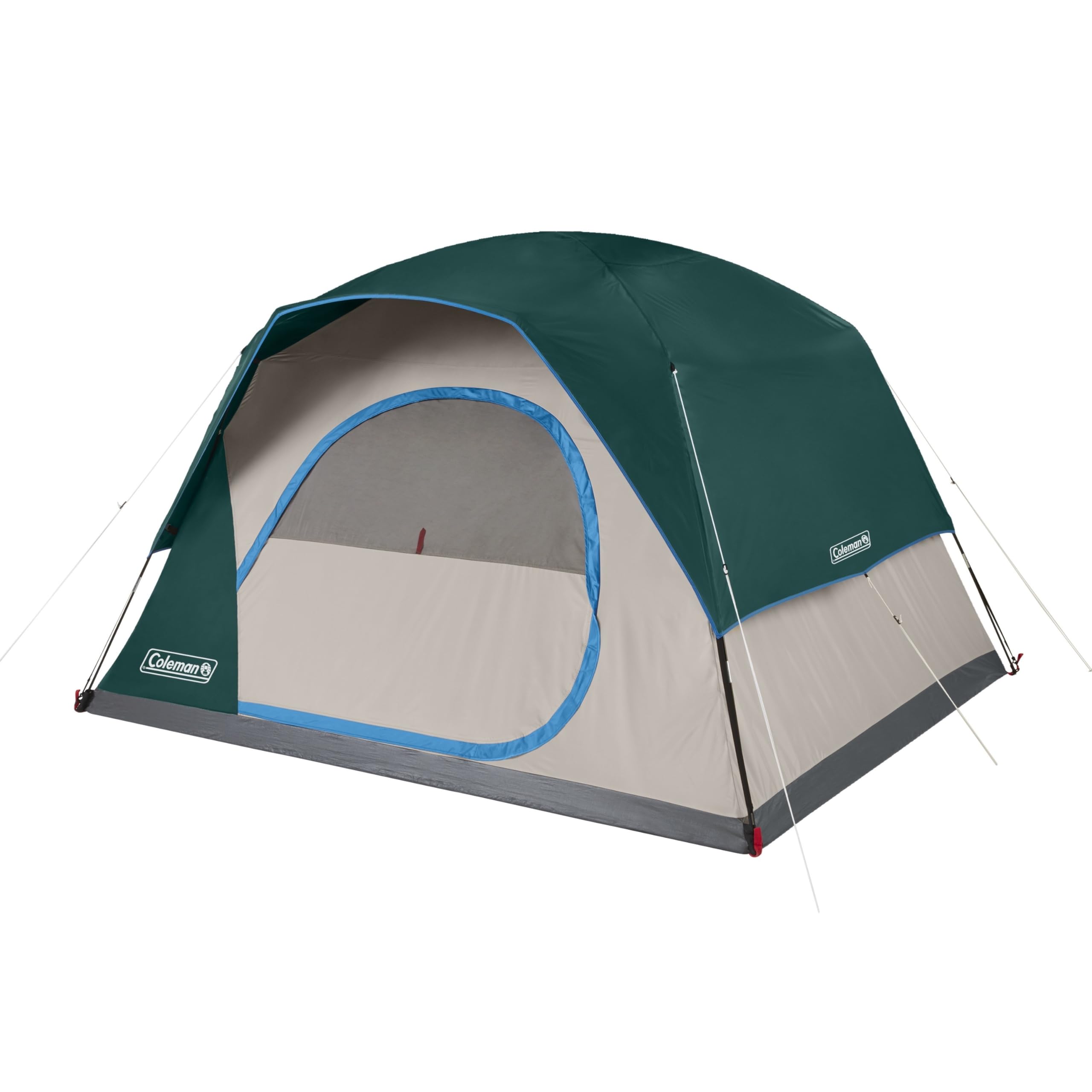
The Skydome 4P is not a backpacking tent — it is a car-camping palace with 80 square feet of floor space and a 6-foot center height that lets most adults stand upright. The nearly vertical walls and pre-attached poles make setup straightforward for two people, and the WeatherTec system with tub-like floor, patented welded corners, and inverted seams keeps water out during persistent Pacific Northwest rain events. One user reported staying completely dry during a heavy PNW downpour with only minor floor moisture that never reached sleeping bags.
The wide door is large enough to slide in a queen-size air mattress without deflating it, and the mesh storage pockets plus gear loft keep small items off the floor. The compact-packed size is small enough for trunk storage but not for a backpack — at 80 square feet, this tent is strictly for vehicle-supported camps. The 5-minute setup claim is realistic for two people after one practice run.
The included stakes are weak and the carry bag tore after three uses for one owner. The instructions are sparse, so watch a setup video before heading out. If your trips involve driving to a site and setting up a home base for the family, the Skydome offers spacious, weather-resistant shelter at a price that leaves room in the budget for camp chairs and a stove.
Why it’s great
- 80 sq ft floor with 6 ft headroom for comfortable family camping
- WeatherTec system keeps water out in sustained rain
- Quick setup with pre-attached poles in under 5 minutes
Good to know
- Not suitable for backpacking due to size and weight
- Stakes and carry bag are low quality and need replacement
9. Naturehike Mongar 2P

The Mongar 2P is a budget-friendly freestanding dome that punches above its weight class with a 3000mm waterproof rating on both the fly and the floor — matching tents that cost twice as much. The Y-frame aluminum pole structure is simple enough that a first-time user can pitch it in under three minutes, and the included footprint (a rare bonus at this level) adds an extra layer of ground protection. The 30-square-foot floor is generous for the weight class at 5.3 pounds total.
Two doors and two vestibules mean each occupant has their own entry and gear storage, a feature usually reserved for mid-range and premium tents. The high-density B3 mesh inner provides good bug protection while maintaining airflow, and users reported no condensation issues even during humid trips. The packed size of 19.7 by 5.9 inches is manageable for backpacking, though not as compact as higher-end models.
The stakes are the weakest point — they snapped on hard-packed soil during at least one trip. The zippers and buckles feel solid for the price, but few loose threads suggest QA could be tighter. For the budget-conscious backpacker who wants a genuine two-door tent with real waterproofing, the Mongar is an exceptional value.
Why it’s great
- 3000mm waterproofing on both fly and floor at an entry-level price
- Two doors and two vestibules for dual-occupant convenience
- Includes footprint — a rare extra at this tier
Good to know
- Stakes are brittle and may snap on hard ground
- Fit and finish show occasional loose threads
FAQ
Can I use a 3-season tent in winter snow?
How do I stop condensation inside my 3-season tent?
Final Thoughts: The Verdict
For most users, the best 3 season tent winner is the Big Agnes Copper Spur UL because it delivers the best balance of low weight, livable space, and waterproofing in a freestanding package. If you want a lighter shelter with superior wind handling for alpine trips, grab the Gale Lite 2 Tunnel Tent. And for car camping where standing headroom and water resistance matter most, nothing beats the Coleman Skydome 4P.