
A 3 ton package unit is the backbone of mobile homes, manufactured houses, and light commercial spaces where space inside is at a premium. Instead of splitting the compressor and air handler between an outdoor pad and an indoor closet, everything lives in one single weatherproof cabinet that sits outside, connecting directly to your ductwork through a small opening in the wall. This all-in-one architecture simplifies installation, reduces refrigerant line complications, and delivers reliable whole-home cooling and heating without sacrificing square footage indoors.
I’m Min — the co-founder and writer behind Gadgets Feed. I’ve spent hundreds of hours researching the technical specifications, real-world performance data, and long-term reliability reports across the current lineup of package units to help you separate marketing claims from genuine engineering quality.
Whether you are replacing an aging unit in a double-wide, outfitting a new workshop, or upgrading a rental property, understanding the difference between SEER2 ratings, scroll compressor durability, and heat pump temperature ranges makes the difference between a system that cools for twenty years and one that fails in five. This guide walks you through every crucial decision point to help you confidently choose the best 3 ton package unit for your specific application.
How To Choose The Best 3 Ton Package Unit
A package unit is a significant investment, and the decision comes down to a few non-negotiable technical factors that affect both upfront cost and long-term operating expense. You need to match the unit type to your climate, verify the ductwork configuration, and understand the warranty structure before you buy.
Packaged Unit vs. Split System vs. Mini-Split
A true packaged unit like the Goodman GPCH or GPH series places the compressor, condenser coil, evaporator coil, and blower all inside one outdoor cabinet. This is very different from a mini-split system, which uses an outdoor condenser connected to one or more indoor wall-mounted air handlers via refrigerant lines. For a mobile home or a building with no indoor mechanical closet, a package unit is the only practical choice because it requires zero indoor equipment. Mini-splits are far more efficient on paper (19 to 25 SEER2), but they demand significant interior wall space and usually necessitate professional installation of multiple heads. A package unit trades peak efficiency for extreme simplicity and easier service access.
Efficiency Ratings — SEER2 and EER2
The federal minimum efficiency for residential package units shifted to 14 SEER as of 2023. However, the new SEER2 metric (which tests against a more realistic static pressure) runs roughly 1 point lower than the old SEER number for the same hardware. A unit rated 13.4 SEER2 like the Goodman GPCH33631 is effectively a 14 SEER unit under the older rating system. For cooling-dominated climates in the South or Southwest, moving from 14 SEER to 16 SEER can cut your annual electricity consumption by roughly 12 to 15 percent. In milder regions, the payback period for higher SEER2 equipment may exceed the unit’s warranty window, making a budget-friendly 14 SEER unit a pragmatic choice.
Heat Pump or Straight Cool? Heating Source Matters
A straight cool package unit (like the Goodman GPCH33631) provides air conditioning only. For heating, you must pair it with an electric heat strip kit or a separate gas furnace, which adds cost and complexity. A heat pump package unit (like the Goodman GPH1436H41) can reverse the refrigeration cycle and pump heat into the home down to about 30°F before supplemental electric heat kicks in. If your winter temperatures rarely drop below freezing, a heat pump package unit can handle your heating needs entirely — no gas line, no chimney, no furnace required. That is a massive convenience factor for mobile homes and off-grid installations.
Quick Comparison
On smaller screens, swipe sideways to see the full table.
| Model | Category | Best For | Key Spec | Amazon |
|---|---|---|---|---|
| Goodman GPH1436H41 | Heat Pump | Year-round climate control | 14 SEER / Scroll Compressor | Amazon |
| Goodman GPCH33631 | Straight Cool | Cooling-only in mild climates | 13.4 SEER2 / Scroll Compressor | Amazon |
| Goodman GPH1442H41 | Heat Pump | Larger homes needing extra capacity | 3.5 Ton / 14 SEER | Amazon |
| Senville 3 Ton Central | Inverter Split | Extreme cold-weather heating | Variable Speed / -22°F Operation | Amazon |
| Cooper & Hunter 36K | Smart Split | WiFi control & whisper-quiet operation | 19.5 SEER2 / Inverter | Amazon |
| ACiQ 36K Essentials | Mini-Split | Large single-zone coverage | 20 SEER2 / 2000 sq ft | Amazon |
| DELLA Vario 36K | Mini-Split | Energy savings & smart features | 19 SEER2 / Alexa Compatible | Amazon |
| Senville Tri Zone 36K | Multi-Zone Split | Three-room zoning from one condenser | 22.5 SEER / 3 Indoor Heads | Amazon |
| Senville Quad Zone 36K | Multi-Zone Split | Four-room coverage, individual control | 22.5 SEER / Quad Heads | Amazon |
| Cooper & Hunter 28K 2-Zone | Multi-Zone Split | Dual-zone with 25ft line sets | 25 SEER2 / Smart App | Amazon |
| Cooper & Hunter 28K 12K+18K | Multi-Zone Split | Asymmetric two-room heating/cooling | 25 SEER2 / 25ft Lines | Amazon |
In‑Depth Reviews
1. Goodman 3 Ton 14 SEER Package Heat Pump GPH1436H41
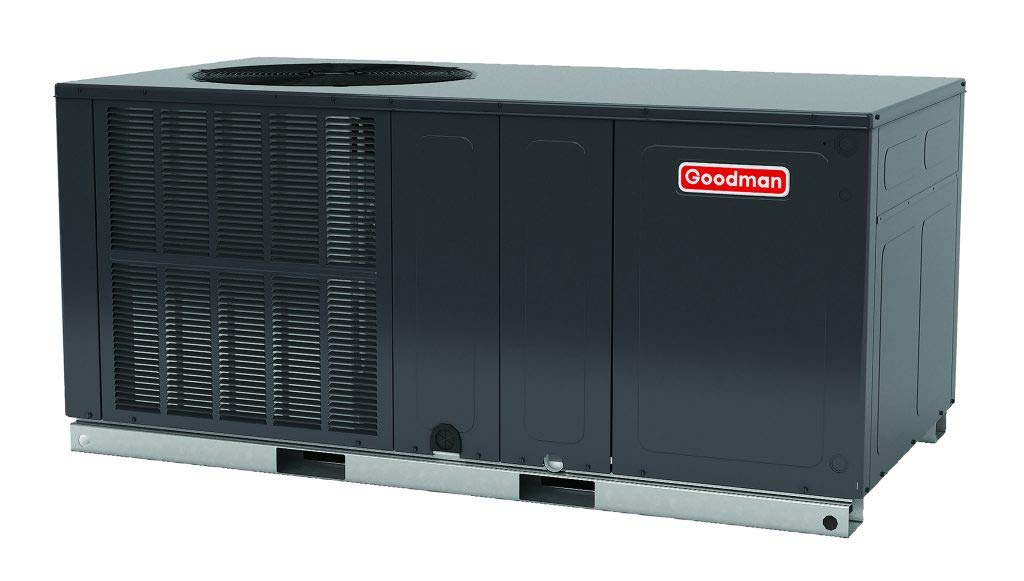
The Goodman GPH1436H41 is the definitive true package unit for anyone looking to drop a complete heating and cooling system onto a roof curb or ground pad without installing any indoor equipment. At 14 SEER and featuring a Copeland scroll compressor, this heat pump can handle both cooling and heating duties down to the mid-30s before the backup electric heat strips engage. The scroll compressor is a major reliability differentiator — it has fewer moving parts than a reciprocating compressor and is far less prone to the refrigerant flood-back issues that can shorten the life of cheaper compressors.
Because it is a packaged design, all the refrigerant is factory-charged and sealed. There is no brazing, no field charging, and no risk of contamination during installation. The unit connects directly to existing ductwork through a single wall penetration, which makes it a very practical option for manufactured homes where indoor space is too tight for an air handler. Users report consistent cooling performance in 880-square-foot to 1,500-square-foot homes, with the unit cycling efficiently without short-cycling.
The downsides are mostly about the lack of modern niceties. This is not an inverter unit, so it operates in full-speed on/off cycles rather than modulating to maintain a steady temperature. The SEER rating is adequate but not remarkable — in a hot climate like Florida or Texas, you will pay more in monthly energy costs than you would with a 16+ SEER mini-split. Delivery damage is also a recurring complaint; the cabinet can arrive dented if the freight carrier is not careful.
Why it’s great
- Proven scroll compressor reliability with decades of field history
- Factory-charged sealed system eliminates field refrigerant work
- Heat pump functionality reduces or eliminates need for electric strip heat
Good to know
- Not an inverter — full-speed cycling, not modulating
- 14 SEER is the entry-level efficiency tier for this category
- Freight delivery occasionally results in cabinet damage
2. Goodman 3.5 Ton 14 SEER Package Heat Pump GPH1442H41

The Goodman GPH1442H41 steps up the capacity to 3.5 tons, making it the right choice when the space to condition exceeds the typical 1,500-square-foot coverage of a 3-ton unit. This is a heavy, industrial-grade piece of equipment weighing 400 pounds, which underscores its all-in-one construction — the compressor, evaporator coil, condenser coil, and blower are all packed inside that single architectural gray cabinet. The R-410A scroll compressor provides robust performance and a long service life under continuous load.
Installation still follows the same straightforward package-unit playbook: set the unit on a roof curb or a concrete pad, seal the duct connection, wire the 230V supply, and connect the thermostat. The factory charge is sufficient for standard line lengths, and there is no need to braze or vacuum the lines as you would with a split system. Customers upgrading from older 2-ton units report a dramatic improvement in cooling speed and overall comfort, especially in homes that were previously undersized for their square footage.
One important warning that comes through in the user data: warranty support does not cover labor for defects. If the unit arrives with a mechanical defect like a wobbly fan, the freight carrier and manufacturer may not reimburse the installation labor. This places a premium on carefully inspecting the unit before rigging it into place. Additionally, the R-410A refrigerant is being phased down under the AIM Act, so future service costs for any leaks will be higher than R-32 alternatives.
Why it’s great
- Higher 3.5-ton capacity for larger manufactured homes or light commercial
- Scroll compressor provides reliable, quiet operation
- Simple drop-in installation on existing curb or pad
Good to know
- Extremely heavy — requires mechanical lifting equipment
- Warranty does not cover labor for manufacturing defects
- R-410A refrigerant is being phased out; future repairs will cost more
3. Goodman 3 Ton 13.4 SEER2 AC Only Packaged Unit GPCH33631
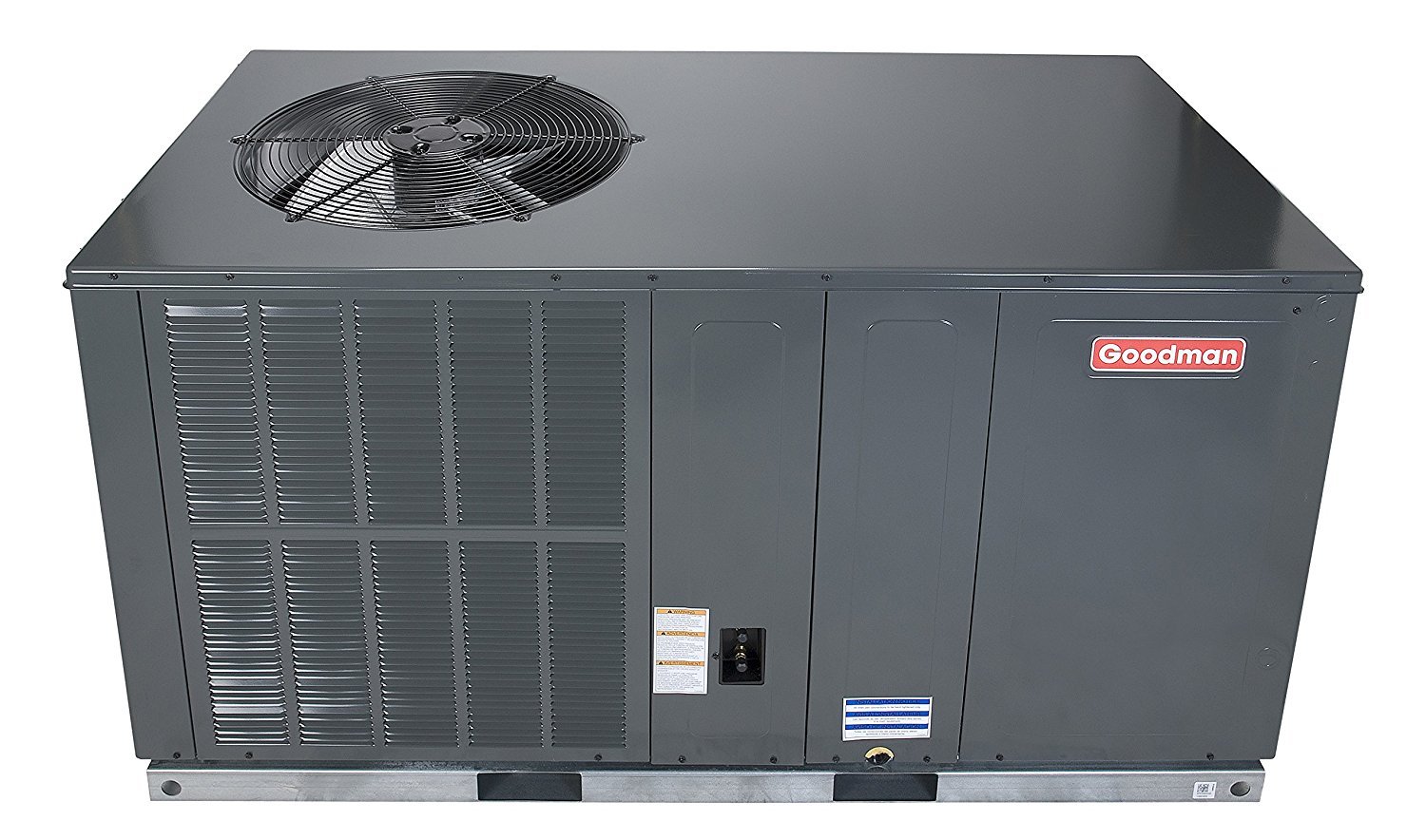
The Goodman GPCH33631 is the cooling-only version of the Goodman package unit lineup. It delivers 3 tons of air conditioning at 13.4 SEER2 (equivalent to roughly 14 SEER under the old standard) with a scroll compressor and a 1,376 CFM airflow rating. If your home already has a separate furnace or you live in a climate where heating demand is low enough that electric strip heat is acceptable, this unit saves the extra cost of a heat pump reversing valve and associated control board.
Installation is the same straightforward process as the heat pump models — set the cabinet, connect to existing ductwork, and wire the power. Users consistently praise how easy the package unit format makes the job compared to running copper lines for a split system. No brazing, no evacuation, no refrigerant charging errors. One longtime owner noted that their first two Goodman units were still running after 41 years on a barn and a woodworking shop, which speaks to the basic durability of the scroll compressor platform when properly maintained.
The trade-off is efficiency and cold-weather capability. Straight cool units have no way to produce heat, so you must install electric heat strips in the indoor ductwork if you need any warmth at all. Those heat strips can draw 10 kW to 20 kW, which is extremely expensive to run in cold weather. Users in Florida or the deep South get away with this because their heating season is short. Those in northern states should opt for the heat pump version instead.
Why it’s great
- Scroll compressor offers proven long-term reliability
- No brazing or evacuation required — true DIY-friendly install
- Very budget-friendly upfront cost for a genuine package unit
Good to know
- Cooling only — requires electric heat strips or separate furnace for heating
- 13.4 SEER2 is the minimum federal efficiency level
- Heavy cabinet may need a tractor or lift for placement
4. Senville 3 Ton Central AC Heat Pump Split System
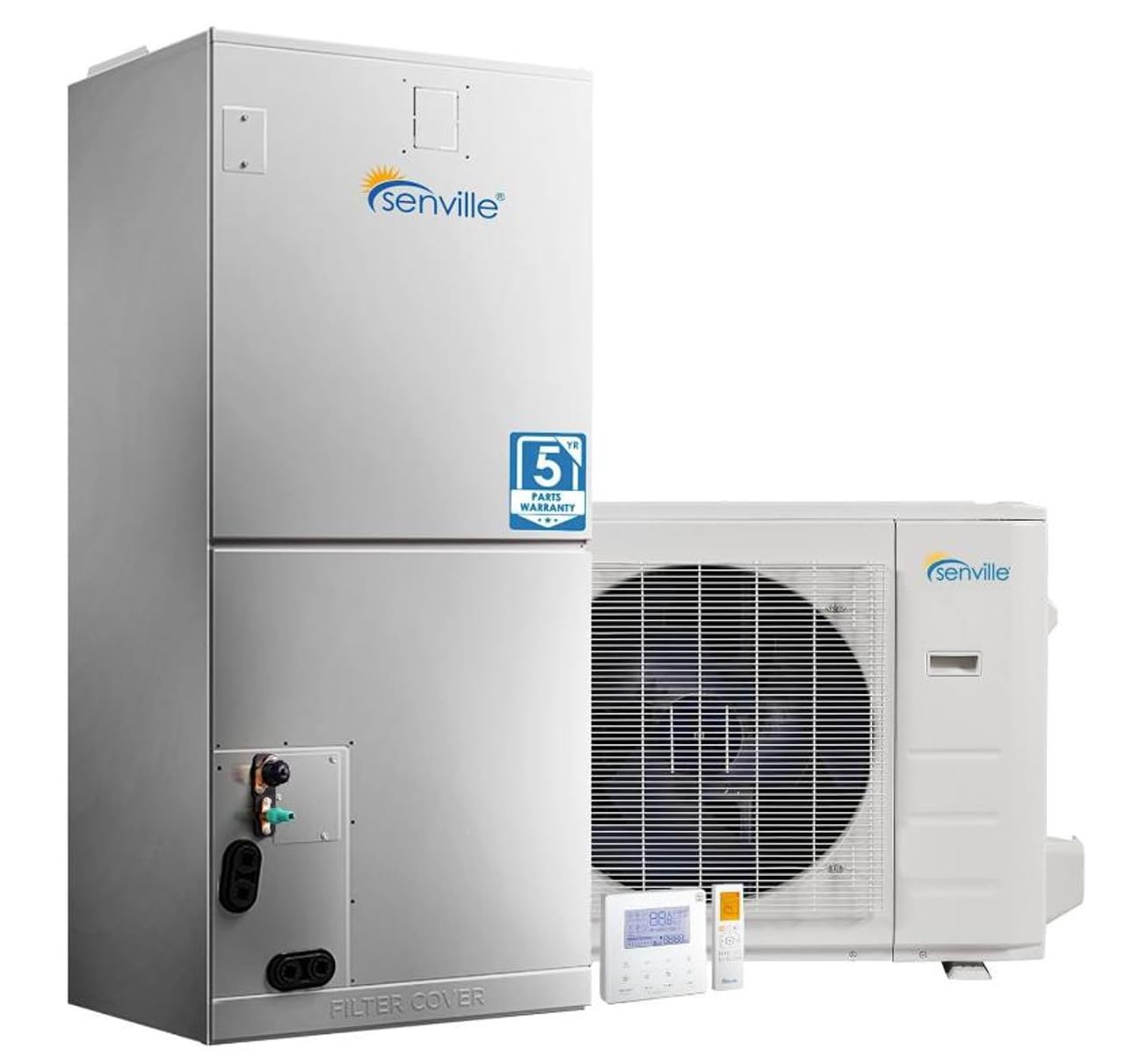
The Senville 3 Ton Central system is technically a split system rather than a true package unit, but it earns a spot here because it is specifically designed to replace existing central AC systems with a high-efficiency inverter compressor. The variable-speed scroll compressor and inverter technology allow the system to modulate its capacity continuously rather than cycling on and off, which maintains a much tighter temperature band and reduces energy waste. The rated 16 SEER2 efficiency is competitive with any mid-range package unit.
The standout feature here is the heating envelope. This heat pump can deliver useful heat down to -22°F, which is far beyond what any standard package unit heat pump can handle. For anyone in a northern climate who wants to eliminate a gas furnace entirely, this kind of low-ambient capacity changes the calculation. Users report that their power bills dropped significantly — one owner saw a 1,700 kWh reduction in the first month compared to their old system.
The main caveat is that installation complexity is higher than a package unit. The system requires two 230V services to the outdoor unit, and the communication wiring between the condenser and the air handler uses S1/S2 terminals that can confuse technicians unfamiliar with inverter systems. The included 16-foot line set may be too short depending on the placement of your existing ductwork. And the customer support has drawn sharp criticism — one owner reported getting a PC 04 error code after three months and spending hours on hold without resolution.
Why it’s great
- Heats effectively down to -22°F, replacing gas furnace in cold climates
- Variable-speed inverter maintains steady temperature without cycling
- Measurable energy savings — up to 1,700 kWh reduction per month
Good to know
- Installation requires two separate 230V circuits and HVAC technician
- Customer support responsiveness is inconsistent
- 16-foot line set may be too short for some retrofit scenarios
5. Cooper & Hunter 36,000 BTU 19.5 SEER2 Mini Split

The Cooper & Hunter 36K unit sits firmly in the premium mini-split category, with a 19.5 SEER2 rating and a full Wi-Fi smart control kit included in the box. The inverter compressor allows it to ramp up and down smoothly, which means you never get the blast of temperature overshoot you feel with a Goodman package unit. The on-board app gives you full remote control over temperature, mode, fan speed, and scheduling from anywhere, which is a major upgrade from a basic thermostat.
Performance reports from owners are consistent: the system cools a 1,500 to 2,000 square foot shop or home addition reliably, even when outside temperatures push above 100°F. The humidity control is particularly strong — one reviewer noted that the unit keeps their metal shop at 82°F on 100°F days while extracting enough moisture that tools do not rust. The whisper-quiet operation is also a recurring theme, with both the indoor and outdoor units running at levels that are barely audible.
However, this is not a package unit in any sense. The indoor air handler requires a solid wall mount with a 3.25-inch hole drilled through for the line set. The system ships via freight to the nearest accessible point, which may mean the driver leaves it at the curb. Do-it-yourself installation is technically possible — several users have done it in about 10 hours — but you risk voiding the warranty if you do not use a licensed technician. Also, the GFCI compatibility issue is real: multiple owners report that the unit will not run on GFCI breakers and needs a standard breaker instead.
Why it’s great
- 19.5 SEER2 efficiency dramatically lowers operating cost vs. 14 SEER units
- Built-in Wi-Fi kit with app control for remote temperature management
- Exceptional humidity removal in high-heat, high-humidity environments
Good to know
- Requires professional installation for warranty validity
- Not compatible with GFCI breakers — must use standard breaker
- Freight delivery to curb only; buyer must move unit to installation site
6. ACiQ 20 SEER2 Essentials 36,000 BTU Mini Split
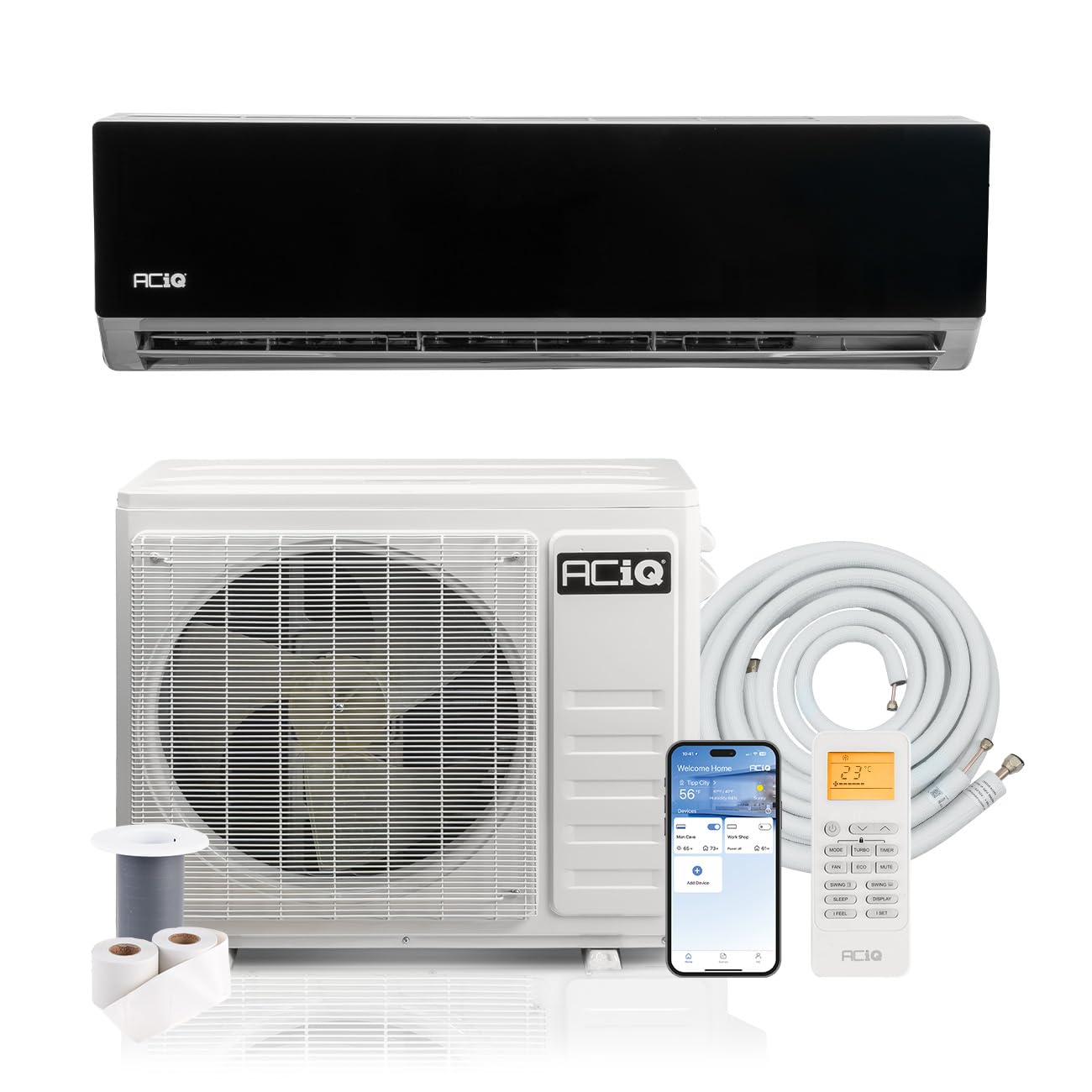
The ACiQ 20 SEER2 single-zone mini split system delivers the highest efficiency rating in this roundup at a price point that is lower than many 14 SEER package units. The rotary DC inverter compressor and R-32 refrigerant give this system a modern edge — R-32 has a lower global warming potential than R-410A and allows for a more compact condenser coil design. The included 16-foot line set, power cable, and mounting hardware make the purchase a true drop-in kit for a single large zone up to 2,000 square feet.
Customer feedback highlights how quiet the system runs. The outdoor condenser is described as near-silent, and the indoor unit is noticeably quieter than typical window units or older mini-splits. The unit includes useful auxiliary modes like turbo for rapid cooling, eco for energy savings, and an IFEEL sensor that measures temperature at the remote for more accurate room comfort. Owners using the system in garages and workshops report that it cools effectively even during summer peak hours.
Build quality is where the budget price shows. Several buyers noted that the indoor air handler feels flimsy — the plastic shell is thin. One unit arrived with a cracked valve cover on the condenser, though it still functioned. The installation instructions are vague enough that even experienced HVAC owners found them lacking, and the minimum temperature setting of 60°F may disappoint anyone who wants the room at 50°F. For the price, the trade-off between high efficiency and lower build quality is worth it if you are comfortable with a bit of DIY finesse.
Why it’s great
- Exceptional 20 SEER2 efficiency keeps operating costs very low
- Uses R-32 refrigerant with lower environmental impact than R-410A
- Extremely quiet operation, especially the outdoor condenser
Good to know
- Indoor air handler feels lightweight and less durable
- Vague installation documentation — not beginner-friendly
- 60°F minimum set point may be too warm for some users
7. DELLA Vario Series 36,000 BTU 19 SEER2 Mini Split

The DELLA Vario Series is a strong contender for anyone who wants a fully-featured mini-split with 19 SEER2 efficiency and full smart home integration without jumping to the premium tier. The 4D airflow louvers provide up-down and left-right oscillation that distributes air more evenly than single-direction vents.
Owners who replaced entire 12,000 BTU window AC arrays with this unit report a 40 percent reduction in cooling costs while maintaining below-70°F temperatures on 90°F days. The heat pump function works down to -4°F, which covers the vast majority of US winter conditions. The I-Feel mode uses the remote’s temperature sensor instead of the air handler’s, which is a genuinely useful feature for rooms with vaulted ceilings where the wall sensor reads falsely warm.
The weak point is that DELLA has a mixed reputation for long-term support. While the hardware itself performs well across multiple units — one owner has bought four DELLA units and only needed one board replacement — getting warranty help on a faulty unit can be a challenge. The 4-way airflow is a nice touch but the louvers on some units make a faint clicking sound during oscillation that can be audible in a quiet bedroom. Professional installation is strongly recommended because refrigerant adjustment is required if the line set exceeds 25 feet.
Why it’s great
- 19 SEER2 efficiency provides strong energy savings over older AC systems
- 2,500 sq ft coverage exceeds the typical 3-ton rating
- 4D airflow and I-Feel sensor improve room comfort
Good to know
- Warranty support reputation is inconsistent
- 4D louvers can make a clicking noise during oscillation
- Line sets longer than 25 ft require field refrigerant adjustment
8. Senville 36,000 BTU Tri Zone Mini Split

The Senville Tri Zone system provides three separate indoor air handlers powered by a single 3-ton outdoor condenser, offering an alternative to three separate mini-splits or one large package unit with zoning dampers. Each zone gets its own 9,000 BTU air handler, allowing temperature control in separate rooms or areas without needing ductwork. The outdoor unit uses a scroll compressor and achieves 22.5 SEER, which is significantly higher than any package unit on the market.
Performance feedback from real installations confirms that the system runs quietly and efficiently. One owner installed the three units to cover a new addition with a 500-square-foot room and a 1,000-square-foot vaulted room, reporting excellent cooling and heating in both spaces. The Arctic Heat Pump claim is verified by user reports of functional heating in 3°F weather, which makes this a viable option for colder climates. The Alexa integration allows voice control of temperature and mode, though the app interface is reportedly basic.
Installation complexity is the biggest obstacle. The indoor units must be mounted on walls, and the line sets must be individually run from each air handler to the outdoor condenser. Senville does not provide individual shut-off valves for each head, so the entire system must be pumped down for service on a single zone. The remote control operates all heads simultaneously by default, which is a limitation if you want independent temperature control without using the app. Professional installation is required for warranty eligibility.
Why it’s great
- 22.5 SEER efficiency far exceeds any package unit alternative
- Provides zoned temperature control without ductwork
- Functional heat pump operation down to -22°F
Good to know
- No individual zone isolation valves — servicing one zone affects all
- Remote control operates all heads simultaneously by default
- Installation is complex with multiple line sets and wall penetrations
9. Senville 36,000 BTU Quad Zone Mini Split

The Senville Quad Zone takes the same 3-ton outdoor condenser and splits its capacity across four 9,000 BTU indoor air handlers, making it the highest zone-count option in this roundup. This is ideal for a multi-room manufactured home, a small office building, or a rental property where each room needs its own temperature control. At 22.5 SEER, the system provides substantial efficiency savings compared to four separate window units or ductless units with lower ratings.
Real owners report that the quad zone system cools fast and runs quietly. One Florida user documented that the system kept the house at 69°F even when outdoor temperatures hit 105°F. The 16-foot linesets included with each head are standard, but Senville can provide custom line lengths if you need longer runs — several owners recommend calling the company directly to order the correct sizes for your specific layout. The Alex integration works the same as the tri-zone version, with voice commands for basic temperature and mode changes.
The main practical limitation is that the system is effectively four 9,000 BTU heads drawing from a 36,000 BTU condenser. If all four rooms demand maximum cooling simultaneously, each head only gets 9,000 BTU. That is fine for bedrooms and small living areas, but it will not adequately cool a large open-plan room if you need the full 36,000 BTU in one zone. The 4-zone configuration also means four separate wall penetrations and four separate condensate drain lines to manage, which adds to installation time and cost.
Why it’s great
- Four independent zones from one outdoor condenser saves pad space
- 22.5 SEER delivers excellent part-load efficiency
- Proven cooling performance even in extreme 105°F conditions
Good to know
- Each head limited to 9,000 BTU — not suitable for large single rooms
- Requires four separate wall penetrations and drain lines
- DIY installation voids warranty — professional install is mandatory
10. Cooper & Hunter 28,000 BTU 2-Zone 9K+18K
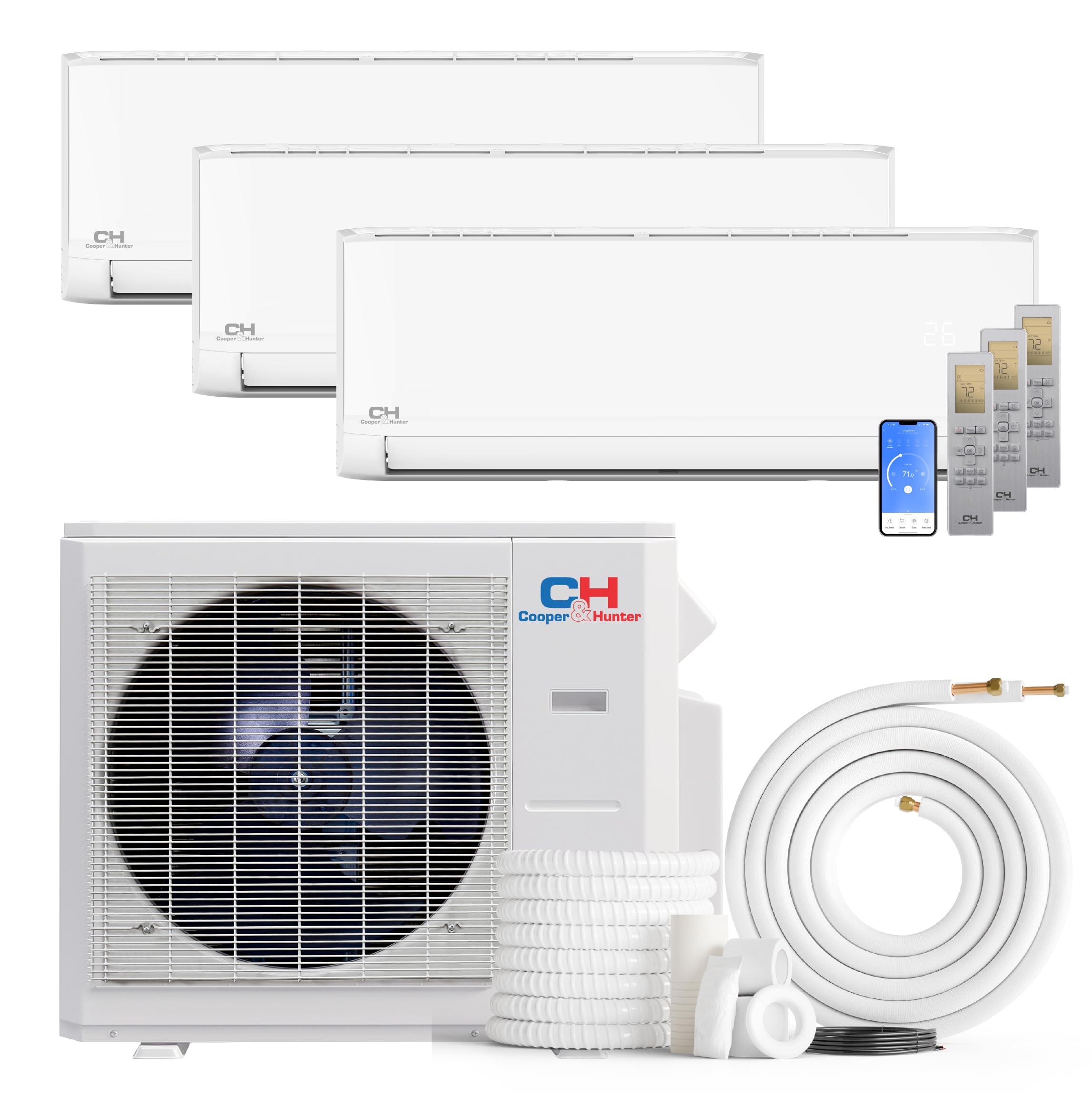
The Cooper & Hunter 28,000 BTU dual-zone system is a high-efficiency alternative for those who need two separate climate-controlled areas without the space penalty of a package unit. The configuration pairs one 9,000 BTU wall mount with one 18,000 BTU wall mount, allowing asymmetric zoning where a smaller room and a larger living area are served from the same outdoor condenser. The 25 SEER2 rating is exceptional — you will never find a package unit above about 16 SEER2, making this system multiple times more efficient for comparable cooling capacity.
User reports consistently highlight how quiet the indoor units are, especially compared to the window AC units they replaced. The 25-foot installation kits provide extra flexibility for positioning the air handlers far from the outdoor unit without needing to purchase longer line sets separately. The smart app control is included with both heads, so you can program each zone independently without additional hub purchases.
The reliability picture is mixed. Several long-term owners reported that units failed after roughly 5 years of use, requiring expensive repairs that are not covered by warranty. One owner spent on repairs for three compressors and four wall units. Professional cleaning every 6 months is recommended to maintain performance, which adds per year to the operating cost. The remote control layout also draws criticism — the buttons are too close together, causing accidental mode changes when you adjust the temperature.
Why it’s great
- 25 SEER2 efficiency provides unmatched energy savings for a 2-zone system
- Asymmetric 9K+18K head configuration fits diverse room sizes
- 25ft linesets included for flexible placement of both heads
Good to know
- Long-term reliability reports are inconsistent — some units fail at 5 years
- Professional cleaning every 6 months adds ongoing cost
- Remote control buttons are poorly spaced and prone to accidental presses
11. Cooper & Hunter 28,000 BTU 2-Zone 12K+18K
The second Cooper & Hunter dual-zone option swaps the 9,000 BTU head for a 12,000 BTU head, resulting in a 12K+18K configuration that provides a more balanced split of 3-ton capacity. This is the best choice when both zones are reasonably sized — for example, a master bedroom (12K) and a living room (18K). The 25 SEER2 rating ensures that the system operates at very low power consumption across the entire load range, and the two smart control kits allow independent scheduling for each zone.
Installation feedback from owners confirms that the system is straightforward for a licensed HVAC technician to install. The pre-charged outdoor condenser and 25-foot linesets mean no additional refrigerant is required for standard runs. The expandable design is a nice touch — some owners noted that the outdoor unit can support a third head in the future, making this a good platform for phased renovations where you add a third zone later.
The same reliability concerns from the 9K+18K model apply here. A subset of owners report failures after 3 to 5 years, with poor manufacturer support for out-of-warranty repairs. The inverter compressor itself is generally reliable, but the control board and fan motor appear to be the failure points. The remote control issue — buttons too close together leading to accidental mode changes — is identical to the other model because the remotes are the same. For buyers who prioritize efficiency above all else, this system delivers on that metric, but you should budget for a third-party extended warranty.
Why it’s great
- Balanced 12K+18K head sizing for equally-sized rooms
- 25 SEER2 efficiency is among the highest available in any AC system
- Outdoor condenser supports expansion to a third zone later
Good to know
- Control board and fan motor failures reported after 3-5 years
- Manufacturer support for out-of-warranty repairs is limited
- Same poorly-spaced remote control as the 9K+18K model
FAQ
Can I install a 3 ton package unit on a concrete pad instead of a roof curb?
Does a 3 ton heat pump package unit need electric backup heat strips?
What size breaker do I need for a 3 ton package unit?
Why would I choose a package unit over a mini-split for a 3-ton application?
Can I use a 3 ton package unit in a mobile home with existing ductwork?
Final Thoughts: The Verdict
For most buyers, the best 3 ton package unit winner is the Goodman GPH1436H41 because it delivers a scroll compressor with a 10-year parts warranty in a true packaged format that requires no indoor equipment, no field refrigerant work, and no complicated inverter electronics. If you want higher efficiency and can accommodate an indoor air handler, grab the Senville 3 Ton Central for its -22°F heat pump capability and variable-speed modulation. And for the simplest possible drop-in installation on a budget, nothing beats the Goodman GPCH33631.