
Our readers keep the lights on and my morning glass full of iced black tea. As an Amazon Associate, I earn from qualifying purchases.
Specs are compiled from manufacturer listings and verified buyer reviews and can change over time — please confirm the key details on the product page before buying.
A 3-way monitor adds a dedicated midrange driver, so vocals and guitars get their own clean slice of the spectrum instead of sharing a woofer. This guide breaks down five genuinely different takes on the 3-way design, from point-source imaging wizards to big-room bookshelves, so you can match the right tool to your desk, room, and budget.
I’m Min — the founder and writer behind Gadgets Feed. This guide is built by comparing the manufacturers’ published specifications and the patterns across verified customer reviews, so you get each pick’s real strengths and trade-offs instead of marketing spin.
Whether you are mixing in a treated room or just want richer desktop sound, these 3-way studio monitors put dedicated drivers to work for clearer, more honest listening.
Our Picks at a Glance

How To Choose The Best 3-Way Studio Monitors
Match the monitor to your room size and listening distance before you buy. A 3-way monitor separates the audio spectrum into bass, mids, and treble, each handled by a dedicated driver, which is why they tend to reveal more detail than a two-way design. These three specs decide how well a 3-way works for you.
Driver Layout: Coaxial vs. Offset
Coaxial designs align mid and tweeter on one axis for tighter imaging; offset stacks are cheaper but can blur placement at close range. A coaxial design acts like a single point in space, which tightens the stereo image — the “phantom center” between the two speakers feels locked in place. Non-coaxial 3-ways are simpler to build and often cheaper, but the drivers are physically offset, which can slightly smear how you perceive the sound at close range.
Power and Amplification
Active monitors (with built-in amps) are the norm here, and you want to check the RMS wattage. Tri-amplified systems give each driver its own amp channel — woofer, mid, tweeter all get dedicated power. That separation is what keeps a loud bass note from stealing energy from the vocals sitting above it.
Room Tuning and Connectivity
Boundary EQ switches or DIP switches on the rear let you compensate for the speaker’s position — on a desk, near a wall, or free-standing. Balanced XLR and TRS inputs reject interference over long cable runs, while RCA is fine for consumer gear. Without boundary EQ, desk or wall reflections will color the bass you hear.
Quick Comparison
| Model | Best For | Design | Power | Woofer | Amazon |
|---|---|---|---|---|---|
| Edifier MR5★ Best Overall | Desktop versatility with wireless | 3-way, non-coaxial | 110W RMS | 5 inch | Amazon |
| Kali Audio IN-5Precision Pick | Precision point-source imaging | 3-way coaxial | 160W | 5 inch | Amazon |
| Kali Audio IN-8 V2 | Deep bass and mastering detail | 3-way coaxial | 140W | 8 inch | Amazon |
| Edifier R2750DB MKII | Home theater and streaming | 3-way, non-coaxial | 144W RMS | 7 inch | Amazon |
| Sony SS-CS5 | Passive hi-fi on a budget | 3-way, 3-driver | Passive | 5.12 inch | Amazon |
In‑Depth Reviews
1. Edifier MR5 2.0 Studio Monitor Bookshelf Speakers, 110W RMS, Black
Our pick — 4.5★ from 300+ verified ratings; the strongest balance of quality and price.
A true 3-way with Bluetooth 6.0 and XLR inputs for wired or wireless studio work.
The MR5 earns the top spot because it makes the jump to three drivers genuinely painless. You get a 5″ long-throw woofer (a driver that moves far to push more air for bass), a separate 3.75″ mid driver, and a 1″ silk dome tweeter (a soft fabric dome that smooths out harsh highs). Together they cover 46Hz to 40kHz, so you hear deep lows and airy highs without needing a subwoofer. The silk dome tweeter also keeps long listening sessions fatigue-free, so your ears stay fresh during marathon mixes.
Where this one runs away from the purely studio crowd is connectivity. You get XLR, TRS, and RCA inputs for gear, but also Bluetooth 6.0 with multipoint, so you can stream from a phone while your interface is still wired in. Buyers report that after disappointing runs with countless Bluetooth speakers, the pairing here synced on the first try and the build felt genuinely sturdy.
Owners upgraded from smaller Edifier pairs and describe these as a “sounds like a larger set” moment — heavy, powerful, and clean, with a front volume knob and app-based EQ for Studio, Music, or Custom presets. The thing everyone raves about is the sound quality for the size, with deep bass that does not overshadow the mids. It is note the adjustability gets mixed feedback, so you may want to lean on the app rather than the rear knobs.
Where it wins big
- True 3-way driver array with a dedicated midrange for vocals and guitars
- Bluetooth 6.0 with multipoint plus XLR, TRS, and RCA wired inputs
- App-based room compensation and EQ presets tailor sound to your desk
Honest trade-offs
- Rear knob tuning draws mixed feedback — the app is the surer path
- Great for small or mid rooms, but a big untreated space will want more power
Reach for these if: you want one pair that works for near-field mixing, desktop listening, and wireless streaming without swapping cables.
Look elsewhere if: your room is large and you expect these to fill it easily; they shine in smaller, quieter spaces.
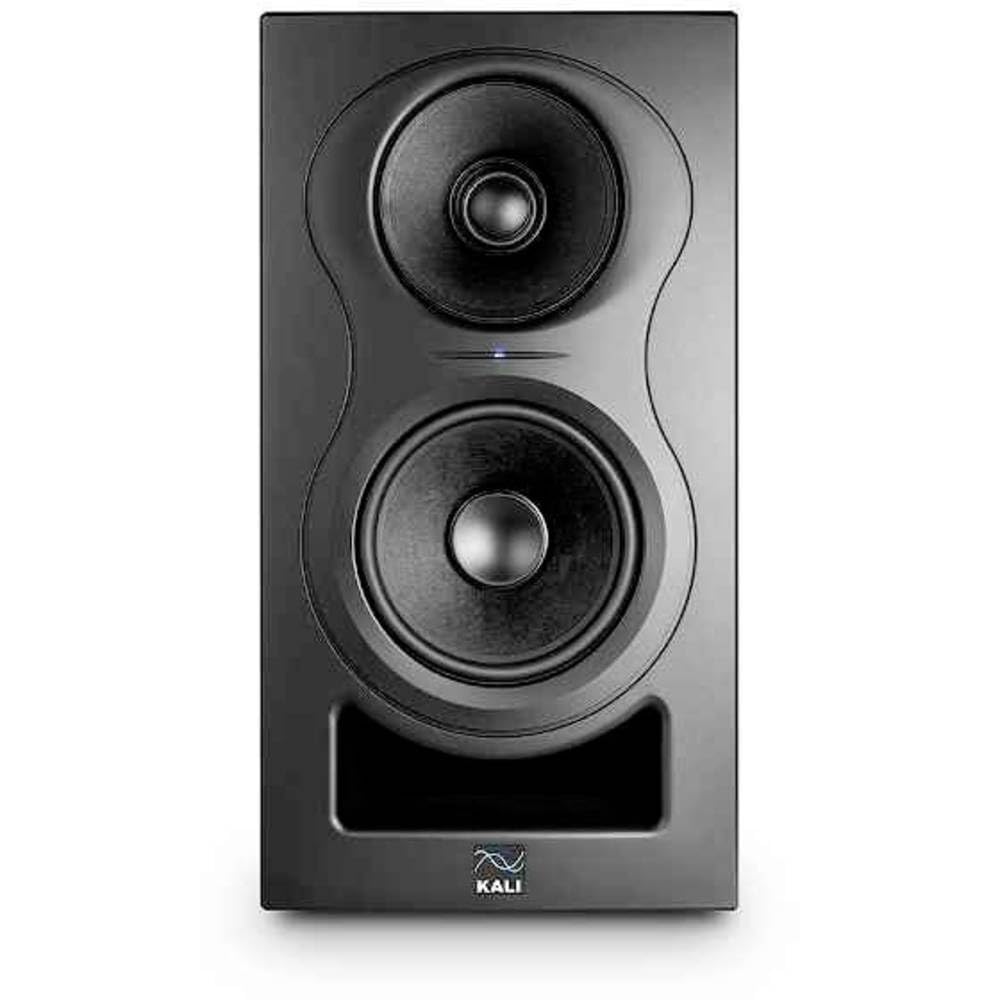
2. Kali Audio IN-5 5-Inch Studio Monitor – Active 3-Way Studio Speaker
A coaxial 3-way that locks in precise stereo imaging for critical mixing.
The IN-5 is the pick when imaging — your ability to tell exactly where a sound sits left-to-right and front-to-back — is the whole game. This is a true coaxial design, meaning the tweeter sits in the center of the midrange driver, so both emerge from the same point in space. That physical alignment is what delivers the “hyper-realistic” soundstage and locked-in phantom center that owners describe.
Power comes from a 160W tri-amplified system, with a separate amp feeding the woofer, mid, and tweeter independently to cut distortion across the band. That puts it ahead of the Edifier MR5’s 110W RMS on raw headroom for louder, cleaner mixes. Buyers who swapped in these from big-name consumer speakers like Klipsch found them less shrill, louder, and free of distortion at higher volumes.
Rear-panel DIP switches (small switches that tweak the speaker’s response) handle boundary EQ, so you can tune for desk placement or wall proximity. XLR, TRS, and RCA inputs cover pro interfaces and consumer gear alike, and the flat, uncolored response earns praise for how well mixes translate to other systems. The recurring gripe is an audible hiss when no music plays, even over balanced XLR — a real annoyance in a quiet room, though some report it clears once an interface is properly grounded.
The accuracy argument
- Coaxial mid and tweeter act as a true point source for precise stereo imaging
- 160W tri-amped power drives each driver on its own channel
- Boundary EQ DIP switches tune for desk or wall placement
Know before you buy
- An audible hiss can appear when idle, even with balanced XLR connected
- Best value if you are actually mixing, not just listening casually
Pick this for: serious mixing and production where accurate sound placement and translation matter more than anything else.
Think twice if: a faint idle hiss would drive you mad in a dead-quiet room, or you want a speaker that is also a casual living-room piece.
3. Kali Audio IN-8 V2 8-Inch Powered Studio Monitor

The big-coaxial brute that brings mastering-grade low end to your desk.
The IN-8 V2 is what you step up to when the 5-inch siblings cannot reach deep enough. Its 8″ woofer with a low-noise port tube delivers punchy, extended bass while the coaxial stack — a 1″ tweeter and 4″ midrange mounted on the same axis — keeps imaging and phase coherence intact. That 8-inch woofer is a full 60% larger than the 5-inch driver in the Edifier MR5, which is exactly the headroom you feel on kick drums and bass lines.
Power comes from a 140W tri-amplified system, slightly below the IN-5’s 160W but aimed at moving that bigger cone. Owners moving from 15-year-old Event monitors describe the detail across all frequencies as a clear upgrade, and the build quality earns consistent praise for the price. The three-way layout is the headline reason people say clarity and separation beat their old two-way setups.
Boundary EQ plus wall-and-ceiling mounting options mean you can place it where the room demands, not just where it sounds best. There is a real caveat though: satisfied owners who paired these with a digital piano found the response “almost too perfect” — and one unit reportedly failed after about six weeks, with a loud hiss before it stopped. Treat the hiss risk and the size seriously: these are physically much larger than product photos suggest, so measure your desk before ordering.
Why it earns the space
- 8″ woofer delivers deep, punchy bass with extended low-frequency response
- Coaxial point-source design keeps imaging precise even at high volume
- Wall and ceiling mounting options plus Room Correction DSP for placement flexibility
Size it right
- Way bigger than they look in photos — a small room will feel crowded fast
- No output or pass-through connection if you wanted to daisy-chain
Choose it for: mastering and mixing work where you need to hear and feel deep bass accurately without a separate subwoofer.
skip it if: your desk or room is compact; the 8-inch model is too large for a small space, and a rare unit has shown a hiss or early failure.
4. Edifier R2750DB MKII 3-Way Powered Bookshelf Speakers, 144W RMS, Black
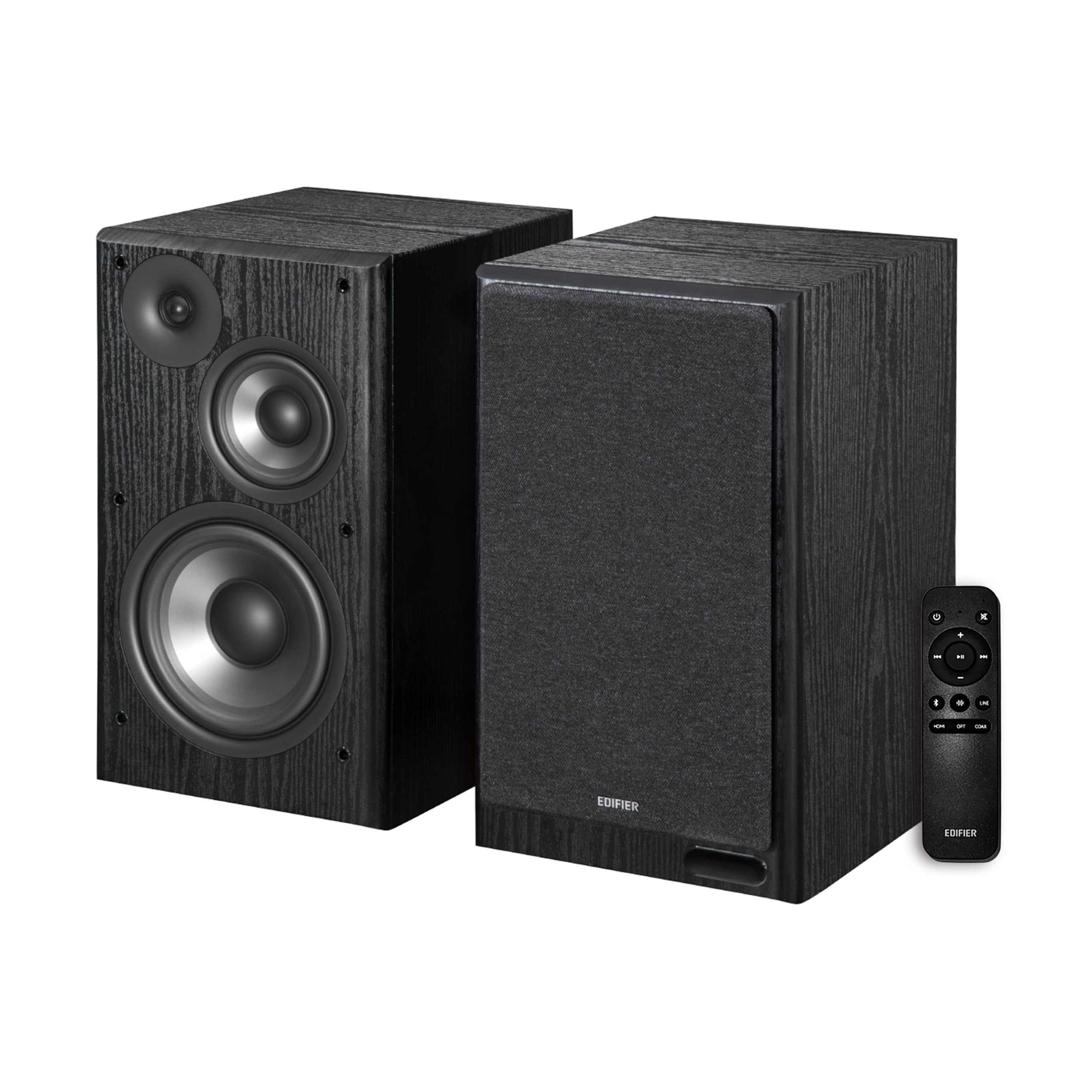
The 3-way that thinks like a soundbar but sounds like a proper stereo.
The R2750DB MKII spreads a 7″ woofer, 4.5″ mid-range, and 1″ silk-dome tweeter across four Class-D amps (a class of amplifier known for efficiency and low heat) for 144W RMS total. What makes it a standout for living rooms is HDMI eARC — you plug it straight into a TV’s HDMI port and get audio without a separate receiver. Owners mention these genuinely blow away soundbars for movies and music.
Owners praise the substantial bass you get with no subwoofer at all, and there is a SUB OUT jack when you eventually want to add one for deeper theater rumble. The connectivity list is the longest here: HDMI eARC, Optical, Coaxial, Line-In, plus Bluetooth 6.0 with multipoint. Four presets — Classic, Monitor, Dynamic, and Vocal — sit alongside a 9-band EQ in the EDIFIER ConneX app, and a physical remote is in the box.
The sound is wide and realistic, especially for classical music, with crisp highs and strong lows across genres. Honest caveats: they are larger and heavier than the photos suggest, they are not wall-mountable, and the rear-mounted controls drew complaints for awkward access. Fit-wise, they are a great match for a desk or a small-to-mid room where you want theater-scale sound without a full receiver stack.
The living-room verdict: this is the rare active 3-way that plugs into a TV, streams over Bluetooth 6.0, and still offers a Monitor preset for music work — versatility is the whole story.
The catch: size and weight are real; plan the shelf, because these are not wall-mountable and the rear controls are fiddly once set up.
5. Sony SS-CS5 3-Way 3-Driver Bookshelf Speaker System (Pair) – Black
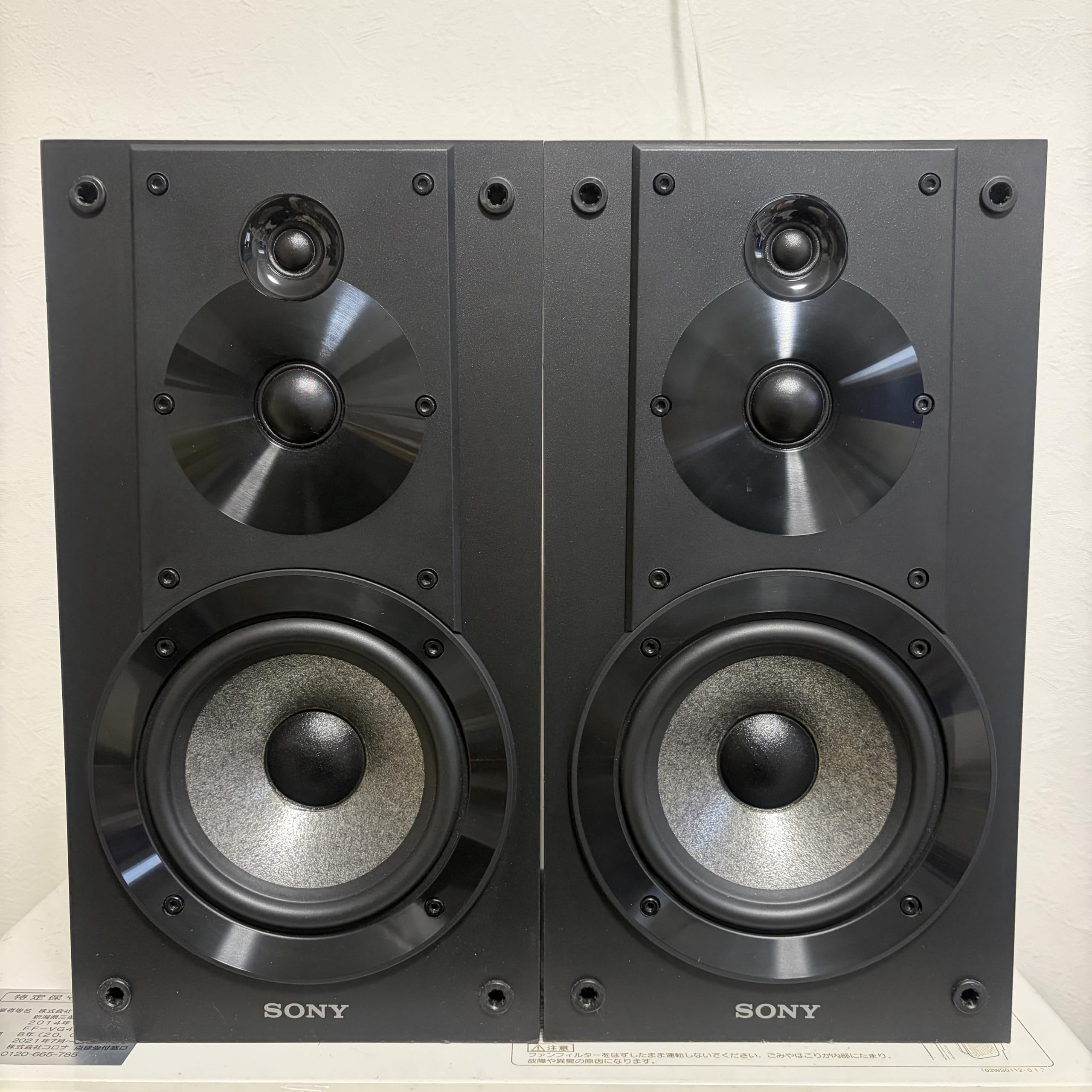
The budget 3-way that needs an amplifier and rewards a careful ear.
The Sony SS-CS5 is the odd one out here because it is a passive speaker — it has no built-in amplifier, so you supply your own receiver or amp to drive it. That makes it the entry ticket to genuine 3-way sound for less, and it explains the crowd size: it is the most-reviewed pair in this lineup. The driver layout is unusual: a ¾-inch super tweeter and a 1-inch tweeter handle the high frequencies while a 5.12″ woofer covers bass and midrange.
Owners describe the extra tweeter as making a “huge difference” in the high end, with clear vocals and detailed classic-rock textures that exceed pricier rivals when paired with a good receiver. Maximum input power is 100W, so a modest amp gets them singing. They also slot into Sony’s bigger home-theater ecosystem, working toward a Dolby Atmos 5.1.2 setup alongside the brand’s center, tower, and subwoofer models.
The honest limitations are real and size-specific. In a small room, customers note they “work great”; pushed lower, they are best used above 100Hz with a subwoofer because the bass around 50Hz gets thin due to cabinet resonance. This is a speaker that rewards pairing with a sub and a decent amp — buy it as part of a system, not as a standalone powered monitor.
balance: this is the budget-friendly route into 3-way detail. The super-tweeter adds air that budget speakers usually lack, and buyers give it strong reviews for small-room listening, so it suits a compact desk setup where space is tight.
Real limits: passive design means extra amp cost, and deep bass wants a subwoofer — this is a satellite at heart, best above 100Hz.
Understanding the Specs
Coaxial vs. Offset Drivers
A coaxial speaker stacks the tweeter inside the midrange driver so both fire from the same point. This creates a “point source” that locks in the stereo image — you hear precise left-right placement instead of a smeared center. An offset 3-way stacks drivers vertically, which is simpler and cheaper but can blur imaging slightly at close range. For mixing, coaxial is the accuracy play; for casual listening, offset is fine.
Tri-Amplified Power and RMS
RMS wattage is the continuous power a speaker can handle, not a peak burst. Tri-amplified means each driver gets its own amplifier channel — one for the woofer, one for the mid, one for the tweeter. That separation stops a loud bass note from draining energy from your vocals. More tri-amped watts generally mean cleaner output at higher volumes with less distortion.
Boundary EQ and DIP Switches
Place a speaker on a desk or against a wall and the room changes its sound, boosting certain bass frequencies unnaturally. Boundary EQ are small switches or DSP presets that cut those problem frequencies based on where the speaker sits. DIP switches are the old-school physical version of this tuning. If a monitor lacks any room compensation, you are stuck with whatever the room gives you.
FAQ
What exactly makes a speaker a 3-way instead of a 2-way?
Does a coaxial 3-way really sound better than a non-coaxial one?
How much power do I need from a 3-way monitor?
Can I use 3-way studio monitors for home theater and movies?
Do I need an amplifier for any of these 3-way monitors?
What does boundary EQ tuning actually do for my setup?
Is a hissing sound normal on active studio monitors?
How important is the Bluetooth version on a studio monitor?
Final Thoughts: The Verdict
The crowd favorite here sits at 4.5 stars across a few hundred owners, and it is the Edifier MR5 — the best all-around 3-way studio monitors pick because it pairs genuine tri-driver detail with Bluetooth 6.0 and XLR inputs (balanced connections that reject interference) for near-field work or desktop listening. If your priority is pinpoint stereo imaging for serious mixing, the Kali Audio IN-5 is the coaxial specialist to grab. Need deep bass without a sub? The Kali Audio IN-8 V2 brings an 8-inch woofer for mastering-grade low end. For a living-room setup with TV-friendly HDMI eARC (a connection that carries high-quality audio from your TV) and booming bass, the Edifier R2750DB MKII is the one to reach for.
How We Picked
We do not accept paid placement. Every pick is matched to a real buyer and a real use-case; we do not hands-on test units.
Sources & Methodology
Specifications: manufacturer listings and product documentation. Review insights: verified customer reviews, as of September 2026. Pricing: not shown on this page (it changes often); check the current price via the retailer link.
As an Amazon Associate, Gadgets Feed earns from qualifying purchases. This does not affect which products we feature.