
The difference between a bike a three-year-old actually rides and one they abandon after a week comes down to weight and seat height. Most pedal bikes with training wheels are too heavy and too tall for a three-year-old’s center of gravity, which is why balance bikes have become the smarter starting point for toddlers learning two-wheel independence.
I’m Min — the co-founder and writer behind Gadgets Feed. I’ve spent hours researching the geometry, tire types, and seat adjustment ranges that determine whether a toddler bike builds confidence or collects dust in the garage, analyzing real parent feedback and technical specs across dozens of models to find the ones that actually fit a three-year-old rider.
This guide walks you through the seven best models that suit a three-year-old’s proportions and skill level. Whether you prioritize lightweight construction, air-filled tires for grip, or a bike that transitions smoothly to pedals, the right best 3 year old bike makes all the difference in how fast your child learns to glide and steer.
How To Choose The Best 3 Year Old Bike
A three-year-old bike needs to fit the child’s current inseam, weigh little enough for them to lift and steer, and have tires that match where they’ll ride. Here are the three specs to focus on before clicking buy.
Seat Height Range and Inseam Fit
The most common mistake parents make is buying a bike the child will “grow into.” A bike with a minimum seat height above the child’s inseam forces them to tip-toe or slide off the saddle. For a typical three-year-old with an inseam around 14 to 17 inches, look for a seat that adjusts down to at least 13 inches. The ideal seat height lets the child sit fully with both feet flat on the ground and knees slightly bent.
Bike Weight vs. Child’s Strength
A three-year-old can handle a bike weighing roughly 30 to 40 percent of their body weight. For the average 30-pound toddler, that means a bike under 10 pounds is ideal, and anything over 12 pounds becomes a struggle to steer and stop. Steel frames under 10 pounds are achievable in the balance bike category, while pedal bikes with training wheels often exceed 16 pounds and require significant effort from a small rider.
Tire Type: Foam, Air, or Plastic
Foam rubber tires (flat-free) work well on pavement and smooth sidewalks, providing zero maintenance and consistent grip. Air-filled rubber tires add shock absorption and grip on grass, gravel, and uneven trails, but require occasional inflation. Hard plastic tires — common on budget balance bikes — slip on smooth surfaces and offer no damping, making them the least suitable choice for outdoor riding.
Quick Comparison
On smaller screens, swipe sideways to see the full table.
| Model | Category | Best For | Key Spec | Amazon |
|---|---|---|---|---|
| Strider 12” Pro | Balance Bike | Ultimate lightweight aluminum | 3.0 lbs / 11–19 in seat | Amazon |
| Retrospec Baby Beaumont | Balance Bike | Air tires & adjustable handlebar | 9.3 lbs / 13 in seat min | Amazon |
| bicystar 14 Inch Balance | Balance Bike | Tall kids ages 3-6 | 8.5 lbs / 13–21 in seat | Amazon |
| Ridego 14 Inch Balance | Balance Bike | Lightest composite frame | 8.16 lbs / 14.2–18.3 in seat | Amazon |
| Retrospec Cub Balance | Balance Bike | Puncture-proof tires for 1-3 yr | 10 lbs / 11–14.5 in seat | Amazon |
| RIDYEE Toddler Balance | Balance Bike | Custom name plate & storage | 13.4–15.8 in seat range | Amazon |
| Nickelodeon Blue’s Clues | Pedal Bike | Character design with training wheels | 17.4 lbs / 12 in wheels | Amazon |
In‑Depth Reviews
1. Strider 12” Pro Bike

The Strider 12” Pro sets the benchmark for toddler balance bikes at just 3.0 pounds — lighter than almost any competitor — thanks to its aluminum frame and foam rubber tires. The seat adjusts from 11 inches up to 19 inches using two seat posts (regular and XL), accommodating children from roughly 18 months all the way to age 5. That range means a three-year-old with a 14-inch inseam can sit flat-footed while still having room to grow for another year or two.
Flat-free foam tires eliminate the maintenance hassle of air inflation, and the tool-free adjustment system lets parents raise the seat or handlebars in seconds. The safety pad on the top tube prevents injuries when the child inevitably tips sideways, and the mini grips are sized for small hands. The lack of any braking system is intentional — toddlers learn to stop using their feet, which is the safest method at this age.
Customer feedback consistently highlights how quickly children transition from this bike to a pedal bike without ever needing training wheels. The only real trade-off is the 60-pound rider weight limit, which a heavy three-year-old might approach by age 4. But for a true lightweight starter that teaches balance fastest, the Strider Pro remains the gold standard.
Why it’s great
- Ultra-light 3.0 lb aluminum frame — toddler can lift and steer with ease
- Two seat posts give an 11–19 in adjustment range, growing with child for years
- Foam rubber tires are completely flat-free and require zero maintenance
- Tool-free handlebar and seat adjustments
Good to know
- 60 lb max rider weight limit may be tight for larger 4-year-olds
- No brake or pedal — foot stopping only
2. Retrospec Baby Beaumont Balance Bike

The Retrospec Baby Beaumont brings air-filled tires and a low step-through alloy steel frame at a weight of 9.3 pounds — heavier than the Strider but still manageable for a three-year-old. The seat adjusts from 13 inches upward, making it suitable for children 18 months to 3 years old, and the handlebars also adjust to dial in the rider position. The wide, grippy tread on the pneumatic tires provides real shock absorption on grass and gravel that foam tires cannot match.
The low frame design makes it easy for toddlers to mount and dismount independently, which builds confidence quickly. The included basket adds a fun factor — kids love carrying toys or treasures on their rides. Assembly is straightforward with the included tools, and the bike arrives about 80% assembled. The faux leather basket straps may show wear over time, but the frame and tires hold up well after a year of regular use according to owner reviews.
For parents who want a balance bike that can handle mixed terrain — sidewalk, park grass, dirt paths — the Baby Beaumont delivers air-cushioned comfort that foam tires cannot provide. The trade-off is slightly more weight and the occasional need to pump the tires, but the ride quality improvement is significant for outdoor toddlers.
Why it’s great
- Air-filled rubber tires absorb bumps on grass and gravel better than foam
- Adjustable seat and handlebars grow with the child
- Low step-through frame makes mounting easy for small toddlers
Good to know
- 9.3 lbs is heavier than aluminum-frame competitors
- Basket straps are not as durable as the frame
3. bicystar 14 Inch Toddler Balance Bike
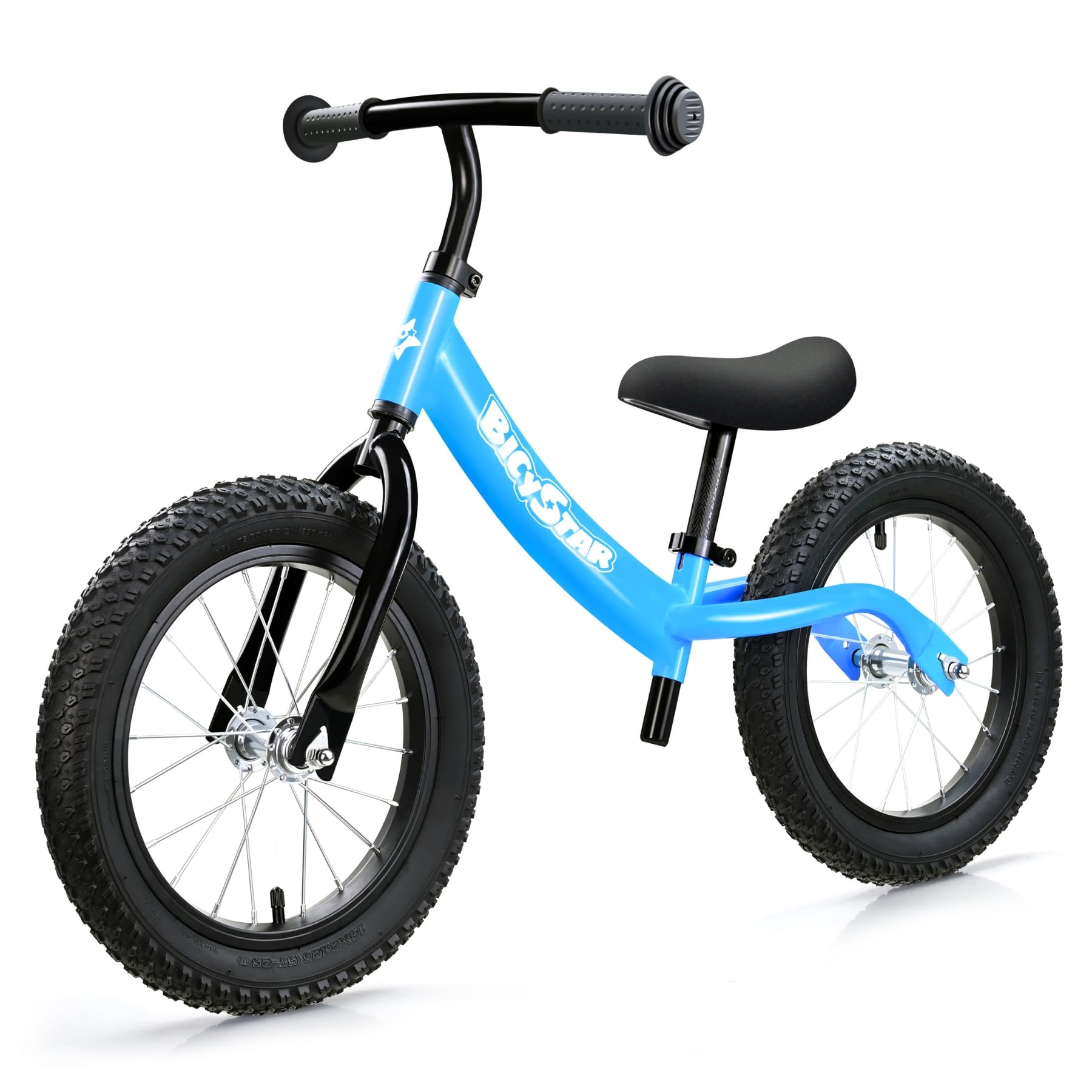
The bicystar 14-inch balance bike targets the taller end of the three-to-six-year-old range with a seat height that adjusts from 13 inches up to 21 inches — one of the widest ranges available. At 8.5 pounds, it’s light enough for a three-year-old to control, while the carbon steel frame supports up to 110 pounds, meaning it can last until the child is ready for a pedal bike. The real rubber air tires offer grip on loose surfaces like gravel and packed dirt, something foam tires cannot do.
The padded seat and non-slip grips keep the rider comfortable during longer sessions, and the coaster footrest gives kids a place to rest their feet while gliding. Assembly takes about ten minutes with the included tool kit, and the 8-year frame warranty provides peace of mind. The handlebars also adjust, which is useful for fine-tuning the riding position as the child grows.
Parents in reviews praise the quick transition from this bike to pedaling, noting that the balancing skills learned on the bicystar transfer directly. The main limitation is that the 14-inch wheel size and taller geometry might intimidate a very short three-year-old with an inseam under 13 inches. For a three-year-old who is already on the taller side, this bike offers the best grow-with-me range in this list.
Why it’s great
- Wide 13–21 in seat range fits tall toddlers and can last years
- Real air rubber tires provide grip on gravel and grass
- 8-year frame warranty shows confidence in build quality
Good to know
- 14-inch wheels and taller frame may feel big for shorter three-year-olds
- No brake — foot stopping only
4. Ridego 14 Inch Balance Bike

The Ridego 14-inch balance bike uses a glass-reinforced nylon frame that weighs just 8.16 pounds — lighter than many steel-frame bike options while still supporting up to 110 pounds. The composite material resists corrosion better than steel, which matters if the bike gets left out in damp weather. The seat adjusts from 14.2 to 18.3 inches, making it best for a three-year-old with an inseam of at least 14 inches.
Air-filled rubber tires with deep anti-slip tread provide excellent traction on pavement, grass, and loose dirt. The padded saddle and footrest keep the rider comfortable, and the non-slip handlebar grips give small hands a secure hold. The 14-inch wheel size rolls over small obstacles more easily than 12-inch wheels, making this a good choice if your child will ride on mixed terrain.
Reviewers note that the assembly instructions are minimal, but the bike goes together intuitively with the included tools. A few parents of average-height two-year-olds mention their child needed a few weeks to grow into the minimum seat height. For a three-year-old who is already comfortable on a 12-inch balance bike, the Ridego offers a natural step up to a larger wheel size with minimal weight penalty.
Why it’s great
- Composite frame is corrosion-resistant and weighs only 8.16 lbs
- Air tires with deep tread grip well on loose surfaces
- 110 lb weight capacity extends usable life
Good to know
- Minimum seat height of 14.2 in may be too tall for short three-year-olds
- Assembly instructions are sparse
5. Retrospec Cub Toddler Balance Bike

The Retrospec Cub is a no-frills balance bike that focuses on durability and simplicity at a budget-friendly price. The alloy steel frame weighs 10 pounds, which is acceptable but not class-leading, and the puncture-proof foam tires eliminate any risk of flats — a real advantage for parents who do not want to deal with tire pumps. The seat adjusts from 11 inches to 14.5 inches, tailored specifically for children ages 18 months to 3 years with smaller inseams.
Rounded edges and non-slip grips prioritize safety during inevitable tip-overs, and the low center of gravity from the frame geometry helps prevent the bike from tipping sideways during sharp turns. Assembly requires basic tools but is straightforward, and the bike ships about 80% assembled. The quick-release seat clamp makes height adjustments tool-free once the bike is set up.
Customer reviews consistently mention that this bike builds balance quickly, with many parents reporting their toddler progressed to a pedal bike within a few months. The main limitation is the 14.5-inch maximum seat height, which caps the bike’s usability around age 3 for average-height children. If your child is already tall for their age, consider a model with a higher seat range.
Why it’s great
- Puncture-proof foam tires require zero maintenance
- Low seat range (11–14.5 in) fits smaller toddlers well
- Quick-release seat adjustment for easy height changes
Good to know
- 10 lb weight is heavier than premium aluminum models
- Max seat height limits use once child passes age 3–4
6. RIDYEE Toddler Balance Bike
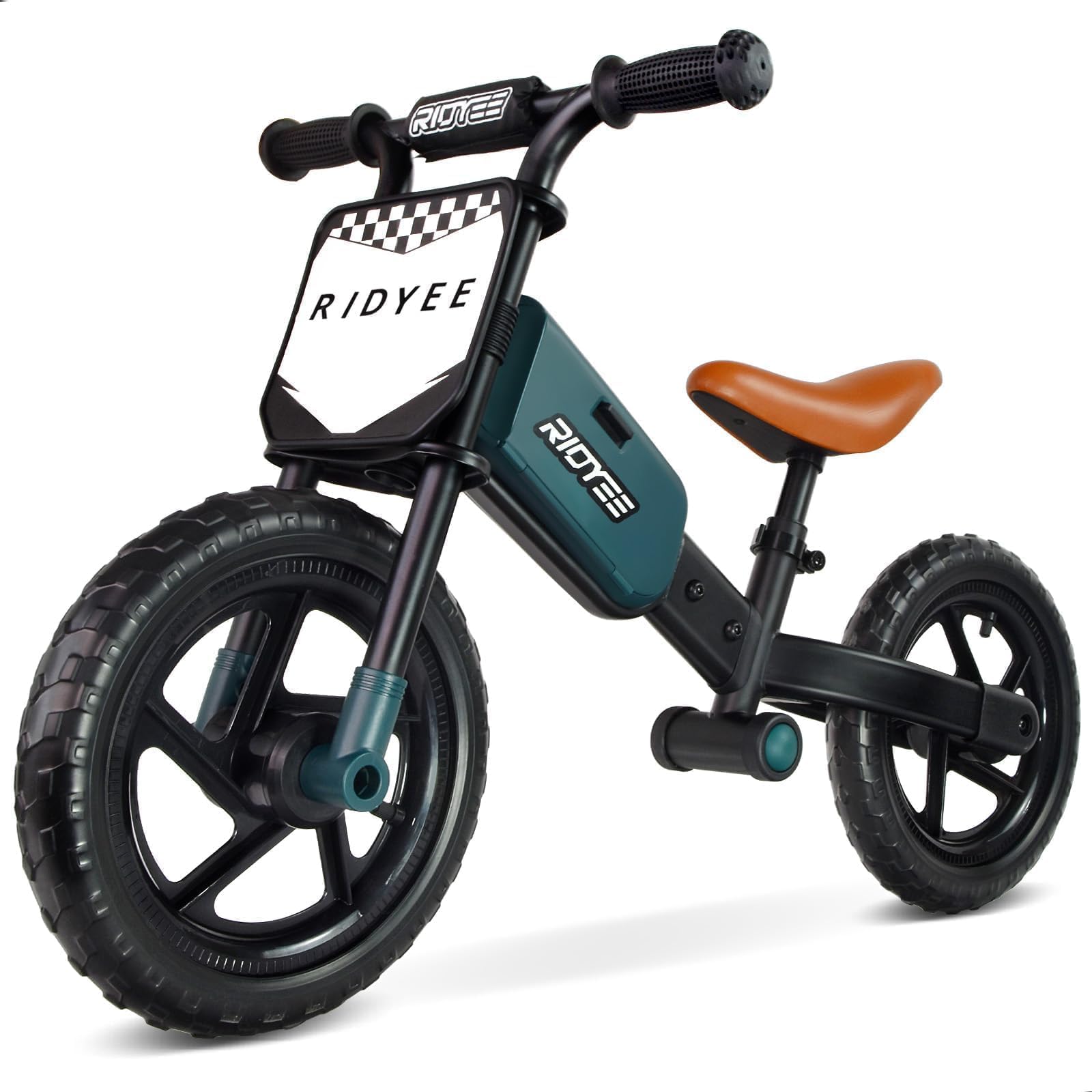
The RIDYEE balance bike takes a different approach by stacking features rather than minimizing weight: it includes a shock-absorbing padded seat, a customizable front name plate with letter and number stickers, and a built-in storage compartment for toys or snacks. The carbon steel frame is sturdy but weighs more than aluminum alternatives, and the 13.4–15.8 inch seat adjustment range suits ages 2 to 5 without needing any tools to change the height.
The safety angle limit on the steering prevents the handlebars from turning too sharply, which reduces the risk of sudden spills when a toddler overcorrects. The plastic tires are the main drawback — several reviewers note they would prefer rubber for better traction on loose surfaces. The all-terrain tread pattern helps somewhat, but the hard plastic compound still slips more than foam or pneumatic rubber on gravel and wet pavement.
This bike arrives fully assembled out of the box, which is a significant convenience for parents who want to hand the bike to their child immediately. The DIY stickers add a layer of personalization that many kids enjoy. For indoor or smooth sidewalk use, the RIDYEE works well, but if your three-year-old will ride on grass or dirt regularly, a bike with rubber tires is worth the extra spend.
Why it’s great
- Comes fully assembled — no tools needed out of the box
- Custom name plate and storage compartment add fun value
- Steering angle limit improves safety for new riders
Good to know
- Plastic tires offer less traction than rubber on loose surfaces
- Heavier than competitors due to carbon steel frame and accessories
7. Nickelodeon Blue’s Clues & You Kids Bike

The Blue’s Clues & You bike is the only pedal bike in this guide, and it operates on a fundamentally different philosophy than the balance bikes above. The 12-inch wheels and single-speed drivetrain with a rear coaster brake make it a traditional first pedal bike, supported by removable training wheels. The bike weighs 17.4 pounds — nearly twice as much as some balance bikes — which means a three-year-old will need help steering and stopping until they build leg strength.
The signature Blue’s Clues styling includes a mailbox-style storage compartment on the handlebar and a character handlebar plate, which generates strong enthusiasm from fans of the show. The alloy steel frame is built to withstand years of use, and the limited lifetime warranty from Pacific Cycle backs the frame. The training wheels provide stability while the child learns the pedal motion, but they do not teach balance — that skill must come later when the training wheels are removed.
Feedback from parents indicates that children who already have balance experience on a balance bike transition to this pedal bike quickly, while kids starting from zero take longer because the weight and pedal timing add complexity. The decorative picture frame on the front tends to break during falls. This bike is best for a child who is already a confident glider and wants the character appeal of Blue’s Clues on their first pedal set.
Why it’s great
- Strong character design that motivates Blue’s Clues fans to ride
- Limited lifetime frame warranty from a major cycle manufacturer
- Coaster brake is intuitive for beginner pedal riders
Good to know
- 17.4 lbs is very heavy for a three-year-old to control independently
- Training wheels teach pedaling but not balance skills
- Decorative front plate is fragile in tip-overs
FAQ
Is a balance bike or training wheels better for a 3 year old?
What seat height should a 3 year old bike have?
How much should a 3 year old bike weigh?
Final Thoughts: The Verdict
For most users, the best 3 year old bike winner is the Strider 12” Pro because its 3.0-pound aluminum frame and massive 11–19 inch seat range make it the lightest and most adjustable option for teaching balance. If you want air-filled tires for better grip on grass and gravel, grab the Retrospec Baby Beaumont. And for a tall three-year-old who needs a bike that lasts several years, nothing beats the bicystar 14 Inch Balance Bike with its 13–21 inch seat adjustment range.