
The difference between a safe power setup and a fire risk often comes down to a single spec: gauge. A 30 amp extension cable isn’t a standard household cord — it’s a heavy-duty tool designed to push high current over long distances without dangerous voltage drop or overheating. Whether you’re connecting a generator to a transfer switch, running a welder in the shop, or charging an EV from a dryer outlet, the wrong cord introduces resistance, heat, and failure points.
I’m Min — the co-founder and writer behind Gadgets Feed. I’ve combed through hundreds of product specs, current ratings, and real owner reports to find the cables that actually deliver full rated amperage without compromise.
After analyzing wire gauge, conductor material, connector quality, and jacket durability across dozens of models, these seven options stand out as the most reliable 30 amp extension cable choices for serious power delivery.
How To Choose The Best 30 Amp Extension Cable
A 30-amp circuit demands respect. Standard 16-gauge or even 14-gauge cords will overheat under sustained 30-amp draw, tripping breakers or melting insulation. Focus on three variables: wire gauge matching your load, NEMA plug configuration for your equipment, and jacket construction for your environment.
Wire Gauge and Conductor Material
For a 30 amp extension cable, 10 AWG is the minimum safe standard. Some 30-amp applications — particularly generators with 240V output — require 10-gauge, 4-conductor wire (two hots, one neutral, one ground). Pure copper conductors handle heat better than copper-clad aluminum, reducing resistance at the connection points. The longer the run, the more copper matters; a 50-foot run with 10 AWG pure copper will maintain voltage within 3% drop at full load.
NEMA Plug and Receptacle Matching
The plug pattern determines compatibility. A welder or EV charger typically uses NEMA 6-50 (three prong, 250V). Dryer outlets and Level 2 chargers often require NEMA 10-30 (three prong, 125/250V). Generators with twist-lock outlets use NEMA L14-30 (four prong, locking). Using an adapter introduces an additional connection point that can loosen over time — direct matching is safer.
Jacket Rating and Temperature Tolerance
Outdoor-rated jackets like SJTW and STW handle water, UV exposure, and abrasion. Temperature range matters if you’re running a generator in freezing conditions: cheap PVC stiffens and cracks below -20°F, while rubberized compounds stay flexible down to -40°F. For permanent outdoor runs, look for a jacket material that resists ozone cracking in direct sunlight.
Quick Comparison
On smaller screens, swipe sideways to see the full table.
| Model | Category | Best For | Key Spec | Amazon |
|---|---|---|---|---|
| PlugSaf 50FT 30A L14-30 | Generator | Home backup with transfer switch | 10 AWG, 4-conductor STW | Amazon |
| Champion 25-Foot L14-30 | Generator | Generator load balancing | 10 AWG, 4 outlets (5-20R) | Amazon |
| CircleCord NEMA 10-30 50FT | EV/RV | Level 2 EV charging | 10 AWG, STW, NEMA 10-30 | Amazon |
| VEVOR 25FT NEMA 6-50 | Welder | MIG/TIG welder extension | 10 AWG, SJT jacket | Amazon |
| S7 25FT L14-30 to 4×5-20R | Generator | Multi-device power distribution | 10 AWG, L14-30 locking | Amazon |
| PlugSaf 50FT 10 AWG Multi-Outlet | Worksite | Multiple tool power distribution | 10 AWG, 3 outlets, IP65 | Amazon |
| Deeklify 50FT 12 AWG | Light Duty | Outdoor tools and lights | 12 AWG, 15A, waterproof | Amazon |
In‑Depth Reviews
1. PlugSaf 50FT 30 Amp Generator Extension Cord 4 Prong

This 50-foot, 4-conductor cord is the ideal link between a portable generator and a manual transfer switch. The NEMA L14-30 twist-lock connectors prevent accidental disconnection under vibration, and the 10 AWG STW jacket handles direct sunlight, rain, and freezing temperatures down to -40°F without stiffening. Rated at 7500W, it delivers full 30-amp capacity over the entire length without measurable voltage sag.
The molded strain relief at both ends protects the internal copper conductors from bending fatigue, and the adjustable organizer makes coiling and storage straightforward. Users report the cord remains flexible enough for routing around corners and obstacles, unlike some heavily rubberized cables that fight against coiling.
For RV owners connecting a generator to shore power or home backup setups, the IP65 weatherproof rating means this cord can sit exposed on wet grass or snow without concern. The yellow jacket provides high visibility, reducing trip hazards in emergency power scenarios.
Why it’s great
- Full 30A / 7500W capacity over 50 feet
- Twist-lock L14-30 connectors stay secure under vibration
- STW jacket stays flexible in extreme cold
Good to know
- No female outlet pigtail — single L14-30R end
- Bulkier than shorter 25-foot alternatives
2. Champion Power Equipment 25-Foot 30-Amp Fan-Style Generator Extension Cord
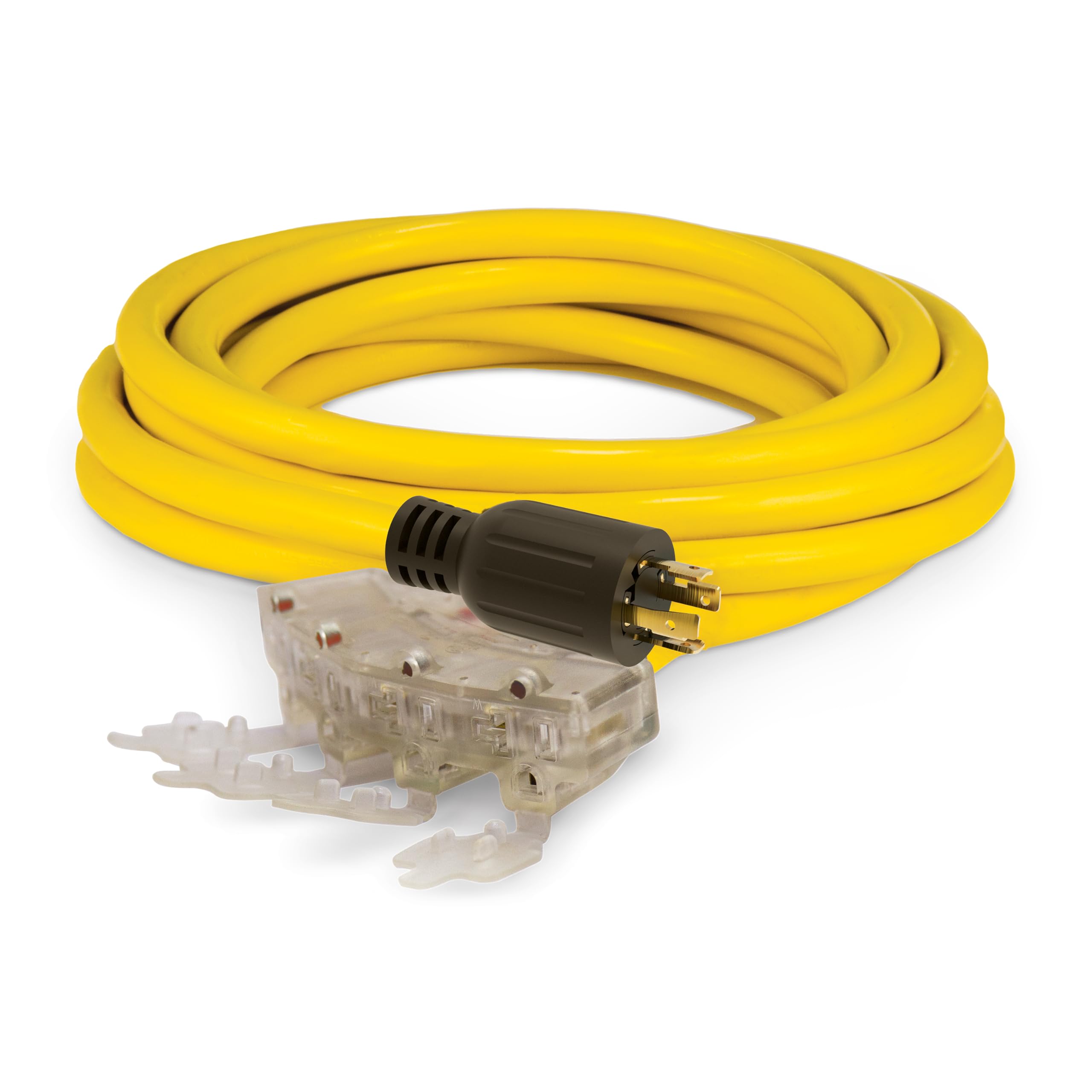
Champion’s fan-style cord converts a single L14-30 generator outlet into four 20-amp household 5-20R receptacles, split into two color-coded 120V legs. The transparent molded ends let you inspect wiring and confirm solid connections. At 25 feet, it’s purpose-built for generator setups where the power source sits on a patio or driveway within a short cable run of the equipment being powered.
The 10-gauge conductors handle sustained 30-amp load with minimal heat buildup, and the abrasion-resistant jacket survives being dragged across concrete and gravel. Each outlet includes a dust cover, keeping the contacts clean during storage or when not in use. The load balancing design requires splitting high-draw appliances between the red and green sets to avoid tripping the generator breaker.
No power indicator lights means you’ll need to confirm power at the source manually — but the robust construction and 1-year warranty with lifetime technical support make this a sound investment for serious generator owners. The flexible jacket, while not as supple as premium rubber compounds, remains manageable at moderate cold temperatures down to around 14°F.
Why it’s great
- Four 20-amp outlets for multi-device power
- Color-coded loads for 240V balancing
- Included dust covers protect unused outlets
Good to know
- No power indicator light on outlets
- Requires manual load balancing to avoid trips
3. CircleCord ETL Listed 3 Prong 50FT Dryer/EV Extension Cord
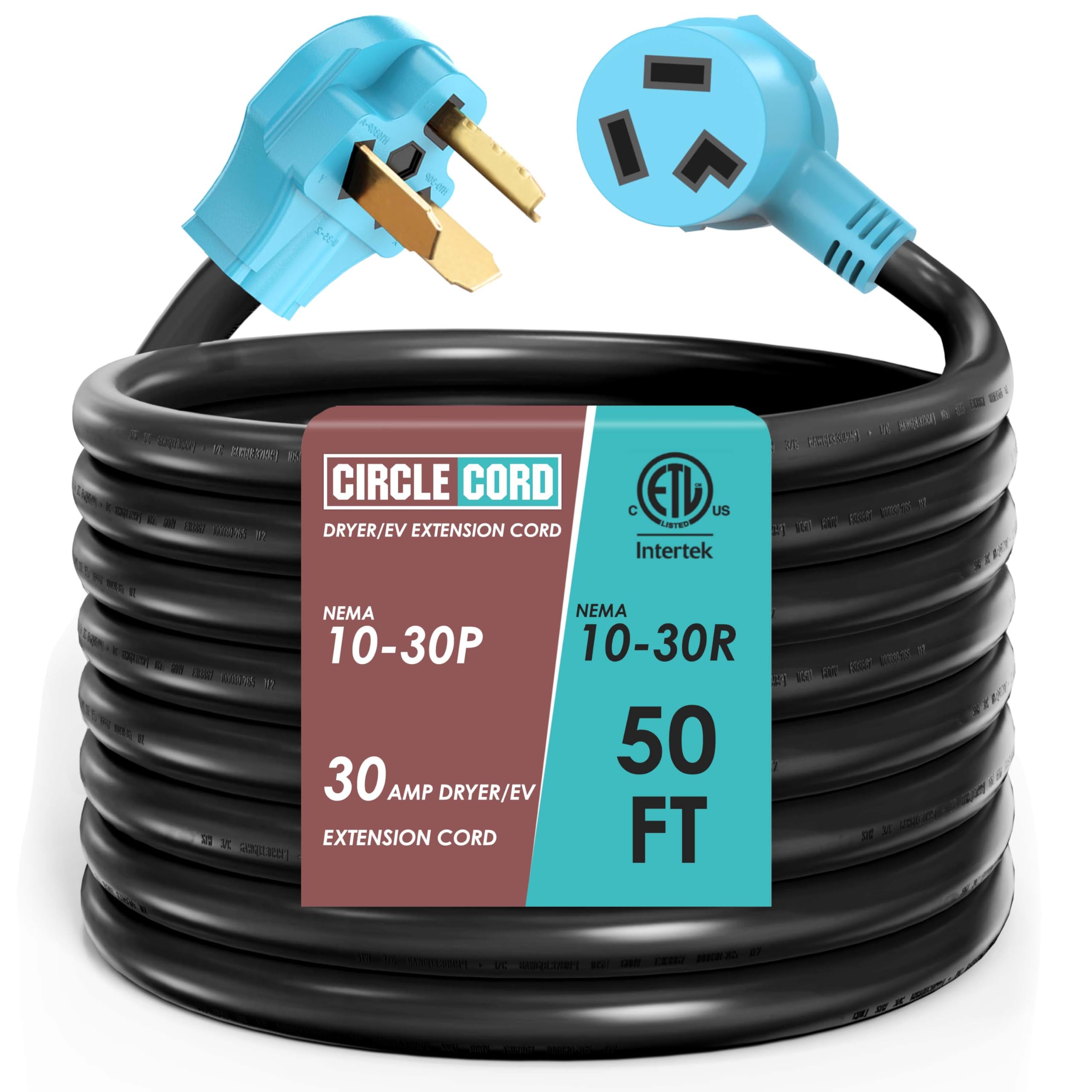
Designed specifically for NEMA 10-30 outlets — common for electric dryers and Level 2 EV chargers — this 50-foot cord delivers 30 amps at 125/250V. The STW jacket resists UV, oil, and moisture, making it suitable for garage use where a dryer outlet is repurposed for EV charging. The pure copper 10 AWG conductors ensure no voltage sag during the sustained 20-amp continuous draw typical for overnight EV charging.
The molded grip spaces on both the male and female ends make insertion and removal secure even with gloved hands. CircleCord includes an adjustable organizer and a storage bag, a thoughtful addition for keeping a 50-foot cable tangle-free between charging sessions. The flame-retardant PVC jacket adds a layer of safety for applications where the cord may contact hot surfaces.
User reports confirm no overheating even during continuous 24-amp Level 2 charging sessions with Tesla and other EVs. The ETL listing provides independent verification of the electrical ratings — important for a cord that’s expected to draw near-maximum current for hours at a time.
Why it’s great
- Purpose-built for NEMA 10-30 dryer outlets
- Sustains 24A continuous EV charging without heat
- Includes organizer and storage bag
Good to know
- Only rated for NEMA 10-30 outlets
- Not weatherproof for permanent outdoor install
4. VEVOR Welder Extension Cord 30Amp 25ft 250V
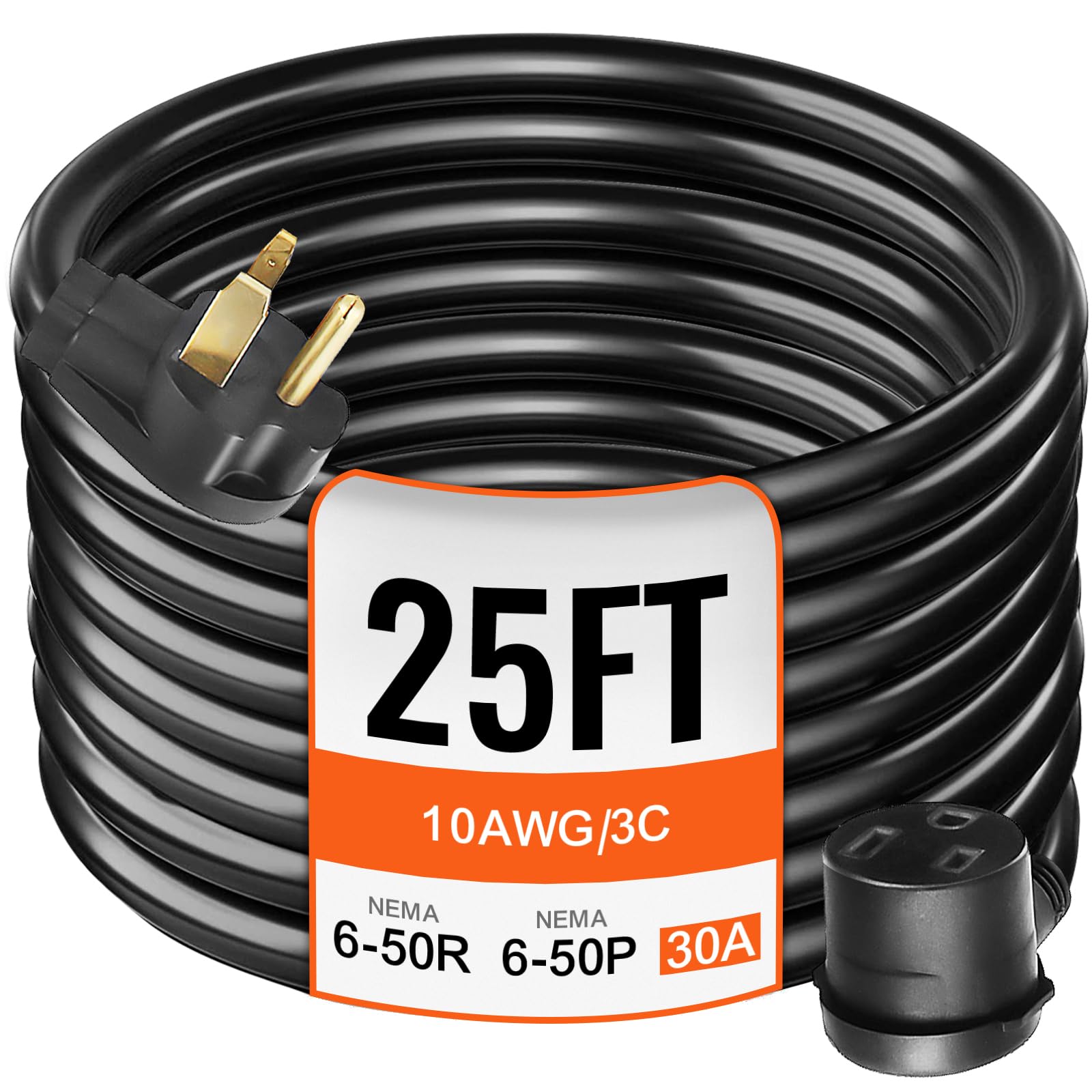
The VEVOR NEMA 6-50 extension cord is built for welders, plasma cutters, and other 250V equipment that draws up to 30 amps. The 10 AWG pure copper cable uses an SJT jacket rated for temperatures from -4°F to 140°F, with rain and splash resistance that makes it suitable for jobsite use. At 25 feet, it gives a welder enough reach to position the power source outside a garage while working inside.
The molded NEMA 6-50 plug fits tight into most welder receptacles, with grips on both ends that help disconnect even after hours of use. A built-in strap makes it portable — you can wrap it around the cord body for transport. Users report consistent power delivery with Miller, Lincoln, and Hobart welders without nuisance breaker trips.
The ETL approval confirms the cord meets safety standards for continuous 30-amp draw, and the all-copper construction avoids the resistance heating issues common with copper-clad aluminum alternatives. If you need a dedicated welder extension that won’t become a bottleneck in your shop, this is the most cost-effective route.
Why it’s great
- NEMA 6-50 connectors fit most welders perfectly
- Pure copper 10 AWG for full 30A delivery
- Portable strap integrated into the cable
Good to know
- SJT jacket is less heavy-duty than STW for extreme weather
- Only 25 feet — no longer option available
5. S7 25FT 30 Amp Generator Extension Cord, L14-30 to 4×5-20R

The S7 generator cord takes the NEMA L14-30 locking plug from your generator and splits it into four standard 5-20R household outlets, making it easy to power multiple appliances directly from the generator without a separate distribution box. The 10-gauge conductors ensure each outlet receives the full 20-amp capacity it’s rated for, provided the total load doesn’t exceed 30 amps.
The twist-lock connector on the male end prevents accidental disconnection from the generator — a critical safety feature when running extension cords through windows or doorways. The molded connectors are beefy and resist cracking even when stepped on or run over by equipment. At 25 feet, it gives you moderate separation from generator exhaust while keeping appliances connected.
One note: the safety tag on this cord specifies indoor use only when powering devices, so for permanent outdoor installations you’ll want a UV-stabilized option. For emergency backup or temporary jobsite use, however, the S7 provides excellent functionality and build quality at its price point.
Why it’s great
- Four 5-20R outlets from single L14-30 connection
- Twist-lock connector stays secure on generator
- Heavy-duty molded connectors resist damage
Good to know
- Rated indoor use only per safety tag
- Limited to 25-foot length
6. PlugSaf 50 FT 10 Gauge Outdoor Extension Cord with Multiple Outlets
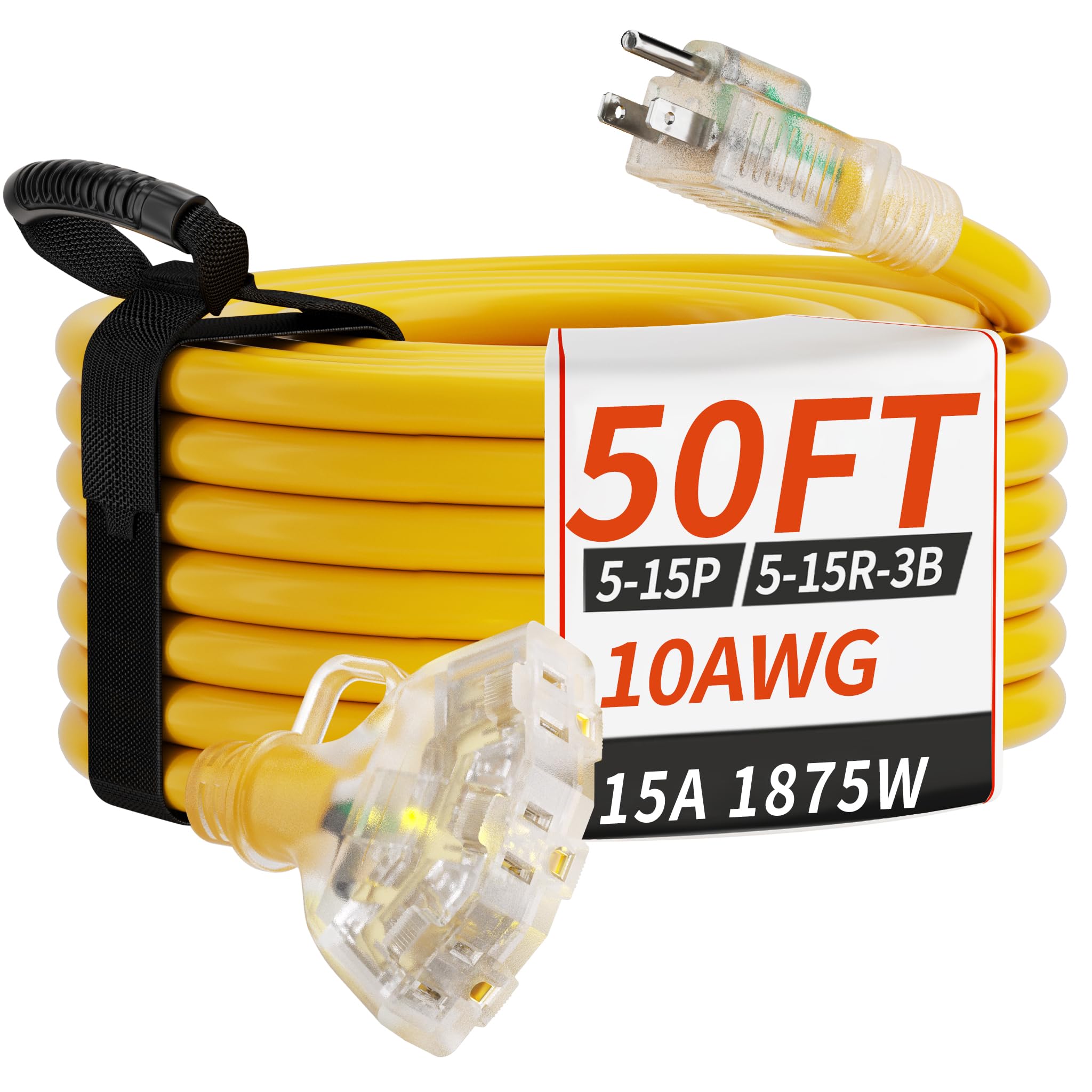
While rated at 15 amps rather than 30, this 10 AWG cord from PlugSaf still uses the heavier gauge wire for reduced voltage drop over 50 feet — a real advantage for high-draw outdoor tools like table saws, generators, and grills. The three 5-15R outlets let you power multiple devices from a single run, and the IP65 waterproof rating means it can sit in rain or snow without risk.
The LED indicator at the female end glows when power is present, a simple but useful feature when debugging connections in low-light conditions. The SJTW jacket stays flexible in cold weather down to -40°F, and the tail has been tested to 20,000 bending cycles without failure. The hook design at the outlet end lets you hang the cord off a workbench or ladder without the connectors pulling loose.
For anyone who needs to run power tools in the yard, power holiday lights, or supply electricity to an outdoor workspace, the heavier 10 AWG construction provides headroom that standard 14-gauge or 12-gauge cords simply can’t match. It’s heavy — but that weight comes from the thicker copper that makes it safer.
Why it’s great
- 10 AWG copper for minimal voltage drop over 50 feet
- IP65 waterproof and cold-resistant to -40°F
- Three outlets with LED power indicator
Good to know
- Rated 15A, not full 30A continuous
- Heavier than typical 12-gauge cords
7. Deeklify 12 Gauge 50 FT Heavy Duty Outdoor Extension Cord
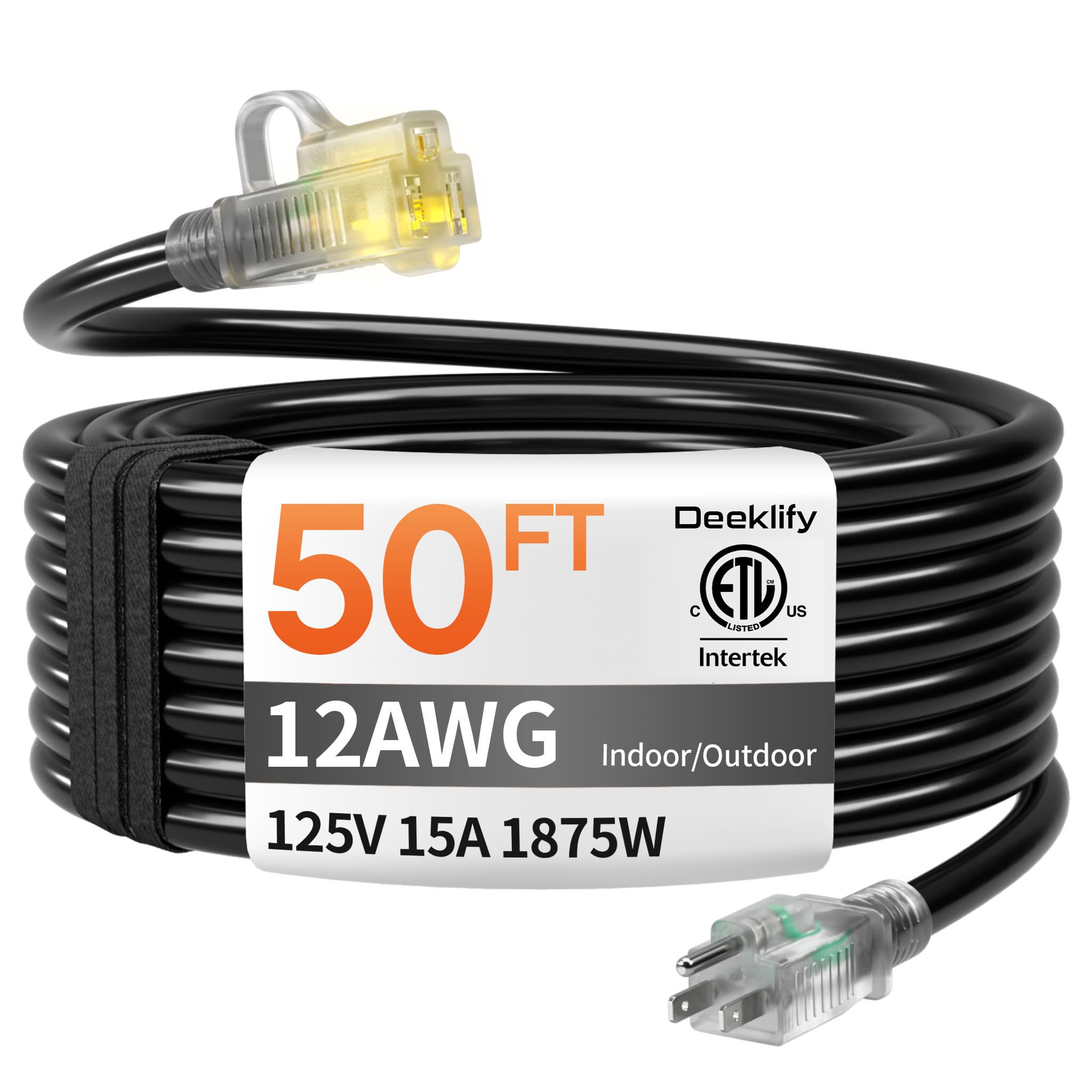
For light-duty 15-amp applications where a 10-gauge cord is overkill, the Deeklify 12 AWG cord offers a welcome balance of durability and flexibility. The polyethylene jacket stays pliable down to -58°F, making it one of the most cold-tolerant cords in this class. The lighted end confirms power presence and the waterproof construction lets it sit on snow-covered ground without issue.
The strain relief hooks at both ends reduce pull-out risk, and the PVC jacket passes 2,000 bending cycles without cracking. Users report it works well with leaf blowers, hedge trimmers, and miter saws — all demanding tools that would stress a thinner extension cord. The 50-foot length provides generous reach across a typical suburban yard or jobsite.
At 12 AWG, this cord can’t sustain true 30-amp loads, but for the vast majority of outdoor tool and lighting applications (all of which run on 15-amp or 20-amp breakers), the thicker-than-average copper and cold-tolerant jacket make this a smart pick for daily outdoor use. The ETL/cETL certification confirms insulation integrity and conductor quality.
Why it’s great
- Exceptional cold tolerance down to -58°F
- 12 AWG conductors handle 15A with minimal drop
- Lighted end and waterproof jacket
Good to know
- Not rated for 30-amp continuous draw
- Single outlet — no multi-tap
FAQ
Can I use a 30 amp extension cable with a 15 amp appliance?
What’s the difference between SJTW and STW jacket ratings?
Will a 50-foot 10 AWG cord drop voltage at 30 amps?
Why do some 30 amp cords have 4 prongs and others have 3?
Final Thoughts: The Verdict
For most users, the 30 amp extension cable winner is the PlugSaf 50FT L14-30 because it combines the ideal 50-foot length with 10 AWG pure copper, a weatherproof STW jacket, and secure twist-lock connectors for generator-to-transfer-switch setups. If you need a multi-outlet cord for running appliances directly from a generator, grab the Champion 25-Foot Fan-Style. And for Level 2 EV charging or dryer outlet extension, nothing beats the CircleCord NEMA 10-30 50FT for sustained 24-amp continuous draw without heat buildup.