
The 30-inch riding mower segment occupies a rare sweet spot — wide enough to cut your mowing time in half compared to a walk-behind, yet narrow enough to slip through standard residential gates. These machines don’t just cut grass; they transform a Saturday chore into a 20-minute cruise. But with a market shifting rapidly from gas to electric and from manual steering to autonomous navigation, choosing the right one demands understanding where real performance gains come from. Whether you prioritize raw cutting torque, self-propelled convenience, or true hands-off robotics, the decision hinges on a few critical specs that separate a tool from a toy.
I’m Min — the co-founder and writer behind Gadgets Feed. Over countless hours analyzing battery chemistry, deck aerodynamics, and positioning system accuracy across dozens of mower models, I’ve mapped exactly which sub- platforms deliver real durability and which rely on flashy marketing to hide weak traction control or undersized batteries.
After weeks of deep-dive research comparing deck materials, motor torque curves, and slope handling limits, I’ve assembled the definitive guide to finding the best 30 inch riding mower that fits your yard’s demands without breaking your budget.
How To Choose The Best 30 Inch Riding Mower
Not all 30-inch decks behave the same. The wrong choice means scalping bumps, running out of power mid-yard, or spending every weekend troubleshooting app connectivity. Focus on these four pillars to match a machine to your property.
Real Cutting Torque vs. Advertised Horsepower
Electric mowers quote HP-equivalent numbers that rarely translate to real-world cutting ability in thick, wet grass. Instead, look for foot-pounds of cutting torque — a metric that directly measures the blade’s ability to maintain rotational speed under load. A machine delivering 13.2 ft-lb of torque, for instance, cuts through 200cc gas-equivalent conditions without bogging, while lower-torque units struggle with St. Augustine or tall fescue.
Slope Handling and Traction Architecture
Slope ratings are often measured under ideal conditions with a full battery and dry grass. Pay close attention to whether a mower uses all-wheel drive or two-wheel drive, and whether it includes electronic stability control. A 45% slope rating on a two-wheel-drive platform means very different real-world performance than a 70% rating on an AWD chassis with torque vectoring. For properties with any incline, AWD with independent wheel motors is a non-negotiable upgrade.
Navigation Accuracy Without Perimeter Wires
Wire-free mowers rely on one of three positioning systems: RTK (real-time kinematic satellite correction), LiDAR (laser-based environmental mapping), or Vision AI (camera-based object recognition). Each has trade-offs. RTK is accurate to two centimeters but can drop under dense tree cover. LiDAR works in full shade but requires clean sensor surfaces. Vision AI handles obstacle detection best but may miss boundaries in low light. The best platforms combine at least two of these technologies for failover.
Battery Capacity and Charging Speed
Amp-hour ratings alone don’t tell the full story. A 6.0Ah battery in turbo mode might drain in 30 minutes, while the same battery in eco mode runs for 75 minutes. Look for the actual watt-hour (Wh) capacity — 6.0Ah at 56V equals 336Wh, while 8.0Ah at 60V equals 480Wh. Also check fast charging specs: a 189W charger can refill a drained pack in about 70 minutes, making it feasible to mow larger lawns in two sessions without all-day delays.
Quick Comparison
On smaller screens, swipe sideways to see the full table.
| Model | Category | Best For | Key Spec | Amazon |
|---|---|---|---|---|
| EGO Power+ LM3004SP-2 | Premium Ride-On | Gas-replacement power | 13.2 ft-lb cutting torque | Amazon |
| Greenworks 60V 30-inch | Premium Ride-On | Large yards 1+ acre | 1,920 Wh total (4×8Ah) | Amazon |
| Mammotion LUBA 3 AWD 3000H | Premium Robot | Steep terrain autonomy | 80% slope, 165W motors | Amazon |
| Segway Navimow X450 | Premium Robot | Large complex lawns | 17-inch cut, 1.5 acres | Amazon |
| Mowrator S1 4WD | Premium RC | Overgrown hillsides | 75% slope, 18Ah battery | Amazon |
| ECOVACS Goat A3000 LiDAR PRO | Mid-Range Robot | Wire-free LiDAR navigation | 7,500 mAh, 189W charge | Amazon |
| CRAFTSMAN 36-inch Gas | Mid-Range Gas | Budget gas tractor | 11.5 HP B&S engine | Amazon |
| Sunseeker X7 AWD Robot | Mid-Range Robot | Extreme slope robot | 70% slope, floating deck | Amazon |
| WORX Vision Cloud WR320 | Mid-Range Robot | Wire-free 1/2 acre | 8.7-inch cut, RTK cloud | Amazon |
| WORX Vision Cloud WR310 | Mid-Range Robot | Wire-free 1/4 acre | 8.7-inch cut, Vision AI | Amazon |
| ANTHBOT Genie3000 | Entry-Level Robot | Wire-free small yards | 7.9-inch cut, 4-eye vision | Amazon |
| Segway Navimow i206 AWD | Entry-Level Robot | Small sloped yards | 45% slope, 2.5Ah battery | Amazon |
| Sunseeker X3 Plus Robot | Entry-Level Robot | Suburban lawns 0.3 acre | 8-inch cut, RTK + VSLAM | Amazon |
In-Depth Reviews
1. EGO Power+ LM3004SP-2
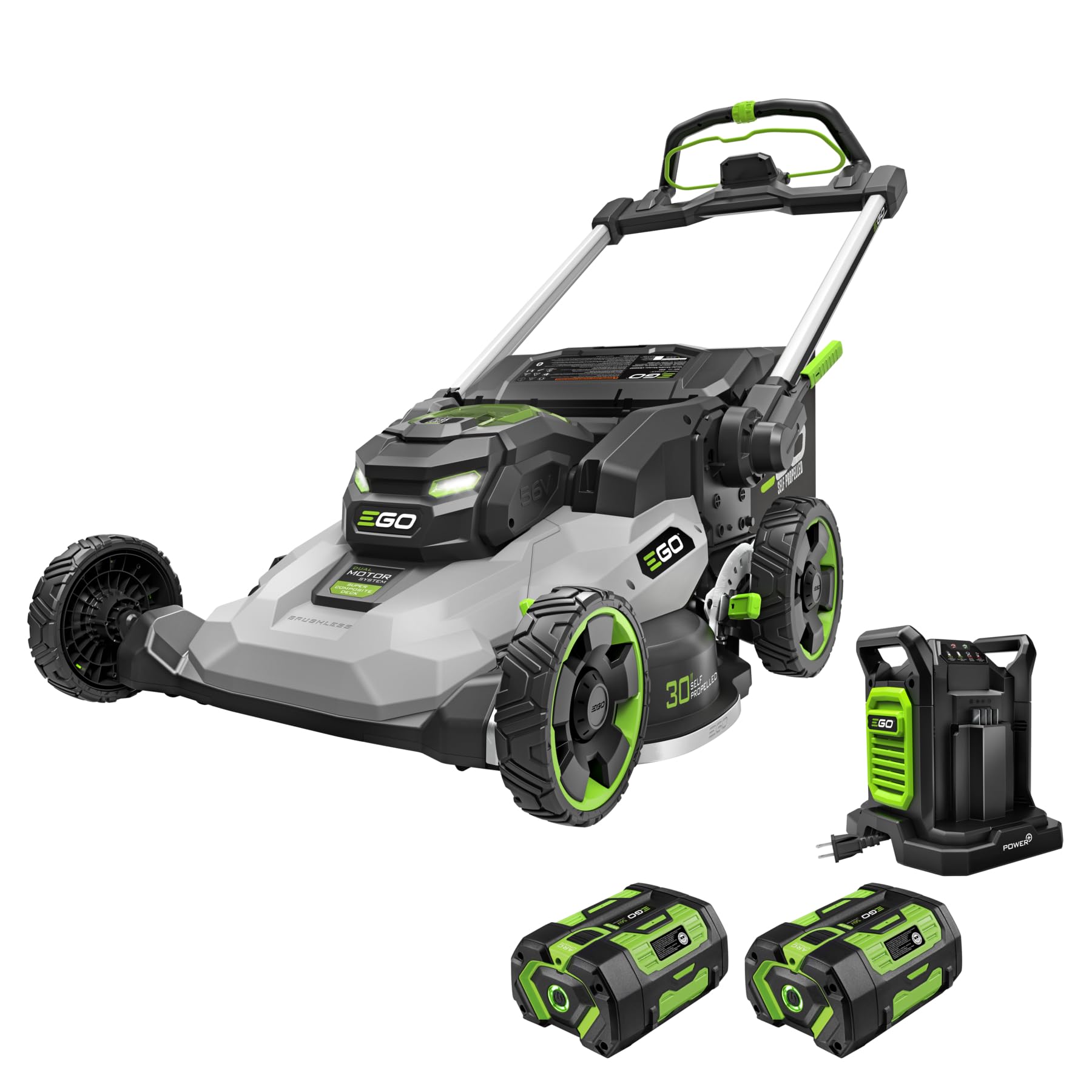
The EGO LM3004SP-2 is the closest thing to a gas-replacement electric ride-on without the maintenance headaches. Its dual-motor, dual-blade architecture delivers 13.2 foot-pounds of cutting torque — enough to tear through 200cc gas-equivalent conditions including thick St. Augustine and wet Bermuda without bogging down. The 30-inch Super Composite deck cuts up to 75 minutes on a single charge using the included pair of 56V 6.0Ah ARC Lithium batteries, though running in Turbo mode reduces runtime significantly.
Touch Drive self-propulsion uses palm pressure on the handle to engage, with a dial for infinite speed adjustment, making maneuvering around landscaping beds intuitive. The nine-position height adjustment ranges from 1 to 5 inches, and the 3-in-1 capability (mulch, bag, side discharge) covers most lawn care needs. The deck folds compact for storage, and the 10-year deck warranty plus 5-year tool warranty back the build quality.
At 166 pounds, this mower is heavy — not something you’ll lift onto a truck bed without ramps. Some users report that the self-propel speed engages instantly rather than ramping up, which takes adjustment when turning in tight corners. The app unlock for extra power modes is a minor friction point, but once configured, the mower performs exactly as advertised.
Why it’s great
- Peak torque of 13.2 ft-lb matches 200cc gas mowers without noise or fumes
- Touch Drive self-propel with variable speed dial for precision control
- 10-year deck warranty and 5-year tool warranty provide long-term confidence
Good to know
- Heavy at 166 pounds; requires ramps for transport
- Self-propel engages abruptly with no gradual ramp-up
- App required to unlock full power potential
2. Greenworks 60V 30-inch Riding Mower
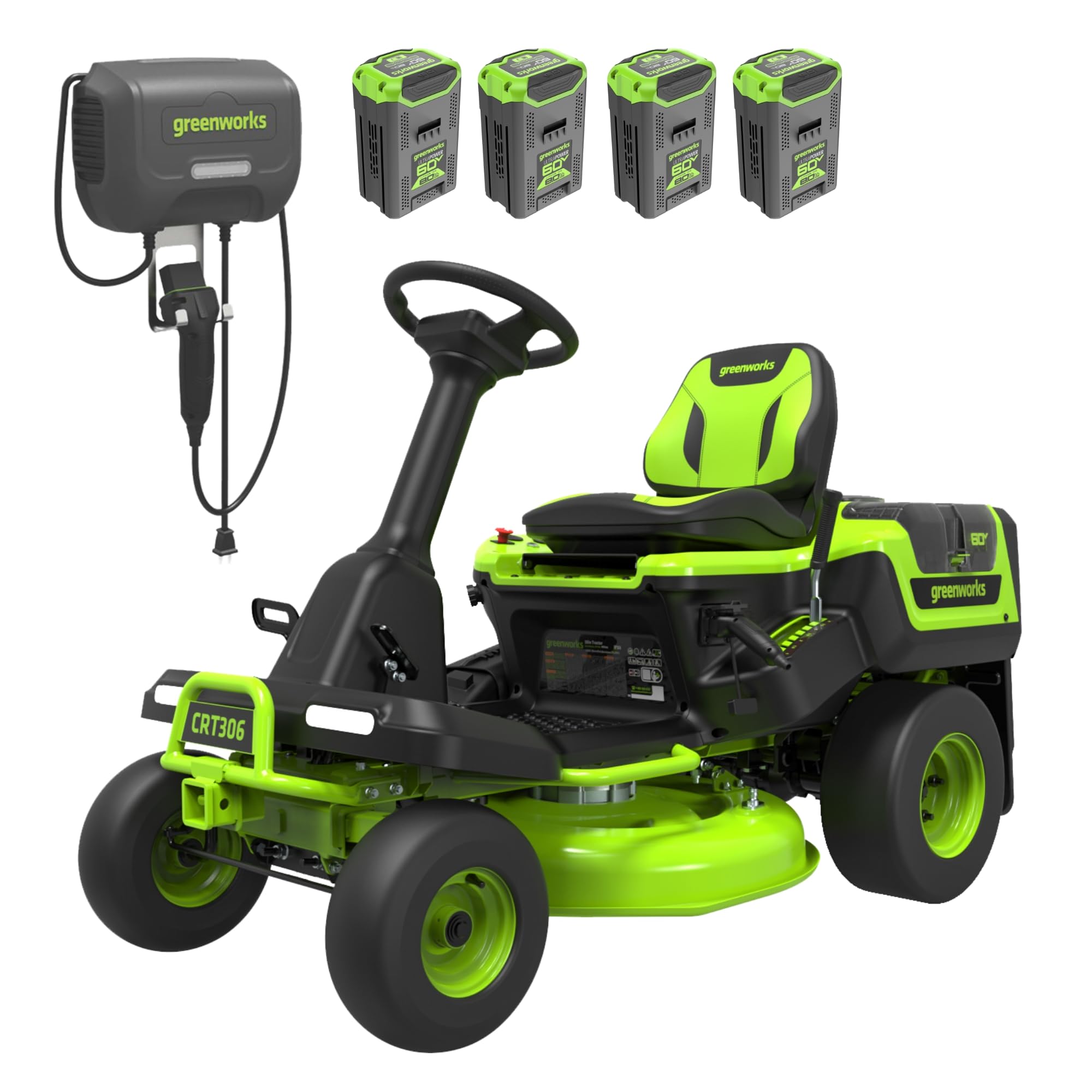
Greenworks attacks the range anxiety problem differently — instead of a single large battery, this 30-inch ride-on ships with four 60V 8.0Ah batteries totaling 1,920 watt-hours. That’s enough capacity to mow up to 1.25 acres on a single charge, with the intelligent brushless motor delivering performance equivalent to a 16 HP gas engine. The SmartCut technology auto-adapts blade speed based on grass density, preventing bogging in thick patches while conserving battery in lighter sections.
The 30-inch heavy-duty 4-in-1 stamped steel deck includes a wash port for easy cleaning and side discharge capability. A single lever adjusts cutting height from 1.5 to 4.5 inches across seven positions. The adaptive traction control system handles slopes up to 15 degrees, keeping the mower tracking straight without sliding sideways. A rear hitch tows up to 200 pounds for trailers or pull-behind aerators, and onboard USB Type-A and Type-C ports keep devices charged during operation.
Assembly is the main friction point — the heavy metal crate requires significant effort to disassemble, and some units have arrived missing small hardware. The side discharge chute can dislodge on uneven ground when the deck is set below 2.5 inches. The 631-pound curb weight also makes it challenging to move without the self-propel system engaged.
Why it’s great
- Four 8.0Ah batteries deliver 1,920 Wh total for 1.25-acre runs
- SmartCut technology adjusts blade speed to grass density in real-time
- Rear hitch tows up to 200 lbs and onboard USB charging ports
Good to know
- Heavy metal crate assembly and missing hardware reported
- Side discharge chute dislodges easily on uneven terrain at low deck height
- 631-pound weight limits portability without ramp
3. Mammotion LUBA 3 AWD 3000H
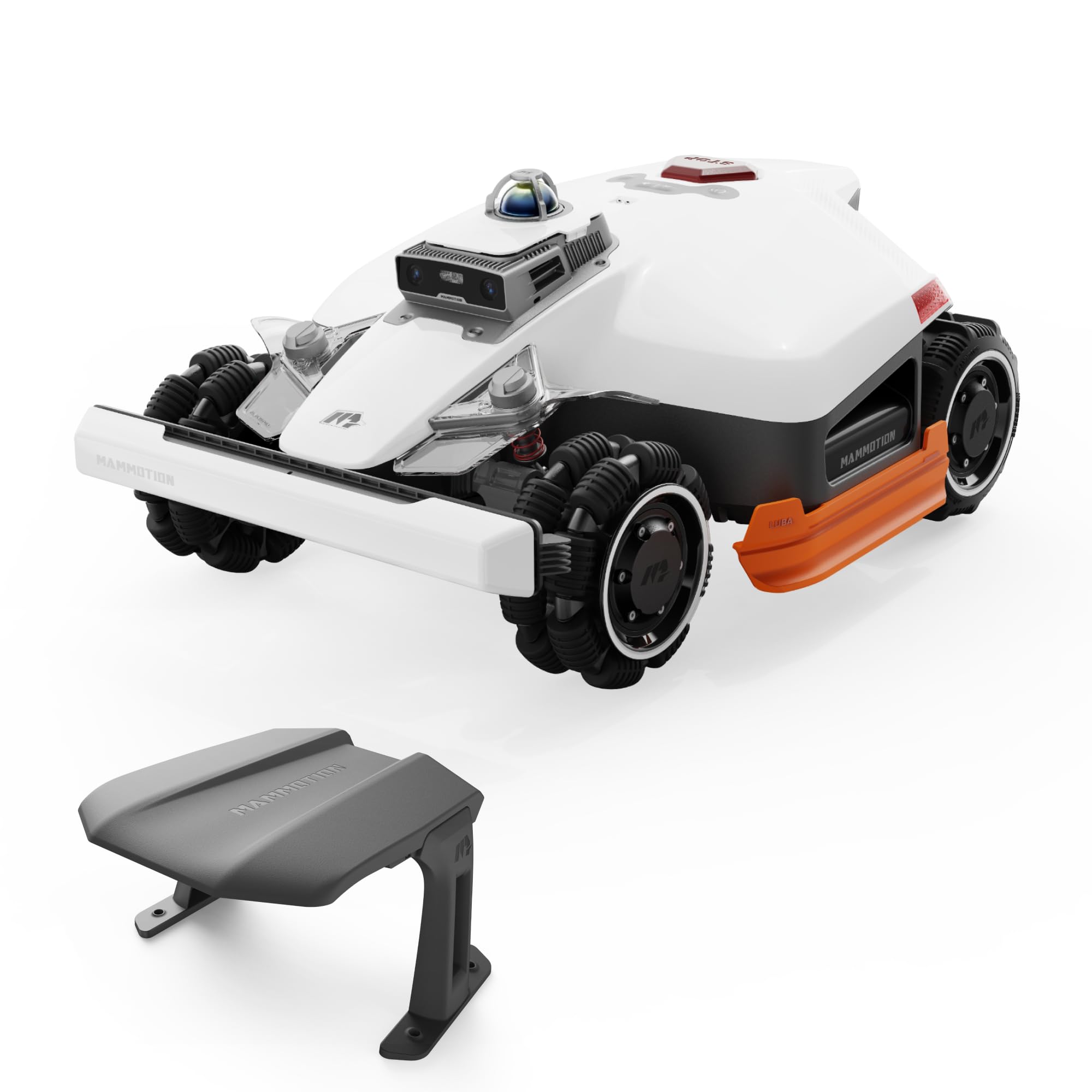
The LUBA 3 AWD 3000H is the most capable robotic mower for extreme terrain, combining 360-degree LiDAR, NetRTK satellite correction, and dual-camera AI Vision into a tri-fusion navigation system. Its four independently motorized wheels climb slopes up to 80% (38.6 degrees), while the adaptive suspension system steps over curbs, roots, and thresholds up to 50 mm high without getting stuck. The 165W dual motors with six-blade discs automatically adjust speed and power based on grass density, covering up to 500 m² per hour.
Setup is genuinely wire-free — the RTK base station handles positioning without perimeter wires, and the 12Ah lithium battery delivers up to 175 minutes of runtime. Users can define up to 30 mowing zones with no-go areas, and choose from perimeter-only, zigzag, checkerboard, or adaptive zigzag patterns. The included garage charges and protects the mower between sessions. The AI processor identifies over 300 obstacle types, from garden hoses to small animals, with real-time path recalculation.
The trade-off is size and weight — the LUBA 3 is a substantial robot that requires clear paths between zones. Some users report that the mower uses the same transit route between zones, which can create tire ruts with frequent mowing cycles. Real-world battery coverage runs about 60% of the advertised 0.75 acres in thicker grass conditions, but fast charging mitigates the gap.
Why it’s great
- Tri-fusion navigation with LiDAR+RTK+AI Vision for centimeter accuracy under tree cover
- Four independent motors climb 80% slopes with 50mm obstacle step-over
- 175-minute runtime with 165W dual motors and auto speed adjustment
Good to know
- Large footprint requires clear transit paths between zones
- Repeated same-path transit can create tire ruts over time
- Real-world battery coverage roughly 60% of max rating in thick grass
4. Segway Navimow X450
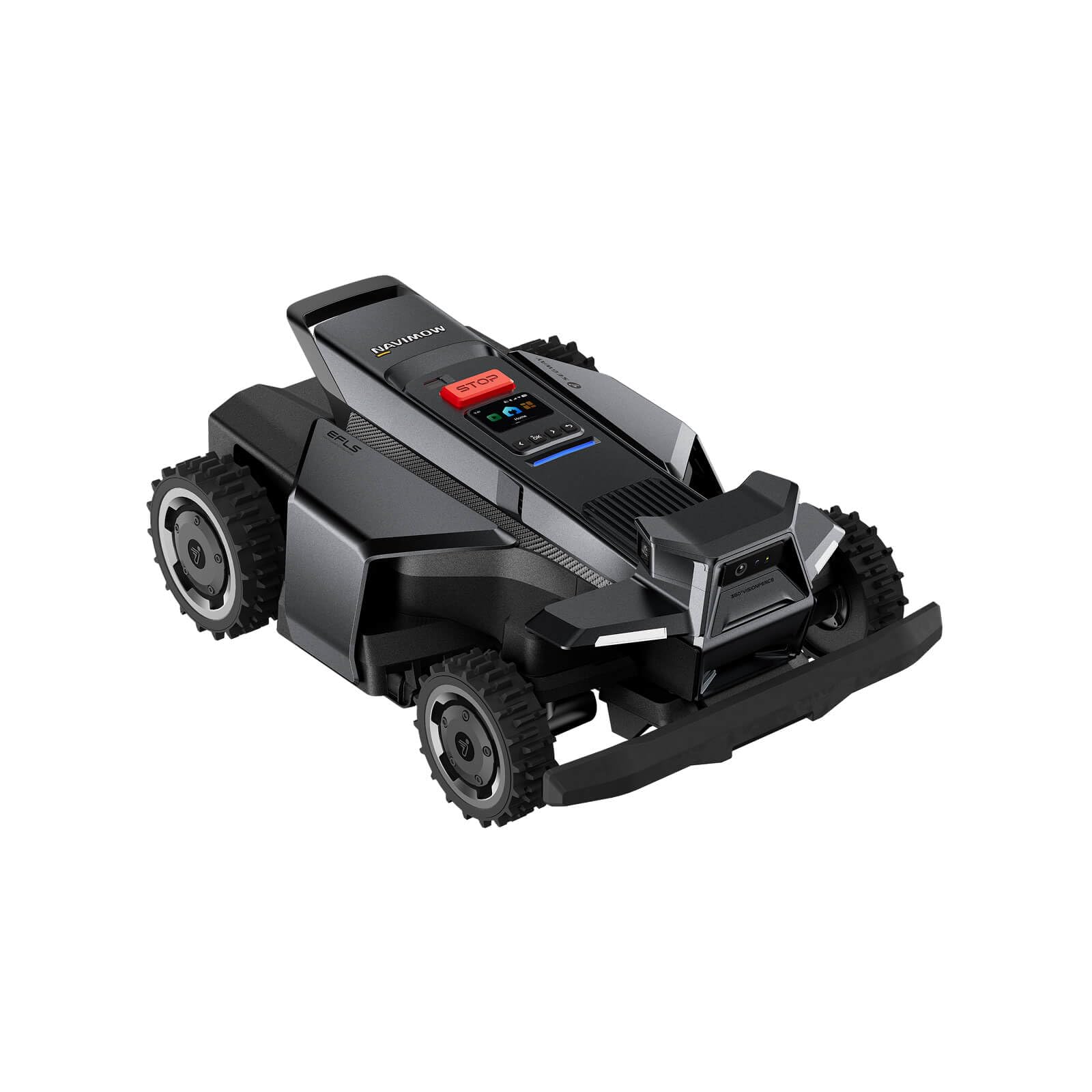
The Navimow X450 from Segway redefines robotic mowing capacity with a 17-inch cutting width and 1.5-acre coverage, making it the widest-cutting robot in this lineup. Its ORV-tuned dual suspension and Xero-Turn AWD with eccentric front-wheel steering enable zero-turn maneuvers that don’t scuff turf, even on 84% (40-degree) slopes. The dual 180W motors drive 12 blades across two discs at 2.6 ft/s, with EdgeSense reducing trimming margins to under 2 inches — close enough to skip manual edging in many yards.
Positioning uses EFLS tri-frequency Network RTK combined with 360-degree Vision and VIO (visual inertial odometry) for centimeter-level accuracy in shaded zones where pure RTK would drift. AI-powered VisionFence identifies over 200 obstacle types, from pets to toys, with adaptive path planning. Setup is truly wire-free and antenna-free — placing the charging station and tapping auto mapping completes initial configuration. Voice control via Alexa or Google Home and GPS-based GeoFence alerts add security layers.
The 63.7-pound weight makes it the heaviest robot mower here, which aids traction but complicates carrying across obstacles. Some early units experienced charging connection issues that required firmware updates to resolve. The dual 180W motors draw significant power, so mowing time at full speed is lower than smaller robots, though the wide cut compensates by covering more ground per pass.
Why it’s great
- 17-inch cutting width with 12 blades covers 1.5 acres with under 2-inch edge margins
- Xero-Turn AWD provides zero-turn maneuvering without turf damage
- Tri-frequency RTK + 360-degree Vision maintains accuracy under shade and trees
Good to know
- Heaviest robot at 63.7 pounds, difficult to lift over obstacles
- Dual 180W motors drain battery faster than smaller competitors
- Firmware updates critical for initial charging dock reliability
5. Mowrator S1 4WD 18Ah
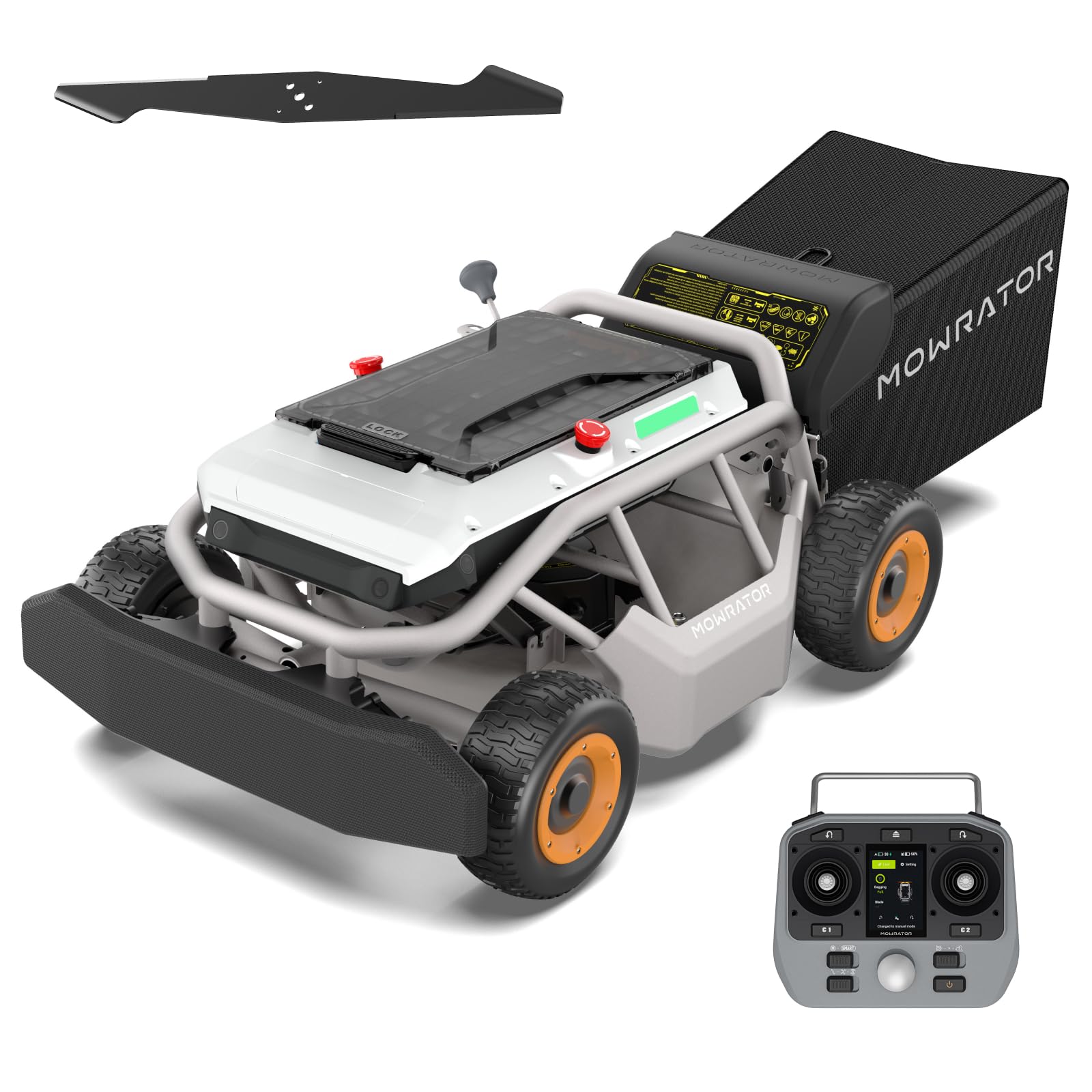
When your terrain is too steep, overgrown, or uneven for any autonomous robot, the Mowrator S1 offers a direct-remote-control alternative that uses a low-latency handheld transmitter. The 4WD chassis with 18Ah battery climbs 75% (37-degree) slopes while the 21-inch cutting blade chews through 30-inch tall invasive grass without hesitation. The four-wheel drive system grips aggressively on loose soil and wet hillsides, making it the tool of choice for properties that would otherwise require a string trimmer and weeks of manual labor.
Beyond summer mowing, the S1 is designed for year-round use with optional attachments: a tow hitch for hauling, mulching blade for leaf management, snow plow with chains for winter, and an FPV camera kit for remote monitoring from indoors. The 2.25-hour battery runtime covers up to 1.12 acres per charge, and the cutting height adjusts from 1.5 to 4.3 inches. At 147.7 pounds, it’s lighter than a gas tractor but far heavier than any robot, benefitting from a metal and aluminum frame with polyurethane wheels.
The downsides are real: frequent error codes with vague troubleshooting documentation, and initial customer support can take weeks to respond. The 4WD system can rip turf when making sharp turns on flat ground, requiring careful steering technique. The machine feels like a beta product in some respects — powerful but not fully polished in its user experience. For extreme terrain, however, nothing else in this list comes close to its brute-force capability.
Why it’s great
- 75% slope climbing with 4WD and deep-tread wheels handles overgrown hillsides
- 2.25-hour runtime from 18Ah battery covers 1.12 acres per charge
- Year-round versatility with optional snow plow, tow hitch, and FPV kit
Good to know
- Frequent error codes with sparse troubleshooting documentation
- Customer support response time reported as slow (up to 3 weeks)
- Sharp 4WD turns can tear turf on flat terrain
6. ECOVACS Goat A3000 LiDAR PRO
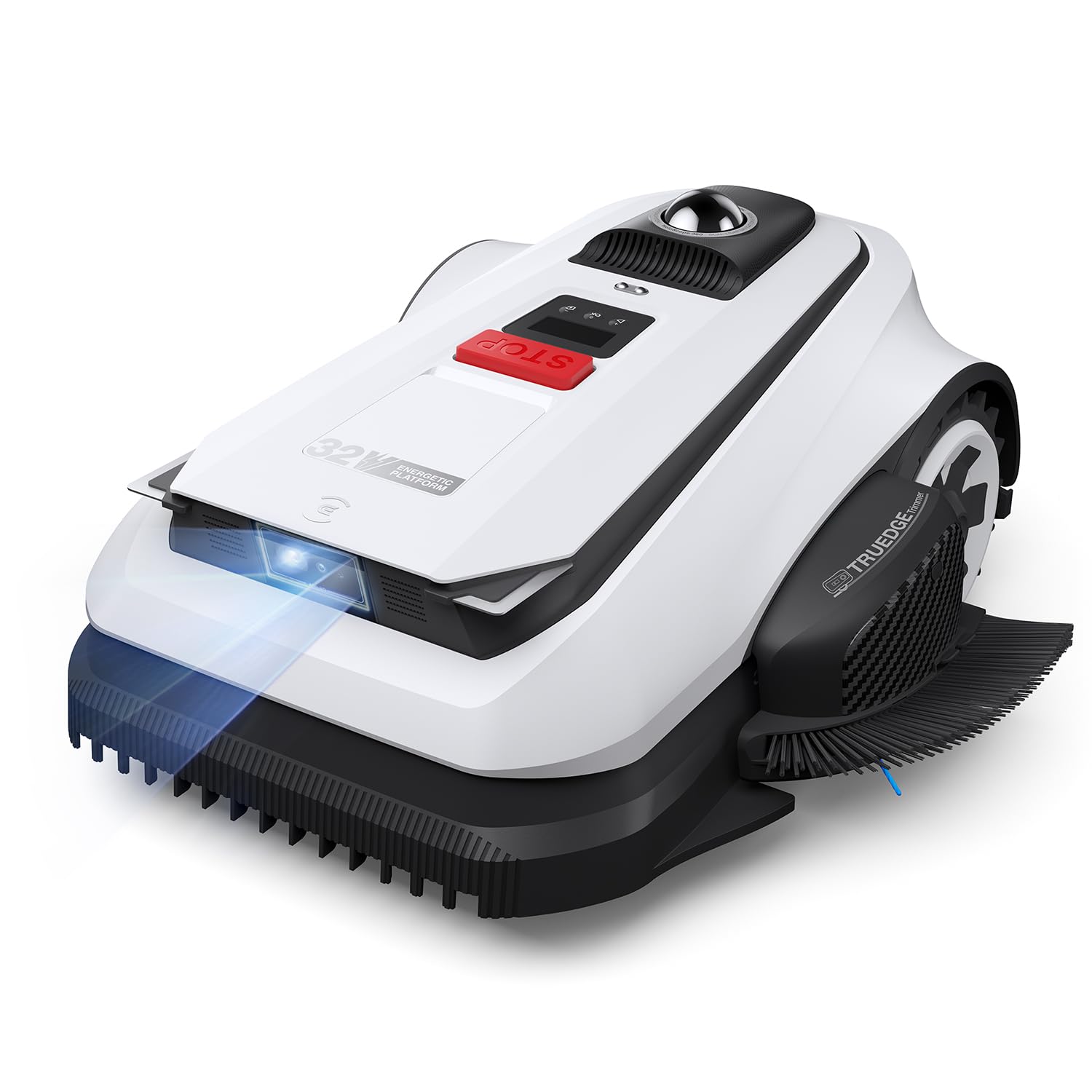
ECOVACS brings its robot vacuum expertise outdoors with the Goat A3000 LiDAR PRO, which uses HoloScope 360-degree Dual-LiDAR for wire-free navigation that works equally well under tree canopies and along fences. The twin spinning laser towers create a 2 cm accuracy positioning map without RTK antennas or perimeter wires, making setup exceptionally simple for users who want a truly out-of-the-box experience. The 32V high-power system with dual-blade disc generates enough torque for thick American grass varieties including Bermuda, Zoysia, and St. Augustine.
The built-in TruEdge edge trimmer is a standout feature — a dedicated blade system that trims lawn borders flush with sidewalks, driveways, and flower beds, reducing the need for manual string trimming after robotic mowing. The 7,500 mAh battery charges fully in approximately 70 minutes via the 189W fast charger, enabling back-to-back mowing sessions for larger yards up to 3/4 acre. The ECOVACS app supports multi-zone mapping with no-go areas, cutting height adjustment from 1.2 to 3.6 inches, and travel path definition between zones.
The LiDAR towers add height, making the mower less able to pass under low-hanging branches or shrubs. Some users report that the initial mapping walk-around can take 3+ hours on complex lawns, and that the mower struggles with tight corners and highly uneven terrain. At the premium price point, the absence of a weatherproof garage (sold separately) feels like a gap.
Why it’s great
- Dual-LiDAR navigation maintains 2 cm accuracy under trees without RTK or wires
- Integrated TruEdge trimmer cuts borders flush, reducing manual string trimming
- 189W fast charger refills 7,500 mAh battery in approximately 70 minutes
Good to know
- LiDAR towers add height, limiting passage under low branches
- Initial mapping walk-around can take up to 3 hours on complex lawns
- Weatherproof garage not included at this price point
7. CRAFTSMAN 36-inch Gas Riding Mower
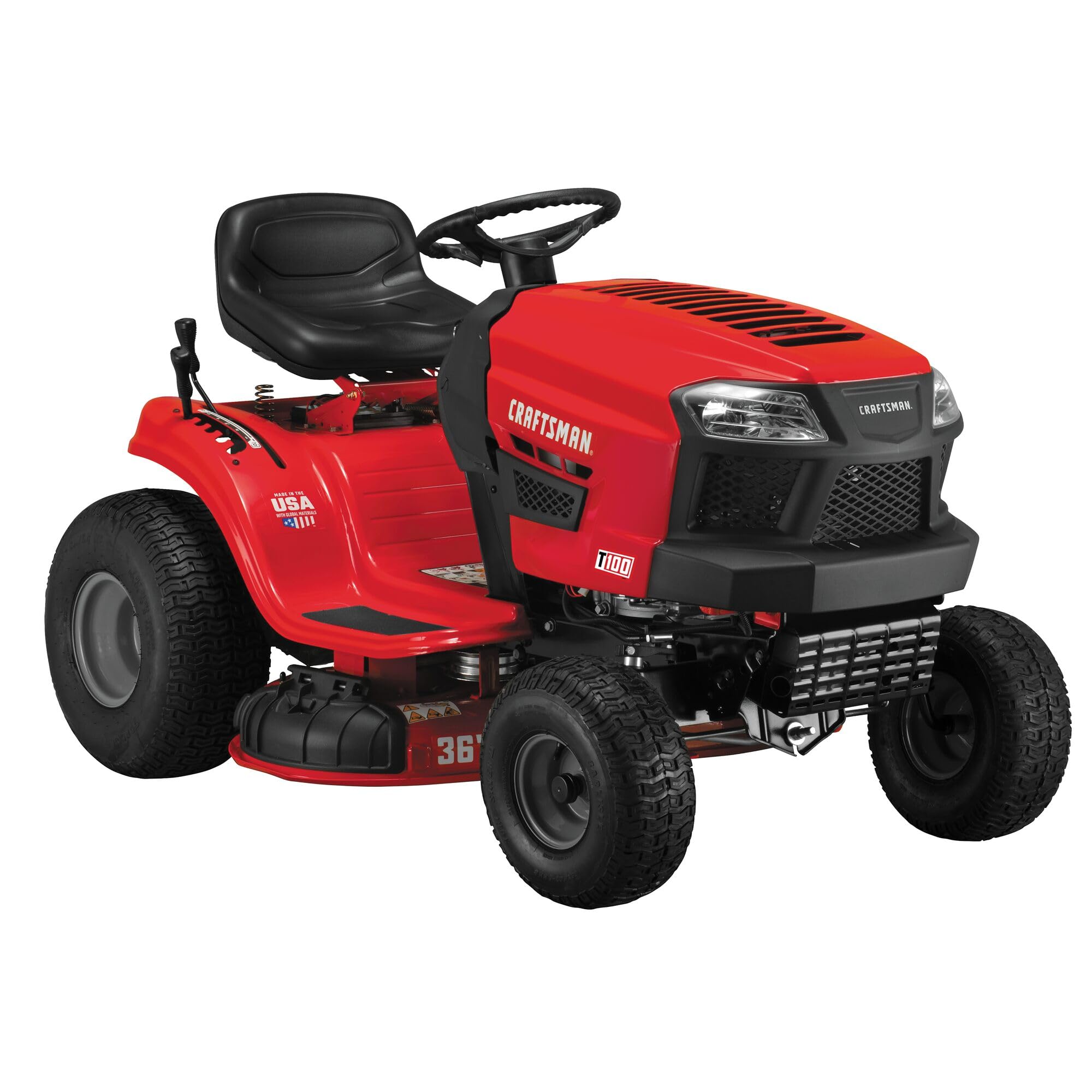
CRAFTSMAN keeps the gas-riding-mower tradition alive with a 36-inch stamped steel deck and an 11.5 HP Briggs & Stratton single-cylinder engine. While its deck width exceeds the 30-inch category, its 18-inch turning radius and 350-pound weight make it maneuverable through gates and around landscaping obstacles. The 7-speed manual transmission lets users select ground speed independently of engine RPM, which helps in varying grass conditions. A mulching kit comes included, allowing immediate 3-in-1 operation without additional purchases.
The steel deck is reinforced and cuts up to 2 acres, making this a viable option for larger properties on a tighter budget. The contoured low-back seat provides adequate comfort for shorter sessions, though taller operators at 6’1″ may find the cockpit cramped. Assembly is straightforward — attach the steering wheel, seat, and battery, then add fuel. The engine arrives pre-filled with break-in oil that should be changed after the first 5 hours.
Build quality is not premium. The stamped steel deck is thinner than fabricated alternatives, and the plastic body panels feel utilitarian. Several owners report transmission or drive issues within the first few uses, requiring warranty service. The 7-speed transmission requires clutching between gears, which adds complexity compared to automatic or continuously variable transmissions (CVT). Consider this a functional entry-level tractor rather than a long-term investment.
Why it’s great
- 36-inch stamped steel deck cuts up to 2 acres with 18-inch turning radius
- 11.5 HP Briggs & Stratton engine starts reliably and runs quietly
- Mulching kit included for immediate 3-in-1 operation
Good to know
- Thin stamped steel deck and plastic body panels feel utilitarian
- Transmission and drive issues reported within the first few uses
- 7-speed manual requires clutching; cramped for operators over 6 feet
8. Sunseeker X7 AWD Robot
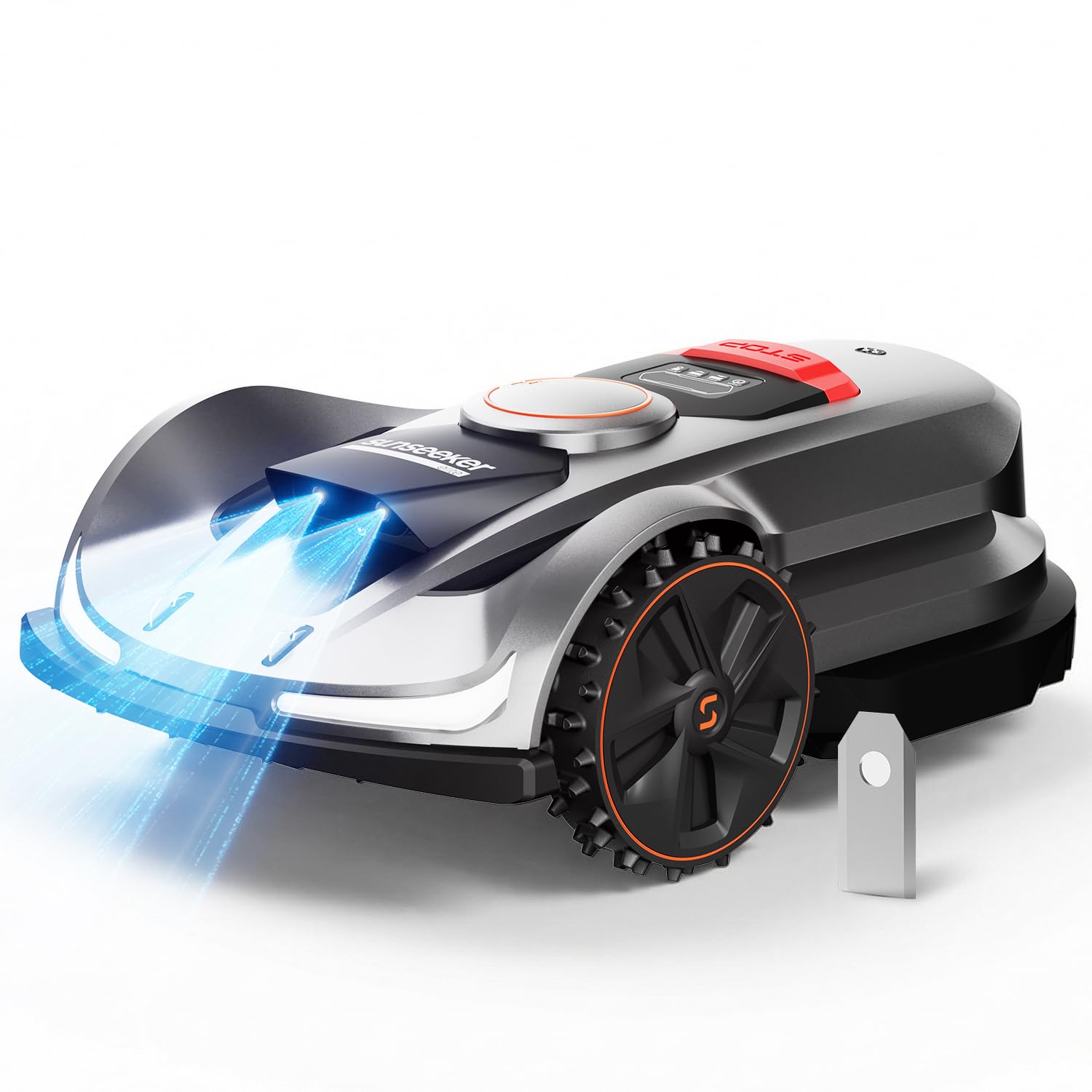
The Sunseeker X7 is built for properties where the terrain turns serious. Its all-wheel-drive chassis with deep-tread off-road tires climbs slopes up to 70% (35 degrees) without slipping, while the binocular 3D AI vision system uses dual cameras for depth perception — detecting obstacle size and distance more accurately than single-camera alternatives. The floating cutting deck auto-adjusts to ground contours to prevent scalping on uneven terrain, and the 14-inch cutting width covers up to 0.75 acres with an 11-position height range from 0.8 to 4 inches.
Security is bank-grade with 4G+GPS real-time tracking, an anti-theft alarm, and geofence lockout that alerts you if the mower is moved outside your property boundary. The 30.5-pound weight is remarkably light for an AWD robot, and users report setup taking about two hours via the app and YouTube guide. The mower operates quietly enough for early-morning schedules without disturbing neighbors, and firmware updates have been arriving regularly.
The networking architecture requires persistent connection to servers in China and Hong Kong, which raises privacy concerns for some users. In areas with weak cellular or Wi-Fi coverage, the robot may lose navigation and display “Plan path failed” errors. Signal stability depends heavily on roof-mounting the RTK base station, which isn’t always possible for HOA-restricted properties. The customer support team is responsive but the app setup isn’t intuitive.
Why it’s great
- Binocular 3D AI vision provides depth perception superior to single-camera systems
- Floating deck prevents scalping on uneven terrain with 0.8 to 4 inch height range
- 4G+GPS anti-theft tracking with geofence alerts for security
Good to know
- Network connections to servers in China/Hong Kong may raise privacy concerns
- RTK signal drops in areas without roof-mounted base station
- App setup is not intuitive and requires patience
9. WORX Vision Cloud WR320
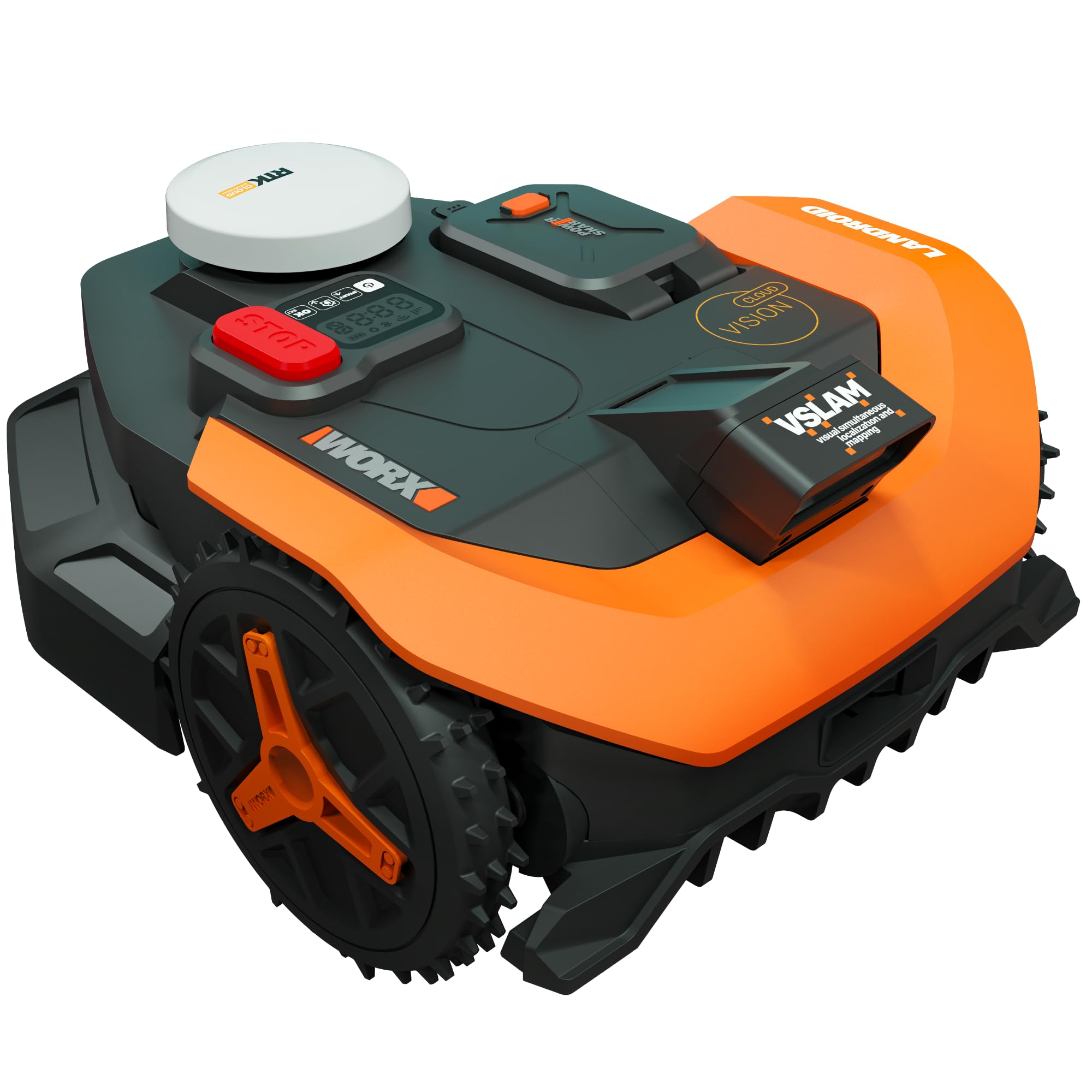
The WORX WR320 takes a different approach to wire-free mowing by delivering RTK corrections through the cloud rather than a local antenna, eliminating the need for any RTK base station installation. Vision AI with a neural network performing 10 trillion operations per second handles object recognition and path planning, supporting unlimited mowing zones with custom pathways. The RadioLink feature extends Bluetooth and Wi-Fi communication beyond standard range, maintaining reliable control across larger lawns where connectivity otherwise drops.
The 8.7-inch cutting width is smaller than premium competitors, but the Cut-to-Edge border cutting system uses vision understanding to cross ridable edges and minimize leftover grass along fixed borders. Users can switch between Parallel, Checkerboard, Diamond, and Natural mowing patterns via the app. The 60-minute battery runtime covers up to 1/2 acre, and the 3-year manufacturer warranty provides solid coverage. V-SLAM sensor fusion takes over navigation in shaded areas where cloud RTK might weaken.
Setup is the major bottleneck. The WR320 requires a dedicated 2.4 GHz Wi-Fi network, and initial firmware updates and app pairing can take hours. Some users report losing connection beyond 50 feet from the charging base, with the mower locking up and failing to return. WORX’s iOS app carries a low rating, reflecting a poor onboarding experience. Once properly configured, however, owners report consistent, quiet mowing that delivers on the wire-free promise.
Why it’s great
- Cloud-based RTK eliminates need for local antenna installation
- RadioLink extends control range beyond standard Wi-Fi coverage
- Unlimited zone management with custom pathways and pattern selection
Good to know
- Setup requires dedicated 2.4 GHz network and can take hours
- App loses connection beyond 50 feet from charging base for some users
- iOS app rated low; onboarding experience is frustrating
10. WORX Vision Cloud WR310
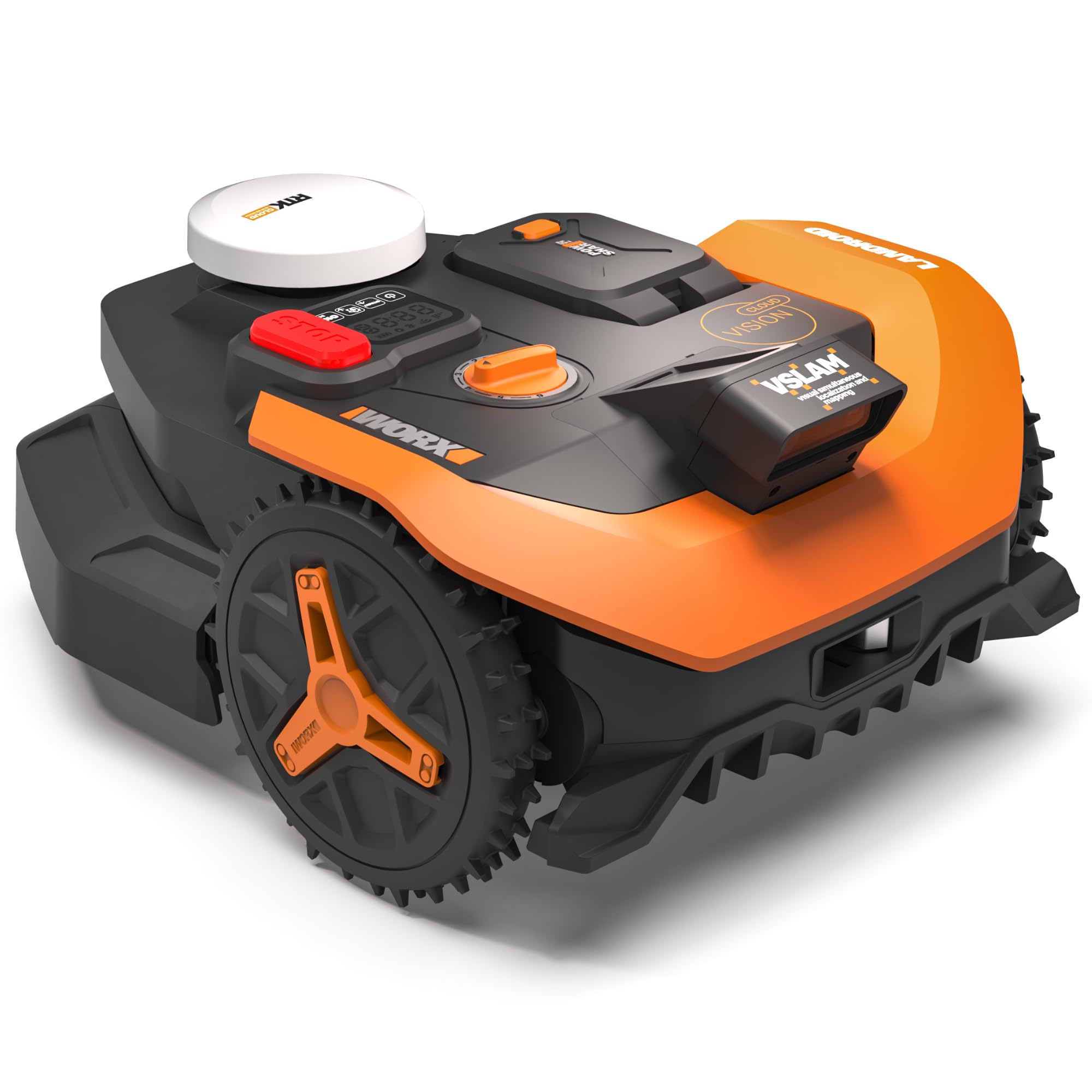
The WR310 is the slightly smaller sibling of the WR320, designed for lawns up to 1/4 acre with the same cloud-based RTK and Vision AI neural network. The 80-minute battery life is actually longer than the WR320’s 60-minute rating, which makes sense for the smaller recommended yard size where the mower won’t need as many passes. The 8.7-inch cutting width and 1.57 to 3.54 inch height adjustment range are identical, and it shares the same Cut-to-Edge border crossing logic and multi-pattern selection.
The same centimeter-level RTK cloud accuracy applies, with V-SLAM sensor fusion for shaded areas. Setup follows the same process — dedicated 2.4 GHz network, firmware updates, and app pairing. The spiked wheels provide good traction on slopes up to 30%, and the mower’s plastic construction keeps weight manageable at approximately 44 pounds. User reports indicate that after an initial learning period, the mower operates flawlessly, quietly, and with minimal intervention required.
The shared pitfalls with the WR320 include the same rough setup experience, 2.4 GHz Wi-Fi requirement, and app reliability concerns. The smaller battery capacity (80-minute average) means the WR310 can be fully discharged on larger 1/4 acre lawns with dense grass, requiring a recharge cycle mid-session. The AI obstacle avoidance sometimes leaves unmowed strips near barkdust borders and flower beds, which improves with firmware updates but may not reach perfection.
Why it’s great
- Cloud RTK eliminates both wires and local antenna with centimeter accuracy
- 80-minute battery runtime covers full 1/4 acre with standard mowing pattern
- Spiked wheels provide reliable traction on 30% slopes without slipping
Good to know
- Setup process is time-consuming and requires technical patience
- AI may leave unmowed strips near barkdust or flower bed borders
- Mid-session recharge needed on densest 1/4 acre lawns
11. ANTHBOT Genie3000
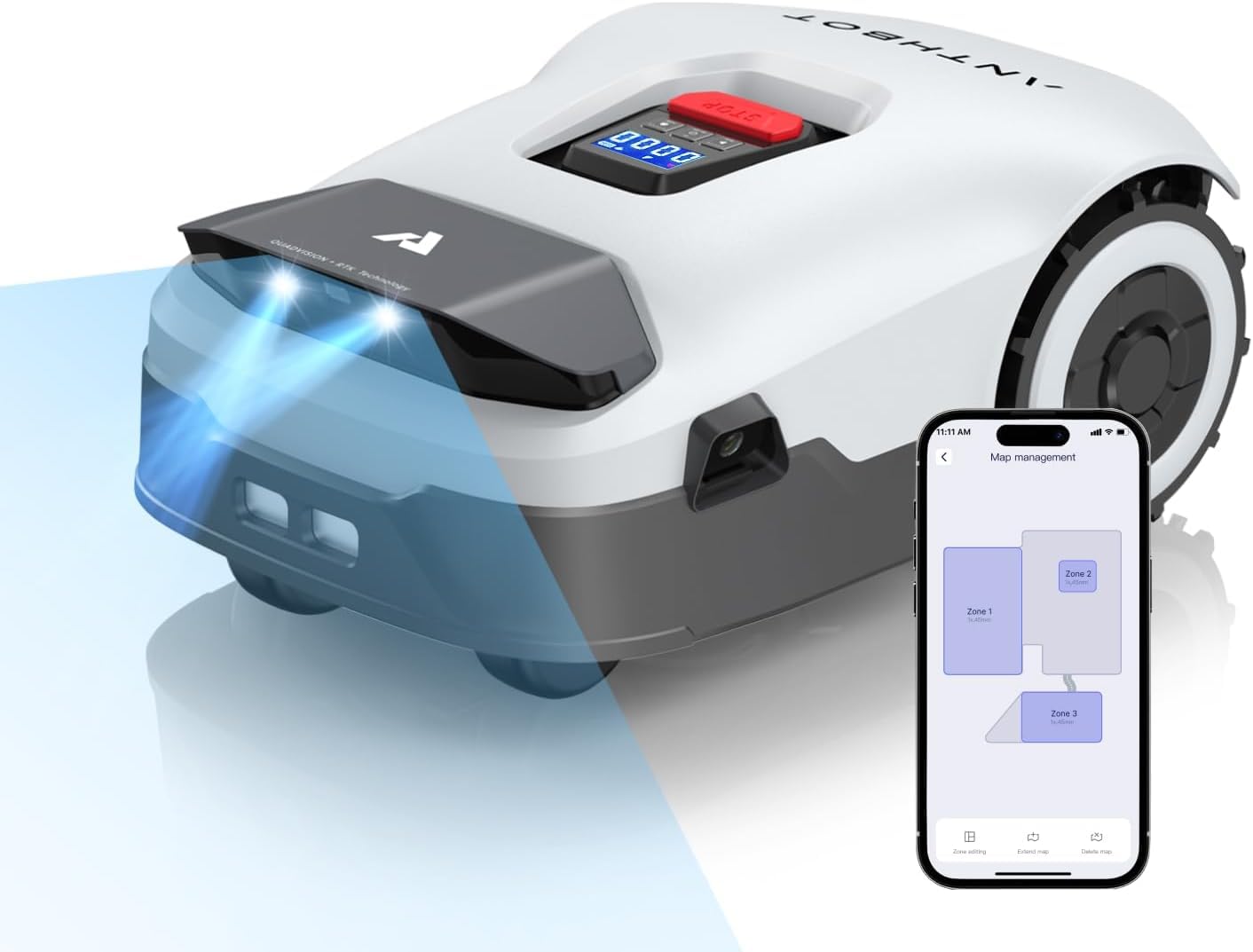
The Genie3000 brings RTK plus a four-camera (4-Eye Vision) positioning system to the sub- price point, making wire-free mowing accessible without breaking the bank. The 7.9-inch cutting width and aluminum-frame construction handle lawns up to 3/4 acre, with the ACC (Adaptive Cruise Control) system automatically mapping boundaries and creating optimal mowing paths. The multiple-camera array identifies 1,000+ objects for obstacle avoidance, providing a level of awareness typically found on robots costing twice as much.
Multi-zone management supports 30+ zones with no-go areas around flower beds, pools, and other obstacles. Remote control mapping lets users draw mowing areas directly on the phone for customization. The 46-pound weight is manageable, and setup takes about one hour with no perimeter wires. Battery life is sufficient for up to 0.91 acres in optimal conditions, and users report that regular firmware updates improve edge-mowing performance and add quality-of-life features.
Long-term durability is a concern. Several users report battery degradation, random charging failures, and “suspended in air” errors after the first year. A subscription fee is required for full app functionality, which was not clearly communicated at purchase. The edge trim performance against raised borders is weak, and the mower doesn’t learn from repeated stuck spots — it will wedge itself in the same bush daily unless you adjust the boundary map.
Why it’s great
- RTK + 4-camera vision at sub- price point makes wire-free accessible
- AI identifies 1,000+ object types for comprehensive obstacle avoidance
- ACC auto-mapping with 30+ zone support for complex yard layouts
Good to know
- Battery degradation and random charging failures reported after 1 year
- Subscription fee required for full app functionality
- Does not learn from repeated stuck spots; requires manual map adjustment
12. Segway Navimow i206 AWD
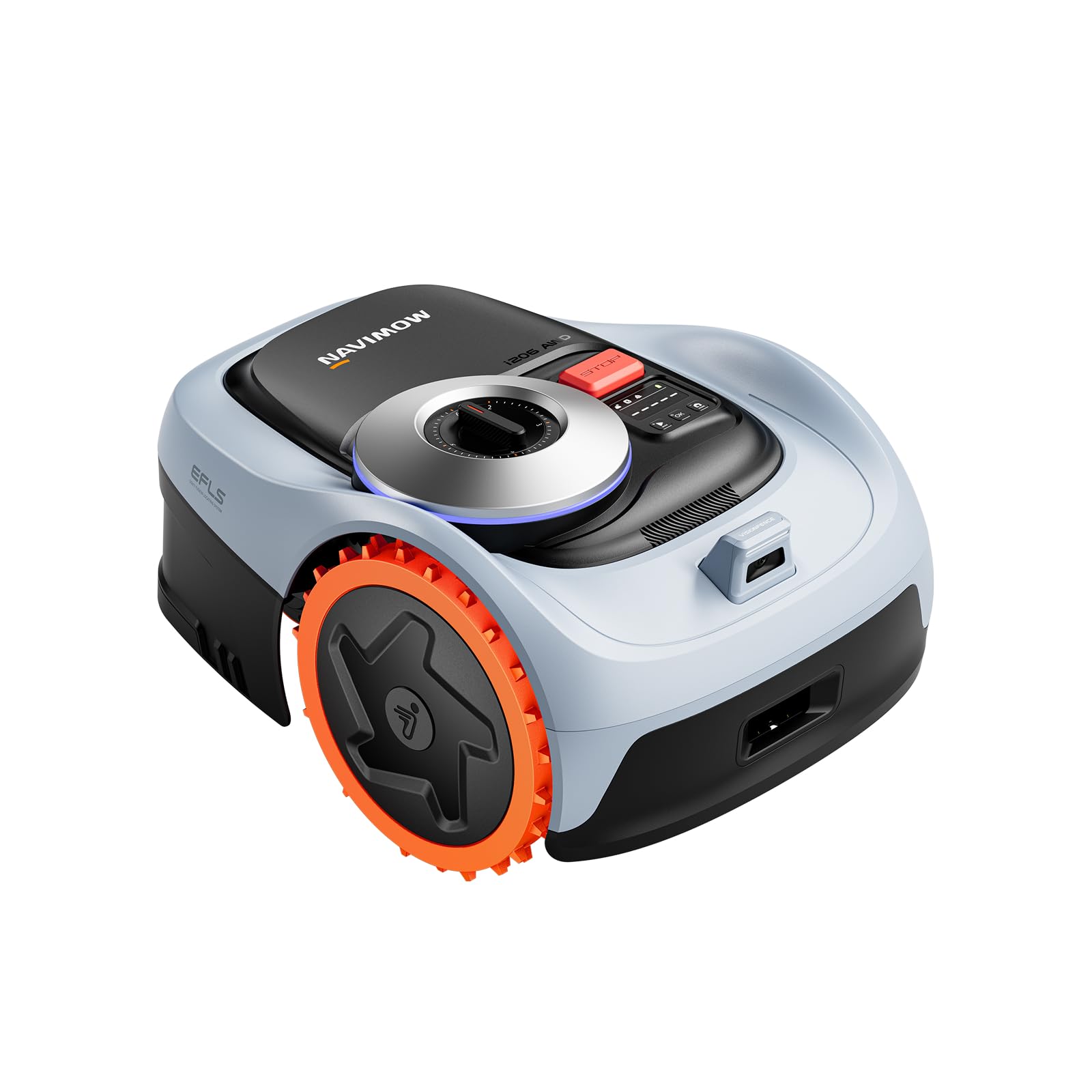
The Navimow i206 AWD is Segway’s compact answer for small, sloped yards. With a 7.1-inch cutting width and 2.5Ah battery covering 0.15 acre per charge, it’s built for urban and suburban front lawns rather than sprawling estates. The automotive-grade electronic stability control on this AWD chassis handles slopes up to 45% (24 degrees), making it one of the best options for hillside properties that stay under the quarter-acre mark. The zero-turn third-wheel design prevents turf scuffing during turns.
Wire-free setup uses EFLS Network RTK with one-tap auto mapping for centimeter-level accuracy. The app manages up to 20 zones with optimized mowing paths and auto-resume after charging. Real-time GPS alerts notify you if the mower is lifted or leaves designated zones, adding a security layer. Cutting height adjusts from 2 to 3.6 inches, and the on-demand drive system conserves battery by providing extra power only when climbing or cutting thick grass.
The small yard coverage is a hard limitation. If your lawn is even slightly over 0.15 acre, you’ll need a recharge session mid-mow or a larger model. Some units have failed within two months with complete power loss and frozen apps, requiring warranty replacement. The camera system can be confused by low-hanging fronds and narrow passages, occasionally requiring manual intervention. Customer support has been reported as slow in resolving these hardware failures.
Why it’s great
- AWD with electronic stability control handles 45% slopes in small yards
- Zero-turn third-wheel design prevents turf scuffing during maneuvers
- One-tap auto mapping with RTK provides centimeter accuracy without wires
Good to know
- Strictly limited to 0.15 acre; no real capacity margin
- Premature hardware failure reported within two months for some units
- Customer support is slow for warranty replacements
13. Sunseeker X3 Plus Robot
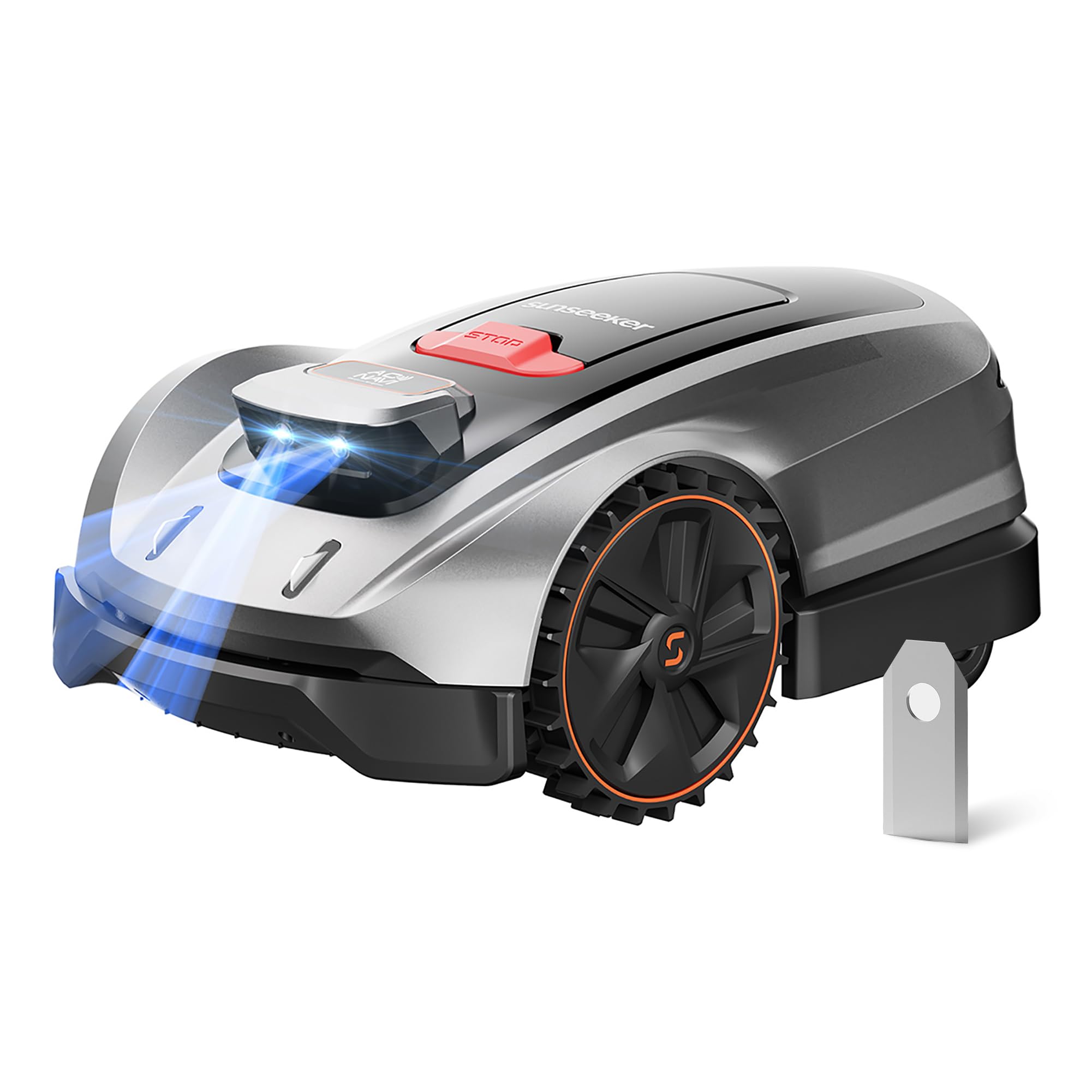
The Sunseeker X3 Plus democratizes wire-free robotic mowing at the lowest entry point in this list. Designed for lawns up to 0.3 acre (13,000 sq ft), it combines RTK positioning with VSLAM visual mapping through the AONavi system for consistent coverage without perimeter wires. The 8-inch cutting width is modest, but the Ride-on-Edge cutting design uses an offset blade that cuts closer along fences and walkways than typical straight-blade robots, reducing follow-up trimming.
Vision AI obstacle avoidance with camera and ultrasonic sensors detects common lawn objects like toys, hoses, and small animals, adjusting the route in real time. The app handles schedule management, zone definition, cutting height adjustment across 7 positions (1.6 to 3.2 inches), and mowing progress monitoring. Setup takes about two hours via the app and YouTube guide, with wire-free virtual boundaries defined through the app rather than buried perimeter wire. The 19.9-pound weight makes it easy to carry to different yard sections.
The networking requirement is the same security concern as the X7 — persistent connections to servers in China and Hong Kong, and blocking those IPs causes the mower to fail with “Plan path failed” errors. The mower can beat down grass without cutting it cleanly, leaving visible tassels stuck on the tire wheels. For very small, simple lawns under 0.1 acre, it works reliably, but the connection dependency is a real limiting factor for privacy-conscious users.
Why it’s great
- Budget-friendly wire-free RTK + VSLAM navigation without perimeter wires
- Ride-on-Edge offset blade cuts closer to fences and walkways
- Lightweight 19.9-pound design for easy portability between yard sections
Good to know
- Requires persistent connections to China/Hong Kong servers to function
- Offset blade can beat down grass without clean cutting in dense patches
- Networking architecture makes it unreliable in areas with weak signal coverage
FAQ
How much slope can a 30-inch riding mower handle before tipping?
Will a robotic mower replace the need for a string trimmer entirely?
What does “wire-free” really mean for robotic mowers and do I still need a base station?
How long do lithium batteries in riding mowers actually last before replacement?
Can I mow wet grass with an electric riding mower without damaging it?
Final Thoughts: The Verdict
For most users, the 30 inch riding mower winner is the EGO Power+ LM3004SP-2 because it delivers genuine gas-replacement torque — 13.2 ft-lb — with a 30-inch deck that folds compact, a 10-year warranty, and Touch Drive self-propulsion that adapts to your pace. If you want extreme slope autonomy and hands-off lawn care, grab the Mammotion LUBA 3 AWD 3000H for its tri-fusion navigation and 80% climbing ability. And for the classic ride-on feel with a larger 1.25-acre capacity and towing capability, nothing beats the Greenworks 60V 30-inch with its 1,920 Wh battery bank and 6 MPH cutting speed.