
Our readers keep the lights on and my morning glass full of iced black tea. As an Amazon Associate, I earn from qualifying purchases.
Specs are compiled from manufacturer listings and verified buyer reviews and can change over time — please confirm the key details on the product page before buying.
You are ready to ditch the smartphone snap and grab a real camera, but you do not want to break the bank. The problem is that the camera aisle is full of models that look the same on paper but act completely differently in your hands — some deliver crisp, vivid shots while others leave you wondering where the quality went. This guide cuts through the noise to find the real performers you can actually afford.
I’m Min — the founder and writer behind Gadgets Feed. This guide is built by comparing the manufacturers’ published specifications and the patterns across verified customer reviews, so you get each pick’s real strengths and trade-offs instead of marketing spin.
if you need a zoom for wildlife, a lightweight travel companion, or a DSLR to learn on, this article on the best 300 dollar camera will help you find a model that genuinely fits your needs and budget.
Our Picks at a Glance

How To Choose The Best 300 Dollar Camera
At this price point, you are making a trade-off between reach (optical zoom), sensor quality, and convenience features like WiFi or a flip screen. Here is what to watch for so you do not end up disappointed.
Optical Zoom vs. Digital Zoom
Optical zoom uses the lens glass to magnify a subject — it is genuine reach that keeps the image sharp. Digital zoom just crops and enlarges the picture inside the camera, which makes it blurry fast. For wildlife, sports, or concerts, a camera like the Kodak PIXPRO AZ528 with a 52x optical zoom will bring distant subjects into crisp view, while a model with only digital zoom will leave you frustrated.
Sensor Size and Megapixels
The megapixel (MP) number tells you how many millions of tiny light-capturing cells are on the sensor — the big light-sensitive chip inside the camera. More megapixels can mean more detail, but a larger physical sensor (like the APS-C sensor in a DSLR) matters more for low-light performance than just a high MP count. A 24.2 MP DSLR like the Nikon D3200 will often produce better-looking photos in dim light than a small-sensor 88 MP point-and-shoot, even though it has fewer megapixels on paper.
Build and Battery Life
Some cameras in this range run on standard AA batteries (good for emergencies, but costly over time), while others use rechargeable lithium-ion packs that last much longer per charge. If you plan to shoot for a full day, look for a rechargeable battery with a capacity around 3000mAh or a model that gets solid reviews for all-day use. Buyers often report that a second battery is a wise backup.
Quick Comparison
| Model | Best For | Optical Zoom | Sensor / Megapixels | Video Resolution | Amazon |
|---|---|---|---|---|---|
| Kodak PIXPRO AZ255★ Best Overall | Beginner-friendly point-and-shoot | 25x | 16 MP CMOS | 1080p Full HD | Amazon |
| Kodak PIXPRO AZ528Also Great | Wildlife & distant subjects | 52x | 16 MP BSI CMOS | 1080p Full HD | Amazon |
| Nikon D3200 (Renewed)Best DSLR for Beginners | Learning photography on a DSLR | — (Interchangeable Lens) | 24.2 MP APS-C CMOS | 1080p Full HD | Amazon |
| Canon EOS Rebel T5 (Renewed) | Entry-level DSLR with Canon ecosystem | — (Interchangeable Lens) | 18 MP APS-C CMOS | 1080p Full HD | Amazon |
| True 5K Digital Camera | Vlogging with a flip screen | 16X Digital | 64 MP | 5K (25fps) / 4K | Amazon |
| 8K Digital Camera (88MP) | Content creation with WiFi sharing | 16X Digital | 88 MP | 8K | Amazon |
| XNSIAKXA 8K Digital Camera | High-resolution video on a budget | 16X Digital | 88 MP | 8K | Amazon |
| Canon PowerShot SX400 (Renewed) | Ultra-long zoom in a compact body | 30x | 16 MP | 720p HD | Amazon |
| Saneen 4K Digital Camera | Budget vlogging kit with WiFi | — (Digital Zoom, fixed lens) | 64 MP | 4K | Amazon |
In‑Depth Reviews
1. Kodak PIXPRO AZ255-BK 16MP Digital Camera
Our pick — over 4★ from 950+ verified ratings; the strongest balance of quality and price.
A 25x optical zoom point-and-shoot that is among the most affordable ways to get close to the action.
For the lowest cost of entry, the Kodak PIXPRO AZ255 gives you a 25x optical zoom (a 24mm wide-angle to a 600mm telephoto equivalent) and a 16 megapixel CMOS sensor with optical image stabilization — enough reach and stability to capture the moon or a bird across the park. One buyer summed it up perfectly: “It takes pictures of the moon! It’s awesome for the price!” It records 1080p Full HD video, and the 3-inch LCD screen is clear enough for framing and review.
Most buyers call it a “great camera for beginners” with “sharp photos” and “good battery life.” However, a small number of reviewers had a very different experience, calling the photos “terrible” and the zoom “unusable” — a reminder that at the very low end of the market, unit quality control and user expectations can vary. The camera runs on four AA batteries, which are included and widely available, but you will want rechargeable AAs to keep costs down over time.
Compared to the Kodak AZ528 above, this model has a 25x optical zoom range compared to the Kodak AZ528’s 52x optical zoom, a less advanced sensor, and no WiFi for photo transfer. It is the most affordable way to get into zoom photography, but if your budget stretches, the AZ528 is a huge step up in capability.
Why it is a contender
- 25x optical zoom at the lowest price point in this guide.
- 1080p Full HD video and optical image stabilization for steady footage.
- Runs on widely available AA batteries — great for travel emergencies.
What holds it back
- Mixed reviews — some buyers experienced poor image quality and unusable zoom.
- No WiFi for instant sharing, and AA batteries add recurring cost.
Reach for this if: Your budget is very tight and you just want a zoom camera for casual outdoor shots.
Save up for the AZ528 if: You want reliable quality, double the zoom range, WiFi, and a rechargeable battery.
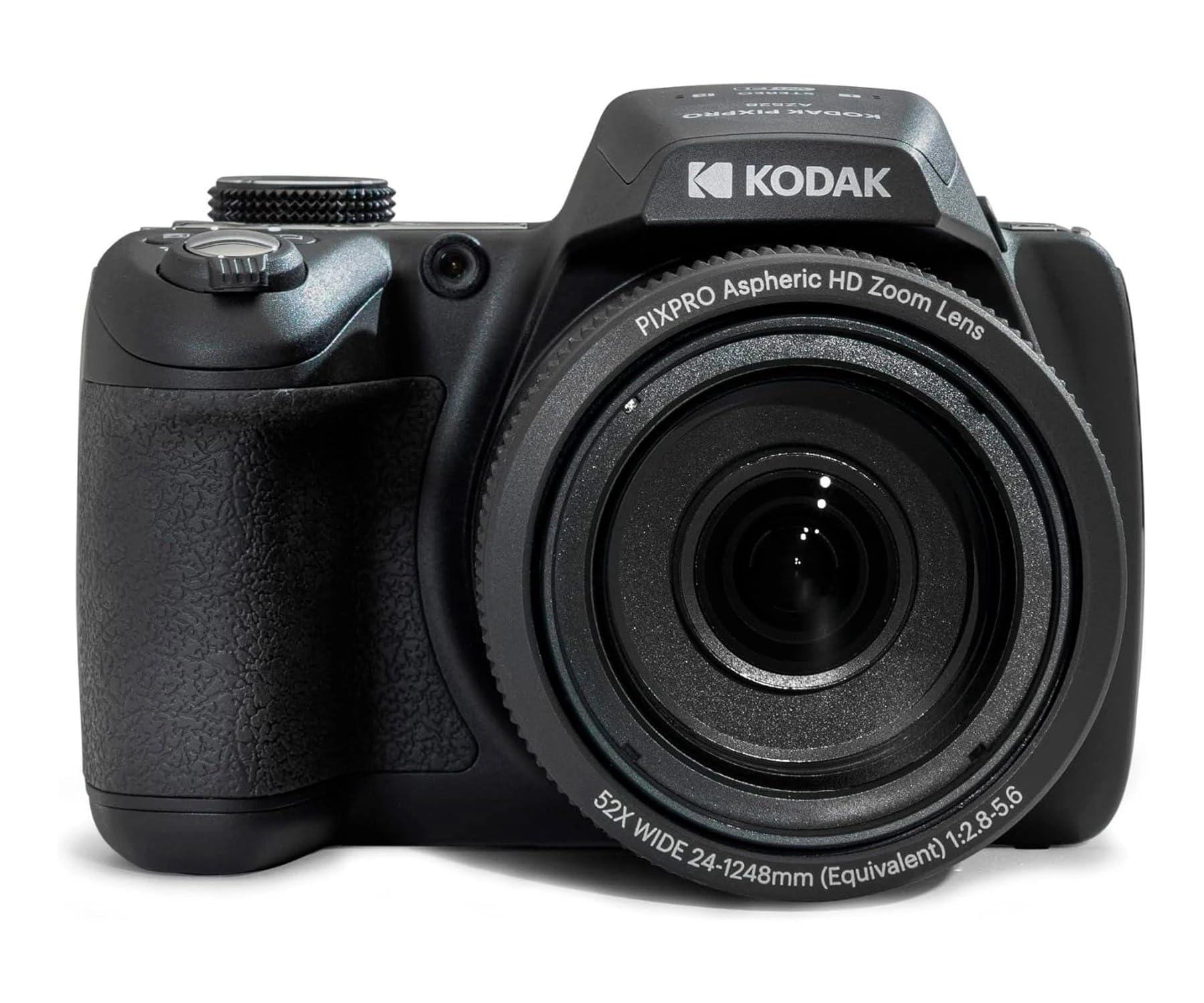
2. Kodak PIXPRO Astro Zoom AZ528-BK
A 52x optical zoom that pulls birds, wildlife, and stadium seats right into your frame without blur.
This is the camera for anyone who wants to photograph things far away — really far away. The 52x optical zoom (a 24mm to an effective 1248mm reach) lets you fill the frame with a bird at a feeder or a player on the field, and the optical image stabilization (OIS — a built-in mechanism that moves a lens element to cancel out hand shake) keeps those long shots from turning into a blurry mess. The 16 MP backside-illuminated CMOS sensor (a type of sensor that gathers light more efficiently, especially in dim conditions) helps deliver clean images even as the light fades.
Buyers report that it is very easy to use, with one mentioning they got “a great photograph of this Carolina chickadee” right from their backyard. It also includes built-in WiFi for transferring photos straight to your phone and a 1080p Full HD video mode. Unlike the Kodak AZ255 model, which runs on AA batteries, the AZ528 uses a rechargeable lithium-ion battery and supports SD cards up to 512 GB, making it a much better companion for full-day shooting trips.
The main trade-off is that at full zoom, you need a steady hand — one reviewer noted “you have to have steady hands or it is very blurry” — but that is true of any super-zoom camera. This is the king of reach at this price.
Why it stands out
- 52x optical zoom — class-leading reach for wildlife, sports, and distant subjects.
- BSI CMOS sensor with OIS keeps handheld telephoto shots sharp.
- WiFi connectivity for instant sharing to your smartphone.
- Rechargeable battery and support for up to 512GB SD cards for all-day use.
What to know before buying
- Stabilization at max zoom still requires a steady hand or a tripod.
- Does not include a memory card — you will need to buy one separately.
Reach for this if: You want to photograph distant subjects — birds, wildlife, sports — without spending thousands on a massive telephoto lens.
Look elsewhere if: You need a pocketable camera for daily carry, or you prefer a DSLR for interchangeable lenses and manual control.
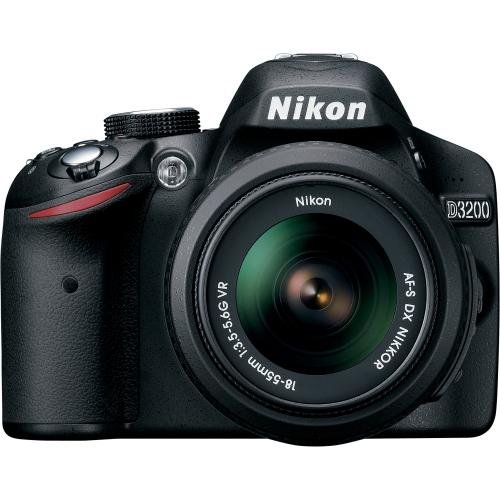
3. Nikon D3200 with 18-55mm Lens (Renewed)
A 24.2 MP DSLR that teaches you photography without the intimidating price tag.
If you are serious about learning photography and want a camera that grows with you, the Nikon D3200 is the class of the field at this price point. Its 24.2 megapixel APS-C sensor (a sensor size much larger than a point-and-shoot’s, giving you better control over blurry backgrounds and much cleaner images in low light) paired with the EXPEED III image processor produces images that rival cameras costing much more. The 18-55mm kit lens covers a useful range from wide-angle landscapes to standard portraits.
Buyers consistently praise the image quality, with one calling it “the perfect beginner’s SLR” and another noting the battery lasts roughly 500 shots per charge. It records 1080p Full HD video at 30 frames per second with one-touch recording, and the 11-point autofocus system (the camera uses 11 separate focus points scattered across the frame to lock onto your subject quickly) works well in most conditions, though a few reviewers mention it misses focus about 15% of the time and requires occasional manual tweaking.
One important thing to note: this is a refurbished (renewed) model, and not every kit includes an SD card or a printed manual. Also, unlike many modern cameras, the D3200 does not have built-in WiFi, so you will need a separate card reader or cable to transfer photos. If you can live without wireless transfer, this is the best image quality you can buy for the money.
Why it wins for learners
- 24.2 MP APS-C sensor delivers DSLR-grade image quality and low-light performance.
- Interchangeable lens system lets you upgrade to better glass over time.
- EXPEED III processor provides fast operation and great color reproduction.
What to watch for
- Refurbished — condition varies; some units may have minor cosmetic wear.
- No built-in WiFi for wireless photo transfer.
- May not include SD card or printed manual in the box.
Grab this for: Learning photography seriously — it offers real manual controls, great image quality, and a path to upgrade lenses.
skip it if: You want WiFi sharing from the start or a fully pocketable travel camera.
4. Canon EOS Rebel T5 with 18-55mm Lens (Renewed)

An 18 MP DSLR that gives you the Canon lens universe and a forgiving learning curve.
If you are drawn to Canon’s legendary ease of use and massive selection of affordable lenses, the Rebel T5 is your entry point. It packs an 18 megapixel APS-C CMOS sensor with the DIGIC 4 image processor — a proven combination that produces sharp, vibrant photos with good color. The 9-point autofocus system is fast and reliable for still subjects, and the 3.0 frames per second continuous shooting (how many photos the camera can take in one second when you hold the shutter button down) is enough for capturing kids and pets in motion.
One reviewer summed it up well: “When looking for a solid camera that performs all the functions that you’ll want and need when either taking a video or shooting still pictures, then the Rebel T5 is for you.” It records 1080p Full HD video and the included EF-S 18-55mm IS II lens features built-in optical image stabilization, which smooths out handheld video noticeably more than the Nikon D3200’s kit lens.
The catch is that the autofocus during video can be slow and noisy — several reviews point this out as a weakness. Like the Nikon D3200, this is a refurbished model, so you are getting a camera that has been returned and restored to like-new condition. Compared to the 24.2 MP Nikon D3200, the Canon has fewer megapixels and slower burst shooting, but some buyers prefer Canon’s color science and menu layout.
What works well
- Classic Canon color science produces vibrant, pleasing images straight out of camera.
- IS (Image Stabilization) in the kit lens smooths handheld shots and video.
- Access to Canon’s huge ecosystem of lenses and accessories.
What to consider
- Autofocus during video recording is slow and can pick up motor noise.
- 18 MP sensor is lower resolution than the 24.2 MP Nikon D3200.
- Refurbished — some reports of missing batteries or accessories.
Pick this if: You prefer Canon’s user interface and want to build a kit around their affordable EF-S lens lineup.
Consider the Nikon D3200 if: Higher resolution and better video autofocus are priorities for you.
5. True 5K Digital Camera for Photography

A 5K vlogging camera with a 180° flip screen so you can frame yourself perfectly every time.
This camera is built for content creators who want a clear, detailed selfie view and high-resolution video. The 3-inch screen that flips 180 degrees means you can see exactly what the lens sees while recording yourself, and the 5K video resolution at 25fps (frames per second — the number of still images the camera captures each second to create smooth motion) gives you extra detail to crop in post-production. It also shoots 4K at 30fps for smoother everyday footage. The 64 MP photo mode captures a lot of pixels for large prints or cropping.
Unlike the basic Saneen camera below, this kit comes with a 52mm wide-angle attachment lens and a macro lens for close-up detail shots, plus two large capacity batteries and a charging dock. Owners mention the “autofocus and 16X anti-shake” work well for on-the-go use, though they note the camera is “slightly bulky” for a compact. The built-in fill light is a practical feature for vlogging in dim indoor spaces.
The trade-off is that the zoom is 16X digital, not optical — so you are cropping into the image rather than using lens glass. This means zooming in will reduce image quality noticeably. For vlogging and close-to-medium shots, it is a solid all-in-one package.
What creators will love
- 180° flip screen makes self-framing and vlogging easy.
- 5K video resolution for high-detail capture and cropping flexibility.
- Includes wide-angle and macro lens attachments plus two batteries.
Where it falls short
- 16X digital zoom degrades quality at longer distances — not for wildlife.
- Some buyers found it bulkier than expected for a compact camera.
Best for: Vloggers and beginner YouTubers who want a complete kit with a flip screen and detachable lenses.
Not ideal for: Anyone needing true optical zoom for sports, wildlife, or distant subjects.
6. 8K Digital Camera, 88MP WiFi Cameras for Photography
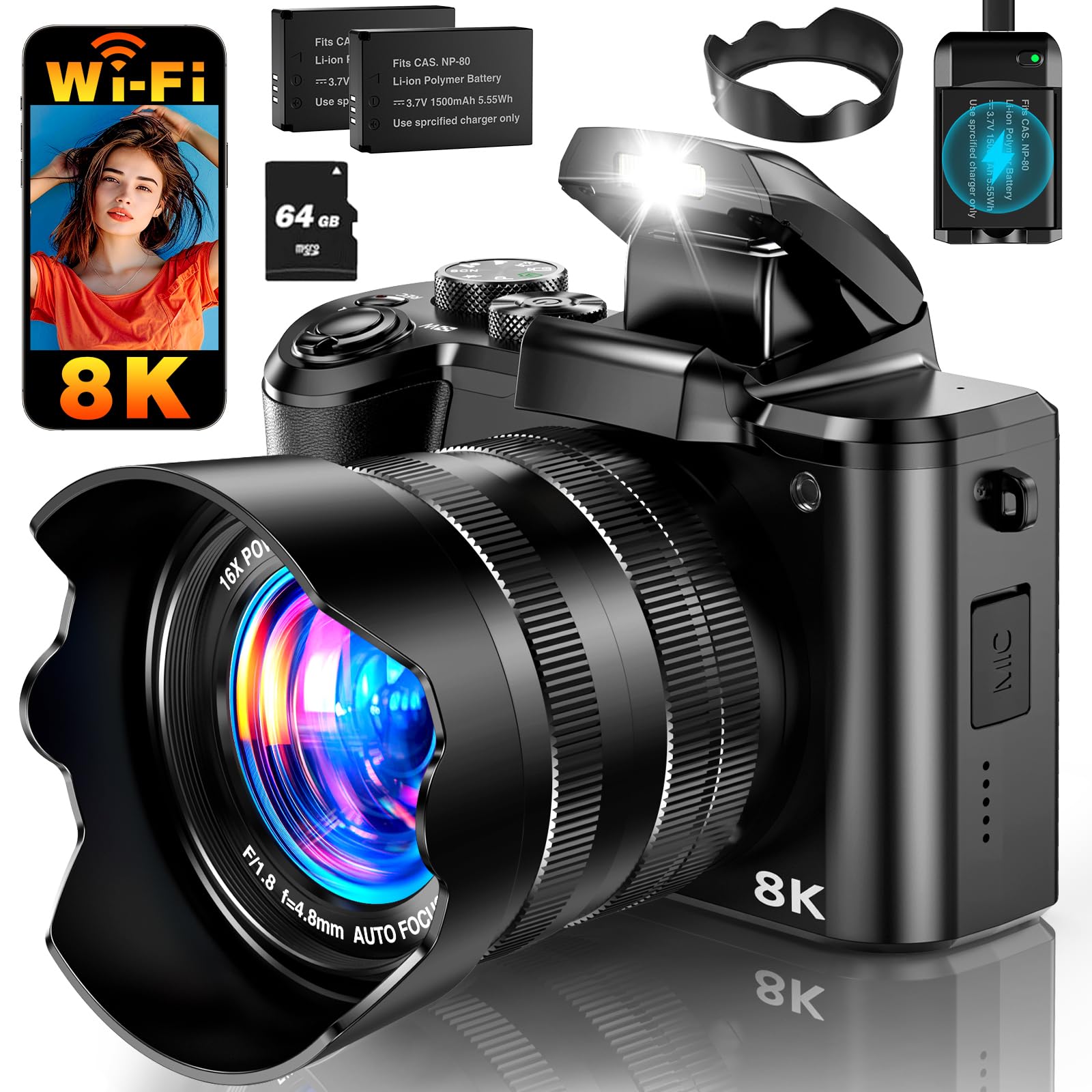
A fully-loaded 8K camera that includes everything you need in the box, including 2 batteries and a 64GB card.
This is the budget-friendly bundle that is designed to remove the hassle of buying extras separately. The camera shoots 8K UHD video and captures 88 megapixel stills, and the 6-axis anti-shake stabilization (a stabilization system that compensates for movement in six directions — up/down, left/right, and two types of rotation — to keep your video smooth during handheld walking shots) makes handheld footage significantly smoother than cameras without it. The 3.2-inch IPS touchscreen (a high-quality, color-accurate screen that responds to finger taps) makes menu navigation and focus points easy to manage.
Buyers consistently highlight the included accessories: “includes 2 batteries, charging stand, memory card, lens hood” — everything you need to start shooting immediately. They also praise the “fast autofocus” and “sharp details” at this price. The 16X digital zoom and built-in flash handle distant subjects and low light reasonably well. One buyer mentioned the LED fill light is “a rare feature at this price,” which helps with evenly-lit portraits.
Compared to the XNSIAKXA model below, which comes with a 32GB card, this one includes a 64GB card, doubling your storage from the start. The main limitation, as with all digital-zoom cameras, is that the 16X zoom degrades image sharpness as you push in.
What you get in the box
- 8K video and 88 MP stills with 6-axis stabilization for smooth footage.
- Generous bundle: 2 batteries, charging stand, 64GB card, lens hood, bag.
- 3.2″ touchscreen and a 360° rotary dial for quick mode changes.
What to keep in mind
- 16X digital zoom loses quality at the long end — not true optical zoom.
- Image quality won’t match a larger-sensor DSLR in low light.
Best for: Beginners and teens who want a complete, ready-to-shoot kit for travel vlogging and social media content.
pass on it if: You need genuine optical zoom for wildlife or you prioritize ultimate low-light image quality over features.
7. XNSIAKXA 8K Digital Cameras for Photography
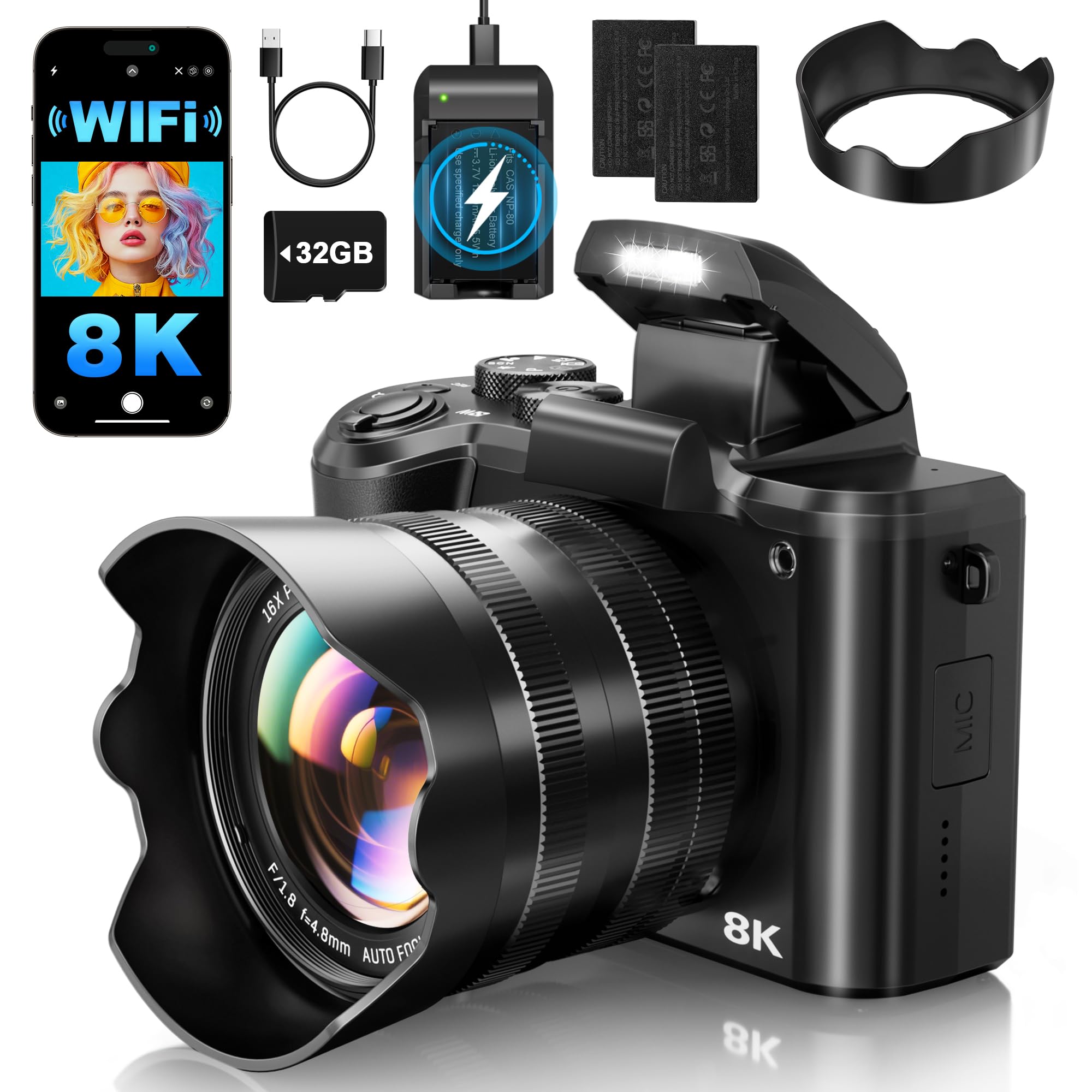
An 8K / 88MP camera with a 79-point autofocus system and a full set of accessories.
This model is the closest competitor to the 8K camera above, and it has a few specs that edge ahead on paper. The 79-point autofocus system (the camera has 79 focus detection points across the frame, which helps track moving subjects more accurately than a 9-point system) is a significant advantage over the 9-point systems found on many budget cameras. It also features a 12-bit color depth (meaning the sensor can capture 68 billion colors versus the 16 million colors of an 8-bit sensor, giving you smoother gradients and more editing flexibility).
Customers note “crisp 8K resolution with vibrant colors and incredible sharpness,” and many highlight the dual-lens design and 3.2-inch touchscreen as key conveniences. The package includes a 32GB TF card, two large capacity batteries, and a charging stand — a solid starter kit. The “360° rotary dial” lets you switch between modes like time-lapse, slow-motion, and portrait without diving into menus.
The difference between this and the previous 8K camera is subtle: this one has a 32GB card instead of 64GB, and it offers a slightly more advanced autofocus system. The 8K and 88MP specs on both cameras deliver 8K video compared to a standard 4K camera, and 88MP stills compared to a 64MP camera — but remember that both use digital zoom only.
What stands out
- 79-point autofocus for better subject tracking than many budget cameras.
- 12-bit color depth for richer, more editable images.
- Complete bundle with dual batteries, charging stand, and carry bag.
Considerations
- Includes 32GB card, half the storage of the competing 8K bundle.
- Digital zoom only — no optical magnification for distant subjects.
Choose this if: Advanced autofocus and high-resolution video are your top priorities and you prefer the included accessories over the card size.
Consider the other 8K model if: You want the larger 64GB memory card included instead.
8. Canon PowerShot SX400 (Renewed)

A 30x optical zoom in a lightweight body from a name you trust, even if the video is 720p.
If you want a long zoom from a major brand without paying for a DSLR system, the Powershot SX400 delivers. The 30x optical zoom covers the equivalent of 24mm (wide-angle) to 720mm (super-telephoto), which lets you switch from a sweeping landscape to a tight portrait of a distant subject with a single twist of the lens barrel. The 16.0 megapixel sensor and DIGIC 4+ processor handle the image processing, and the Smart AUTO mode (a scene recognition system that automatically selects the best settings for 58 different shooting situations) makes it a true point-and-shoot for beginners.
Buyers are very happy with the results — one called it “awesome,” another said it “takes beautiful pictures,” and a parent noted their daughter “loves the quality.” The dedicated movie button lets you start recording 720p HD video at any time without switching modes. The High Speed AF (autofocus) helps the camera lock focus more quickly than older budget Canons.
The honest limitation is video resolution: 720p HD is fine for basic clips, but it looks dated compared to the 1080p or 4K output from other cameras in this guide. It also runs on AA batteries (included), which are convenient for emergency replacements but cost more over time than a rechargeable pack. If still photos with a huge zoom are your priority, this is a strong, reliable choice.
What works well
- 30x optical zoom (24-720mm equivalent) delivers real reach in a compact body.
- Canon’s Smart AUTO mode makes it dead simple for beginners.
- Trusted brand with solid image quality for the price.
What might disappoint
- Only 720p video — no 1080p or 4K.
- Runs on AA batteries rather than a dedicated rechargeable pack.
Get this if: You want a long optical zoom from Canon without spending on a DSLR, and video quality is secondary.
Pass if: You need 1080p or 4K video and prefer a rechargeable battery.
9. Saneen Digital Camera, 4k Cameras for Photography & Video

A 4K / 64MP vlogging bundle with WiFi and a touchscreen at a price that is tough to top.
This Saneen camera is the most affordable way to get 4K video and a WiFi-enabled touchscreen into one box. The 64-megapixel photo mode and 4K video resolution give you high-resolution options, and the 4.0-inch touchscreen makes setup and focus simple. The dual-lens design (lenses on both the front and back of the camera) means you can flip to selfie mode for vlogging without turning the camera around — a convenient feature for this price tier.
One owner reported: “battery time is ok for one day if you take a lot of pictures per day. Recommendation: you should buy a second battery for reservation.” The kit includes a 3000mAh battery, a 32GB SD card, a lens hood, and a camera bag — a genuinely useful starter bundle. The built-in flash and exposure dials add manual control for more experienced users.
The catch is that some reviewers point out the 4K image quality is misleading — one customer observed “photos look HD on screen but are trash (max 1080p) when loaded to computer/phone.” This is the lowest-priced camera in the guide, and it shows in consistency. If your budget is absolute and you want 4K video and WiFi, it is an option, but the True 5K camera above costs a bit more and offers a flip screen and better lens attachments.
What you get for the price
- 4K video and 64 MP photos with a large 4.0″ touchscreen.
- WiFi for direct phone transfer and a 3000mAh battery for all-day shooting.
- Complete bundle: 32GB card, lens hood, bag, and flash included.
Potential drawbacks
- Some buyers found the 4K video quality disappointing on a computer monitor.
- Battery life is adequate for one day, not more — a second battery recommended.
Best for: Absolute beginners or kids who want a touchscreen camera with WiFi and a low barrier to entry.
Look at the True 5K camera if: You want a flip screen, detachable lenses, and more consistent video quality for just a bit more money.
Understanding the Specs
Optical Zoom vs. Digital Zoom
Optical zoom is the lens physically moving to magnify the light coming into the camera — it preserves every pixel of sharpness, so a bird at 100 feet still looks crisp. Digital zoom is the camera cropping and enlarging the central part of the sensor, effectively tossing out pixels; the result is a blurry, blocky image the more you push in. For any serious zoom work — wildlife, sports, concerts — optical zoom is non-negotiable. A camera with 25x or 30x optical zoom will always produce sharper distant shots than one claiming “50X digital zoom.” The spec that matters is the “x” number next to “optical” on the box.
Sensor Size and Megapixels
The sensor is the light-sensitive chip inside the camera that captures the image. A larger sensor has bigger individual pixels, which gather more light and produce cleaner, less grainy photos in dim conditions. The megapixel (MP) count is the number of millions of tiny pixels on that sensor — more megapixels can mean more detail, but only if the sensor itself is large enough to handle them. A 24.2 MP APS-C sensor (like in the Nikon D3200) is dramatically larger than the small 1/2.3-inch sensor found in most budget point-and-shoots, so it will produce far better low-light images even though its megapixel count is lower than a 64 MP compact camera.
Image Stabilization (OIS / Anti-Shake)
Image stabilization is a mechanism that compensates for the tiny shakes of your hands while holding a camera. Optical Image Stabilization (OIS) physically moves a lens element or the sensor itself to counteract motion — it works without reducing image quality. “Anti-shake” or “6-axis stabilization” in digital cameras often refers to electronic stabilization, which crops the image slightly to smooth out movement. For video, especially when walking, some form of stabilization is critical to avoid a shaky, unpleasant clip. OIS is generally more effective than purely digital anti-shake, but both are much better than having no stabilization at all.
FAQ
What is the best 300 dollar camera for a beginner photographer?
What is the best 300 dollar camera for wildlife or bird photography?
Is a refurbished DSLR like the Nikon D3200 worth buying?
What does “digital zoom” mean and is it any good?
Should I get a point-and-shoot or a DSLR for under?
Do I need a camera that has WiFi built in?
What is better, 4K video or 1080p Full HD?
What size memory card do I need for a 300 dollar camera?
Can I use a 300 dollar camera as a webcam for Zoom or streaming?
How long do the batteries last on these cameras?
Final Thoughts: The Verdict
For most buyers, the top 300 dollar camera is the Kodak PIXPRO Astro Zoom AZ528 because its 52x optical zoom offers genuine reach no other camera in this price range can match, and the WiFi, 1080p video, and rechargeable battery make it a versatile do-it-all companion. If you want to learn photography with a real DSLR, grab the Nikon D3200 for its superb 24.2 MP sensor and upgradeable lens system. And for vlogging and content creation with a flip screen, the True 5K Digital Camera is the best bundle for the money.
How We Picked
We do not accept paid placement. Every pick is matched to a real buyer and a real use-case; we do not hands-on test units.
Sources & Methodology
Specifications: manufacturer listings and product documentation. Review insights: verified customer reviews, as of July 2026. Pricing: not shown on this page (it changes often); check the current price via the retailer link.
As an Amazon Associate, Gadgets Feed earns from qualifying purchases. This does not affect which products we feature.