
Our readers keep the lights on and my morning glass full of iced black tea. As an Amazon Associate, I earn from qualifying purchases.
Specs are compiled from manufacturer listings and verified buyer reviews and can change over time — please confirm the key details on the product page before buying.
When the power goes out, you need to know if a 3000 watt generator can keep your fridge running all night or just charge your phone at a campsite. The right choice hinges on runtime per tank, noise level at 23 feet, and clean power output for sensitive electronics. Here are the models that deliver, with real runtime, noise, and wattage numbers from the product data.
I’m Min — the founder and writer behind Gadgets Feed. This guide is built by comparing the manufacturers’ published specifications and the patterns across verified customer reviews, so you get each pick’s real strengths and trade-offs instead of marketing spin.
Whether you’re prepping for outages or planning RV trips, the best 3000 watt generator fits your fuel type, your noise tolerance, and your budget without overpaying for unused power.
Our Picks at a Glance

How To Choose The Best 3000 Watt Generator
Before buying, determine your required wattage, runtime, and operating environment. These answers separate conventional generators from fuel-efficient inverters and battery power stations.
Starting Watts vs. Running Watts
Every motor appliance—a fridge compressor, an air conditioner, a sump pump—draws a big jolt of power for a split second when it kicks on. This starting (surge) wattage always exceeds the running wattage. A generator rated 3000 running watts might show 4000 starting watts. If starting watts can’t cover your AC’s surge, the generator overloads and trips. Always verify starting watts before running watts.
Inverter vs. Conventional
An inverter generator produces “clean” electricity with less than 3% total harmonic distortion (THD). That matters because it’s safe for laptops, phones, TVs, and other sensitive electronics. Conventional generators produce dirtier power that’s fine for power tools but risky for your laptop. Inverters are also quieter and more fuel-efficient, but they cost more. If you’re powering electronics or sleeping near the unit, go inverter.
Noise and Fuel
Noise is measured in decibels (dBA) at a set distance—usually 23 feet. A rating of 60 dBA is about the level of a normal conversation; 50 dBA is much quieter. Fuel efficiency depends on the tank size and the load. A 1.6-gallon tank might run 6.5 hours at 50% load, while a 3.4-gallon tank could stretch to 19.6 hours with the eco-throttle engaged. Decide if you need overnight runtime or just a few hours.
Quick Comparison
| Model | Best For | Running Watts | Noise Level | Fuel Type | Amazon |
|---|---|---|---|---|---|
| Champion 4000W Inverter★ Best Overall | Light RV + home backup | 3000W | 64 dBA | Gasoline | Amazon |
| LIFAN 3500W InverterBest Value | Compact RV camping | 3000W | Quiet (est.) | Gasoline | Amazon |
| AIVOLT 4300W InverterTop Performer | Sensitive electronics + RV | 3450W | 60 dBA | Gas | Amazon |
| GENMAX 3500W Dual Fuel | Gas or propane flexibility | 3200W (gas) | 62 dB | Dual Fuel | Amazon |
| PowerSmart 4800W Inverter | High-startup loads at home | — | 67 dB | Gasoline | Amazon |
| Westinghouse 4024 Dual Fuel | Quiet dual-fuel home backup | 3300W | 52 dBA | Gas + Propane | Amazon |
| AFERIY P280 Power Station | Fuel-free whole-home backup | 2800W | Silent | Electric (Solar) | Amazon |
| DJI Power 2000 | Quiet RV nights + tech | 3000W | 30 dB | Electric | Amazon |
| DABBSSON 3000L | Heavy-duty appliances | 3000W | Quiet | Electric | Amazon |
| Jackery HomePower 3000 | Whole-home essential backup | 3600W | Quiet (fan) | Electric | Amazon |
| Honda EU3000iS | Premium reliability + silence | 3000W | 50-57 dB(A) | Gasoline | Amazon |
In-Depth Reviews
1. Champion Power Equipment 4000W RV Ready Inverter Generator
Our pick — over 4.5★ from 350+ verified ratings; the strongest balance of quality and price.
The 48-pound featherweight that runs your RV AC and still sips fuel all day.
The Champion 4000W tops our list for its blend of build quality and reliable power output. It’s one of the lightest 4000-watt inverters in the industry at under 49 pounds, yet it delivers 4000 starting watts and 3000 running watts. In real-world testing, buyers report it runs a 15K BTU AC unit without issue, and one owner’s 55-hour test showed it handles the AC plus a fridge—just not the AC and microwave together. That’s a 5-gal/24hrs fuel burn under load, which is impressively efficient for the class.
It runs at 64 dBA from 23 feet—quiet enough for camping, tailgating, or backing up a few home essentials without waking the neighbors. The clean electricity (less than 3% THD) makes it safe for laptops and phones, and the included 120V 25A TT-30R RV plug plus a 120V 20A household duplex outlet covers RV and home needs. The CO Shield carbon monoxide auto shutoff system adds a layer of safety, and a 3-year limited warranty with free lifetime technical support backs it up. It also has a 12V automotive-style outlet for charging batteries on the go.
The optional parallel kit lets you connect a second 4000-watt Champion inverter to double your output—a smart upgrade path if your power needs grow later. The 149cc 4-stroke engine starts easily via recoil, per multiple owner reports. At 17.9″L x 11.7″W x 19.7″H, it’s compact enough to tuck into a garage corner or truck bed.
Why owners pick it
- top-tier weight-to-power: under 49 lbs with 4000 starting watts
- 10-hour runtime at 50% load keeps essentials going overnight
- RV-ready TT-30R outlet plus clean electricity for electronics
The trade-offs
- Gasoline only—no propane option like some rivals
- Won’t run a big AC and a microwave simultaneously
Reach for it if: you want a proven, lightweight RV companion or home backup that starts easily and sips fuel.
Look elsewhere if: you need to power multiple high-draw appliances at once or want dual-fuel flexibility.
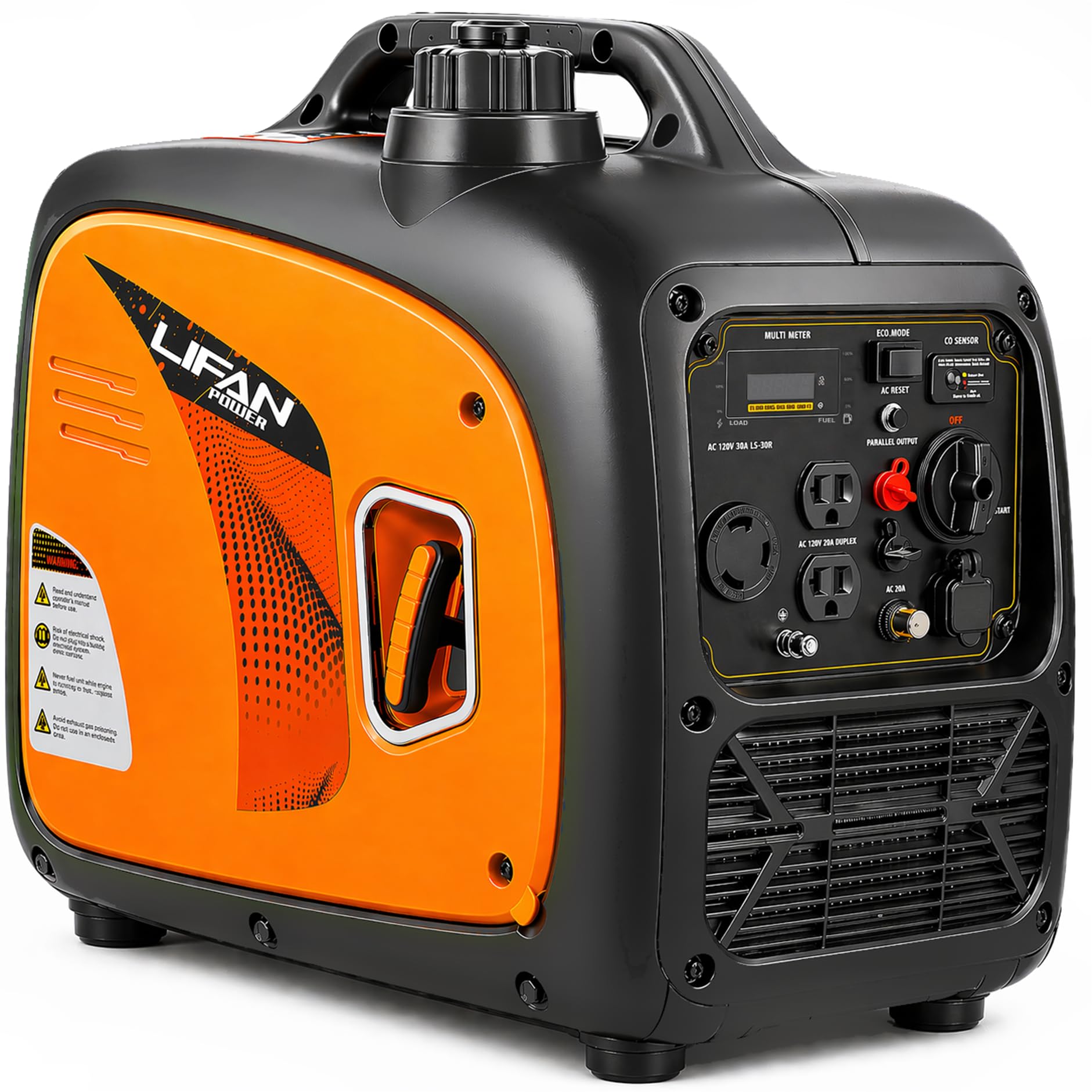
2. LIFAN 3500W Compact Gas Inverter Generator
A 46.3-pound workhorse that slides into an RV compartment and runs a whole shop.
The LIFAN 3500W is the budget-friendly pick that surprises owners with its stamina. The 46.3-pound frame with a built-in handle makes it among the most portable options here, and its 22″L x 13″W x 18″H body fits RV compartments and vehicle trunks. While it’s heavier than the Champion by a bit—46.3 lbs vs. 48.1 lbs—it’s more compact in footprint. Owners mention using it to run a whole shop easily, and one owner ran it “2 weeks straight” for a fireworks tent, calling it an “absolute workhouse” before winterizing it for next year.
It delivers 3500W peak and 3000W rated power with pure sine wave inverter output, so it’s safe for laptops, phones, TVs, and routers. The 1.6-gallon tank provides up to 6.5 hours at 50% load—shorter than the Champion’s 10 hours, but the ECO mode helps stretch fuel for camping and backup needs. The CO-MINDER auto shutoff, low-oil protection, and overload protection support safer operation, and it’s parallel-ready for future expansion.
The included accessories are a bonus: plug adapters, parallel cables, a screwdriver, a spark plug wrench, and a spill-proof funnel. It’s quieter than expected, with one owner comparing it favorably to a 2500W unit. The 149cc 4-stroke engine starts on the first pull, per multiple reports. The main caveat: owners note it may overload with a camper AC pulling around 16A, and 10w40 oil isn’t included—so check your oil level before first use.
What wins people over
- Includes parallel cables and plug adapters in the box
- Pure sine wave output protects sensitive electronics
- Fits tight RV storage with its compact 22 x 13 x 18 in body
Think twice if
- Shorter 6.5-hour runtime vs. the Champion’s 10 hours
- May struggle with high-inrush camper AC units
Best for: campers who need a compact, quiet inverter that fits tight storage and powers everyday electronics.
Not for: those planning to run a large RV air conditioner—check your AC’s starting amps first.
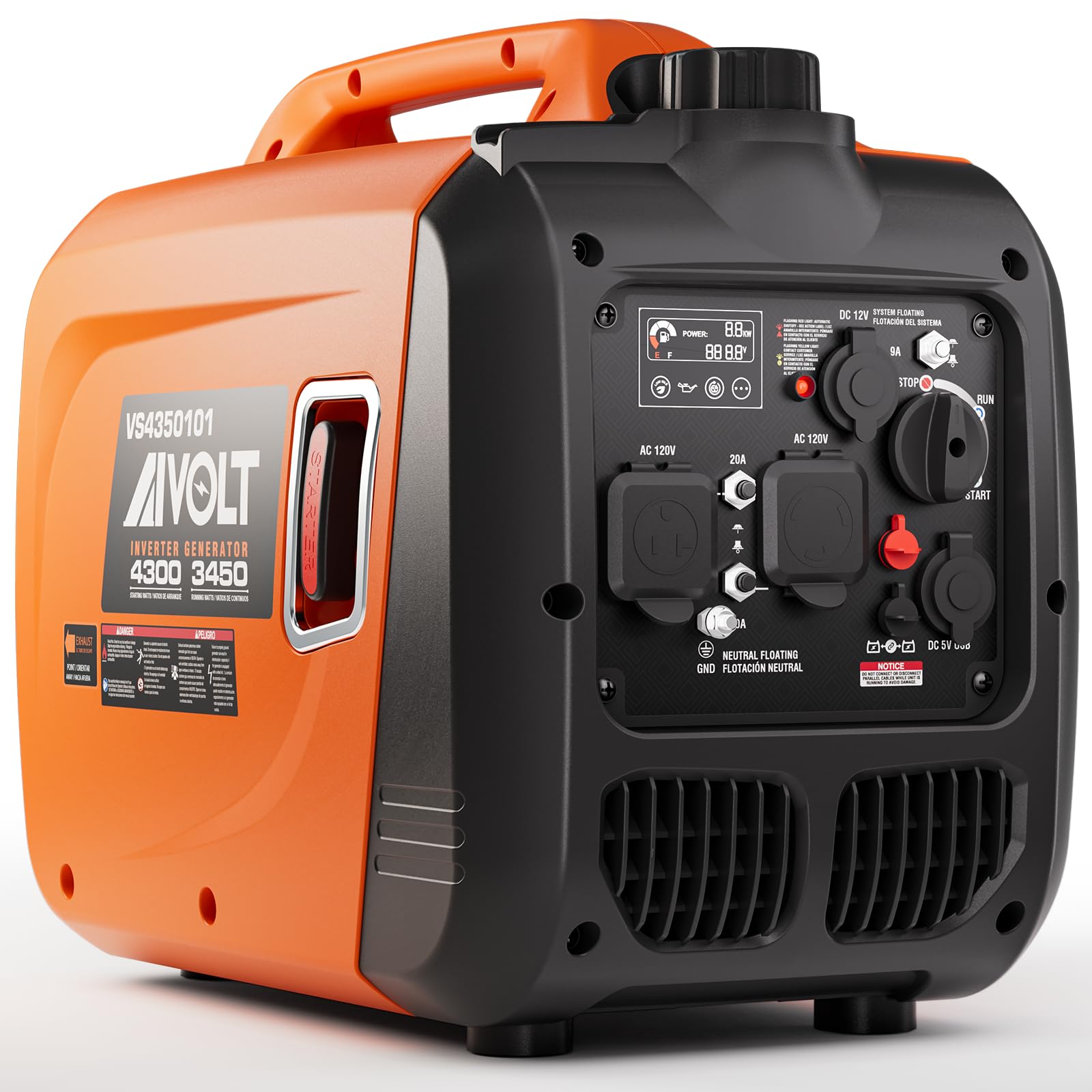
3. AIVOLT 4300W Inverter Generator
Pushes 3450 running watts with a 60 dBA whisper—and a remote electric start.
The AIVOLT 4300W packs more punch than the Champion—3450 running watts vs. 3000 watts, a 15% edge—in a unit that weighs 50.7 pounds. That’s a 10% weight premium over the LIFAN’s 46.3 pounds, but you get a serious power boost plus electric start with remote control. The 149cc 4-stroke OHV copper-winding engine delivers 4300 starting watts, enough for most RV AC units. It’s rated at 60 dBA no load at 23 feet, which is quieter than the Champion’s 64 dBA—closer to a normal conversation.
The clean power (less than 3% THD) makes it safe for game consoles and laptops, and the control panel is genuinely versatile: a 120V 20A outlet, a 120V 30A locking outlet, a 12V DC outlet, and 5V type-A and type-C USB ports. The 5-in-1 LCD display center shows oil level, fuel level, overload warnings, and operating status. An RV adapter and 12V DC battery charging cable are included, and it’s parallel-ready with a separate kit.
The eco switch enhances fuel efficiency, providing over 5.5 hours of runtime at 25% load. Safety features include CO Alert auto shutdown, low-fuel auto shutdown, and overload protection. One owner notes a hot-restart quirk: if you shut it off, you need to let it cool down before restarting, or it goes into safety mode. The build quality is the #1 praised aspect, with the noise level close behind.
The strong points
- Electric start with remote beats pull-cord starting
- 3450 running watts is the highest in this tier
- USB-C and USB-A ports built into the panel
The quirks
- Hot engine requires a cooldown before restart
- Engine oil not included—buy 10w30 before first start
Choose it for: the extra headroom of 3450 running watts and the convenience of remote electric start.
skip it if: you hate waiting for a hot engine to cool before a restart—the Champion restarts more forgivingly.
4. GENMAX 3500W Dual Fuel Inverter Generator

Runs on gas or propane with a telescopic handle—the flexible home companion.
The GENMAX GM3500iAD stands out as the dual-fuel option in this lineup, giving you a real choice at the fuel pump. On gasoline, the 145cc 4-stroke OHV engine produces 3500 peak watts and 3200 rated watts with clean electricity (less than 3% THD). Switch to propane and you get 3100 peak watts and 2800 running watts—enough for most essentials. This flexibility is a lifesaver during fuel shortages or when you want to store propane long-term without the carburetor degradation that stale gasoline causes.
It’s easy to move, thanks to a telescopic rod and 2 rolling wheels, and at 56.2 pounds it’s manageable for one person. The noise level is a low 62 decibels—quieter than most traditional generators. A CO detector automatically shuts the unit down at unsafe carbon monoxide levels, and the 3-year warranty with free lifetime technical support adds confidence. It’s parallel-capable, letting you connect two GM3500iAD units to double up to 7000 peak watts and 6400 running watts.
Owners find it starts on the first pull, with one OTR trucker praising it for saving fuel and wear on the truck. The included LPG hose is a pleasant surprise—it’s not advertised but ships in the box. The 120V 20A outlets and clean sine wave make it safe for RV camping and home backup. The trade-off is that the CO detector and dual-fuel system add complexity, and one owner had a defective unit on gas (propane worked fine) with a slow warranty resolution.
The flexibility wins
- Gas or propane—choose based on availability and price
- Telescopic handle and wheels for easy transport
- 62 dB noise level is neighbor-friendly
What to watch
- Propane output drops to 2800 running watts
- A rare defective unit on gas with slow support
Grab this if: you want fuel flexibility for outages and a unit that wheels around like a suitcase.
Pass if: you need maximum running watts on propane for heavy appliances—stick with the higher-output picks.
5. PowerSmart 4800W Portable Inverter Generator
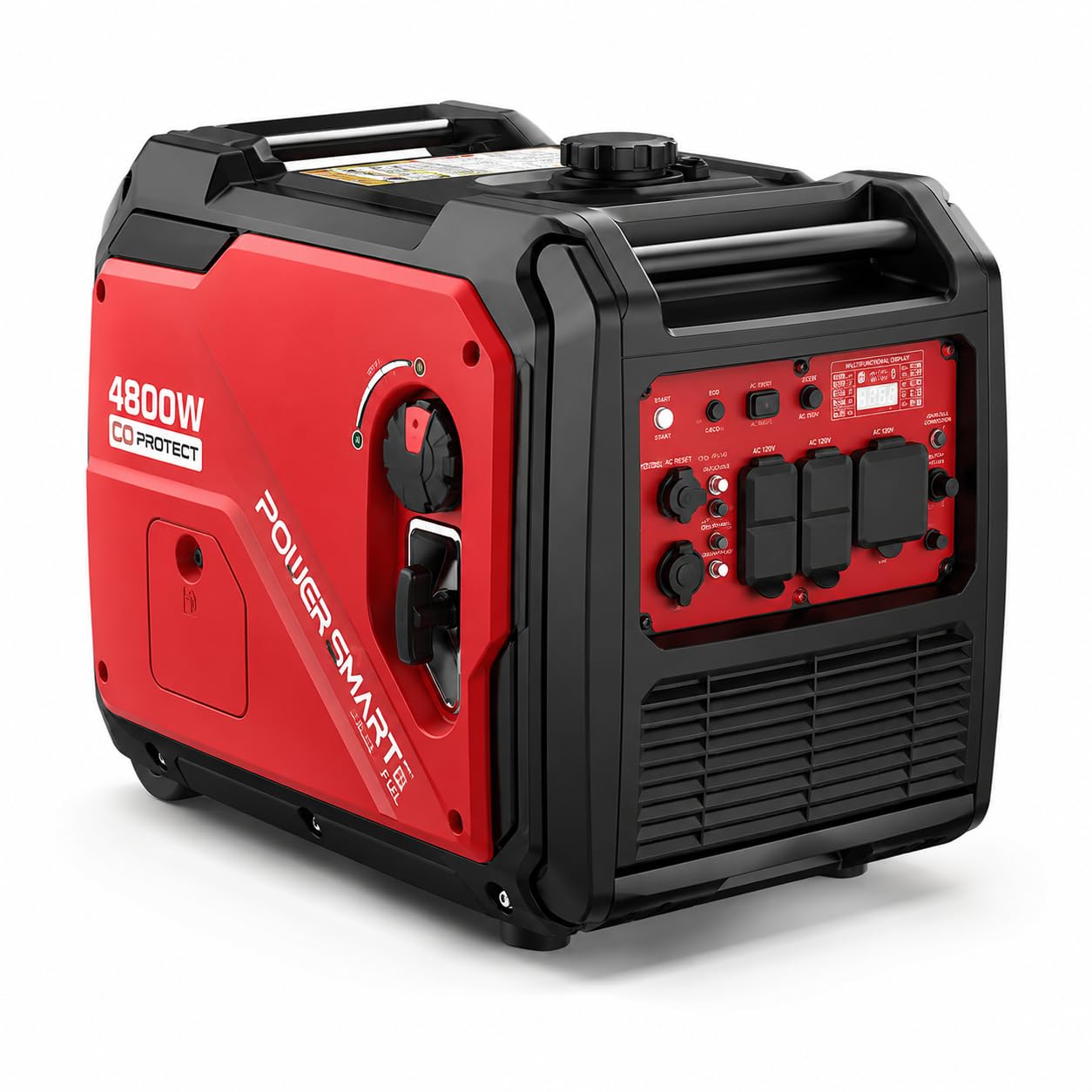
A heavier 223cc bruiser built to fire up AC units and sump pumps without strain.
The PowerSmart 4800W takes a different approach: instead of chasing portability, it prioritizes raw starting power for high-draw appliances. The 223cc 4-stroke OHV engine delivers 4800 surge watts, specifically engineered to handle the startup jolt of air conditioners and sump pumps. It’s the heaviest mid-tier option at 68 pounds (with 89 lbs listed in the description), but built-in wheels and a compact 16″L x 16″W x 19″H frame make it manageable. The 3.43-gallon fuel tank provides up to 10 hours of continuous runtime at 50% load—matching the Champion’s endurance for storm season.
One-touch electric start gets you running in seconds, with a manual recoil starter as a backup for emergencies. The outlet selection is pro-grade: a 120V 30A RV-ready TT-30R outlet, two 120V 20A household outlets, a 12V DC port, and dual 5V USB ports. The pure sine wave output is safe for laptops, phones, and even medical equipment. A built-in CO alarm automatically shuts down the engine at dangerous carbon monoxide levels, plus low-oil shutdown and overload protection.
At 67 dB at 23 feet, it’s a touch louder than the AIVOLT’s 60 dBA or the Westinghouse’s 52 dBA, but it’s still neighbor-friendly. Owners praise it for starting quickly and running “everything I have plugged in so far.” The one recurring gripe is the electric start—some customers note intermittent issues, though the recoil backup covers that. If you need a home backup that can punch through heavy startup loads, this is a strong mid-range choice.
Built for heavy loads
- 4800 surge watts handles AC and sump pumps
- 10-hour runtime at 50% load for overnight outages
- Electric start plus recoil backup
The weight to accept
- Heaviest mid-tier pick at 68 lbs
- Electric start can be finicky—use the recoil as backup
Pick it for: whole-home essential backup where starting power beats portability.
pass on it if: you’ll be hauling it to campsites—the LIFAN or Champion are far easier to lift.
6. Westinghouse 4000W Dual Fuel Inverter Generator
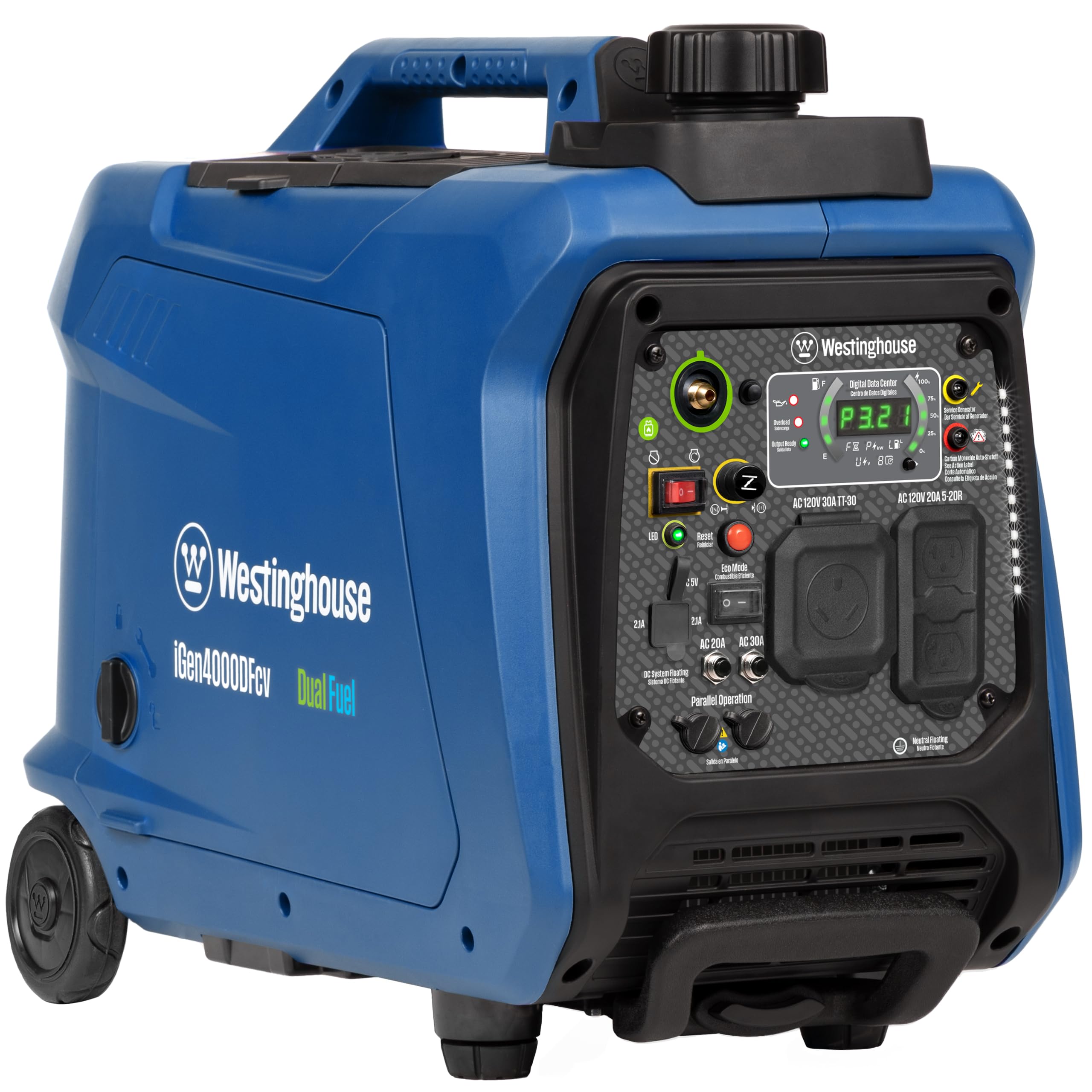
The 52 dBA dual-fuel marvel that runs your camper’s AC and stays neighbor-friendly.
The Westinghouse 4024 earns its premium spot with the quietest noise rating in the gas class: as low as 52 dBA. That’s dramatically quieter than the Champion’s 64 dBA and the AIVOLT’s 60 dBA—roughly the level of a quiet library. It delivers 4000 peak watts and 3300 rated watts at less than 3% THD on gas, and it runs on propane too for fuel flexibility. The 1.69-gallon tank provides up to 7 hours of run time, and the “Economy Mode” boost fuel efficiency when you don’t need full output.
The LED Data Center is a standout feature: a rotating digital display shows fuel level, power output, remaining run time, voltage output, and lifetime hours. That’s genuinely useful for monitoring your load and planning refuels. The outlet selection includes a 5-20R 120V duplex household outlet, an RV-ready TT-30R 30 amp outlet, and two USB outlets. Automatic low-oil and carbon monoxide shutdown add safety layers, and the 3-year limited warranty with nationwide service backs it up.
Reviewers point out it runs a 15k air conditioner, converter/charger, and LED lights in a trailer with ease, and it’s lighter than a Yamaha 3000i. The dual-fuel capability is a big selling point—one owner runs it on propane from a grill tank to avoid gasoline’s carburetor degradation. At 59 pounds with a telescoping handle, it’s portable enough for travel trailers. The only real trade-off: it’s a pricier investment than the Champion or LIFAN, but the quiet operation and fuel gauge justify it for frequent campers.
Why it’s worth more
- 52 dBA is the quietest gas generator in this lineup
- LED data center shows fuel, runtime, and power output
- Dual fuel: gas or propane for flexibility
The premium trade-off
- Higher price for the quiet operation and display
- 7-hour runtime is shorter than the 10-hour rivals
Reach for it if: you camp near others and want the least noise possible, with fuel-flexible dual fuel.
Look elsewhere if: you need maximum overnight runtime on a single tank—the Champion or PowerSmart stretch further.
7. AFERIY P280 Portable Power Station

Skip the fuel can entirely—a 2048Wh battery that refills in 38 minutes to 80%.
The AFERIY P280 represents the new wave of fuel-free power stations that are changing what a “generator” can be. Instead of burning gasoline, it stores 2048Wh in a LiFePO4 battery (expandable to 10.24kWh with extra batteries) and delivers 2800W AC output. The headline spec is the charging speed: 1800W AC input fills it from 0% to 80% in just 38 minutes. That’s faster than refueling and waiting at a gas station.
For pure silence and zero fumes, nothing here matches it. The pure sine wave AC output is identical to wall outlet power, protecting sensitive electronics, and the <10ms UPS response instantly switches to battery during outages—smooth for computers and medical gear. It has a NEMA TT-30 outlet for RV use, and dual PV solar inputs let you charge from panels without extra MPPT management. Shoppers say powering pellet grills, ham radios, and three days of camping on a single charge, with recharging from wall power in under two hours.
It weighs 44 pounds, which is lighter than the gas generators despite carrying a massive battery. The LiFePO4 chemistry supports 4000+ cycles and a 10-year lifespan, making it a long-term investment. The catch: it’s a different tool than a gas generator—you trade unlimited run time (as long as you have fuel) for a finite charge. The 2800W output is lower than the gas units’ surge capacity, so it won’t run a large AC unit’s startup jolt. And the companion app’s permissions are invasive, per one owner—set your charge rate once and delete the app.
The modern advantage
- 38-minute charge to 80%—faster than refueling
- Dead silent and zero exhaust fumes
- 10-year lifespan with 4000+ charge cycles
The limits
- Finite battery—can’t run indefinitely like gas
- 2800W output won’t handle big AC startup surges
Best for: RV owners and home backup where silence, zero fumes, and quick recharge matter more than unlimited runtime.
Not for: powering high-startup appliances like central AC—stick with gas for that.
8. DJI Power 2000 Portable Power Station
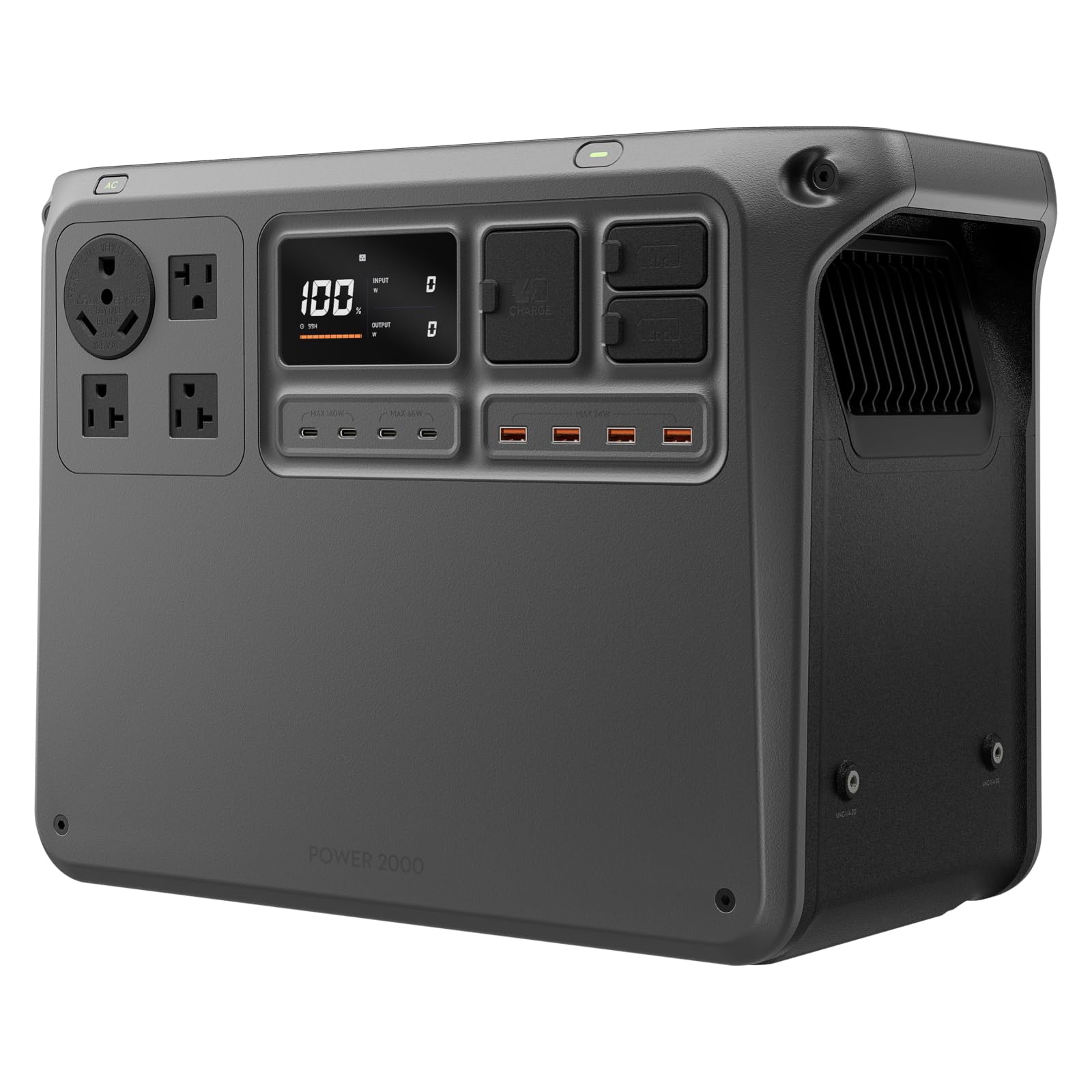
Runs as low as 30 dB—so quiet you’ll sleep through an RV blackout.
The DJI Power 2000 is the quietest unit on this entire list, operating as low as 30 dB—barely a whisper compared to the 52 dBA of the Westinghouse. It packs a 2048Wh LiFePO4 battery with a 3000W continuous output (4000W peak) and recharges to 80% in just 55 minutes. The smart BMS, sub-nano coating, and flame-retardant housing make it safe in wet or rugged outdoor conditions. It runs 99% of appliances, including kettles, cookers, projectors, electric saws, and impact drills.
The port selection is generous: 15 total ports including dual full SDC ports, four AC outlets, four USB-C, and four USB-A—enough for 4-5 people to charge phones, lights, fans, and laptops together. The smooth UPS with a 10 ms switch time keeps devices running during outages, and it’s expandable up to 22.5kWh with extra batteries. The DJI Home app lets you check status and adjust settings remotely without a separate dongle. It weighs in at 21.72 kg (about 48 lbs), carries a 5-year warranty, and owners call it a “beast” for power outages.
The caveats are real but manageable: the app is clunky, the proprietary SDC ports limit third-party accessories, and there are no built-in wheels. Owners praise its reliability and clean operation, with one noting it handles portable AC, laundry, and kitchen appliances simultaneously on old breakers. One caution: keep the battery above 10-15% to avoid a full depletion that can brick the unit. Like the AFERIY, it’s a different philosophy than gas—finite battery but zero noise and fumes.
The quiet powerhouse
- 30 dB operation is ideal for sleeping in an RV
- 15 ports run a whole crew’s devices at once
- 55-minute charge to 80% gets you back online fast
The trade-offs
- Proprietary SDC ports limit accessory flexibility
- No wheels—plan to lift the 48-lb unit
Choose it for: RV trips where you want to sleep undisturbed and charge a full family’s tech.
it’s not for you if: you need built-in wheels for easy transport—the gas units with handles win there.
9. DABBSSON Portable Power Station 3000L
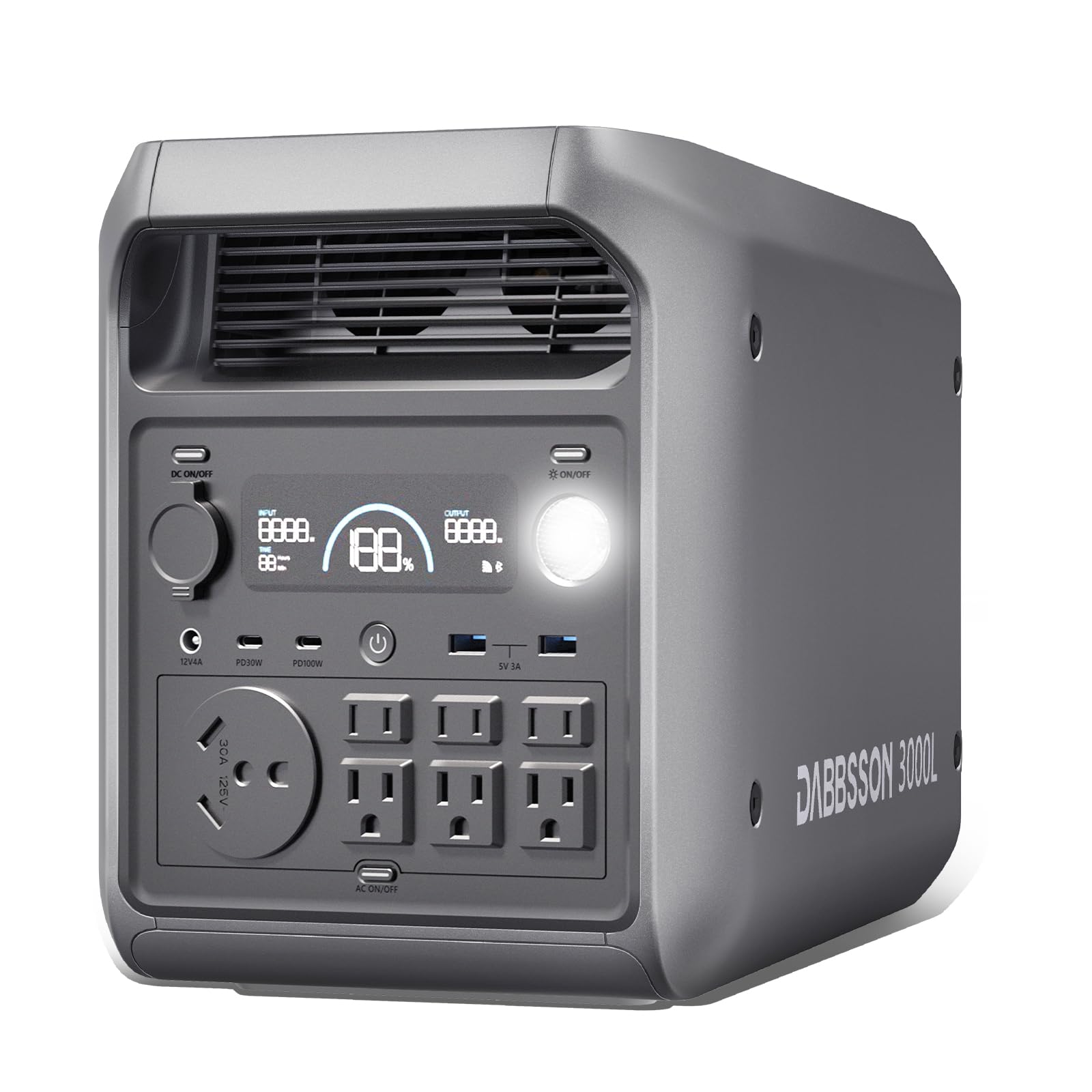
A 3072Wh battery with 6 AC outlets that brews coffee without firing up the gas.
The DABBSSON 3000L is the high-capacity battery option for those who want serious runtime without gas fumes. The 6 AC outlets let you power multiple devices at once, and the whole unit weighs 56 pounds. It recharges to full in just 1.38 hours with AC input, which is remarkably fast for this class.
The semi-solid LiFePO4 chemistry is a step up in stability and safety from standard LFP batteries, with a UL94-V0 flame-retardant housing and 4000+ deep cycles to 80% capacity—over 10 years of daily use. The <10ms EPS switch protects computers, NAS, and routers from power loss, and the Dabbsson App manages everything remotely via Wi-Fi or Bluetooth. It supports AC, solar (up to 1200W MPPT), and 12V/24V car charging, plus hybrid dual-input for off-grid flexibility.
Owners are enthusiastic: one sums it up with—”I can make coffee without going out to start the gas generator!” The unit handles 1400-1600W coffee makers, hair dryers, and an RV microwave (1500W) with ease, and buyers report it offers “most of the software features of ecoflow at a fraction of the price.” The 5-year warranty (3 standard + 2 extended) adds confidence. The trade-offs: one owner found a hot/neutral reverse on the AC receptacle (quickly replaced by support), and another had an RV AC trigger an error unless voltage was dropped to 100V—so check your specific appliances’ tolerance.
The capacity advantage
- 3072Wh is the largest battery in this lineup
- 1.38-hour full recharge is class-leading
- 6 AC outlets power multiple appliances at once
The watchouts
- A rare unit had an AC polarity issue at delivery
- Some RV AC units may trigger errors—check compatibility
Reach for it if: you want the biggest battery capacity and most outlets for whole-home or job-site needs without gas.
Look elsewhere if: you have a specific RV AC unit—verify it runs on this inverter before buying.
10. Jackery HomePower 3000 Portable Power Station
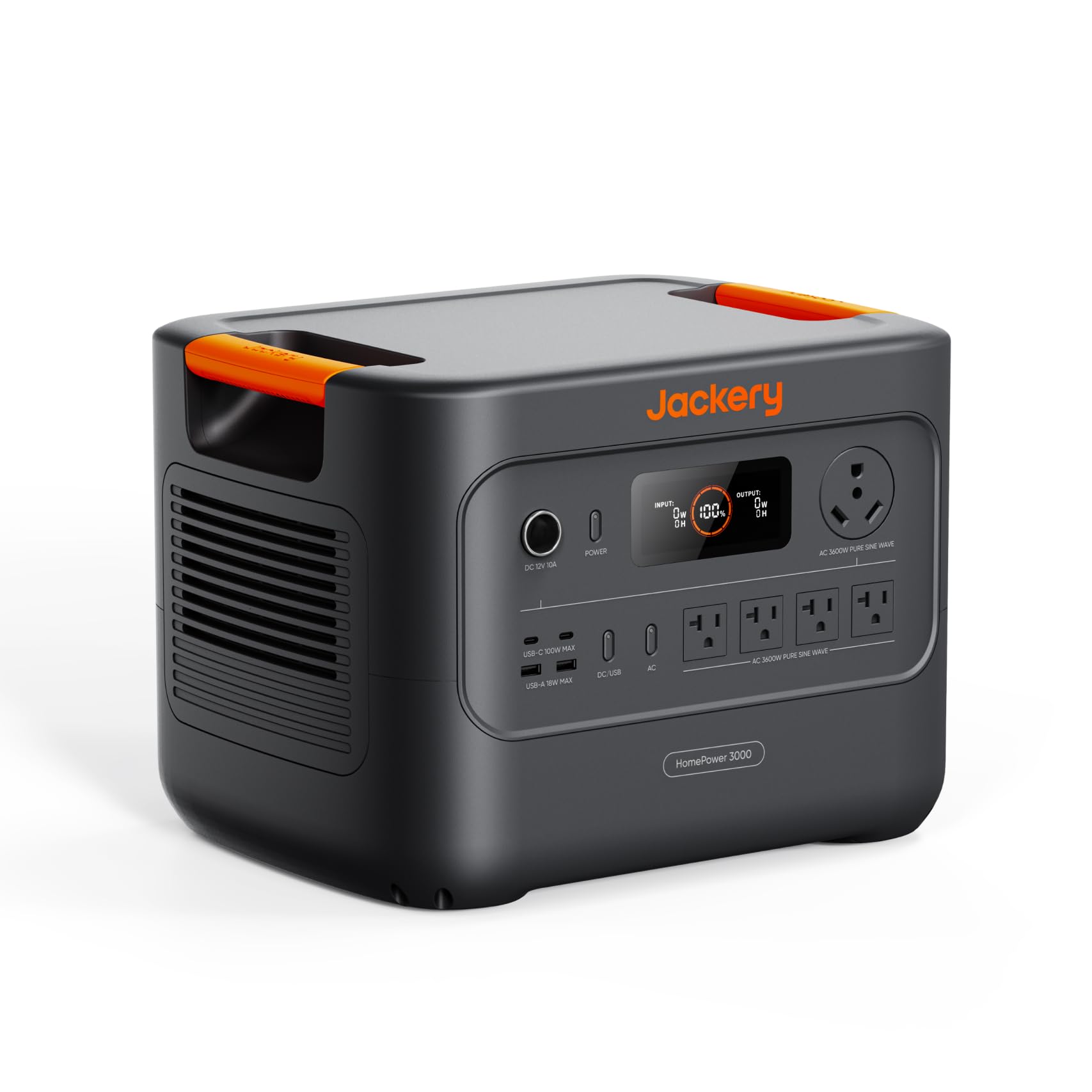
3600W output and a 7200W surge that keeps your fridge running for days.
The Jackery HomePower 3000 is the most powerful battery station here, with a 3600W AC output (7200W surge) and a 3072Wh capacity. That’s enough to power a household for up to 15 hours and keep a refrigerator running for 1 to 2 days, per the manufacturer. The UL-certified UPS switches within ≤20ms, so security cameras, medical refrigerators, Zoom calls, and pet feeders run uninterrupted during outages. It’s the battery option that comes closest to replacing a gas generator for whole-home essentials.
Charging is flexible: fully recharge in 1.7 hours via hybrid AC and DC, or 2.2 hours via AC alone. Pair it with two SolarSaga 200W panels and it charges up to 80% in 9 hours. The ChargeShield 2.0 technology uses AI algorithms to boost charging speeds and extend battery lifespan—the LiFePO4 batteries offer 4,000 cycles while retaining 70% capacity. The built-in TT-30 RV port offers plug-and-play power for your camper, and dual 100W PD ports fast-charge phones, tablets, and drones.
Jackery claims it’s the world’s first 3kWh station with CTB technology, making it 47% smaller and 43% lighter than comparable models of the same capacity—though it still weighs 59.5 pounds. Owners validate the battery life: one powered a Whirlpool side-by-side refrigerator for 30+ hours, and another ran an air fryer oven. The fan gets noisy (~60 dB) on any power draw, so it’s not ideal as a daily UPS on your desk. And one owner found it won’t function below 15°F, so cold-weather users should keep it indoors.
The home backup king
- 3600W output with 7200W surge handles heavy loads
- TT-30 RV port for direct camper plug-in
- 4,000 cycles with 70% capacity retention
The honest limits
- Fan noise (~60 dB) makes it a poor daily UPS
- Heavy at 59.5 lbs despite the compact design
Best for: homeowners who want gas-free backup that runs the fridge, router, and lights for days.
Not for: sub-freezing temperatures—keep it warm or choose a gas generator for winter storms.
11. Honda EU3000iS 3000 Watt Inverter Generator
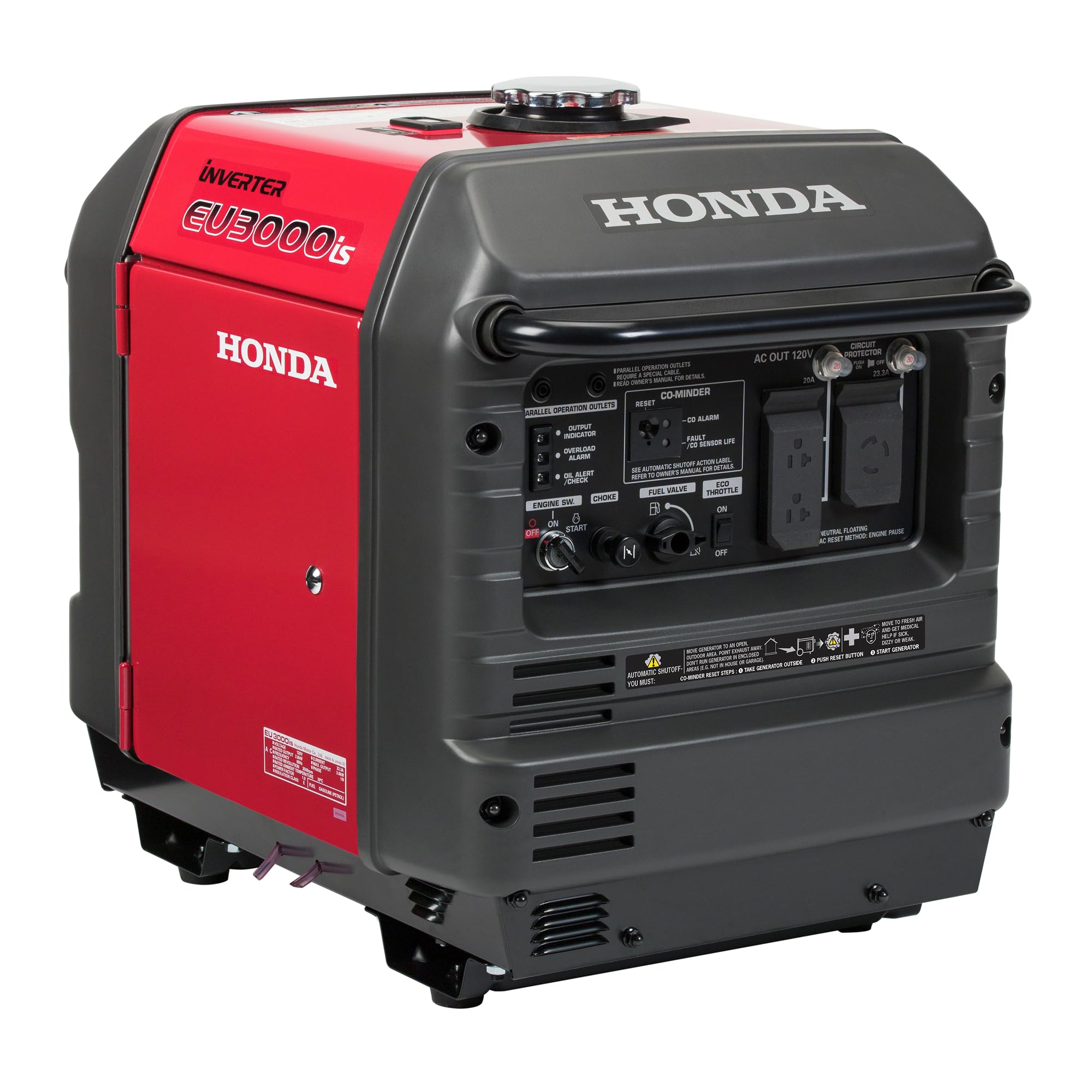
The 144-pound gold standard that sips gas and whispers at 50 dBA.
The Honda EU3000iS is the legend of the category, and it earns that reputation with a 418cc engine that runs6.9 to 19.6 hours on a single 3.4-gallon tank. That’s the widest runtime range in this lineup, and the Eco Throttle System automatically matches engine speed to the load, so it sips fuel when you’re just running a few lights.
At 50 to 57 dB(A), it’s quieter than a normal conversation—the rare generator where neighbors genuinely thank you. Owners who survived Florida hurricanes call it “whisper quiet,” and one says they should have bought it years ago. The CO-MINDER system continuously monitors carbon monoxide levels and shuts down before they become dangerous, adding a meaningful safety layer for camping or home use. It runs most 13,500 BTU RV AC units, furnaces, and fridges, with power clean enough for computers.
The 3-year residential warranty and Honda’s legendary reliability justify the premium for many buyers. But the numbers tell an honest story: at 144 pounds, it’s the heaviest unit here by far—three times the Champion’s 48.1 pounds. It also can’t be sold in California, so west-coast buyers need the EU3200IAC2 instead. Owners are split on value, but those who prioritize longevity and silence consistently call it “worth the money.”
Why it’s the gold standard
- 19.6-hour max runtime on one tank with Eco Throttle
- 50-57 dB(A) is the quietest gas inverter here
- Honda’s 3-year warranty and proven reliability
The heavy reality
- 144 pounds—plan for a dolly or two people
- Not available in California—check the EU3200IAC2
Reach for it if: you want the most reliable, quietest gas generator money can buy and don’t mind the weight.
Look elsewhere if: you need something you can lift into a truck bed alone—the Champion or LIFAN are far more portable.
Understanding the Specs
Starting Watts vs. Running Watts
Starting watts (also called surge watts) is the brief jolt of power a motor needs to start spinning—think of pushing a heavy door open before it swings. Running watts is what it needs to keep going. The DABBSSON, for example, delivers 3000W rated but up to 3600W surge, while the PowerSmart hits 4800 surge watts for big AC compressors. Always match the starting watts to your biggest appliance’s startup draw, not just its running draw.
THD and Inverter Technology
Total harmonic distortion (THD) measures how “clean” the electricity is. Less than 3% THD is safe for laptops, phones, and TVs; higher THD can damage sensitive electronics over time. Inverter generators like the Champion at less than 3% THD convert DC to AC electronically, which also lets them run at lower engine speeds for fuel efficiency and quietness. Conventional generators run at a fixed 3600 RPM, which is louder, thirstier, and dirtier in output.
Decibels (dBA) and Distance
Noise is measured in dBA, usually at 23 feet—the distance from your camper door to the generator outside. A 60 dBA rating is like a normal conversation; 52 dBA (Westinghouse) is library-quiet; 30 dB (DJI) is a whisper. Every 10 dBA represents roughly a doubling of perceived loudness, so the jump from 52 to 64 dBA (Champion) is more noticeable than the numbers suggest. If you camp near others, prioritize lower dBA.
Runtime and Fuel Tank
Runtime is always quoted at a specific load—usually 50% or 25% of max output. The Champion runs up to 10 hours at 50% load on its tank, while the Honda EU3000iS stretches 6.9 to 19.6 hours depending on load and Eco Throttle engagement. A bigger tank doesn’t always mean longer runtime; fuel efficiency matters more. For battery stations, the equivalent spec is charge time: the AFERIY hits 80% in 38 minutes, the Jackery fully recharges in 1.7 hours hybrid.
Fuel Type: Gas, Propane, or Electric
Gasoline is energy-dense and widely available but degrades over months of storage. Propane stores indefinitely and burns cleaner, but delivers slightly less power (the GENMAX drops from 3200 to 2800 running watts on propane). Electric battery stations run silently with zero fumes but have a finite charge. Dual-fuel units like the Westinghouse and GENMAX give you the flexibility to use whichever fuel is available during an outage.
CO Shutoff and Safety Features
Carbon monoxide (CO) is the silent killer with gas generators—never run one indoors. CO-MINDER (LIFAN, Honda), CO Shield (Champion), CO Alert (AIVOLT), and CO Detect (GENMAX) all automatically shut down the engine when CO levels climb to unsafe ranges. Low-oil shutdown and overload protection are also standard on most picks. These features add cost but are essential if you’re running the generator near a camper or home entry.
FAQ
Will a 3000 watt generator run my house?
What’s the difference between an inverter generator and a conventional one?
How many hours will a 3000 watt generator run on a full tank?
Can I run sensitive electronics like a laptop on these generators?
What is parallel capability and do I need it?
How loud is too loud for camping?
Should I get a dual fuel generator or stick with gasoline?
Can a battery power station replace a gas generator?
What size generator do I need for an RV air conditioner?
How often do I need to change the oil?
Is it safe to run a generator in the rain?
What does the CO sensor on these generators do?
How much maintenance does a 3000 watt generator need?
Final Thoughts: The Verdict
For most buyers, the best 3000 watt generator is the Champion 4000W Inverter because it combines the lightest weight in its class (under 49 lbs) with a proven 10-hour runtime and the safety of CO Shield—the crowd favorite at 4.6 stars across 300+ owners. If you want the quietest gas operation, the Westinghouse 4024 at 52 dBA is the one to reach for with its dual-fuel flexibility and LED data center. And if you’re ready to ditch gasoline entirely for silent, fume-free power, the Jackery HomePower 3000 delivers 3600W output that keeps your fridge running for 1-2 days—just keep it warm in winter. Choose based on your fuel preference, weight tolerance, and if you need hours of continuous power or a quiet overnight solution.
How We Picked
We do not accept paid placement. Every pick is matched to a real buyer and a real use-case; we do not hands-on test units.
Sources & Methodology
Specifications: manufacturer listings and product documentation. Review insights: verified customer reviews, as of August 2026. Pricing: not shown on this page (it changes often); check the current price via the retailer link.
As an Amazon Associate, Gadgets Feed earns from qualifying purchases. This does not affect which products we feature.